
If you are on the verge of making a decision, I’m here to help your think clearly – even if it means breaking some cherished behaviour patterns. I am going to help you think of the Alpha 900 not as a logical progression from the 700, but as a different camera system entirely.
For over a hundred years, camera makers have tried to reduce the size and weight of equipment; to make focusing errors disappear, and pictures become sharper without needing a tripod. In the early years of the 20th century rollfilm began to replace plates; in the 1930s 35mm film took over from rollfilm, though it was to be 40 years before professional use matched amateur enthusiasm. For the snapshooter, sub-35mm formats like half frame, 110, Disc and the Advanced Photo System (APS) then attempted to supplant the full 24 x 36mm 35mm format.
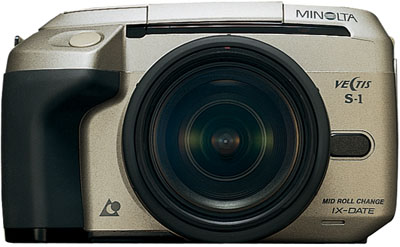
The Vectis S-1 SLR – a film format, in its non-panoramic form, called APS-C . That gave its name to the sensor size Sony call DT and Nikon call DX.
When digital SLRs arrived, many formats were tried out from full frame to quarter-frame but something very similar to the APS-C (Classical) format proved economical to manufacture and offered an acceptable trade-off when used with existing lenses. Though it only used the centre 16 x 24mm of the full 24 x 36mm coverage, this central zone was and remains a ‘sweet spot’ getting the best sharpness from many optics.
Losing recent advances
The loss of wide angle coverage which resulted meant that new lenses had to be designed just for this format, though the mount fitting was inherited from existing systems. This was a challenge because the back focus distance involved demanded extreme retrofocus zooms. But it also improved the results, forcing the lenses to be more ‘telecentric’ and project the image from a greater distance on to the digital sensor. This, for technical reasons, improved the all-round quality centre to edge.
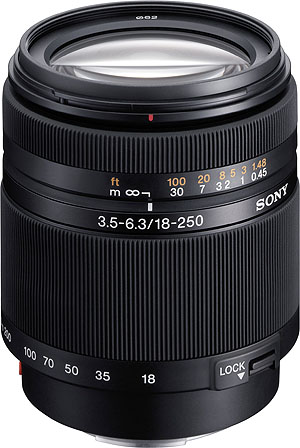
The Sony SAL 18-250mm – a DT lens with a range that has never been achieved on full frame.
While SLR bodies did not shrink to match the 0.66X reduced imaging area (1.5X factor), they could be made as small as any film body used to be – or beefed up and given professional features like 5 frames per second motordrive, which you will find in the Sony Alpha 700. Sensors improved to the point that unheard of ‘fast film’ speeds produced fantastic results. ISO 400 was no longer fast; ISO 1600 is an everyday setting and ISO 6400, never achieved by any film as its normal rating, arrived for action shots. Low light is best tackled using lower settings, but that’s another subject!

The Alpha 900’s big mirror hides a large focal plane shutter – over 35mm size – and full 35mm size sensor.
Now, along comes the economic possibility to make full frame digital sensors just five years after the first wave of consumer-enthusiast ‘APS-C’ format DSLRs. In that five years, whole ranges of lenses have been developed offering unprecedented zoom ratios and features. There never was such a lens as a 24-160mm* or a 42-450mm* for film, but digital SLR users quickly got used to just this kind of range. Once, if you bought a typical zoom like the Minolta 24-105mm D you thought it a big step forward to get close-ups at 0.18X – that’s less than one-fifth life size, on full frame. The digital replacement, Sony’s CZ 16-80mm, manages 0.24X which is better than one-quarter life size, but it does that on a 1.5X factor format – meaning it’s the same as a 24-120mm (more range) focusing down to capture one-third life size on film.
The comparison is 0.36X versus 0.18X and that means the digital lens, on the digital format, actually shoots close-ups at twice the output magnification (for the same size print, in case any pedants are reading this).
*A 16-105mm and 28-300mm when used on APS-C
Depth of field
Throughout the domain of the APS-C DSLR, the small sensor format has transformed things. For the same angle of view, a full frame film camera needs 1.5 f-stops more stopping down to get the same depth of field (sharpness in depth). So, a shot which would be sharp enough from foreground to background at f/8 on an Alpha 700 must be shot at f/13 on full 24 x 36mm.
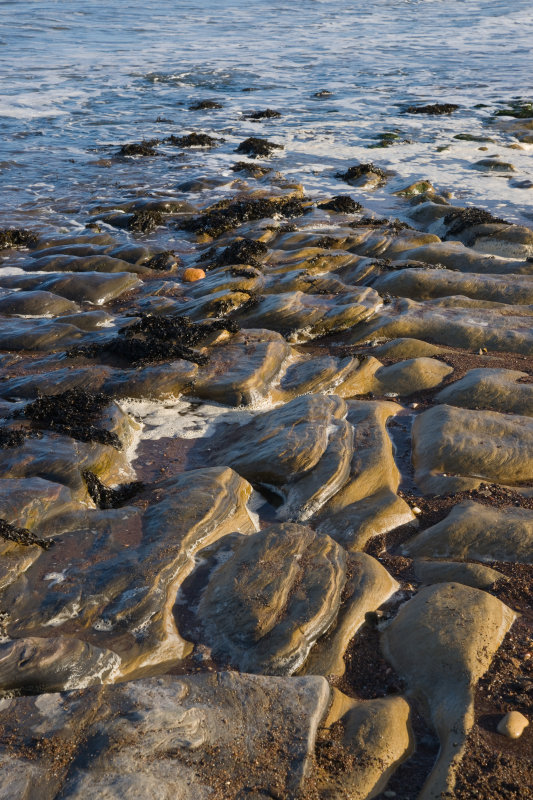
This shot was taken at f/11, 60mm focal length. Click it to open a full 24.6 megapixel image and see just how limited the depth of field is when examined so closely!
Is that a problem? Not on its own, but it also means a shot taken at 1/125 (which freezes most facial expressions and slight body movements, if not action) would need to be taken at 1/40 instead. There is a big difference. Wind moving foliage, people walking, many slow movements in the real world are sharp at 1/125 but blurred at 1/40.
So, to regain the benefits which have been conferred by the small digital sensor, any full frame digital sensor really needs to offer equal quality at three times the ISO sensitivity figure (or 1.5 stops), just to enable the user to get back to the same actual depth of field and motion-stopping shutter speeds. This means a full frame DSLR must be as good at ISO 400 as an APS-C model is at ISO 125.
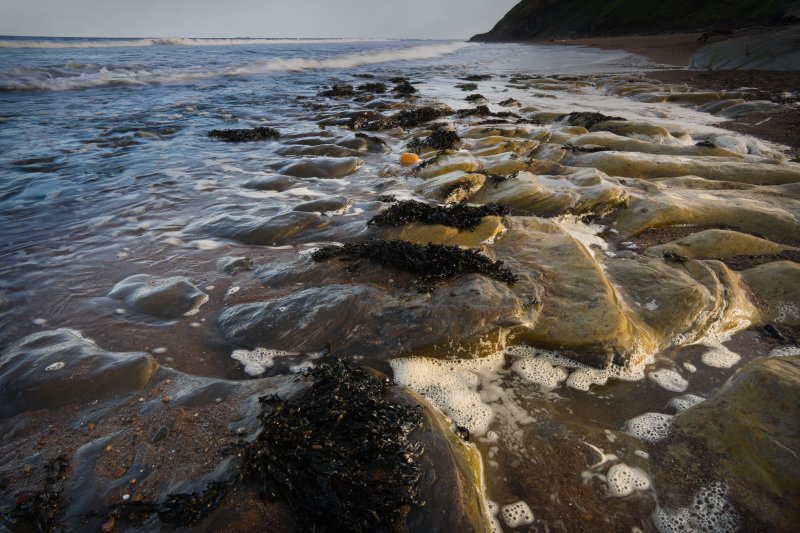
This shot was taken at the same place, but with a focal length of 22mm and aperture of f/25 – an extreme case of stopping down, with 1/8 shutter speed and tripod. Click to view the full size version.
Should that be pixel for pixel, or allow for reducing the image size? I think it needs to be absolute not relative. There is not much point at all in full frame unless you can genuinely make a bigger print or a sharper print, which means using extra pixels if offered.
There is only one good reason for wanting full frame other than this – if you actually want less depth of field. If differential focus effects, isolation of a portrait subject from a background for example, are important to you then the Alpha 900 will deliver this more readily than the Alpha 700 (or other APS-C model) under similar flash or lighting conditions.
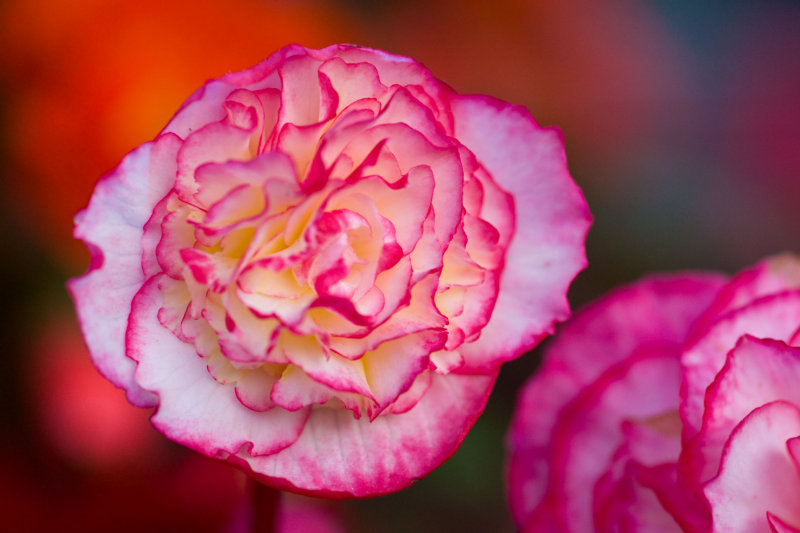
The effects of differential focus work beautifully with colour. Since this flower was blowing around and vibrating, I need a fast shutter speed (1/250th) with the 100mm macro at f4 after sunset. I underexposed at ISO 200 and pushed the processing from ARW using ACR 4.6, by 2.3 stops plus extra brightness, vibrancy and clarity (but not saturation). It’s a noisy result without anything more than ACR default NR but I like the colour and the bokeh (remember it is effectively at ISO 1000). The A900 viewfinder makes shooting this type of subject a real pleasure even in poor light. Click to open a larger version.
The focal length factor
If you buy into the Alpha 900, you are committing yourself to a whole different range of lenses. If you buy the forthcoming 70-400mm zoom, it will not offer the same reach the 70-300mm model does on the A700. You have the option to use a cropped APS-C mode, which produces an 11 megapixel file, or to crop any full frame as you wish. That in effect more than restores your telephoto reach.
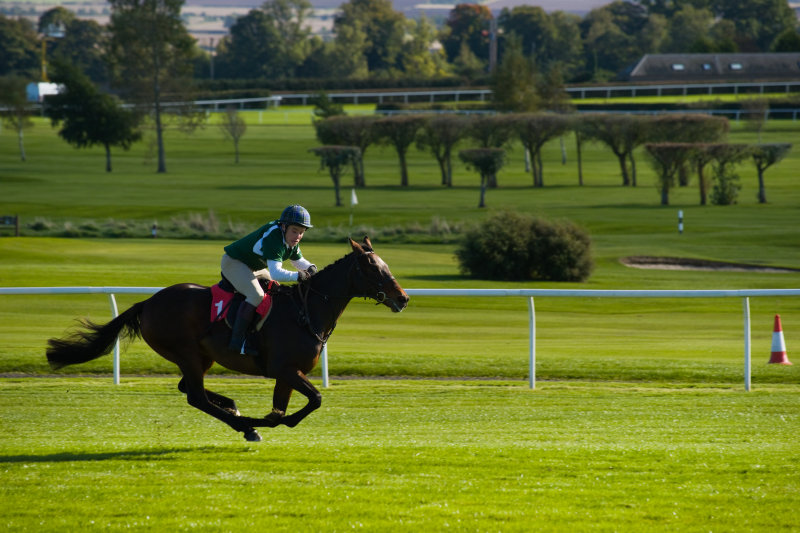
One benefit of full frame – if you don’t keep your subject dead centre in the frame, you can crop in and get as big an image as APS-C. Click on the shot for the full size 70-200mm SSM image. 1/1000s f/5.0 at 200mm, ISO 400.
But if you are shooting with a long lens and want 24.6 megapixels, the cost in size, weight and money may be prohibitive. The difference between a 200mm f/2.8 and 300mm f/2.8 shows this perfectly. The Minolta APO G 200mm f/2.8 weighed just 790g, was 135mm long, and took 72mm filters; the 300mm f/2.8 APO G of the same period weighed 2310g, was 240mm long, and needed 114mm filters (but a rear 42mm filter slot was provided).
The 200mm f/2.8 covers exactly the same field of view, at the same maximum aperture, on the Alpha 700 as a 300mm f/2.8 does on the Alpha 900. The 200 focuses to 1.5m; the 300mm can’t get any closer than 2.5m and at closest focus, produces a smaller subject scale than the 200mm does. Fortunately the last Minolta and current Sony APO G (D) SSM version can manage 2m and now beats the vintage – discontinued – 200mm for magnification.
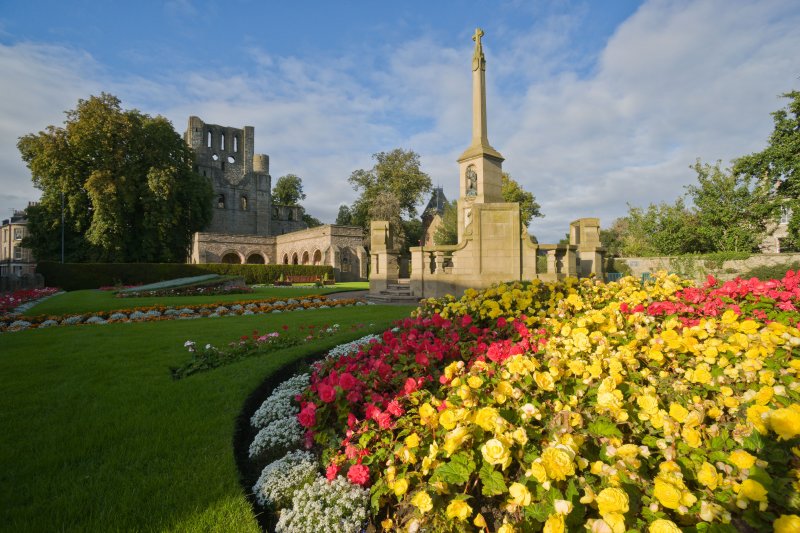
My 17-35mm KM D lens is restored to a genuine 17mm view – and through the large bright finder, precision composition is made easy. ISO 200, f/11. Click on picture for full size.
At the other end of the scale, the wide-angles, your choices are limited. A probably superb CZ 16-35mm f/2.8 will be available in January 2009 at around three times the price of the existing 11-18mm which serves (though lacking in speed) for APS-C. And, if you consider the 10-20mm Sigma useful on APS-C, you could simply opt for the 15-30mm Sigma on full frame; it’s exactly the same range and slightly faster! Or you could choose the 12-24mm Sigma, which has no 8-16mm equivalent for APS-C.

The Alpha 900 looks entirely at home with the 16-105mm SAL DT, but in practice, it’s not… practical!
Should you try an APS-C lens on the A900? Sony say it will give incorrect exposure metering unless you use centre weighted or spot. I say that you really can’t see the APS-C frame markings in the viewfinder against most subjects. For action shots, you have little chance of being aware of the frame zone. And you can’t turn the cropping off (except with some independent lenses which the camera fails to recognise as needing a crop), and the raw file is cropped too.
For walkaround zooms, you must look at rather older designs – the 28-300mm Tamron in place of an 18-200mm or 18-250mm. Is it really worth the compromise? The whole point of walkaround zooms is convenience, and the Alpha 900 increases size and weight. The resolution and overall performance of a 28-300mm may not fit well with the full frame.
With macro lenses, the 1:1 aspect is again changed back to where it was pre-APS-C. Of course, it is still 1:1, but relative the print size the magnification on full frame is less impressive. Remember, 1:1 on the Polaroid 20 x 24 inch camera is a head and shoulders portrait – and 1:1 on a video camera is the head of a butterfly. Macro is a field where the super-bright, large viewfinder of the Alpha 900 really pays off and 24.6 megapixels can be very useful, but if you want to match the stunning closeups people have been getting on the Alpha 700 and Alpha 350 you must add an extension tube to your macro lens.
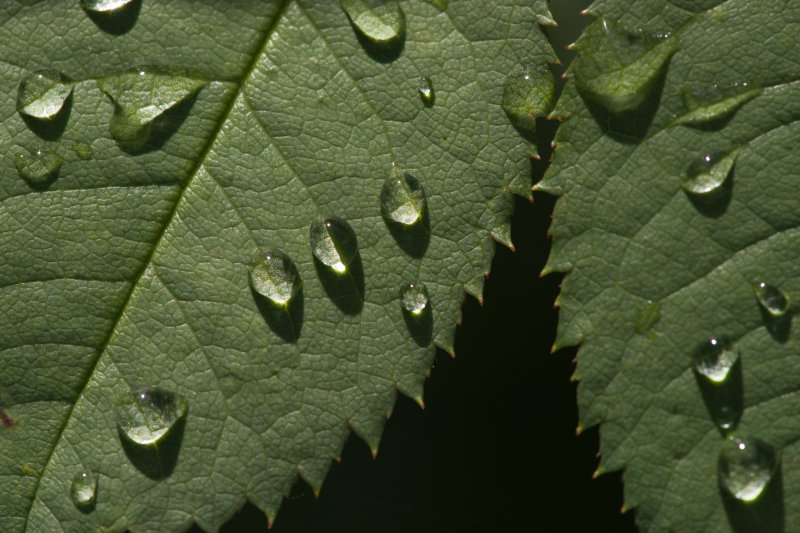
The 100mm f/2.8 Macro AF works well on the Alpha 900, but on the 700, only half this area of subject would have formed the entire picture. Click on picture for full size.
However, I should not play Devil’s Advocate all the time. The large finder of the Alpha 900 also transforms wide-angle views with lenses like the 17-35mm Konica Minolta D, to the point that you feel you have regained true wide angle composition. No matter that the 11-18mm at 11mm is just the same on the Alpha 700; it’s small, vague and dark as a compositional view compared to what you see through the A900. The 900 returns the 16mm f/2.8 fisheye lens to its true coverage and look.
It allows lenses like the Sigma or Tamron 14mm f/2.8 designs to do their job, as with Sigma full frame ultrawide zooms. Lenses like the 200mm Apo G f/4 Macro from Minolta, which is almost too long for comfort on the Alpha 700, become far more friendly. The 50mm f/1.4 is a standard once again, the 35mm f/1.4 and 28mm f/2 get their status back; so do the 28mm f/2.8, 20mm f/2.8 and Minolta 24mm f/2.8. The 85mm f/1.4 designs frame better for portraits and the 135mm f/1.8 and STF lenses can at last be used in a normal sized indoor studio.

My 50mm f/1.4 restored to its normal view! This is the Alpha 900 used for a 13 megapixel direct in-camera JPEG at ISO 1600, with +1 over-ride set to get the correct tonal quality for the shot. Sharpness (and all other parameters) set to 0 default using Standard sRGB style. Auto WB. High ISO NR set to Normal. Since this was shot with cRAW, it is a FINE quality JPEG not Extra Fine. Click to image to see the JPEG.
The flash dilemma
If you use on-camera flash, or the wireless system, the Alpha 900 will cost you real money. It has no built-in controller for wireless remote flash units, and no onboard flash. The affordable HVL-F42AM makes a decent if bulky substitute for the missing pop-up, but can’t control remote flash. The only flash which will do so is the HVL-F58AM, a superbly made and presented bit of gear but one of the most expensive camera top flash units on the market.

Your existing Minolta 3600HS(D) 2500(D) and 5600HS(D) guns, or Sony HVL-F36AM and HVL-F56AM equivalents, can be wirelessly controlled by the HVL-F58AM but only at their native power values. No controllable ratio can be set. Nor can they be assigned into ‘Groups’, a function used by ratio-lighting setting. The HVL-F42AM can be, and so can additional HVL-F58AM guns. Examine the possible costs, and you will realise that one of the expensive 58 guns is sacrificed to act as an on-camera controller from the start. It would be easy to spend £1,000 setting up a two-head wireless flash kit for the 900.
With reluctance I’ve bought a 58, because I have a 42, 56 and 36. The 58 will be most useful for solo flash on camera work, bounced light for groups, and so on. The other three can form a reasonable ‘studio’ with some control possible via the (wasted) 58 in controller mode.
But – I have also found on eBay a little Minolta 2000i flash. It’s incompatible with digital TTL and has no manual controls, so it will always fire at full power. That’s GN20 and coverage for a 28mm lens only. It has a low profile, unlike the digitally compatible Konica Minolta 2500D flash which is a mini bounce model. I’m quite capable of working out manual exposures for GN20 (f/2 at 10m ISO 100, f/4 at 5m, f/8 at 2.5m, f/16 at 1.25m, f/22 at 0.75m). For £14 it will make a neat standby in a pocket.
And then there’s the filesize!
The final question, once you appreciate that moving up to an Alpha 900 also means living with more assertive shutter-mirror action and a larger body to handle, is all about what it consumes and what it needs to support it.
First of all, Sony claims 880 exposures per battery charge. I believe this is an error; it is more than the Alpha 700 (750) despite running twin processors and having exactly twice the data to push through. I have not yet managed much over 250 exposures per full charge, shooting RAW+JPEG, and see little chance of reaching 880 under any circumstances.

A detailed image like this can be 24MB just an an Extra Fine JPEG. As JPEG+RAW, this one used over 40MB of card space – 25 shots per GB. cRAW compression saves 12MB per shot (24MB file versus 36MB file). This shot shows that at f22, the minimum aperture possible, diffraction is not ruining a 17mm view on the A900 with its relatively large pixel pitch. The point of focus is easily found, in the first third of the boat where there is some rope above very sharply detailed textured boat floor. f22 is not enough to keep the prow sharp, or the background view. Remember, when viewing this on a 96dpi monitor, you are viewing a ‘print’ over five feet high close up! Click image to go to the full size file.
You will need exactly twice the card space for the same number of shots. So, if you use 4GB cards and find they fill up on a typical day, you’ll need 8GB. However, the Alpha 900’s very clear and large viewfinder helps you avoid poor framing or timing, and the general feel of the camera promotes craftsmanship rather than random snapping. If you can begin to put yourself more into rollfilm technique mode, you may even end up being more economical with the gigabytes.
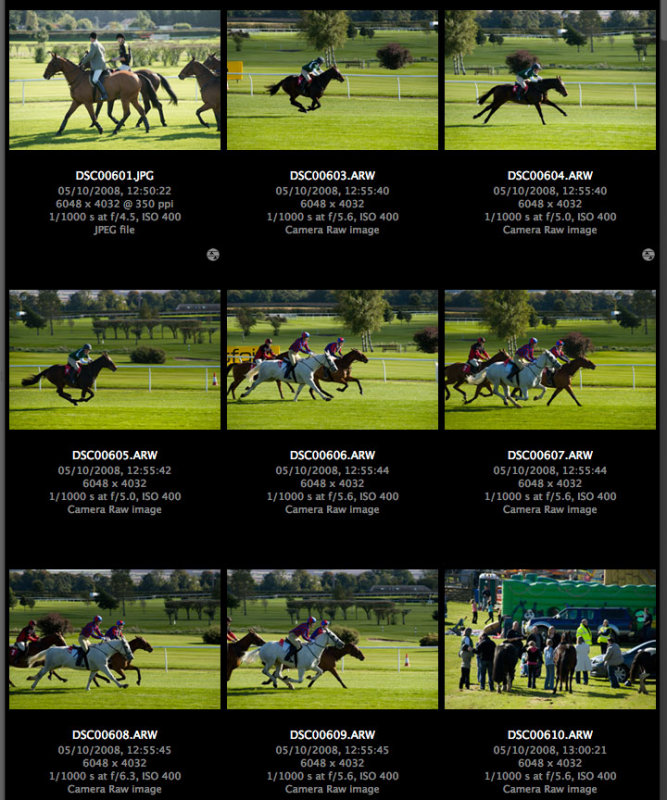
Bridge will create thumbnails for raw – with Alpha 900 images, the process of creating these (in similar programs too, like Lightroom or C1 Pro) to high quality is longer than for smaller image sizes.
Finally you have to process and archive your work. Programs like Bridge and Photoshop use hard disk space for scratch memory and cacheing previews; you can be sure that doubling the data size of every shot converted to a thumbnail, previewed to high quality, and processed in Photoshop will double the workload on your computer processor and the demands on temporary or cache hard disk space. Even if you have an efficient setup with 3-4GB of RAM available, it’s the reading and writing times for the original images and everything associated with them that will slow you down.
If you have a recent computer system, all will be well. But you may have a slightly older system which had coped perfectly with A100, A200, D5D, A700 and even the 14.2 megapixel A350 files. Start work with the A900, and it just loses that edge. So, be prepared to have to upgrade your PC or Mac in addition to the relatively minor investment needed in external HD drives for archiving files.
The package
All these factors add up. Each one alone is not too hard to reconcile with your plans for future DSLRs – but when you take them as a bundle, it can be a heavy bundle! I have not even considered the possibility that to get the most from the Alpha 900, new Sony and CZ lenses may be neeed. Though the body costs £1,800 a set of 16-35/24-70/70-400mm will add £3,000 and your ideal flash kit £1,000 more. Computer upgrades could cost you another £1,000 and so could that HDTV you covet for viewing the images at their best!
If you already own an Alpha 700 with 11-18mm/16-80mm/70-300mm you will gain one or more f-stops of aperture across much of the range, and some genuine telephoto reach. You will lose the great benefit of APS-C, a top grade general purpose zoom offering a far more useful long end than the 24-70mm does on full frame. Don’t imagine the 24-105mm can do this job; I have one, and there is no comparison. The 16-80mm CZ on APS-C is a much better lens all round than the Sony SAL 24-105mm on full frame.
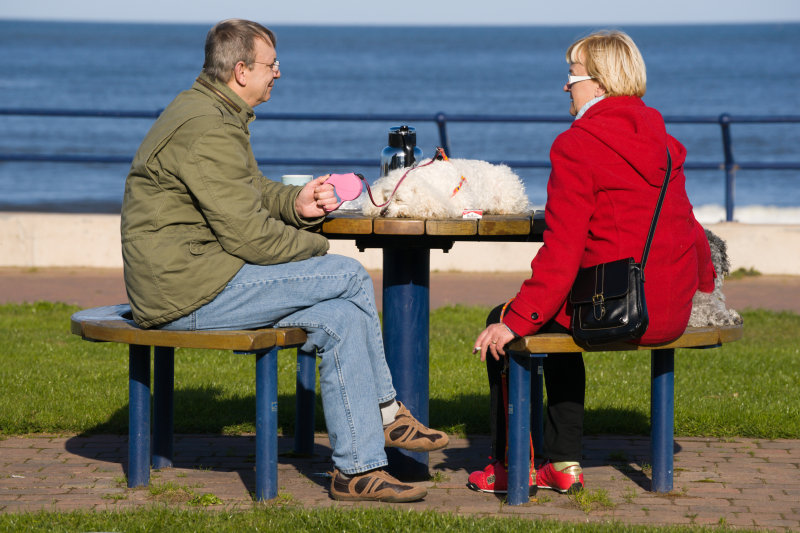
The 70-300mm G SSM is a wonderful lens – free from CA and sharp corner to corner wide open – but it’s essential a consumer grade design, with distortion even at 200mm turning the horizon into a dish. Click to view the full size file.
But you may already own a 24-70mm CZ; you may have a 70-300mm SSM G which will do a moderately good job on APS-C, though with a ‘consumer’ level of distortion and vignetting. Like me you may have older 17-35mm or 28-75mm lenses and find that they work well; or real vintage stuff like the 70-210mm f/4, original macros and 50mm f/1.4 which perform even better. The Alpha 900 could reward you for keeping or acquiring such lenses by showing you what they are really designed to do.
Point of no return
This article is intended to stop you in your tracks, but not to stop you entirely! I have to own and use an Alpha 900. I could not run this website or Photoworld magazine without doing so. I also have to keep my earlier equipment. The A350 sits there with a 16-80mm on it now. The A200 has the 16-105mm. The A700 has been passed to Shirley who prefers one lens to do everything, so it now has the 18-250mm.
So what do I do? I use the Alpha 900. I use it because once you have done so, there is no going back. Buy it, and your APS-C gear will be forgotten. Your cherished CZ 16-80mm won’t get a look in, even if you can’t afford a CZ 24-70mm and end up with a budget alternative like the 28-75mm D on your new full-frame. The accuracy of the focusing before you even consider using the micro AF adjustment, or try manual focus, will make you unwilling to return to the vagueness of the APS-C focus points again.
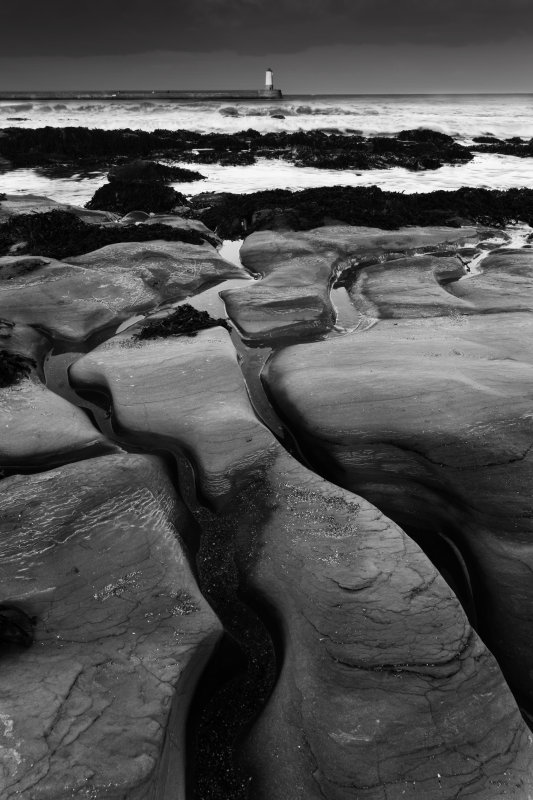
After making a 20 x 16 Epson Stylus Pro 3880 print on Ilford Galerie Gloss premounted exhibition board media, I realise why I will be shooting with the Alpha 900 in future. 17-35mm Konica Minolta f/2.8-4 D lens at f/22; lighthouse added from a second shot, as its real position is to the left outside this composition. Click the image for a full size file. You re welcome to download and print this if you would like to see for yourself!
You will keep using the Alpha 900, and you will probably travel with it even if at first you put your lighter and more versatile kit aside for vacations and trips. Commonsense tells you that the extra depth of field from the APS-C format makes it much better for sports, family, pets, theatre, concerts and all those 90 per cent of your images where a little more in sharp focus can only help. But you’ll use the Alpha 900 instead. You may even end up with worse pictures sometimes, and be aware of it, but still unrepentant!

To conclude – you will have moved on to a different system. It may still be Alpha, and the changeover may be smoothed by Sony’s attention to keeping memory card types, battery, remote controller, cable connections, filetype, lens compatibility and the user interface consistent.
No skilled photographer who takes the step up to the Alpha 900 and full frame digital will regret it – but you need to take that step in full awareness of everything involved.
– David Kilpatrick
Unique features and key points for the Alpha 900
Full frame 24 x 36mm capture
Good compatibility with many older Minolta and Konica Minolta AF lenses
100% viewfinder at 0.73X magnification (2nd largest of all DSLRs made)
Fully corrected eyepiece allowing clearer vision of the focusing screen
20% brighter viewing image than any other DSLR
24.6 megapixel image, the highest resolution of any DSLR
5fps continuous shooting, the fastest for any DSLR over 18 megapixels
SteadyShot image stabilisation through sensor piezo movement applies for all lenses
Oversized reflex mirror gives maximum brightness and coverage for tele and macro lenses
Shutter speeded 30 seconds to 1/8,000 with X-sync at 1/250
PC X-sync socket
Alpha dedicated wireless flash system with channel, ratio and group control possible
A genuine 5 frames per second capture rate (tested)
True mirror lock-up mode, 2 second m/up timer and normal 10 second self timer
Viewfinder eyepiece backout blind
Intelligent Preview first stops the lens down for screen depth of field viewing then shows an adjustable capture on the LCD screen
Top LCD provides shooting settings summary and changes context for adjustments
Three Memory positions on the simple PASM/Auto main mode dial, like the Dynax 7D
Two memory slots with extremely fast read/write on the main CompactFlash drive
1920 x 1080 HD output and 16:9 capture mode
True cropped RAW mode for APS-C lenses (11 megapixels, 1.5X factor)
Magnesium alloy body
Weathersealed with gaskets on all controls and labyrinth design for card and interface doors
Capable of full style adjustment range in both AdobeRGB and sRGB modes
Extra Fine JPEG mode available as an alternative to raw
USB tethered shooting software supplied for both Mac and PC
Full image browsing and raw conversion software supplied for both Mac and PC
High ISO NR includes OFF option as well as Low, Normal and High


Leave a Reply
You must be logged in to post a comment.