Category: Photo Techniques

  • Bluebells, bokeh and OM-1 macro

    Bluebells, bokeh and OM-1 macro

    • Classic 2012-on OM-system M4:3 60mm F2.8 Macro on OM-1, £449 street price
    • Less than 200g, 8cm 1:1 reproduction (from lens front)
    • Make the most of the micro four-thirds system’s size advantage

    Can a smaller sensor deliver the artistic and creative potential for narrow depth of field and use of bokeh? Absolutely. The Olympus family of mirrorless cameras has evolved into the OM system – we look at the 2012 60mm f/2.8 M.Zuiko Macro for creative close-up photography and explore the opportunities made available by cutting the size of your system.
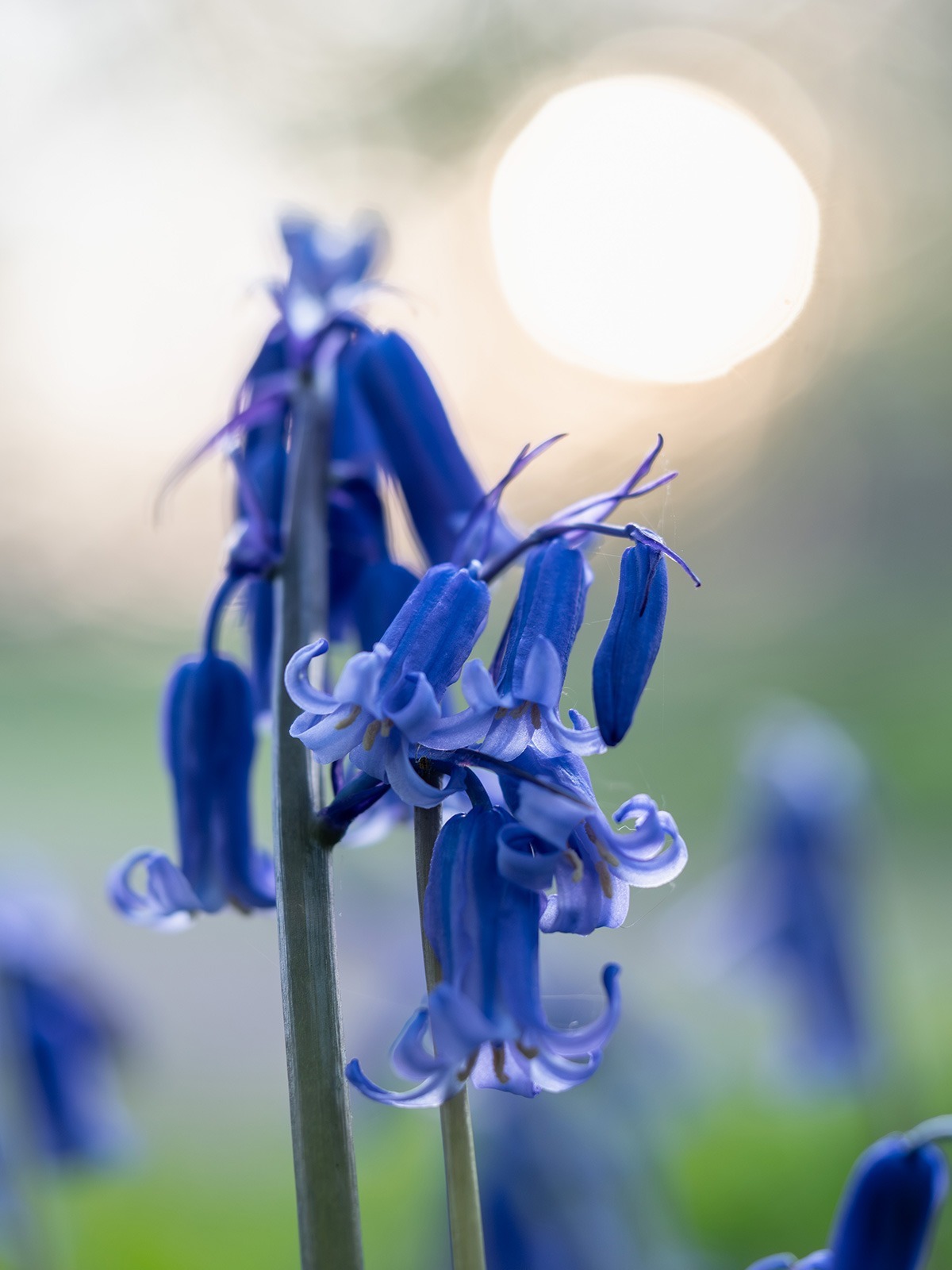
    What is the 60mm f/2.8 M.Zuiko Macro lens?

    The OM-Systems 60mm f/2.8 M.Zuiko Macro is one the best lenses for close-up nature photography. Introduced in 2012, after 14 years it’s still an essential in any Olympus OM kit. True 1:1 focus at 8cm from the lens front is thanks to an internal focus system with no change in the barrel length. It weighs just 186g, takes 46mm filters and is only 82mm long. This makes it ideal as a field companion.

    Although it was introduced 14 years ago at the time of writing, it has remained part of the OM-System lineup and is available new for £449 from Clifton Cameras (this link supports Cameracraft), from Amazon UK, or used from around £250 from reputable secondhand dealers such as London Camera Exchange or CeX.

    Here’s a shot of with it next to the full frame Sigma 105mm f/2.8 macro – the 60mm is equivalent to a 120mm – which says it all.
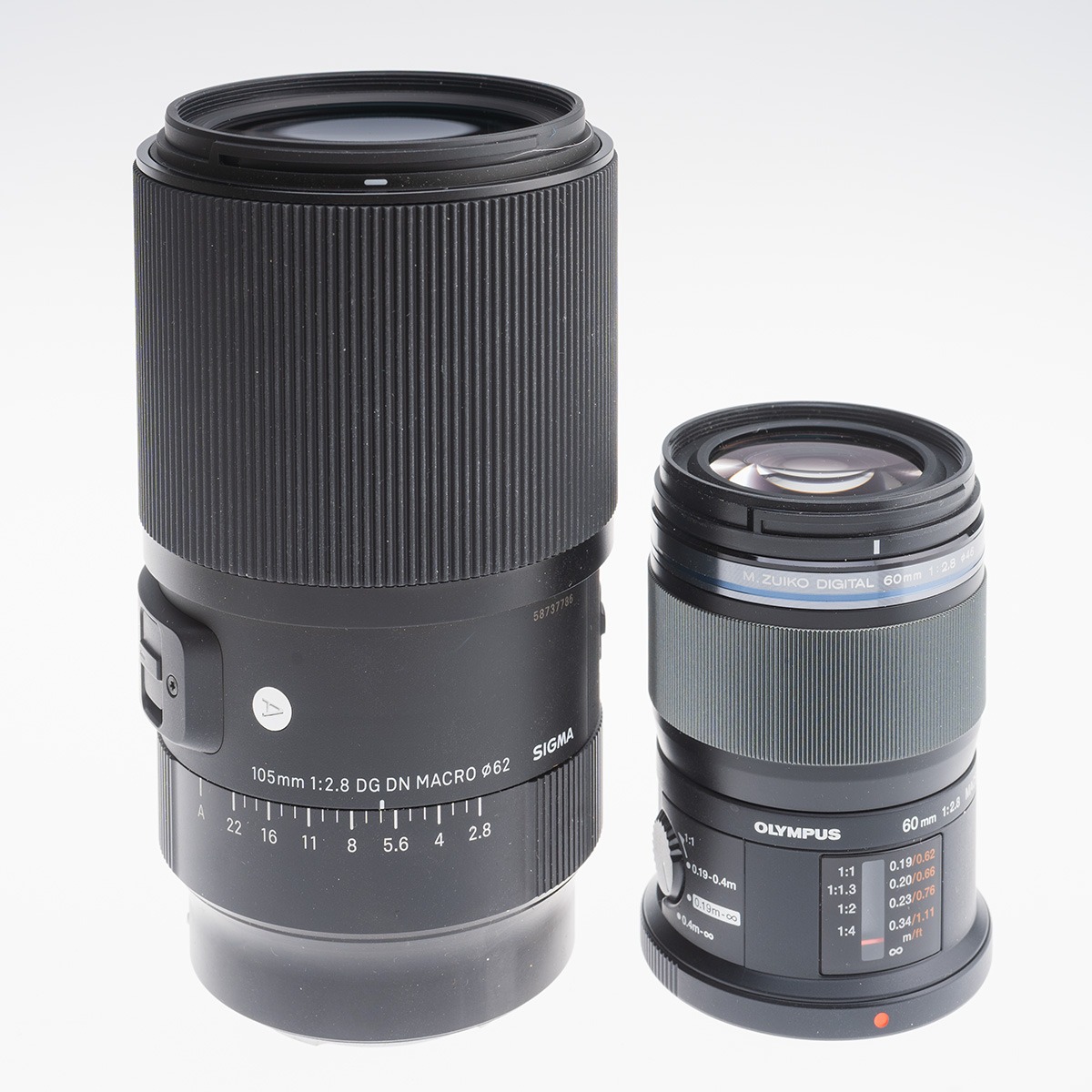
    The OM-Systems 60mm f/2.8 M.Zuiko Macro, right, next to the Sigma 105mm F2.8 macro.for full frame. The Olympus is equivalent to a 120mm F2.8 in full-frame terms, but is significantly smaller and lighter.

    The size avoids touching or disturbing foliage. It’s also easy to hold a camera like the OM-1, currently the largest and heaviest OM-Systems body, one-handed. It’s easy to get low viewpoints using the tilt and twist rear screen when you can not put an eye to the viewfinder.
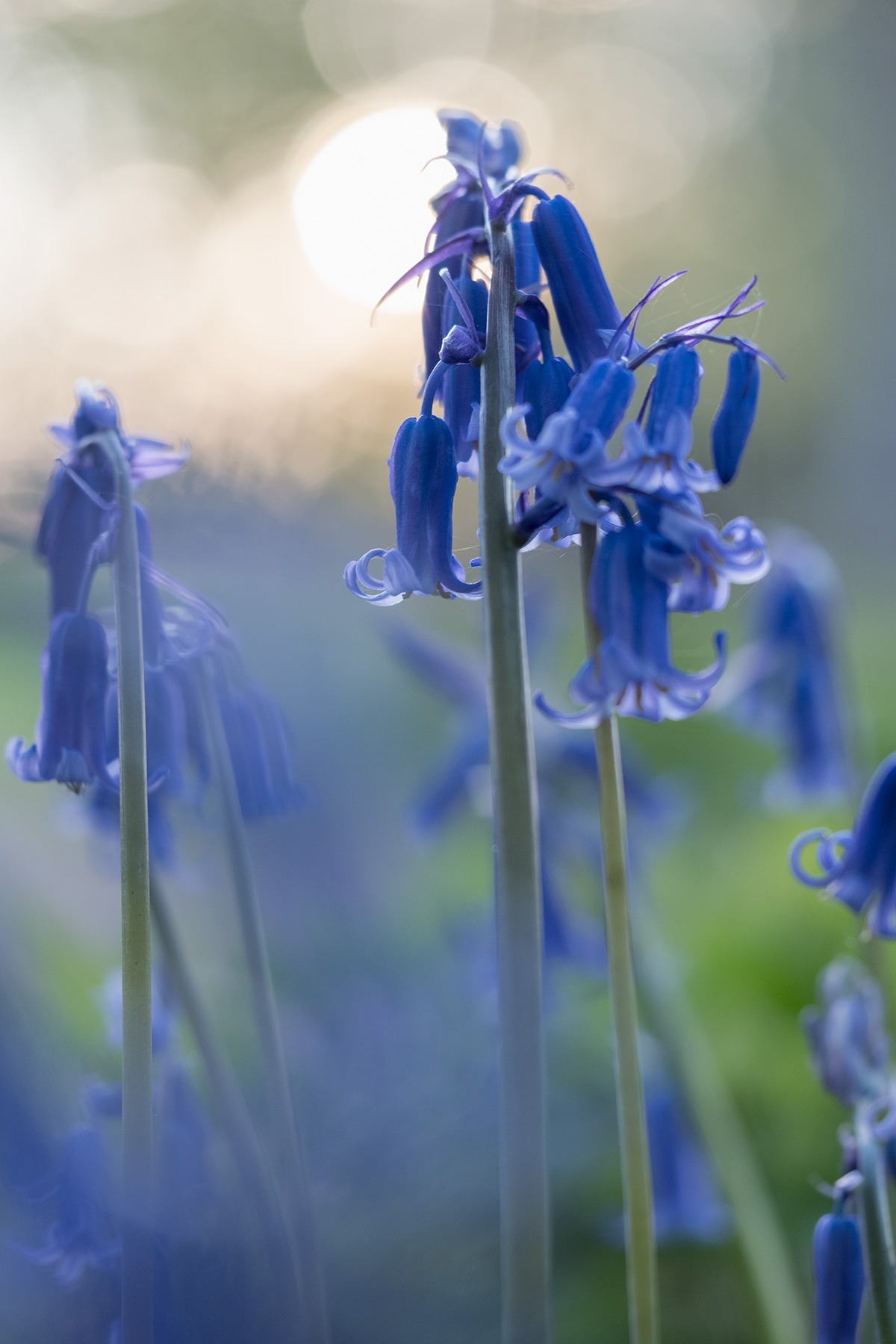
    A picture of bluebells, where the foreground, burred subject imparts an impressionistic glow.

    The f/2.8 aperture means if you do put anything very close to the front element it can dissolve into a blur. Here a bluebell adds an impressionistic glow. Depth of field is tiny wide open. The seven-blade aperture is still present at f/2.8 so the low sun coming through trees creates slightly less than perfect highlight circles. It’s still a lovely effect.

    Shot against the light, the colour of bluebells is realistic. Most digital (and film) shots record too much reflected far red from these flowers making them slightly less pure blue, as the shot below taken at the same time with the light coming from the left hand side. Aperture for this was f/5 to balance keeping most of the main head sharp but still with distinction from the background.

    These are true Scottish bluebells! They are not the Spanish-British hybrids and are a protected species, growing here in woodlands dating from the early 18th century (the big house and estate disappeared long ago). I was very careful not to tread on any. My garden has the invaders, and that’s also what most ‘wild’ ones are. They look very different. See – https://www.wildlifetrusts.org/wildlife/how-identify/spanish-or-native-bluebell
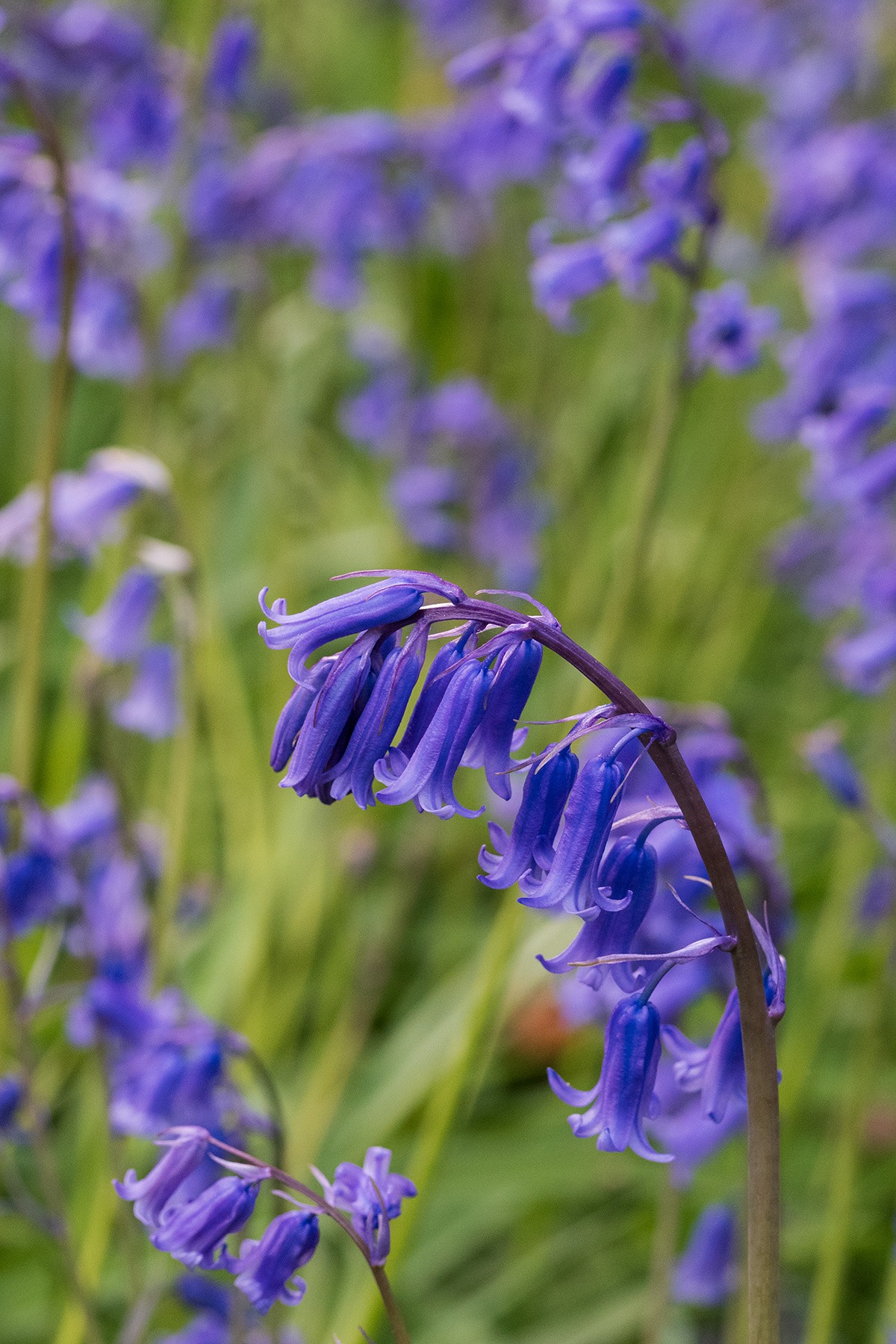
    A crisp frame-filling bluebell shows strong differentiation in plane of focus in the foreground as well as the background, even at f/10.

    I set out with just this lens on the OM-1 walking to a spot where I had seen a large patch of bluebells on the edge of the wood open to the direction of sun, setting behind distant trees. As a subject, bluebells are best shot on a longer lens, which this 120mm-equivalent is. The narrow angle of view compresses them to fill the frame. At f/10, there’s still a distinct plane of focus with softer detail in front and beyond. This lens stops down all the way to f/22 in third-stop steps but using a smaller aperture like f/16 would have lost sharpness slightly where focused – the lens performs best from f/4 to f/5.6 – and even this was at ISO 5000 to keep 1/125s shutter speed. The OM-1 sensor-based stabilisation would allowed 1/30s or even 1/15th without camera shake affecting things, but flowers don’t keep still. At macro distances the vibration from a gentle breeze can blur them.
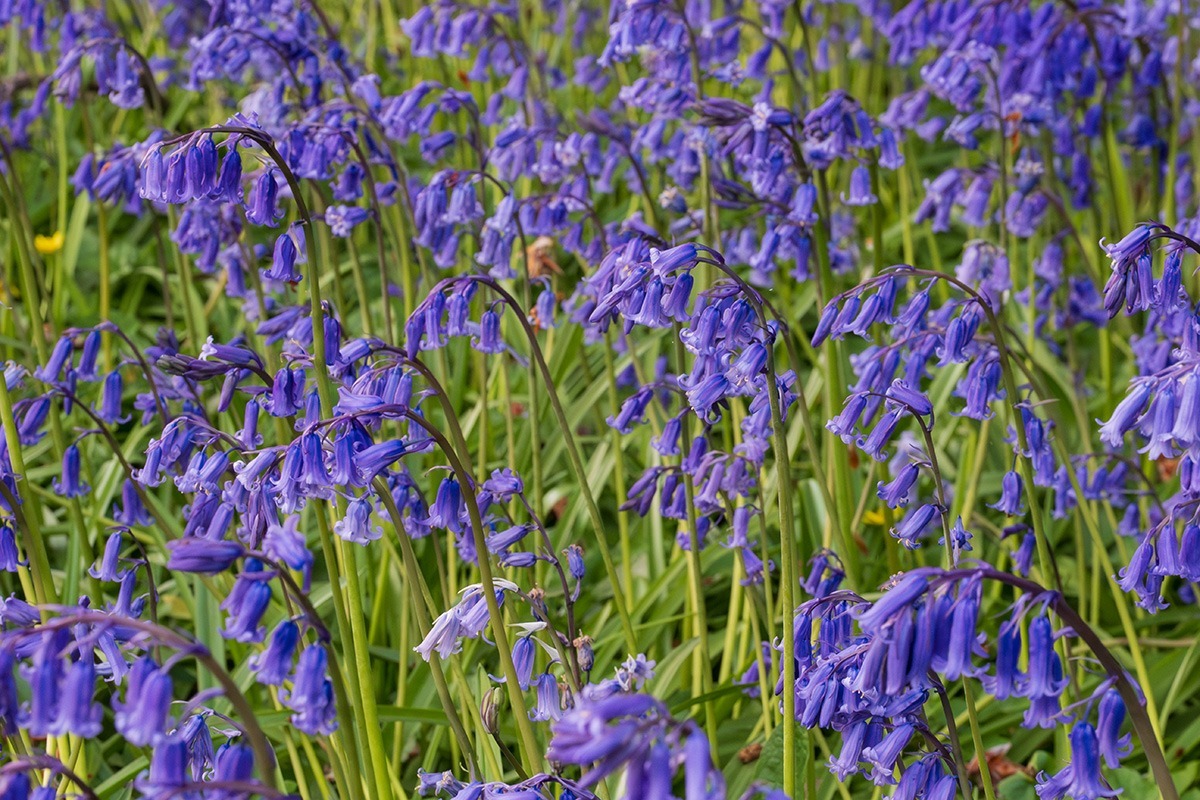
    I also knew where the low sun would be coming from, and it was the backlit effect I was looking for. The side/front lit angle may also have influenced auto white balance, and when this colour is viewed in a mostly green setting, the blue can seem to have more magenta.
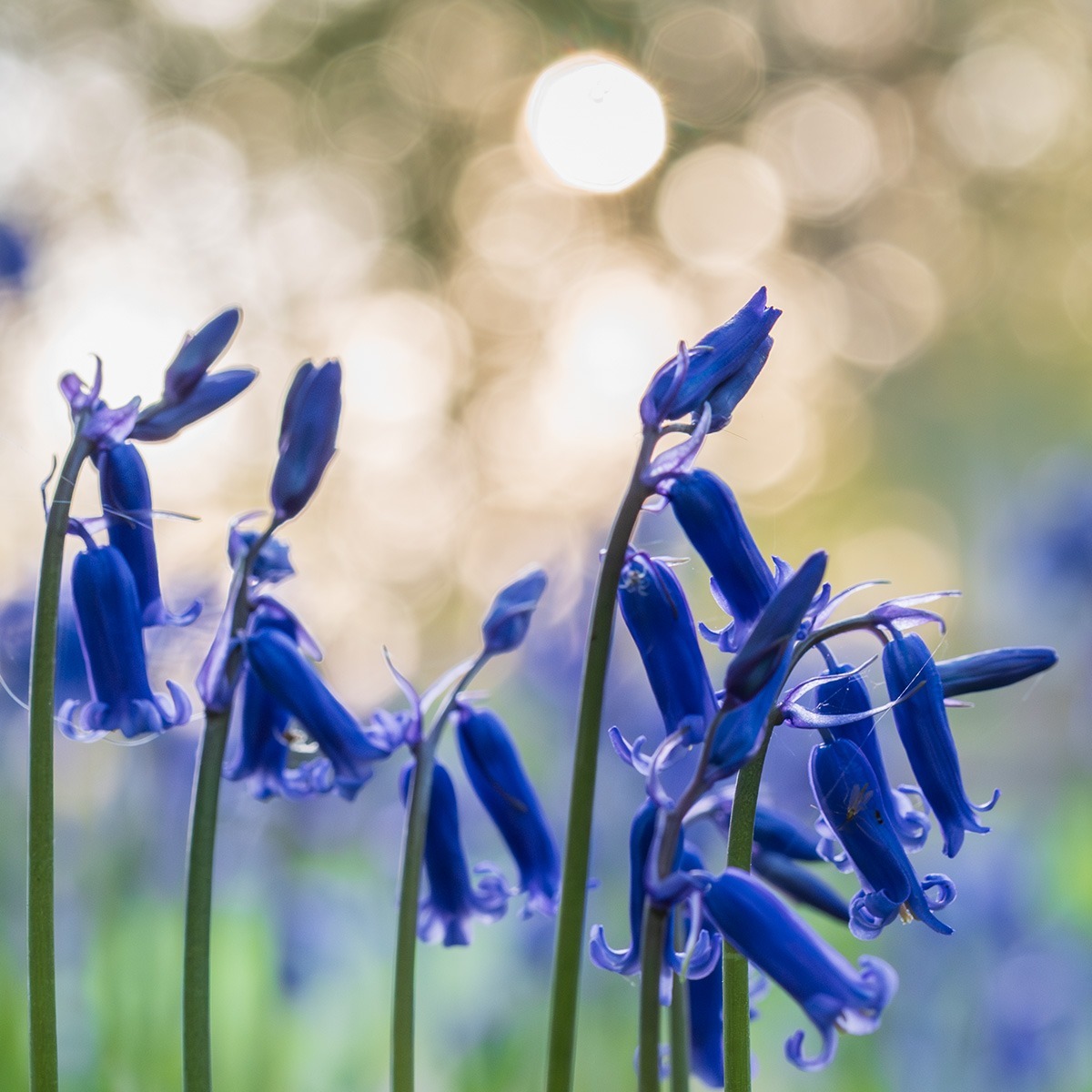
    The multiple overlapping bokeh discs are caused by the distant trees. Here they are made smaller and more distinct by stopping down to f/5.6. Again, this blue is more realistic and very true to nature.
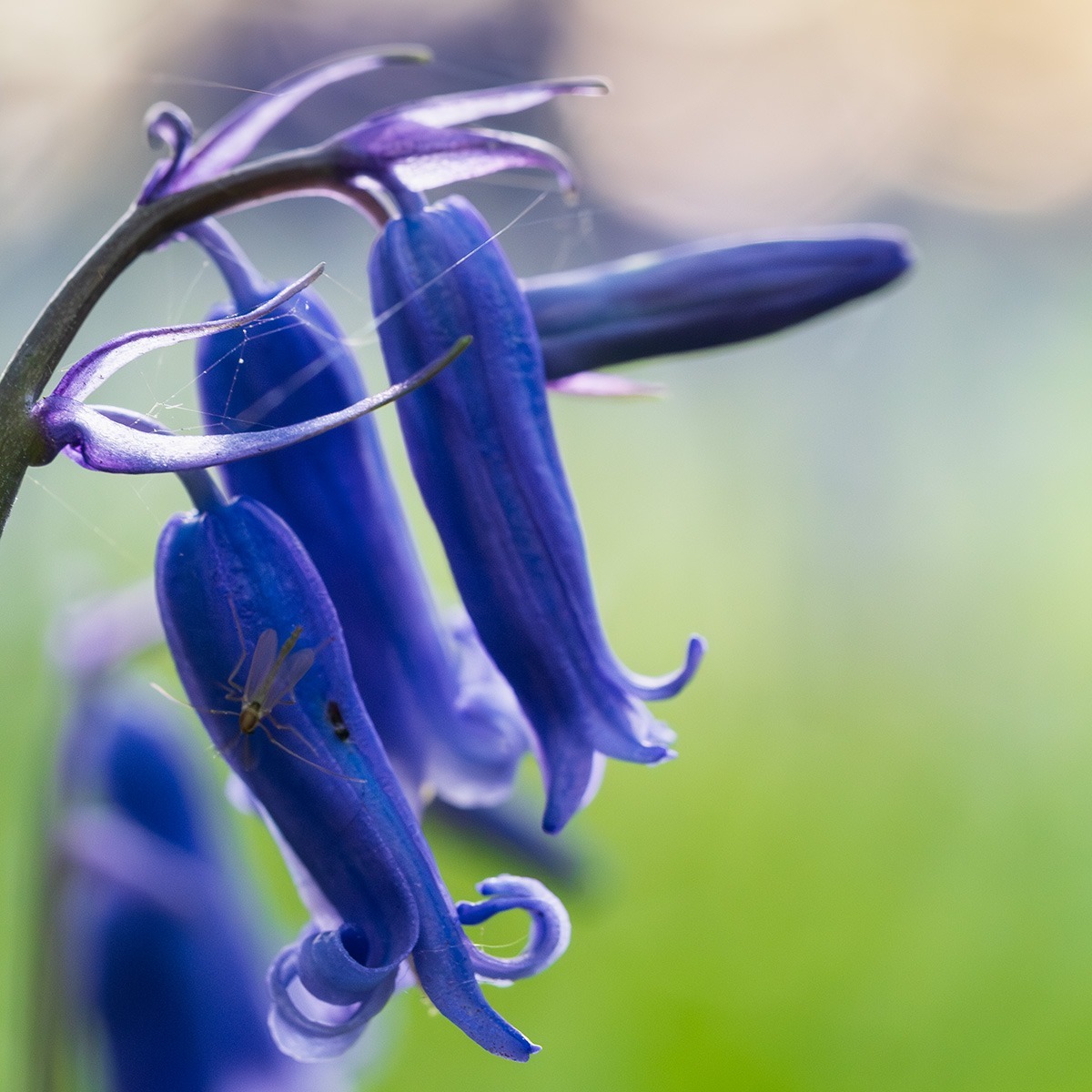
    The 60mm macro enabled very close studies and even at f/2.8. You can see the fly and strands of spider web are well resolved, but the contrast of the fly and flower is low in this lighting.
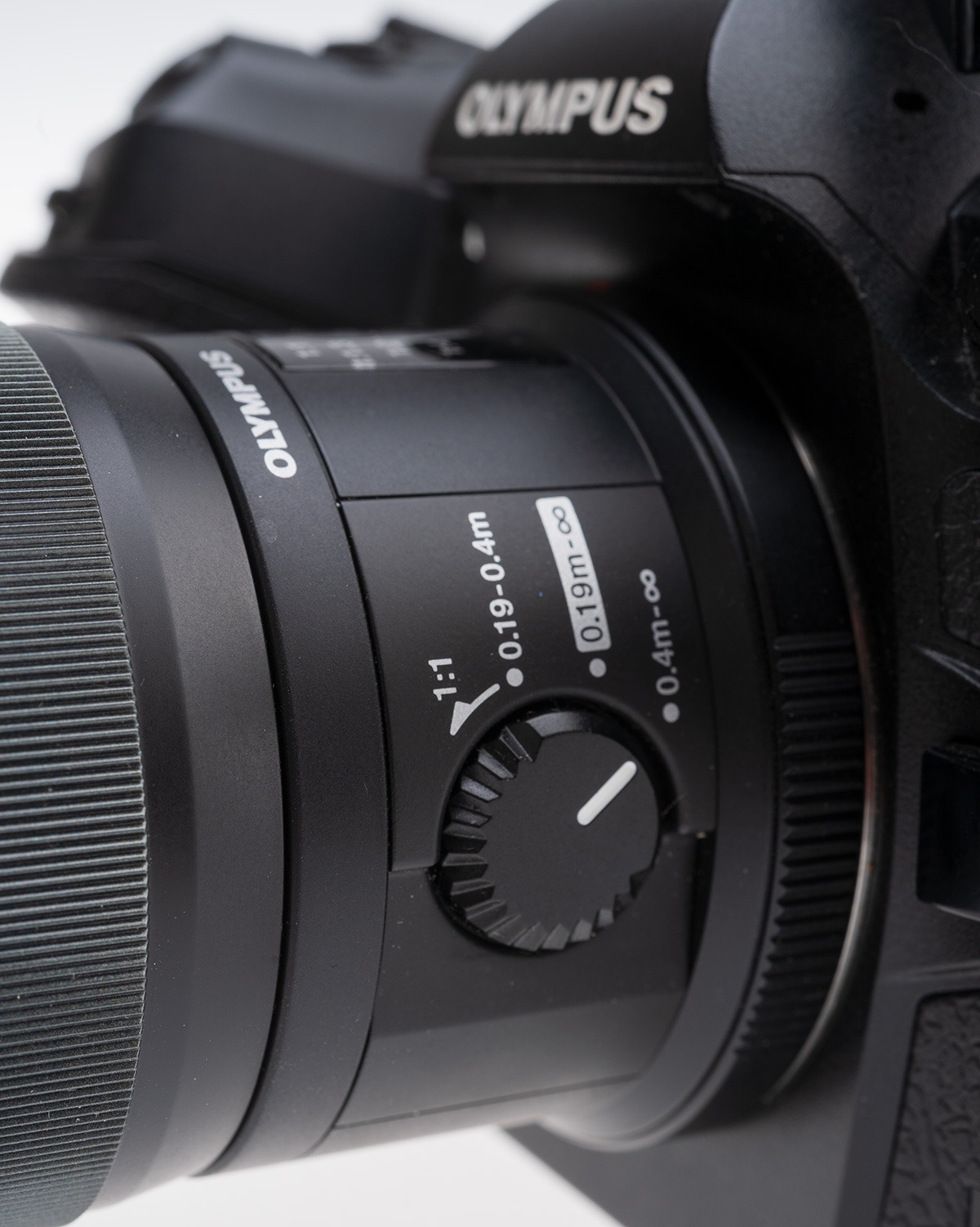
    The focus range limiter switch on the left of the 60mm f/2.8 M.Zuiko Macro lens, showing settings for 0.4-infinity, 0.19-infinity, and 0.19-0.4m and fixed 1:1 magnification (move subject or camera, not focus).

    For more distant shots, the focus range limiter on the lens was set to 40cm to infinity. It focuses very fast and silently but if allowed to range all the way from 1:1 focus may be missed. I had it set to the 19 to 40cm range when two roe deer does walked past just three or four metres away and that was a lost shot!
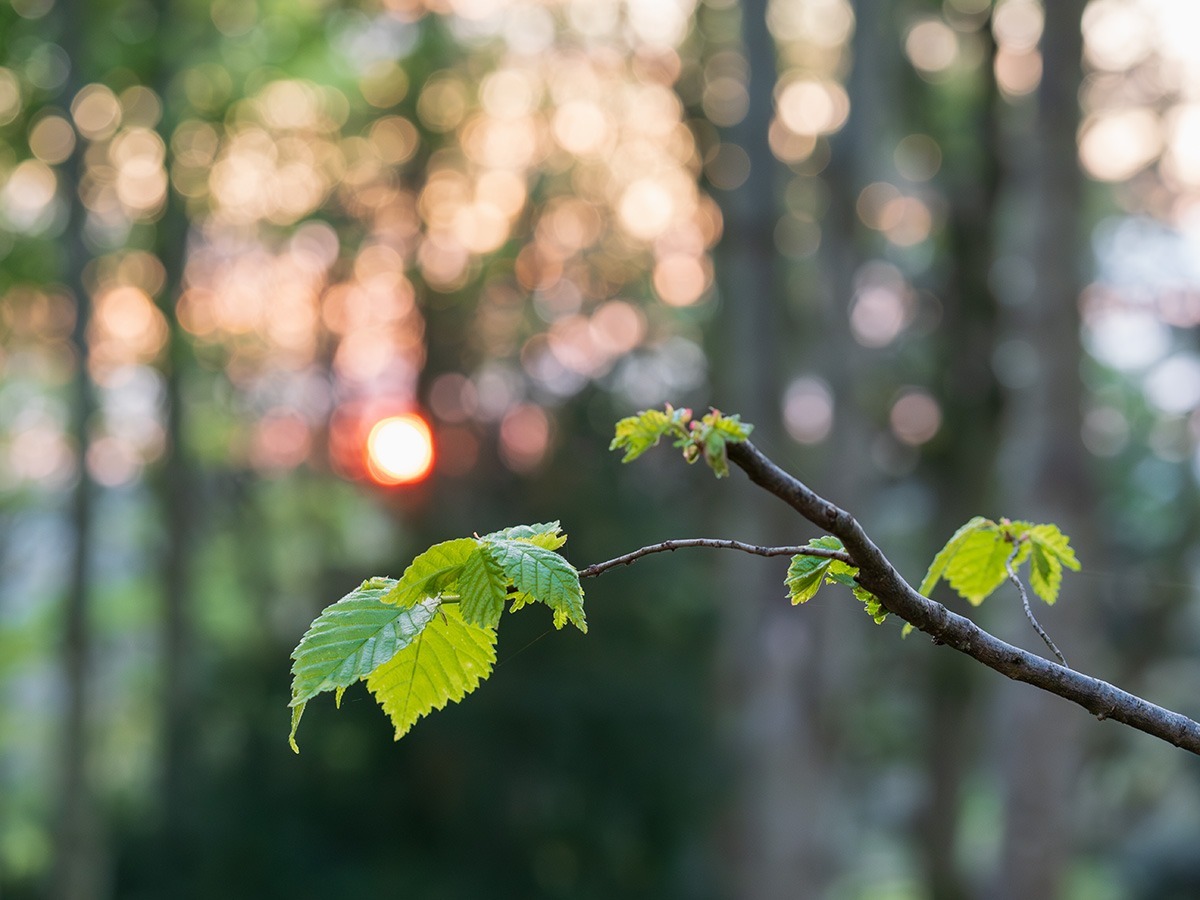
    With this lens, the woodland at sunset continued to provide many opportunities. Young birch leaves here were taken at f/4, and in the rapidly falling light this needed ISO 2500. The small MicroFourThirds sensor – one quarter of the size of a full frame, half the size of APS-C – has reasonable noise levels but without shooting raw as I did for all these, and using Adobe’s Reduce Noise AI-powered conversion, the results would not be as smooth.
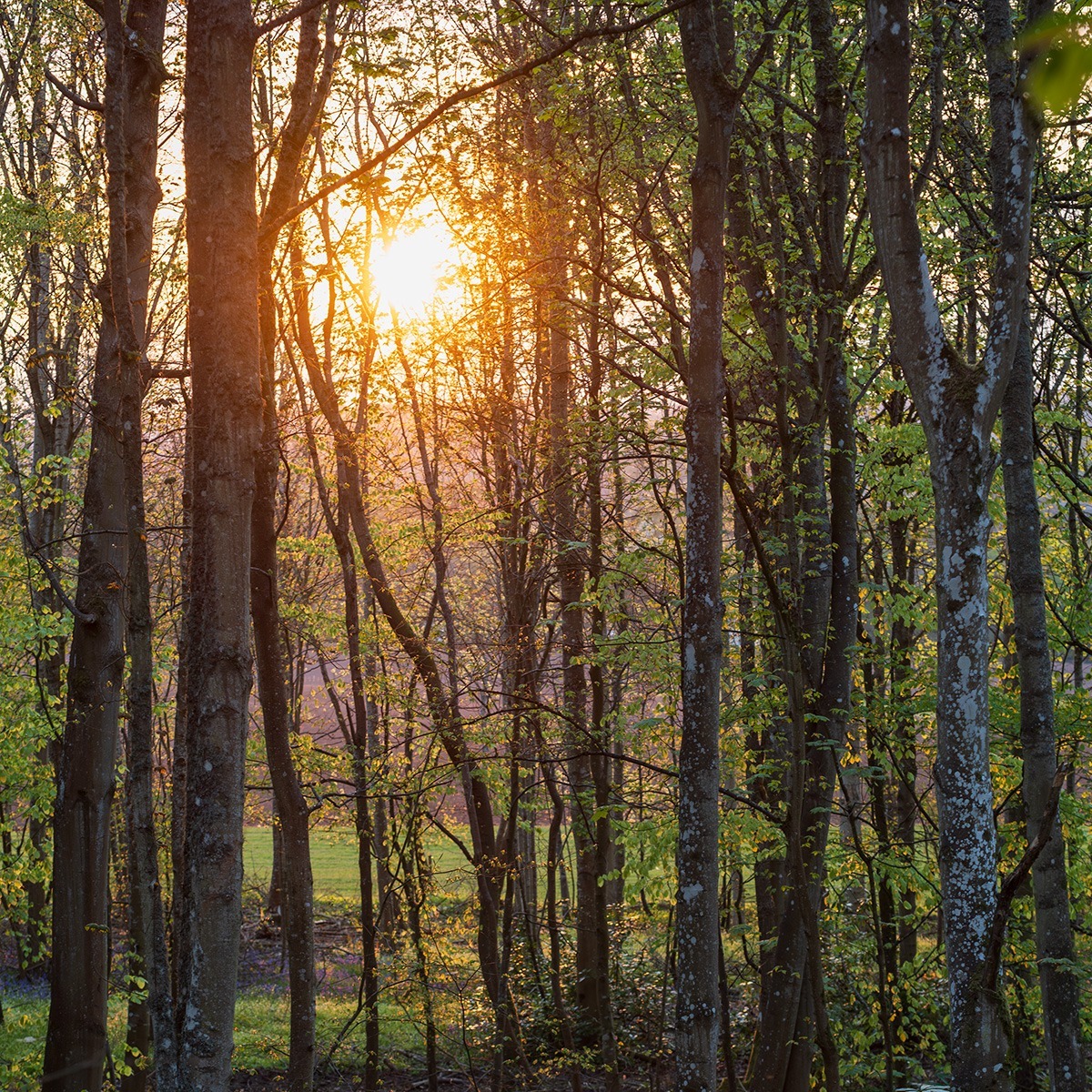
    The 60mm focal length is also great for general landscape views. This is taken 12 minutes earlier and only needed ISO 320 at f/4. That only 1/3rd of a stop faster than the OM-1 base ISO of 200.

    Where and when to find bluebells in the UK?

    In many parts of the UK bluebells are still in bloom and there’s still time to get out into woodlands while the leaf cover on trees is not too far grown to let the light in. In southern Scotland they have just come into their best state and woodlands remain open to light, but that will not last long. Further north it’s a week or so later. May is a good month to catch the new bright green and light environment in woods. By June, most trees are in such full leaf that only a fraction of the light reaches the forest floor and in July the green of leaves begins to darken.

    Get out now, even without a macro lens. Do not just look for subjects. Look for interesting light, which can mean staying out until sunset. Photography is all about light, the subject or scene is not enough on its own!
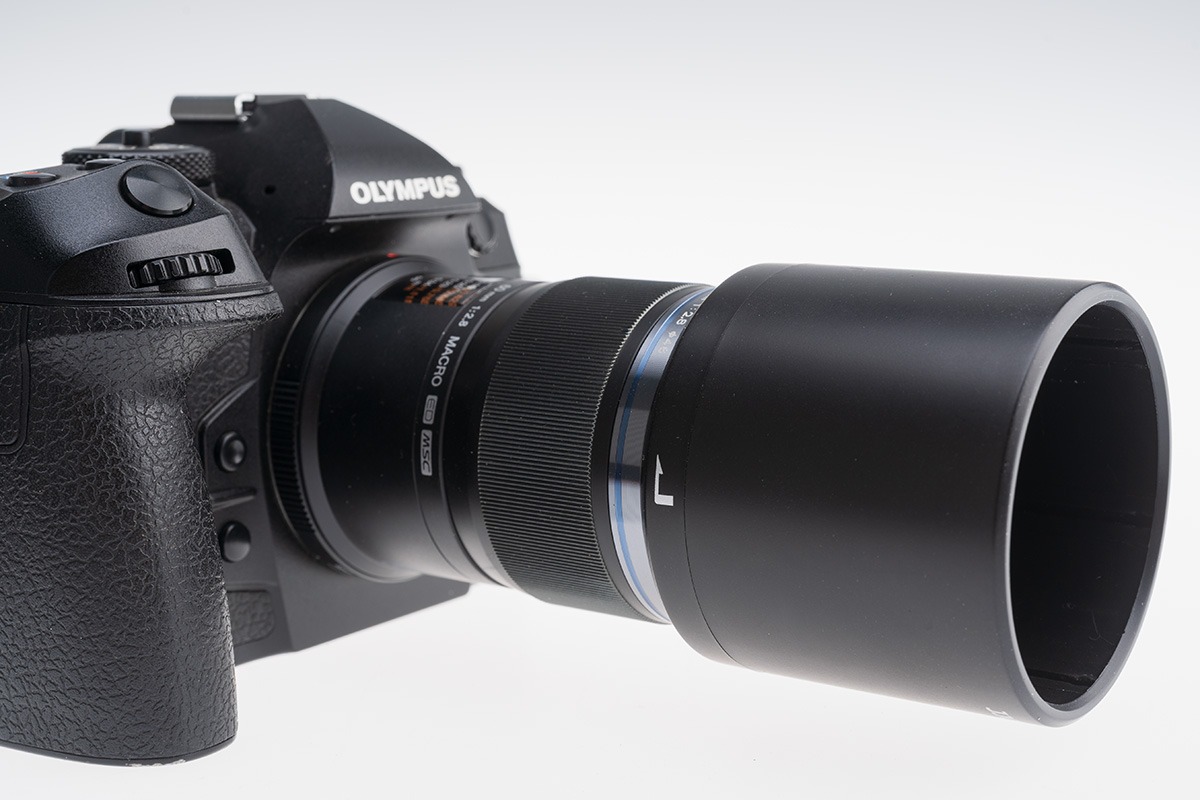
    This lens hood, which retracts with a gentle push to sit back over the lens, is a low cost JJC from Amazon which I rate better than the OM-Systems original. It was used for all the pictures as the working distance of this lens does allow enough space. None of the close shots are anywhere near the lens’s 1:1 which is the same framing as a 2:1, twice life size, view on a full frame camera.

    – David Kilpatrick
  • Tabletop photography: A seasonal montage for a Christmas card

    Tabletop photography: A seasonal montage for a Christmas card

    • One to try with your local camera club – handheld or natural light, limited space
    • Bring objects and small accessories to assemble a scene
    • Use digital or analogue montage techniques to create a new scene

    In early November, my local camera club held a non-studio table top photography evening, inviting members to bring three items along, set them up and see what photographs could be got. Lighting was either none (the room’s ceiling lights) or portable camera flash. A few backgrounds and reflectors were brought along too.

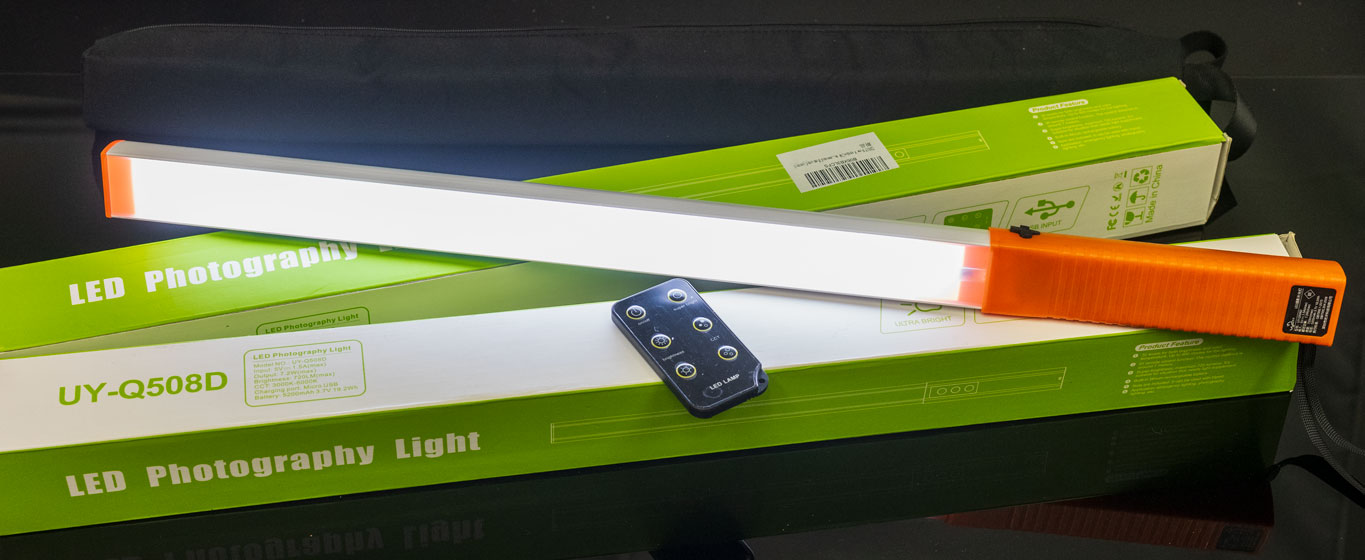
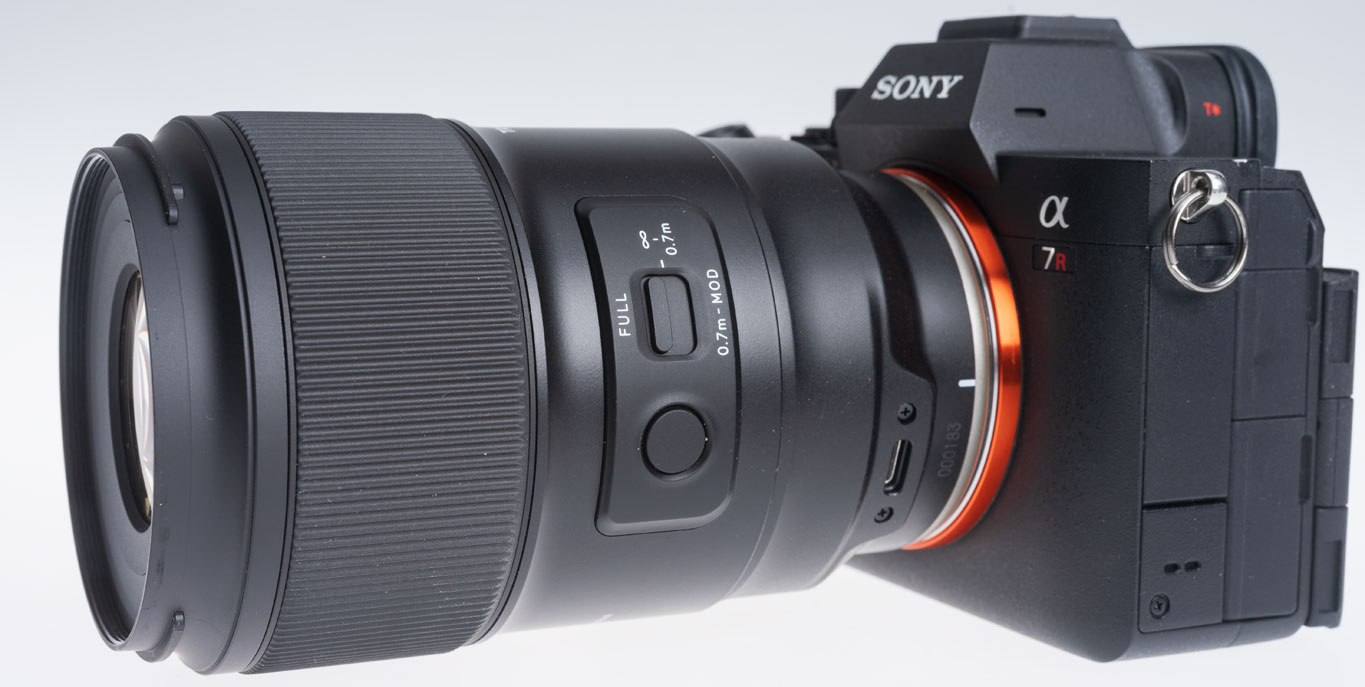
    I took a candle in cut glass holder and a wooden base of polished cut teak, and some holly with berries from my garden, along with the new Tamron 90mm f/2.8 Di III VXD full frame macro lens for my Sony A7RV, and a tripod. For lighting, I brought two UYLED USB recharged photo-video light sticks with adjustable colour temperature and brightness.

    This one of the frames taken. There was no black background, just a dark curtain about 2m away at the end of the room. For my set-up, the room lights were turned off, with the camera first focused and composed and locked to manual focus. ISO was set to 100, WB to Daylight, the aperture to f/16 for a long exposure moving the light sticks all round the subject to wrap the light. Aperture priority auto was used, with no EV correction for this example. A few auto exposures were made with +1 EV and the time ranged from 5s to 25s giving a choice of how much detail appeared in darker areas, and the colour of the candle flame. Moving the light sticks around gave a range of exposure times. The one I chose to work with later was the shortest exposure.

    With so little light reaching the background, it’s effectively black. This could be used as a Christmas card with a message in the upper left black area, but a brighter exposure would be my choice for that. This rather more subdued shot was destined to be quickly combined with an old shot taken of my dining-room window in winter.

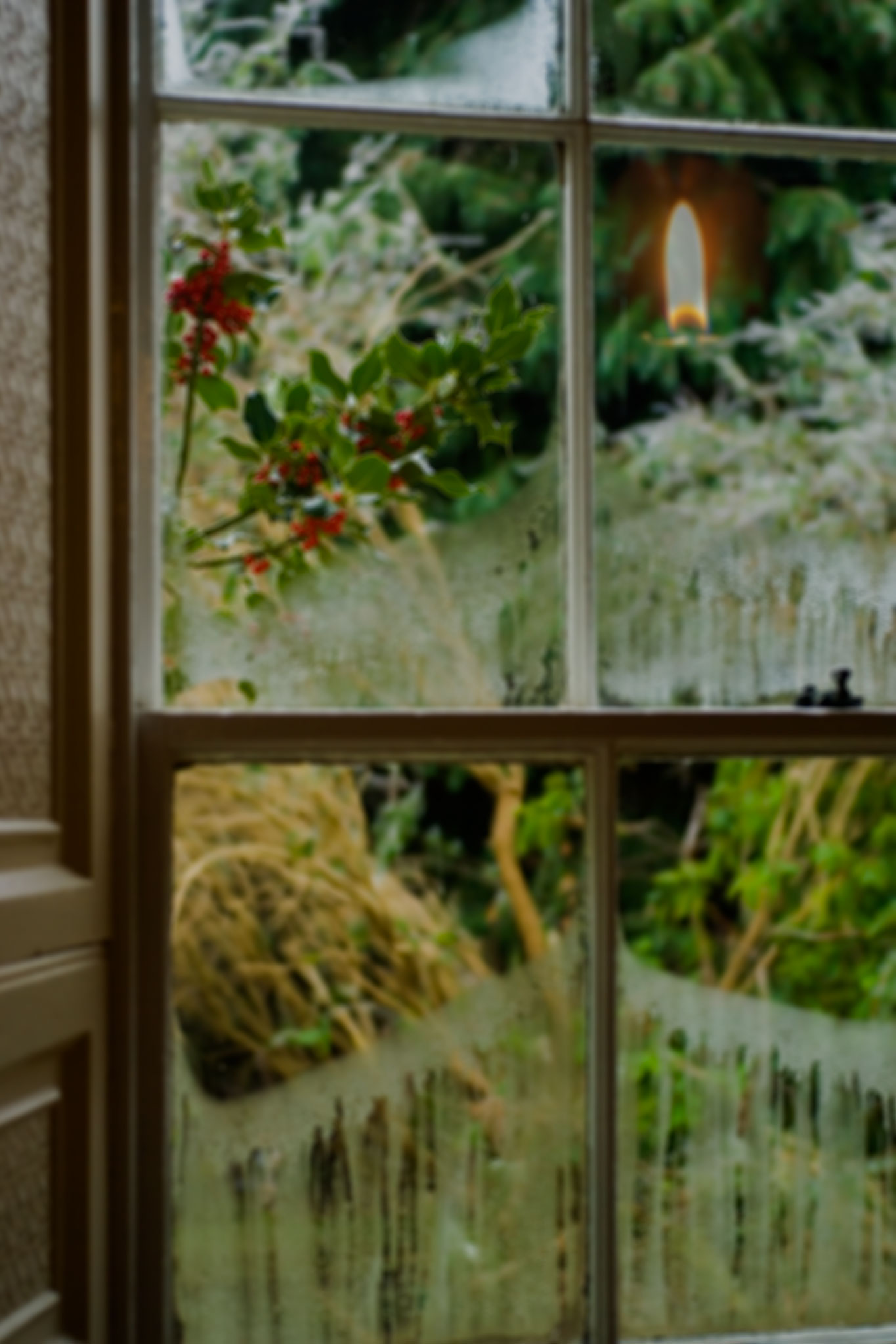
    What may be seen straight off is the floating candle flame! That’s because where I wanted to cut the candle out in a Layer by making a quick mask using a Path, this would not work for the blended flame. The original window photo (Christmas 2006, Sony A100) is sharp, so was given brushed-in Lens Blur adjusted by eye to look right, before the flame was clone-brushed in using Lighten.

    This is the Layer on top of that Background Layer, as masked. A fair amount of retouching for dust was also done, as the subject had been around for a year or so since the candle was last lit! For a ‘proper’ studio job, everything would have been scrupulously cleaned. A 61 megapixel sensor with a lens of the Tamron’s sharpness reveals even the smallest speck of dust or scratch on the glass. With the cutting out and masking, and tidying up, it took me about an hour before saving the Photoshop file as a .psd with its two Layers.

    It doesn’t matter that the cut out round the flame looks rough, as the tones at its sharp edge are identical to the tones in the background image.

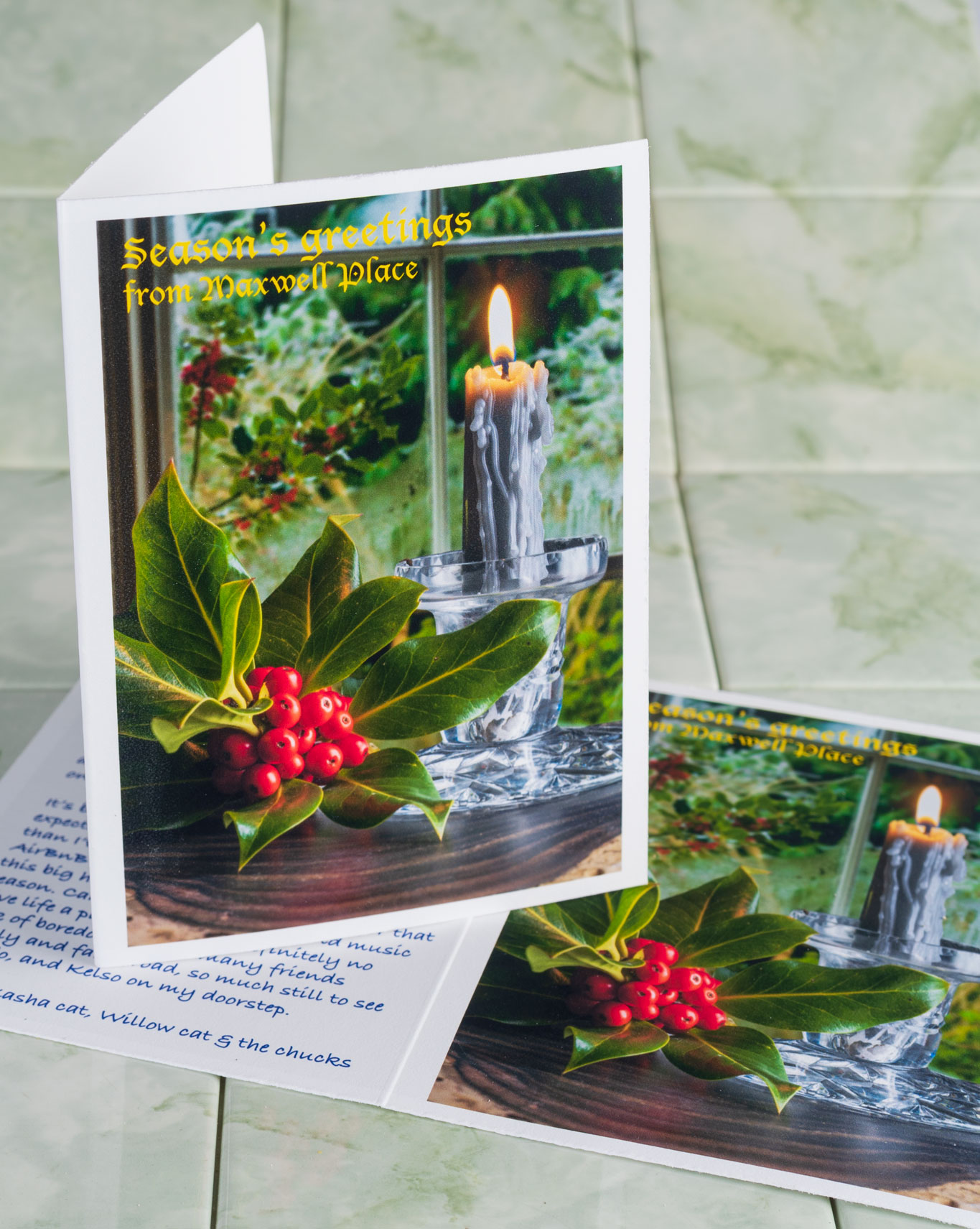
    This is the result. It’s not entirely convincing as the glass did not have that garden view beyond it, and has a metallic look from the dark background. The candle was dark grey and I think if there had been a suitable red or green one attractively melted in the same way it would have been better. But it looks wintery!

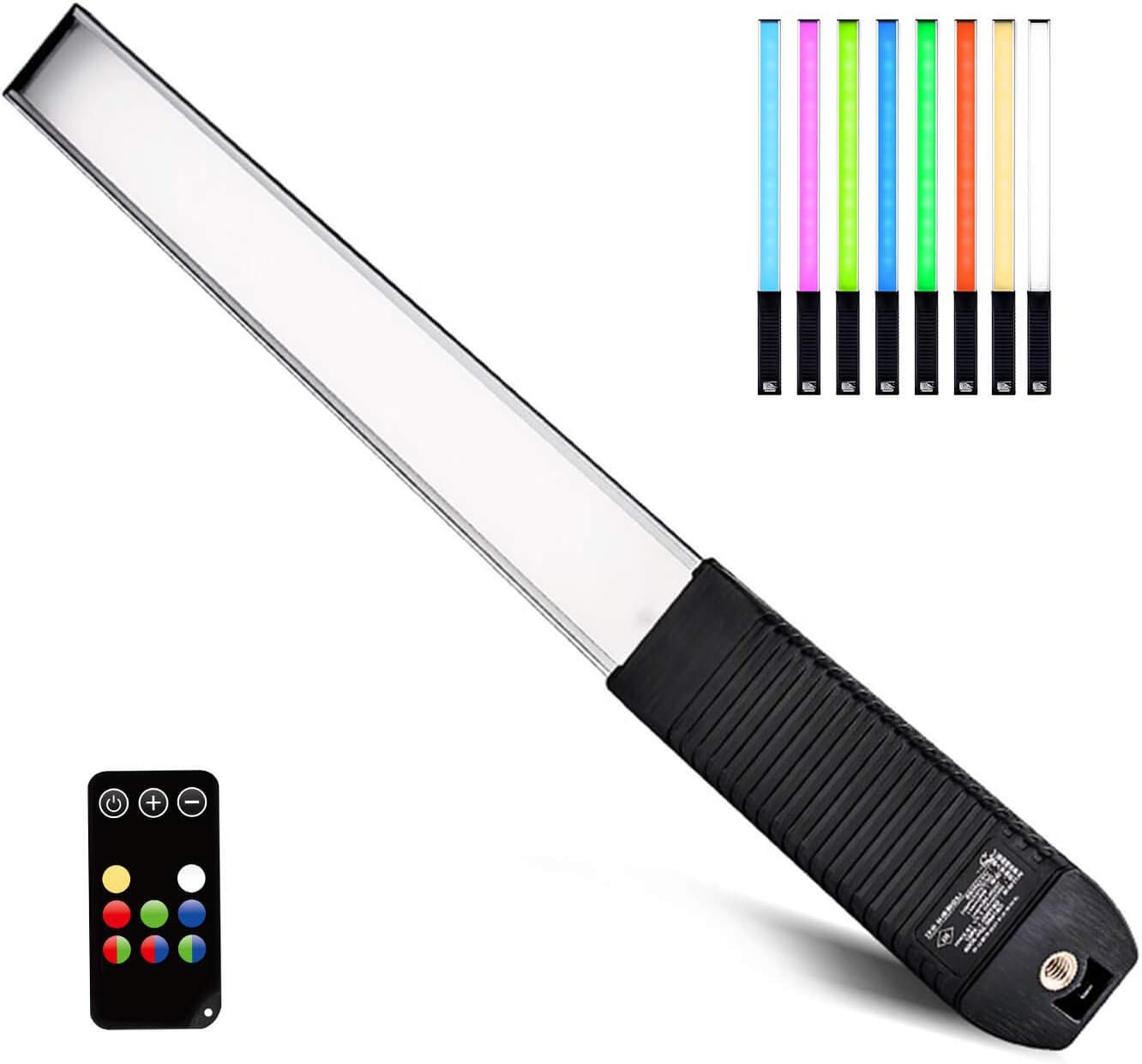
    These are the LED sticks I used to wave all round the subject, either side and ahead of the camera position. They don’t seem to be made any more, as there’s a new version with full RGB colour change, otherwise similar with a tripod thread for mounting at the handle end, and the remote control for colour and dimming. The LUXCEO Q508A, below, is £49.99 on Amazon.

    I’ve found my tungsten-to-daylight adjustable pair from 2018 very reliable! If a roomful of readers click any affiliate link in this article and decide to buy, I may be able to afford an RGB upgrade…

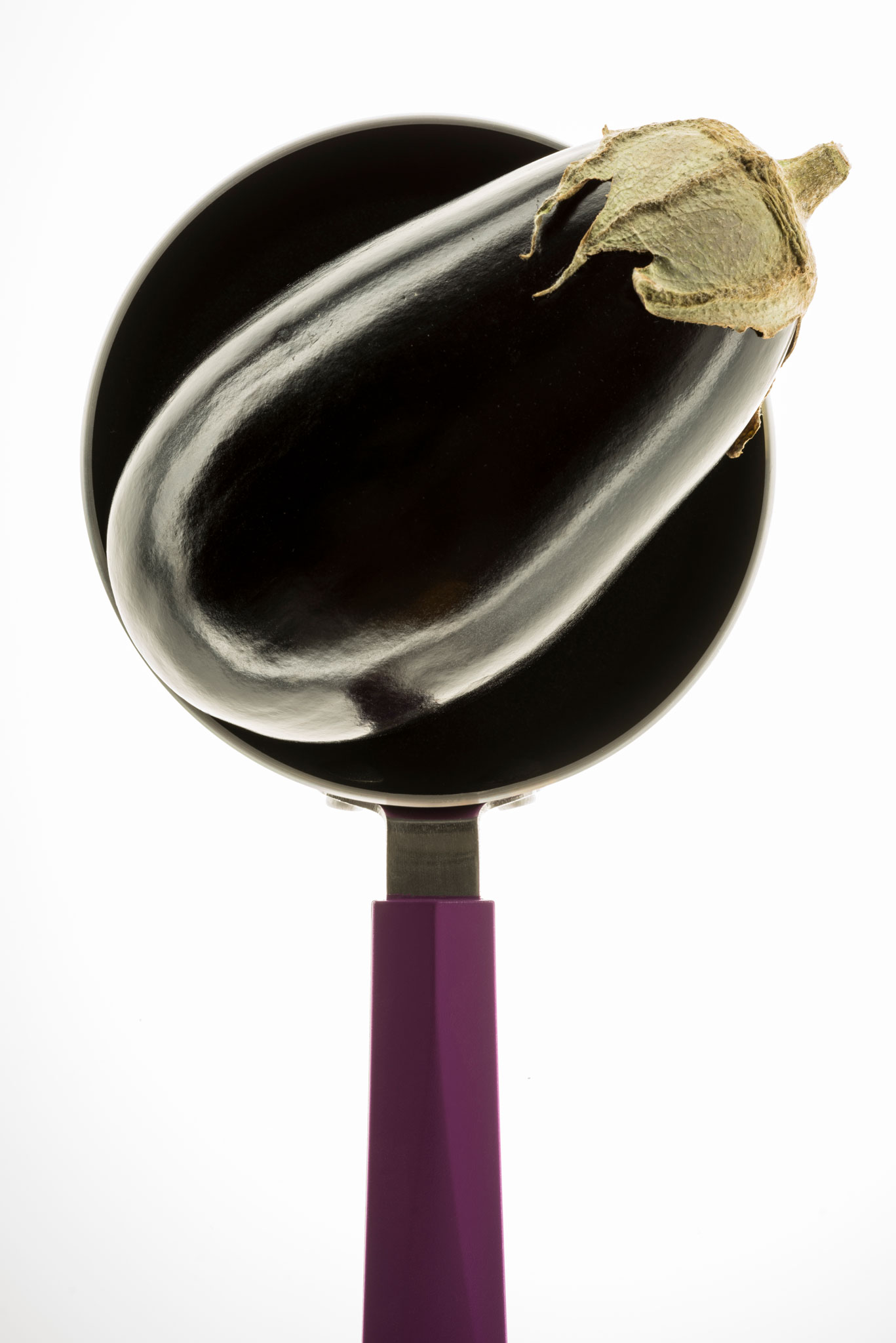
    Here’s a studio shot from when I bought the light sticks, created by carefully moving one in a circle round the subject and keeping the distance and time as steady as possible. At least two circuits were made with the light at different heights, level with the subject and higher up.

    This is the new Tamron. I have a report to be published in Cameracraft due out on January 1st 2025, but in a month of using it I’ve also taken many more different images – more than the magazine can show. So I’ll be putting a page of photographs here with a link on the printed page. The lens costs under £600 in Sony FE/E mount or Nikon Z mount. Thanks for the loan of the review lens to Tamron UK – https://www.facebook.com/TamronUK

    The Christmas card prints were made on 20-plus-year-old Lyson 300gsm double sided Smooth Fine Art paper – a box abandoned after I got an Epson P3800 pigment ink printer (which still runs thanks to Marrutt refill cartridges and inks). These original Lyson papers don’t handle pigment inks well. But they DO work with Epson Eco-Tank ET8550 dye-based inks, even if the black is pigment. In fact they work so well that ‘Printer Manages Colours’ and no colour management at all was needed. Set the printer to Matte paper, load the main tray with A4s halved to A5, use Velvet Fine Art as the paper setting and the cards were dry enough to crease on my Unibind Creaser directly off the output tray. The Lyson paper came from Marrutt too all those years ago for tests with their Quad Black inks. I never throw anything away!

    – David Kilpatrick

  • Three waterfalls

    Three waterfalls

    If it rains, these photo locations just get better…

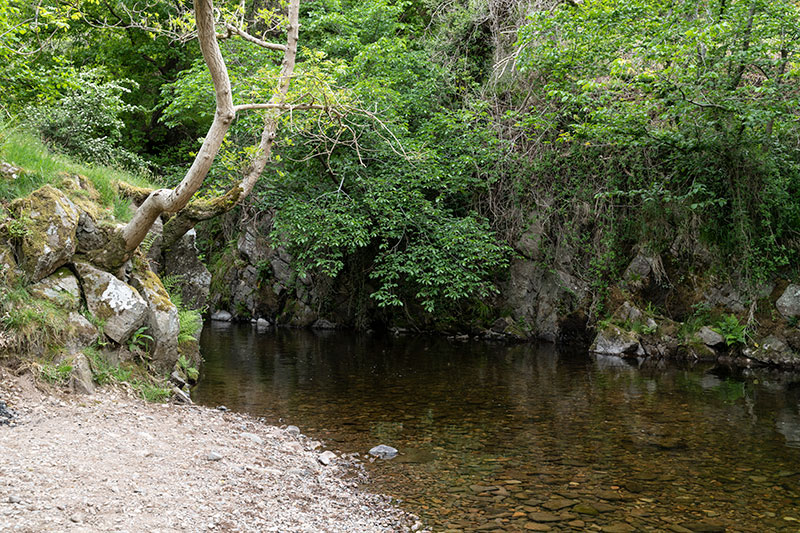
    On our doorstep (writes publisher David Kilpatrick) or just a short drive away there are many rivers and burns coming down from the Cheviots, the Lammermuirs, the Southern Uplands and Tweedsmuir. Some pass through steep small ravines or cleughs (similar to ghylls in north-west England). In both Northumberland and southern Scotland, they are called linns. Some just get called waterfalls, like the Grey Mare’s Tail on the road between Selkirk and Moffat, because they are big enough. Some are very hard to reach or don’t offer potential for photography; some are easy to get to but almost local secrets, without very clear footpaths or signs. If you visit Kelso, Jedburgh or Coldstream here are three which you can easily visit by car with normal walking footwear in the course of a day. The first is just a few minutes from Kelso.

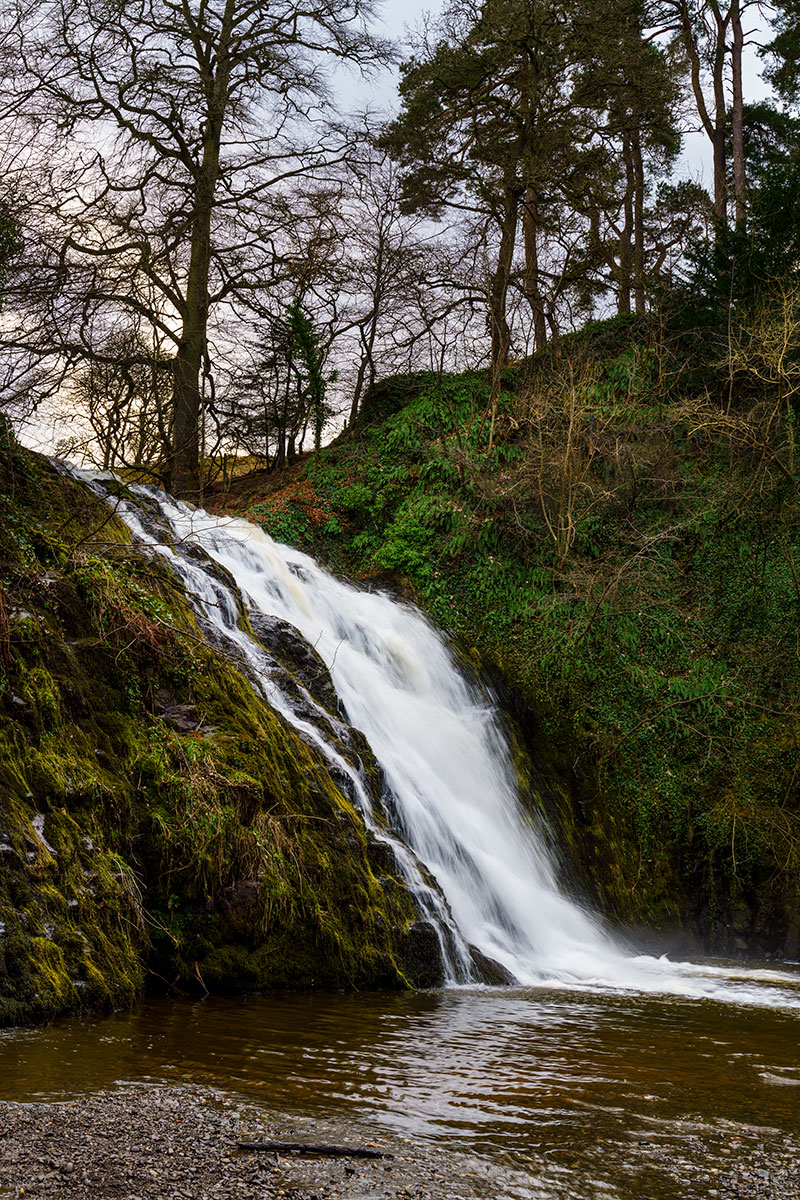
    Stichill Linn is at the site of a former mill and later pioneering hydro-electric on the Eden Water, in the grounds of the Newton Don estate. During the winter of 2020/21 the estate put a big effort into making the riverside, woodlands and the linn accessible after many years of neglect which had made it hard to reach and at time impossible to photograph without obstructions. Though you need to know which minor road (from Ednam) to park on and then where to find the start of the signposted footpaths, once you are on the trail it is an easy walk with occasional boggy spots where small streams cross the path. Wellies are advised, and also help if you plan to cross the river and find positions for a tripod. It is lovely in autumn as the woodlands are mostly deciduous. This usually means the last week in October and first in November. This spot is good for taking your dog as there’s no livestock to encounter and it is very safe to be off the lead.

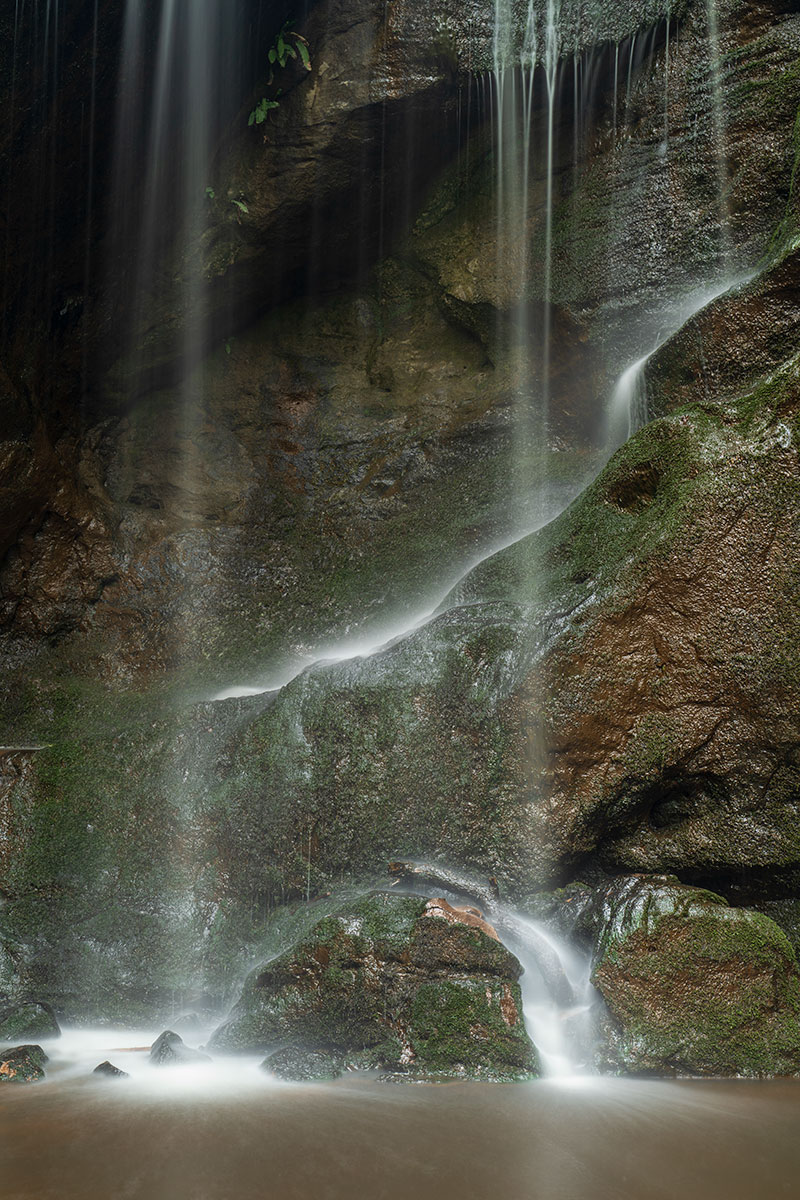
    My next one is Roughting Linn, 20 miles away over the border in England. It can be reached from the village of Ford, or from the A1 side via Lowick. Although the farm estate the woodlands and linn are located on allows access, the paths alongside the stream are not maintained in the same way as Stichill. It’s best to wear shoes or boots suitable for moor or mountain and be prepared to use a stick (or a tripod) to deal with slippery or sloping sections often close to sharp drops into the burn. Wellies are essential to get to the classic position for photography. Sadly some of the moss on the boulders has sheared away and as normal some woodland debris has landed. It’s tempting to go in with help and remove the tree limb which is new feature. The area round the waterfall has some fascinating rock faces, caves, twisted trees and countless interplays of stones, water and light. When I took this in mid-May 2021 the woods were also full of bluebells. There is no phone signal here, there are few visitors and after negotiating a steep scramble back to the path I realise you should really do this in company, not alone. Again, this location does not involve crossing farmland so dogs are OK, but the stream at certain points would not be a welcome invitation!

    My final one here is Hethpool Linn, near the farm of Hethpool which is south of the Yetholm to Wooler road, on the College Valley road closed to vehicles except by permit (limited numbers). It’s national park, and also just off St Cuthbert’s Way. There is a car park at the end of the public vehicle access. Beyond it you can walk miles up the College Valley, or turn back a bit and go right down a track leading from the big farm as if following the well-known walking route. Looking at a map you might think the linn could be reached from the east side of the College Burn, but that’s a mistake. Before you reach the crossing, a permissive footpath (without signs to the waterfalls) crosses farm fields, over a stile on the left of the track. This takes you between the farm woodland plantation, and the wooded banks of the river. A couple of stiles or gates later the sound of the water can be heard and small paths through scrub take you to the edge of the ravine. At some points you can climb down and where the path crosses a wooden footbridge the flow is shallow.

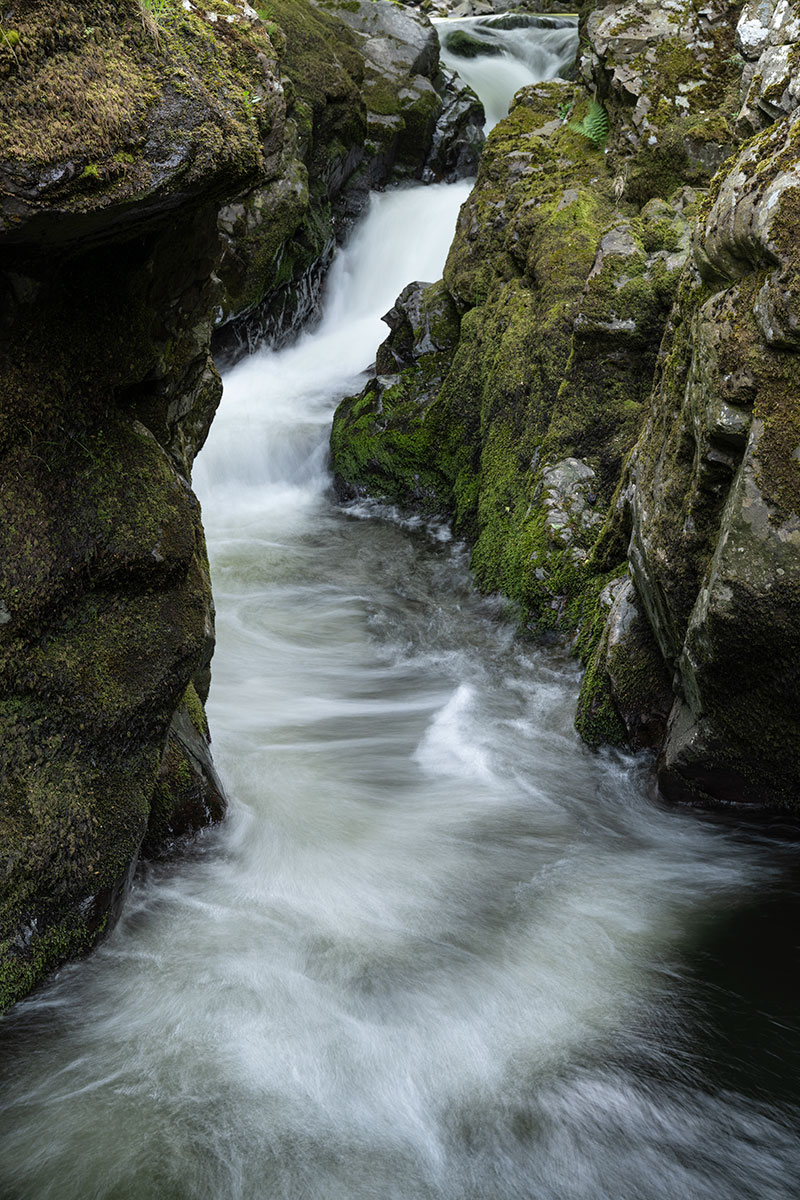
    However, below the bridge the river enters a narrow deep mini-gorge, the linn itself. You take a footpath to the left after crossing the bridge and soon enough encounter the more dramatic stretch. The path then drops down, an easy enough scramble to a calm shallow pool of clear water with a pebble beach. The fast-flowing gorge above is not a tripod time exposure – it’s me clinging on to rocks right over the water, holding camera in contact with contours of the stone able to give it a stable support. Again, there is no phone signal and I realised it wasn’t that clever to be balancing (with £4k of camera and lens!) over a deep fast-flowing turbulent plunge a couple of metres below. I had left my camera bag and tripod (useless on the ledge) near the path high above and lowered myself down the rocks to the viewpoint I wanted. It’s something which people clearly do but safer in company.

    As for the pool just round the bend after the narrow gorge ends, it’s not all that photogenic but you could bring your own naiad along. Maybe with a wetsuit… this water looks inviting and in the heat of summer it would be fine, but it’s a cold mountain stream nevertheless. Hethpool is very definitely farm land and lambs were everywhere on the walk, so taking a dog to enjoy this very dog-friendly pool would require care and control.

    These three linns were photographed on separate sorties, with Stichill Linn in early March a mid-day venture, and both Roughting Linn and Hethpool Linn early evenings in June. Winter can be different but the bare trees let in more light and heavy rainfall transforms any of these.
    – David Kilpatrick

    I now offer an AirBnB in Kelso – the former offices of PHOTOpro, Photon, Freelance Photographer, f2, Master Photography and Cameracraft converted to a flat by my daughter and son-in-law who sailed the Caribbean for a yea, and set it up so it would be suitable for visitors and for their return while buying a home nearby. Everyone loves the town and it’s great to welcome them. I am happy to give pointers to help visiting photographers and the flat has 50+Mbps fibre broadband (from a 900Mpbs service). After returning they converted the opposite wing of the house so in addition to East Wing there’s also West Wing AirBnB – two three-bedroom wings of the house, with their own entrances, licensed to accommodate 10 guests between them or six in any one wing.

  • Goodbye white sky…

    Goodbye white sky…

    With cloud covering much of Britain and our own home territory in near the North Sea coast shrouded in featureless white for days, remember that post-processing can transform landscapes

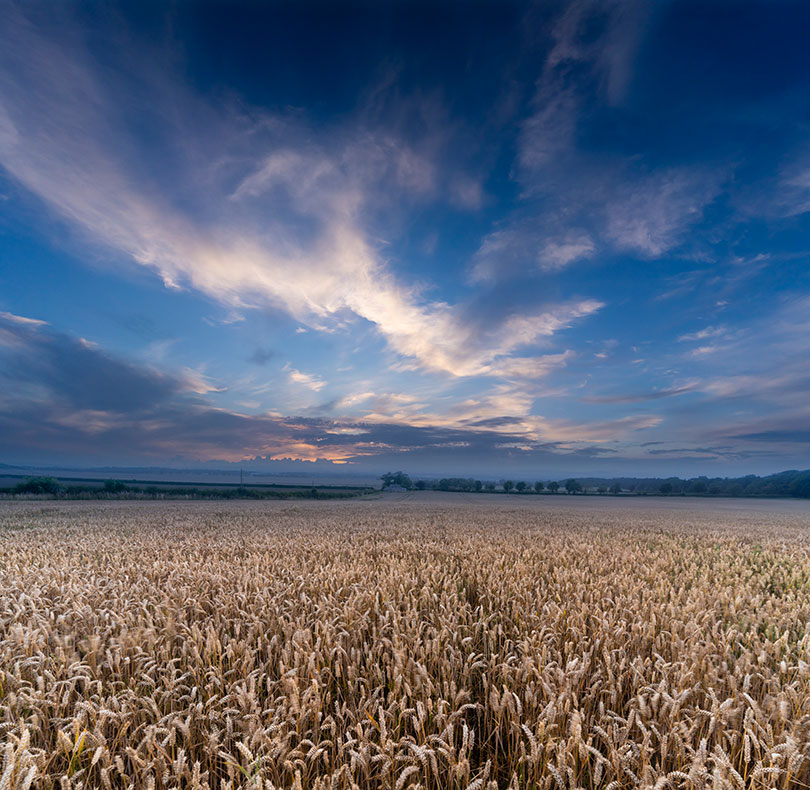
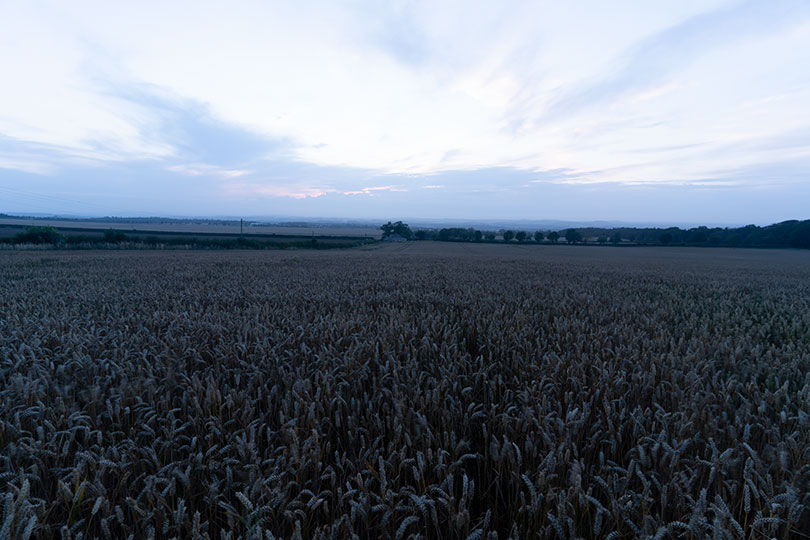
    This was just a few days ago when the promise of a sunset disappeared. The sky was taken ten minutes before I expected the best sunset, and shot without any ground – it had potential for use as a stock sky to compose into other shots. The ground, a field of wheat taken from the highest point looking north-west a short distance from our office, was shot hand-held with a 1/5th exposure, stabilisation providing a sharp image from the 17-28mm Tamron FE Sony lens – but the wind blowing the crop selectively, so some ears show contrasting movement.

    And that, above, is what a straight conversion from the raw capture looked like (you can also see how the sky had not morphed into a lovely sunset but instead lost any colour and became a neutral dusk). The point is that even a shot like this, in conditions like this, can be turned round by adjustment from raw and combining two frames. The almost square result is also a 170MB file, big enough for an acceptable print the size of some living room walls.

    Landscape Pro as a solution when the weather lets you down

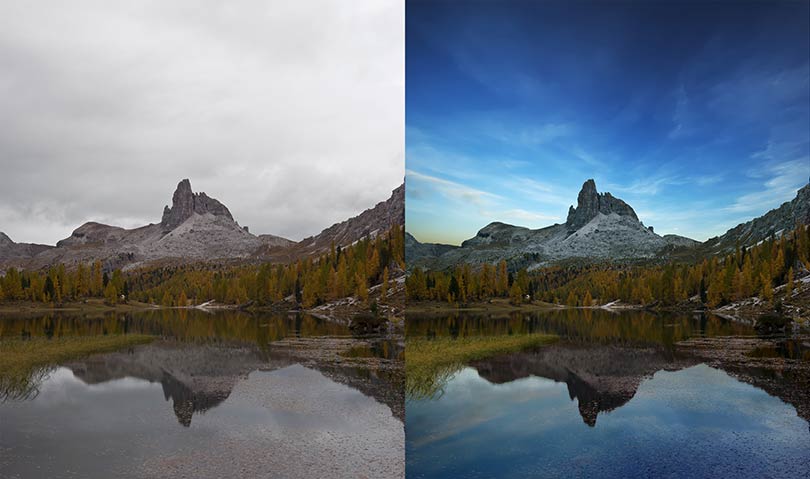
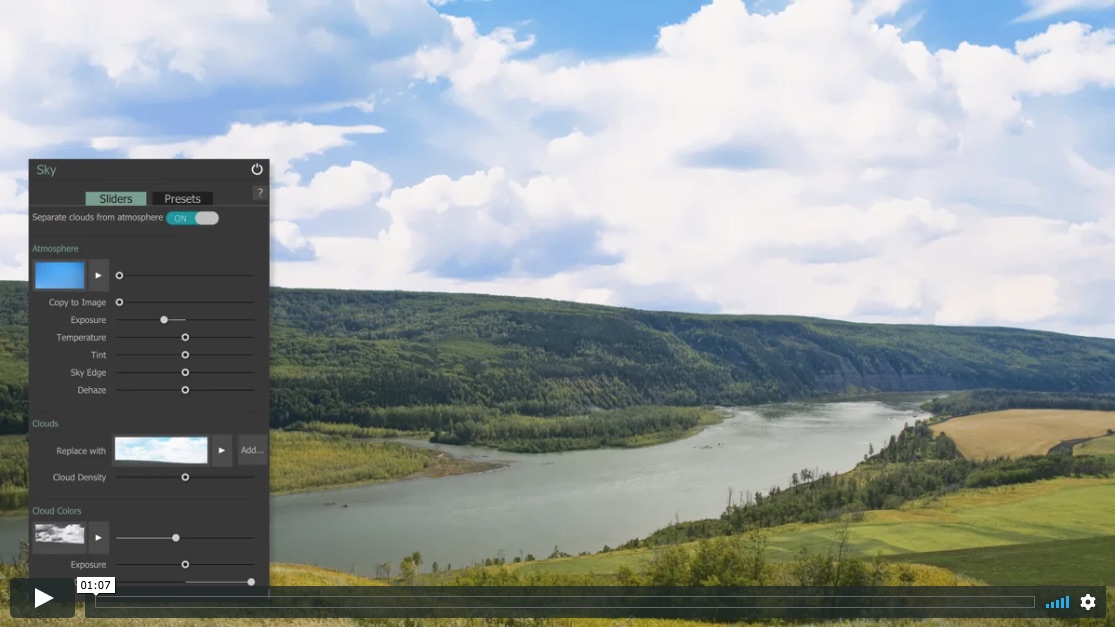
    We used Photoshop for this but if you don’t have a full Mac or PC editing program, Anthropics’ Landscape Pro is purpose-designed for even more complex fixing-up and comes with its own library of royalty-free sky images (you can add your own). Here’s an example from Anthropics:

    This one uses the masking functions of Landscape Pro to fit the sky to the shape of the rocks, and its controls to define water, mountain and trees as separately adjustable zones. There is also an intelligent function to create reflections in water with a realistic density. Notice that the water-weed in the foreground remains intact in the processed image and the sky reflection has been very accurately masked at the left hand side.

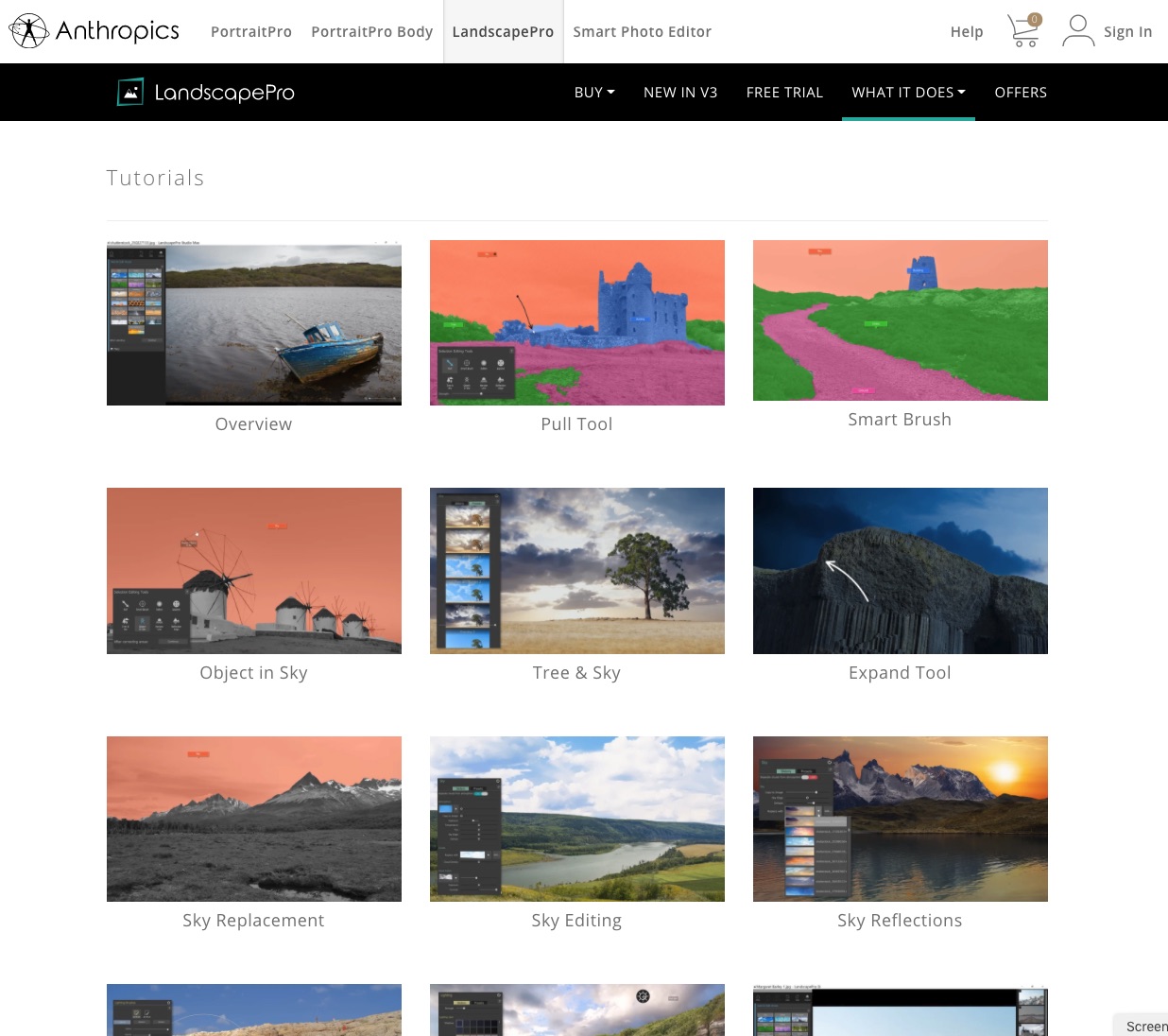
    Using the program is well explained in a series of short videos on the Landscape Pro website. These are not the tedious kind of how-to vids you tend to find on YouTube which seem to aim to take several minutes to get to the point, maybe to enable advertising to appear. They are short and very clear in their message, and there’s a good selection (screen shot below).

    There is a discount offer of 50% at the moment and an additional 20% off with our code CC8L – this code was not working when this post went out on August 16th due to a technical glitch, it is now working and can be used up to Sunday August 23rd.

    Save on Landscape Pro & Portrait Pro using Cameracraft code CC8L

    Code valid on any Anthropics software (PortraitPro, PortraitPro Body, LandscapePro or Smart Photo Editor), new editions, upgrades, or bundles. Download your free trial today! 50% OFF sale now on + for an EXTRA 20% OFF use the code CC8L.

  • Never say ‘zoom with your feet’…

    There’s a dismissive and rather superior position some camera club buffs take – ‘why not zoom with your feet?’. It is well worth ignoring. The focal length of your lens, whether your use a zoom or a range of fixed focal length lenses, decides the exact relationship of elements in the picture including one component you just can’t ‘zoom with your feet’, the sky. The depth of blue above the horizon, the scale of clouds, can only be changed by using a different focal length.

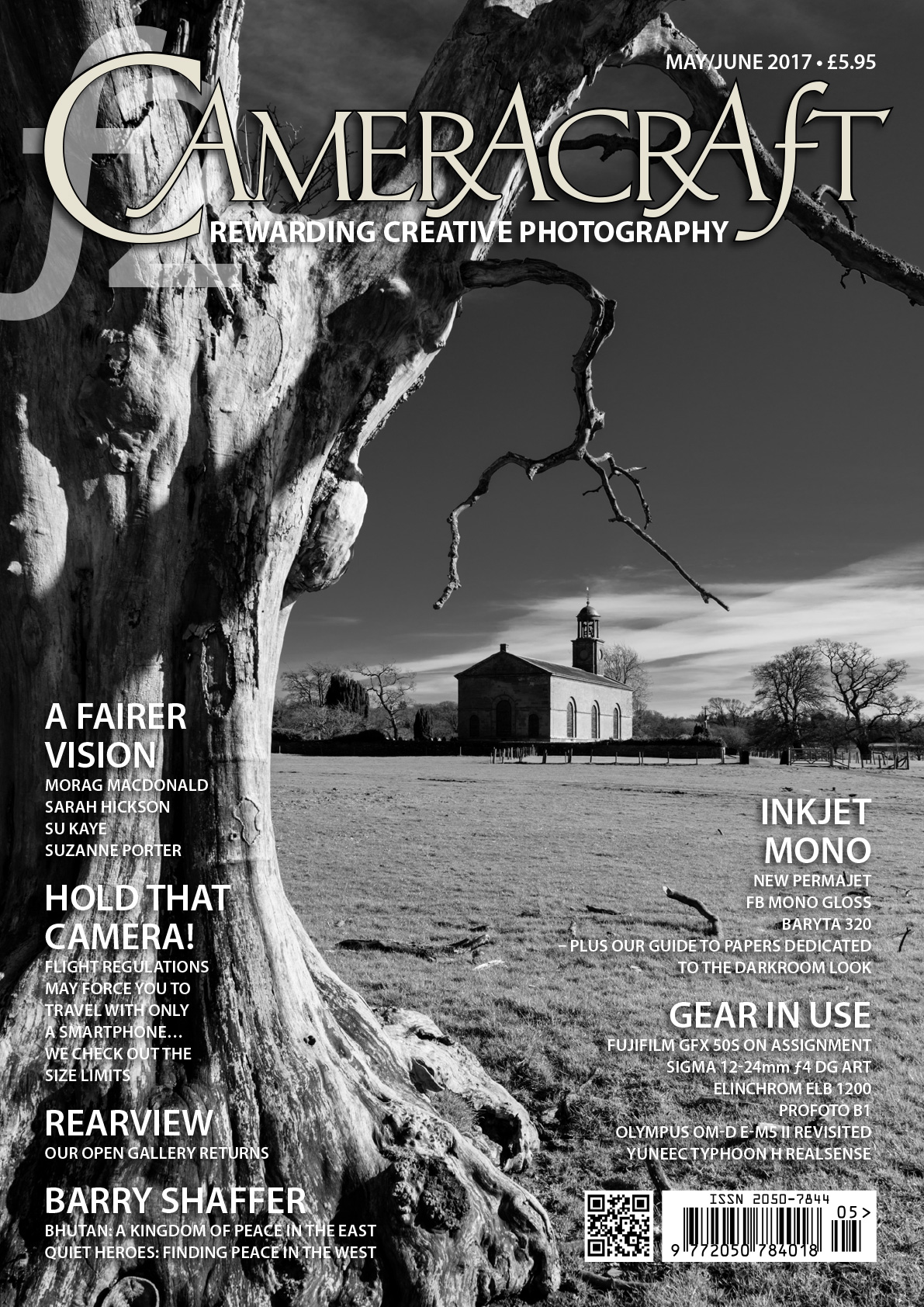
    Here is the cover of the May/June 2017 Cameracraft magazine, and in a very rare lapse of judgment I used one of my own photographs. I had never photographed this church before despite driving past it on the A7 Scotland to England road through the ‘debateable lands’ for the last 28 years. A quick left turn down a farm estate road led to St Andrews church of Kirkandrews, an 18th-century gem with the unusual feature of being built on a north-south alignment instead of east-west. This put the late March afternoon sun on to the south door and sundial.

    Now this is a typical deliberately uncorrected 24mm steep angle shot, and I also have very straight versions taken from further away on the 24-70mm CZ f/4 lens and A7RII. but they are all at between 24 and 32mm with the church smaller and composition using the churchyard and walls. That’s because the sky simply looks best with a wide angle.

    Despite some bad press, I’ve found the 24-70mm to be an excellent lens. You can get good deals and Amazon UK is showing discounts up to 19% – check our affiliate link which helps photoclubalpha cover its costs if you buy.

    When we pulled up here, there was a car on the other side of the church spoiling the view I had seen from the road, spotting a dramatic old dead tree. We chatted to a lady who was looking after the churchyard and gardens, a lifelong commitment. She said it was a pity the church was locked as the interior was worth seeing – and left taking her car which had been prominently in my planned shot. So, we parked the car in the field further away, and I returned to the area of the tree.

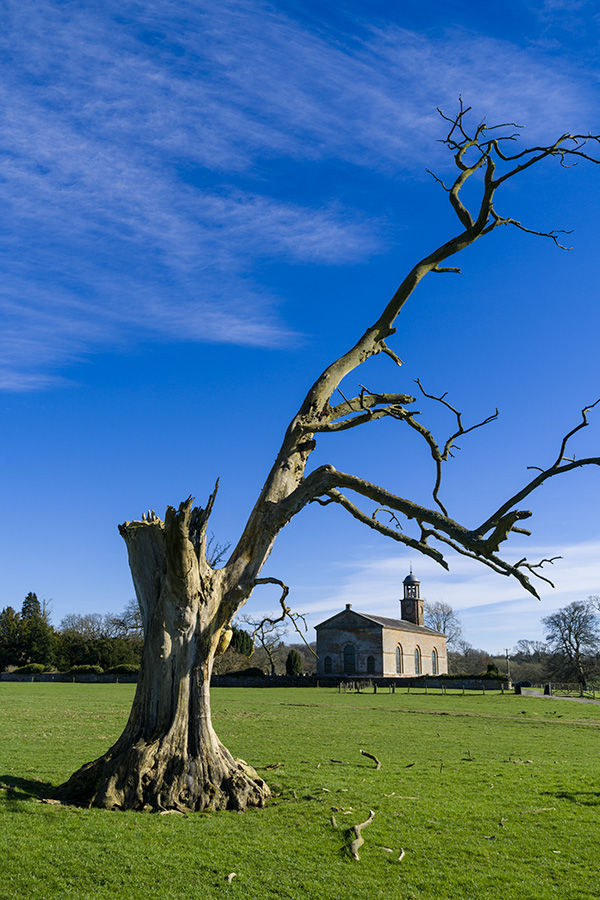
    I knew what I was looking for, and at first walked to a spot and composed this at 30mm. But by moving round and just looking at the possible camera positions (and heights above ground) I could see the relative scale of the church and tree could be changed by finding the best angle of view and perspective. This is what using your feet AND a zoom helps you do, and ‘zooming with your feet’ most certainly does not if all you have is a fixed lens. A 35mm or 28mm would have been fine here, but I knew how much clearance I wanted between the church bell tower and the branch, how large or not I wanted the fallen branches to be (and I do not ‘garden’ subjects like this which are someone else’s property).

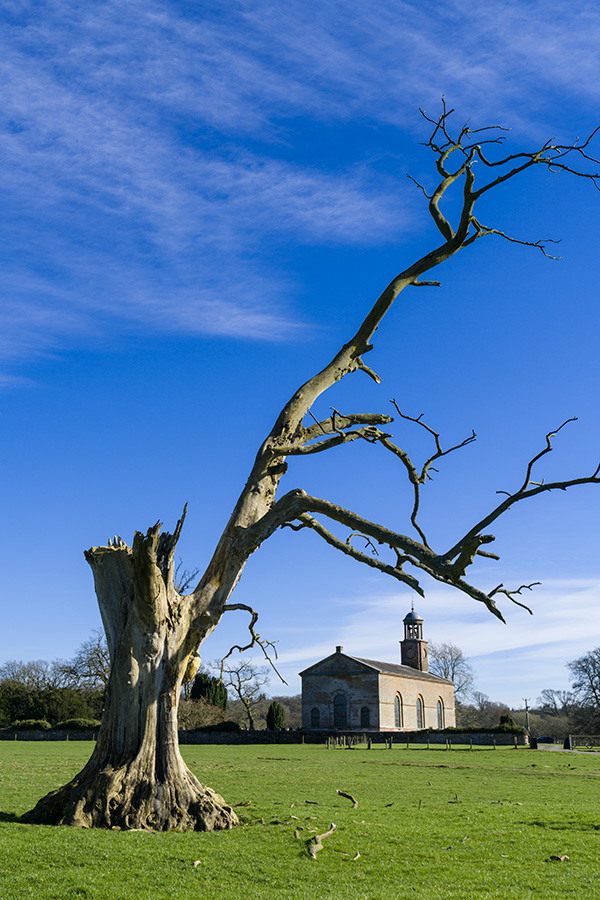
    This shot at 26mm was able to give me more sky. It’s also one which I could straighten for converging verticals (it has space to do that) using Photoshop/Camera Raw‘s excellent tools for this. To the right, there was an ugly wooden barrier to keep livestock off a sapling. Below, you can see why this was not a good addition to any composition. Earlier on there was that white car between it and the church, which had departed.

    From this position, I was generally happy with the scale of the tree and church and their relative weights in a vertical composition, but felt it needed to be a little tighter.

    This framing at 35mm kept all parts of the tree clear of the church, placed them neatly and avoided any strong foreground of fallen wood.

    This example moved me closer to the tree, at 24mm again, giving the most attractive sky and clouds. But I felt the broken main trunk of the tree was slightly too strong and the ratio between the tree and church just missed the mark. Such small differences do count. Normally I don’t show anyone the ‘ringaround’ compositions, only the final shot. In what is essentially a landscape scene, it’s not always that important. In commercial work, including portraits, wedding or fashion you need to realise that a centimetre or two difference in where you place your lens can distinguish good photography from ordinary. This, and the timing of your shot, also marks out the best press photography.

    Precision viewpoint is where both your feet and zooming come in. By moving much closer to the tree, and using it as a solid closure to the left hand side of the image, the small forked branch could be positioned to frame the church and no slightly more ugly broken branch ends would be shown. The closer viewpoint was controlled to within an inch or two side to side and vertically, by crouching slightly to get the lens in exactly the position I wanted.

    This also kept the church centred and therefore without converging verticals. I was already seeing this as a black and white conversion, and possibly a cover image, with the space necessary for typical cover lines and logo. This was the picture I did use for the cover.

    However, from the same viewpoint zooming to 41mm allowed a different crop with a larger scale to the church.

    You can see how I have moved to my left just a small amount, and also stepped back a couple of paces to change the relationship between the forked branch and the church. This is the control you gain from a lens like the 24-70mm – and why you should zoom PLUS your feet, not zoom WITH your feet. Above all, you should walk round and look, even without the camera, studying the interplay between foreground, background, middle distance and the sky.

    For my first three years of using the Sony full-frame mirrorless system I have been without a 24-70mm, using a range of primes and the 28-70mm instead. Although I had used excellent work from the 24-70mm f/4 in our magazines, from other photographers, there were so many bad reports about it. But 24mm has always been a critical focal length for me, so I had to buy it when a good deal came up (a refurb from Sony, which allows me to recover the 20% VAT which I can’t claim on regular secondhand items). Well, it’s not perfect because at 24mm the focus field is very curved (cap-shaped) to the extent that detail at the edge of the frame is focused on around 45cm when the centre is set to 45m. This can lead to the idea it’s soft. In fact, this curvature improves the sharpness of the tree trunk and the distant church at f/11 – 42 megapixels can be demanding. But if this was a portrait, with a distant scene beyond, it would have the reverse effect and make the outer field seem less sharp.

    • David Kilpatrick

    Affiliate links to help photoclubalpha if you order the 24-70mm Carl Zeiss Vario-Tessar f/4 FE – B&H Photographic, Amazon, and WEX.

  • Is retouching acceptable?

    There’s been a controversy surrounding Steve McCurry, a photographer I have listened to on the edge of a conversation a couple of times courtesy of Kodak who were always great sponsors and put his ‘Afghan Girl’ on display at photokina 2012 where McCurry’s work was celebrated.

    Here’s the story – he’s been changing, or allowing his retouchers and agents to change, the material content of some shots. This has included the removal of people, changes to their clothing, tidying up messy objects and distractions. First, this is not something new and great photojournalists never saw harm in burning in or dodging back areas of a print to make something disappear into a shadow or burn out to white. It was OK to use bleach on prints if needed to remove blemishes, including things which damaged the shot. It was even OK to use tints or pencil to enhance outlines so that newspaper reproduction didn’t lose the subject in a grey mush.

    http://petapixel.com/2016/06/07/eyes-afghan-girl-critical-take-steve-mccurry-scandal/

    That’s the current controversy.

    Well, here are some examples from my archives. One dates from 1969 and back when the first prints were made from this, with publication in The Guardian and various magazines, I used pencil and bleach to try to ensure the faces at the centre of the group were properly defined from the wall behind them. This was a very mild treatment and not very successful.

    Here’s a not-totally straight print. Some detailed dodging and burning was done in the darkroom to try to get the definition needed between the blonde girl’s face and the wall. It was this lack of definition which meant it was never a real winner, though it did well enough in competitions. It was also taken on outdated Perutz film using a very cheap manual Hanimex lens – I was only 17 and could not afford anything more!

    Vintage 1969 black and white print scan secondary school pupils crowd round a little black girl who has fallen and is crying at Maltby Grammar School sports day. Note the black child was one of twins from the only coloured family in this Yorkshire mining town and at this time there was no discrimination just a lot of attention.

    Once scanned, the print could be retouched digitally, Photoshop giving much more accurate control of burning-in the tone of the wall behind the girls. This is the result – it’s not a huge change. and I do not think anyone would suggest it falsifies the image.

    Vintage 1969 black and white print scan secondary school pupils crowd round a little black girl who has fallen and is crying at Maltby Grammar School sports day. Note the black child was one of twins from the only coloured family in this Yorkshire mining town and at this time there was no discrimination just a lot of attention.

    Moving on, here’s another group of children – three kids in the timed-burst water play fountain at Alnwick Castle Garden. It’s a picture I was very pleased to catch, the best of three frames with the children at the best critical moment for action and composition. But in the darkroom I would certainly have burned in the people in the background to reduce their distracting highlights.

    Children run into a fountain released by build up of a head of water visible in a tube popular water feature in Alnwick Garden Northumberland UK

    One of the principles of making a picture which works is to reduce it to a simple form. Extra faces always distract (we are drawn to look at faces regardless of composition). So, for this image, I retouched our the entire background scene. This would not be allowed by many competition, awards and some news or general media.

    Children run into a fountain released by build up of a head of water visible in a tube popular water feature in Alnwick Garden Northumberland UK

    Since I offer both images as licensable stock, with the retouched version clearly identified as retouched, I don’t feel there is any wrongdoing here.

    The next example is less controversial because it has no people at all. Wires interfere with the view of Hollows Tower, the old stronghold of the reiver Johnny Armstrong in the debateable lands as you pass from Scotland into England.

    Hollows, the tower house of the Armstrong clan lairds of Gilnockie on the border between England and Scotland. Unretouched see also version with power lines removed from shot.

    It’s not a massive task to remove the pole and wire mess. It falsifies the state of the scene, but only from a viewpoint which is not typical – most tourists see the tower as they drive past, from many angles.

    Hollows, the tower house of the Armstrong clan lairds of Gilnockie on the border between England and Scotland. Retouched image with power lines removed.

    I have not removed all the poles!

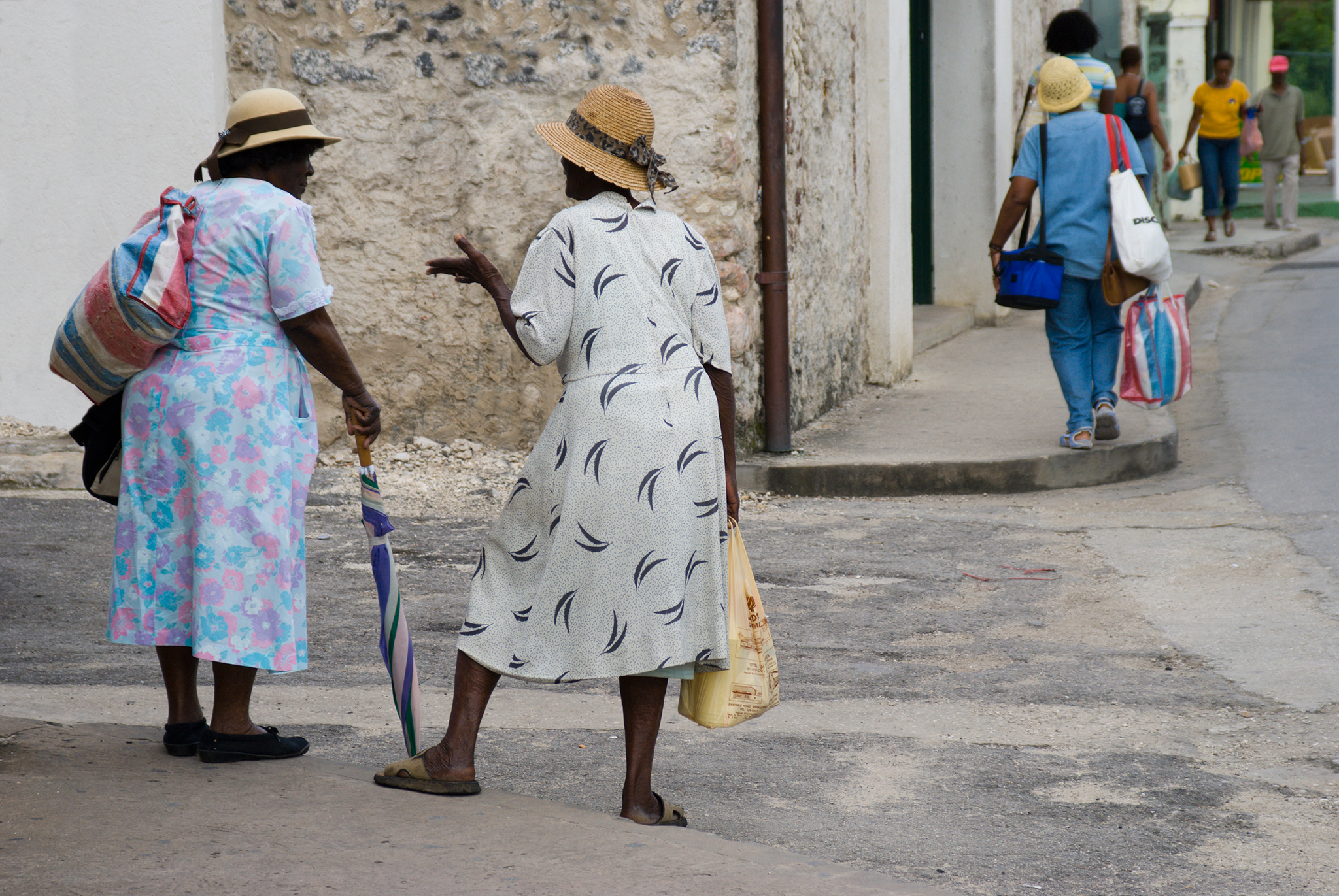
    Finally, another example of where the infrastructure spoils the scene. In Holetown, Barbados, local ladies tend to dress up well to do the shopping and tend to stop to chat in the street. Even so, it’s a matter of framing and shooting quickly to catch a neat moment before they move on or something else gets in the way. And the wiring on the wall really does spoil the shot.

    Barbados Holetown St Thomas parish west coast two Bajan ladies typically dressed chat on a street corner

    The retouching here was more complex. Is it a crime, or a routine part of modern photography?

    Barbados Holetown St Thomas parish west coast two Bajan ladies typically dressed chat on a street corner retouched version

    My work is generally used by travel guides, or in articles and books relating to people and places, travel and everyday life. The meter on the wall clearly documents the real place. The retouched image is an imaginary place. However it’s not been removed because it was an ugly meter. It’s removed because it spoiled a shot which I liked.

    You can make your own judgments on Steve McCurry or his retouchers. Did they alter the pictures because they were really spoiled by the way they were? I feel I would have been happy with the unretouched image in most cases or used less obvious major changes.

    – David Kilpatrick
     

  • A7RII shoots in Iceland’s glacier caves

    Sony camera sensor technology enables a closer look at some of Mother Nature’s rarest sights that could not previously have been photographed in this way

     Story: Sony Corporation UK PR release with high resolution images and full metadata – click to view. All images are copyright and may not be copied or reproduced.

    Wednesday 25th November 2015, Vatnajökull national park, Iceland: Photographer Mikael Buck with assistance from renowned local Icelandic guide Einar Runar Sigurdsson, explored the frozen world of Vatnajökull glacier in Iceland using Sony’s world first back-illuminated full-frame sensor – which features in the ?7R II camera. His images were taken without use of a tripod or any image stitching techniques in photoshop. This was made possible through Sony’s new sensor technology, allowing incredibly detailed low-light hand held photography. Previously images this detailed would have required carrying bulky equipment to the caves, some of which can require hiking and climbing over a glacier for up to two hours to to access. This picture: Inside the 'ABC cave' - which stands for Amazing Blue Cave. Guide Einar Runar Sigurdsson is seen taking a photo at the entrance to the cave PR Handout - editorial usage only. Photographer's details not to be removed from metadata or byline. For further information please contact Rochelle Collison at Hope & Glory PR on 020 7014 5306 or rochelle.collison@hopeandglorypr.com Copyright: © Mikael Buck / Sony 07828 201 042 / mikaelbuck@gmail.com
    Inside the ‘ABC cave’ – which stands for Amazing Blue Cave. Guide Einar Runar Sigurdsson is seen taking a photo at the entrance to the cave. Copyright: © Mikael Buck / Sony

    The enigmatic beauty of the caves of Vatnajokull, one of the largest glaciers in Europe, is revealed in all its frozen, icy splendour through astoundingly sharp and detailed photography.

    The sensor sits at the heart of every camera and defines its capability to capture the amount of light and detail that goes into photographs. Advancements in Sony’s sensor technology are enabling photographers to take pin-sharp photographs in the most challenging low light conditions with the latest cameras from Sony, which formerly would not have been possible.

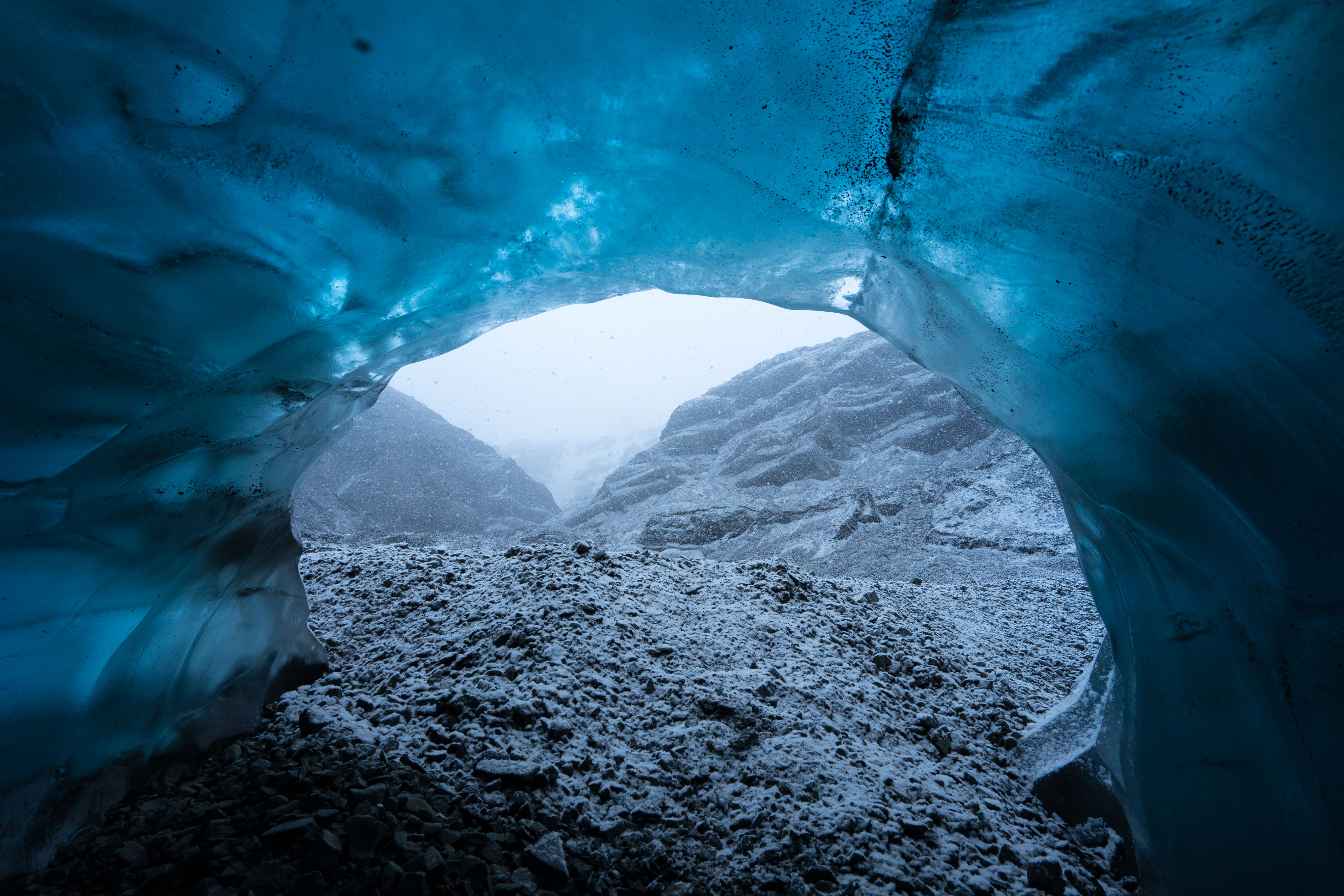
    Wednesday 25th November 2015, Vatnajökull national park, Iceland: Photographer Mikael Buck with assistance from renowned local Icelandic guide Einar Runar Sigurdsson, explored the frozen world of Vatnajökull glacier in Iceland using Sony’s world first back-illuminated full-frame sensor – which features in the ?7R II camera. His images were taken without use of a tripod or any image stitching techniques in photoshop. This was made possible through Sony’s new sensor technology, allowing incredibly detailed low-light hand held photography. Previously images this detailed would have required carrying bulky equipment to the caves, some of which can require hiking and climbing over a glacier for up to two hours to to access. This picture: Inside the 'ABC cave' - which stands for Amazing Blue Cave. This view shows a snow storm outside the entrance to the cave. PR Handout - editorial usage only. Photographer's details not to be removed from metadata or byline. For further information please contact Rochelle Collison at Hope & Glory PR on 020 7014 5306 or rochelle.collison@hopeandglorypr.com Copyright: © Mikael Buck / Sony 07828 201 042 / mikaelbuck@gmail.com
    A snow storm outside the entrance to the cave. Copyright: © Mikael Buck / Sony

    Stunning photo series heroes Iceland’s otherworldly ice caverns, with the cave’s bright blue and bubble-like walls resembling an almost underwater scene. Images also capture flowing waterfalls, and crystal clear crevasses and icy tunnels within the frosty fortress.

    Wednesday 25th November 2015, Vatnajökull national park, Iceland: Photographer Mikael Buck with assistance from renowned local Icelandic guide Einar Runar Sigurdsson, explored the frozen world of Vatnajökull glacier in Iceland using Sony’s world first back-illuminated full-frame sensor – which features in the ?7R II camera. His images were taken without use of a tripod or any image stitching techniques in photoshop. This was made possible through Sony’s new sensor technology, allowing incredibly detailed low-light hand held photography. Previously images this detailed would have required carrying bulky equipment to the caves, some of which can require hiking and climbing over a glacier for up to two hours to to access. This picture: Looking up from inside the 'ABC cave' - which stands for Amazing Blue Cave. Guide Einar Runar Sigurdsson can be seen ice climbing on the glacier outside. PR Handout - editorial usage only. Photographer's details not to be removed from metadata or byline. For further information please contact Rochelle Collison at Hope & Glory PR on 020 7014 5306 or rochelle.collison@hopeandglorypr.com Copyright: © Mikael Buck / Sony 07828 201 042 / mikaelbuck@gmail.com
    Looking up from inside the ‘ABC cave’. Guide Einar Runar Sigurdsson can be seen ice climbing on the glacier outside. Copyright: © Mikael Buck / Sony

    This incredible photo series displays the immense intricacies of never-before-seen ice caverns in Vatnajokull, Iceland – only made possible through Sony’s new sensor technology, allowing incredibly detailed low-light photography.

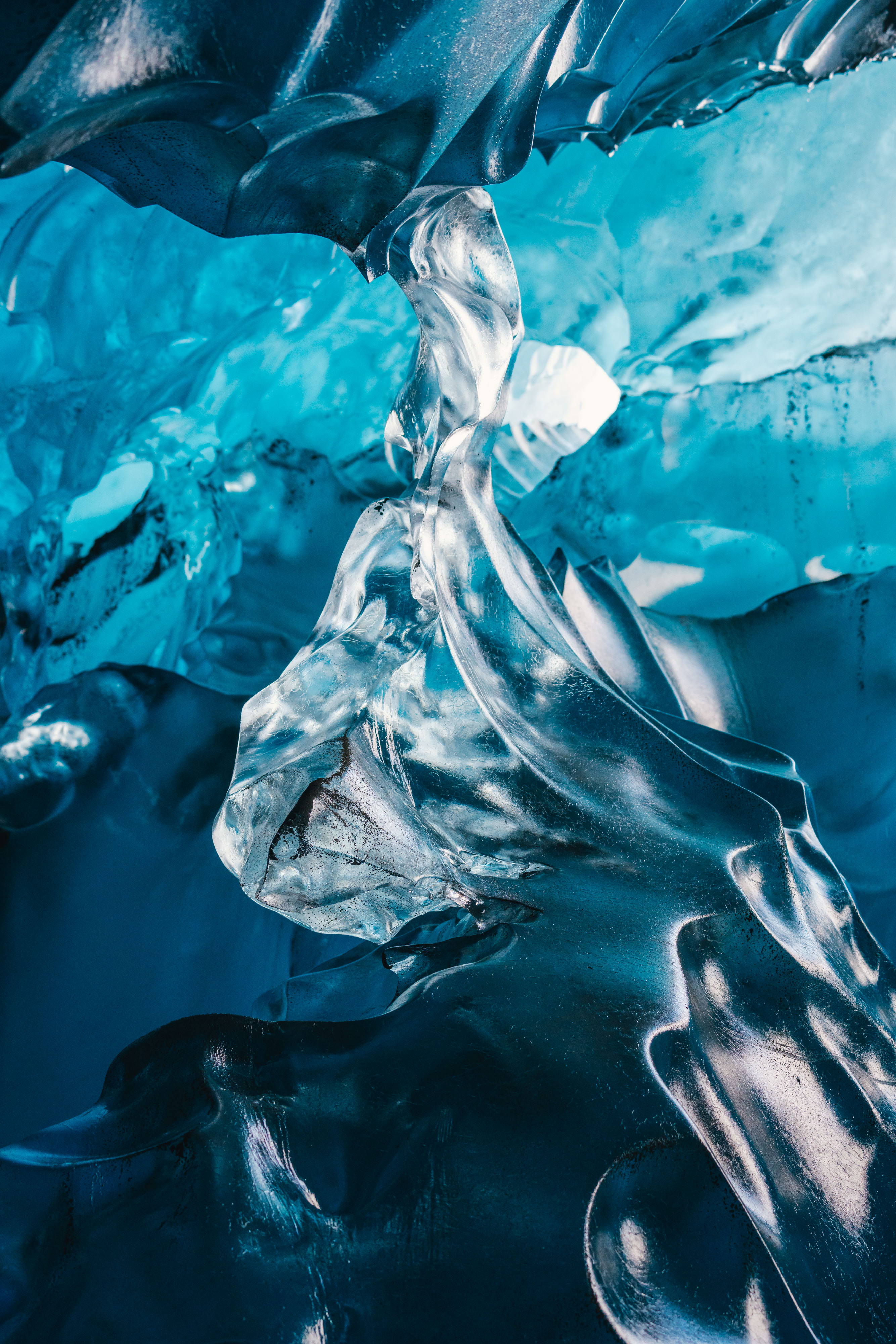
    Wednesday 25th November 2015, Vatnajökull national park, Iceland: Photographer Mikael Buck with assistance from renowned local Icelandic guide Einar Runar Sigurdsson, explored the frozen world of Vatnajökull glacier in Iceland using Sony’s world first back-illuminated full-frame sensor – which features in the ?7R II camera. His images were taken without use of a tripod or any image stitching techniques in photoshop. This was made possible through Sony’s new sensor technology, allowing incredibly detailed low-light hand held photography. Previously images this detailed would have required carrying bulky equipment to the caves, some of which can require hiking and climbing over a glacier for up to two hours to to access. This picture: Inside the 'ABC cave' - which stands for Amazing Blue Cave. PR Handout - editorial usage only. Photographer's details not to be removed from metadata or byline. For further information please contact Rochelle Collison at Hope & Glory PR on 020 7014 5306 or rochelle.collison@hopeandglorypr.com Copyright: © Mikael Buck / Sony 07828 201 042 / mikaelbuck@gmail.com
    Inside the ‘ABC cave’. Copyright: © Mikael Buck / Sony

    Each year, the Vatnajokull glacier shifts and changes, revealing complex cave systems that are there for only a matter of weeks before metamorphosing again.

    Wednesday 25th November 2015, Vatnajökull national park, Iceland: Photographer Mikael Buck with assistance from renowned local Icelandic guide Einar Runar Sigurdsson, explored the frozen world of Vatnajökull glacier in Iceland using Sony’s world first back-illuminated full-frame sensor – which features in the ?7R II camera. His images were taken without use of a tripod or any image stitching techniques in photoshop. This was made possible through Sony’s new sensor technology, allowing incredibly detailed low-light hand held photography. Previously images this detailed would have required carrying bulky equipment to the caves, some of which can require hiking and climbing over a glacier for up to two hours to to access. This picture: Inside the 'ABC cave' - which stands for Amazing Blue Cave PR Handout - editorial usage only. Photographer's details not to be removed from metadata or byline. For further information please contact Rochelle Collison at Hope & Glory PR on 020 7014 5306 or rochelle.collison@hopeandglorypr.com Copyright: © Mikael Buck / Sony 07828 201 042 / mikaelbuck@gmail.com
    Inside the ‘ABC cave’. Copyright: © Mikael Buck / Sony

    Photographer Mikael Buck and renowned local guides Einar Runar Sigurdsson and Helen Maria explored the frozen world using Sony’s latest digital cameras including the α7R II featuring the world first back-illuminated full-frame sensor which brings together ultra-high resolution and ultra-high sensitivity, the  RX10 II and RX100 IV which feature the world’s first 1.0 type stacked Exmor RS CMOS sensor that truly shine in low-light and high contrast conditions. The images were taken without the use of any external sources – just the natural light that filters through the ice caves.

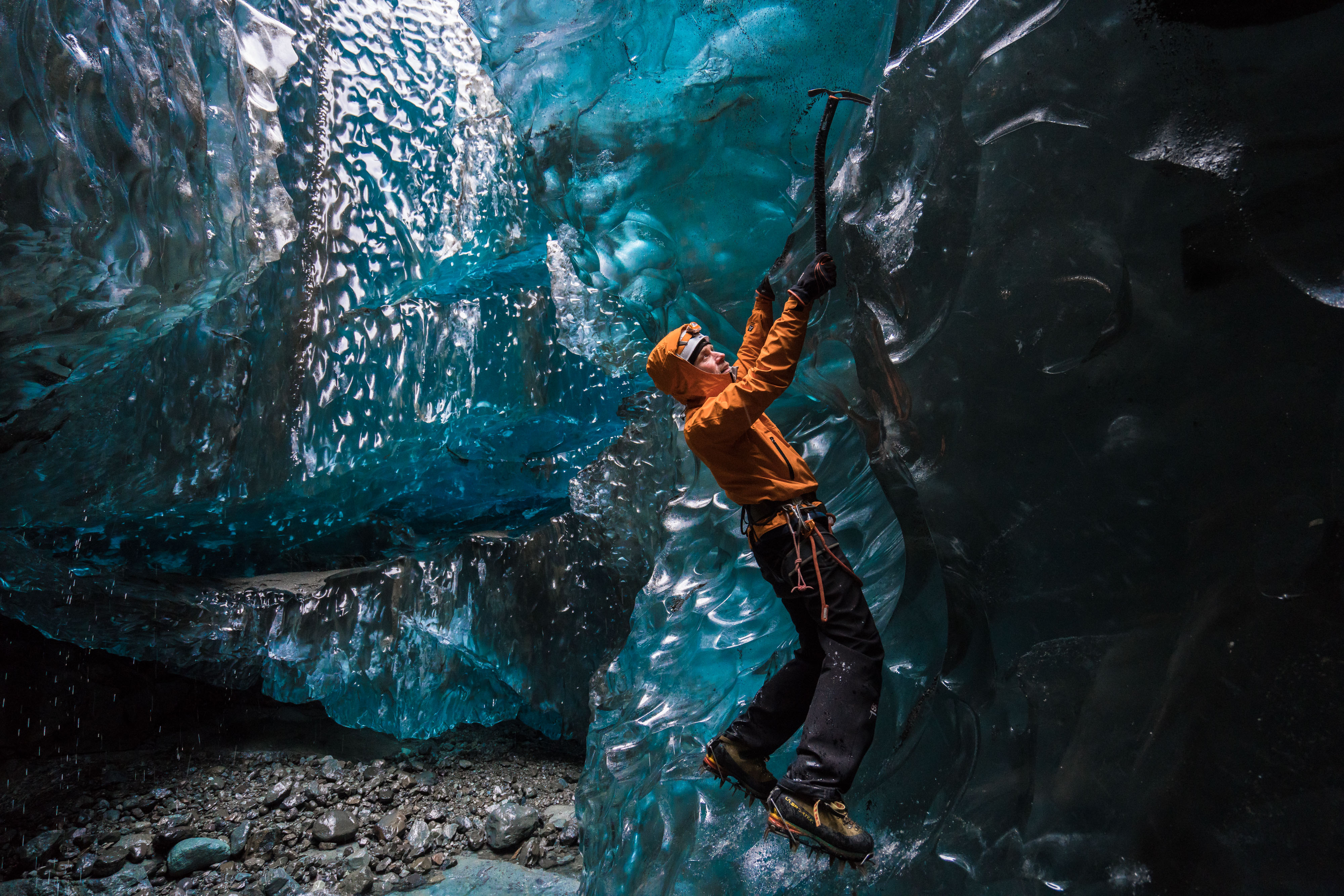
    Wednesday 25th November 2015, Vatnajökull national park, Iceland: Photographer Mikael Buck with assistance from renowned local Icelandic guide Einar Runar Sigurdsson, explored the frozen world of Vatnajökull glacier in Iceland using Sony’s world first back-illuminated full-frame sensor – which features in the ?7R II camera. His images were taken without use of a tripod or any image stitching techniques in photoshop. This was made possible through Sony’s new sensor technology, allowing incredibly detailed low-light hand held photography. Previously images this detailed would have required carrying bulky equipment to the caves, some of which can require hiking and climbing over a glacier for up to two hours to to access. This picture: Guide Einar Runar Sigurdsson is seen ice climbing inside the 'Waterfall Cave' PR Handout - editorial usage only. Photographer's details not to be removed from metadata or byline. For further information please contact Rochelle Collison at Hope & Glory PR on 020 7014 5306 or rochelle.collison@hopeandglorypr.com Copyright: © Mikael Buck / Sony 07828 201 042 / mikaelbuck@gmail.com
    Guide Einar Runar Sigurdsson is seen ice climbing inside the ‘Waterfall Cave’. Copyright: © Mikael Buck / Sony

    Within the photo series, barren caves have been brought to life, making visible the intricate curves of the natural sculptures, the delicate structure of its icicles, and the smooth and the marble-like texture of the cavern walls, which are formed through constant movement. Images capture the misty waterways that flow within the frosty fortress, as well as the ice-cold waterfalls that cascade down and transform the cavern’s bright blue walls. Buck has also captured images of a skilled local climber ascending the icy walls to showcase the scale of the majestic blue cave.

    Wednesday 25th November 2015, Vatnajökull national park, Iceland: Photographer Mikael Buck with assistance from renowned local Icelandic guide Einar Runar Sigurdsson, explored the frozen world of Vatnajökull glacier in Iceland using Sony’s world first back-illuminated full-frame sensor – which features in the ?7R II camera. His images were taken without use of a tripod or any image stitching techniques in photoshop. This was made possible through Sony’s new sensor technology, allowing incredibly detailed low-light hand held photography. Previously images this detailed would have required carrying bulky equipment to the caves, some of which can require hiking and climbing over a glacier for up to two hours to to access. This picture: Guide Einar Runar Sigurdsson is seen ice climbing inside the 'Waterfall Cave' PR Handout - editorial usage only. Photographer's details not to be removed from metadata or byline. For further information please contact Rochelle Collison at Hope & Glory PR on 020 7014 5306 or rochelle.collison@hopeandglorypr.com Copyright: © Mikael Buck / Sony 07828 201 042 / mikaelbuck@gmail.com
    Sigurdsson ice climbing inside the ‘Waterfall Cave’. Copyright: © Mikael Buck / Sony

    Helen Maria of Local Guide – Iceland’s oldest mountain guiding company – comments: “I have been exploring these ice caves for years with Local Guide. Being here in them is a truly wonderful opportunity. Knowing you’re experiencing such a fleeting phenomenon makes it even more special – the opportunity to help capture this nature in all its intricate glory and now in more detail than ever thanks to Sony’s sensor technology is a truly magical experience. This series of photographs has done it justice like never before, and I hope many more people will be spurred on to visit as a result.”

    Wednesday 25th November 2015, Vatnajökull national park, Iceland: Photographer Mikael Buck with assistance from renowned local Icelandic guide Einar Runar Sigurdsson, explored the frozen world of Vatnajökull glacier in Iceland using Sony’s world first back-illuminated full-frame sensor – which features in the ?7R II camera. His images were taken without use of a tripod or any image stitching techniques in photoshop. This was made possible through Sony’s new sensor technology, allowing incredibly detailed low-light hand held photography. Previously images this detailed would have required carrying bulky equipment to the caves, some of which can require hiking and climbing over a glacier for up to two hours to to access. This picture: Guide Helen Maria is pictured inside the waterfall cave PR Handout - editorial usage only. Photographer's details not to be removed from metadata or byline. For further information please contact Rochelle Collison at Hope & Glory PR on 020 7014 5306 or rochelle.collison@hopeandglorypr.com Copyright: © Mikael Buck / Sony 07828 201 042 / mikaelbuck@gmail.com
    Guide Helen Maria is pictured inside the waterfall cave. Copyright: © Mikael Buck / Sony

    Yann Salmon Legagneur, Head of Product Marketing, Digital Imaging for Sony Europe, commented, “These images wouldn’t have been possible a few years ago without having to take bulky kit, lighting and other accessories to the glacier – all of which would have weighed down a photographer. The sensors inside Sony’s α7 and RX cameras ensure that all a photographer needs is a small form factor camera and with its low light photography capabilities and they can then capture incredible images like these.”

    Wednesday 25th November 2015, Vatnajökull national park, Iceland: Photographer Mikael Buck with assistance from renowned local Icelandic guide Einar Runar Sigurdsson, explored the frozen world of Vatnajökull glacier in Iceland using Sony’s world first back-illuminated full-frame sensor – which features in the ?7R II camera. His images were taken without use of a tripod or any image stitching techniques in photoshop. This was made possible through Sony’s new sensor technology, allowing incredibly detailed low-light hand held photography. Previously images this detailed would have required carrying bulky equipment to the caves, some of which can require hiking and climbing over a glacier for up to two hours to to access. This picture: Inside the 'ABC cave' - which stands for Amazing Blue Cave. Guide Einar Runar Sigurdsson is seen taking a photo at the entrance to the cave PR Handout - editorial usage only. Photographer's details not to be removed from metadata or byline. For further information please contact Rochelle Collison at Hope & Glory PR on 020 7014 5306 or rochelle.collison@hopeandglorypr.com Copyright: © Mikael Buck / Sony 07828 201 042 / mikaelbuck@gmail.com
    Sigurdsson is seen taking a photo at the entrance to the ABC cave. Copyright: © Mikael Buck / Sony

    As the global number one in Sensor technology and production with approximately 50% global market share, Sony is proud to continue to push through the perceived boundaries of sensor development and thanks to advancements in this field, images like this are now possible. Sensors are such a vital part of camera performance and being able to release two new advanced sensors this year is enabling Sony to continue its growth in the digital imaging industry.

    Wednesday 25th November 2015, Vatnajökull national park, Iceland: Photographer Mikael Buck with assistance from renowned local Icelandic guide Einar Runar Sigurdsson, explored the frozen world of Vatnajökull glacier in Iceland using Sony’s world first back-illuminated full-frame sensor – which features in the ?7R II camera. His images were taken without use of a tripod or any image stitching techniques in photoshop. This was made possible through Sony’s new sensor technology, allowing incredibly detailed low-light hand held photography. Previously images this detailed would have required carrying bulky equipment to the caves, some of which can require hiking and climbing over a glacier for up to two hours to to access. This picture: The view on top of the Vatnajökull glacier whilst hiking to access the caves PR Handout - editorial usage only. Photographer's details not to be removed from metadata or byline. For further information please contact Rochelle Collison at Hope & Glory PR on 020 7014 5306 or rochelle.collison@hopeandglorypr.com Copyright: © Mikael Buck / Sony 07828 201 042 / mikaelbuck@gmail.com
    The view on top of the Vatnajökull glacier whilst hiking to access the caves. Copyright: © Mikael Buck / Sony

    In addition to being able to capture incredibly detailed low-light photography, sensor technology featured in the RX10 II and RX100 IV cameras also allows photographers, hobbyist and professionals alike, to capture moments not always visible to the human eye, with 40X super slow motion video capture at up to 1000fps.

    Wednesday 25th November 2015, Vatnajökull national park, Iceland: Photographer Mikael Buck with assistance from renowned local Icelandic guide Einar Runar Sigurdsson, explored the frozen world of Vatnajökull glacier in Iceland using Sony’s world first back-illuminated full-frame sensor – which features in the ?7R II camera. His images were taken without use of a tripod or any image stitching techniques in photoshop. This was made possible through Sony’s new sensor technology, allowing incredibly detailed low-light hand held photography. Previously images this detailed would have required carrying bulky equipment to the caves, some of which can require hiking and climbing over a glacier for up to two hours to to access. This picture: On top of the Vatnajökull glacier PR Handout - editorial usage only. Photographer's details not to be removed from metadata or byline. For further information please contact Rochelle Collison at Hope & Glory PR on 020 7014 5306 or rochelle.collison@hopeandglorypr.com Copyright: © Mikael Buck / Sony 07828 201 042 / mikaelbuck@gmail.com
    On top of the Vatnajökull glacier. Copyright: © Mikael Buck / Sony

    Wednesday 25th November 2015, Vatnajökull national park, Iceland: Photographer Mikael Buck with assistance from renowned local Icelandic guide Einar Runar Sigurdsson, explored the frozen world of Vatnajökull glacier in Iceland using Sony’s world first back-illuminated full-frame sensor – which features in the ?7R II camera. His images were taken without use of a tripod or any image stitching techniques in photoshop. This was made possible through Sony’s new sensor technology, allowing incredibly detailed low-light hand held photography. Previously images this detailed would have required carrying bulky equipment to the caves, some of which can require hiking and climbing over a glacier for up to two hours to to access. This picture: Inside the 'ABC cave' - which stands for Amazing Blue Cave. For further information please contact Rochelle Collison at Hope & Glory PR on 020 7014 5306 or rochelle.collison@hopeandglorypr.com Copyright: © Mikael Buck / Sony 07828 201 042 / mikaelbuck@gmail.com
    Amazing Blue Cave. Copyright: © Mikael Buck / Sony
    To enquire about other uses, reproduction rights or prints email [email protected]

  • Capturing Autumn colour better

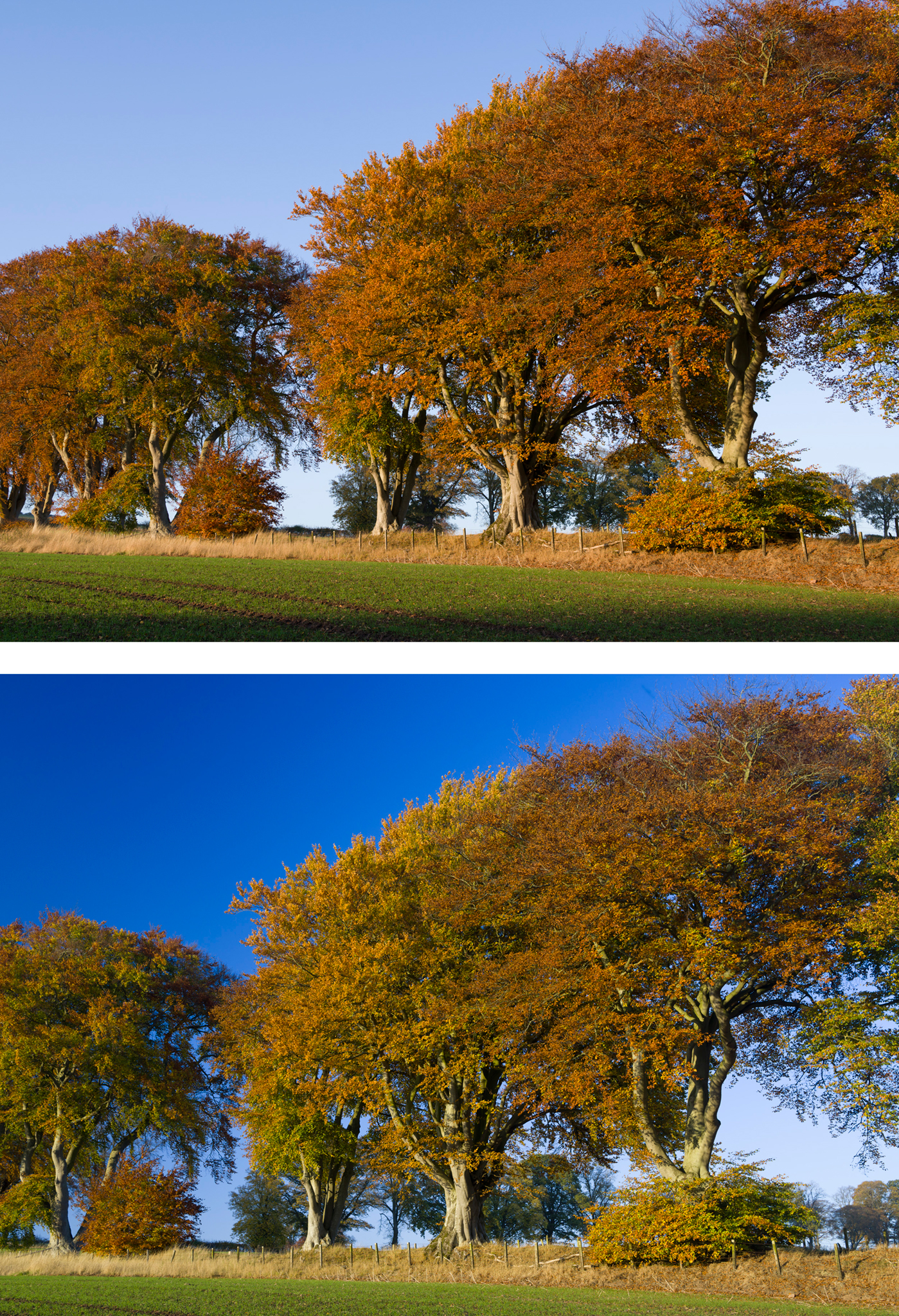
    nopolariser-vs-polariserandprofile-web

    Upper: unprofiled (Standard) raw conversion. Lower: using a tunsgten-light generated custom camera profile, combined with a polarising filter, gives a more vivid impression.

    Most Alpha system users know that some – not all – cameras have a special JPEG mode for Autumn Colours. They’ll also know that if you shoot raw, with no JPEG in camera, only Sony software replicates this. The choice of picture looks or camera profiles in Lightroom and other programs ranges from none (one default) to good (a full basic range similar to Canon settings). However, you can go way beyond the default look your camera will produce from the Autumn colours we are seeing right now (UK) if you profile your camera using the X-Rite Color Checker Passport and the free downloadable software which goes with it. You can also use this software with any standard MacBeth Color Checker card.

    You still need to create a .dng file from your original raw, as you also do for Adobe’s free camera profile generator. The X-Rite software creates much smaller profile files but they are no less effective.

    Here’s my tip – normally, you calibrate by daylight and the Adobe Camera Profile (.dcp) includes automatic adjustment for tungsten. You can also take two test shots, one under each lighting condition. Experimenting with the X-Rite software, I found that if you only use tungsten to create your profile, all the daylight ‘landscape’ colours (especially green foliage and the sky) really pop out. The greatest change is in the sky blue, which can be very disappointing if you use Adobe Standard as your camera profile for raw conversion.

    A7RIIprofiles

    The zip file you can download from above contains some .dcp profiles for the A7R II which I’ve produced (the names are more or less self-explanatory). They should be unzipped and placed in the CameraProfiles folder of Camera Raw in Application Support>Adobe. You can find the software, instructions for PC and Mac, at:

    http://xritephoto.com/ph_product_overview.aspx?ID=1257&Action=Support&SoftwareID=986

    Using the stock Lightroom/ACR A7RII camera profiles you’ll find that the Landscape flavour tends, if anything, to make sky blue lighter. My tungsten-generated profile has most of the overall ‘snap’ of Landscape plus very much richer sky tones.

    The second tip with Autumn/Fall colours is, of course, to use a polariser. I’d say this makes the single greatest difference to all Autumn colours even if you can’t see it clearly when composing. The individual leaves reflect light, and the polariser cuts through this to reveal the full colour. Because it also darkens the sky, the often fairly dark colours of Autumn trees come to life better. You don’t need to study the trees, just set the polariser for the best results with the sky. The leaves are at such random angles all positions tend to work equally well. It can however be worth trying a few different rotated positions of the polariser especially if there is also water in the shot. What deepens the sky may also reduce the strength of reflections in water. Experiment!

    – David Kilpatrick

    If you are considering buying a Color Checker, Color Checker Passport on Amazon can benefit this site.


  • Low-cost macro for the A7 series

    It’s been a while since my last review of Sony products here, and not because I have been inactive. The truth is that I’ve spent so much on Sony kit 24/7 working has been necessary, including a good few reviews and tests of the A7RII and lenses appearing elsewhere. It’s a real issue, I now lose so much value with the lightning-fast depreciation of Sony’s products within a few months of launch that my old tactic of buying, reviewing and selling no longer works. For one thing, no media in the world will readily pay a fee which even matches the amount you might lose on a camera body in the A7 series over its first two months of retail life. Sony have been good enough to lend me a few items for brief periods but you really can’t form any useful opinions on such radical and new hardware on that basis.

    However, my A7R II report is shortly on the way, and the extra time spent using the camera and suffering the damage to my credit card does not harm the process. It helps put the gear in context. I’ve resisted the anti-social pricing policies of the UK camera retail environment for some time, even buying one grey import from Panamoz. So it’s appropriate that my first article for a fair while should be intended to help you save money and get great results from any A7 full frame FE mount camera, while also supporting a company whose UK pricing policies are entirely reasonable – Sigma.

    The Sigma 60mm f/2.8 ART DN lens

    The butterfly above is one example of what this lens can do on uncropped full frame, in this case adding a single 16mm extension tube, which we’ll come to later as the exact type of tube you buy matters a great deal!

    The neat, low-cost 60mm f/2.8 is the portrait lens in Sigma’s Art DN lens trio for APS-C and MicroFourThirds mirrorless systems. I’ve used the 19mm f/2.8 and 30mm f/2.8 as well, but the 60mm is my favourite. Originally, I tested it on Olympus MFT and the 50cm close focus with their 2X factor made it almost feel like a macro. It’s actually just 1:7.2X scale, but 1:3.6X relative to full frame on that smaller sensor. That’s a really good working distance and subject scale.

    I was curious to see how much of the full frame the 60mm would cover. All these Sigma lenses are just £129.99-£139.99 retail at most UK dealers right now. They are beautifully designed and made, very light, use 46mm filters and have advanced optical design giving high contrast and first-class full aperture sharpness. Well, the answer is easy enough; you’ll get more than APS-C, with a 24 x 24mm square format crop working well, but not anything like full frame at any aperture from the 60mm.

    This is the closest focus of the Sigma ART DN 60mm on the A7R II, uncropped.

    Sigma call it a telephoto, with its rear nodal point much closer than 60mm to the focal plane. But its design signalled it would probably perform well as a macro lens too.

    Meike extension tubes

    So, we add extension tubes between the A7-series body and the lens. There’s one prominent make, Meike, and a couple of years ago I bought their very low-cost fully electronically coupled plastic 10 and 16mm twin tube set. 26mm of extension is not much. It won’t even make the E-mount 35mm f/1.8 focus to 1:1, and does even less with a 60mm. However, what it does is worthwhile combined with the lens’s own focusing range.


    I found my plastic Meike tubes have a narrow circular throat and cut the image off all round. But, you say, the image was cut off all round already, so what could be done?

    When you mount an APS-C lens on tubes, it covers more than APS-C. Put it on tubes adding about 1.4X to its focal length – like using 26mm of tubes on a 60mm lens – and it will cover full frame. You are moving the lens further from the focused plane, and as you do so, its fixed angle field of sharp coverage grows (it more or less follows the inverse square law, as does the effective working aperture of the lens when you use tubes). So a lens made for the NEX sensors, c.16 x 24mm, can cover 24 x 36mm when used on tubes for close-ups. The 60mm on 26mm of tubes would cover 24 x 36mm even with no leeway. Since the lens already has a good image circle, it turns out that it covers 24 x 36mm when used on the 16mm tube alone, and shows just a hint of corner cutoff with the 10mm tube alone. With both, it covers the full frame easily.

    This is the result of using a 10mm metal extension tube – not the plastic set. The plastic design cuts off even more than the lens used on its own.

    Meike understand this. They have a newer, metal-mount extension tube set costing about twice as much as the original plastic one. To get it, you must search for Meike metal extension tubes – and they are not easy to identify for certain. There’s very little explanation on-line. These tubes have a full width throat with baffles top and bottom, more or less matching the 24 x 36mm frame shape. Some black flock paper is glued in to prevent light reflection at the sides, but none is fitted top and bottom, and this is the main weakness of the design (you can obtain flock paper and fix this yourself).

    Twin set, no pearls

    Used alone, the metal Meike tubes turn the Sigma 60mm into a very good close-range long standard lens for the A7 series. I found that you can add the plastic tubes next to the lens, not next to the camera, and suffer no cut-off. This combination of four tubes adds 52mm and makes the Sigma 60mm able to do 1:1 with the addition of its own AF range.

    You need to understand sensor-based stabilisation before using any manual lens on tubes (which these are equally suitable for, with adaptors). The A7 II series bodies use the focal length and focus distance of the lens as transmitted to the camera to control the Steady Shot Inside function. As far as I can tell from practical tests, the Meike tubes do not transmit any change to the information reaching the CPU, but SS seems to be OK with such relatively minimal extra focus extension.

    This shot was taken at 1/15th hand-held with the 16mm tube on the A7R II, ISO 800, 14-bit uncompressed raw, f/8 on the Sigma 60mm lens. There’s no significant corner vignetting with 16mm of extra extension to the lens.

    This is a 100% clip from the shot.

    When I mount my 50mm Macro SMC Takumar on the A7R II I use either the SSI menu control, or the Lens Compensation App, to tell the SSI system I’m using a lens with an extension in place. It focuses to 1:2 size, and for this I tell the camera I’m using a 75mm lens not a 50mm. If I add 26mm of tubes, it will focus to 1:1 and I need to tell the camera I’m using a 100mm lens. That’s because a 50mm lens extended to 1:1 focus has the same camera shake characteristics as a 100mm lens used on a distant scene. Be careful, as this relationship only holds good for simple lenses (Tessar, Sonnar etc) and not for any zoom lenses, or any macro lens which uses internal focusing. If you mount a Tamron 60mm f/2 macro on your Sony body using a dumb adaptor, just tell the camera it’s got a 60mm attached. The Tamron changes focal length to focus, but the effect for anti-shake purposes is that it remains a 60mm. Its angle of view remains unchanged as you focus, while my 60mm Sigma when used at 1:1 repro covers half the angle of view it does at infinity.

    I am not entirely sure whether the Meike tubes work properly with SS Inside, or if the system simply has enough latitude to function with my degree of unsteady hand-holding. Those contacts just seem to make a connection, with no chip to add information. The EXIF data does show the focal length correctly, and the set aperture (which will be a reduced effective aperture at closer range, 26mm of tubes turns 60mm f/2.8 into a working f/4-ish). But the focus distance is shown as whatever the lens focus function chip confirms – a range of 50cm to infinity. That’s obviously incorrect when tubes are added, in contrast to using a dedicated lens like the Sony 90mm f/2.8 FE G OSS Macro, which will show the true focused distance in the viewfinder and also pass correct data to the CPU.

    So, a warning – the 60mm plus tubes is not technically perfect but seems to work well enough.

    When you use a tripod or flash, or a fast shutter speed, and turn off Steady Shot none of this applies. In practice with shutter speeds fast enough to stop subject action or wind vibration, it all goes well. The Sigma is very sharp even though not designed for macro range work, but that’s typical of this type of lens – even if 8 elements in 6 groups with several low-dispersion elements is not basic.

    sigma60mm-26mmtubes-iso800-A7RII

    Here’s an example with 26mm of tubes plus some lens focus range. The ISO 800 14-bit uncompressed file has allowed some work on the bee’s back which lacked contrast. Click to open a 2048 pixel wide version.

    sigma60mmf9on20mmtube-iso800-A7RII

    Here’s an example which clicks through to a full size A7R II AdobeRGB JPEG (no doubt much crunched by WordPress image storage) taken at f/9 on the 16mm tube. If any of my image files have 20mm in the filename it was the 16mm tube – I’m so used to the lengths used by regular SLR mounts! The 60mm has a seven-blade aperture and gives pleasantly neutral defocused quality behind the subject. You can call it bokeh if you want to. Thank you, Scottish weather, for keeping a few flowers in this condition and giving me some sunshine just after the 14-bit uncompressed raw upgrade for the A7R II arrived.

    The Metal Meike extension tubes have the same essential benefit over the plastic version with all FE and E mount, and legacy, lenses used of the A7 series full frame bodies. You can use them on the 28-70mm, 24-70mm, 55mm f/1.8, 28mm f/2 and most lenses though they have little use with the 70-200mm and I would not recommend hanging a 24-240mm off a tube.

    Footnote July 2017: I now have the 50mm f/2.8 FE Sony macro. It’s a very nice lens, indeed, but the internal focusing means it’s really more like a 40 to 35mm as you get the subject bigger, and you end up just millimetres away. I compared using this lens on 26mm of tubes to focus on a target 7.5cm wide with the lens itself set to infinity (and therefore, 50mm). Working distance from the lens rim to subject – 11cm. Then I took the tubes out, and focused the lens using its own range, on the same target. The clear distance was reduced to 7.5cm. Now you know why you need tubes and probably don’t really need a macro lens.

    – David Kilpatrick

    If you have found this article useful, you can support Photoclubalpha by using affiliate buying links (we are not sponsored or paid in any other way, except by selling subscriptions to f2 Cameracraft).

    Sigma 60mm at B&H

    Vello metal mount extension tubes at B&H (similar to Meike)

    Sigma 60mm F2.8 DN for Sony E – Silver from Amazon UK, no idea why they have none in black

    Neewer metal extension tubes – much better price than Vello! on Amazon

    Visit Wex Photographic and search for any items (UK)

  • Sharp vintage glass – and subject

    In 1996 I was operating one of the first full service digital photo studios in the world. I had already published, back in 1986, the world’s first desktop published commercial periodicals and our company won the UK Printing Industries Research Association inaugural DTP Awards for this in 1987. We’d bought the first Apple laser printer in provincial Britain and when Letraset’s ReadySetGo layout package failed to produce usable output for our first such magazine, Aldus stepped in and provide a pre-release beta of PageMaker. In 48 hours, I had to re-create the entire magazine – and it worked.

    From then on we progressed, through having the first separation-capable film imagesetting in Scotland to reproducing the first magazine cover from Kodak Photo-CD and soon after that the first full colour page from a Kodak DCS camera. By the beginning of 1995 we had Photon, the first major photo-mag style website, in by the end of that year we had a Leaf Lumina based studio with Scandles lighting. There’s an article about this in our repository of past articles, https://cameracraft.online/2007/08/06/the-leaf-lumina-scanning-camera-1995/

    That year, Shirley had planted an entire bed of flowers specifically for drying. They make good photographic subjects. The (now relocated) university college of St Margaret’s in Edinburgh asked me to give a lecture about the new technology – and so the Leaf Lumina (a scanner on a tripod with a  Micro Nikkor up front, and an Apple Mac Powerbook on the end of a SCSI-2 cable) went along with the fluorescent studio light heads and a tray of the dried flowers. We also took our Kodak dye-sub printer, which had made hundreds of prints alongside other printers during that year, when Shirley completed her M.Sc.Colour Science and created pre-ICC colour tables to reproduce fabric colours accurately. With this carload of gear, we were able to shoot and produce a print on the spot.

    The picture remained on file – a 25MB TIFF, roughly 8 megapixels, but equal to 8 megapixels in the Sigma Foveon sense as every pixel was true RGB with no Bayer filter involved. The exposures took over a minute, limiting it to still life, but the quality was not exceeded until 12 megapixel Bayer cameras like the Sony A700 appeared. And a few months later, we were producing Paterson’s catalogues and price lists and needed a cover. One list covered black and white and colour chemicals, the former mostly from Paterson and the latter from Photo Technology. Photoshop offered an easy way to take the image, and divide it accordingly. So that’s what we proposed, and what was used for the cover.

    Paterson1996-web

    It was intended to show the gamut from plain monochrome through toning to colour and it did look very good in print, because relatively low overall contrast combined with high detail contrast is easily handled by litho.

    Now, forward two decades, and I’m looking for subjects to test out the latest Elinchrom ELB400 portable li-ion powered two head flash kit. This has LED modelling lights over twice as bright as its predecessor and they now really show how the light is falling even when using light shapers. I wanted to show texture using my optical Mini Spot attachment, which works very well with these new heads and their cool-running LEDs.

    On top of a wardrobe, in a basket, were the dried flowers. They are called everlasting and apart from gathering loads of dust, they are. The most difficult job was holding each flower against the nozzle of a handheld vacuum cleaner to remove 19 years of dust.

    The first shot I took was with the Sony A7II, 24 megapixels, using my Pentax SMC Macro Takumar 50mm f/4. Like the flowers, this is also everlasting. It’s not yet 50 years old even though the lens design, a simple Tessar-type corrected for magnifications from 1:2 (50%) to 1:10, is well over 100 years old. It’s also a tolerable lens for general scenes, though the extreme resolution it achieves centrally only covers the full frame when you focus close. With Pentax’s original multicoating in every way a match for the latest Zeiss T* as found on new Sony Zeiss lenses, and a deeply recessed very small optical unit, it has a contrast and colour saturation you just don’t find from lenses using hybrid or moulded aspherics or many more air to glass surfaces.

    This picture appears, fairly small, in my review of the ELB40 in f2 Freelance Photographer magazine July/August 2015. When editing it, I was struck by the extreme resolution. Within the planes of sharp focus, it was exceptional.

    So, I decided I’d shoot a new shot, and improve on the use of the spotlight attachment on the Quadra head to cast the shadows and create a sunlight-like effect – and this time, use the A7R with its 36 megapixel resolution. Although the A7R has no AA filter and is sharper in theory, the larger pixel count calls for a smaller aperture to secure a little more depth of field for the larger viewing scale, and this when using any macro lens always risks diffraction limits on fine detail contrast. For example, at half life size a setting of f/12.5 (between f/11 and f/16) which I found desirable for best sharpness distribution gives an actual f-stop of c.f/19 and this does cause some sharpness loss. If the lens was extended on a tube to give 1:1, a setting of f/16 as nearly always needed for depth of field is really a true f/32 for diffraction calculations and light readings alike.

    Fortunately, our brains are sensitive to perceived scale, and we ‘see’ close ups as sharper than distant subjects even when they are not. The A7R and the Pentax macro lens also combine to produce an extreme level of textural detail, the information our eyes and brains use to see 3D solidness, shape and form in a flat photograph. So in practice you can shoot macro and use whatever aperture the subject depth demands, without resorting to focus stacking techniques.

    And here, anyway, is the result. You can click on this image and it will take you to a pBase hosted full size, JPEG compression level 12 version (this is over 24MB of image data, and it is not compressed like Facebook or indeed a WordPress image – though it’s still not ‘virgin’ data).

    driedflowermacro-cleaned-srgb-web600

    In a couple of days, I have another SMC Takumar of the same era arriving. It’s a 35mm f/3.5, which was the cheapest of the line back in 1970 when Shirley bought me my very first brand new, marque brand lens for Christmas! We were both only 18 and that represented an entire month of her basic salary working behind the counter at Dixons in Sheffield… helped by a staff discount. It was my first Super-Multi-Coated lens and I can remember still how the high contrast and bright colours could even be seen through the viewfinder – and how amazing the first box of slides looked, midwinter close-ups of fallen leaves rimmed by frost and frozen puddles.

    These lenses have never lost the edge they had, if they have been looked after, but the truth is we never knew how good they really were. We can now focus them within a fraction of a millimetre. I’ll probably never compare the 50mm f/4 SMC Macro Takumar with the 55mm f/1.8 CZ (I’ve used it, but only for low light high ISO tests on the A7S) or the 35mm f/3.5 with the CZ 35mm f/2.8 because it’s unlikely I’ll ever buy the new lenses with their inflated prices and reliance, however marginal, on software correction to be ‘good’.

    I know I have not written much about the A7R, or the A7II I’m using, or about any of the new lenses I can not manage to borrow from Sony and can’t afford to buy. I have an amazing set of lenses from 12mm to 500mm for full frame, including tilt-shift, wide aperture and mirror but just one single Sony FE lens for convenience (the 28-70mm FE kit lens). In contrast, my A6000 kit is all Sony plus the Samyang 12mm f/2 because it is just so good it had to have a place.

    So, please do take a look at the full size file. The critical plane for focus crosses the smooth surfaces of the two poppy seed heads and it’s in this relatively low contrast zone that the quality of the lens shows up. Elsewhere in the image the defocused quality is very pleasant (there was no CA to correct and there’s no bad colour bokeh) and the plane of sharpness passes through a few other more interesting flower details.

    Finally, a word for A7II users. If you use a manual macro lens, as I do, remember that when you program in the focal length for Steady Shot you should only enter the actual focal length for distant views. For my 1:2 macro Pentax, most often used in the range from quarter to half life size, I program in 70mm as the focal length because this represents the view angle. Using a macro at 1:1, you should enter double the focal length to get the correct Steady Shot compensation. Sony and Minolta macro lenses with the D chip (eight contacts) convey accurate extension information, so the auto Steady Shot works perfectly with them. But manual, or Canon lenses on adaptors which may or may or not pass the right information through, are best used with the Steady Shot focal length entered via the menu screen and adjusted to allow for the actual lens extension.

    – David Kilpatrick
    Check out B&H prices for all full frame lenses for the Sony FE (A7) system here

    Check out B&H Secondhand Department for all ‘film camera’ manual and vintage lenses

    Check out B&H Secondhand for Sony E-mount adaptors to allow you to fit your vintage/legacy lenses

    Check out the huge list of new adaptors for almost every lens ever made!