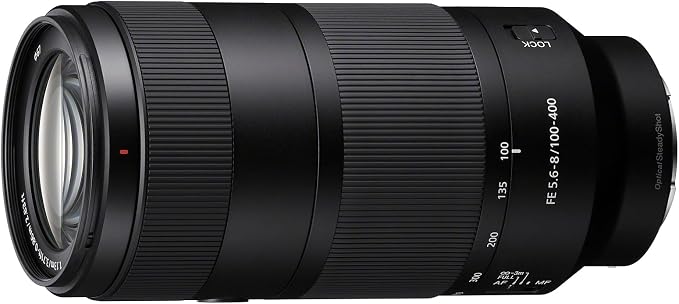
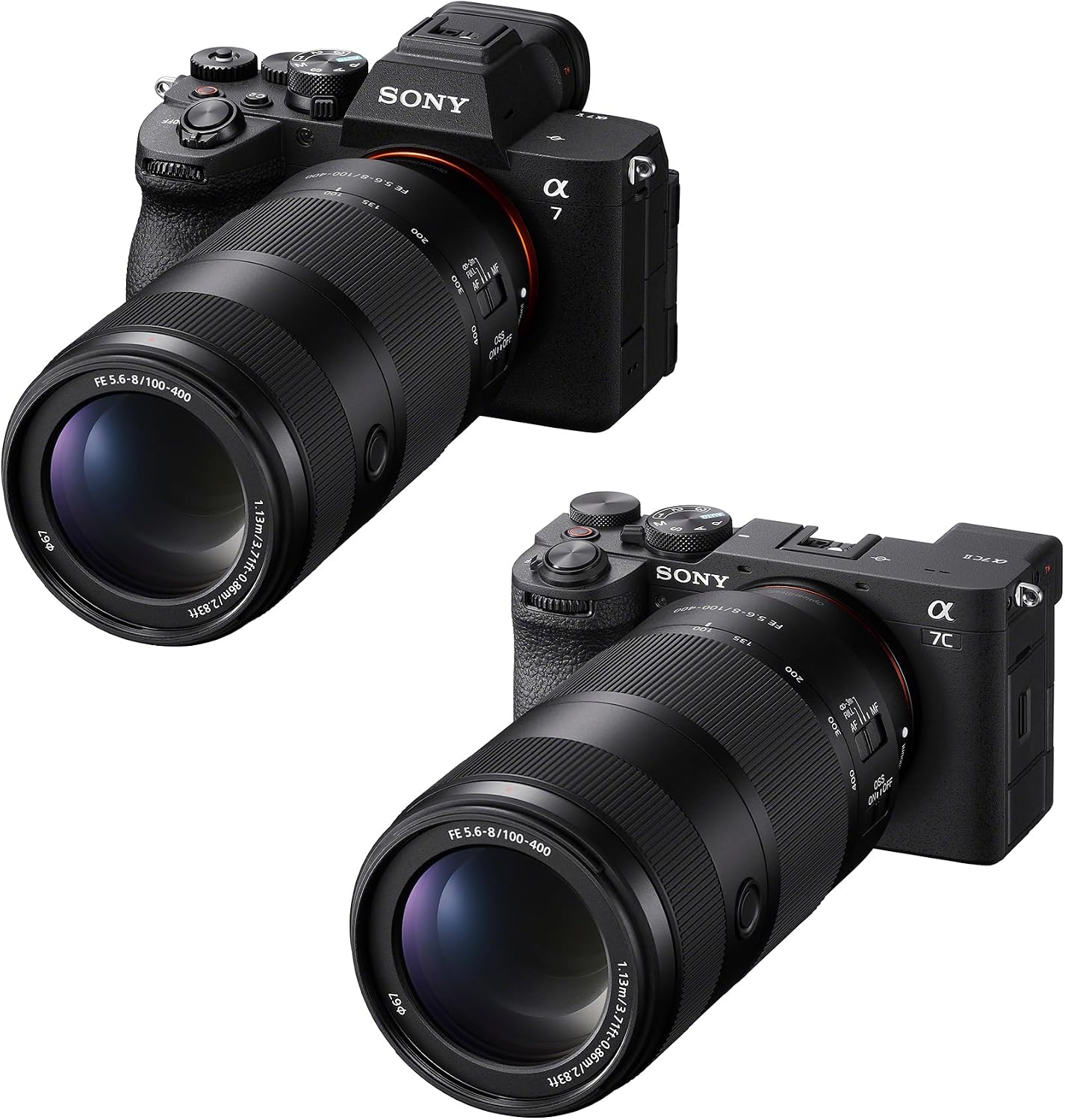
Sony’s new FE 100-400mm f/5.6-8 OSS arriving at the end of August breaks many moulds. It looks as if it derives from Tamron, the lens maker Sony is considering taking over entirely after many years as a shareholder, and at £799 it has a Tamron-level price despite the branding.
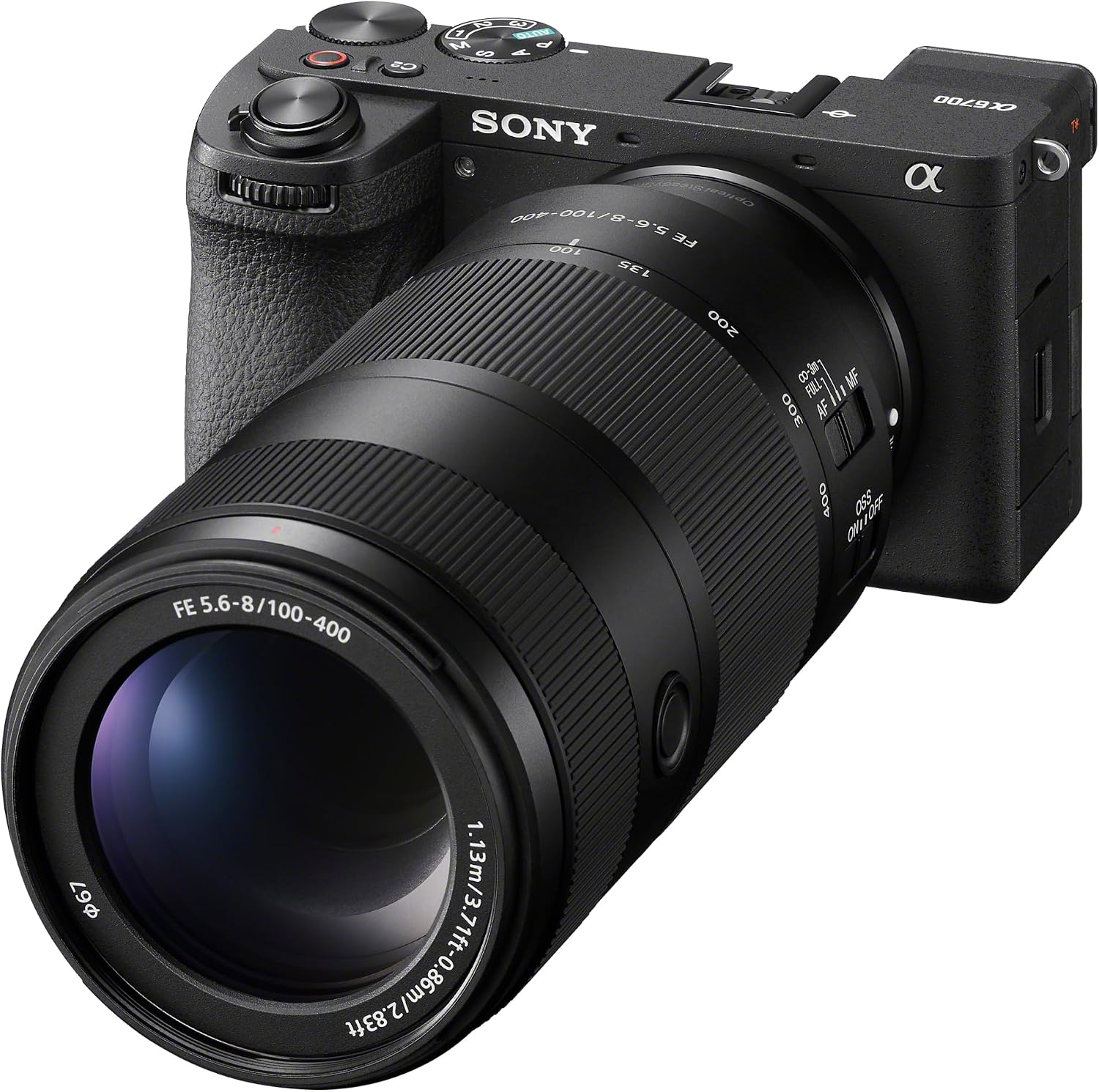
Tamron’s lenses generally take 67mm filters – and so does this. They are compact and light weight, as this is, though the 654g is a real featherweight for such a lens and the physical length (before zooming) of 164.5mm makes it walkabout and travel friendly. As seen below on an APS-C A6700 body!
Before you question the viability of f/8 at the long end, remember it is just half a stop slower than so many popular zooms which hit f/6.3 at 300mm or even 200mm like my daily companion Sigma 20-200mm. As Canon found, AF off modern high resolution sensors can work at ƒ8 even in poor light and as we all have (I hope) found processing from raw using Adobe Camera Raw now makes ISO 6400 or even 12,800 a clean capture despite the tiny pixel pitch of 60-plus megapixels.
Unlike Tamron’s OEM designs or Sony’s own excellent 70-300mm f/4.5-5.6 G OSS, this Sony accepts both the 1.4X and 2X Sony converters. A black lens taking white converters! It must be good. They wouldn’t dare risk the potentially awful results of a sub-par zoom with the 2X even if The EVF at f/16 and 800mm will be just as bright as as an f/2 lens in good light.
Unlike Tamron’s designs so far, this Sony zoom uses a radically different approach to close focusing. Instead of offering the closest and largest image scale at the short end, it does the best thing ever and gets down to 86cm at 400mm, the trade-off being a very conservative 1.13m at 100mm. The long end image scale is 0.41X, so not quite half life size which would be classed as macro. Macro is often better tackled using the APS-C crop anyway.
It also claims OSS, which I would assume to be Sony’s tech not Tamron VC relabelled. It’s possible too that Tamron has nothing at all to do with this lens. I only dwell on it because it does look that way.
So, I’ve pre-ordered along with £200 off 1.4X converter. Seriously, this lens if it’s any good may it see me part entirely with MicroFourThirds. I value the reach of OM-Systems’ little 75-300mm, equal to a 600mm though the sensor is only 20MP. Pair this light zoom’s 400mm end with the 28MP 1.5X APS-C crop from A7RV or VI or the slightly bigger file from the A7VI and the pixel-resolution tele power exceeds MFT.
Add in the unexpected high compatibility of this non-G 100-400mm with advanced Sony body functions like 30fps continuous shooting, or 120fps on that camera body I can not afford. Really it’s a game-changer. Sure, the A7RV kit will never be exactly as light, compact and versatile as my OM-1 kit but with this lens, the Sigma 20-200mm and the lovely little 14mm f/4 Viltrox it will come close.
As for tech spec, I’ve given most of it and Sony’s sites or any good dealer will have all the detail.
To buy from WEX, visit this Affiliate Link which will support Cameracraft:
Cameracraft Issue 71 is now free to read in low-resolution page turn here!
Cuba just before severe impositions kicked in
Brilliant underwater Caribbean
Wildlife on a British farm, and subtle infrared colour
The July/August 2026 issue of Cameracraft is now live, and you can read it free here – subscribers get high-resolution PDFs…
It’s a colourful edition with a new look at Cuba just before severe impositions on the island kicked in, the brilliant underwater world of the Caribbean, wildlife on a British farm and the unexpectedly lovely colours of subtle infrared, plus tests on Tamron’s 35-100mm f/2.8 and the Viltrox apo 55mm f/1.8 Evo. Rollei Infrared 200 film got run through Ilford Perceptol dev and surprised your editor too.
You can now view the latest issue of Cameracraft. We are 36 hours late but sometimes this happens, just has not happened since we started providing high-resolution PDF download editions for subscribers and making the low-resolution page turn here free to read. My apologies to Pocketmags platform readers, the release date for Amazon, Google etc reading was delayed, in case we could not comply with their lead time, until the 8th and there’s no way of making the edition go live immediately.
Subscribers have been sent a link but we tried using Adobe’s PDF sharing function, it is not fit for our purpose as your editor must now respond to hundreds of emails with access approval and there may be a need to have an Adobe account, which many canny photographers no longer have.
66.7 megapixel back illuminated partially stacked full frame sensor
Bionz XRII processor with AI subject recognition and tracking over 94% of the frame
3X brighter OLED viewfinder with better than sRGB colour
New battery for 15% more stamina
Dual SDII/CFExpress Type A card slots
Illuminated buttons for low light operation
8.5 stops sensor-based image stabilisation
New 100-400mm constant f/4.5 optically stabilised zoom with 3X faster AF
£4,400 launch price already on pre-order from dealers such as Clifton Cameras and WEX
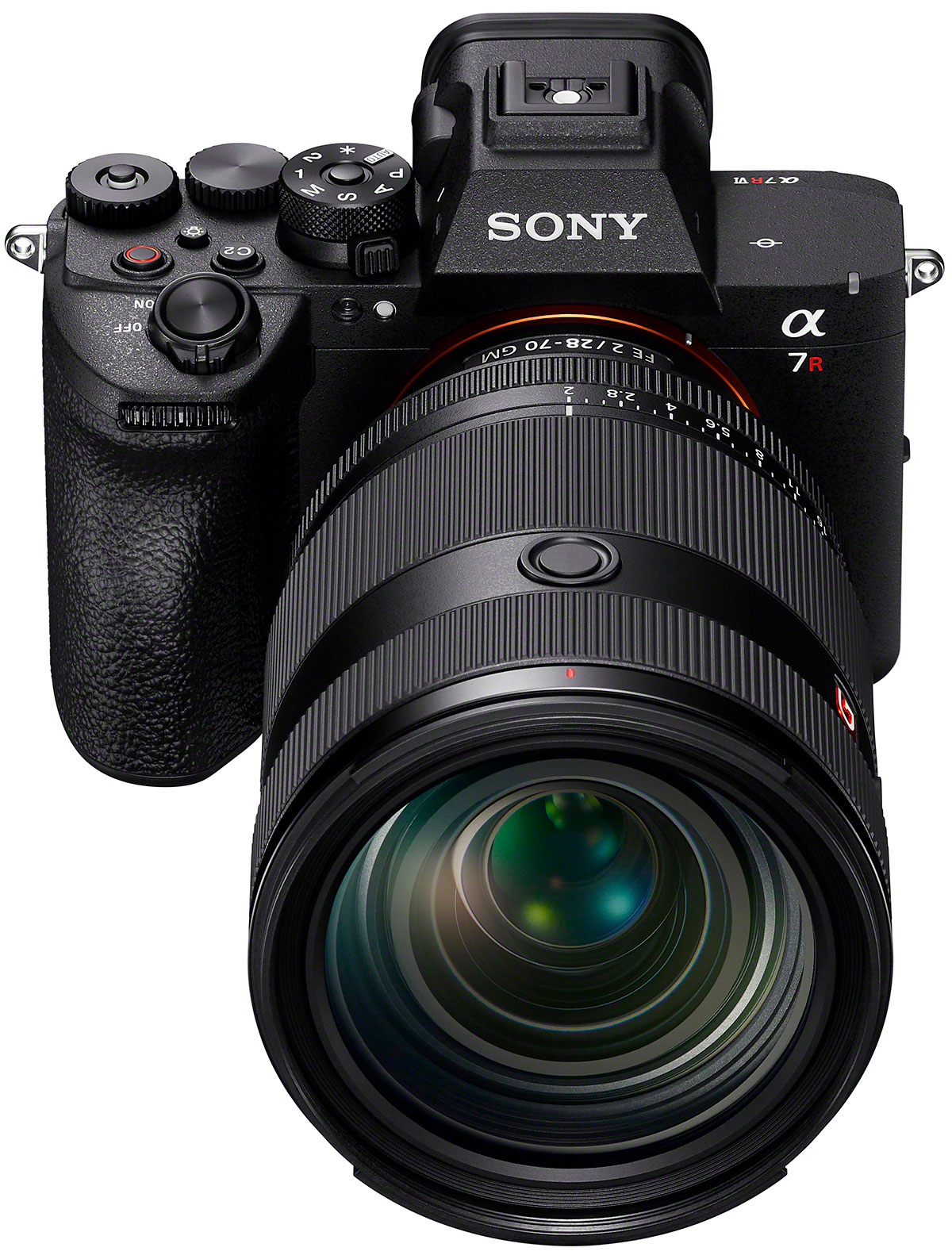
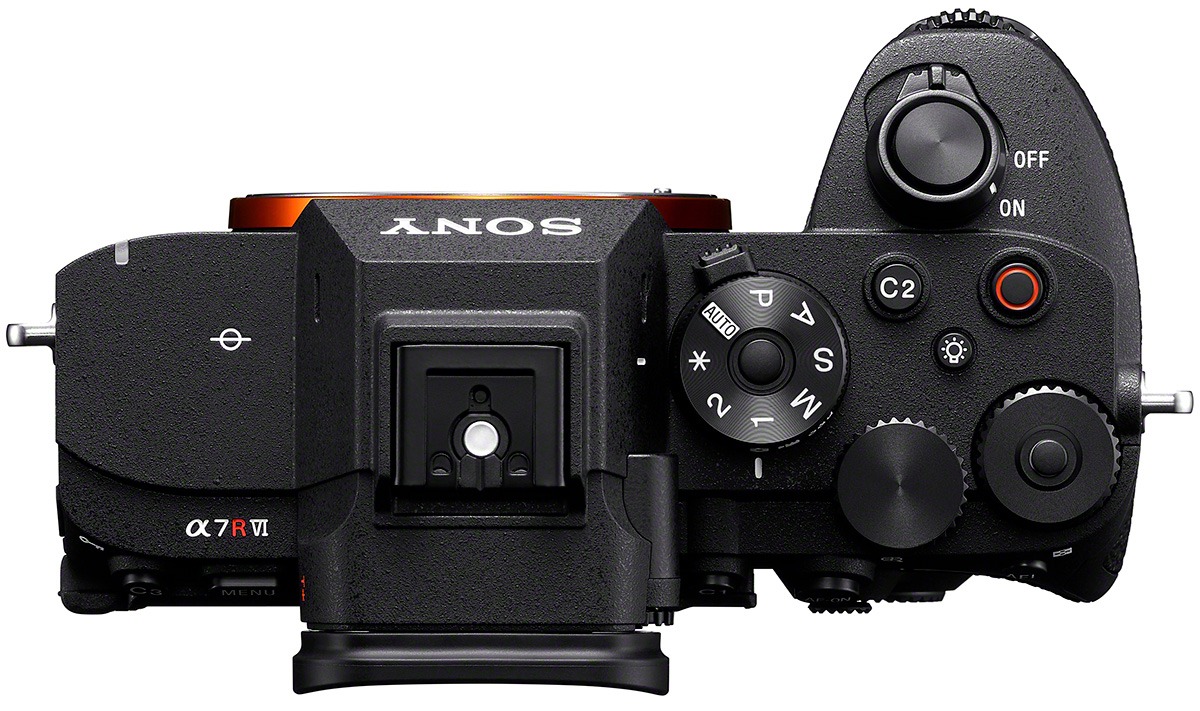
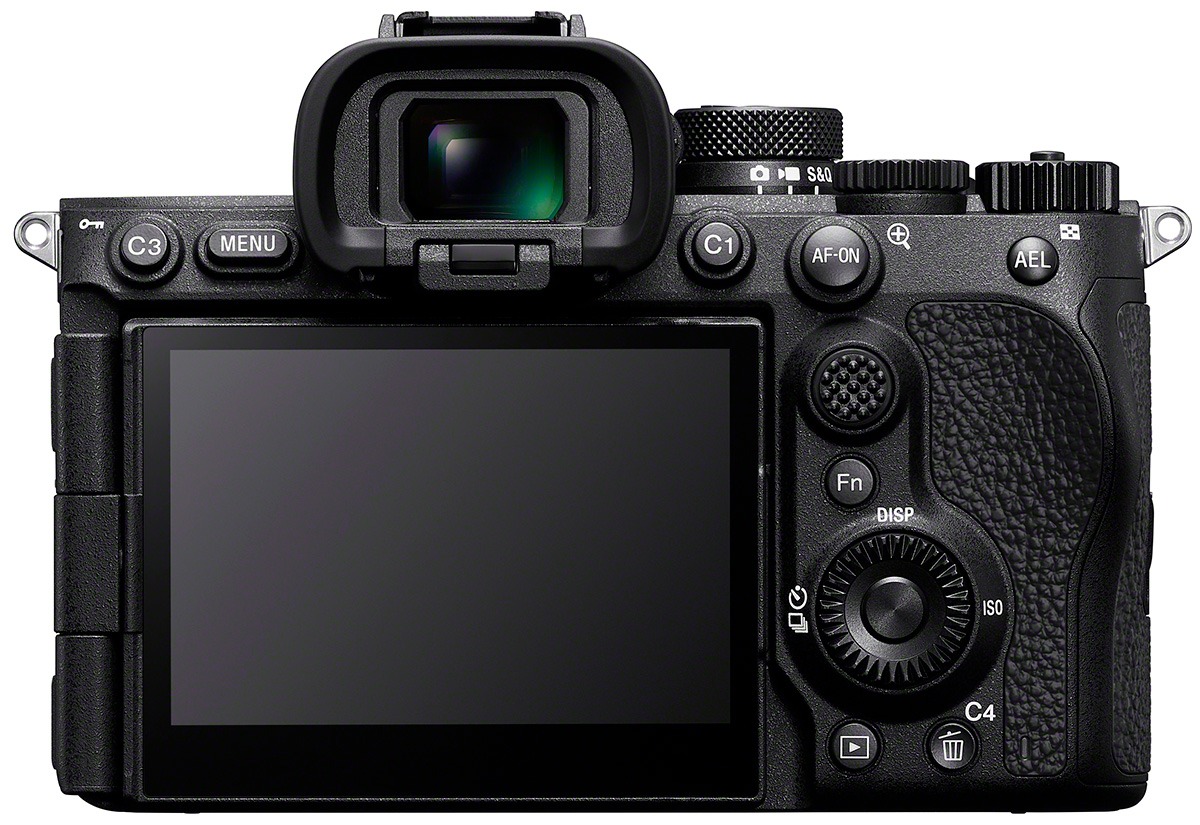
Sony’s new A7RVI hit the news desk – though the UK company no longer appears to issue press information and relies on a website little different from anything they provide for dealers – on the same day we ordered a replacement deep eyecup for our A7RV. Evening sunshine had made the otherwise superb EVF hard to see, and the silicon surround of the original eye-pad had split at one corner.
Sony doesn’t make a deeper eyecup but others such as JJC and Smallrig do, alongside regular replacements. But for those buying the A7RVI in June, its EVF has a boost to make it three times as bright as the V, while the otherwise similar near-10-million dot OLED gets better than sRGB colour and increased dynamic range.
If you do not need the other improvements such as 30fps blackout-free continuous shooting, up to 5 seconds of pre-capture frames, four times faster readout from the new stacked 66.7 megapixel sensor greatly reducing silent shutter action/pan distortion and video rolling, the EVF enhancement might well be your main reason to upgrade to this £4,400 body.
It also has a new mode dial with 1-2-* instead of 1-2-3 for Memory recall of complete setups – the * opens rapid access to many saved setups previously needing menu diving. And when you need buttons, there’s another button to light them. Give me one which instantly puts on my reading specs and it would have more use!
The additional pixels in the image are of little importance. Mark Galer (one of the better ambassador/influencers) states repeatedly in his blog post that it’s ‘twice the resolution’ of the A7V. Well, 66MP is not twice the resolution of 33MP because resolution is and always has been a linear not area measurement. It’s actually 1.41X the resolution, twice the megapixels.
The increase from 9504 x 6336 pixels to 9984 x 6656 is not insignificant but not game-changing. For astro and wildlife or any kind of tele photography where the pixels capturing a subject with a specific lens are what counts, the OM-Systems 20MP MicroFourThirds sensor is like a crop from an 80MP full frame, Fujifilm’s X-Trans 40MP matches 94MP on the same basis. The APS-C crop on the A7RVI is 28MP, compared to 26MP on the V.
Relative to the A7RIV/V the VI has a 5% increase in resolution and does become the highest resolution 24 x 36mm sensor camera, and to this Sony add marginally better in-body stabilisation, improved dynamic range to 16 stops depending on capture format and hopefully some improvements to noise levels across the entire low to high ISO range.
As with other recent R series models having no low pass filter, the A7RVI offers 4-shot (true RGB for every pixel) or 16-shot (2X pixel dimensions) multi-shot high resolution. There is no upgrade to in-camera processing (as used by OM-Systems) and it’s a strictly static subject tripod mounted option. This isn’t surprising as creating a 240MP image from 16 70MB raw captures demands much more than OM’s 50 or 80MP generated from 16 20MB raws.
Extending the AF point grid to cover 94% of the full frame as feasible will help deal with lenses that have curvature of focus field when used for action photography with a subject relatively small in the frame.
Sony’s colour has always been good but Auto White Balance far too variable. The Bionz XR2 processor (introduced with the A7V) adds AI-derived image analysis which can give much more consistent skin tones in changing light and settings. It’s a something wedding, portrait and fashion/lifestyle photographers need.
A new XLR digital microphone module with four channels has also been announced, fitting the multi function accessory shoe as for previous mics and preamps. The second USB C socket has a screw thread beside it to accept new lockable cables without needing a clunky tether-anchor assembly.
Battery with more ammo
The one change most likely to frustrate existing owners of A7*III and later bodies, including even A9III, is that a new larger battery priced at £99/$120 is used to solve the problem of the poor performance of the NP-FZ100 with its 2280maH rating. The NP-SA100 (already listed by dealers – see Clifton Cameras) offers 2670maH at the same nominal 7.2V with an expectation of 600 shots. While Sony has never attempted to improve the FZ100 third parties like Mathorn (sold by WEX) offer 2600maH already and it might have been reasonable to think Sony could have improved their now ageing battery to at least this spec without having to change to a brand new shape and fitting.
Here’s an interesting 2600maH third party – Llano brand from Amazon with a neat power level display which lights up at a touch. It is not biometric as they claim, just plain old touch-sensitive inductance. But it’s half the price of some third party cells.
However, if the NP-SA100 battery after moderate use doesn’t do the now familiar FZ100 trick of showing over 30% charge in the finder display then dying completely after half an hour taking just a couple of dozen frames, it may save newcomers to the system experiencing an urgent need to buy two more.
Twin USB 3 connections do make it possible to chargenot only while shooting, but also while using a tethered display or video SSD recorder. Power banks work well – here’s a very good Ugreen deal which is also a magnetic wireless charger for iPhone. There is also a new battery grip accepting the usual two to double everyday stamina, £399 on pre-order.
The one full size sample image (above, click for link) provided by Sony on the press site is shot at ISO 400 and is fairly noisy as well as not ultimately sharp – no doubt there will be many more which prove the A7RVI can at least match the V if not all rival brands or models using sensors in the 40-50MP range.
100-400mm f/4.5 GM OSS
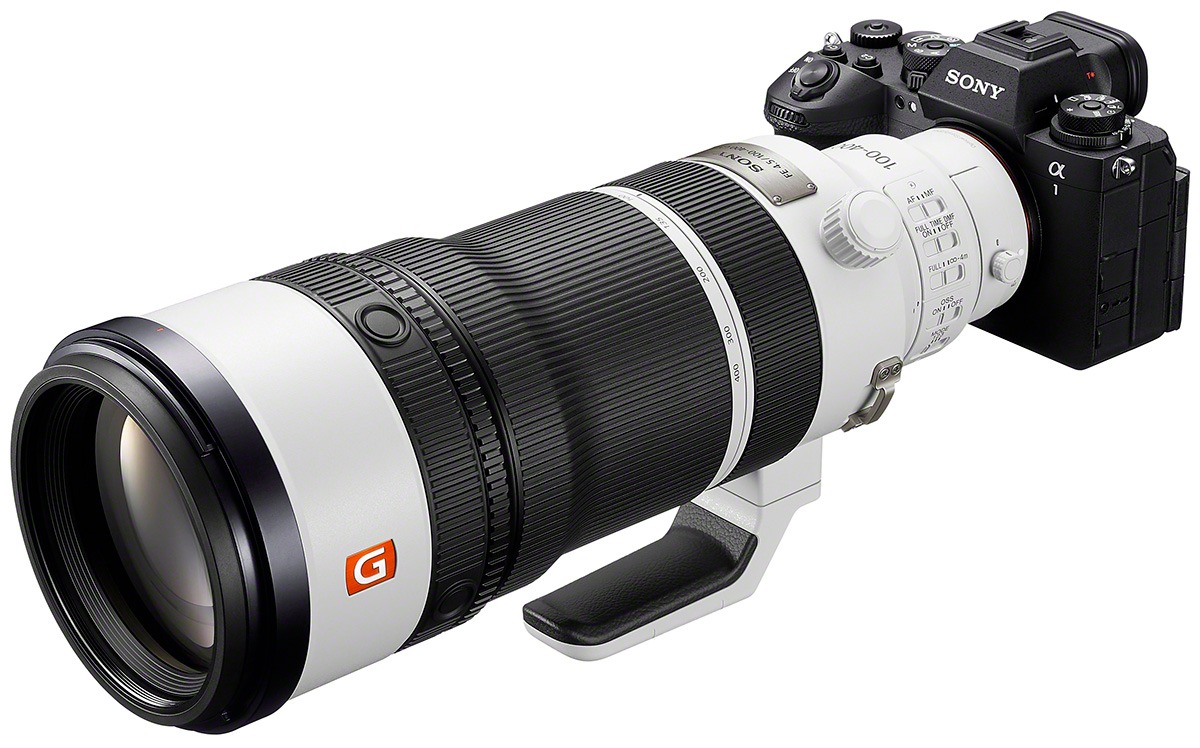
Alongside the A7RVI Sony have launched an alternative to existing long tele zooms, a new 100-400mm f/4.5 constant aperture GM OSS. The existing GM OSS is 100-400mm f/4.5-5.6, weighs 1395g, is 205mm long and focuses down to just 98cm with a subject scale of 0.35X, takes 77mm filters and costs £2,149. The new model claims 3X faster AF and better optical performance as well as 2/3rds of a stop extra light on to the sensor at 400mm.
It is however over twice the price at £4,400 and weighs 1840g, is 328mm long (this is a huge difference) taking 95mm filters though with a rear slot-in option, and its minimum focusing distance is variable from 64cm to 1.5m with a maximum image scale of 0.25X. You can buy two or even three Sony G long tele zooms for the price but not one them will give 400mm and f/4.5 – you can get the 400mm f/2.8 for over ten grand, or use a 2X converter on the 70-200mm f/2.8 and get f/5.6. So there’s a definite place for this lens.
Pre-order now open from most dealers including WEX and Clifton.
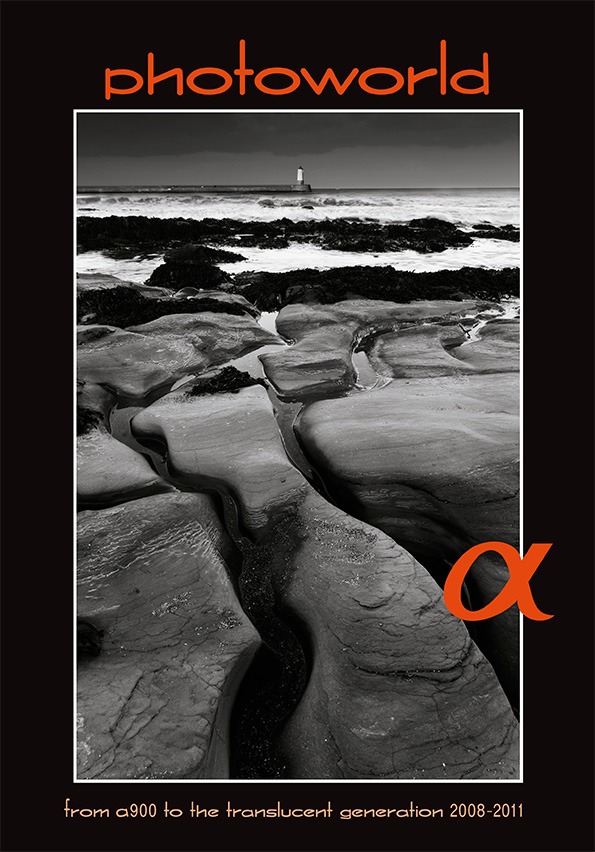
Icon Publications now has a 316-page book available with all the editions of Photoworld in one volume. Printed on 130gsm silk paper with a 250gsm gloss laminated soft cover, this compilation of news, tecnique and images covers an important period as the Sony Alpha system bridged the gap between Minolta’s legacy and the modern Sony mirrorless E-mount system.
From the first 24 megapixel full-frame DSLR A900 to the first APS-C mirrorless NEX system and the birth of the short-lived ‘DSLT’ translucent mirror hybrids, this superb full colour A4 compendium puts the final 12 issues of Photoclubalpha’s quarterly magazine into a bookshelf-friendly read to keep.
Equipment reviews
Expert Minolta/Sony users featured
Galleries featuring owners’ best shots
News and events from the three-year period
Reports from Sony launches
Practical tips and technique
Many standing pages, advertisements and offers have been removed to keep the pagination, cost and posting weight down. Photoclubalpha is the name adopted by The Minolta Club of Great Britain after Sony absorbed the camera brand in 2006.
When Minolta established a UK presence in the 1960s through their distributor Japanese Cameras Ltd, it pioneered a direct-to-consumer relationship by combining warranty registration cards with a periodical magazine and a programme of events, courses and training. The Minolta Club of Great Britain had a small membership with a quarterly A5 black and white newsletter called Minolta Photoworld.
In 1980, Minolta Camera Co. of Osaka set up a direct subsidiary Minolta (UK) Limited. David and Shirley Kilpatrick had a meeting with Rick Kutani when attending photokina ’80 in Köln, and agreed to take on running the club and magazine, which had already expanded to A4 with some colour. The membership expanded rapidly and members opted for Minolta Image as the new name for an improved publication.
Dick Bryant, the editor of Minolta Mirror the prestige annual from Japan, helped greatly. For 25 years – from 1981 to 2006 when Sony took over the brand – Minolta Image was published quarterly. After Sony’s 2006 take-over the club was formally closed, but with a still active community David and Shirley’s company, Icon Publications Ltd, decided to keep it active without using the Minolta name or any link to Sony. It became Photoclubalpha, with the magazine changing back to its 1979 name.
Through the Club’s events many amateur and student photographers found a professional career path and training, with exposure in Minolta Image magazine and for the select few, featured work in Minolta Mirror.
In 2011 without any support from Sony membership had dropped back to 1979 level and Photoworld transformed into Cameracraft.
Subscriptions guarantee early access, and let us keep the website uncluttered with minimal advertising. It costs just £15 a year, and you get unrestricted downloadable 300dpi files which can be viewed as spread and which print really well, if you want to keep selected pages or articles that way, using printers such as the Epson ET-8550 in our office. It was bought when these were brand new on the market and at the time of writing is still on the original inks, just coming up to refill the Grey and the others still about one-third full.
You get the issue download link sent in an email on or just before the 1st of month (Jan, Mar, May, July, Sept, Nov) – and it lets us keep publishing interviews, profiles, advice, tests, guides and more without the intrusive and irrelevant adverts, incessant video and paywalls that blight modern publishing.
Flagship medium-format digital rangefinder-style design revives classic Fujica handling
100MP 44x33mm sensor and fixed 35mm f/4 lens
4K movie capability, and less than £4,700
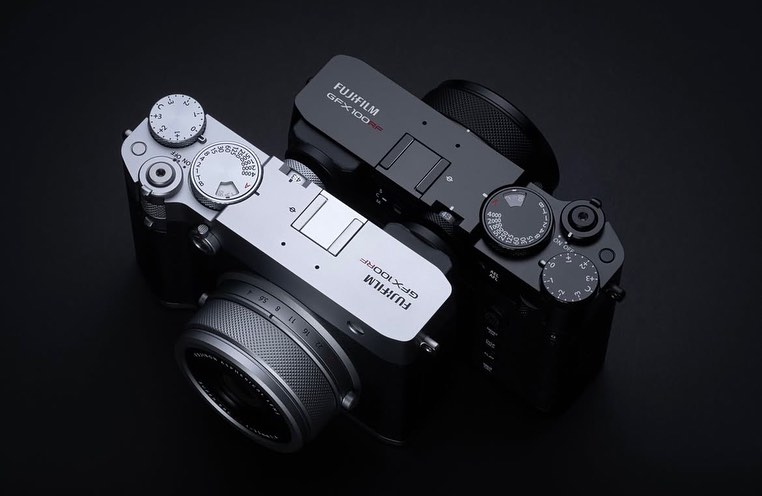
Anyone remember the Fujfilm GS645W, that robust go-anywhere 120 rollfilm leaf shutter viewfinder (focus by estimation) model with a 45mm f/5.6 wide-angle lens, or its electronic GA645W with faster AF f/4? Well, in a slightly different body form the medium format digital GFX series is revisiting this amazingly popular minority choice for landscape, travel and everyday use. This is the GFX100RF.
The GFX100RF is essentially unique on the market, but you may consider a Hasselblad X2D II 100C for the minimalist body, paired with either the 28mm or 45mm f/4 lightweight lenses. It will cost twice as much – albeit, with the benefit of in-body stabilisation and interchangeable lenses. That logic would also put Fuji’s own medium-format mirrorless system camera in the running – the GFX100S II with 35-70mm kit lens is around £600 more than the 100RF, but is a more conventional DSLR-style design and much larger, even with a compact prime.
Fujifilm GFX100RF specifications
102 megapixel 44 x 33mm CMOS sensor
Fixed 35mm f/4 Fujinon Super EBC Aspherical lens
Angle of view similar to 28mm on 35mm full frame
Mechanical leaf shutter 1 second to 1/4000s with physical top dial setting
Apertures down to f/22 set by physical aperture ring on lens with A setting for aperture priority auto
EV over-ride for auto metering or manual setting from +3 to -3 stops
Selectable format ratios 4:3, 2:3, 1:1, 16:9, 5:4, 7:6, 17:6 and 24:65
Digital converter by embedding metadata crop in raw file, cropping in-camera JPEG
Full range of Fujifilm film simulation looks and BW with filters
4K movie, Bluetooth GPS location data and Fujifilm X app compatible
Weight 735g, size 133 x 90mm
GFX100RF: handling and controls
If you like physical controls and the feel of fine engineering, you’ll fall in love with the fixed lens medium format Fujifilm GFX100RF. It looks, handles and performs unlike any other and my brief acquaintance with it only scratches the surface. That may not be the right term, as this camera has a ‘machined from solid’ aluminium housing with a surface treatment which should look as good in a decade as it does now.
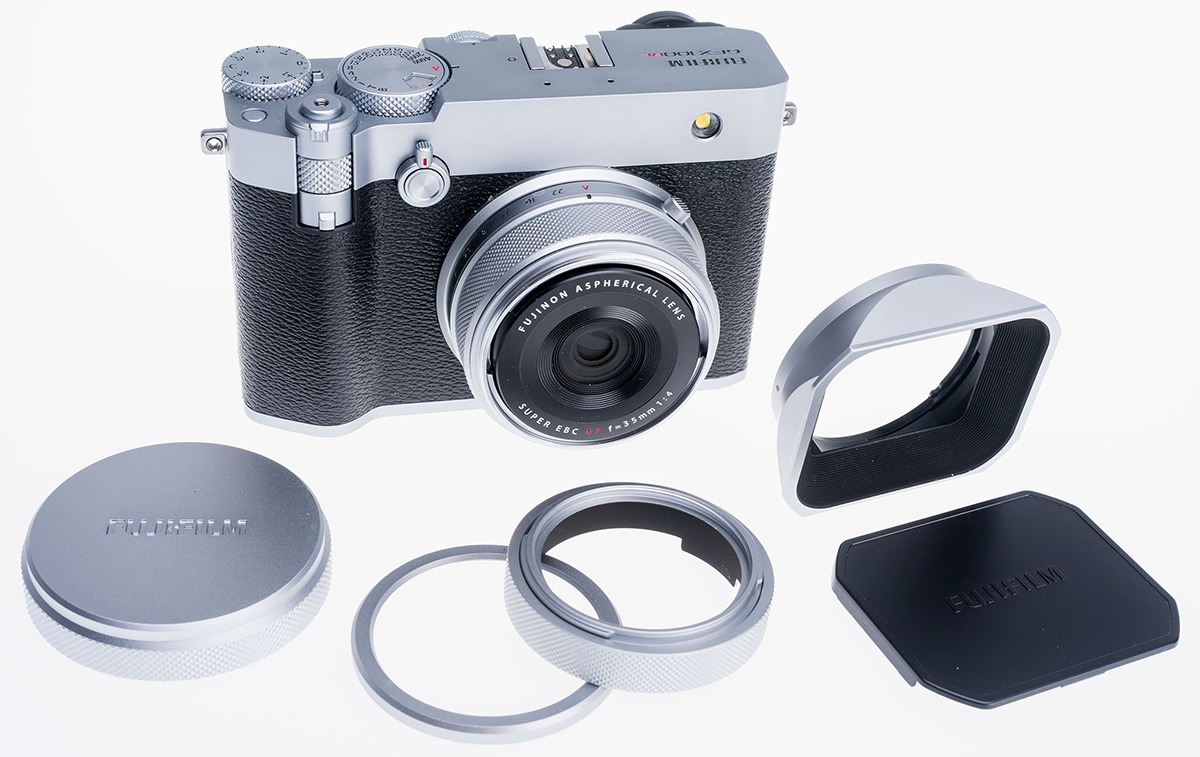
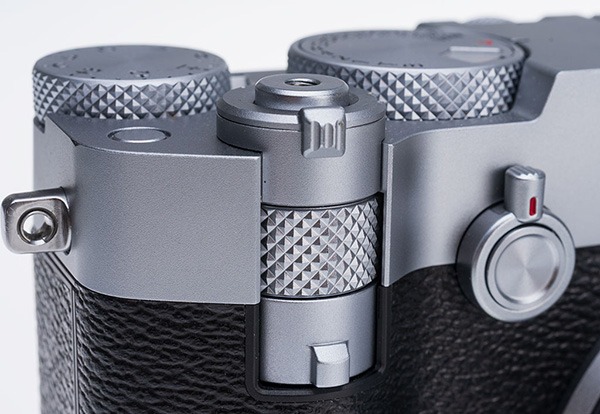
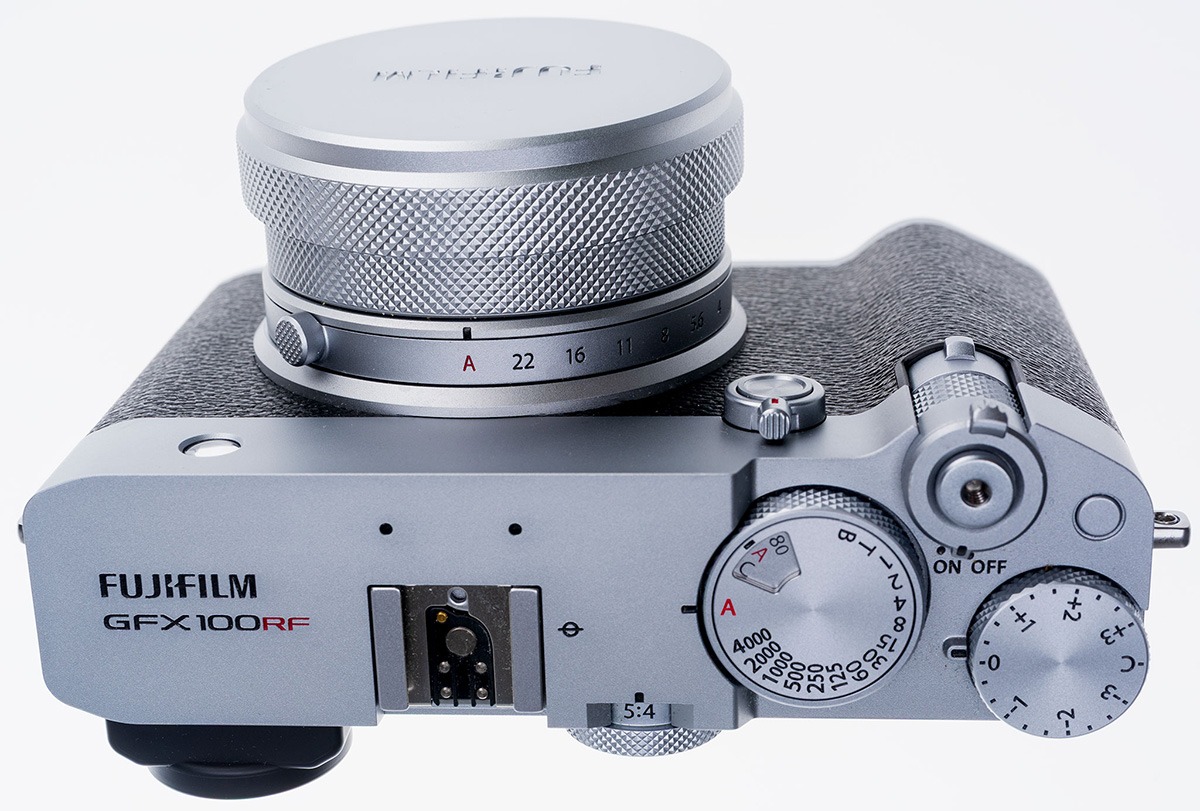
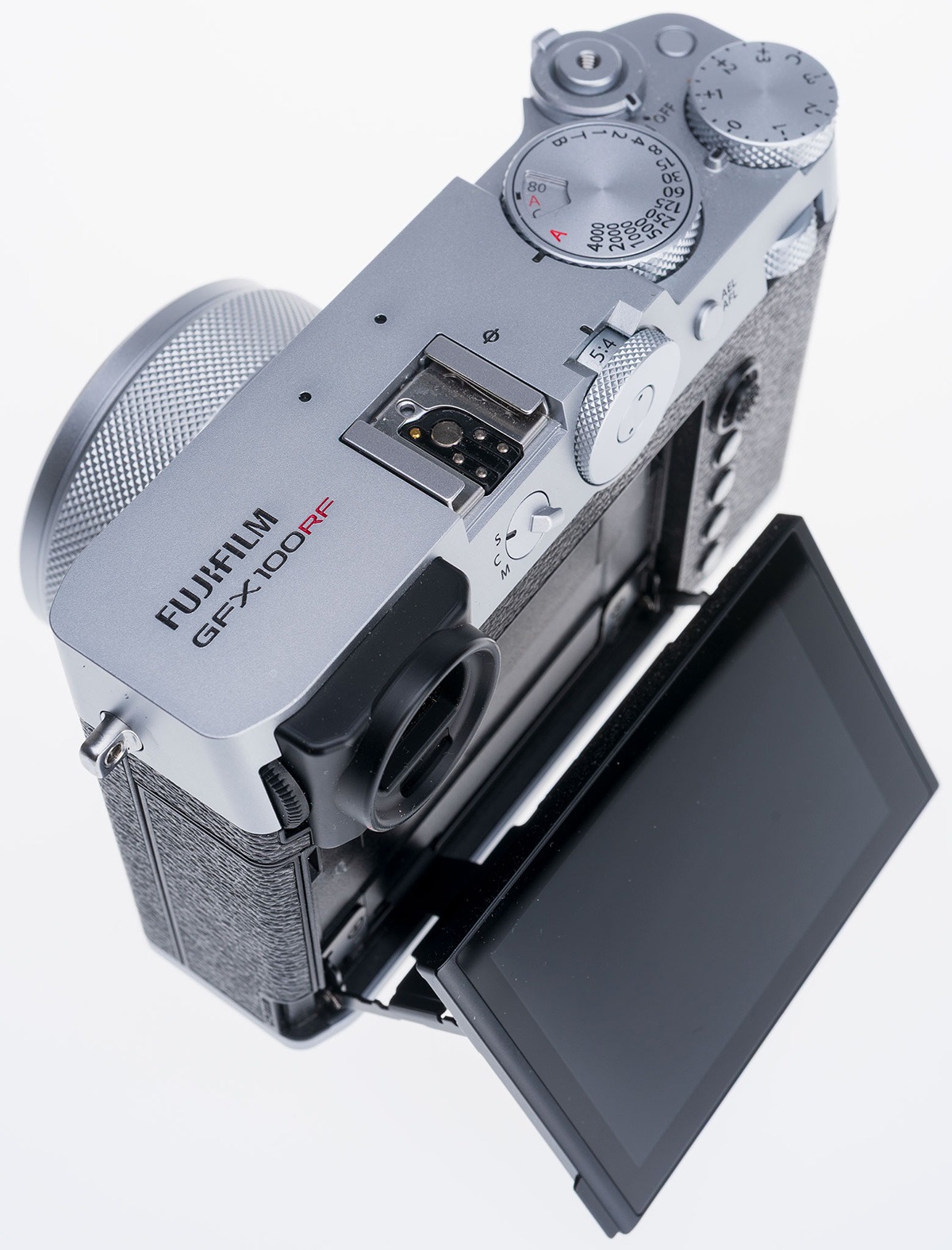
It’s a pity our sample was missing its flash shoe cover as that completes the design. Every dial, wheel and roller is finely knurled. Below the shutter release is a roller you can turn, a cylindrical pillar with the on/off switch above and a left-right toggle below it. You can customise functions, but out of the box the roller scrolls through nine image ratios and the bottom toggle further changes the crop with four lens simulations.
There’s another toggle lever (with a red mark) to move between EVF and rear screen viewing. A smaller roller with pushbutton function falling under your thumb positions the AF area, a rear top plate mounted dial gives an alternative way to set the default format ratio on power up, and on the top in the usual position is a shutter speed dial with lift and drop ISO setting collar (80-8,000, expandable to 40-102,400).
Most of this could be accomplished using the screen or EVF and menu settings. Instead this camera reasserts Fujifilm’s affinity for real controls as found in other GFX, the X100 and X-Pro ranges.
It is most akin to the X100 models, including a choice of silver or black finish. It’s also not much bigger despite the 33 x 44mm sensor. The X100VI is larger than its APS-C sensor predecessors because of the sensor stabilisation, and the GFX100S II is fairly large for the same reason. IBIS adds about 1cm all round to a sensor assembly.
The GFX100RF has no form of stabilisation, optical or sensor based, except a digital type dependent on a crop which can be activated for shooting the 4K and lesser movie formats. I did not test movie shooting, and also didn’t experiment with the interesting multi-exposure function.
For me, this camera came as more of a digital reprise of the classic Fuji GA645 rollfilm autofocus camera. It also manages to cover the role played by the G690 and G670 ‘giant Leica’ models, and the G617 panoramic 120 rollfilm camera which shot a 55 x 165mm format using a 105mm lens.
Switch the GFX100RF to its 17:6 ratio, and the 35mm f/4 Fujinon Super EBC lens gives exactly the same panoramic view. The JPEGs produced are cropped, and the raw .RAF files get an embedded sidecar file which makes Lightroom, Bridge, Camera Raw and other software preview and open them using the crop seen in the viewfinder.
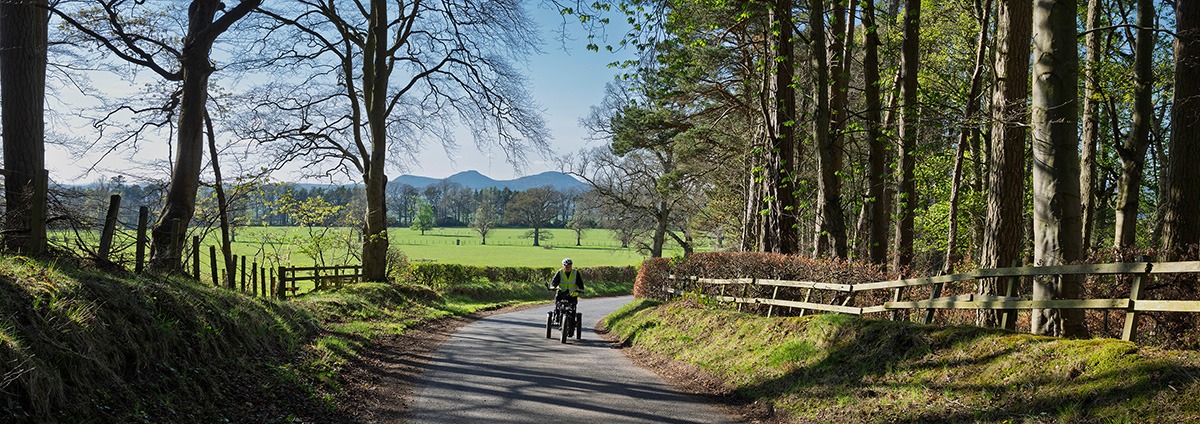
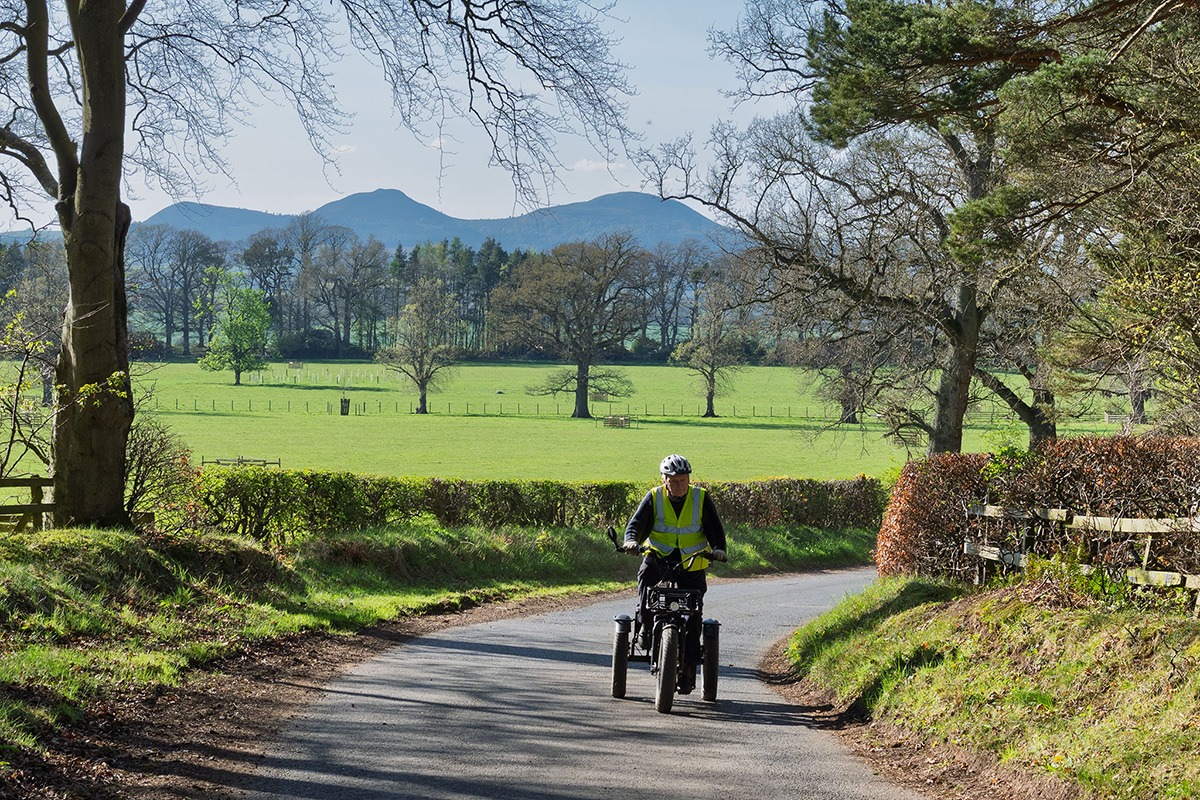
You can cancel this and access the entire 4:3 ratio image instead of the 17:6 – or the 65:24 (XPan), 16:9, 3:2, 5:4, 7:6 and 1:1 options as well as a vertical ‘half frame’ 3:4 ideal for portraits without holding the camera vertically. It’s still more than half the 102MP sensor! Eildon Hills and EV tricyclist in April.
With movie/audio functions similar to the X100VI, dual SD UHS-II card slots, CPU and screen/EVF similar to the GFX100S II I’ll refer readers back to reviews of these for other evaluation.
Part of the appeal of the GFX100RF is that it’s very familiar in detail and functions for any dedicated Fujifilm shooter. It offers all the same film simulations such as the ACROS+R red filtered BW, Velvia and Astia all of which I used at different times during this trial. However, to get the degree of control I wanted from each frame without diving into the detailed adjustments possible on the camera, I found Adobe’s Camera Matching ACROS+R combined with Strong curve and brightness increase more like the kind of print I’d aim for.
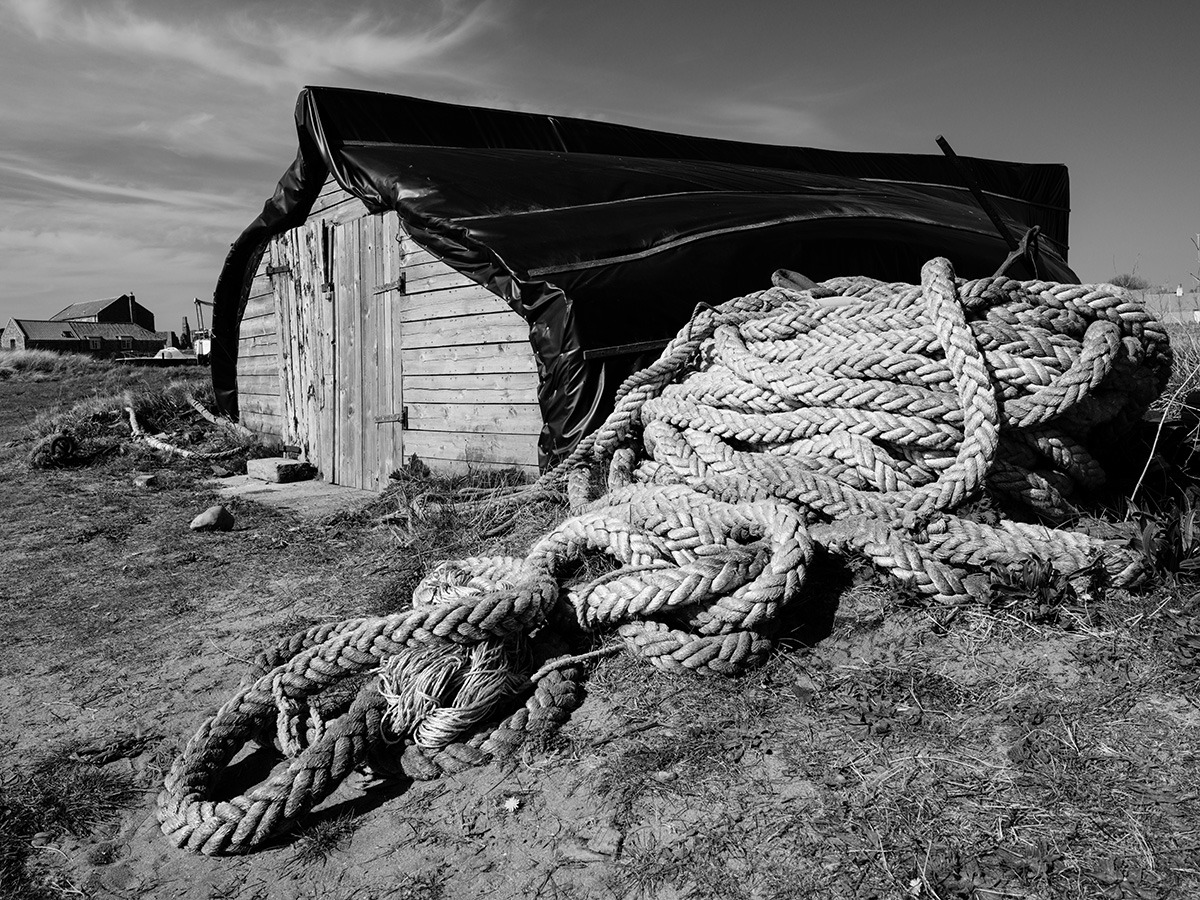
The Lindisfarne boat hut and chunky rope was taken at f/11 and there is enough depth of field for an A2 print with only the distant buildings slightly soft.
Fuji GFX100RF: the 35mm F4 lens
What’s very different is the 35mm f/4 fixed lens. It is not really comparable to the fixed 23mm f/2 of the X100 series, though some will claim f/2 on APS-C ‘equals’ f/4 on 33 x 44mm MF. That only holds true for depth of field, and then only for an identical pixel count determining the print or monitoring viewing conditions.
This lens is similar to a 26 to 28mm in field of view depending on whether you use the full 4:3 sensor ratio or crop to 3:2 35mm shape, where the X100 series lens is like a 35mm semi-wide on 35mm.
It’s a surprisingly simple 10-element 8-group inverted retrofocus with just two aspherical elements. In a similar fashion to lenses which pioneered this design in 1990s luxury compacts and later digital reprises, it uses a large element close to the sensor. It’s more or less a giant Ricoh GR despite Fujifilm pedigree. For calendar picture-postcard views the angle is perfect.
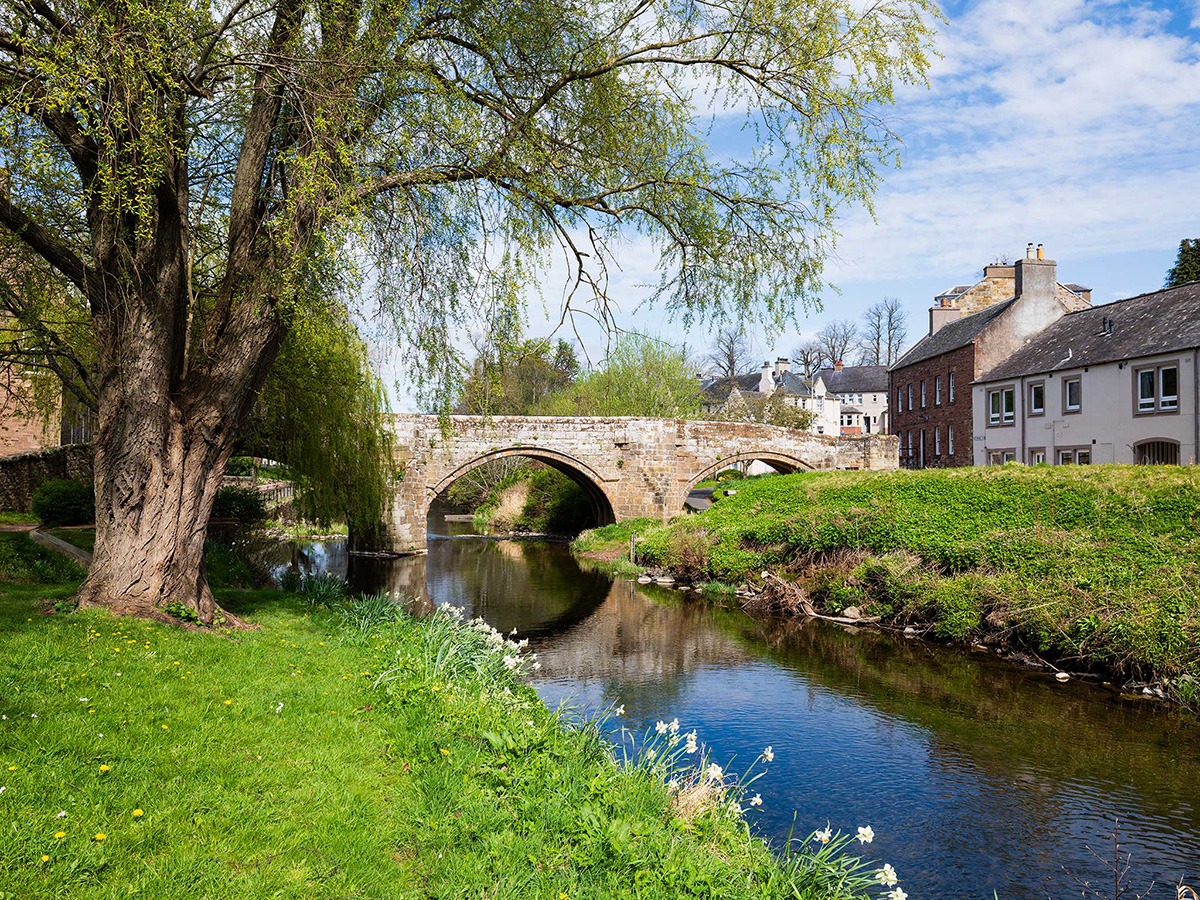
Jed Water running through Jedburgh.
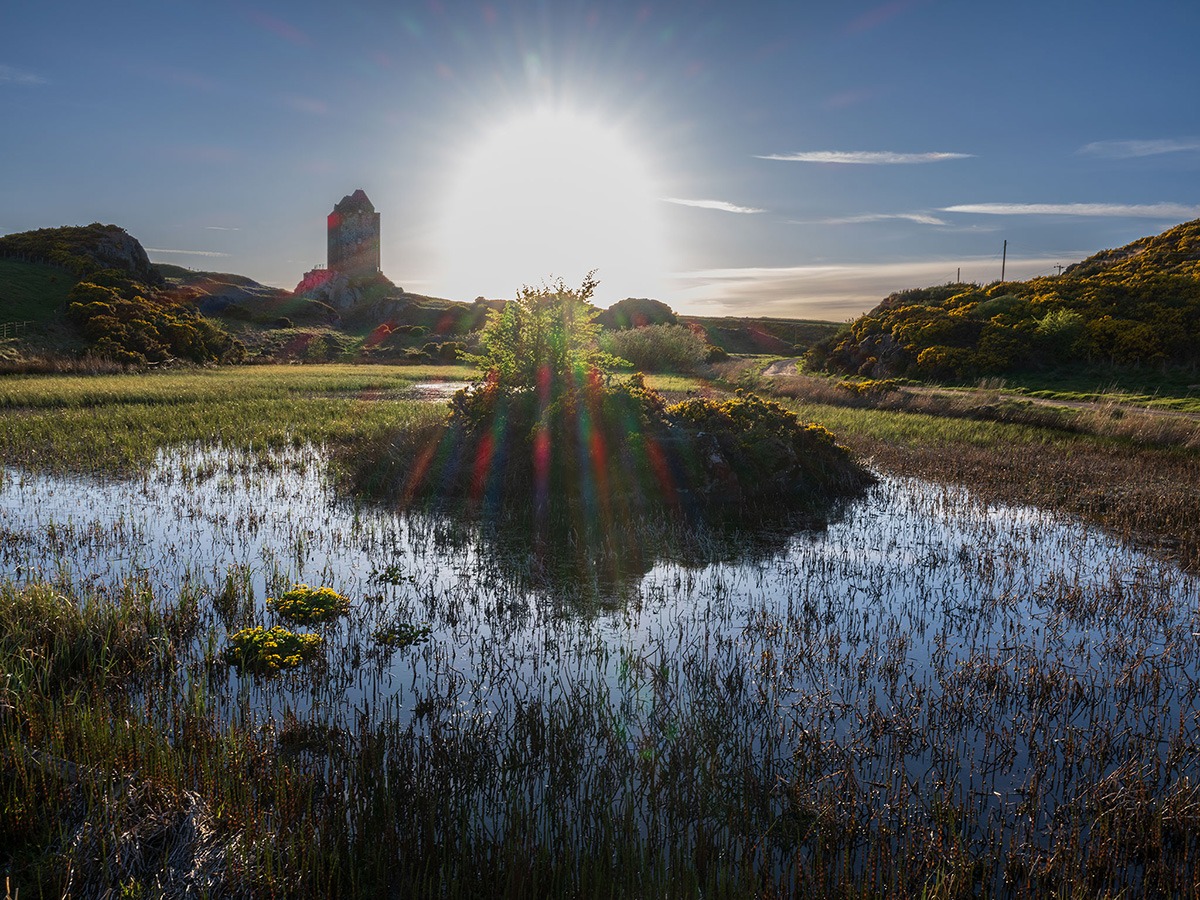
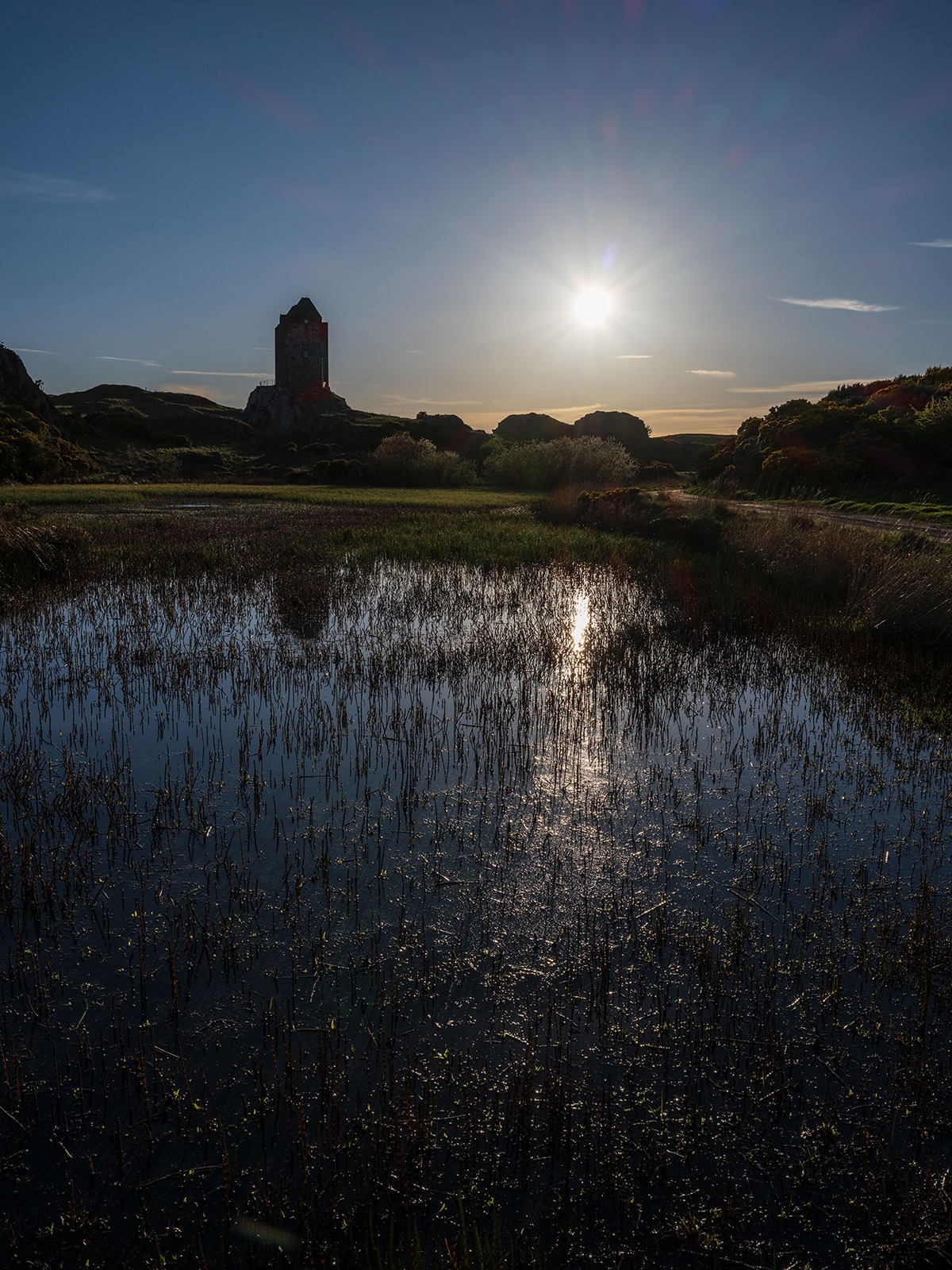
Despite the EBC coating, which I first encountered creating unrivalled flare-freedom in a 1975 55mm f/2.2 EBC Fujinon which used only five elements, the internal leaf shutter and iris combine with the lens design and probably also the sensor to produce some distinct flare patterns when shooting with a light source in the frame. These become dramatic from f/11 to f/22, resembling a diffraction grating or special effect rainbow star filter as below taken at f/22.
Fortunately the lens performance at f/4 is impeccable and using wider apertures can kill this flare, with the benefit of a 4X ND filter option inside the lens and the 1/4,000s fast leaf shutter speed or the electronic extreme of 1/16,000s. Flash sync works up to 1/2,000s or 1/4,000s depending on aperture.There’s no PC sync terminal, the flash shoe is your only connection. But flare is not inevitable, the shot below is at f/14.
Putting all this together with finely engineered focus and aperture rings (to 20cm, and third stop soft detents) we get a masterpiece of compact lens design on this larger format. Unscrew a front trim, fit the supplied 49mm filter on the bayonet lens hood adaptor and the camera becomes weather-sealed. Add the machined rectangular lens hood with its deep matt black inner and aluminium outer skins, and a supplied slide-on front cap completes the rig. The slide-on design could very easily be used to make a dedicated filter holder for grads or effects (hint to Fujifilm).
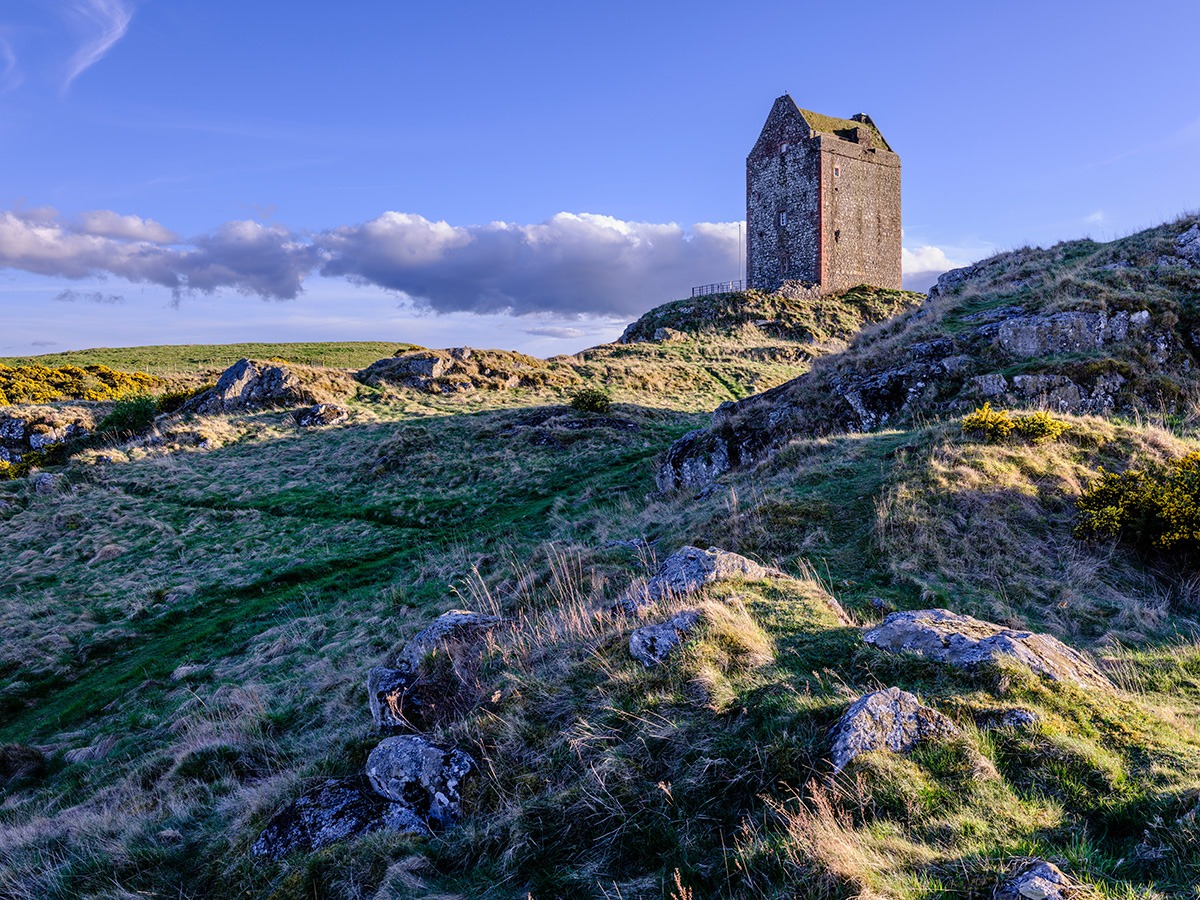
Generous use of Adobe Camera Raw ‘Shadow’ control put noise-free detail into the shaded parts of the foreground. 1/80s at f/9, ISO 200. Location – Smailholm Tower.
It’s difficult to fault the lens when you see in-camera JPEGs. The Super Fine option is so good, and the exposure so accurate, you might never need to shoot raw. At ISO 200, the deepest shadow detail on a JPEG can be pulled up with extreme levels adjustment in Photoshop and show no excessive noise or tone breaks. An underexposed JPEG from this sensor is almost as good as .RAF for post-processing.
It’s just as well that using the two cards to record the raw and JPEG gives you the best backup, film simulations (with EVF/screen preview) and cropped results. You can set the digital zoom to 35mm, 45mm, 50mm or 80mm in addition to those format ratios. If raw is recorded, in-camera processing allows application of all these settings later on. Sit down with the camera and a coffee, use the 5.7 million pixel EVF to view the results, and save a new JPEG.
Cropping, whether in-camera or later, provides great scope despite the fixed wide-angle lens. The 45mm digital onverter setting crops to exactly 35mm full frame bar the 4:3 ratio, and at 62MP closely matches the Sony A7RV with a 35mm lens. The 63mm crop gives a 50mm view with 31MP file and the 80mm a 20MP file with 63mm view. For best quality, an A4 print needs a 10MP+ image. One ninth of the full GFX picture is good enough for this, an effective 3X ‘converter’ giving a 105mm view though you must do this in post, there’s no camera setting.
When using the digital converter, the entire EVF or screen is filled by the cropped image. This leads on to the issue of ergonomics and those wonderfully engineered controls.
Check your change
After a few sorties out with the GFX I noticed that the digital converter and the format ratio had a tendency to be wrongly set. The greyed out non-image areas of the finder view meant accidental nudging of the ratio was not a huge problem, but changing the crop and the angle of view was.
When picking up the camera whether turning it on or just lifting it to the eye from neck-strap hanging, I was all too often touching the front roller and the digital converter (crop) toggle switch because both fall naturally under the right hand fingers. It’s an issue a long-term owner would learn to live with, avoided by turning the camera on only after lifting it to the eye, or by customising functions.
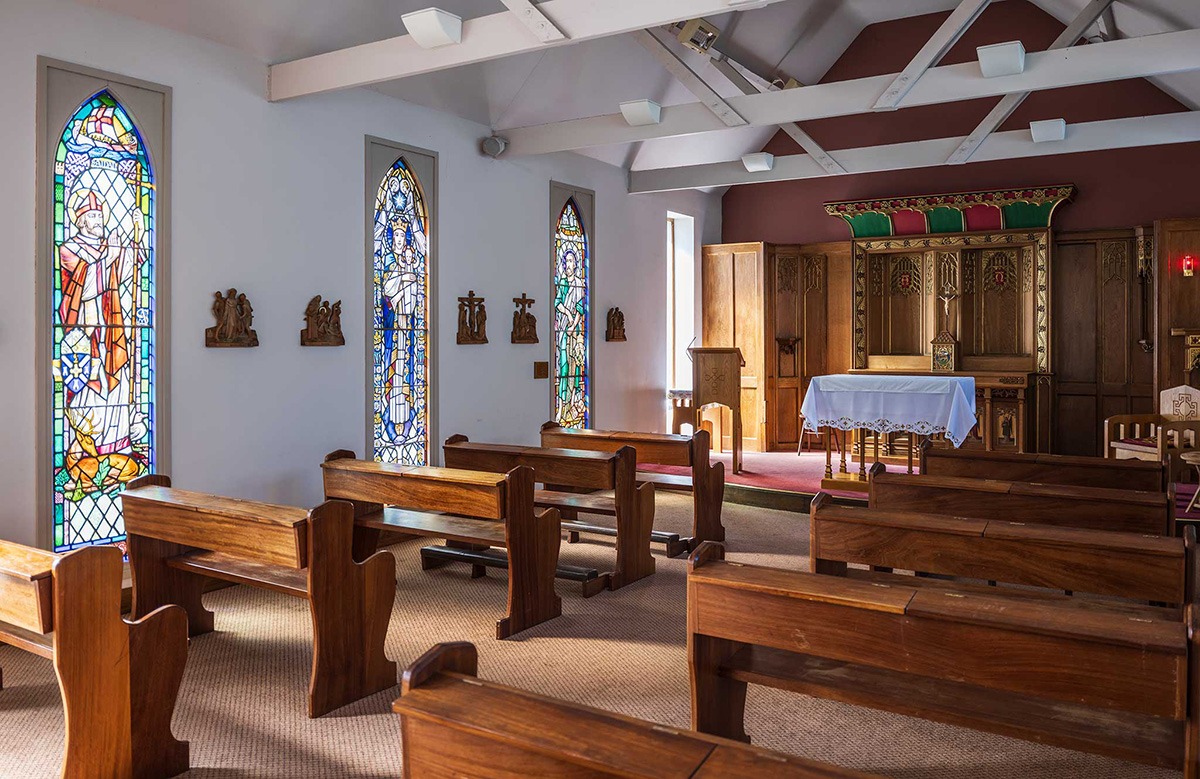
The interior of a Lindisfarne church, showing the 28mm angle of view.
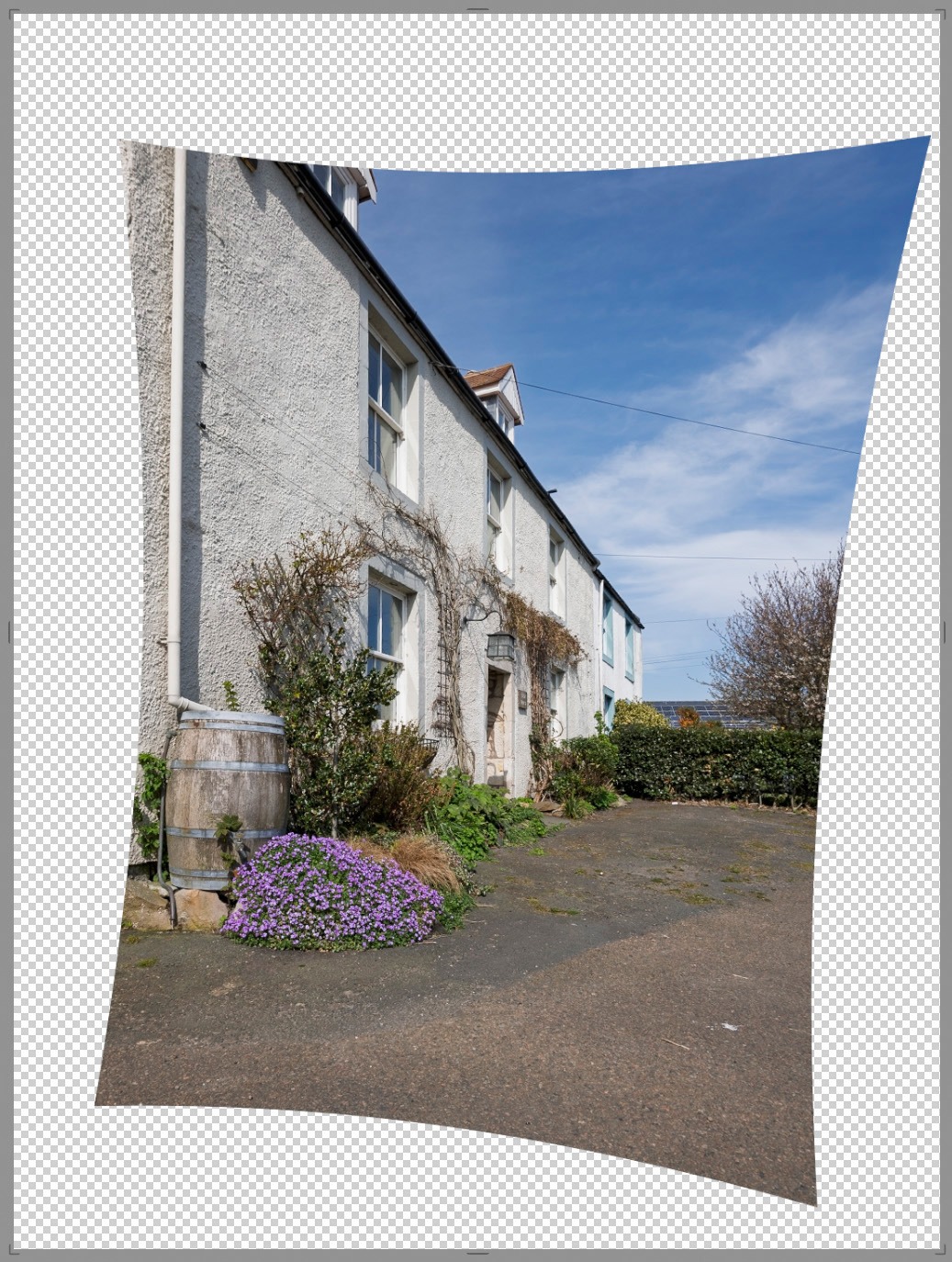
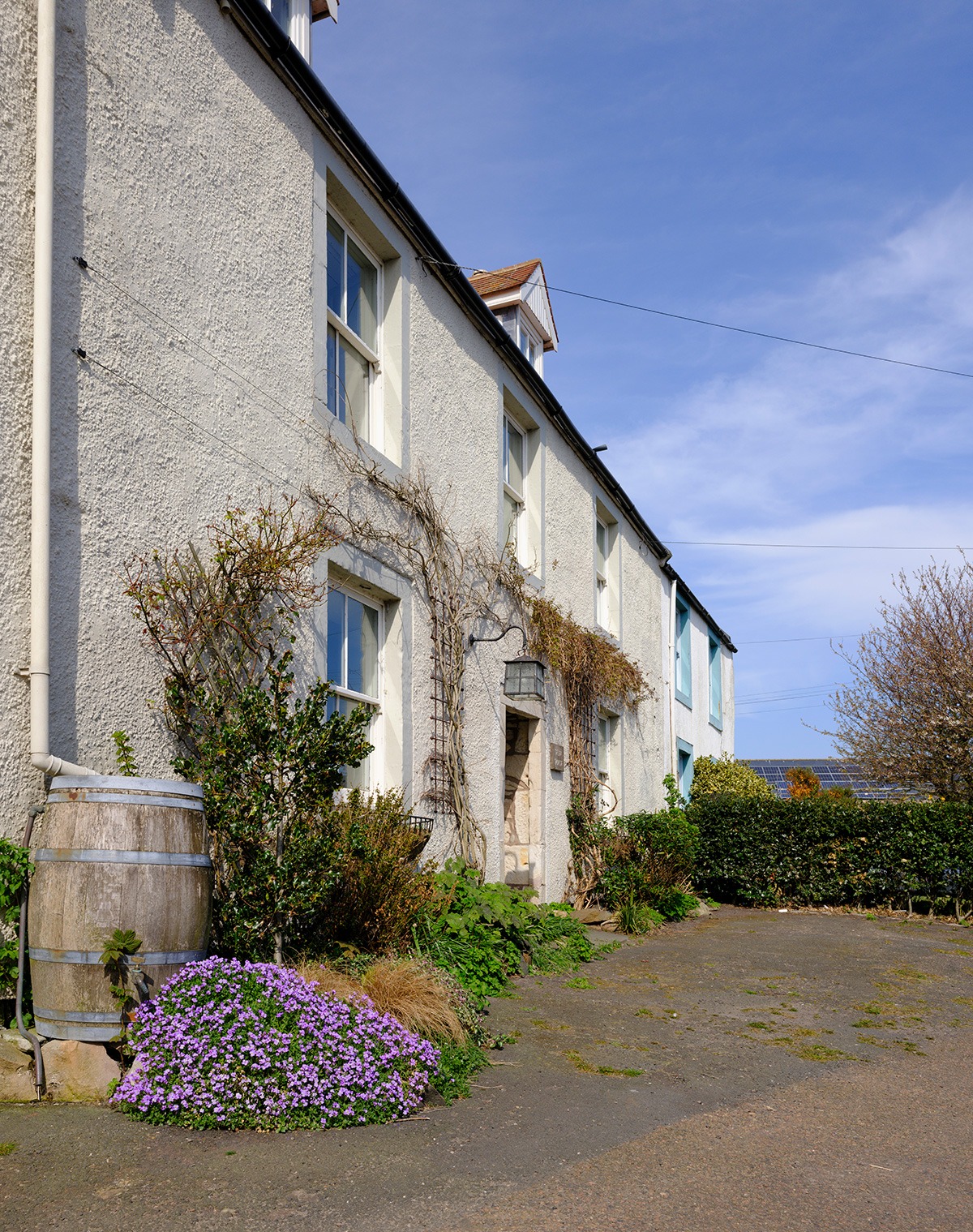
The most common thing was to think – “that’s not a 28mm view!” after moving to the intended shooting position. Church on Lindisfarne, above, is the full 28mm angle with a slight crop to a 35mm shape. The camera was often set by accident to a 35mm view, the first change when moving the toggle switch. Sometimes I failed to realise and took a perfectly good 62MP or 31MP shot, and in a few cases like the house shown in the example dealing with lens distortion and profile I intended a 35mm view (no drainpipe) but used the full 28mm angle when processing from raw. Nothing was ever lost, except perhaps some resolution in a JPEG which I probably did not need.
This example uses Adobe Camera Raw to put a profile-corrected conversion, with straightening and converging vertical correction added, into a larger canvas where the degree of distortion present in the lens can be seen.This is the final crop. Ideally less haze on the sun would have improved this.
GFX100RF: power and storage management
Since startup is not instant, you may leave the camera switched on – but this doesn’t make a huge difference. To wake it up, first pressure on the shutter button is needed, the wake-up time is no faster than switching on from cold. It’s also very easy to take an accidental frame – I got more than a few.
I often found that picking the camera up by its right hand end in my right hand turned it on anyway as that switch also tends to get caught.
There is another point Fujifilm could address – the question of M and S size true raw files. Sony offers this with 26 and 15MP alternatives to 60MP. I don’t often use these, because tests have shown little or no benefit when it might be expected at high ISO settings. Sony raw files are big enough at around 80Mb. However with the 102MP GFX, raw files are over 200Mb and even the Super Fine JPEGs come in around 60Mb, with cropped ratio or digital converter use greatly reducing this, while always leaving raws full size.
If you shoot raw, Bridge/LR will mark frames cropped and/or digitally converted with a symbol identical to the one seen after processing. Only after previewing can you revert to see the whole raw frame and re-crop.
Shake down
The shutter has so little vibration that shots taken at speeds like 1/60s were critically sharp every time (bar subject movement) and those in the 1/8s-1/30s almost always as good. For me the watershed seemed to be anything longer than 1/8s. But ISO 8000 as used below to ensure a shutter speed of 1/50s does not mean high noise, and full aperture doesn’t mean loss of sharpness.
It’s a camera for extremes, with f/22 plus 4XND entering f/64 territory. The sensor doesn’t suffer badly from diffraction loss as it has no AA filter. It can shoot at 6fps (3fps only on electronic shutter) for a burst of nearly 300 JPEGs.
As for the battery life, it’s good that it is over 800 raw captures, twice as many as most full frame high res competitors. I charged in camera as no charger was provided, and never needed to change the battery mid-day. I used the latest Lexar Armor SDXC UHS-II card in slot 1, and a provided standard Lexar in slot 2. Reviewing, deleting, formatting and in-camera operations were fast, as was transferring small JPEGs to my iPhone. Using a new Fujifilm App, geolocation was recorded from the phone reliably with the camera connection renewed.
Although it has been called a ‘compact’ and tipped for street shooting, it’s more of a travel and landscape choice. The level of detail revealed when you zoom in on a 100% view will have you magically erasing gum off paving, crisp bags from hedgerows and bad pointing on brickwork. Sure, it would not distract even on a 20 x 16″ print but this sensor is good for prints 40 x 30″ viewed with a magnifying glass.
If 100 megapixels on a 4:3 ratio format isn’t enough, it’s such a quick and easy camera to used and focus that two handheld shots in rapid succession, one at ISO 160 and the other at ISO 200 by accident, focused on the distant tree and the foreground flowers were easily merged into a slimmer format composite of aorund 140 megapixels! Regular multishot pans do require a good processor and free memory/disc space for Photoshop to handle them automatically. This was a manual composite, no automation involved.
The £4,700 SRP seems high but it’s the lowest cost way to get that 100 million 16-bit pixel look.
You can find the GFX100RF at Clifton Cameras with a 5-year extended warranty.
Classic 2012-on OM-system M4:3 60mm F2.8 Macro on OM-1, £449 street price
Less than 200g, 8cm 1:1 reproduction (from lens front)
Make the most of the micro four-thirds system’s size advantage
Can a smaller sensor deliver the artistic and creative potential for narrow depth of field and use of bokeh? Absolutely. The Olympus family of mirrorless cameras has evolved into the OM system – we look at the 2012 60mm f/2.8 M.Zuiko Macro for creative close-up photography and explore the opportunities made available by cutting the size of your system.
What is the 60mm f/2.8 M.Zuiko Macro lens?
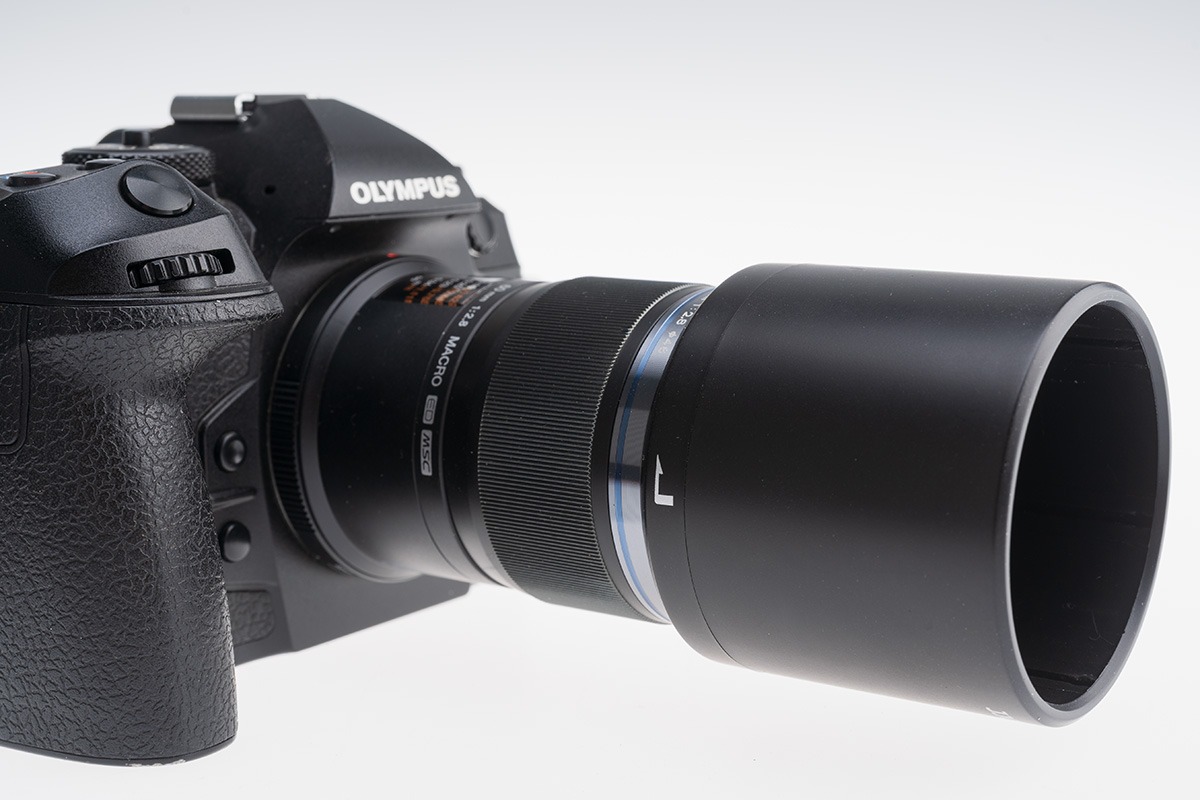
The OM-Systems 60mm f/2.8 M.Zuiko Macro is one the best lenses for close-up nature photography. Introduced in 2012, after 14 years it’s still an essential in any Olympus OM kit. True 1:1 focus at 8cm from the lens front is thanks to an internal focus system with no change in the barrel length. It weighs just 186g, takes 46mm filters and is only 82mm long. This makes it ideal as a field companion.
Although it was introduced 14 years ago at the time of writing, it has remained part of the OM-System lineup and is available new for £449 from Clifton Cameras (this link supports Cameracraft), from Amazon UK, or used from around £250 from reputable secondhand dealers such as London Camera Exchange or CeX.
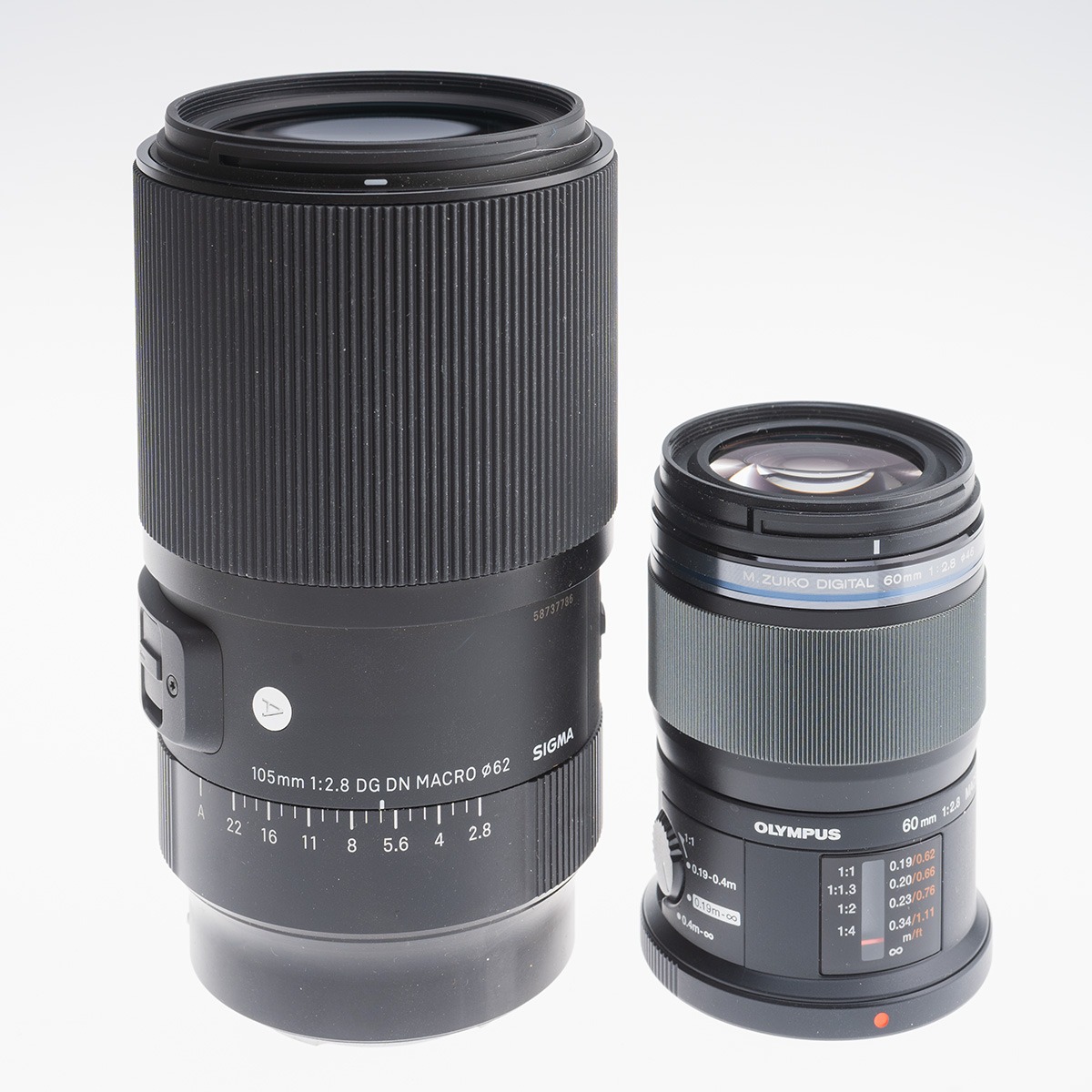
Here’s a shot of with it next to the full frame Sigma 105mm f/2.8 macro – the 60mm is equivalent to a 120mm – which says it all.
The size avoids touching or disturbing foliage. It’s also easy to hold a camera like the OM-1, currently the largest and heaviest OM-Systems body, one-handed. It’s easy to get low viewpoints using the tilt and twist rear screen when you can not put an eye to the viewfinder.
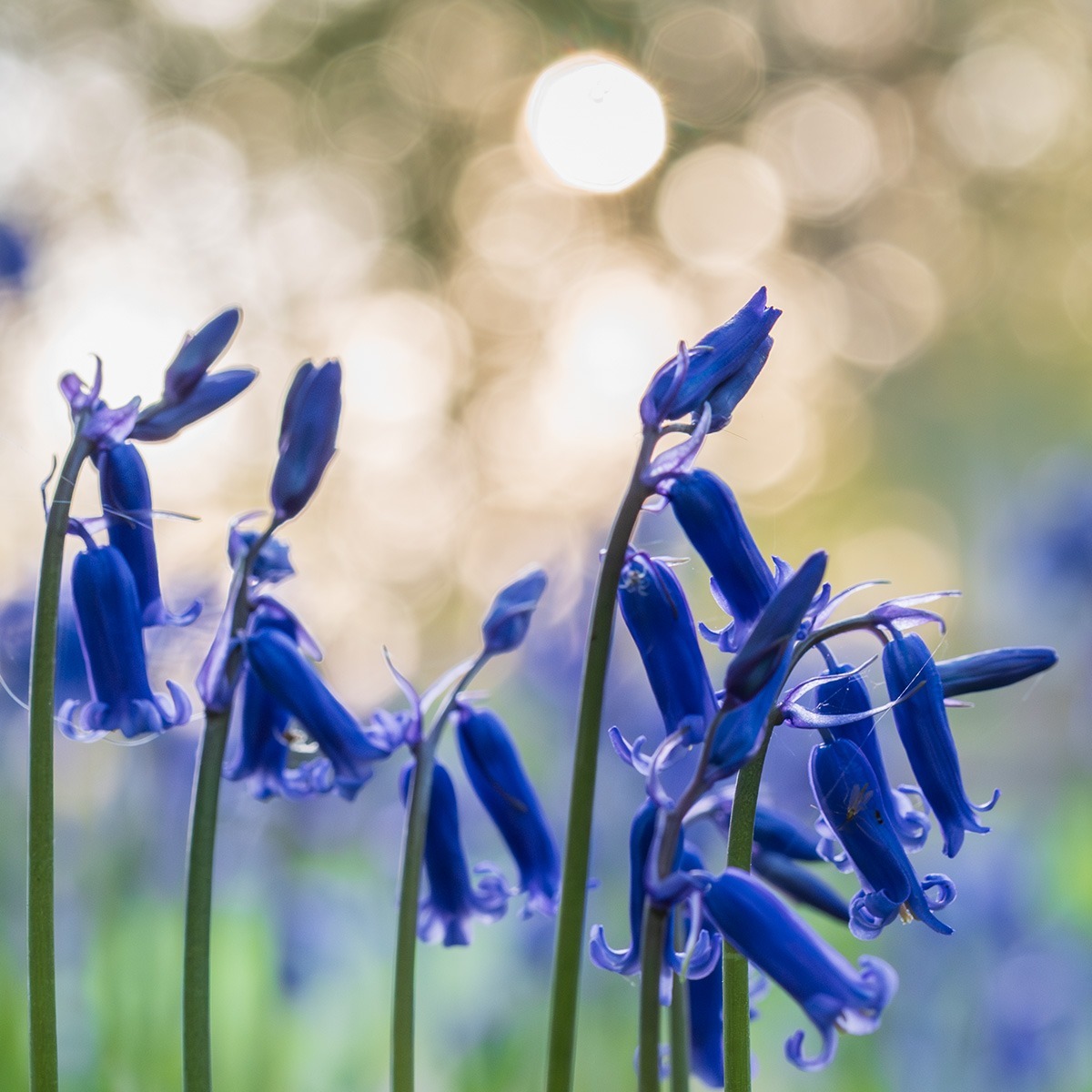
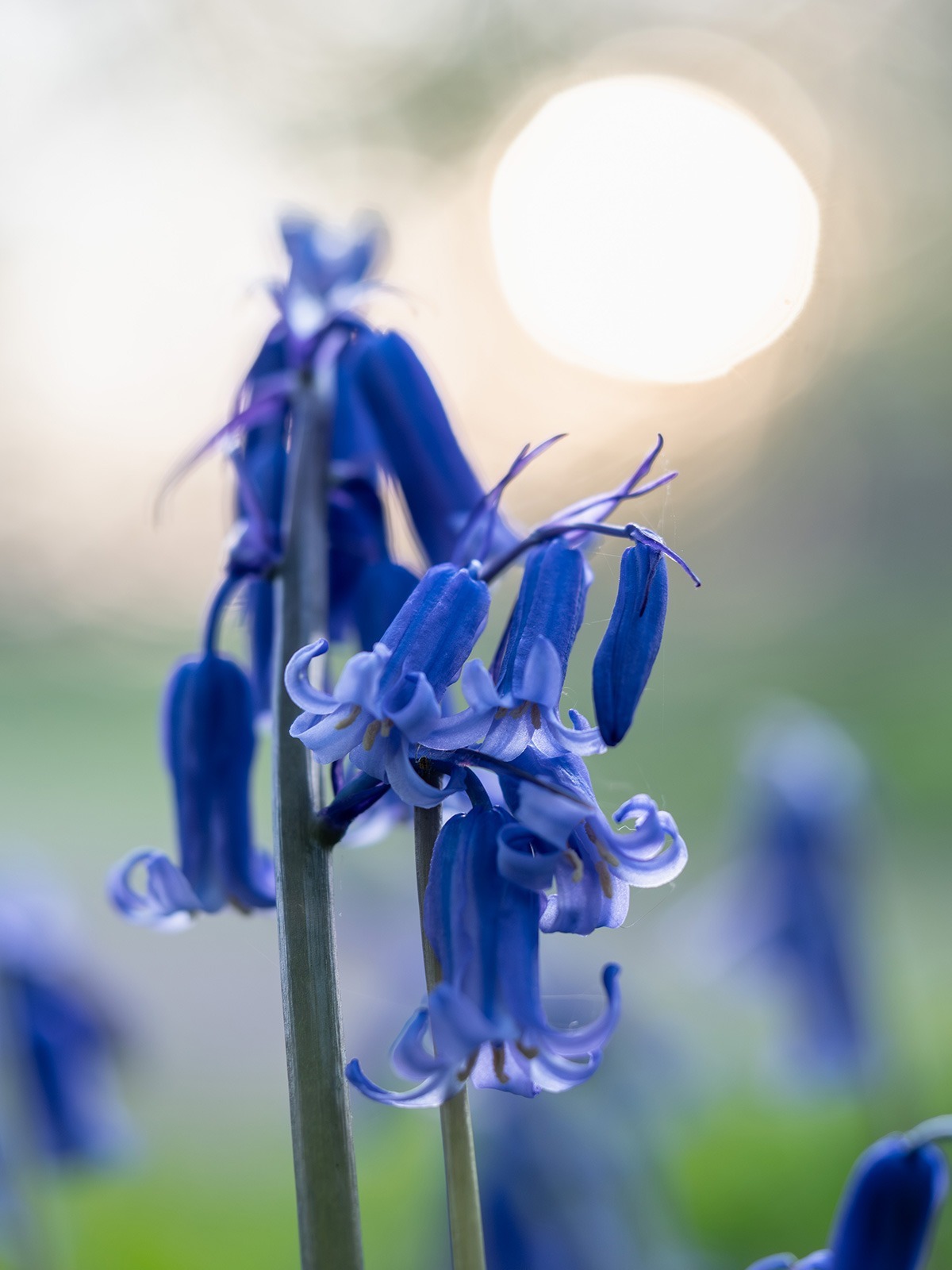
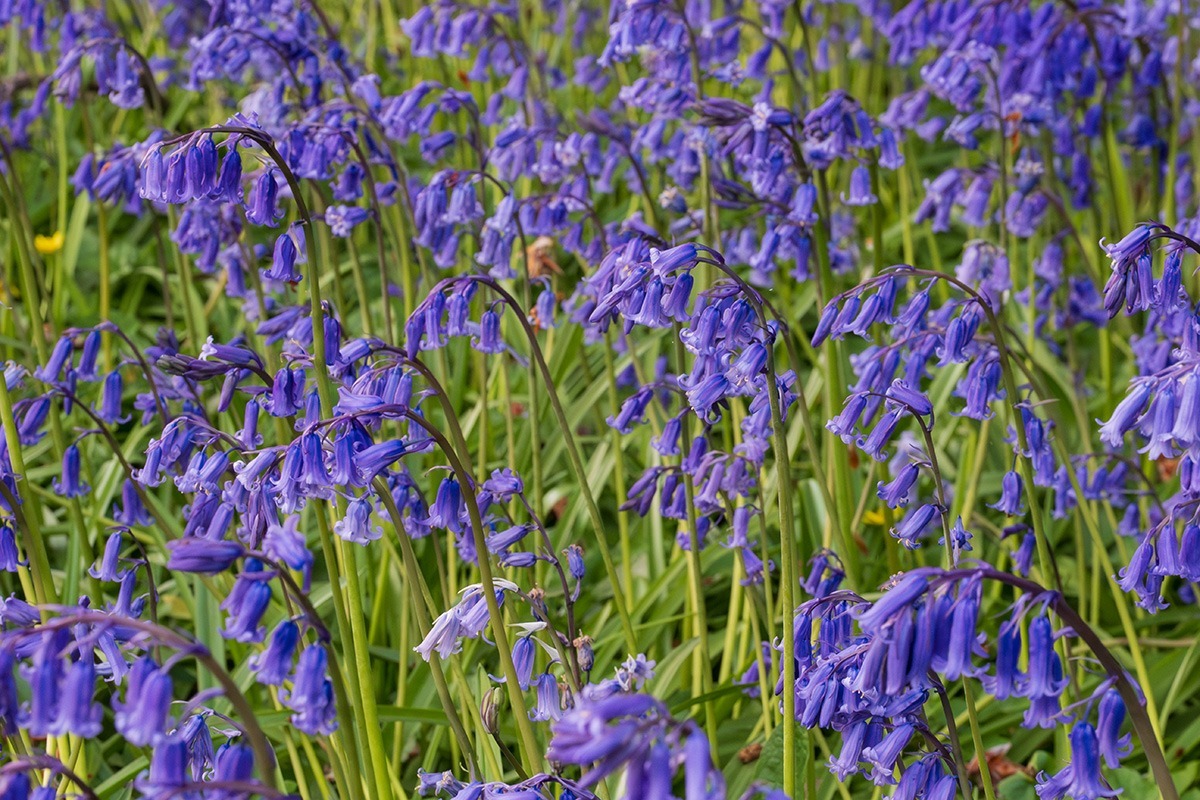
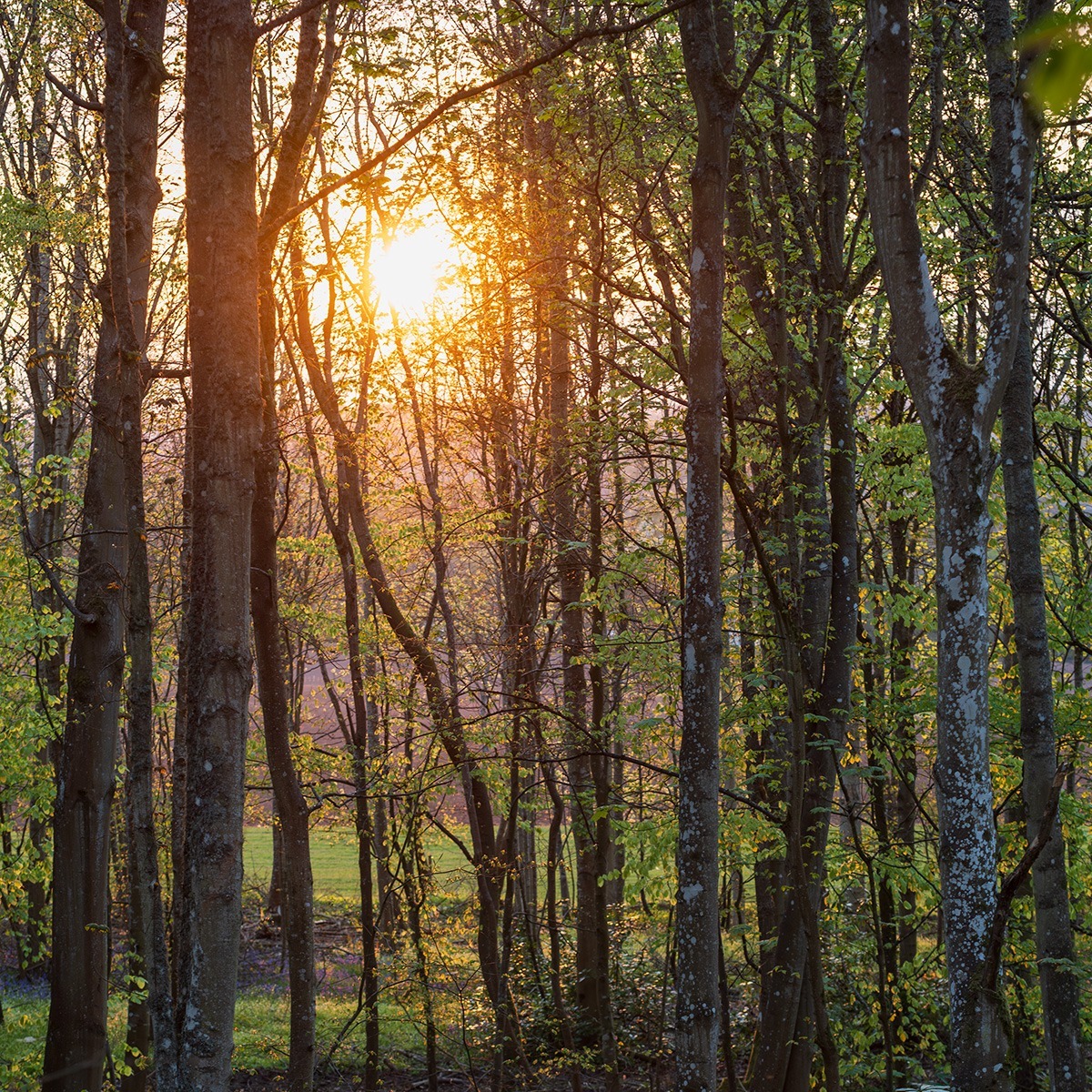
The f/2.8 aperture means if you do put anything very close to the front element it can dissolve into a blur. Here a bluebell adds an impressionistic glow. Depth of field is tiny wide open. The seven-blade aperture is still present at f/2.8 so the low sun coming through trees creates slightly less than perfect highlight circles. It’s still a lovely effect.
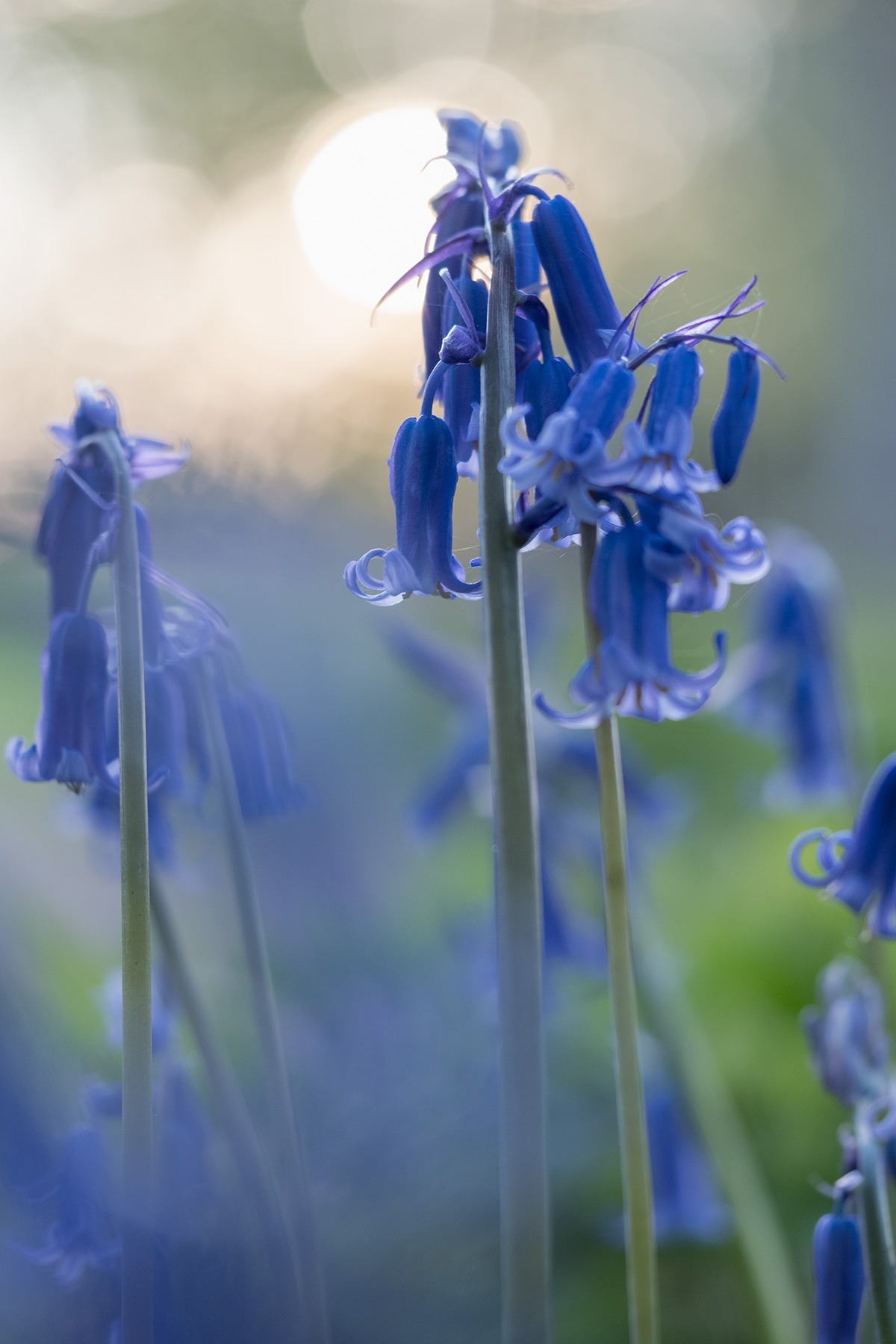
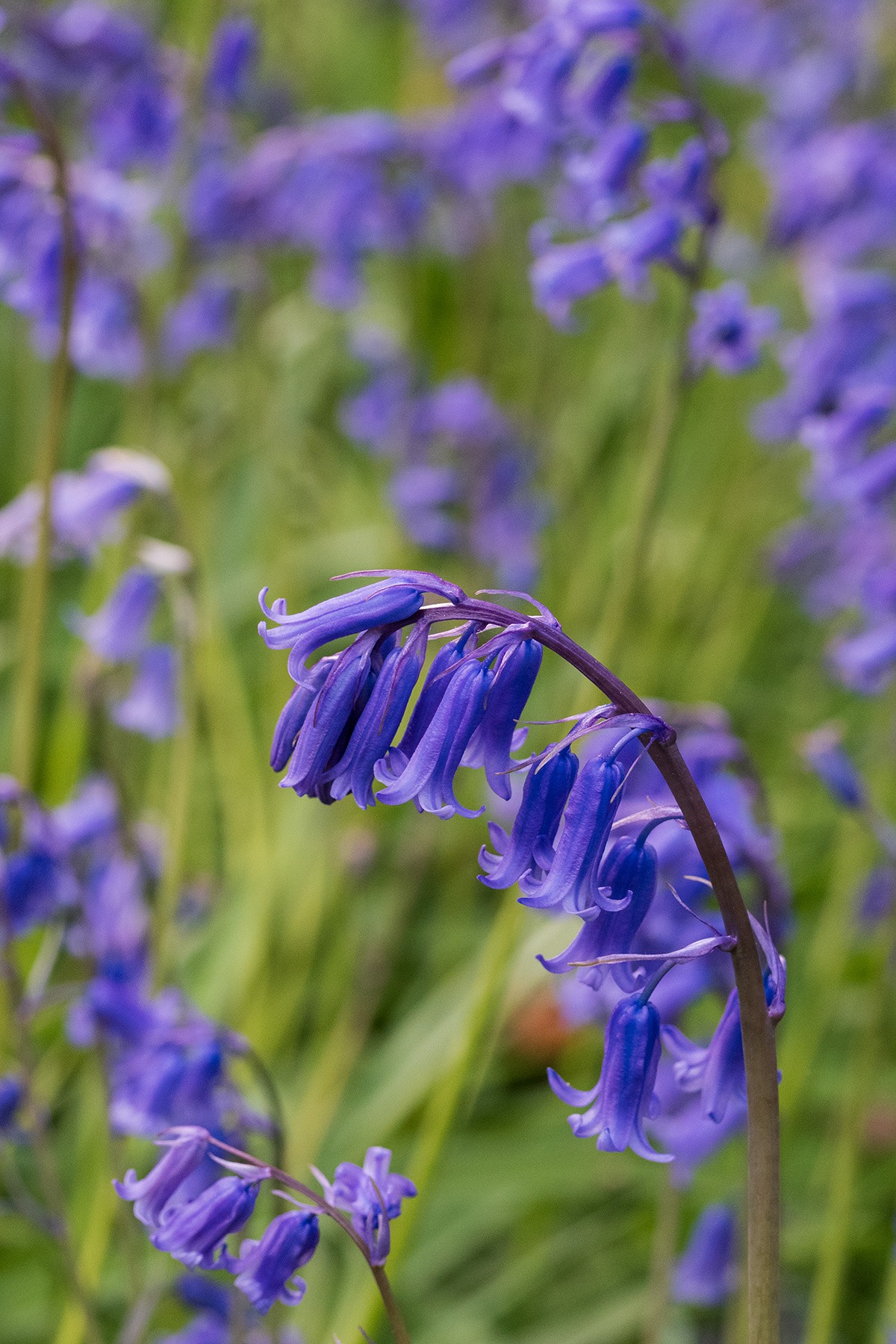
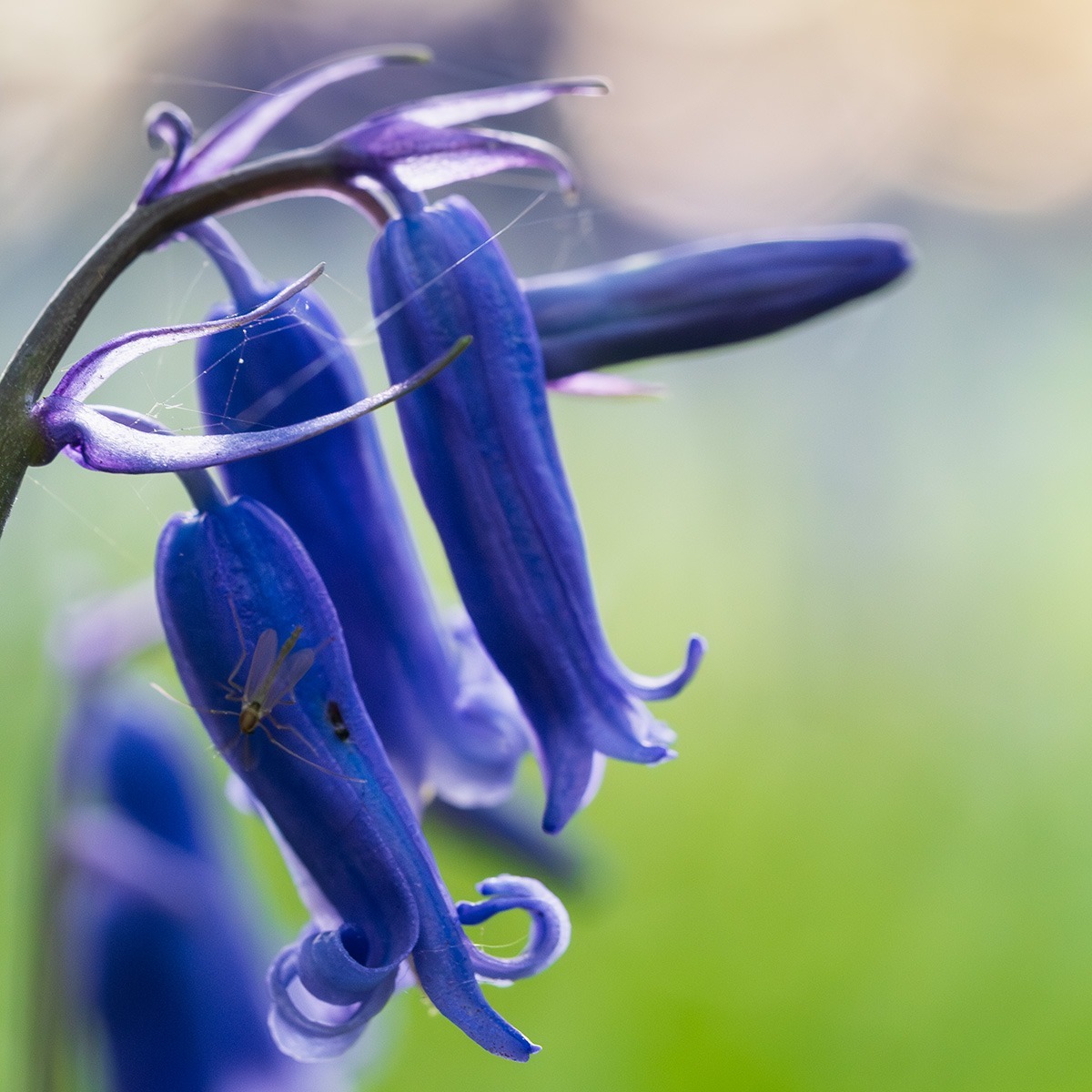
Shot against the light, the colour of bluebells is realistic. Most digital (and film) shots record too much reflected far red from these flowers making them slightly less pure blue, as the shot below taken at the same time with the light coming from the left hand side. Aperture for this was f/5 to balance keeping most of the main head sharp but still with distinction from the background.
These are true Scottish bluebells! They are not the Spanish-British hybrids and are a protected species, growing here in woodlands dating from the early 18th century (the big house and estate disappeared long ago). I was very careful not to tread on any. My garden has the invaders, and that’s also what most ‘wild’ ones are. They look very different. See – https://www.wildlifetrusts.org/wildlife/how-identify/spanish-or-native-bluebell
I set out with just this lens on the OM-1 walking to a spot where I had seen a large patch of bluebells on the edge of the wood open to the direction of sun, setting behind distant trees. As a subject, bluebells are best shot on a longer lens, which this 120mm-equivalent is. The narrow angle of view compresses them to fill the frame. At f/10, there’s still a distinct plane of focus with softer detail in front and beyond. This lens stops down all the way to f/22 in third-stop steps but using a smaller aperture like f/16 would have lost sharpness slightly where focused – the lens performs best from f/4 to f/5.6 – and even this was at ISO 5000 to keep 1/125s shutter speed. The OM-1 sensor-based stabilisation would allowed 1/30s or even 1/15th without camera shake affecting things, but flowers don’t keep still. At macro distances the vibration from a gentle breeze can blur them.
I also knew where the low sun would be coming from, and it was the backlit effect I was looking for. The side/front lit angle may also have influenced auto white balance, and when this colour is viewed in a mostly green setting, the blue can seem to have more magenta.
The multiple overlapping bokeh discs are caused by the distant trees. Here they are made smaller and more distinct by stopping down to f/5.6. Again, this blue is more realistic and very true to nature.
The 60mm macro enabled very close studies and even at f/2.8. You can see the fly and strands of spider web are well resolved, but the contrast of the fly and flower is low in this lighting.
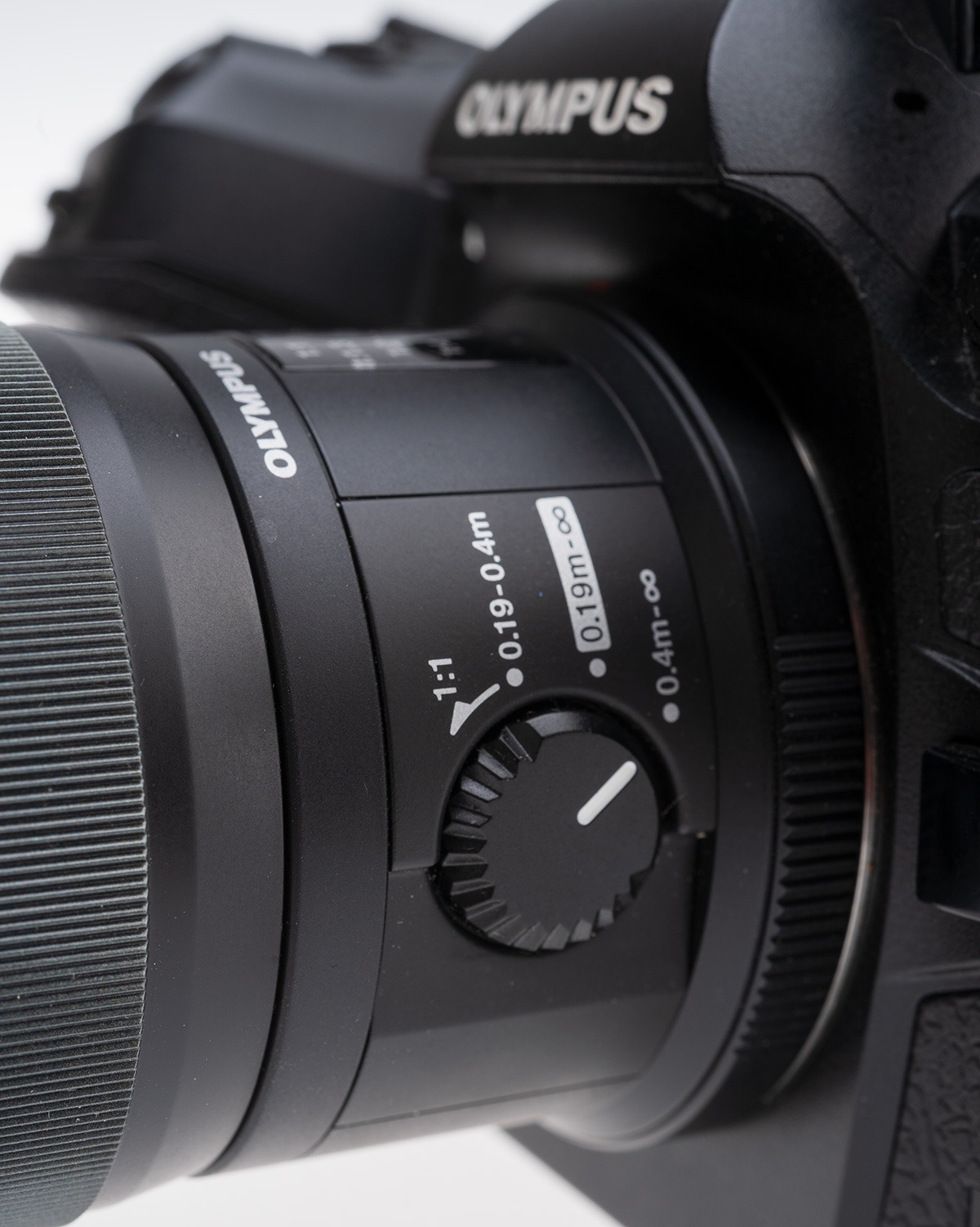
For more distant shots, the focus range limiter on the lens was set to 40cm to infinity. It focuses very fast and silently but if allowed to range all the way from 1:1 focus may be missed. I had it set to the 19 to 40cm range when two roe deer does walked past just three or four metres away and that was a lost shot!
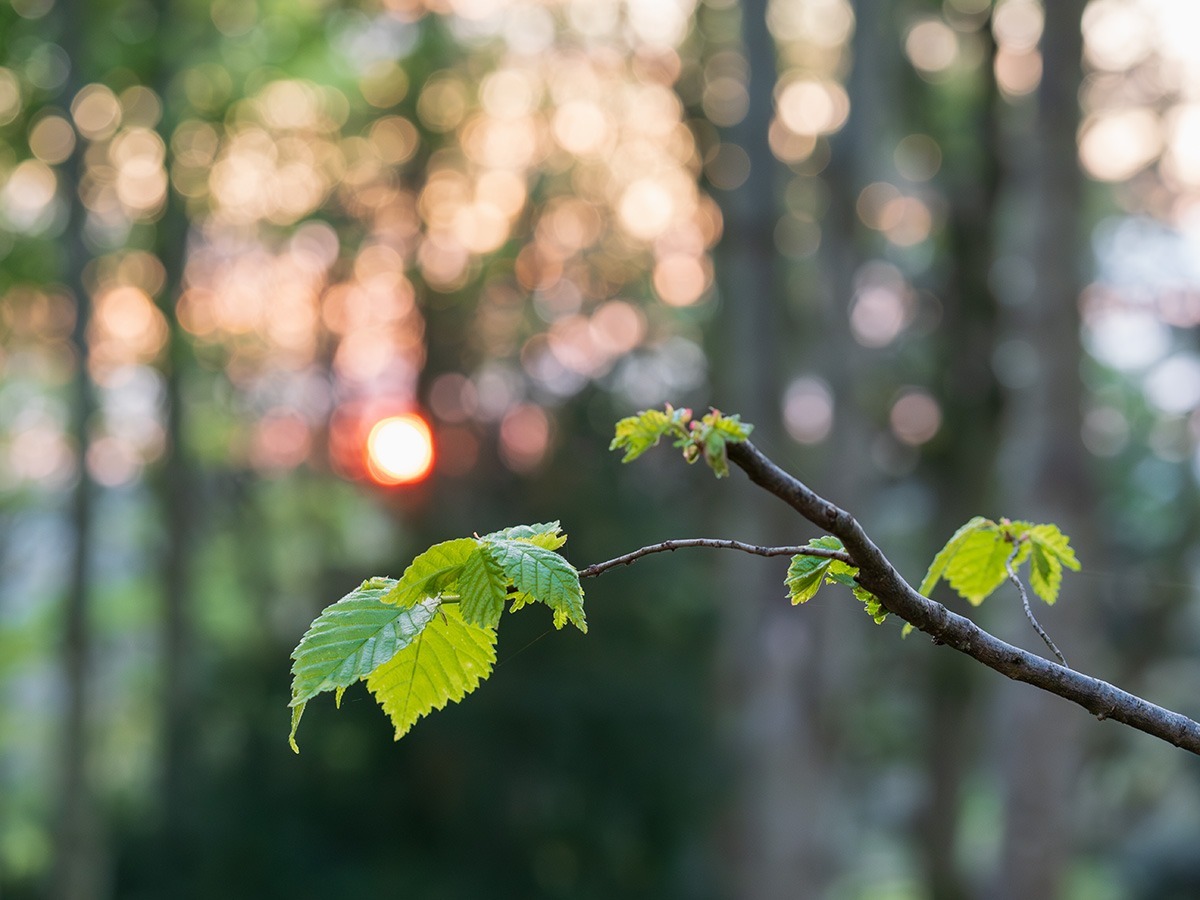
With this lens, the woodland at sunset continued to provide many opportunities. Young birch leaves here were taken at f/4, and in the rapidly falling light this needed ISO 2500. The small MicroFourThirds sensor – one quarter of the size of a full frame, half the size of APS-C – has reasonable noise levels but without shooting raw as I did for all these, and using Adobe’s Reduce Noise AI-powered conversion, the results would not be as smooth.
The 60mm focal length is also great for general landscape views. This is taken 12 minutes earlier and only needed ISO 320 at f/4. That only 1/3rd of a stop faster than the OM-1 base ISO of 200.
Where and when to find bluebells in the UK?
In many parts of the UK bluebells are still in bloom and there’s still time to get out into woodlands while the leaf cover on trees is not too far grown to let the light in. In southern Scotland they have just come into their best state and woodlands remain open to light, but that will not last long. Further north it’s a week or so later. May is a good month to catch the new bright green and light environment in woods. By June, most trees are in such full leaf that only a fraction of the light reaches the forest floor and in July the green of leaves begins to darken.
Get out now, even without a macro lens. Do not just look for subjects. Look for interesting light, which can mean staying out until sunset. Photography is all about light, the subject or scene is not enough on its own!
This lens hood, which retracts with a gentle push to sit back over the lens, is a low cost JJC from Amazon which I rate better than the OM-Systems original. It was used for all the pictures as the working distance of this lens does allow enough space.
None of the close shots are anywhere near the lens’s 1:1 which is the same framing as a 2:1, twice life size, view on a full frame camera.
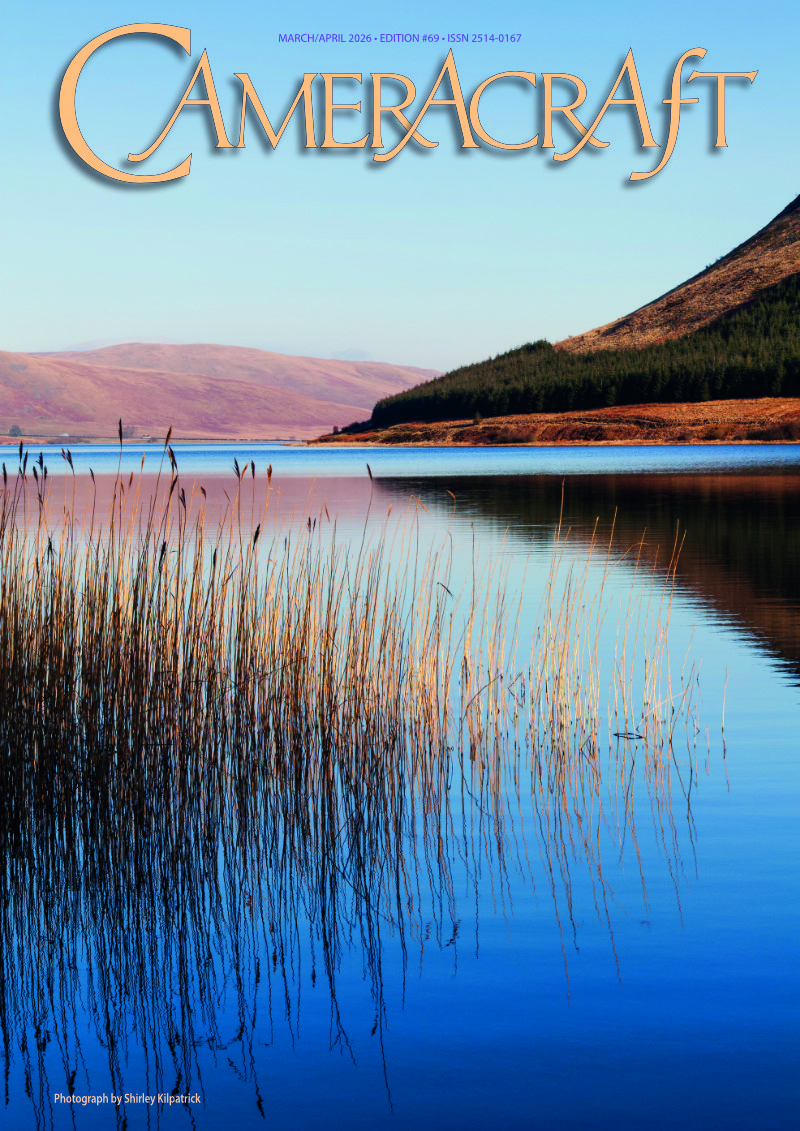
Cameracraft Issue 69 is now free to read in low resolution page turn here!
AI enhancement explored – Gary Friedman stares into the face of generative portraiture
Lifting the Iron (shutter) Curtain – Zeiss Werra 3 and Zorki 4 before they were retro
Is it cheaper to adapt a Sony lens than buy a Nikon equivalent? Viltrox EZ adaptor tested
In this issue – Tom Hill explains how going back to college changed his photography, David Tymm shows how amazing an iPhone and a big bike can be for an epic US road trip, Nigel Thomas on his favourite ends of the day and night, and Colin McPherson catches a Kickstarter tide.
We test the Viltrox E to Z fully coupled adaptor which lets you use all your Sony lenses on a Nikon Z body, puzzle over the good points of the ‘not really hybrid at all’ Yashica FX-D 100, check out the ReflectionFrame which uses e-ink to display a changeable picture for months, reminisce with the Zeiss Werra 3 and Zorki 4 from back in the heyday of Iron Curtain cameras.
Plus, Gary Friedman continues his exploration of AI enhancement for portraits, and we introduce our first crossword – one which uses picture clues!
Subscriptions guarantee early access, and let us keep the website uncluttered with minimal advertising. It costs just £15 a year, and you get unrestricted downloadable 300dpi files which can be viewed as spreads and which print really well, if you want to keep selected pages or articles that way, using printers such as the Epson ET-8550 in our office*.
You get the issue download link sent in an email on or just before the 1st of month (Jan, Mar, May, July, Sept, Nov).
* It was bought when these were brand new on the market. We have just refilled GY (grey) which is the most used ink. The print count, which includes A3+ colour like the Landor Phototex adhesive fabric decor we tested in September/October 2025, was 141 black and white and 1081 colour. The remaining Black, Photo Black, C, Y and M are all more than 1/3rd full and the maintenance cartridge is less than 1/3rd used so running costs look very reasonable.
Cameracraft Issue 68 is now free to read in low-resolution page turn here!
Fashion photography with Paolo Prisco
Top of the Pops: John Henshall’s TV tips and tales from behind the camera
Tested: Leica M EV1, Fujifilm X-E5, Fujifilm X Half
In this issue – Dynamic fashion from Paolo Prisco, freezing winter waters from David Forster, bursts of light and inspiration from TV camera and lighting professional turned digital expert John Henshall. Reviews of the Leica M EV1, Fujifilm X-E5 with 23mm f/2.8, Fujifilm X Half, Newyi 50mm f/1.1 M lens, and vintage Olympus Pen half-framers from 60 years ago.
Plus, Gary Friedman’s AI recreation of impossible family photos uniting generations, and Tom Hill’s take on street photography ethics.
Subscriptions guarantee early access, and let us keep the website uncluttered with minimal advertising. It costs just £15 a year, and you get unrestricted downloadable 300dpi files which can be viewed as spreads and which print really well, if you want to keep selected pages or articles that way, using printers such as the Epson ET-8550 in our office. It was bought when these were brand new on the market and at the time of writing is still on the original inks, just coming up to refill the Grey and the others still about one-third full.
You get the issue download link sent in an email on or just before the 1st of month (Jan, Mar, May, July, Sept, Nov) – and it lets us keep publishing interviews, profiles, advice, tests, guides and more without the intrusive and irrelevant adverts, incessant video and paywalls that blight modern publishing.
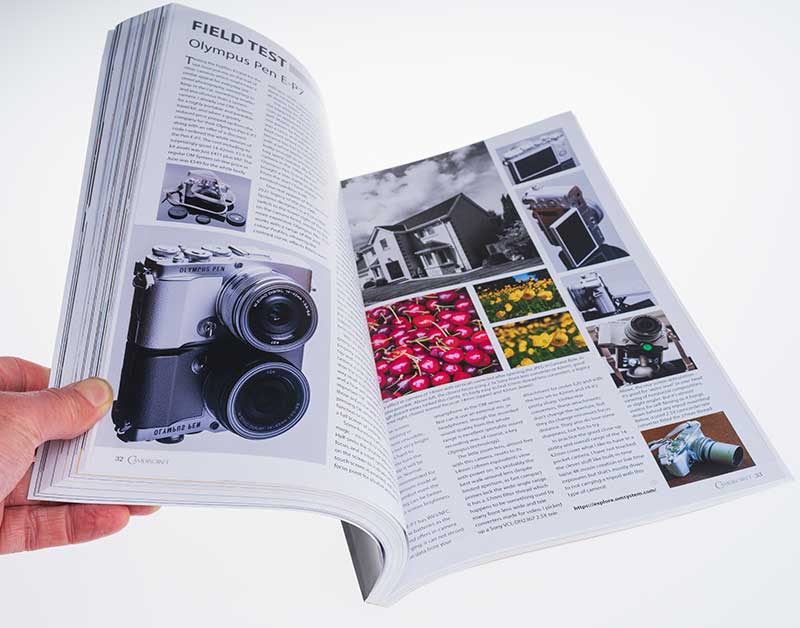
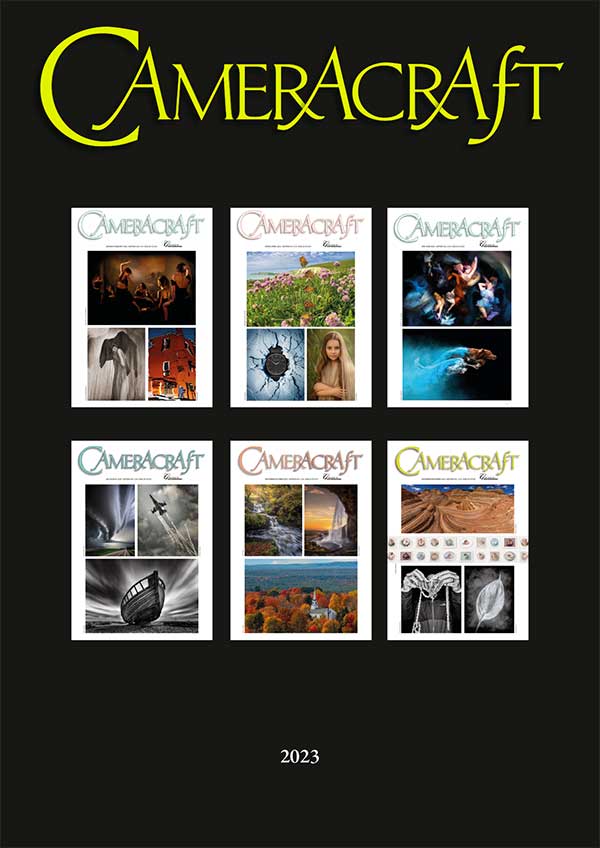
From the May/June 2025 edition, Cameracraft has been published as a PDF download or on-line read… but we know our readers love the printed page. So we have created digitally printed copies you can order – and complete 288-page softback volumes of the 2024 and 2023 editions, ideal for your bookcase (earlier years will follow as time permits).