Category: Lenses – E mount

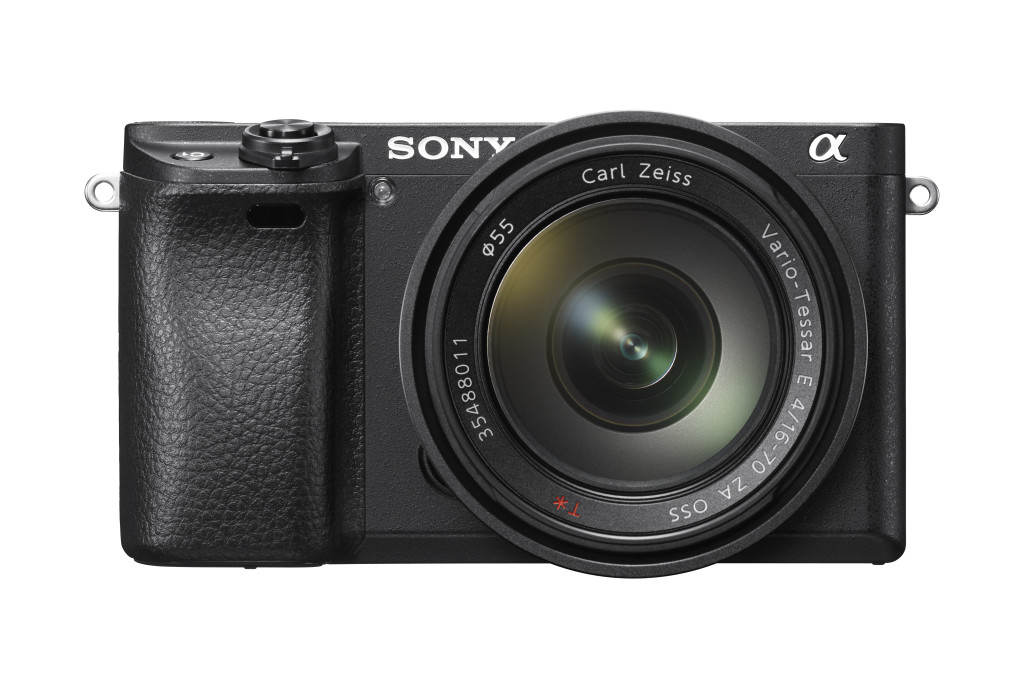
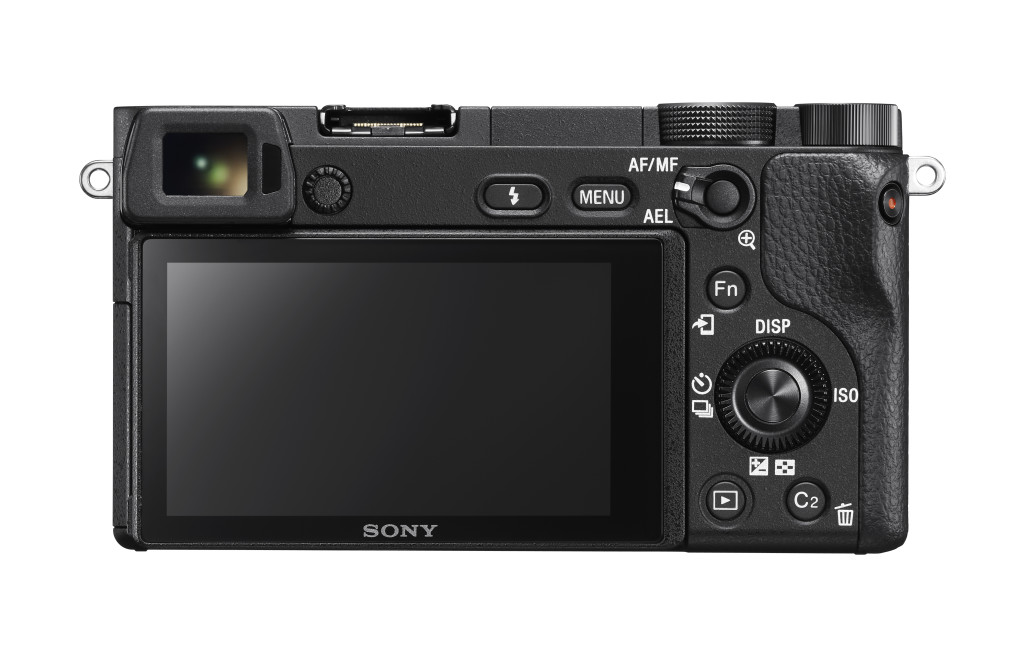
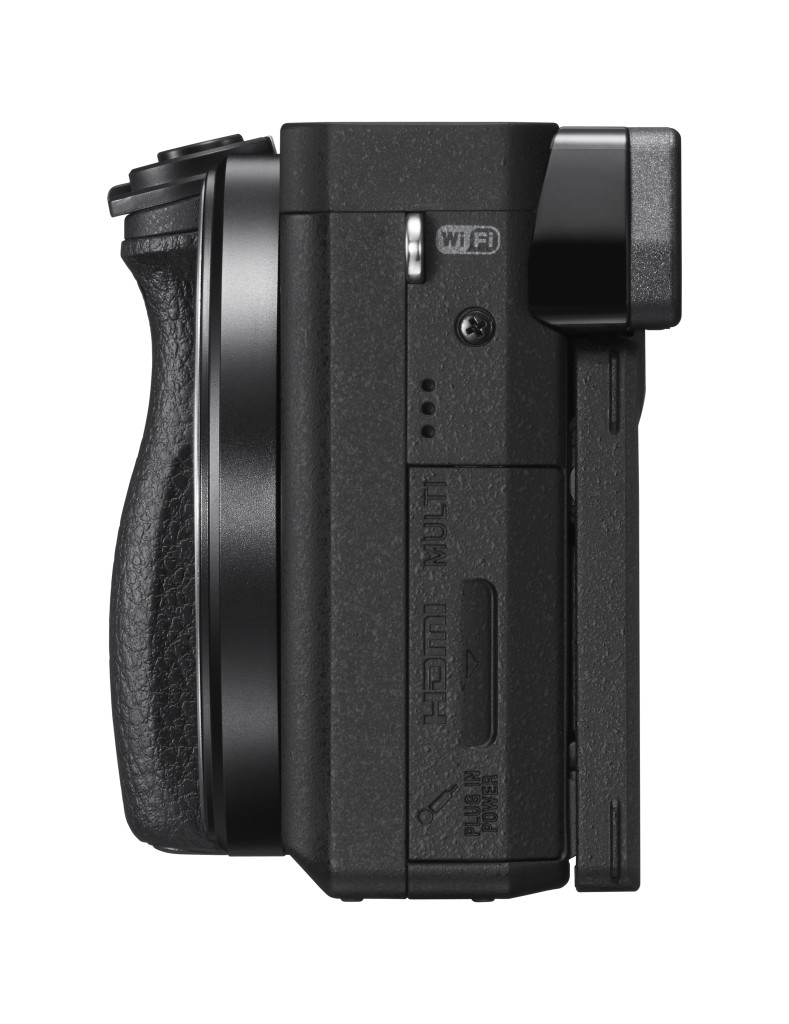
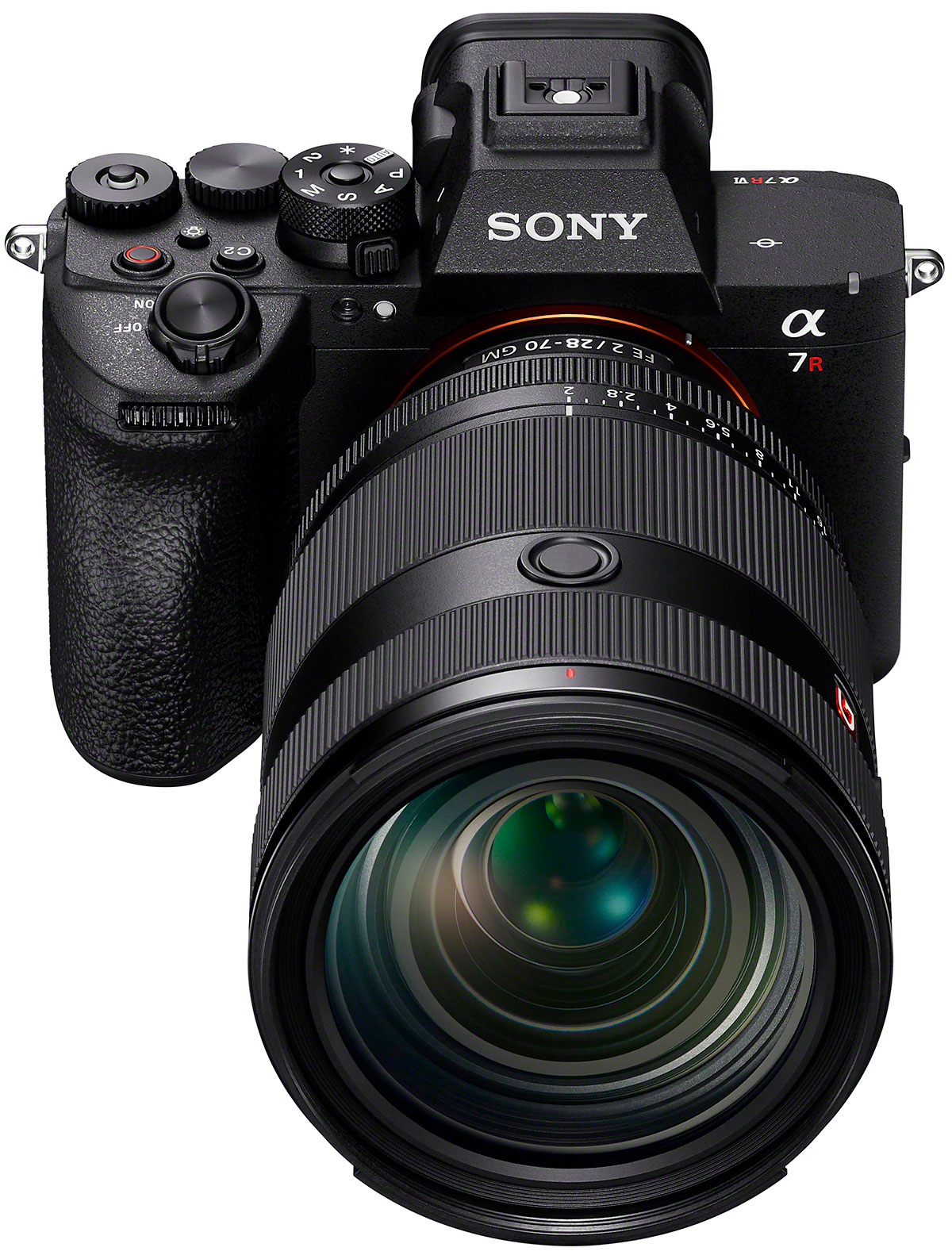
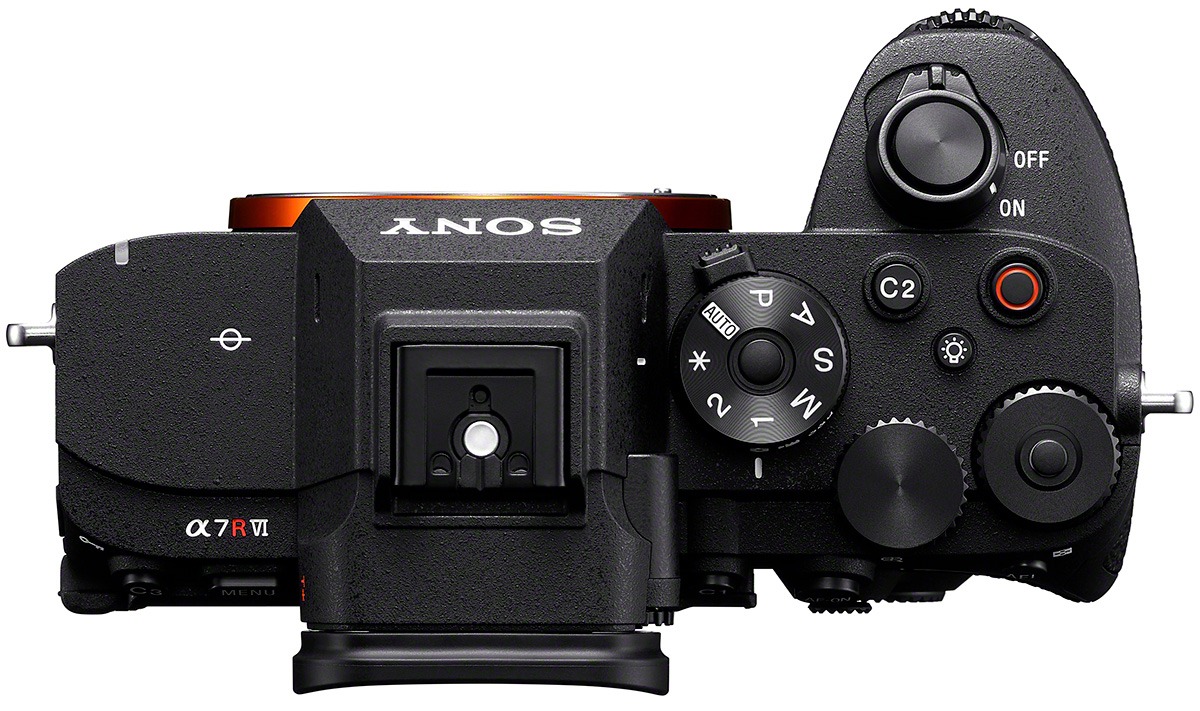
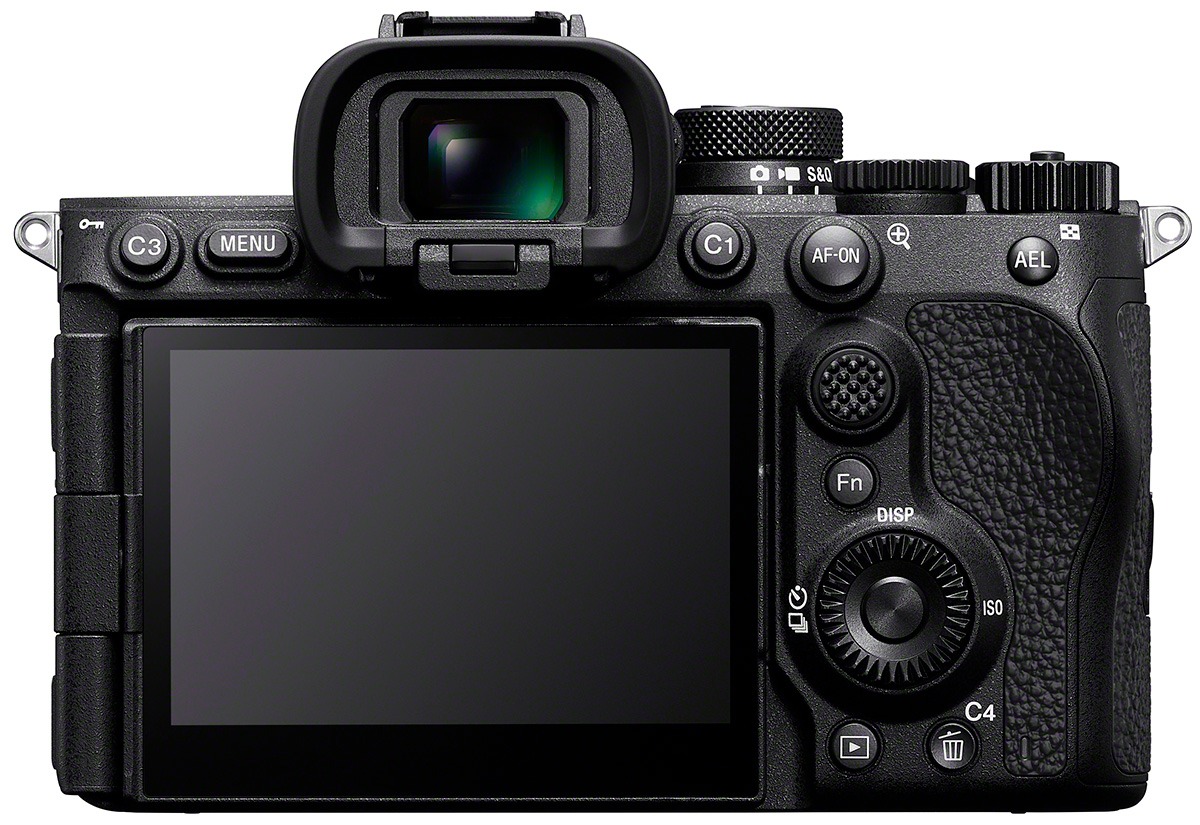
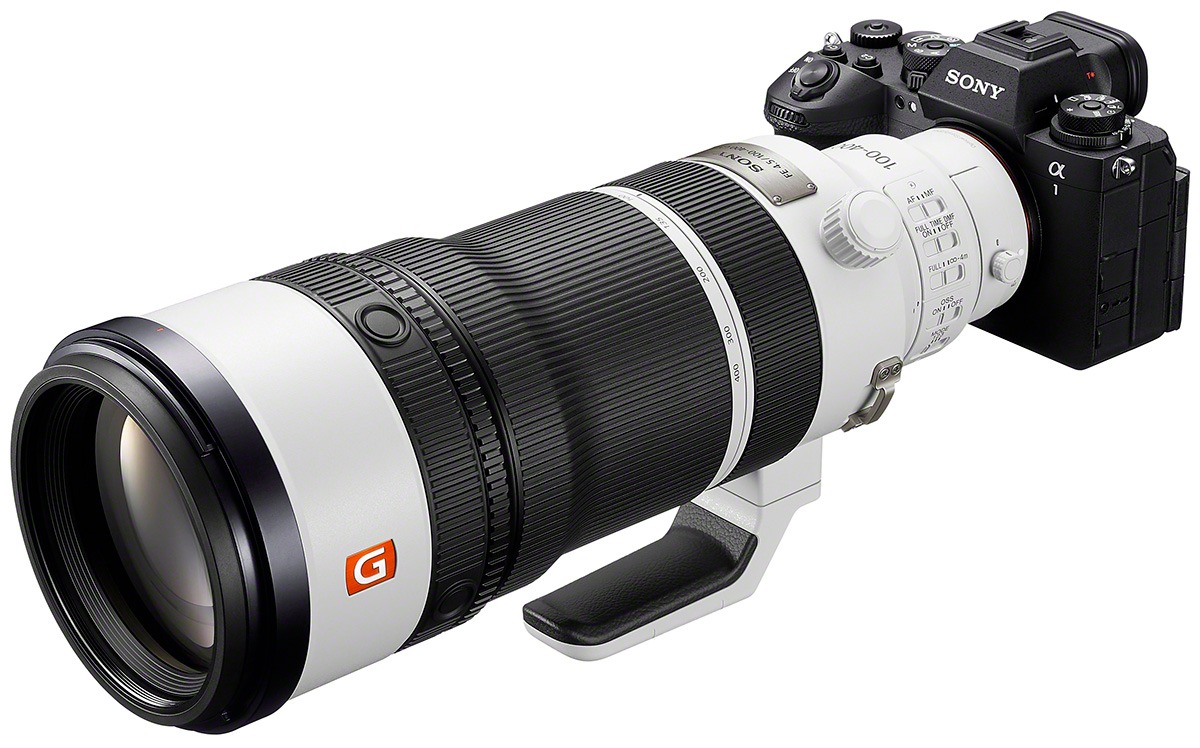
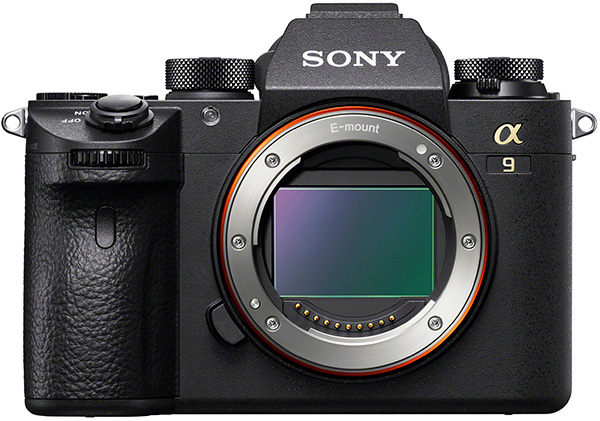
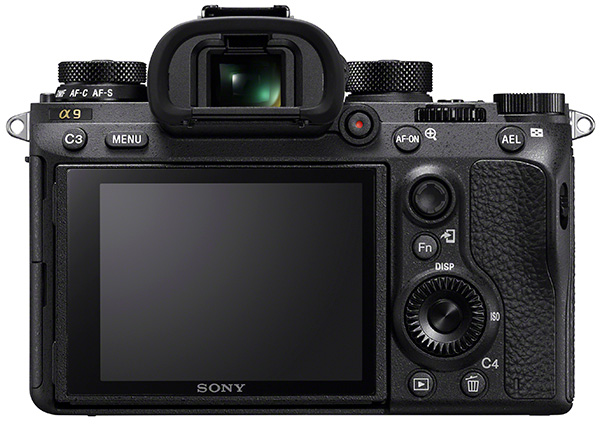
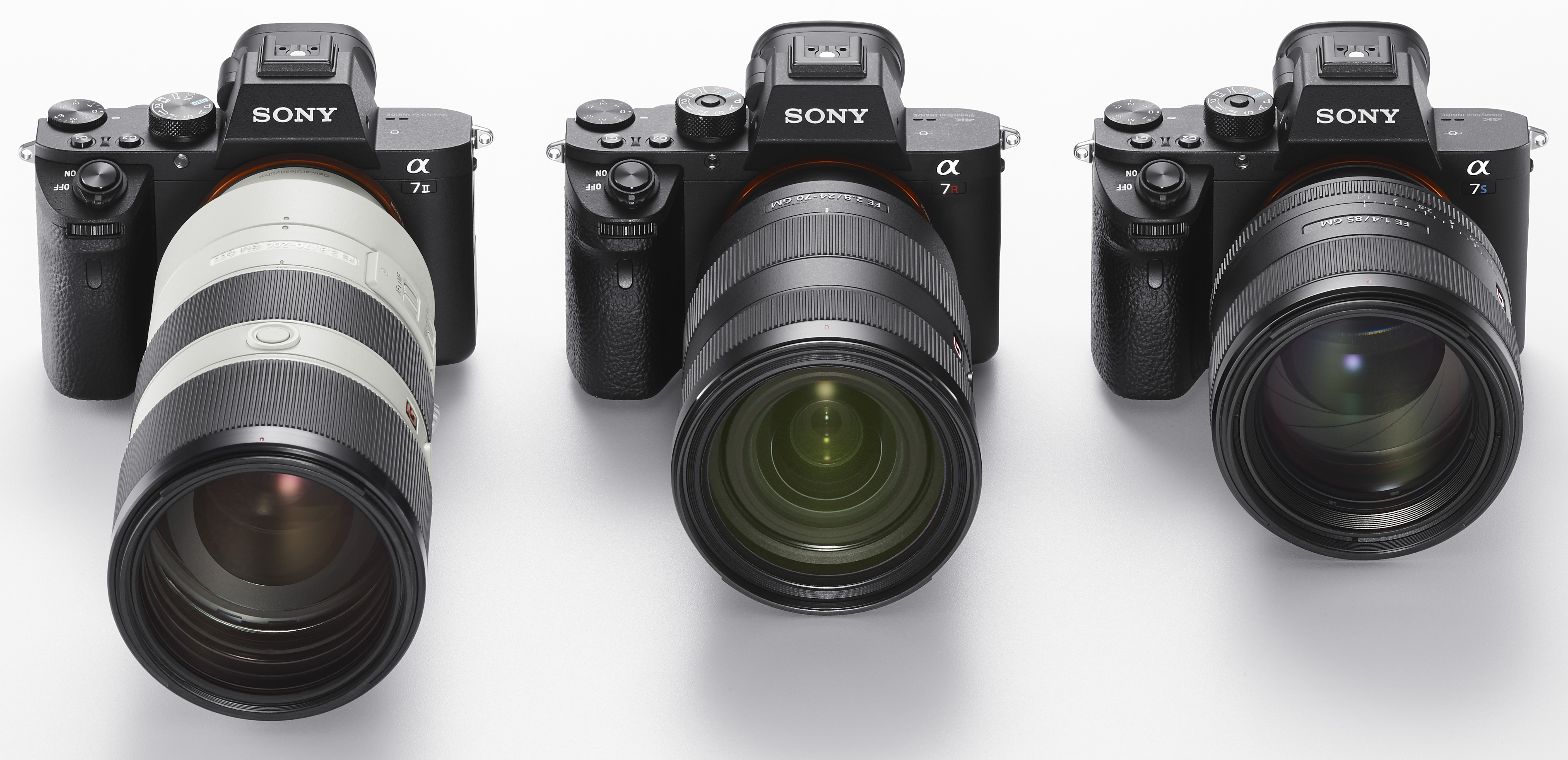
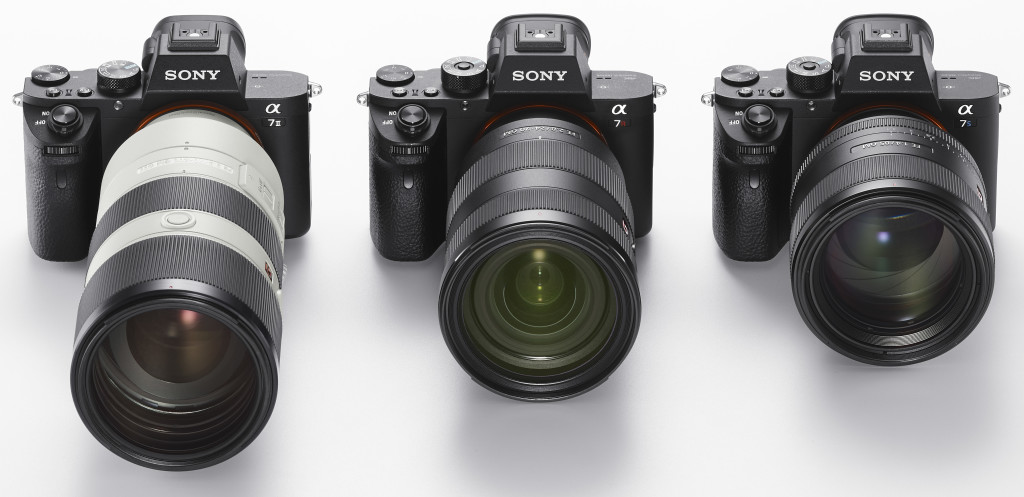
  • Sony A7RVI and 100-400mm f/4.5 GM lens

    Sony A7RVI and 100-400mm f/4.5 GM lens

    • 66.7 megapixel back illuminated partially stacked full frame sensor
    • Bionz XRII processor with AI subject recognition and tracking over 94% of the frame
    • 3X brighter OLED viewfinder with better than sRGB colour
    • New battery for 15% more stamina
    • Dual SDII/CFExpress Type A card slots
    • Illuminated buttons for low light operation
    • 8.5 stops sensor-based image stabilisation
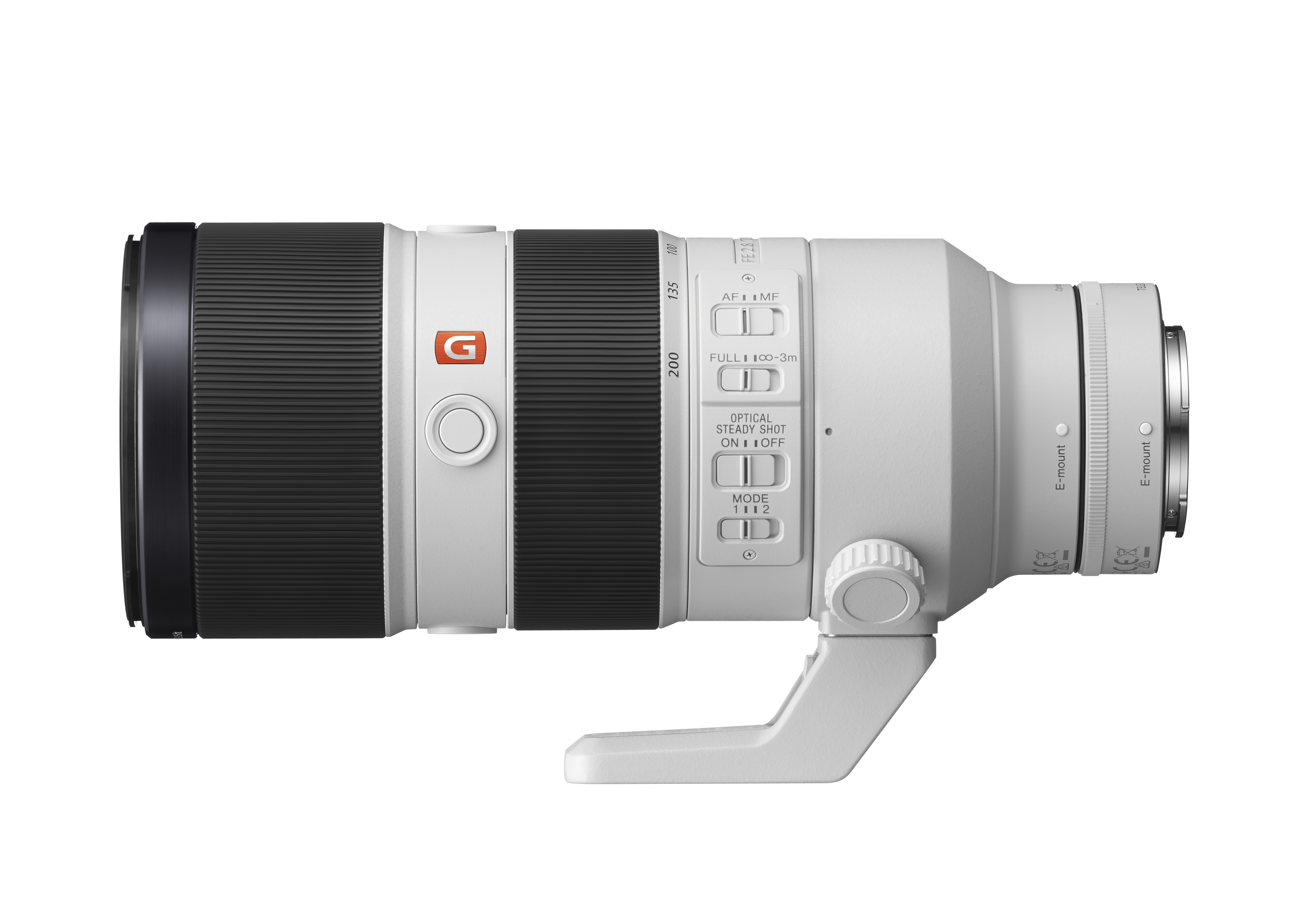
    • New 100-400mm constant f/4.5 optically stabilised zoom with 3X faster AF
    • £4,400 launch price already on pre-order from dealers such as Clifton Cameras and WEX

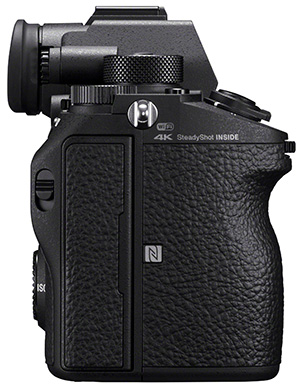
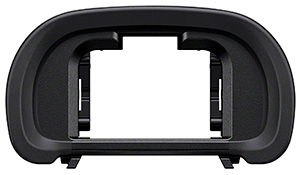
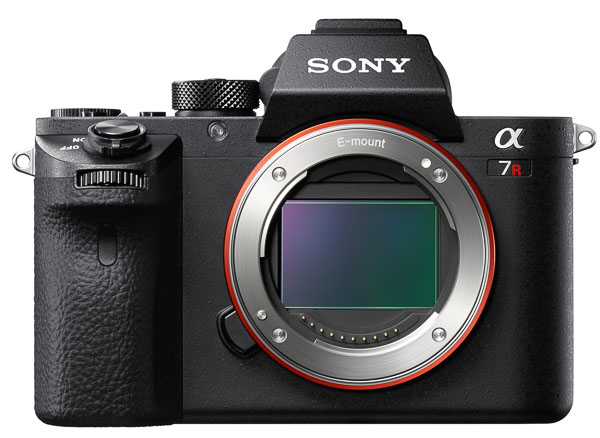
    Sony’s new A7RVI hit the news desk – though the UK company no longer appears to issue press information and relies on a website little different from anything they provide for dealers – on the same day we ordered a replacement deep eyecup for our A7RV. Evening sunshine had made the otherwise superb EVF hard to see, and the silicon surround of the original eye-pad had split at one corner.

    Sony doesn’t make a deeper eyecup but others such as JJC and Smallrig do, alongside regular replacements. But for those buying the A7RVI in June, its EVF has a boost to make it three times as bright as the V, while the otherwise similar near-10-million dot OLED gets better than sRGB colour and increased dynamic range.

    If you do not need the other improvements such as 30fps blackout-free continuous shooting, up to 5 seconds of pre-capture frames, four times faster readout from the new stacked 66.7 megapixel sensor greatly reducing silent shutter action/pan distortion and video rolling, the EVF enhancement might well be your main reason to upgrade to this £4,400 body.

    It also has a new mode dial with 1-2-* instead of 1-2-3 for Memory recall of complete setups – the * opens rapid access to many saved setups previously needing menu diving. And when you need buttons, there’s another button to light them. Give me one which instantly puts on my reading specs and it would have more use!

    The additional pixels in the image are of little importance. Mark Galer (one of the better ambassador/influencers) states repeatedly in his blog post that it’s ‘twice the resolution’ of the A7V. Well, 66MP is not twice the resolution of 33MP because resolution is and always has been a linear not area measurement. It’s actually 1.41X the resolution, twice the megapixels.

    The increase from 9504 x 6336 pixels to 9984 x 6656 is not insignificant but not game-changing. For astro and wildlife or any kind of tele photography where the pixels capturing a subject with a specific lens are what counts, the OM-Systems 20MP MicroFourThirds sensor is like a crop from an 80MP full frame, Fujifilm’s X-Trans 40MP matches 94MP on the same basis. The APS-C crop on the A7RVI is 28MP, compared to 26MP on the V.

    Relative to the A7RIV/V the VI has a 5% increase in resolution and does become the highest resolution 24 x 36mm sensor camera, and to this Sony add marginally better in-body stabilisation, improved dynamic range to 16 stops depending on capture format and hopefully some improvements to noise levels across the entire low to high ISO range. 

    As with other recent R series models having no low pass filter, the A7RVI offers 4-shot (true RGB for every pixel) or 16-shot (2X pixel dimensions) multi-shot high resolution. There is no upgrade to in-camera processing (as used by OM-Systems) and it’s a strictly static subject tripod mounted option. This isn’t surprising as creating a 240MP image from 16 70MB raw captures demands much more than OM’s 50 or 80MP generated from 16 20MB raws.

    Extending the AF point grid to cover 94% of the full frame as feasible will help deal with lenses that have curvature of focus field when used for action photography with a subject relatively small in the frame.

    Sony’s colour has always been good but Auto White Balance far too variable. The Bionz XR2 processor (introduced with the A7V) adds AI-derived image analysis which can give much more consistent skin tones in changing light and settings. It’s a something wedding, portrait and fashion/lifestyle photographers need. 

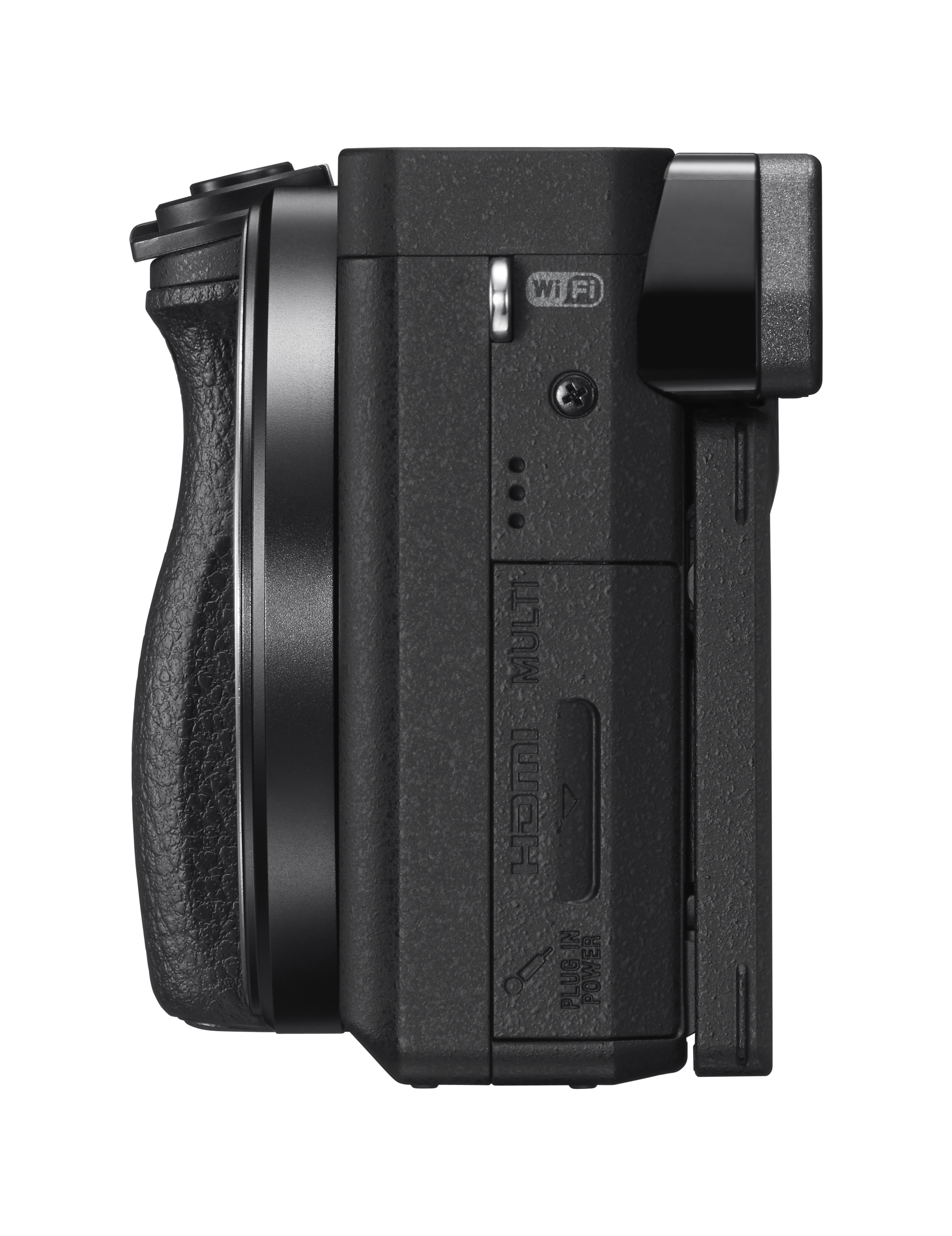
    A new XLR digital microphone module with four channels has also been announced, fitting the multi function accessory shoe as for previous mics and preamps. The second USB C socket has a screw thread beside it to accept new lockable cables without needing a clunky tether-anchor assembly.

    Battery with more ammo

    The one change most likely to frustrate existing owners of A7*III and later bodies, including even A9III, is that a new larger battery priced at £99/$120 is used to solve the problem of the poor performance of the NP-FZ100 with its 2280maH rating. The NP-SA100 (already listed by dealers – see Clifton Cameras) offers 2670maH at the same nominal 7.2V with an expectation of 600 shots. While Sony has never attempted to improve the FZ100 third parties like Mathorn (sold by WEX) offer 2600maH already and it might have been reasonable to think Sony could have improved their now ageing battery to at least this spec without having to change to a brand new shape and fitting.

    Here’s an interesting 2600maH third party – Llano brand from Amazon with a neat power level display which lights up at a touch. It is not biometric as they claim, just plain old touch-sensitive inductance. But it’s half the price of some third party cells.

    However, if the NP-SA100 battery after moderate use doesn’t do the now familiar FZ100 trick of showing over 30% charge in the finder display then dying completely after half an hour taking just a couple of dozen frames, it may save newcomers to the system experiencing an urgent need to buy two more.

    Twin USB 3 connections do make it possible to chargenot only while shooting, but also while using a tethered display or video SSD recorder. Power banks work well – here’s a very good Ugreen deal which is also a magnetic wireless charger for iPhone. There is also a new battery grip accepting the usual two to double everyday stamina, £399 on pre-order.

    The one full size sample image (above, click for link) provided by Sony on the press site is shot at ISO 400 and is fairly noisy as well as not ultimately sharp – no doubt there will be many more which prove the A7RVI can at least match the V if not all rival brands or models using sensors in the 40-50MP range.

    100-400mm f/4.5 GM OSS

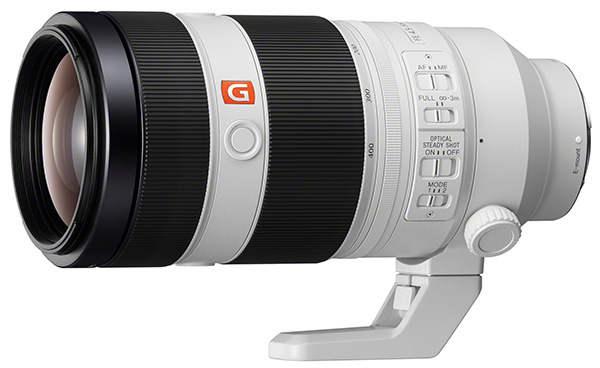
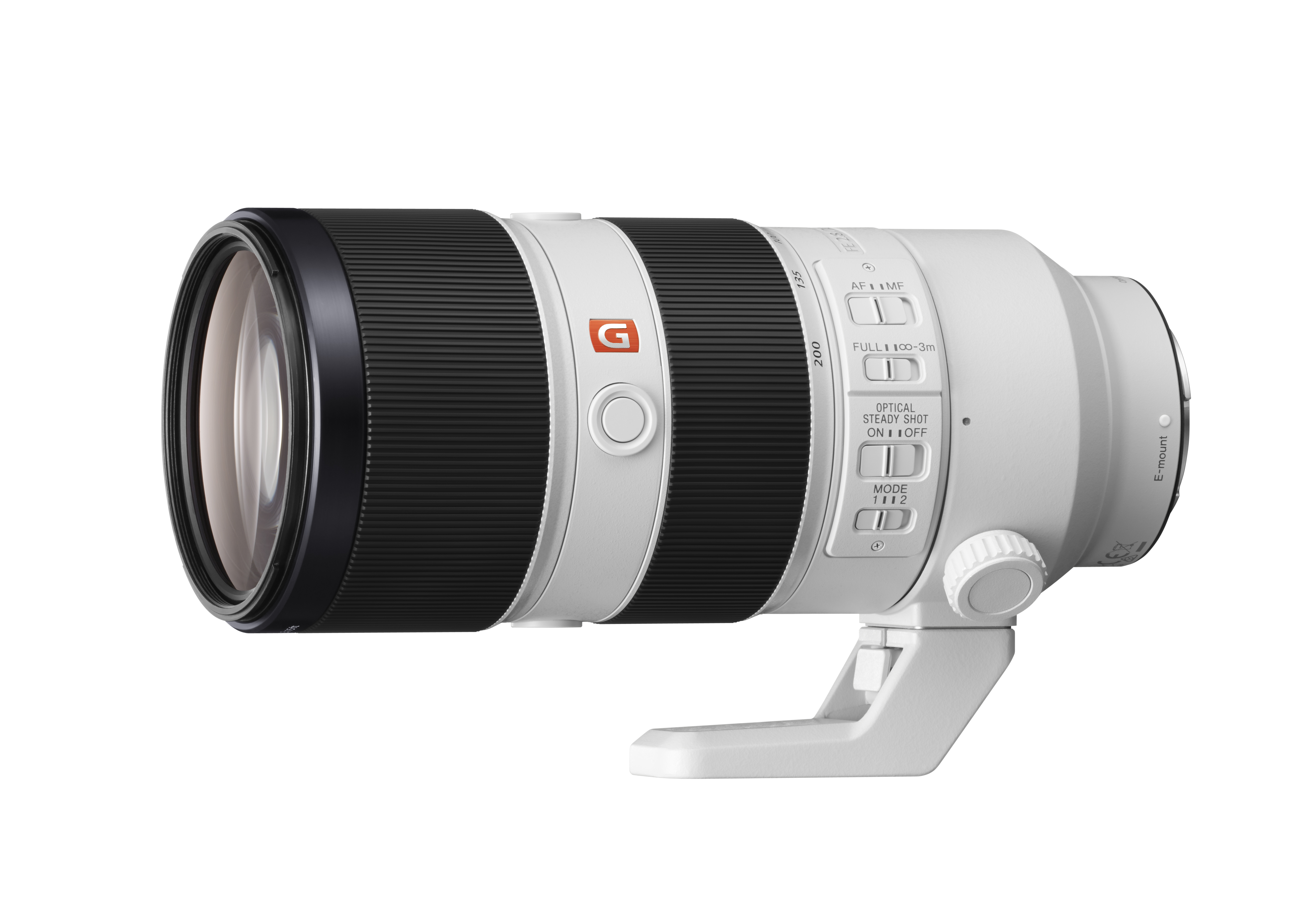
    Alongside the A7RVI Sony have launched an alternative to existing long tele zooms, a new 100-400mm f/4.5 constant aperture GM OSS. The existing GM OSS is 100-400mm f/4.5-5.6, weighs 1395g, is 205mm long and focuses down to just 98cm with a subject scale of 0.35X, takes 77mm filters and costs £2,149. The new model claims 3X faster AF and better optical performance as well as 2/3rds of a stop extra light on to the sensor at 400mm.

    It is however over twice the price at £4,400 and weighs 1840g, is 328mm long (this is a huge difference) taking 95mm filters though with a rear slot-in option, and its minimum focusing distance is variable from 64cm to 1.5m with a maximum image scale of 0.25X. You can buy two or even three Sony G long tele zooms for the price but not one them will give 400mm and f/4.5 – you can get the 400mm f/2.8 for over ten grand, or use a 2X converter on the 70-200mm f/2.8 and get f/5.6. So there’s a definite place for this lens.

    Pre-order now open from most dealers including WEX and Clifton.

  • Sony A7RIII review in Cameracraft

    Read David Kilpatrick’s review of the Sony A7RIII

    Cameracraft January/February started the A7RIII test report, and March/April 2018 continued it. Both are free to read here. In the second issue you’ll also find the review of the 24-105mm f/4 FE G OSS lens. In the first issue, Gary Friedman looks at the RX10 series and one-inch sensor quality as well – and David tests the Voigtländer Nokton 40mm f/1.2 Aspherical FE manual focus lens, Sigma 16mm f/1.4 DN DC, and Samyang 35mm f/2.8 AF FE.

    Part 1

    Part 2


  • Sony A7RIII – more than a skin deep upgrade

    With a body-only price of £3,199/$3,198, the third generation of the A7R came as a surprise to Sony’s own photo studio, who labelled most of the product pictures release on Wednesday as ‘A7RM2’ instead of ‘A7RIII’. We’ve changed the filenames on our system, but countless mediafolk of the future will be confused. They do after all look similar.

    In fact the new 24-105mm f/4 G OSS lens was released with pictures of it on the A7RIII, above, and also on the A9 below. With the A7RIII having a 10fps 42 megapixel motordrive capability, thanks to an improved LSI and new processing engine reading off much faster from the 42 megapixel back-illuminated CMOS sensor, you might have expected economies of scale to have given it the same Dynax 7D-like left hand end drive mode physical dial like the A9, below – especially as the A7RIII has an additional drive-type mode, a four-shot sensor shift to capture 169 megapixels of image data.

    This involves shifting by one pixel in four positions, and does not create a 4X size, 2X linear pixel count file. You can only get that by shifting half a pixel as Olympus do. The Pentax sensor shift high-res mode shifts by one pixel, and it does not increase the image dimensions, only the sharpness and colour information for each pixel location (making the image similar to a Sigma dp Quattro file in fine detail resolution). The Sony implementation also appears to need almost half a second between each of the four subframes, requiring a tripod and roughly 2 seconds of capture time. Sony’s proven multishot processing will certainly be able to remove any problems with movement of parts of the subject during this time, but it has to be done in the computer, using the new software suite.

    Some commentators have assumed that the 169 megapixel four-shot file means large dimensions, effectively a 169 megapixel resolution full frame, the same way Olympus gets high megapixel files. But the pre-release information clearly indicates it’s a Pentax-type mode – here’s from the wording provided to dealers by Sony:

    “You can then stitch the images together to create an image with fewer artifacts and a truer range of colours”.

    I tested that on the Pentax K-1 and concluded it was not worth the effort. Regular normal 42 megapixel AA-free shots on a top grade lens are all you need. I’ll repeat that bit about top grade lens.

    The A7RIII also has a new shutter mechanism which reduces shock, improving the SteadyShot performance, though still 30s to 1/8,000s as before. The sensor gains a new anti-reflective coating and there will be many ‘under the hood’ improvements because that’s what happens. There may also be teething troubles and newly introduced problems, because that also happens. However I’d say early buyers run less risk with this third generation A7R than they did with the predecessors, or indeed with the A6500.

    But we’ll leave you with the 9 for comparison. Most else that matters is the same, like for example the Memory registers – only two on the A7RII, but three on the A7RIII. It will remember more things, like Setting Effect OFF/ON, and that is just as well because the III puts a DSLR-like feature on its left hand end, a threaded coaxial Prontor-Compur (PC) flash synchronisation terminal (below). Let’s just hope that the circuitry inside is well isolated, as one of my vintage flash units destroyed the Godox X1-T which I use both to get Setting Effect OFF and isolation from high trigger voltages on my A7RII.

    Study this left end for a bit. It does have phantom power for the 2.5mm mic jack, but the earphone output has been moved so that two doors must now be opened at once to use both together. And there’s something missing.

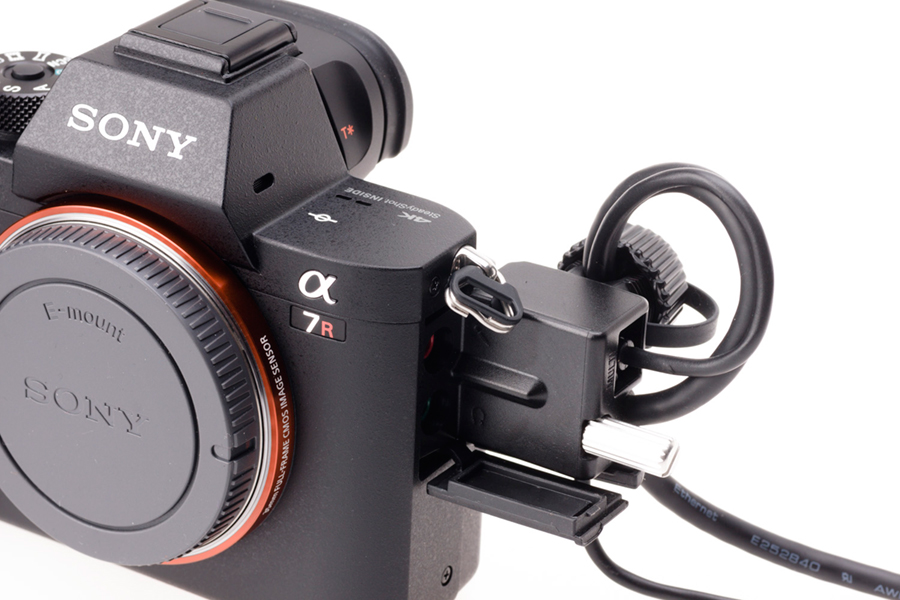
    The A7RII has a screw socket next to the neatly paired mic/headphone jacks, which allows a custom made tether clamp assembly (supplied with the camera, seen above) to hold HDMI and USB cables with clamped protection looping. You’ll need some extra Tether Tools kit to safeguard the connectors on the MkIII. There is now a USB-C/3 Super Speed connector as well as a USB-Micro Multifunction, and Micro HDMI. But no provided security of a tether clamp.

    The back of the camera has much the same screen, but with improvements to resolution and daylight visibility – still no twist and turn, or reversing to face the camera back and protect the LCD. The rear button layout is revised, with movie button located near the viewfinder (well, if Canon does it, it can’t be wrong, can it?) and the switching AF/AE Lock/Toggle/Hold button replaced by an AF-ON and separate AEL, with C3 moved to the left end. Where the movie button used to be you’ll notice a catch for the weathersealed door which covers TWO SD card slots, one UHS-II enabled (more broken bits of card contact septum to lose inside your slot!). Changes to the movie mode using the main shutter release make the use of the red button less essential.

    You can assign those cards the usual ways, to make copies on card 2 of card 1 as you shoot, just in case one fails (the most important use for wedding photographers) and also to use sequentially (overflow into card 2, liked by action photographers), or split RAW and JPEG, or still and video.

    This is the new lens, 24-105mm f/4, and it will probably be very good. It has 77mm filters so I think I’ll stick with the A6500 for travelling, as the little CZ 16-70mm f/4 which is the direct equivalent of this is tiny by comparison and uses neat 55mm filters. Despite some reports to the contrary, I’ve found it to be a good lens, sharp across the frame at 70mm wide open, though prone to flare.

    The top shows that the strictly amateur ‘SCENE’ position of the mode dial has been replaced by S&Q. I look forward to finding out what this means – probably much the same*  *Gary Friedman has provided the answer in Comments – it’s a slo-mo/fast-mo video mode which is of no interest to me personally, but might fascinate messers around with short video clips for YouTube, even if their smartphones do it better. Green auto survives, as not all owners will be experienced photographers, some will just be wealthy camera buyers and this setting will be where they leave it.

    The published specs were vague about Bluetooth, used for GPS tagging from a smartphone – I’m told US Sony Store specifications clearly state it does have. The A6500 and A9 both do, and can therefore use the Sony mobile phone function for live geotagging of pictures as you take them, using information read at the moment of capture from your nearby smartphone. We’ve also seen reports saying the A7RIII does not use Apps but that seems very unlikely.

    There are also improvements claimed for dynamic range, with the figure of 15 stops mentioned. This would actually need a 16-bit A to D conversion internally followed by compression to a virtual 15-bit range (via a tone curve) saved in the 14-bit uncompressed raw .ARW format. A 14-bit raw format is now offered for all shooting modes including high speed continuous, which on the A7RII means automatic stepdown to 12-bit. The ISO range is extended to 32,000 before Hi expansion up to 104,200 and goes down to 100 native with Lo down to 50. One benefit of an effective 15-stop range will be that ISO 50 should have 14 stops, or as much highlight data as ISO 100 on the MkII.

    The extra effective bit depth also pays off when using the S-Log3 and Hybrid-Gamma HDR video settings. This brings Sony professional video camera standards into a primarily still camera for the first time (better than the video-targeted A7SII, and the A9).

    Sony claim improved skin tones too, though compared to what is a bit of a worry. Many people like Canon skin tones, I think they are like a 1970s USA colour portrait and that Sony’s skin colours have always been more natural. Others disagree and want the pinker, less yellow, face tones.

    The A7RIII uses the new larger battery with its 2.7X capacity, introduced in the A9. I rather like the way my current Sony cameras share one rather underpowered battery type, but at least a bagful of batteries covers A56500, A7RII, RX10. There are not many different battery types, as we could find with our Olympus kit (check E-M1, E-M1 MkII, E-M5, E-M5MkII, E-M10, E-M10MkII and E-M10MkIII batteries if you want a nightmare). You can also charge Sony batteries in-camera.

    Will I buy it? Probably not. I use the A7RII for relatively static, large image size, low ISO, controlled shooting of landscapes, architecture, products and so on. I have sold my full frame zooms except for the 70-300mm G OSS and now only use primes on the A7RII (10mm, 18mm, 28mm, 50mm macro, 55mm, 85mm). I don’t travel with it. We’ve bought an Olympus OM-D E-M1 MkII for its Pro Capture (60fps, 18-20fps with pre-shot buffering) and macro auto focus stacking. I’m sticking with the A6500 kit for travel (10-18mm, 16-70mm, 55-210mm) but it’s got to go head to head with the Olympus including the use of the two different smartphone GPS methods.

    • David Kilpatrick

    WEX Pre-Order (Affiliate link) UK £3199

    MPB (Affiliate link) – buy and sell used Sony equipment UK

    B&H (Affiliate link) – order US/World from $3198

  • Alpha A9 promises professional performance

    You can order the A9 here – any of these links to order will help photoclubalpha pay our way.

    B&H have it listed 

    WEX in the UK (also Calumet)

    Amazon (co.uk)

    The front view below of the Sony Alpha A9 body, introduced today, gives a subtle clue about changes under the hood. For some time we’ve been nagging Sony about the weak, potentially tilting, 4-screw mount on the mirrorless bodies. Now they have at least added two more screws, to match Fujifilm X or the A-mount, even if the distribution is a bit odd with all the extra strength concentrated at the sides not the top and bottom where heavy lenses normally cause most stress.

    It’s a clue to a different internal construction, probably stronger all round, to make it possible to support the new 100-400mm G Master  lens, a native E-mount new design which should come as a relief to those struggling with the A-mount 70-400mm varieties on adaptors:

    But the lenses still have four-screw mount fitting (as do most A-mount lenses), and fairly weak sacrificial assemblies to prevent damage to the camera if knocked. See this video (it’s a bit long but makes a point): //www.youtube.com/watch?v=qGvlX9BtiTQ

    The EVF of the A9 is around twice as bright as the A7RII and also runs at twice the refresh rate, while offering 50% more pixels. Part of this is down to the new stacked-CMOS 24.2 megapixel full frame sensor, which has a readout some twenty times faster than the A7II and previous generation 24 megapixel models. That, of course, is linked to the 6K native live feed from the full frame (used to create very high quality 4K video as well as an excellent live view) which in turn enables a distortion-free purely electronic silent shutter running to 1/32,000s plus 20 frames per second sequence shooting.

    AF is claimed to be 25% faster than the A7RII and when the shutter speed is faster than 1/125s there is no visible blackout in the finder when shooting. Personally, a single frame (1/120s or 1/60s) blip would never be unwelcome as it helps tell you when you’ve shot. As for the low-light capability, not too much is being said; it’s in the usual up to 56,200 range with extension of two more stops. (Edit: April 20, we have noticed that at least one ‘reviewer’ – Sony Artisan paid to promote – completely wrongly claims 2,048,000 ISO not the actual 204,800, when comparing the A9 with the Nikon D5’s listed 3,276,800). The high speed sequences, movie frame rate and EVF refresh all tend to limit ultimate low-light clean imaging and we would guess that the A7SII and A7RII will not be made redundant.

    That can not be said for the old weeny weedy weaky batteries of the E-mount range. The stripling NP-FW50 used in all the NEX to A7 series models gets kicked aside by a slightly larger variant with 2.2X the capacity. Frankly, it’s overdue but it creates a split system. I’m happy to travel with my A6000, RX10, and A7RII all sharing a pool of batteries even if those do run down alarmingly fast.

    If it means carrying a new dual charger too, to get the necessary 2.5 hour recharge time instead of a leisurely overnight in-camera top up, I can only hope the charger (cum mains adaptor with clumsy dummy battery connection) also accepts the older batteries. It’s carrying multiple chargers that increases my travel bag weight not carrying extra batteries.

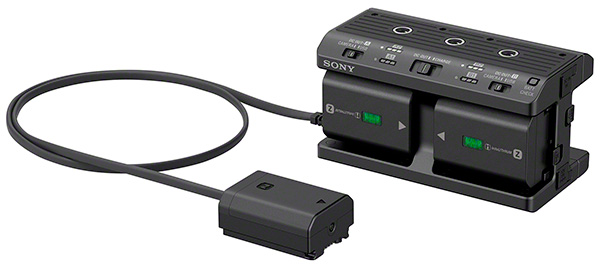
    But… I see that the charger ‘cradle’ can mount four of the new cells, and charge the lot in 480 minutes. This cradle has a dummy battery on a lead, and 1/4″ tripod thread mounting points to add it to a video rig (which this camera is not specially made for, indicating an A9S is on the way with S-Log and direct 4K top quality encoding). The dummy battery then powers the camera for roughly 10X the life of the current A7 series batteries. So what if you have an A7 model? Easy – the outer shell of the battery simply slides off, revealing a SMALLER dummy inside, which fits the entire NEX/A7 mirrorless range or indeed the RX10 series. So your existing Sony mirrorless kit can be powered using this ‘battery bank’.

    The top plate reveals that some input has been listen to. As a regular M1-M2-M3 user on my A99, the drop to only two memory registers on the A7RII is unwelcome but survivable. A return to three, plus a a custom button memory recall function, will make the a9 better. Having the drive modes on a physical control is good too. But I’ll leave any verdict on all this until the actual operation is better known – whether, for example, the memory registers now cover more than just the primary camera settings and thus enable one-step tripod setup.

    I’ll have to say that after using the Olympus OM-D E-M1 MkII, which offers many of the advantages being claimed by the A9 as major selling points, the non-reversible simple tilt rear screen remains a negative compared to a fully articulated reversible screen. Sony does now offer a real glass protector, but I like the A55 to A99 style screen which can be turned to face the wall permanently if you want (and has never arrived on the E-mount models).

    The new joystick controller takes something from the A99/II controls and adds it to the wheel of the A7 series, while the upper thumb button becomes a native back-button AF. In addition to being able to move the focus points faster (it’s a pain with the A7RII design) there is a memory for AF point selection and a horizontal-vertical switch function. Combined with a larger number of AF points covering 93% of the sensor, the action/sports performance of the A9 should be a long way ahead of any earlier mirrorless (though the A6500 is pretty good).

    Though not visible here, there are two SDXC (one UHS-II) card slots with the usual recording options similar to the A99/II, and also an Ethernet port which is almost a requirement for some major sports events. You will notice that the Drive control has a Focus control below it, giving direct access to the kind of AF/MF/DMF choices found on the dedicated controller of A-mount bodies – no more need for menu or Function/Custom button operations.

    The eyepiece, shown here, may perhaps be a little less prone to detachment and we are promised the least squiffy finder view with new optics.

    There is one minor fly in the ointment, a price-tag of £4,500 (UK) body only; the 100-400mm will be £2,500. While the team of assembled ambassadors made much of praising the silent shutter mode and small size of the camera at Sony’s vidcast press conference, none of this is new and pretty much anything the A9 can do is also within the reach of the A7RII and A7SII even if it does it faster and perhaps better. There was some praise for the durability of the system – what? I don’t know about others, but I find the Sony/Zeiss lenses are the worst I’ve ever owned for showing almost immediate signs of wear from the lightest contact with clothing and bags. Silver appears through the molecule-thin black coating instantly and neither the regular lenses nor the bodies have ever struck me as being suitable to knock around in a busy press kit or travel bag. Where old Leicas survived years of abuse elegantly, gradually brassing at the edges, my Sony kit generally just looks a bit scruffy and used despite minimal handling. The A9 looks about the same in this respect as the mark II lesser models.

    Full official press information and specifications can be seen here:

    //presscentre.sony.co.uk/pressreleases/sonys-new-a9-camera-revolutionises-the-professional-imaging-market-1923969

    And for the lens:

    //presscentre.sony.co.uk/pressreleases/sony-expands-flagship-g-master-lens-series-with-new-100-400mm-super-telephoto-e-mount-zoom-1923976

    • David Kilpatrick


  • New 85mm f/1.8 FE and 100mm f/2.8 STF for E-mount


    Sony has announced two new lenses for E-mount mirrorless cameras.

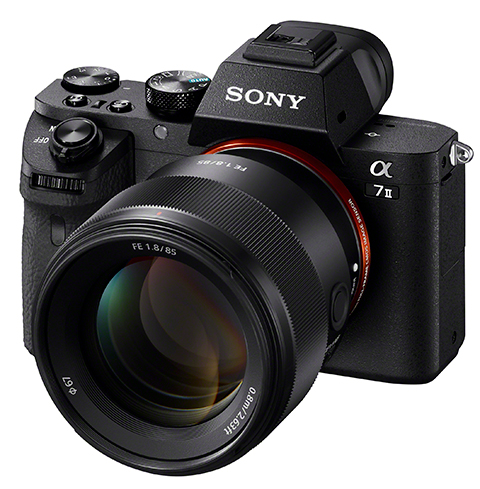
    The FE 100mm F2.8[i] STF GM OSS is the first Smooth Transition Focus prime since the acclaimed A-mount 135mm and is designed for the best possible bokeh without any trace of aperture-related artefacts. The compact, lightweight FE 85mm F1.8 portrait prime lens may put an end to sales of Canon 85mm f/1.8 USM lenses mounted on FE adaptors… but at £550 and not stabilised it’s just over the typical cost of that combo, which also enables the use of other Canon lenses and of course the use of the Canon glass on native bodies.

    It’s a slightly disappointing lens as the 80cm close focus is no improvement over the 85mm G-Master f/1.4, and much less useful than the 85mm A-mount SAM f/2.8 which focuses to 60cm. With the 85mm such a popular choice for portraits, food photography and creative close-ups (short of the macro range) this is a missed opportunity even it is also very much an industry standard. In contrast to this the 100mm STF has an excellent close focus of 57cm and the same close-up ability as zooms like the classic ‘Beercan’ 70-210mm f/4 by Minolta, the magic ‘quarter life size’ which covers the area of a 6 x 4″ postcard print when used on full frame.

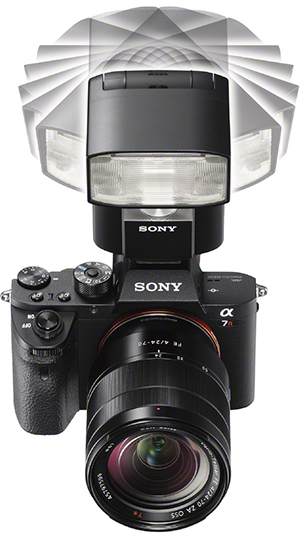
    Sony also introduced a new flash HVL-F45RM with radio-controlled wireless communication ideal for off-camera multi flash TTL work with Sony’s line-up of α7 full-frame cameras. This flashgun uses the Sony Quick-Navi visual system for its rear panel – so they did learn something from the success of this in the old A700!

    TO SUBSCRIBE TO OUR OWN TOP QUALITY PHOTOGRAPHIC PUBLICATION CAMERACRAFT, SIX TIMES A YEAR, VISIT ICON PUBLICATIONS LTD WEB PAGE

    (Sony information follows)

    FE 100mm f/2.8i STF GM OSS Telephoto Prime Lens

    A specially designed mid-telephoto, full-frame prime lens, the new 100mm STF is built to produce truly unique, magnificent and beautiful bokeh while maintaining the exceptional standard of resolution that is showcased throughout Sony’s entire line-up of flagship G Master series lenses, making it a powerful photographic tool for any portrait, fashion, nature or wedding photographer.

    These impressive defocus capabilities are made possible by the lens’ advanced optical structure, as it features a newly designed 11-bladed aperture and a unique optical apodization lens element. Similar to a neutral density filter that increases in density towards the edges, the apodization element creates beautiful transitions of in-focus to out-of-focus areas within an image, making for exceptionally soft, smooth bokeh that adds depth and dimensionality. This allows the subjects to stand out against beautifully defocused elements in both the foreground and background, producing an image that is naturally pleasing to the eye. The design of the lens also ensures that vignetting is kept to an absolute minimum, ensuring optimum image quality.

    David Kilpatrick writes: The STF function is available from full aperture (an effective T=5.6 despite the f/2.8 physical aperture) over a one-stop adjustment range to T=8. This is less than the f/4.5 to f/8 (T) range of the original STF design and indicates that a more powerful apodisation element (radial/circular graded element created by using neutral density in a double concave glass) or apodisation filter (a cheaper method using a conventional radial graduated ND filter inside the lens near the aperture position). This should actually mean that f/5.6 looks smoother than f/4.5 could have. Confusing, but true. You can the depth of field of a more-or-less f/8 lens with the bokeh of an f/4.

    Additionally, the new 100mm lens supports both contrast AF and focal-plane phase detection AF[ii], and has a high-precision, quiet direct drive SSM (Super Sonic Motor) system that ensures exceptionally fast and accurate AF performance. The SEL100F28GM also offers up to 0.25x close-up capabilities with a built-in macro switching ring, built-in Optical SteadyShot™ image stabilisation, a customisable focus hold button, AF/MF switch, aperture ring and is also dust and moisture resistant.[iii]

    FE 85mm f/1.8 Telephoto Prime Lens

    The new SEL85F18 mid-telephoto prime lens offers an extremely versatile, lightweight and compact telephoto prime lens solution for a variety of Sony camera owners ranging from working professionals to emerging enthusiasts that have stepped up to an APS-C or full-frame camera for the first time. With its wide f/1.8 aperture, it can produce impressive, exceptionally sharp portraits with soft background defocus that take advantage of its 85mm focal length and wide f/1.8 maximum aperture.

    The new prime lens features a 9-bladed circular aperture mechanism that ensures smooth, natural looking bokeh, and a double linear motor system to allow for fast, precise and quiet focusing. It also has a focus hold button that can be customised and assigned together with functions in the camera body like the popular Eye-AF feature. There is a smooth, responsive focus ring and AF/MF switch and the lens is also dust and moisture resistant.iii

    New Compact Radio-controlled Flash

    Sony’s new HVL-F45RM flash enhances the radio-controlled lighting system capabilities of their growing system, offering a compact professional shooting solution when combined with the currently available wireless remote controller FA-WRC1M and receiver FA-WRR1.

    The new flash, which is designed to complement the compact bodies of Sony’s E-mount camera line-up including full-frame α7 models, produces a maximum lighting output as expansive as GN45[iv]. This ensures sufficient illumination even when shooting with bounce lighting or high-speed-sync (HSS) flash. The radio capabilities of the HVL-F45RM allow it to be used as a transmitter or a receiver at up to 30m (approx. 98 feet[v]), making it an ideal fit for creative lighting with multiple flashes. Additionally, unlike optical flash systems, radio-control flashes do not require a direct line-of-sight between components to function properly, while also minimising any impact that bright sunlight has on signal transmission and control.

    The HVL-F45RM flash has an impressive battery life of up to 210 bursts, and can tilt up to 150o vertically, a complete 360o horizontally and up to 8o downward to maximise versatility. Usability has been maximised with a new large, bright and highly visible LCD display, an LED light, dust and moisture resistant design3 and a revamped menu system that mimics those of Sony’s newest camera systems.

    Pricing and Availability

    The new lenses and flash will start shipping in March 2017. The SEL100F28GM will be priced at approximately £1700, the SEL85F18 will be priced at approximately £550 and the HVL-F45RM will be priced at approximately £420. Further information can be found on the Sony Camera Channel: www.youtube.com/c/ImagingbySony/ and the Sony Photo Gallery: www.sony.net/Product/di_photo_gallery/

    [i]T-number (T) =5.6

    [ii]With compatible α camera bodies. Please visit Sony support webpages for details.

    [iii]Not guaranteed to be 100% dust and moisture proof.

    [iv]Guide Number (GN) 45 (105mm, in meters at ISO 100)

    [v]Sony internal measurement

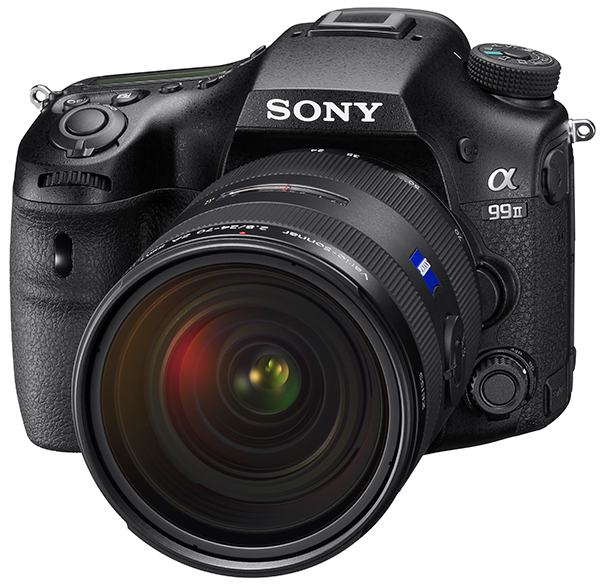
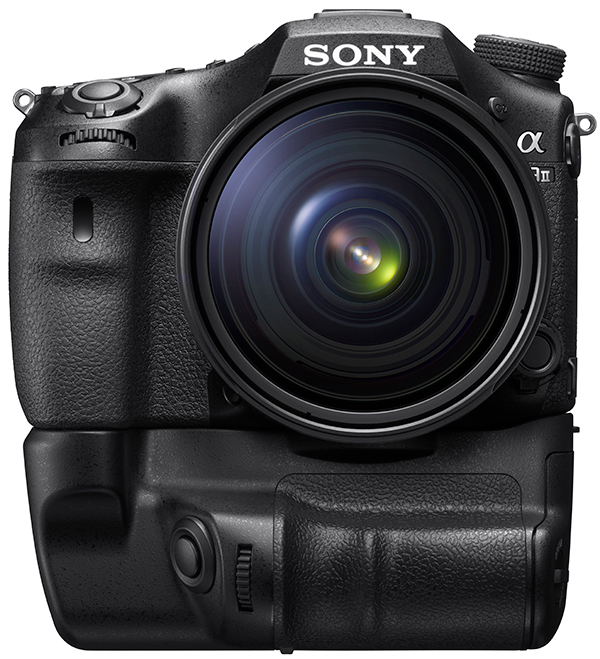
  • Sony launches A99II at photokina

    a99-ii_wsal2470z2_right-web

    Sony has today released the details of the updated A99II, using a 42MP sensor and 5-axis stabilisation to match the A7RII. It does not appear to have retained GPS and the paragraph highlighted in red later on indicates a weasel-worded possible get out for this – it may not embed GPS in the image files, but instead store a mobile phone location data track on the camera’s memory card. We may guess that this choice could be partly down to cutting out fees payable to incorporate a GPS module. Not the same, guys, not the same:

    From Sony’s site, the ambiguous word is highlighted here:

    Use Location Information Link to make the most of your camera anywhere you go together. After the camera has been paired to the PlayMemories Mobile app installed on a compatible mobile phone or tablet device, it can acquire location data from the mobile device and record that data with still images. The acquired location data can also be used to correct the camera’s date/time and location settings. The PlayMemories Home application can then be utilised on a personal computer to organise still images imported into the computer on a map.

    Edit: note that Sony’s later announcement for A6500 uses specific wording which says that its GPS Blueooth app embeds location data in the images as they are shot. This wording has not been used for A99II. We have not, though the A9II has now been released and bought by some users, been able to confirm how it works yet.

    In the Sony release (used almost complete, slightly edited, to form this post) they appear to imply that dual SD card slots are new, which of course they are not, the original A99 has this already. No UHS-II, no USB 3 Not only that, the dual slots are apparently exactly the same spec as the original unless someone at Sony Towers has forgotten to edit their website:

    Memory Stick PRO Duo, Memory Stick PRO-HG Duo, Memory Stick Micro (M2), SD memory card, SDHC memory card (UHS-I compliant), SDXC memory card (UHS-I compliant), Micro SD memory card, Micro SDHC memory card, Micro SDXC memory card

    Some of the hidden, clever features of the A99 remain like the buttons which are coded to touch with concave or convex tops or a small raised dot, making it easy once you have learned their feel to find them by fingertip. In fact the entire interface remains constant (in the way that Canon did throughout the EOS 1D series) meaning you can pick this up and shoot immediately, coming fom the A99. Only the Silent Controller is significantly improved, and the badly placed Movie button remains exactly where it was.

    • Full-frame 4D Focus: Innovative Hybrid Phase Detection AF system with accurate 79 hybrid cross AF points[i] enabled by 79-point dedicated and 399-point focal-plane AF sensors and continuous shooting at up to 12fps[ii]
      There is no AF Illuminator, but please note that -4 EV is quoted with an f/2.8 lens at ISO 100. In the past, AF low limits were always quoted with an f/1.4 lens (although the sensor only works at f/2.8). This is very good.
    • 42.4 effective MP 35mm Full-frame Exmor R™ CMOS sensor so it’s essentially an A7RII
    • Newly developed optical 5-axis in-body image stabilisation system
    • Outstanding operability and reliability in newly designed downsized body
    • Internal 4K movie recording in XAVC-S format[iii] with host of pro-orientated movie features
      IMPORTANT: this appears to be a Super-35 4K mode if you want no pixel binning and the highest overall quality but near-full-frame is offered with the usual partial readout.We would add a few extras – this camera has the much-needed (almost essential) Copyright Info function, minimum shutter speed when using Auto ISO, 10/5/2 sec self-timer, Hi+ in addition to Hi, Med and Lo motordrive shooting (not just shifting three settings over a faster range but giving 12, 8, 6 or 4 fps); built-in WiFi wireless including WiFi remote control and NFC (but not, apparently, apps); there are new Highlight and Average metering modes, and for each metering mode, you can calibrate the standard exposure if you prefer your shots slightly lighter or darker than the camera’s default.The A99II can capture 54 uncompressed RAW+JPEG images at 12fps (Hi+) before the buffer is full. There’s no great advantage in capturing RAW only, or JPEG only, and even with Fine JPEG at Hi speed (8fps) the limit is still 71, not ‘until card full’.

      Omissions include no Multi Shot Noise reduction, no GPS, and the external DC power supply is no longer via a dedicated socket, instead it uses the dummy battery approach. The camera is still not officially recommended for use in temperatures below freezing or over 40°C/104°F, both of which can easily be achieved in Scotland in a single sunny winter day (even without the benefit of your car parcel shelf oven).

    a99-ii_rear-web

    The upgraded autofocus

    The newly developed Phase Detection AF System is capable of ‘full-time AF’ and is the first implementation of 4D FOCUS in the full-frame ɑ series, bringing a supreme new level of AF performance to ɑ99 II users. The Hybrid Phase Detection AF System is enabled by combining a precision 79-point[iv] dedicated phase detection AF sensor with 399 focal plane phase detection AF points to produce a 79 hybrid cross AF point[v] array. These cross points deliver incredibly precise autofocus performance and advanced subject tracking of any moving objects right across the image, at high speed. In addition, as there is no moving mirror, TMT enables continuous AF operation and the finder image remains unaffected during any type of shooting, including live view and movie recording.

    Low light conditions present no problem to the ɑ99 II. The precision AF system will function properly down to EV-4[vi] brightness levels where most other cameras struggle. Editor’s note: the A99 is poor in this respect and often can’t focus modest aperture lenses at all in low light.

    Data flow through the ɑ99 II has been redesigned to allow for high resolution and continuous shooting at high frame rates. A new front-end LSI works with the image sensor and BIONZ X image processing engine, as well as a newly designed shutter unit, to enable continuous shooting at up to 12fps with AF/AE tracking[vii], all whilst harnessing the sensor’s 42.4MP capabilities. The result is an ultra-fast camera that will deliver incredibly detailed shots, even with fast moving objects in challenging light conditions. Thanks to a large buffer and sophisticated data processing, these shots can be viewed immediately after shooting even when in high speed continuous shooting mode and if shots are being taken indoors under artificial lighting, flicker is automatically detected and the shutter is timed to minimise its effect on the end image[viii].

    Improvements to the EVF display algorithm now deliver continuous live-view shooting at up to 8 fps[ix] with AF/AE tracking with minimal display lag so that the viewing experience is essentially no different from that of an optical viewfinder. Exposure, white balance and other camera settings are displayed in real time in the viewfinder and continuous live view shooting can be set in 3 stages to match a variety of subjects: 8 fps, 6 fps and 4 fps.

    Pixel Power

    The back-illuminated full-frame 42.4MP[x] Exmor R CMOS sensor benefits from a gapless-on-chip design and allows for fast readout of large volumes of data as well as being extremely efficient in its light gathering ability. The net result is very high sensitivity with low noise, wide dynamic range and 42.4MP resolution across an ISO range of 100-25600, expandable to ISO 50 – 102,400[xi]. The ɑ99 II has been designed without an optical low-pass filter to allow the finest natural details and textures to be captured with unprecedented depth and realism and the photographer can select compressed or uncompressed RAW files, as required.

    5-axis SteadyShot™ INSIDE Image Stabilisation

    Having proved to be incredibly popular in the ɑ7 II series of cameras, Sony has designed a new in-body 5 axis image stabilisation system for A-mount cameras which debuts for the first time in the ɑ99 II. In addition to movement in the pitch and yaw axes that tend to occur at longer focal lengths, this system effectively detects and compensates for shift blur that can occur on the X and Y axes when shooting close-up, and roll blur that is often apparent in still images and movies that are shot at night. Newly implemented precision gyro sensors are capable of precisely detecting even tiny camera movements that can cause blurring, providing a 4.5 step[xii] shutter speed advantage that can help realise the full potential of the 42.4MP sensor, in both stills and movies. The effect of image stabilisation can be monitored in the viewfinder or on the LCD screen during live view when the shutter button is half pressed or the Focus Magnifier functions are used. This allows framing and focus to be accurately checked via live view when shooting at telephoto focal lengths or macro distances.

    Improved design and operability

    The design of the new ɑ99 II has noticeably evolved compared to its predecessor, based upon feedback from professional users. The new model is 8% smaller than the original ɑ99 and has a newly designed grip, magnesium alloy body, dual SD[xiii] card slot and other upgrades that improve both hold and operation. All major buttons and dials are provided with seals and the media jack cover and enclosure edges feature tongue and groove – the result is a body that is both dust and moisture resistant[xiv] and can be used in the toughest and most challenging shooting conditions.

    In addition to being designed for faster response, the new shutter unit is also more durable and has passed endurance tests in excess of 300,000 shutter operations[xv].

    a99-ii_top-web

    The XGA OLED Tru-finder has a ZEISS® T* Coating and has a 4 element lens group that includes a double sided aspherical element whilst offering a powerful 0.78x magnification, delivering outstanding clarity from corner to corner. It also has a fluorine coating on the outer lens to prevent fingerprints, dust, water, oil and dirt from sticking, thus ensuring a clear view. Editor’s note: the ocular of the original A99 is a weak point, and in the A7RII Sony finally produced a really good non-squiffy eyepiece optical train which shows a clear view with some leeway to move your eye. So this is a major upgrade as much of the experience of using the SLT models comes down to finder quality.

    The silent Multi Controller introduced in the original ɑ99 has been improved so that in addition to allowing control of aperture, shutter speed, ISO, exposure compensation, AF area, AF mode and other settings, it now features a click-stop ON/OFF switch. When ON, the preferred setting for still image shooting, the control clicks, providing a tactile indication of the length of rotation. When OFF, the control turns smoothly and quietly, ideal for movie shooting. Location data acquisition has also been made possible via Bluetooth[xvi] connection to a compatible mobile device and it is now possible to select whether the storage location should just be on a tethered computer or also on camera for easy review without leaving the shooting position. Based upon feedback from a number of ɑ users, the menu structure of the ɑ99 II has also been updated to deliver a smoother navigational experience.

    Internal 4K movie at 100 Mpbs

    The ɑ99 II enables internal 4K movie recording[xvii] featuring full pixel readout, without pixel binning[xviii], for ultimate high resolution video in the pro friendly XAVC S format. It is capable of recording high quality footage at 100Mbps for 4K recording. A new ‘Slow and Quick’ mode[xix] (S&Q) supports both slow motion and quick motion. Frame rates from 1 fps to 120 fps (100 fps) can be selected in 8 steps for up to 60x (50x) quick motion and 5x (4x) slow motion recording.[xx] A number of features designed for a professional movie production workflow are included such as picture profiles, time code and HDMI clear output and the new ɑ99 II now also offers gamma assist for real time S-Log monitoring and a zebra mode for easier exposure adjustment. S-Log3 and S-Log2 gamma are now included, making wide dynamic range shooting possible with(out) – our edit, the press release says with! blown highlights or blocked shadows making the ɑ99 II easily integratable into a fully professional movie production workflow.

    Editor’s note: there’s a problem with the A99II for movies, which also applies to the LA-EA4 and SSM/SAM or other A-mount lenses on the E-mount bodies – the lenses really don’t work well at all. Sony had pictures of this camera with the 24mm f/2 SSM, still a current lens. I sold mine because it could not handle the same AF and exposure control functions as the 25mm f/2 Batis or the 28mm f/2 Sony (which I use) during video shooting. The A-mount was never built for movies, the E-mount has been from the start. However, both are fine using purely manual focus, manual aperture ciné lenses which many professionals prefer.

    a99-ii_sal2470z2_wvg-c77am_front-web

    The new ɑ99 II will start shipping in November, priced at approximately €3600 and full technical details can be seen here.

    Editing: David Kilpatrick

    Further information can be found on the Sony Camera Channel: www.youtube.com/c/ImagingbySony/ and the

    Sony Photo Gallery: www.sony.net/Product/di_photo_gallery/

    Our Affiliate links, supporting photoclubalpha:

    Check Amazon.co.uk for availability and price

    Check B&H stock (pre-order live)

    Check WEX (UK)

    [i]The number of usable AF points may depend on the lens and shooting mode. Up to 323 focus points are selectable. Not available for movie recording

    [ii]Continuous shooting mode set to ‘Hi+’

    [iii] Class 10 or higher SDHC/SDXC memory card required for XAVC S format movie recording. UHS-I (U3) SDHC/SDXC card required for 100Mbps recording

    [iv]The number of usable AF points may depend on the lens and shooting mode

    [v]Hybrid Phase Detection AF active. The dedicated phase detection AF sensor or focal-plane phase detection AF sensor may be used independently in certain photographic situations.

    [vi]Central focus point

    [vii]The supported focus area will depend on the shooting mode and lens used. Furthermore, when“Continuous Shooting: Hi+” is selected, focus will be fixed at the first frame shot when Hybrid Phase Detection AF is active at aperture settings of F9 or higher, or when Hybrid Phase Detection AF is not active at aperture settings of F4 or higher

    [viii]When Anti-flicker Shoot. is ON. Flicker detection at 100 Hz or 120 Hz only. Continuous shooting speed may decrease. Does not function during bulb exposure or movie recording

    [ix]Continuous shooting mode set to ‘Hi’

    [x] Approximate effective megapixels

    [xi]Still images only

    [xii]CIPA standards. Pitch/yaw shake only. SAL135F18Z lens. Long exposure NR off.

    [xiii]One slot can hold an SD card or a Memory Stick.

    [xiv]Not guaranteed to be 100% dust and moisture proof

    [xv]Electronic front curtain shutter activated

    [xvi]Requires pairing with compatible mobile devices running the PlayMemories Mobile app. Supported devices are Android smartphones running Android 5.0 or later and compatible with Bluetooth 4.0 or later. iPhone/iPad: iPhone 4S or later/iPad 3rd generation or later

    [xvii]SDHC/SDXC memory card of Class 10 or higher is required for movie recording in XAVC S format. UHS-I (U3) SDHC/SDXC card is required for 100Mbps recording

    [xviii] In Super 35mm recording mode

    [xix]Sound cannot be recorded. SDHC/SDXC memory card of Class 10 or higher is required

    [xx]In NTSC (PAL) system

  • Sony Releases Full-Frame FE 50mm F1.4 ZA Prime Lens

    A quintessential wide-aperture 50mm “normal” lens, the new ZEISS® Planar F1.4 offers high resolution, high-contrast and overall exceptional performance

    Sony today introduced a new full-frame lens for their E-mount camera system, the Planar T* FE 50mm F1.4 ZA (model SEL50F14Z). (Press release 2pm UK time)

    “This 50mm prime lens features a large F1.4 maximum aperture that offers impressive contrast and outstanding resolution that are hallmarks of the ZEISS® brand. It produces these consistently strong qualities throughout the entirety of the frame – from centre to corner – and at all aperture settings, even while shooting wide open at F1.4. The cutting edge optical structure includes high-precision AA (Advanced Aspherical) and ED (Extra-low Dispersion) glass elements that reduce spherical and chromatic aberration, as well as a ZEISS® T* Coating that minimises flare and ghosting, creating the classic ZEISS® clarity. Additionally, its Planar design ensures minimal distortion.

    The large f/1.4 maximum aperture of the FE 50mm F1.4ZA lens provides a level of brightness and speed that are advantageous for dimly lit indoor shots, night scenes, and portraits, while its 11-blade circular aperture allows for stunning ‘bokeh’, or background defocus, in images. The lens also features an aperture ring with de-click option, an AF/MF switch, and a dust and moisture resistant design[i], further increasing its functionality.”

    (PR blurb slightly edited but leaving in all the garbage, Registered Trade Mark symbols and stuff including the gratuitous capitalisation of Zeiss)

    Editor’s comments: AA elements have no orange-peel microstructure, and thus reduce the granular appearance of bokeh circles created by point sources out of focus – they resemble traditionally ground and polished elements, even though they are moulded aspherical. Those who say ‘I love this lens in the A-mount version’ or Canon or Nikon or Contax are misguided, as although this is a Planar, it’s not the same 50mm f/1.4 Planar in any way as a traditional design.

    The new lens is also equipped with a ring drive SSM (Super Sonic wave Motor) system, which allows it to efficiently lock focus with speed, precision and in near silence, making it particularly useful for shooting movies.

    Pricing and Availability

    The new FE 50mm F1.4 ZA lens will ship this July and will be available across Europe for approximately €1,800 (this price given by Sony). US price from B&H for pre-order is $1498 which is considerably less, possibly because Europe has VAT tax generally between 20% and 25%.

    Although the design is dust and moisture resistant, absolute protection from dust and moisture is not guaranteed.

  • Bad science and dissing the Sony A7 FE concept

    No doubt everyone’s seen the article on Petapixel which can best be described as successful clickbait – by Sator, essentially claiming that the whole idea of mirrorless full frame is flawed. Well, the good news is that this article is more flawed than the flaws it’s claiming to point out.

    First of, let’s simply dismiss the groundless myth that a shorter mount to focal plane register (body thickness) cause any problems with lens design. It simply doesn’t. Nor does an empty space without any body at all. The only aspect of register which can ever cause problems is additional body thickness, as found on single-lens reflex (SLR and DSLR) designs. In the early days of SLRs, it caused so much trouble for the design of very wide-angle lenses that SLR mirrors had to be locked ‘up’ and a lens fitted with a rear assembly almost touching the shutter, sticking right back into the darkchamber.

    The quote from Zeiss in the article about the ‘short flange distance’ being an engineering challenge for wide-angle lenses may well be a result of mistranslation as it’s hard to imagine any Zeiss engineer actually saying that and meaning it. This is the company which effectively built the Hasselblad SWC, not to mention the aerial and stereoscopic models based on the 38mm f/4.5 Biogon. And they made the Hologon camera. Flange distance? What flange distance?

    Take a look at the optical design of one of the best Zeiss/Sony collaborations, the RX1 series with its 35mm fixed f/2 lens, and you’ll see that Tatsuo Kureishi, Sony product planner, was probably right to say this: “We eventually realised that only a camera with a non-interchangeable lens could significantly increase image quality, since it would allow us to optimise performance between the lens and image sensor.” And what did he mean? That by not even having a focal plane shutter, by having an even slimmer body than the E-mount, a lens which almost touched the sensor, they could engineer something better. And they could align it to perfection. The ghosted product view below says it all. As far as I have been able to work out, the actual body register of the RX1 would be around 12mm, or like the FE mount’s 18mm but with the lens sticking into the body even more than the 5mm depth of the E-mount bayonet.

    Now if there’s any reason the A7 series can’t have the same 35mm f/2 as the RX1, it’s down to the shutter assembly and the filter/coverglass pack of the sensors used in A7 bodies. But it’s not to do with the mount, and as this lens proves perfectly, claims that you ‘can not get lens performance without size and weight’ are also made on a weak foundation.

    Now the throat diameter can indeed cause problems. Sator quotes a set of throat diameters:

    Minolta/Sony A: 49.7mm
    Sony E: 46.1mm
    Fuji X: 44mm
    Canon EF: 54mm
    Pentax K: 44mm
    Nikon F: 44mm

    However, all these are meaningless without reference to the register. Back on 2012, in Issue No 1 of Cameracraft (the quarterly I produced with the co-editing help of Gary Friedman for three years) I printed the register distances then applicable to a range of new and legacy systems:

    Pentax Q: 9.2mm    Nikon 1: 12.29mm     C-mount: 17.52mm     Fujifilm X-Pro: 17.7mm
    Canon EF-M: 18mm     Sony NEX: 18mm      MicroFourThirds: 19.25mm      Samsung NX: 25.50mm
    Pentax 110: 27mm     Leica M: 27.8mm     Robot: 28.1mm     M39 Leica Screw: 28.8mm
    Contax G: 29mm     Olympus Pen F: 28.95mm     Contax/Kiev: 34.85mm     FourThirds: 38.67mm
    Konica AutoReflex: 40.7mm     Miranda: 41.5mm     Canon FL/FD: 42mm     Minolta SR/MD: 43.5mm
    Canon EF: 44mm     Praktica B: 44.4mm     Minolta/Alpha: 44.5mm     Rollei SL35: 44.6mm
    Pentax K: 45.46mm     M39 Zenith Screw: 45.46mm     M42 Pentax Screw: 45.46mm
    Contax/Yashica: 45.5mm     Olympus OM: 46mm     Nikon F: 46.5mm     Leica R: 47mm

    A 46.1mm throat placed 18mm from a 43mm diagonal image sensor clearly isn’t ideal, but it’s for ever better than Fuji’s 44mm throat at the same 18mm. Or is it? Measure the actual mount, and the 46.1mm turns out to be a generous figure including the bayonet recesses. The real circular size is only 43mm and the internal diameter once any mount is fitted is only 42mm. The electronic contact array removes a further 4mm but fortunately not in a bad place. On the Fuji X mount, the contacts are placed to prevent any real chance of a full frame body (the same applies to Canon’s EF-M mount).

    sonyjune1526

    Sony got in by the skin of their teeth, and it is this mount diameter which actually starts to impose design contraints on lenses and makes some of them larger. A good example is the 85mm f/1.4 GM. That, in its purest form, would be a lens normally positioned >85mm from the sensor with an aperture diameter 0f 60mm. However, many of image-forming rays from this would be obstructed by the E-mount. A complex telephoto construction is therefore needed which reduces the virtual size of the lens aperture as seen from the focal plane and simultaneously moves its apparent location closer (placing the rear nodal point of the lens somewhere between 18mm and 85mm). Most lenses longer and/or faster than 50mm f/1.2 will need some increased complexity of design to condense the exit pupil.

    Telecentric design

    But against this, there’s a fortuitous benefit. Digital sensors, with their optically active filter/low-cut/IR glass packs, don’t respond well to very oblique angles of ray incidence. If you can make a telecentric lens – one which produces an almost parallel bundle of image-forming rays from a greater register distance – you’ve overcome this issue. That is what Olympus did with the original FourThirds format, which if scaled up to full frame size would have had a 77mm register – and they made their lenses telecentric, which means they produce a relatively parallel ray bundle, with a long back focus. Although FourThirds is now almost obsolete, it did have this odd advantage (also a real challenge which Olympus overcame in the creation of a fully retrofocus 7-14mm zoom with a 38mm register).

    The point I’m making is that large size, complexity and weight are not as so many state ‘laws of physics’ relating to making good lenses. They may simply be the most expedient solution. Remove all constraints – as Sony did with the RX1, Minolta did with the TC-1, and Ricoh did with the original film GR – and exceptional lenses can be made to be very compact, almost as compact as the theoretical physics will allow. Indeed it surprised many users to find large glass elements almost touching the film plane in some cameras.

    Sorry to be so wordy but it needs explaining. Does it matter? Yes, if you still believe in a Sony A7/FE system which can be as compact as a Leica kit used to be. In fact the E-mount makes it possible to design slightly smaller medium to long zooms and very much smaller wide-angles, and normal sized standard lenses. To adjust your perception, it’s important to take Sator’s camera size comparison images and align the focal plane index marks, not the front or back of the camera body. It’s surprising how much of an A7RII is behind the sensor plane.

    sony-wrongcomparison

    The screen grab above is from Sator’s article. It purports to compare two 85mms. There’s just one small problem – it doesn’t. The lens shown fitted to the A99 on the right is the 24mm f/2 CZ SSM A-mount, not the 85mm CZ. The 85mm is 1mm shorter but 3mm fatter with a generally chunkier look, and if you align the focal plane index marks, its front would come almost exactly level with the GM lens. It’s still smaller than the GM but if comparisons are to be made this way, they really should be correct, not wrong.

    Why other big lenses?

    Blame Canon and Nikon. Both have had SLR mirror paths which are very generous, and there are some lenses you can adapt to Canon which will give you a damaged mirror and lens in return (those lenses can’t be adapted to Nikon at all). Makers like Sigma and Tamron have to design all their lenses to clear the Canon full-frame (EF) mirror swing, and if that means adding 5mm to the back focus and then adding even more in glass to the overall assembly to make this work, so be it.

    sigma-20mmf1p4

    Therefore, when a nice fast 20mm f/1.4 Sigma appears designed for a retrofocus with a 42mm physical clearance, it’s going to be the same size when remounted (if they ever do) for a skinny 18mm register. Actually, the same size plus 24mm of deadspace extension.

    If you think that a fast superwide is bound to be huge, try a Voigtlander 21mm f/1.8 Ultron in Leica M fit. It’s not f/1.4, but it’s also the size of your palm not your forearm – and no doubt an autofocus lens could be made much the same. In fact you can buy an E-mount to Leica M autofocus adaptor and turn it into one. My point is that where Sony’s own lenses may sometimes be fairly large in order to deliver the best results from the existing sensors and the mount constraints, DSLR system lenses can be even larger. Where there is potential for Sony native lenses to be small, there’s very limited potential for this with DSLRs. I use a couple of rare examples, the 20mm f/3.5 Voigtlander Nikon fit wide and the Canon 40mm f/2.8 STM pancake. They are exceptions. Within the range from 28mm to 90mm, there have always been excellent and fairly compact lenses for all types of system – Contax G, Canon, Nikon, Pentax, Leica, Minolta CLE. Sony should look to these for inspiration for a core set of lenses, and seem to have done so with the 28mm, 35mm, 50mm, and 55mm. A neat 85mm f/2.8 next in line then?

    Adaptors and focus calibration

    The general comment that adaptors introduce error is very true, but Sator doesn’t explain why the E-mount is so prone to such errors. Let me do so. It was designed, from the ground up, to be self calibrating and not to require much precision. When the original 16mm f/2.8 pancake was launched with the NEX-3 and NEX-5, that lens had so much focus travel it could go well beyond infinity. Just 0.1mm makes a huge difference with a 16mm lens at f/2.8 – and the actual flange to sensor register of those first bodies was not even accurate to 0.1mm. Sony just made the lenses able to cover the manufacturing tolerance, because the on-sensor contrast detect focusing always got it right. You would never know if a body had 0.1mm or 0.2mm variation from spec, as the lens had more than this leeway.

    SONY DSC
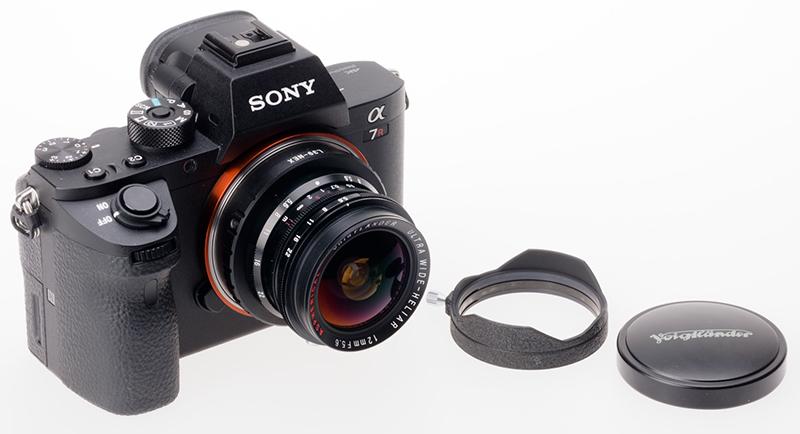
    Why the A7 system still wins – though now old, a Voigtlander Leica screw original 12mm f/5.6 ultrawide works well using a $10 simple adaptor. A very much more expensive adaptor – $300 – turned out to have incorrect infinity focus.

    Then along came awkward early buyers of adaptors and lenses like the Voigtlander 12mm, or for example the 40mm f/1.4 which was the lens that really alerted me to the problem. These lenses are calibrated to Leica focus register with the aim of a hard infinity stop. They are supposed to hit infinity just as the stars in your night sky snap into perfect focus. We found that whether this happened depended on the individual Sony body and also on any adaptors. Manual focus lenses were not self-calibrating! That’s why the Fotodiox Tough-E mount arrived, why Sony tightened up generally on tolerances after the A7 and A7R, and also why makers like Samyang wisely allow a generous over-run past infinity for manual focus lenses (their 12mm f/2 for E-mount is an example, with plenty of tolerance to handle different bodies).

    Now all of Sony’s E and FE mount autofocus lenses have continued to be self-calibrating. They do not have hard infinity stops and many don’t form an image properly at all unless powered up (the power moves groups and elements into position, centres any stabilisation group, and finally performs AF). The start-up routines can also involve opening the lens aperture and closing it, often every time the shutter release is touched for first pressure. This is why expert users often prefer to AF using an assigned custom button, not the shutter release. It can save a wasted quarter-second and greatly speed your response time for action and grab shots. It’s also why manual lenses are popular, as these always shave the response time of the camera body down to an absolute minimum.

    The mistake some make is to assume the Sony E-mount needs to be as precise and accurate as a 35mm SLR or DSLR. It does not. It may feel like a precision instrument but in fact it’s not. Where an SLR design requires micron precision in alignment of the lens mount and the focus plane, the principal mirror and the secondary AF mirror, the AF module, and the focusing screen – all at once – the E-mount mirrorless requires only two conditions to be met. The axis of the lens should be centred on the sensor, and should be perpendicular to the sensor (and any focus mechanism used should retain this). If this is achieved, all other degrees of precision can be covered by tolerance. Obviously the IBIS, 5-axis moving sensor, does require considerable engineering excellence to do what it does and keep everything right. But unlike the old DSLRs, it will never need you to adjust hidden screws just to get the focus working properly.

    The IBIS question

    Sator suggests that with such a small throat aperture, the 24 x 36mm stabilised sensor really can’t do its job. We all saw the first demonstrations of AS, or SSS, or SSI or whatever we call it – the sensor apparently gyrating over many millimetres. Those who bought the original Sony A100 and 16-80mm CZ lens also found that sometimes the sensor would be a little more off-centre for the shot and one corner would be sharply vignetted. Well, you might expect that from the A7RII with certain lenses but in fact I’ve never observed it.

    The IBIS never allows the sensor to sit off-axis. It will constantly correct for your wavering hold, but always return to a centred position. It’s not trying to dive 5mm past the shadow of the lens throat or outside your lens image circle, even if it can do so in theory. The real stabilisation corrections made are within a millimetre or two, and even that is a considerable blur when there are over 200 pixels in one millimetre of travel! Consider what a 200 to 400 pixel blur looks like. What IBIS is doing often corrects shake producing blur in the region of 2 to 20 pixels.

    So, the reply to the apparently valid point that the whole sensor size, stabilisation movement, lens throat size, and lens image circle combine to make Steady Shot Inside a guaranteed failure can only be this: it works. It’s like a bicycle – look at it, think about it, and it’s not promising… but in practice it works very well. It also works, however its firmware interfaces with lenses, to use OSS optically stabilised Sony lenses very successfully.

    Conclusion

    The Leica screw system was probably designed with its 39mm lens thread much smaller than the diagonal of the film gate because it was originally made for an 18 x 24mm ‘single frame’ (later called half-frame) format. When a fixed lens was replaced with the screw mount, the inherent problem of having this smaller than the film diagonal was missed. That gave later generations the vignetting Leica Visoflex and the limited range and performance of all lenses over 135mm focal length!

    To some extent Sony has done the same thing and simple large aperture long lenses might in theory vignette. In practice they don’t. The limitations are nothing like the Leica or Contax rangefinder mounts were in the past. The argument against full frame mirrorless, or the specific design of the Sony FE/A7 series, ignores many things including simple points like volumetric heft (looks very different from overhead views of the camera footprint) and multi-body kits. I use A7RII, A7 and A6000 and all three bodies together barely take up the baggage space of a single pro DSLR.

    So, just relax. The Petapixel article was not a very carefully constructed one or a balanced argument. You’re going to find many different form factors of digital camera in future. The Sony full frame mirrorless system is just one. Because Fujifilm, Olympus, Panasonic, Nikon, Pentax, Samsung and Canon have all made design decisions for their mirrorless offerings which rule out full frame it’s not going to have ‘competition’ right now, and all users of other systems will find reasons why it doesn’t work for them – or take the plunge.

    David Kilpatrick

    Subscribe to f2 Cameracraft our bi-monthly magazine – worldwide subscriptions by fast airmail, premium ultra-heavy print quality and the best of British printing technology (it even smells good).

  • Voigtländer FE 10mm f/5.6 and 15mm f/4.5 III

    cameraswithVSMVFEwides-web
    I got to try out the first new Voigtländer Sony FE mount lenses with electronic aperture setting and manual focus control with a quick overnight test during the UK Photography Show at the Birmingham National Exhibition Centre, on March 19th 2016. The pre-production 10mm f/5.6 Hyper-Wide-Heliar and 15mm f/4.5 Super-Wide-Heliar are two of a trio reaching the market in Spring 2016 – the third is a new version of the 12mm f/5.6 Ultra Wide-Heliar. We also tried the 10mm in Leica M mount; the test cameras were the Sony A7R II and Leica M 240.

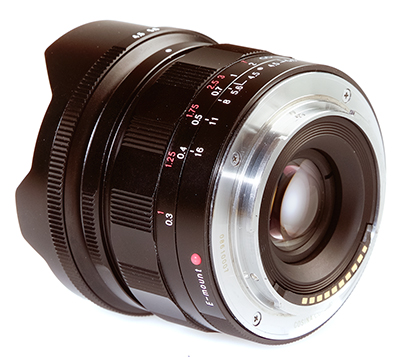
    First of all, no other Voigtländer lenses yet have the Sony E-mount with electronic connections, similar to the Zeiss Loxia models. Cosina, the manufacturer of Voigtländer lenses, also makes some Zeiss lenses and the operation of these designs is probably identical to Loxia 21mm, 35mm and 50mm models. The electronics could allow in-body control of the lens aperture but for these lenses, the aperture is mechanically set on the lens itself with a 1/3rd stop clicked ring that can be de-clicked by pushing back, turning through 180° and putting an alternative index mark in place. The focus distance set is transmitted to the camera, along with the focal length. This allows a digitalogue display in the finder, a marker moving on a bar from close to infinity.

    15mm-Emountrear-web

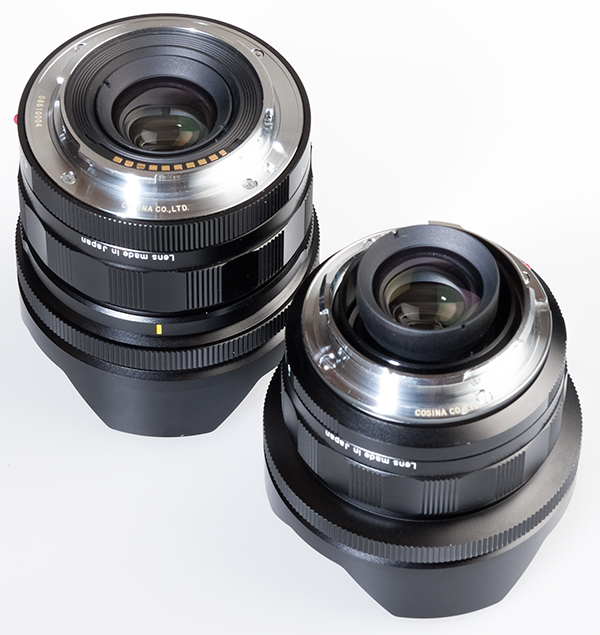
    For the E-mount, the close focus of the 10mm and 15mm is impressive and identical at 30cm. This contrasts with the M-mount minimum focus of just 50cm. The mechanical focus is very smooth indeed and the whole metal-bodied barrel and mount feels solid and precise. Depth of field markings are conventional (that is, based on pre-digital circles of confusion, or a typical A4 print rather than a 100% view on a 27 inch monitor screen). The optical design for the Leica M mount is clearly identical but the mount is very different with no electronics, and indeed no way of telling the Leica body the focal length or aperture in use. The EXIF data from Sony E-mount files is precise, with Leica it depends on the user manually entering the focal length, and a clever algorithm that uses the camera metering to work out the f-stop being used.

    15mmvoigt-twomounts-web

    Here are 10mm Hyper-Wide-Heliars in E-mount and M-mount.

    10and10-web

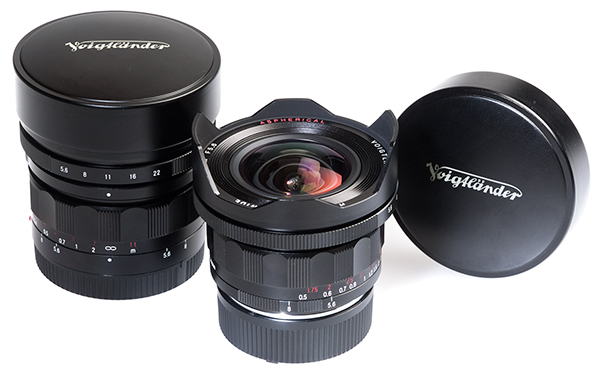
    The lenses have fixed petal type lens hoods and come with well-fitting front caps. The use of filter systems will depend on adaptors like those already found for the 15mm MkIII Leica M, but probably custom designed for the 10mm.

    Here, as a final product shot, is the original 1990s 12mm f/5.6 Ultra-Wide-Heliar Leica screw mount, with its detachable hood removed, next to the new 10mm. The new 12mm is similar in size to the 10mm, reflecting an optical design intended to be more compatible with digital sensors with improved vignetting control and freedom from colour shifts. It’s fair to say, though, that with the Sony A7R II I have been using the old 12mm with very good results. I can also tell you the new lenses are much sharper especially towards the corners.

    old12and10web

    It’s this sharpness which comes as a really welcome surprise with the 15mm f/4.5 design. It can be used wide open with confidence. Because the lenses have mechanical apertures, they don’t open up for focusing like purely electronic E-mount types – you focus at the working aperture, or for extra accuracy open the lens up, focus, then close down. When you touch the focus ring and move it, the magnified focusing of the Sony body is automatically activated, returning to a full view when you take first pressure on the shutter release. In practice this is a very fast and accurate manual focus method needing no button presses on the camera body.

    The geometric distortion of the lenses is minimal – they are almost perfectly orthographic but far from isometric! Objects near the ends and corners of the image can appear extremely distorted simply because they are projected with such rigorously rectilinear drawing. This is not really distortion, but it certainly looks like it when a face or figure ends up placed at an extreme. The 15mm must be used with care, and the 10mm needs an advanced understanding of weirdness.

    These lenses convey a built-in profile to the Sony bodies, and also to Adobe Lightroom or Camera Raw for processing (or so the dialog reports). What you see through the electronic viewfinder, and on opening a raw file, may not represent the optical truth. Studying the 10mm I found it hard to understand how any light reaches the corner of the sensor at all. I can’t measure the true fall off but I would guess it’s in the order of five or six stops. With the profile applied in-camera or by the raw converter, it’s moderated especially when stopped down a bit. This looks natural. Correct the vignetting fully, and some of the natural appeal of the image is lost.

    We must wait to review what may be primary choice for many users, the 12mm.

    The 10mm Hyper-Wide-Heliar f/5.6

    This lens displays an exceptionally straight geometry, even when used on the Leica M 240 body which has no added firmware correction function. Whatever profile is being passed to the Sony bodies probably only concerns vignetting (our Leica test indicated it may not really need a lens profile). It has 13 elements in 10 groups and covers the widest angle ever achieved with a true wide-angle on the 35mm format, 130°.

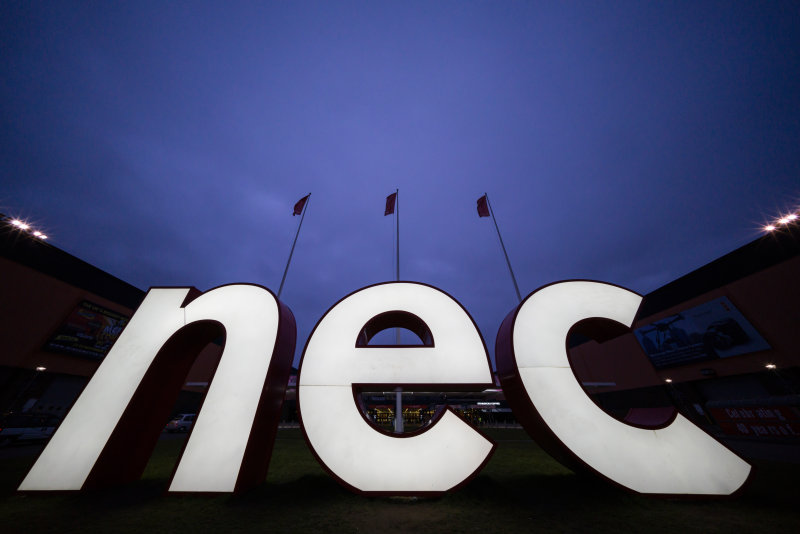
    Of course, I took a few tests inside the NEC but the first subject which really lent itself to the extreme angle was the giant illuminated sign. I was about a metre away from this, but a standing adult is about half the height of the letters. All the pictures used in this article can be clicked-through and will take you to the pBase Gallery which allows access to the ‘Original’ A7RII (level 10 JPEGs, full size) along with all the essential metadata. Please note these pictures are all copyright and if you wish to share them, please link to the pBase Gallery. You may download and examine them for your own research but they may not be reproduced.

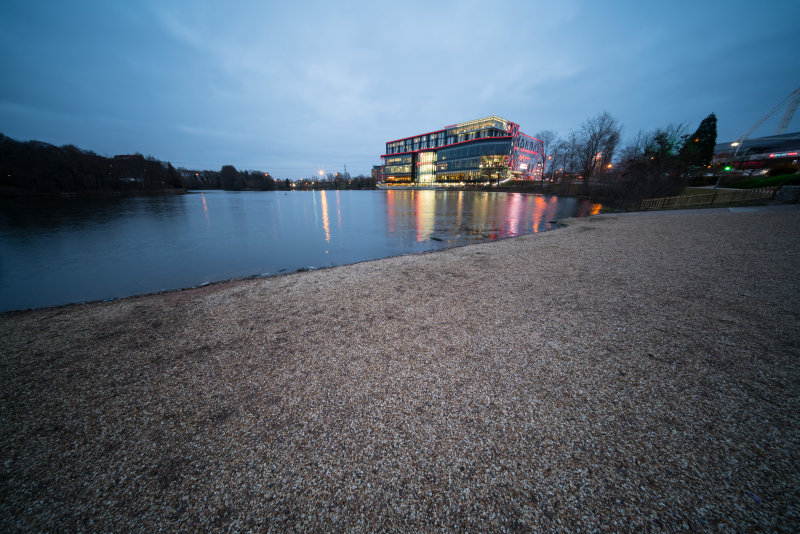
    Outside the exhibition centre there’s an open land drain (Pendigo Lake) which stops the entire place from flooding. It’s about seven feet deep and fed by drains from below all the exhibition halls. With the 10mm fitted, I found a suitable supporting post. You’ll see that the beach gravel shows some softening and elongation towards the corners, almost inevitable regardless of the sensor cover glass specifications sometimes blamed for this. The lens geometry forces the elongation. This shot at f/8 has no added correction at all for vignetting.

    But with a lens like this, simple extreme wide views can be disappointing or pointless. You need to exploit its potential to do what other lenses can not do. The Sony A7R II can also go where other cameras might not – such as nested into the gravel, using the rear screen folded out for viewing the composition.

    This is stopped down to f/22, and in fairness the diffraction softening means nothing is really as sharp as it can be. The diaphragm stars from the lights are neat. Depth of field doesn’t get much deeper than this.

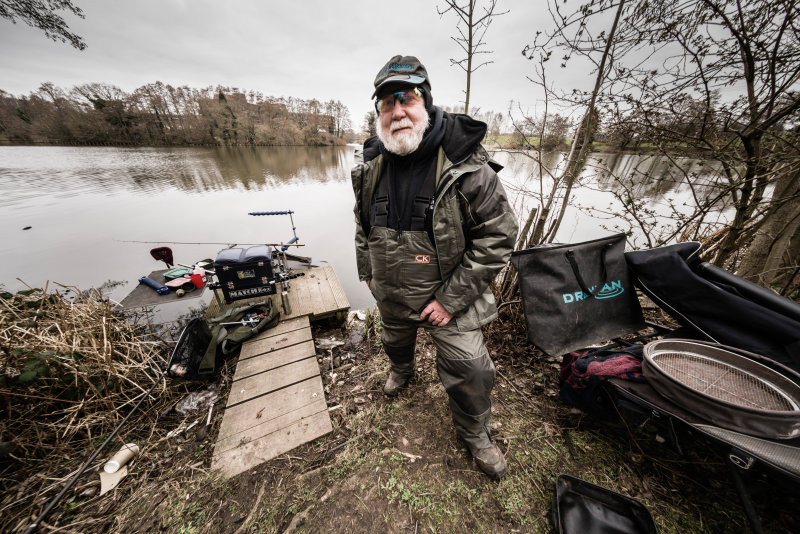
    This picture is from the next morning, walking back past the lake. ‘Not often you get to photograph Father Christmas fishing’, my friend here joked. He told me the history of the ‘lake’. Seven friends had gathered, for a fishing competition – pick their spot, set up, three hours to fish, winner with the biggest catch by weight. I’d been using a tripod so Steady Shot was turned off, and this hand-held shot at 1/6th was just OK. I found that because of the magnified scale of detail towards the outer field, if you do get shake it can be almost invisible in the centre but really blur the corners. I’m still trying to work out exactly why sensor based stabilisation manages to handle this change of scale caused by lens projection, but it does. Shots with SS on were generally perfect, those without could be surprisingly poor considering the very short focal length. I’ve processed this picture a little to suit the subject, but it shows the potential of the 10mm for environmental portraiture and editorial work. Because a shift of just inches in the lens position changes the shot so much with the 10mm, a tripod would have been impossibe here (I was leaning forward almost vertically above his foot for this).

    Here’s a funky use of the 10mm extreme angle and scalar distortion. It’s a quick grabbed shot on leaving the exhibition hall, and it’s not even vaguely sharp, except rather oddly in the view through the coach windows. The LED lighting has strobed some detail at the left hand side.

    I liked the effect with the bus so much I tried a few trucks through the car window in the morning. However, they lacked shape and form. This passing car and trailer was about the best. The progressive shutter captures a very strange effect from the wheels.

    Here’s a more conventional use of the 10mm. The weather was pretty dull and actually, night scenes were better. Stopping right down, again, takes the edge off sharpness. The 10mm seems about at its best around f/8 or f/11 (which is exactly where I use the old 12mm at the moment).

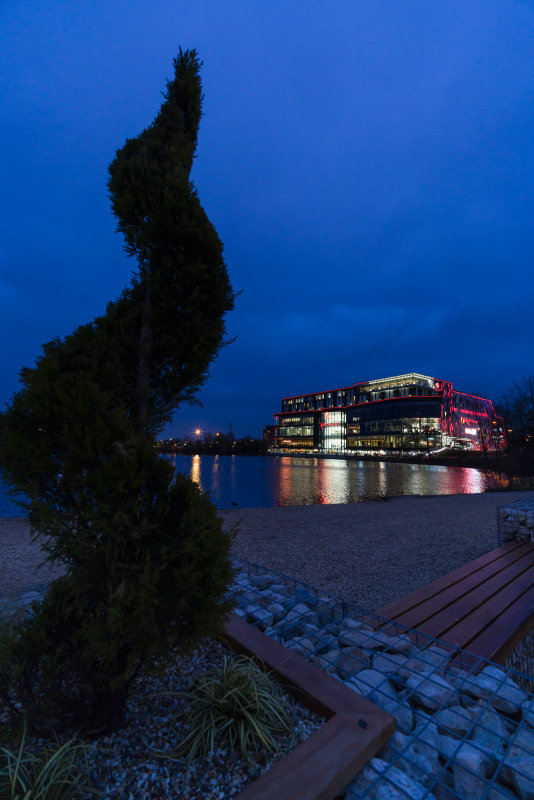
    Before moving on to the 15mm, a change of location. Next to the ‘lake’ there’s a new Resorts World hotel, casino and outlet mall complex with restaurants. Brightly lit at night, it was a far better subject for these wide lenses than anything else! Even in the daylight, it was interesting.

    You’ll also find a vertical version of this in the pBase gallery. It’s hand held, and the detail throughout really says everything you need to know about the 10mm and its practical uses. Although I believe the 15mm is substantially better optically – simply not as ‘stretched’ – I placed my order for a 10mm after doing this test. It is, after all, about the same price as Sony’s supremely boring but widely praised CZ 55mm f/1.8 – and you’re getting something with a unique commercial and creative edge instead of exactly the same old standard lens we’ve had around for ninety years, slightly improved…

    The 15mm Super-Wide-Heliar f/4.5

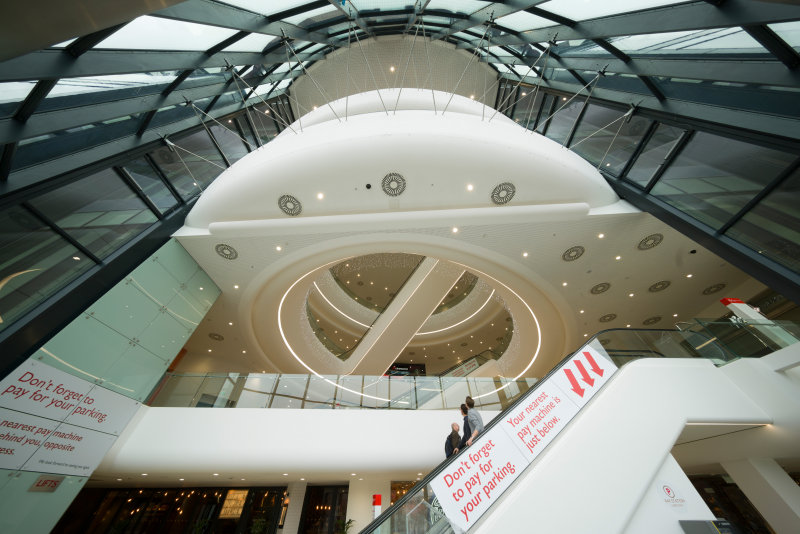
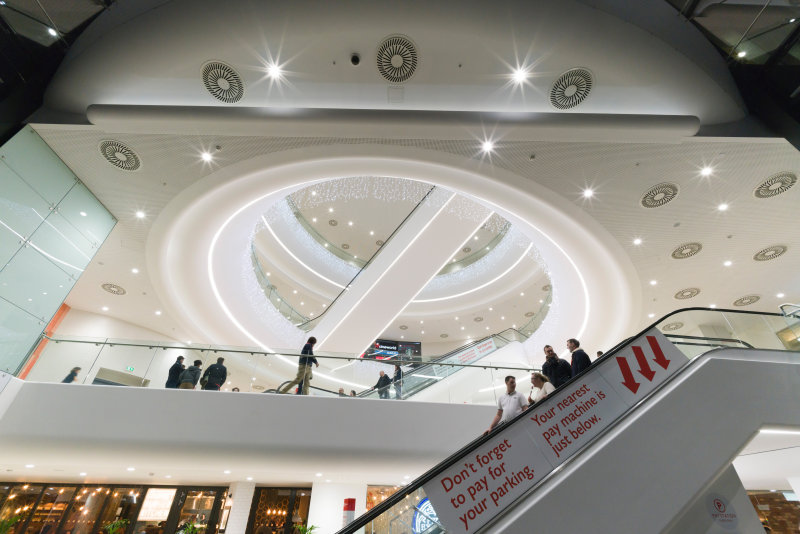
    With only 11 elements in 9 groups, this 110° lens is version III of a popular favourite. Optically identical to the M mount version, the big attraction is not just the lens, but the E-mount functionality. However, having used various 15mms before version III, I have to say this lens is just outstanding optically. It resolved such fine detail that on the interior view at night of the Resorts World mall, moiré patterns are thrown up by the pattern of pegboard type holes in the architectural ceiling surface. Please note that’s not vignetting at the top, below, it’s the lighting in the mall.

    Even if you don’t bother to click through and examine the full sized images for the other shots, please do take a look at this. It’s also handheld with SS, and not at the very slowest ISO. The resolution at f/8 is extreme and other shots taken, including those at f/4.5 maximum aperture, show the same quality. I’ve been testing lenses for over 40 years now and this is simply one of the best lenses I have used. This particular interior is almost like a 3D test target for lenses, too!

    The 15mm causes me a problem. I already own a Sony CZ 16-35mm f/4 and it simply isn’t this sharp.  It can’t do the same thing on a 42 megapixel sensor, it is acceptable and all very good, but not on this level. The 15mm is better than the 10mm and in many ways a more generally useful focal length. But… I’ve got my 16mm covered. 10mm is a better partner. If I dd not have my 16-35mm, I’d team up the Voigtländer 15mm with a 24-70mm. Only even the new 24-70mm Sony f/2.8 probably won’t match this (I have taken a few shots on a pre-production sample, but remember, this Voigtländer is also pre-production).

    The 15mm is a great angle for shots like this and it resists flare well. This is not a tripod shot, it used the fishing platform at some risk of an expensive camera and lens taking a dive.

    Here’s a hand-held, stabilised, very high ISO shot stopped down enough to keep the topiary fairly sharp. It’s much easier to get the horizon level with the display function available in the Sony A7R II and the brightness of the EVF for night shots. Otherwise, this would be much harder. I found it almost easy to take pictures like this casually using the 15mm (it’s harder with the 10mm which needs that little bit more care in levelling up).

    The 10mm on Leica

    Just to prove that the straight-line geometry and reasonable vignetting are not entirely down to any kind of electronic profile, a couple of Leica 240 shots start here with one using no adjustments in raw conversion to correct illumination or geometry.

    Here’s a slightly more creative use of the lens. Getting the camera in position was not easy and the A7R II would have been quicker to set up, but we wanted to check out the Leica version too.

    Conclusion

    If you have not purchased any wide-angles shorter than 20mm, it’s worth buying both the 15mm and the 10mm – or maybe just the 12mm on its own. The prices in the UK should be around £839 including VAT for the E-mount 10mm and £724 inc VAT for the 15mm – or less. At The Photography Show, these lenses were being ordered in some quantity especially on the professional days. A surprising number of mainstream professionals now use Sony A7R II and it seemed that almost all my pro magazine readers who came for a chat at the Master Photographers Association stand either had Sony or Fujifilm X. Those handling commercial assignments generally had the A7R II and most were using their Sony kit alongside Nikon or Canon. You can get pretty good (if huge) 15mm lenses for these DSLRs but you simply can’t get a 10mm. The closest is Canon’s 11-24mm EF zoom; at 11mm this does not even begin to approach the image quality of the Hyper-Wide-Heliar. You could also buy an A7R II with this lens for less than this zoom alone (definitely so at the show prices where £700 was slashed off the A7R II body).

    For those who own 16-35mm or similar lenses, the 10mm is a logical buy. It’s especially useful with the A7R II rather than the A7 II or A7S models, because the 42 megapixel sensor allows sensible cropping away of geometric extremes. One photographer I talked placed an order just to dispense with his bulky Canon 17mm tilt shift and DSLR – a crop from the 10mm angle of view is all he reckons he’ll need in future.

    Our thanks for Hardy Haase of UK distributors Flaghead for the overnight loan of the lenses, and thanks to the NEC and Resorts World environmental landscaping completed this year for creating some half-decent subject matter. Flaghead is also the owner of Robert White, the famous UK professional dealership in Poole, Dorset, whose founder is no longer with us. They took over the premises and shop before Robert’s death, and continue his name and reputation. This is their own direct outlet for the Voigtländer lenses

    – report and all example photographs by David Kilpatrick, publisher and editor of f2 Cameracraft and Master Photography magazines. Product photographs by Richard Kilpatrick. To subscribe to our premium quality bi-monthly magazines, visit www.iconpublications.com

    See: Flaghead – www.flaghead.co.uk; Robert White – www.robertwhite.co.uk; US distributor, CameraQuest – Cameraquest.com; B&H for US orders, 10mm lens E-mount link, B&H product listing.


  • Sony’s Master plan – new 85, 24-70, 70-200 and more

    15H_GM_lens_image_04

    On Tuesday, February 2nd 2016, Sony UK held a press event to which I was invited. Well, I’m in a different country and about 400 miles from their Weybridge offices, so as usual my trusted English office editor at large (and son) Richard made the still substantial journey from Leicester. The result was a completely wasted day, his time and our company’s money, looking at a mixed bag of TVs, camcorders, headphones and all the Alpha and RX gear we already had seen long before.

    Then on February 3rd, mid-afternoon, the same PR agency which had extended this generous invitation to come and gather ZERO editorial content for our magazines announced the new G-Master series 24-70mm f/2.8 FE, 70-200mm f/2.8 FE and 85mm f/1.4 FE, 1.4X and2X extenders, and upgraded A6000 successor A6300.

    I was attending an excellent event with Graphistudio on the road in Edinburgh (they do try to cover the whole of our surprisingly large and still united kingdom) and returned to see the news. Talk about mixed emotions! I was furious that they should cost me a very real £300 or so (that’s what it costs, whether I do it, or Richard, or a hired freelance) to cover yet another of their red herring events just 24 hours before a major announcement like this. We get nothing free from Sony, they don’t advertise in our magazines, and unlike Minolta they don’t offer pre-launch access to pre-production samples.

    And that’s why I should not even be writing this. In the past, I would never – as a responsible journalist and technical editor – have made any comment on equipment I had not been allowed to handle and preferably use if only for an hour or two. But these days a thousand bloggers try to drive traffic to their sites by doing exactly that.

    Here are my thoughts, anyway.
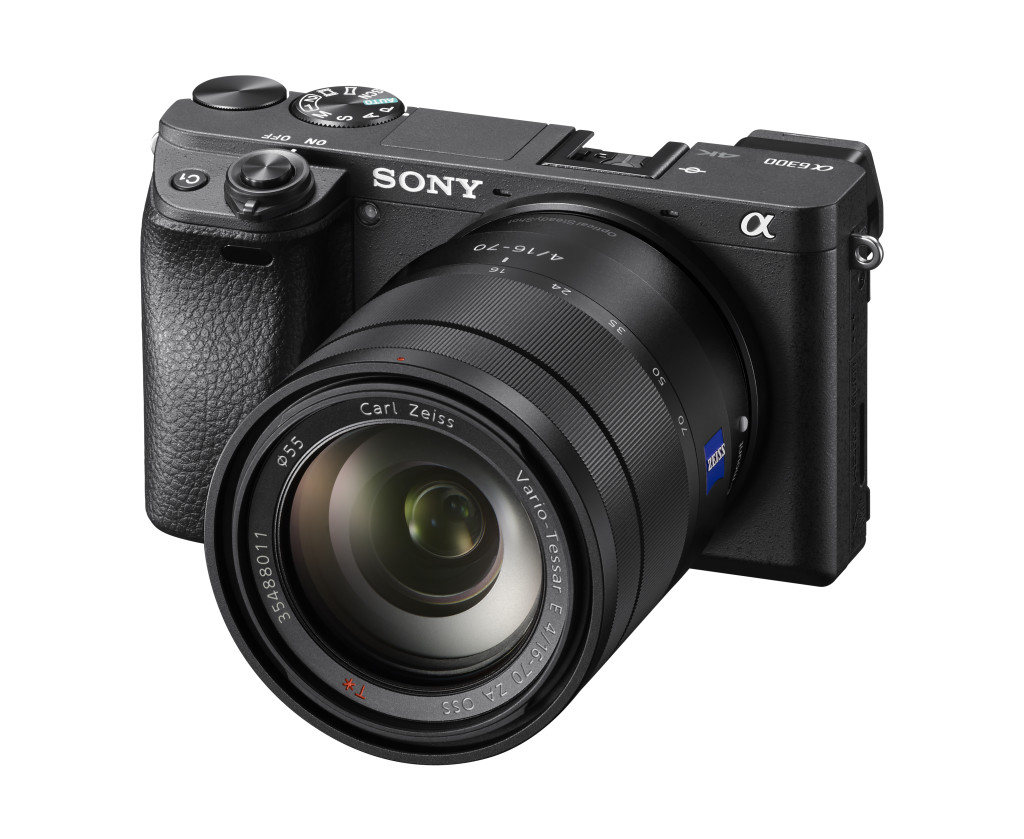
    a6300_N_wSEL1670Z_right

    a6300_N_wSELP1650_topa6300_N_wSELP1650_tilt_downa6300_N_wSELP1650_front_topa6300_N_front

    a6300_N_wSEL1670Z_fronta6300_N_reara6300_N_lefttside   Click to open full size official images!

    The A6300

    It’s 24 megapixels like the A6000 and does claim a slightly faster and wider zone AF. But the A6000 is already close to perfect and I normally shoot with centre point focus, not any of the wide zone modes. I really don’t want the collar on a dog sharp and its face out of focus just because the collar is the more contrasty target which the wide area focus finds first. It’s also twice as much as I paid for my A6000, which happens to have been selling for a market-beating price. I have a great set of lenses – 10-18mm, 16-50mm, 35mm f/1.8, 50mm f/1.8 and 55-210mm. All except the 10-18mm cost about half the official retail because Sony did some great deals. Basically anyone like me who has invested in a decent A6000 (or NEX-6, even) kit and already own an A7S, SII, or RII can take the A6300 or leave it. In fact my now-outdated RX10 and RX100 MkIII do pretty neat silent shooting, one of the main upgrades over the A6000.

    If you need the very fast (120fps) refresh of the new EVF, 4K video and the improved audio functions (whether using jack plug mic or the MFAccessory shoe mic choices) then it’s easy – it will cost you less to get these than any other comparable route. Even the RX10 MkII no longer looks so attractive. As others have commented, it’s partly a matter of waiting for the body price to fall by the end of the year. In the meantime my A7RII actually does all the movie stuff I need (its APS-C 4K is superior to its full frame, and makes full use of line-up of lenses above).

    However, if they manage to lend me a test sample and the new sensor turns out to kill the already wonderful noise/ISO ratio of the 6000 I could be won over early at a high price. Had this been a 36 megapixel body I would be thinking very differently, and perhaps even considering a switch from full frame to APS-C.

    The 24-70mm f/2.8  and 70-200mm f/2.8 G-Master FE
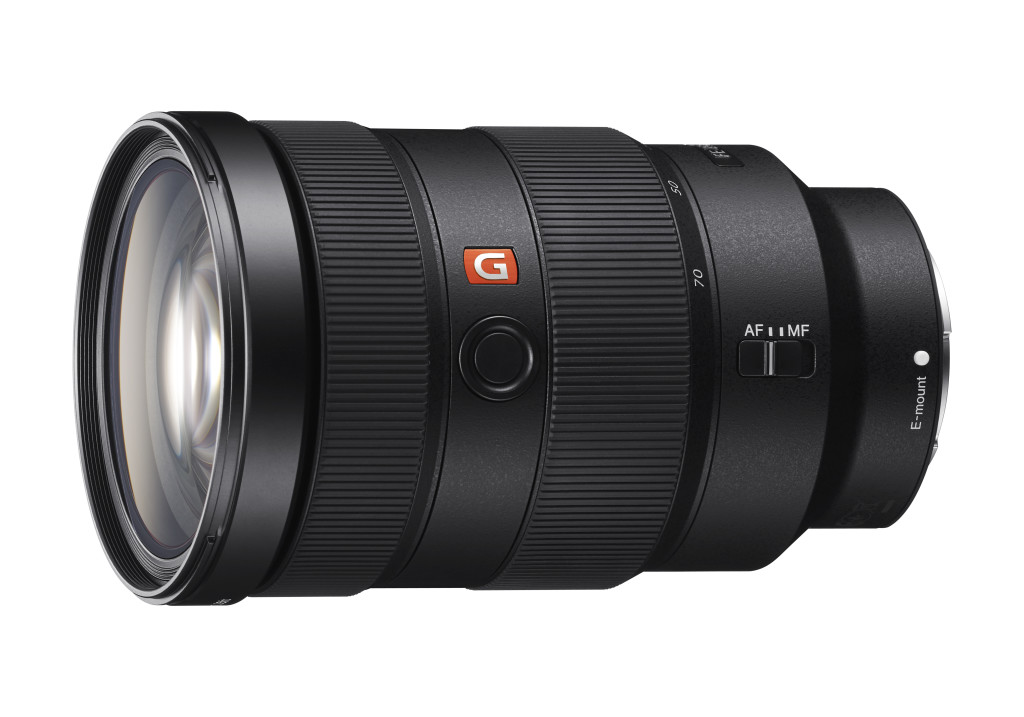
    SEL2470GM_A

    With a 77mm thread and an overall size not far removed from the A-mount equivalents, the weatherproofing and generally improved design of the AF system will win buyers. The longer lens has the 0.96m close focus I’ve been campaigning for now for several years, and it’s disarmingly simple. If you study lenses, you’ll have realised that SSM, stepper or linear motor type AF (silent, no gears) has caused the increased and restrictive focus distances I’ve covered in Cameracraft and elsewhere. It has just been unable to provide enough movement. As an example, compare the old screw-drive 28-75mm Konica Minolta with the ‘identical’ Sony 28-75mm SAM. The 24-70mm f/2.8 A-mount models are actually amongst the better in this respect, managing the magic quarter life-size to important for many subjects. The 24-70mm f/4 FE is not as good though you would have though it easier to make close focusing with a simpler, slower lens – only 0.20X. At least the 24-70mm f/2.8 FE matches up to its A-mount equivalent.
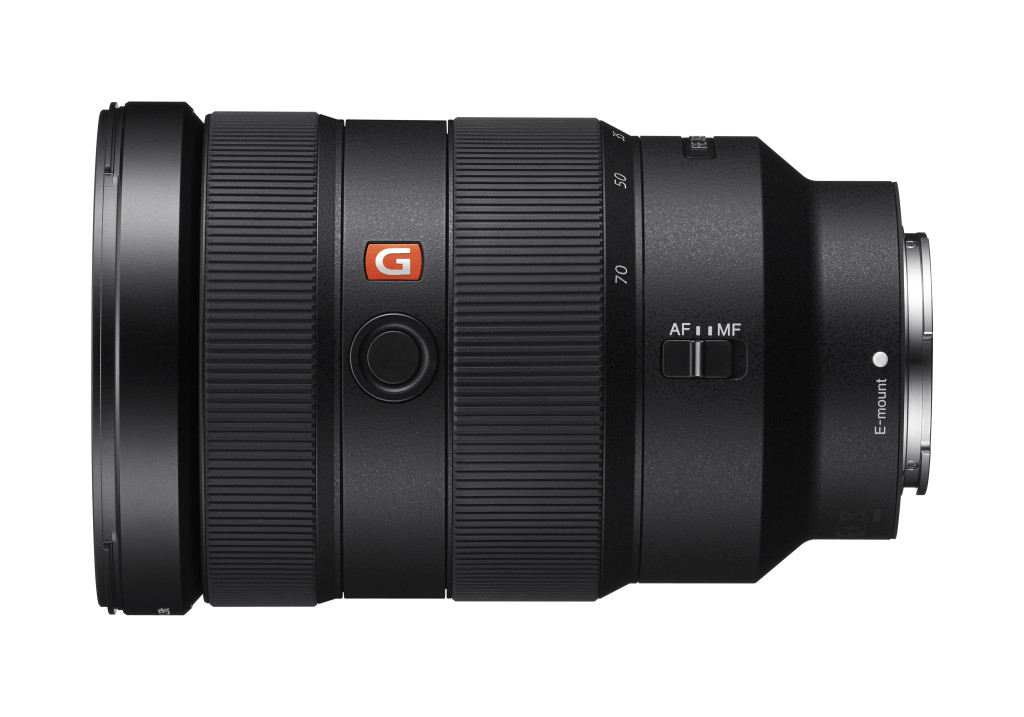
    SEL2470GM_B

    In these new fast FE zooms Sony has improved performance by using more accurate asphericals, designated as XA (extra aspherical, presumably meaning a curve which was out of reach before). Combined with expensive glass types (low and extra-low dispersion) and complex design (23 elements in 18 groups for the 70-200mm) this enables apochromatic correction although they do not use the term. This removes ugly colour bokeh effects. A ‘floating’ internal focus action for the rear unit gives a wider fully corrected focus range, affecting both the focused distance and the flatness of field. An SSM (ring) motor drives the heavy, larger forward group focusing and a linear (rail) movement shifts the rear assembly but the whole focus action is internal.
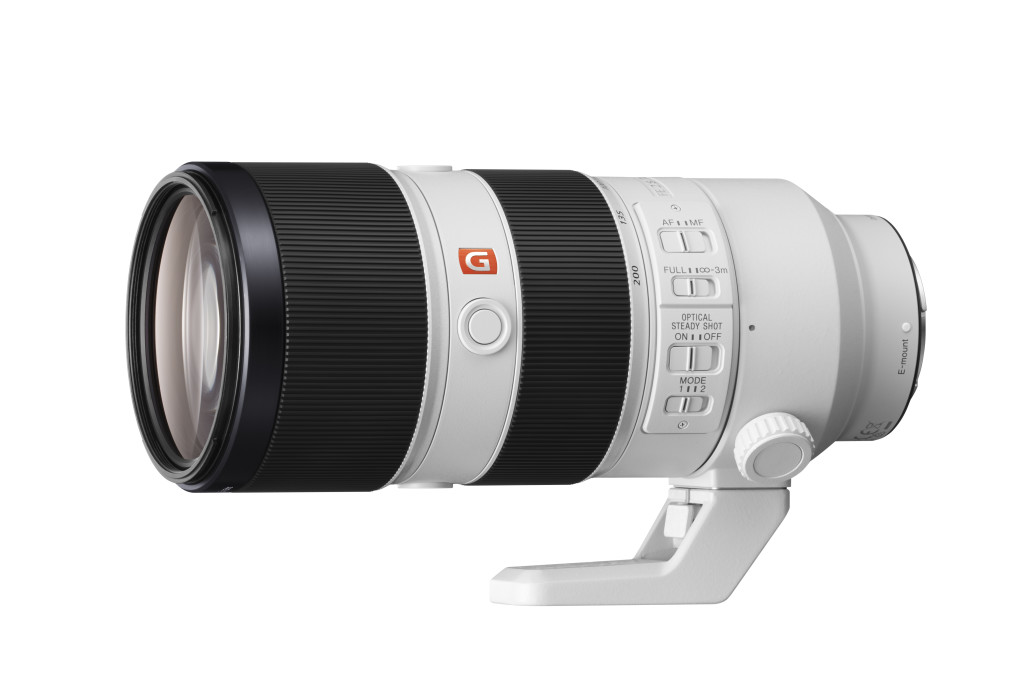
    SEL70200GM_A

    I welcome the 96cm close focus (I trust it applies across the whole zoom range and with AF all the way). This lens achieves 0.25X scale at 96cm. Compare that to the Tamron Di VC USD 70-200mm which can only manage 0.125X, half the subject size, at 1.3m and that’s by switching to manual focus – it forces you back to 1.4m from the subject if you use AF.

    It’s also worth comparing size; most new 70-200mm DSLR lenses are around 185mm long, the Sony is 200mm long. But it’s really ‘smaller’ than the original Sony A-mount 70-200mm’s 197mm. That 15mm extra length is almost entirely dead space, a kind of extension to the barrel in order to handle the 18mm register of the E-mount, and also enable the use of the 1.4X and 2X extenders. This extension falls behind a fixed, not removable, rotating tripod mount collar which has a removable foot instead.
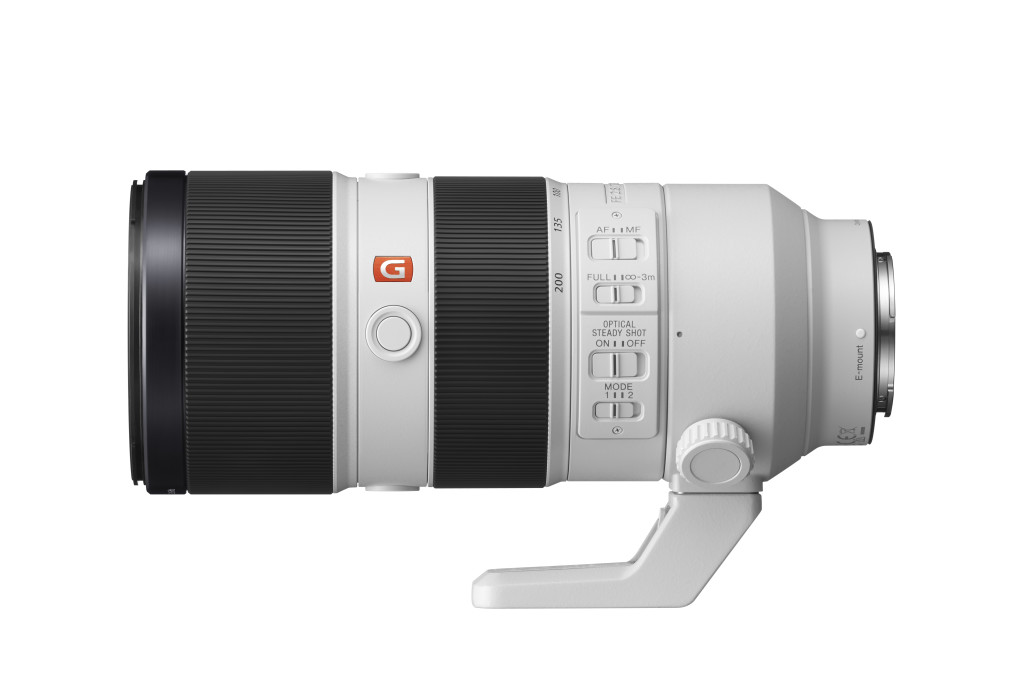
    SEL70200GM_C

    I’m sure that the dual focusing will be fast, with two simultaneous actions combined, and ideal for contrast detection  as well as on-sensor PDAF. My reservations are simple enough though – these are lenses for one-system users, dedicated to mirrorless. There really is no saving over the latest A-mount versions in weight and size, and many photographers (like me) may want to use both A and E mount bodies. I’ve been considering investing in another A99 even though I sold mine. That’s because it is so much more comfortable and complete with my longer lenses than the A7RII with LA-EA4 or 3, both of which I have. If I did so the 24-70mm and 70-200mm A mount would be on the shopping list, and what reason would I have for buying even more expensive new FE versions which could never, ever be used on a A-mount body?

    The 85mm f/1.4 G-Master FE
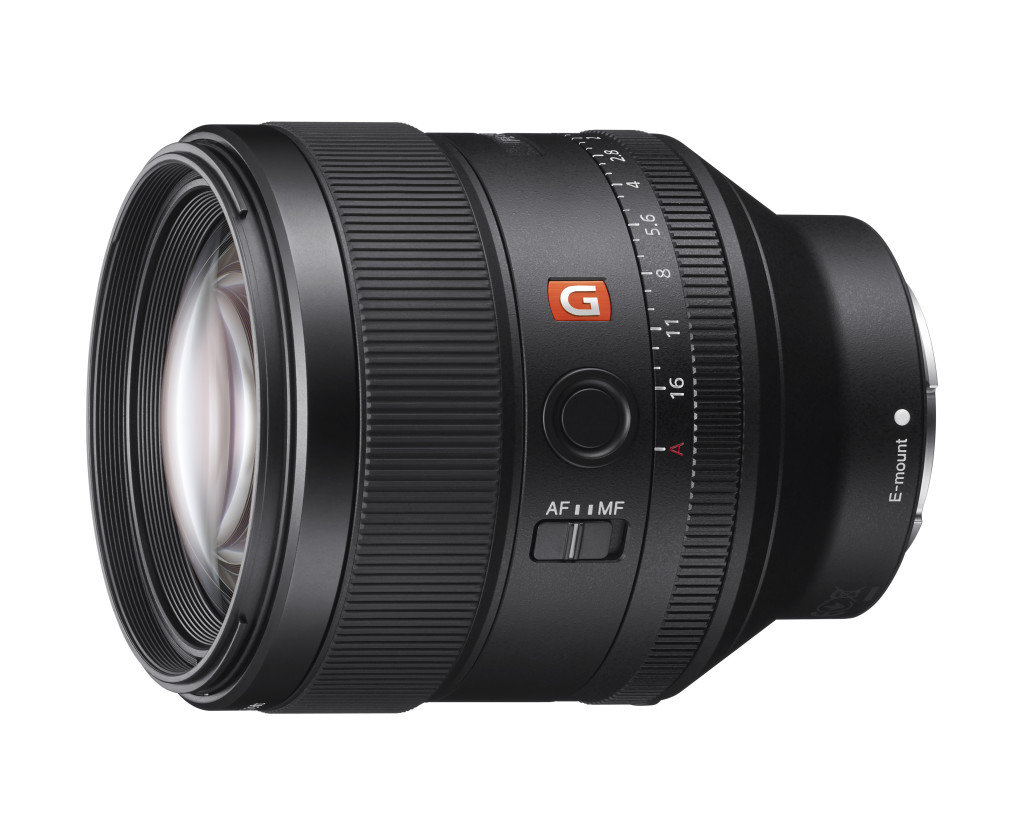
    SEL85F14GM_A

    One guide to acceptable minimum focus distance is the simplest formula imaginable. A lens should be able to focus – at the least – to the same centimetre distance as its millimetre focal length. So, a 50mm lens should manage 50cm, a 100mm lens 1m, a 200mm lens 2m or closer. But that’s the least you need. The ideal is HALF the mm in cm. A 50mm focusing to 25cm is brilliant, a 200mm focusing to 1m is amazing (Vivitar once made one, with a bright f/3 maximum aperture too).

    So, for me the 85mm f/1.4 with its substantial 82mm filter thread, 850g weight and focusing down to 80cm (some data tables say 85cm) with 0.12X image scale is just acceptable. A Samyang 85mm won’t go so close and most 85mms don’t break the 1m barrier. But an ideal new, modern 85mm would focus to 50cm. It’s just pretty hard to enable this using SSM or linear AF drive. Even the Carl Zeiss Batis 85mm f/1.8 is the familiar 80cm, 0.126X scale.
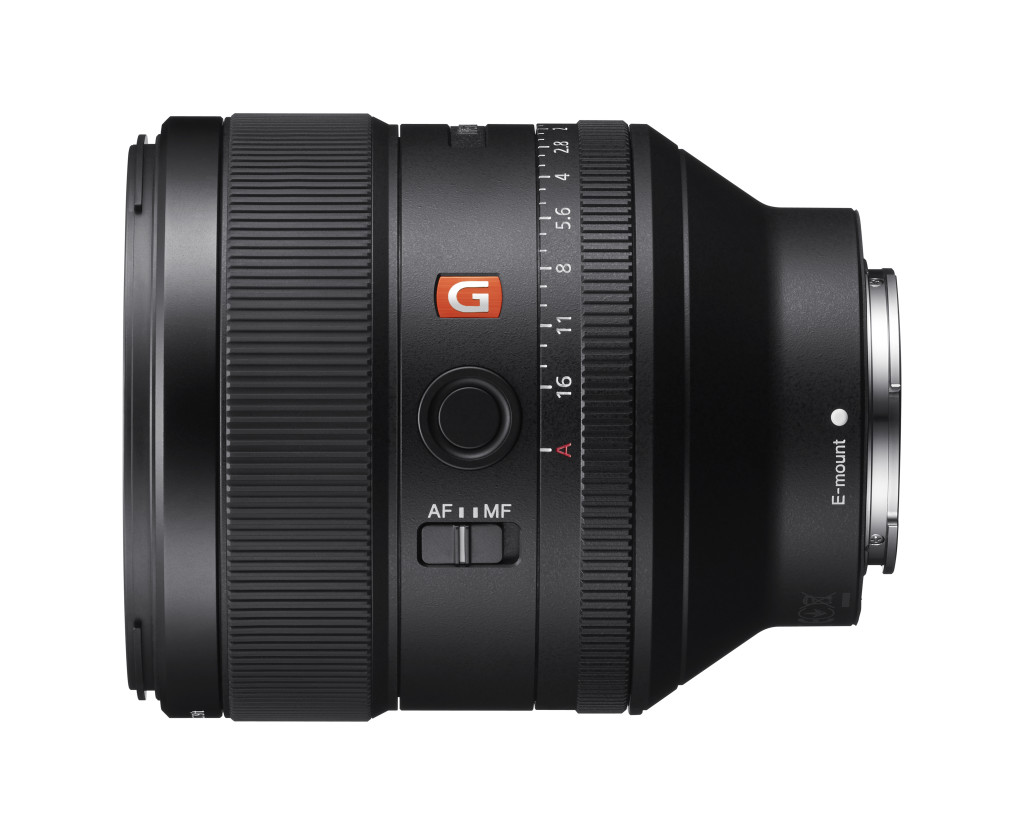
    SEL85F14GM_B

    What I actually use right now is an 85mm f/2.8 SAM lens on LA-EA3. It’s not 100% free from CA and colour bokeh issues, but it is exceptionally sharp and it focuses right down to 60cm with 0.20X scale. Above all it is very small and light, and for me that is most of the point of the A7RII and all the A7 series bodies. It focuses perfectly on my LA-EA3. I can use it with A-mount extension tubes or my Meike metal full frame FE extension tubes, but that’s a bit of a crude solution.

    Results from the MG 85mm so far seen, disregarding some fairly cheesy portraits, show that its 11-blade iris and apochromatic XA correction do deliver more than you will ever get from an 85mm f/1.2 Canon or a Samyang or a Sony 85mm f/1.4 ZA. The manual 1/3rd stop clicked or click-free aperture ring combined with the absence of magenta-green bokeh shift mean this lens will be massive for vids, whether creative porno or music promo. It should be on the same level as Zeiss/Arri ciné lenses if the claims stand up, and I would not be surprised to see a dedicated cinema version.

    It’s a long way from the 85mm SLR lenses of Minolta’s past – six iris blades!

    The extenders

    Sorry, but most FE and E lenses can never (ever) use a a tele extender. That’s why you have not seen any. It’s also why I use that 85mm SAM… it makes a neat 170mm f/5.6 wth my Teleplus 2X MC-7. Way back, one of my favourite travel outfits including the Minolta XD-7 with 85mm f/2 and a 2X converter, 170mm f/4 was a sweet spot in every respect.
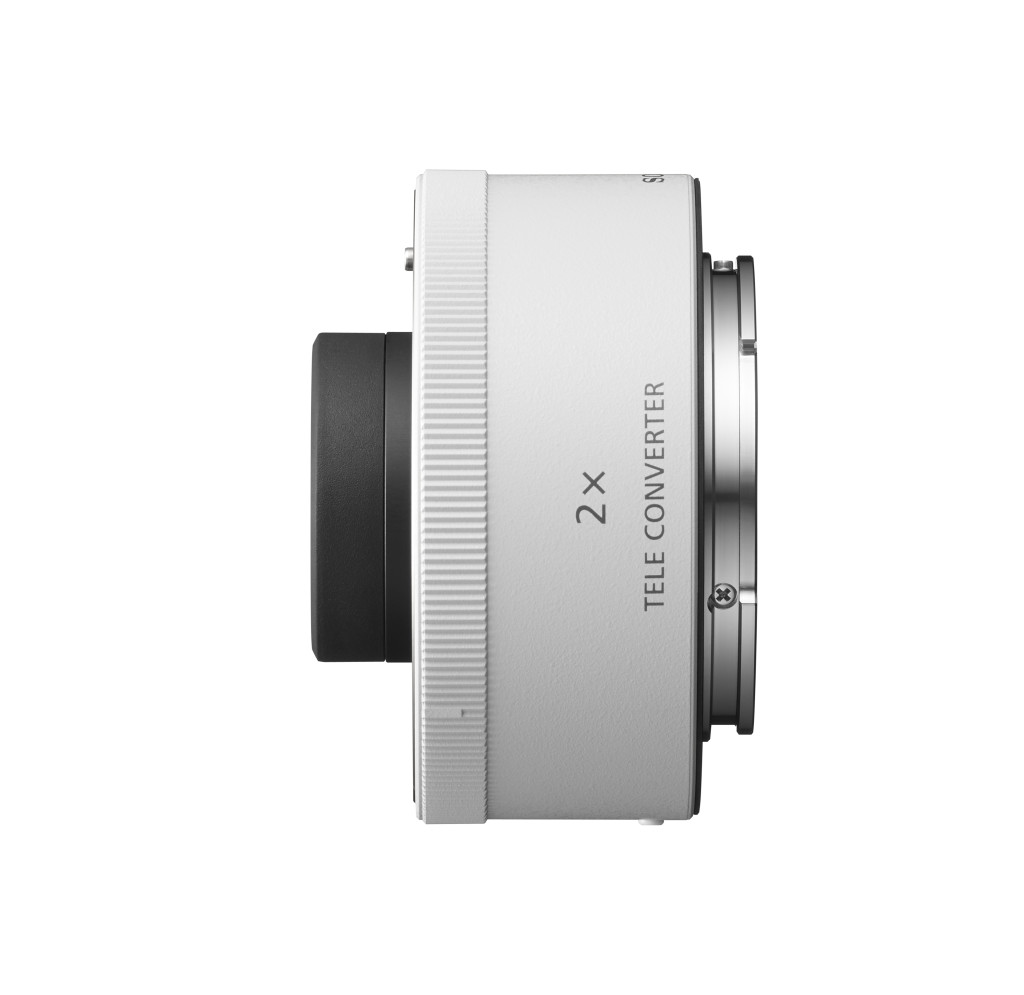
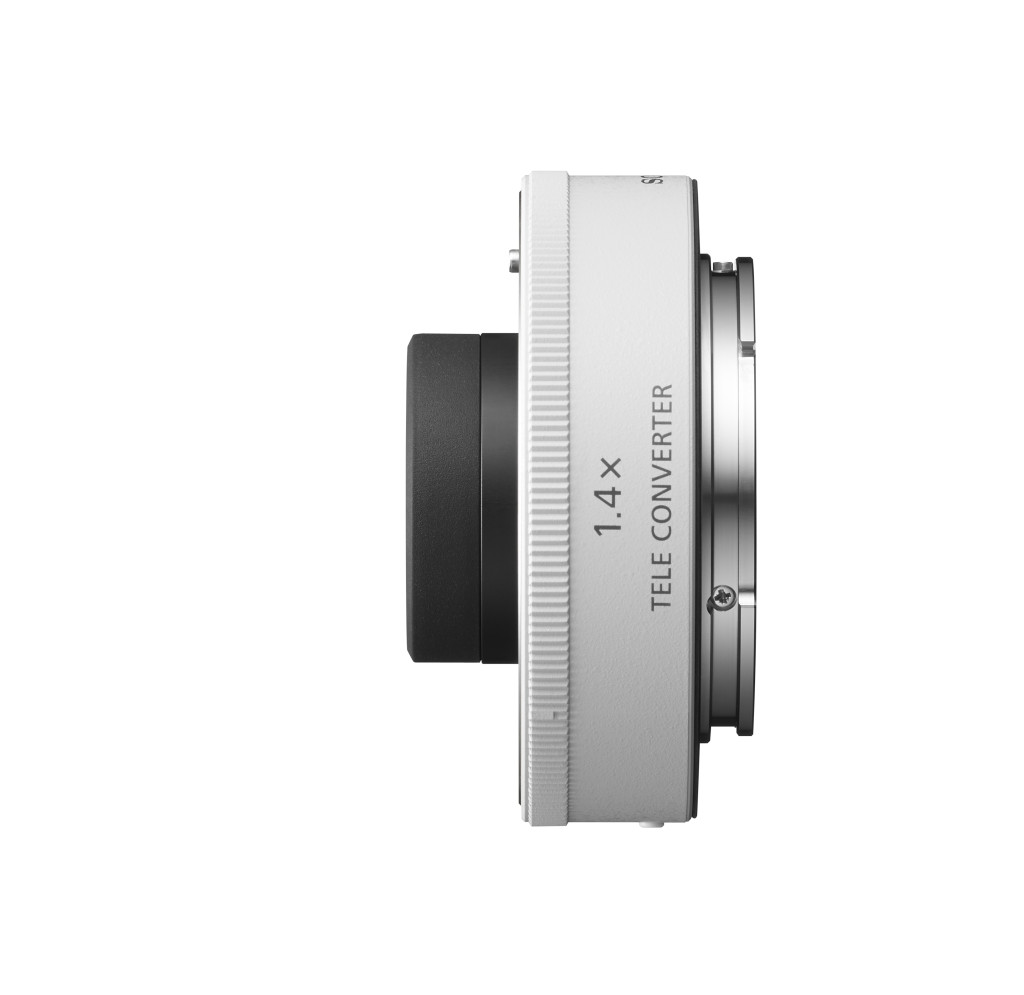
    SEL20TC_BSEL14TC_B

    These two converters can only be used with the new 70-200mm f/2.8 G-Master FE. When you look at how far the converter unit extends into the lens barrel,  you’ll see that this is a combination designed from the start. The rear element of the FE lens is deeply recessed, midway between a typical E-mount design (18mm register) and an A-mount (rear element no closer than 42mm to the sensor).
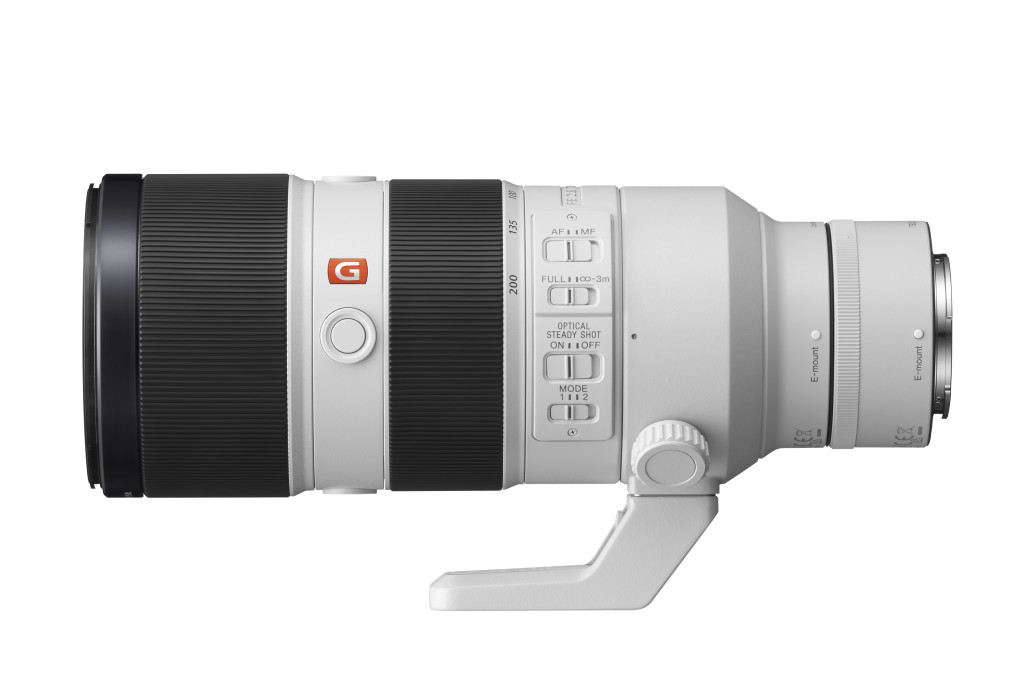
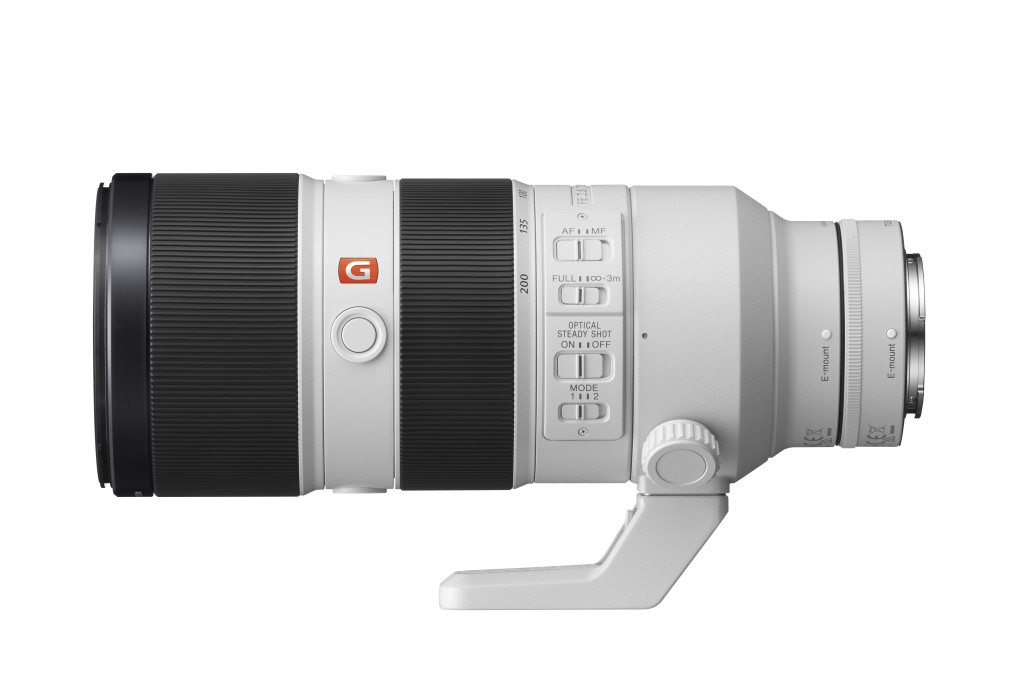
    SEL70200GM_SEL20TCSEL70200GM_SEL14TC

    The extenders add less length than an A-mount variant would, and the back focus of the FE lens is shorter. But it’s a mid-way compromise. Extenders are easy to make for DSLR back focus register, they are difficult or impossible to design for 18mm register mirrorless like Sony or Fuji unless the host lens is matched exactly to the extender. And the 70-200mm f/4, for example, is not…

    The compromise

    And, having mentioned compromise, I should explain the great compromise which has made the entire Sony E/FE system much larger than it needs to be.

    It’s all down to the A7R 36 megapixel sensor. This sensor, more so than the 24 megapixel full frame, requires a very telecentric lens design. That is, more like a DSLR lens, despite the slim A7 series body. In order to perform acceptably with this sensor, the FE lens range could not be designed to be as small as a rangefinder system equivalent, or to take full advantage of the 18mm mount to sensor distance. Brian Smith, whose images are great (not cheesy portraits) but whose technical info clearly comes via Sony PR, says this: “Mirrorless camera design has allowed Sony’s lens designers to place larger than normal lens element close to the body”. Actually, they don’t, as the design of the extenders will tell you. They’ve used a stronger degree of telephoto construction in the long zoom, allowing a smaller than normal rear element and they have taken measures to move it further away from the body – and this is a general trend. If you want to see what a properly small 85mm f/1.4 looks like try a Carl Zeiss Planar 85mm f/1.4 ZE in Canon mount – 72mm filters not 82mm, 570g versus 850g and really solid all-metal manual focus. The mirrorless bodies do provide a zone from around 16mm to 42mm from the sensor surface which can accommodate the rear of the lens, and can’t ever be used on a DSLR. But Sony does not make full use of that and can not do so because of the microlens, filter layer and structural characteristics of the A7R sensor.
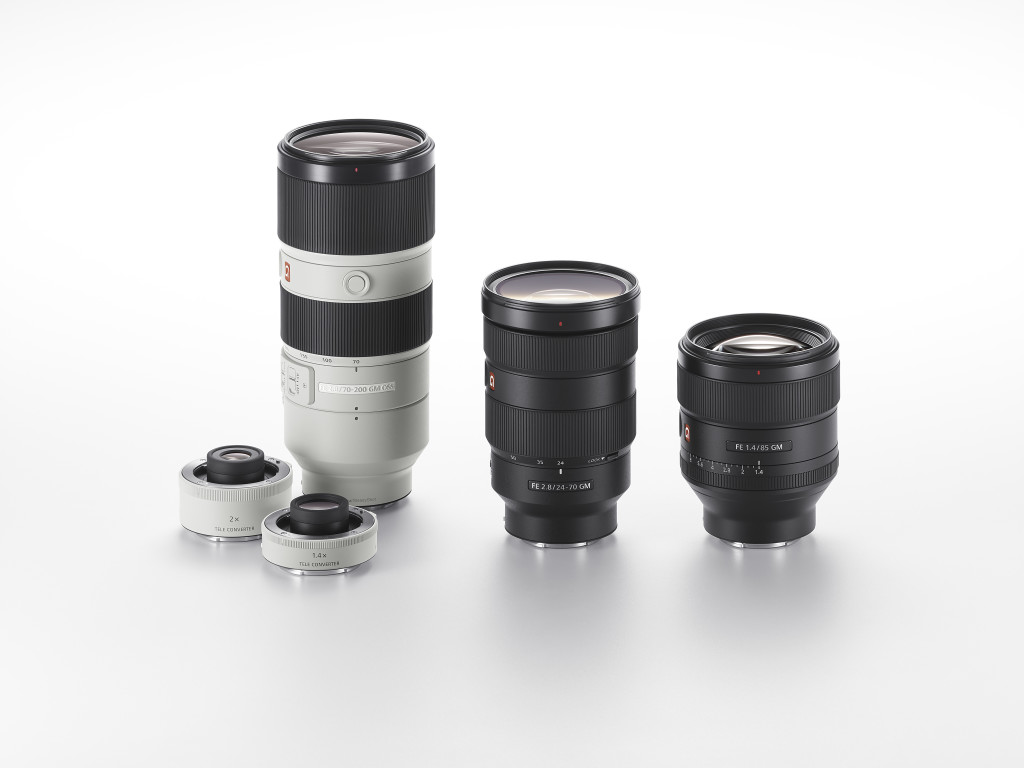
    15H_GM_lens_image_06

    All Sony FE lenses and all CZ independent FE lenses have been designed to work well with the A7R. The 28-70mm kit lens was not, but most owners find it acceptable. They could have made some of the lenses a fair amount smaller and lighter if the A7R had never existed. The A7RII is so tolerant towards short back focus, oblique ray angle imaging, that a whole different range of lenses could be designed for it… but never will be.

    The system has to remain compatible with its earlier components, especially the first ‘flagship’ body A7R. And that is going to constrain design and increase costs for ever into the future. In contrast, see the Fujfilm X system. We have yet to find whether the new 24 megapixel Fujifilm sensor disagrees with any older lenses, but all new lenses no matter how fast, small or clever have full compatibility with all the earlier bodies and don’t seem to have any compromises in design.
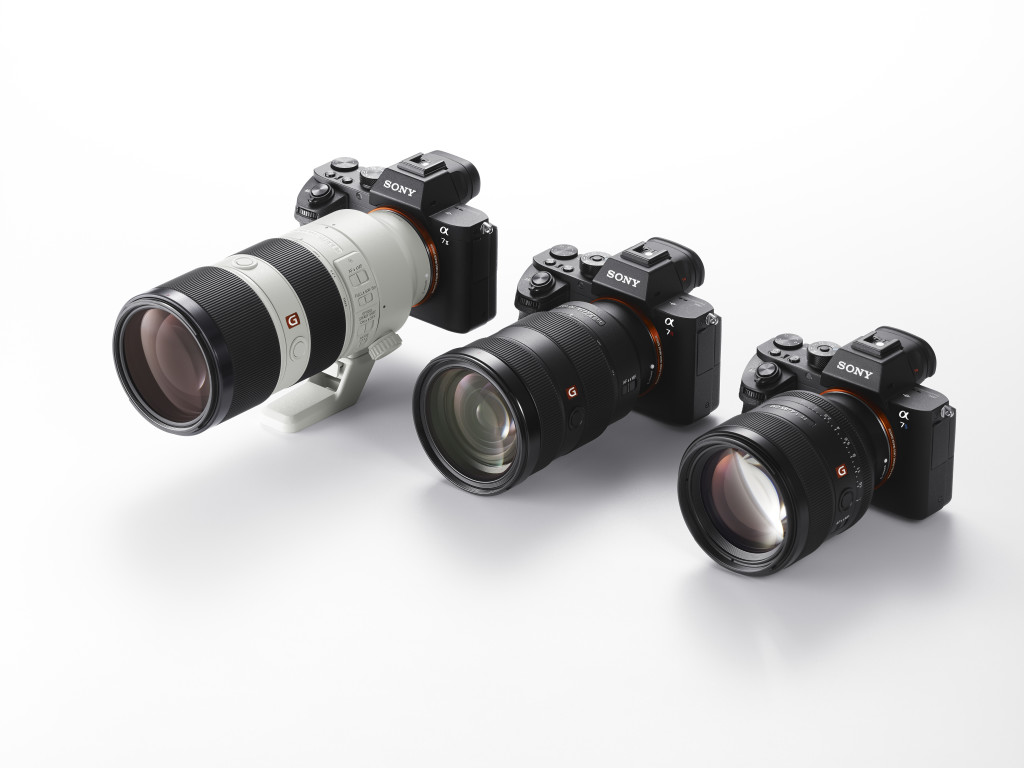
    15H_GM_lens_image_03

    Here’s my view, after doing a lot of digging around over the last two days (Sony PR does not supply any of the technical data for the released lenses – all that had to be found, and cross-checked, from Sony corporate and various dealer sites). I have found some interesting historic lenses like the 50mm f/1.5 and 85mm f/1.5 Zeiss Biotar. They are simple and perform poorly by today’s standards but they are very small. I am familiar with many excellent lenses I’ve used in the past like the Minolta MC/D 45mm f/2, the MD 85mm f/2 and of course the ‘beercan’ 70-210mm f/4 AF. I loved my first serious freelancing kit, Pentax Spotmatics with 20mm f/4.5, 35mm f/3.5, 50mm f/1.4 and 105mm f/2.8. I’ve used some good lenses which have been perfect with all A7 series bodies, such as the Voigtlander 21mm f/1.8, the Canon 40mm f/2.8 STM, and several rangefinder 35mm f/2 or f/1.4 lenses. All of these have been small and perfectly in keeping with the A7 series mirrorless bodies. I think Sony’s inspiration for new lenses should have come from classic rangefinder and compact pre-digital SLR glass, rather than from the bloated f/2.8 zooms of professional digital SLRs.

    In 1999, with a multi-state road trip in the USA to enjoy, I left the SLR kit at home because I was using two Minolta CLE bodies, a 20mm Russar, 28/40/90mm Minolta set and a Leitz Elmar 135mm f/4.5. SLRs in the AF era had started to became big, plastic and clumsy with fairly poor zoom lenses. I opted for the NEX/A/A7 system because I thought we were heading back to light, elegant, unobtrusive little jewels of lenses. Ah well, not so. We’re going to be sold lenses built like a Kardashian ass and learn to live with it!

    – David Kilpatrick

    ????

    A zoom specification comparison

    • Sony Carl Zeiss 24-70mm f/2.8 ZA SSM II – focuses to 34cm, 0.25X, 77mm filters, 975g
    • Sony Carl Zeiss 24-70mm f/2.8 ZA SSM – 34cm, 0.25X, 77mm filters, 955g
    • Sony Carl Zeiss 24-70mm f/4 ZA FE SSM OSS – 40cm, 0.20X, 67mm filters, 430g
    • Sony GM 24-70mm f/2.8 FE SSM OSS – 38cm, 0.24X, 82mm filters, 885g
    • Sony G 70-200mm f/2.8 SSM II – focuses to 1.2m, 0.21X, 77mm filters, 188mm long, 1300g
    • Sony G 70-200mm f/2.8 SSM – 1.2m, 0.21X, 77mm filters, 197mm long, 1500g
    • Sony G 70-200mm f/4 FE SSM OSS – 1-1.3m*, 0.13X, 72mm filters, 175mm long, 840g
    • Sony GM 70-200mm f/2.8 FE SSM OSS – 0.96m, 0.25X, 77mm filters, 1480g, 200mm long, 11-blade aperture

    *Focus to 1.3m at 200mm, 1m when set to 190mm or shorter focal length. 0.13X at 1m and 190mm.

    All the pictures used here have, linked to them, the full sized unwatermarked official Sony PR images except the first image which we have cropped a load of useless white space from – Sony likes useless white space, as the others show. Web and magazine editors hate it and constantly have to crop product shots…