Tag: system

  • Sony new RF wireless flash system

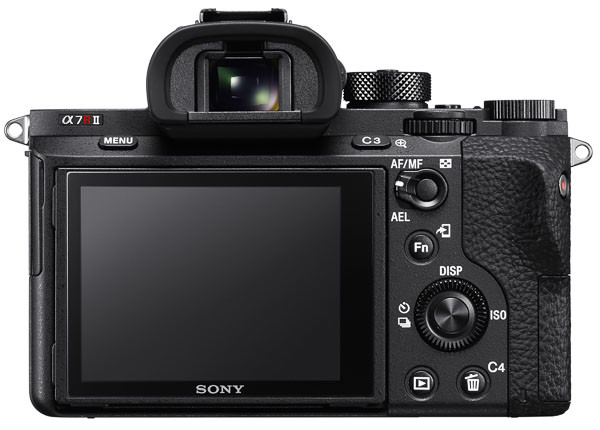
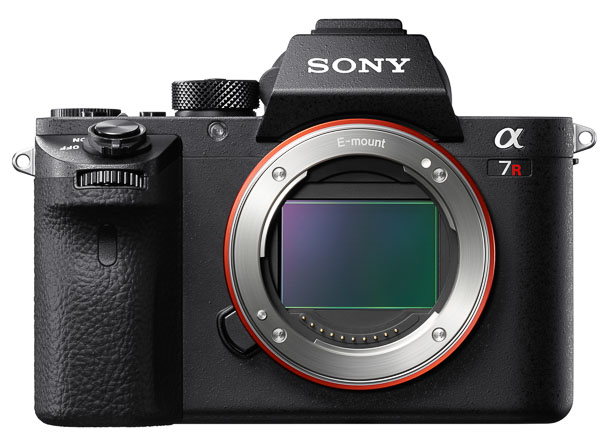
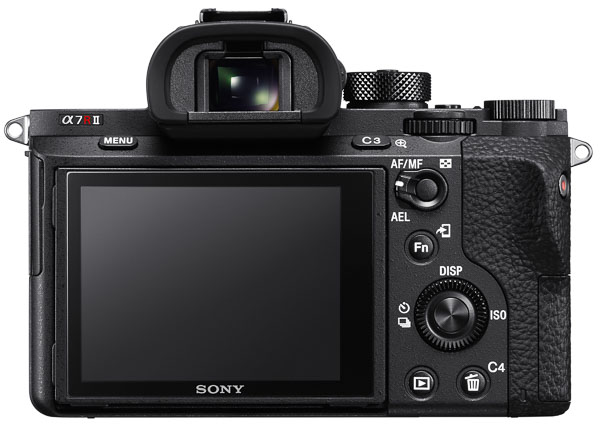
    Sony today announced the availability of a new radio-controlled lighting system to meet the growing demands of professional and advanced amateur Sony photographers.Designed for compatibility with Sony’s α interchangeable lens cameras[i] and external flash units[ii], the new lighting system will include the FA-WRC1M wireless radio commander as well as the FA-WRR1 wireless radio receiver.

    (Editor’s comment – this is a press release text, we realise that absolutely no-one calls RF wireless flash ‘radio controlled’ but there you are…)

    The flexibility of the system means that it can be a totally portable solution, benefitting people like wedding photographers who are often working at locations where it is cumbersome to transport studio lighting but the results need to be perfect first time.

    With a maximum range of 30m (approx. 98.4 feet), the new radio controlled system will allow for an extremely adaptable wireless flash shooting experience with exceptional performance in all types of shooting conditions using TTL, Manual or Group modes. In total, the system can control a maximum of 15 separate flash units[iii] in up to 5 groups of flashes which gives the photographer a huge amount of creative freedom to experiment with different settings to accurately capture their vision for the project.

    Whilst using the system, shooting mode, flash ratio and exposure compensation on remotely located flashes can be controlled via the local commander which is equipped with a large, easy-to-see control panel on which the communication status with each receiver can be confirmed, thus making it convenient for one-man or small-crew shooting. The system also offers the added benefit of enabling remote release of multiple cameras[iv] which is particularly useful for sports and wildlife photographers as the system can work at up to 30 metres, enabling them to capture a wide range of views at the crucial moment.

    The new lighting control system will be capable of flash sync speeds of up to 1/250th[v] of a second with high speed sync (HSS) available as well. Flash level can be controlled over 25 steps (1/1, 1/2, 1/4, 1/8, 1/16, 1/32, 1/64, 1/128, 1/256) in 1/3 EV step increments.[vi]

    The new system is designed for photographers who are creating specific set-ups necessitating multiple light sources, controllable at each flash station for dynamic lighting effects. By delivering a fully radio controlled system, the user does not have to worry about the limitations of IR triggering where strong sunlight or physical barriers may cause problems. It is dust and moisture resistant for use in a variety of conditions.[vii]

    The new system will start to ship in September 2016 with the Remote Commander priced at approximately €420 and the Remote Receiver priced at approximately €240.

    [i]α7 II / α7R II / α7S II via planned software update. Software updates currently scheduled to start in August 2016, as of press release timing

    [ii]Multi Interface Shoe Flashes: HVL-F60M/F43M/F32M. Auto-lock Accessory Shoe Flashes HVL-F58AM / HVL-F43AM / HVL-F42AM in Manual mode only. Optional shoe adaptor ADP-MAA is required.

    [iii]Max 5 groups in GROUP mode, 3 groups in TTL or MANUAL mode

    [iv]Multi Terminal Connecting Cable is required. Sold separately

    [v]Depending on camera specification

    [vi]When using HVL-F32M, up to 1/128flash level is selectable. When shooting in High Speed Sync., flash level of a group including HVL-F32M must be set to 1/16 or higher

    [vii]Although the design is dust and moisture resistant, absolute protection is not guaranteed in adverse weather conditions

  • Sony 28-75mm f/2.8 SAM on mirrorless FF

    SONY DSC

    With the 24-70mm f/2.8 new Sony GM FE lens selling for £1799 (UK) and the A-mount version two 24-70mm f/2.8 for a full £100 more, the cost of a basic mid-range zoom to use with a camera like the A7RII remains very high. There are good arguments to be happy with the 24-70mm f/4 FE zoom, or even the 28-70mm f/3.5-5.6 though that is best limited to use on the A7 (24 megapixel) and A7S (12 megapixel) bodies rather than the A7R (36 megapixel) or A7RII (42 megapixel).

    Of course there are good lens adaptors out there and 24-70mm f/2.8 lenses from Canon, Tamron or Sigma with ultrasonic focus drive in Canon EF mount offer one solution. The original 24-70mm f/2.8 for A-mount with its SSM motor of this type can also be found for a fair price. But there’s one lens which I sold after my A7R arrived, mostly because I was parting company with my full-frame A-mount body survivors. It’s the Tamron-based but Sony revised SAL 28-75mm f/2.8 SAM.

    Although I did have an LA-EA3 adaptor to use SSM and SAM drive A-mount lenses on the E-mount bodies, the 28-75mm didn’t really work very well on the A7R so it remained on my A99 or A900. I made a few tests and saw that it was certainly OK on 36 megapixels, though even on the 24 megapixel A99 where it played nicely with the AF system it had slightly soft corners when used wide open. They were not any softer than the 24-70mm f/2.8 Carl Zeiss of that time and in some ways the lens was better behaved.

    SONY DSC

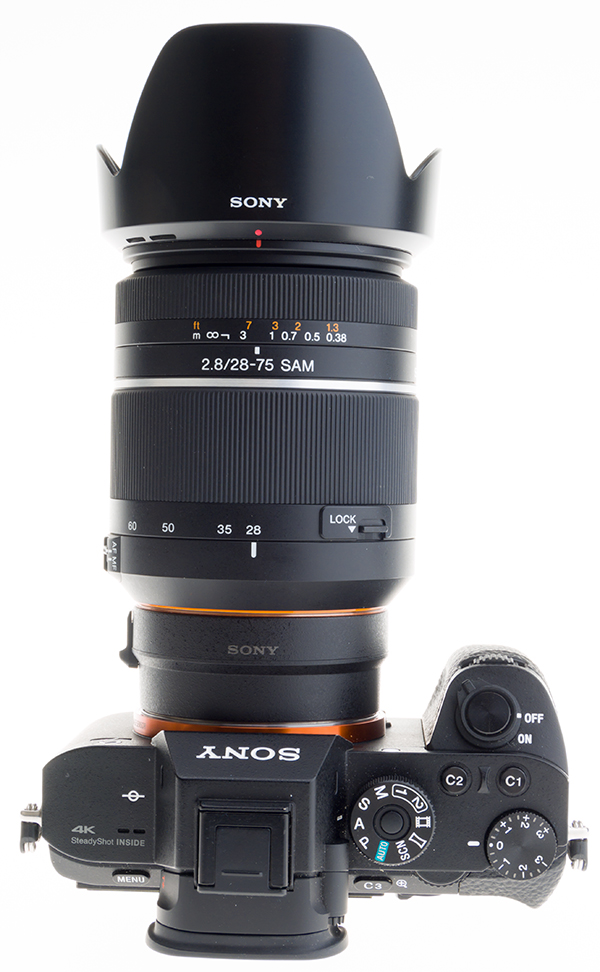
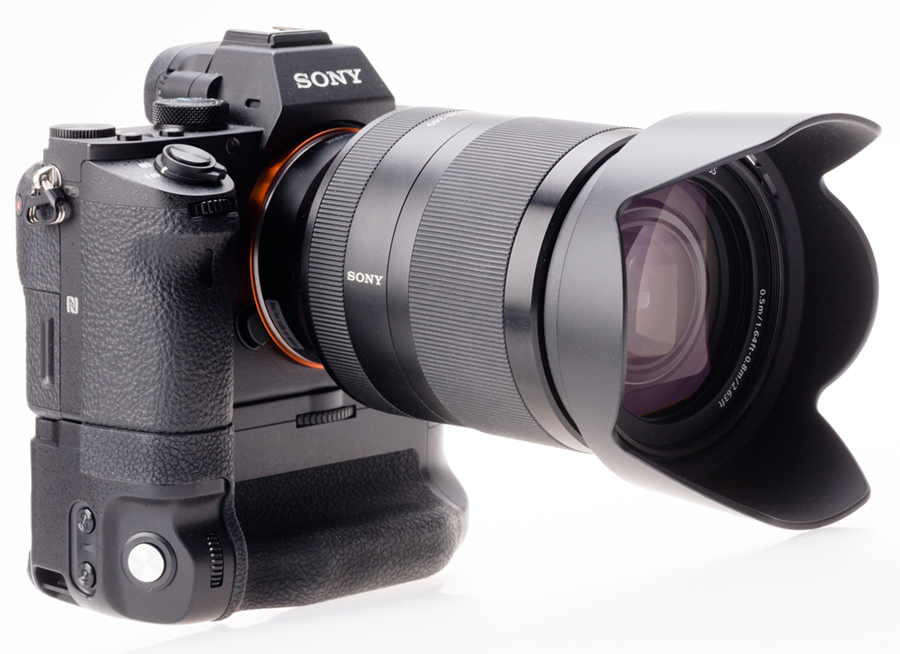
    The first thing to do was to fix this lens to the LA-EA3 creating an FE lens unit. Imagine the adaptor is just part of the lens (that’s pretty much how Sony makes many lenses for E-mount anyway). The total unit measures up at 115mm long including the adaptor, and 75mm diameter taking 67mm filters. The lens itself weighs only 565g, the combo weighs 683g with adaptor and lens hood. That compares with the new GM lens at 136mm long and 88mm diameter using 82mm filters and weighing 886g. As I already have a 16-35mm f/4 CZ which covers the 24mm requirement well, the 28-75mm range is just as useful to me as 24-70mm.

    While the 28-75mm SAM activates PDAF and multiple AF points, it’s not the full works with tracking and Eye-AF. But it’s also not as noisy as some reviews imply. It’s much quieter than the 85mm f/2.8 SAM, and silent compared to the grinding focus of the 30mm DT SAM macro. Startup is fast, with the lens initialising quicker than FE mount stabilised zooms. The aperture actuation is slicker than with body-drive SAL lenses on the LA-EA4, and quieter. Focus is fast and the only downside is the rotating focus ring which does not support DMF or over-ride on the fly, or auto manual focus magnification. Manual focus requires you to set it on the lens and the body, and whatever you are doing, you need to avoid either turning the focus ring when there is any resistance, or blocking it from turning during AF. It’s a bit vulnerable and the direction of focus is the opposite to normal Sony/Minolta design. The zoom ring which locks at 28mm only operates in the normal direction.

    SONY DSC

    So, what you get with the LA-EA3+28-75mm SAM is basic but fully controlled and communicating, EXIF accurate with profile correctly invoked. It will track with continuous focus and during movies, though slightly noisy for in-camera sound recording; it seems to do so when some SSM lenses, like the 24mm f/2 CZ, don’t play.

    As for optical quality, it’s still a 14-year-old Tamron in disguise, but it can match up to 42 megapixels centrally across its full range. The performance over the APS-C image area is superb, even wide open at all focal lengths, with just a hint of misty aberrations slightly masking a super-sharp result on axis. On full frame, a marked ‘cap shape’ deviation from flat field towards the extremes causes strong softening on flat subjects and landscapes at 28mm and is not entirely removed at longer lengths. You would not want to use this at 50mm and f/2.8 if you had a faster 50mm you could fit and stop down to f/2.8. On real three-dimensional subjects at typical working apertures between f/4 and f/11 it can be extremely sharp. The respectable 38cm close focus and 0.22X subject scale (not as good as the new Sony GM 24-70mm) reveal microscopic detail on the A7RII at f/5.6. The shot below is at the closest AF on the large water drop in the centre, at 75mm and f/5.6 – you can see the bokeh is very acceptable, not complex or ‘nervous’ which it tends to be when used wide open for more distant subjects with a slightly defocused background.

    28-75mm@f5p6-75minfoc

    A 100% crop from th A7RII file (converted from raw ISO 500 14-bit, without any sharpening for web and with minimal NR) gives an idea how good this lens is and also just how little depth of field you’re ever going to see from a 42 megapixel full frame image used this way!

    28-75mm@75-f5p6minfoc

    It would hardly be worth buying an LA-EA3 and a new 28-75mm just to save about £1000 over the GM 24-70mm. If you already own an LA-EA3 and you can find a cut price or good used 28-75mm go for it. The way its aperture works means you’ll get very fast low light focus and minimal shutter lag (but you do need a mark II A7 series body to get the best functioning).

    The zoom action is a real pleasure to use, very light but positive, and the overall build and feel of the lens will not disappoint. It also seems to get just the right response from the in-body stabilisation of the A7RII. Sure, 67mm filters may be smaller than many midrange zooms require, but I will either have to use a stepping ring or get a couple of new filters – not cheap, for the quality needed to maintain the lens performance. Also, it’s not weatherproofed.

    Here’s a quick set of three hand held (with SSI) comparisons at 28mm – f/2.8, f/5.6 and f/9. I’ve loaded these up at full size so they should open the original Level 10 sRGB JPEG when clicked. The focus in on the foreground railing spike and the fine spider web gives the best idea of how the resolution and contrast of the lens improve from wide open. It’s clearly resolved at f/2.8 but with a gentle ‘glow’ at pixel level. First image – f/2.8.

    28-75mm28wideopen

    Second image – f/5.6. If you download all three images and load them into Photoshop, it’s interesting to switch between tabs and see the depth of field change.

    28-75mm28at5p6

    The third image is at f/9 and here the ISO is high at 2000. The A7RII can produce great results up to 3200 but I might not choose to have this at 2000. Even so, the sharpness can be judged without problems as the noise doesn’t have much effect on fine detail with current Sony sensors and processing. It always shows more in defocused, smooth areas.

    28-75mm28atf9

    Because I use other lenses – such as the 24-105mm f/3.5-4.5 Sony and 50mm f/2.8 Macro Sony on LA-EA4, 40mm f/2.8 Canon STM, Sony FE 28mm f/2, 16-35mm CZ f/4 and also the unrivalled 24-240mm FE zoom I have many choices overlapping the range of this lens. I remember that for landscape work on the A900 it was hard to beat. Here’s one of my images from that combination, using a 6 second exposure at 40mm focal length, f/8 and ISO 100 with a variable ND filter. With the restrictions on tripod position given by the location, the zoom range of 28-75mm proved just right for a range of studies.

    Roughting Linn, Northumberland - the waterfall.

    With this lens arriving during a period (for my corner of the UK) of sustained white skies and drizzling rain, it’s not been out and about much. One thing it has done is to focus very well in dim room lighting on my sofa companions –

    55mm-2p8-iso3200

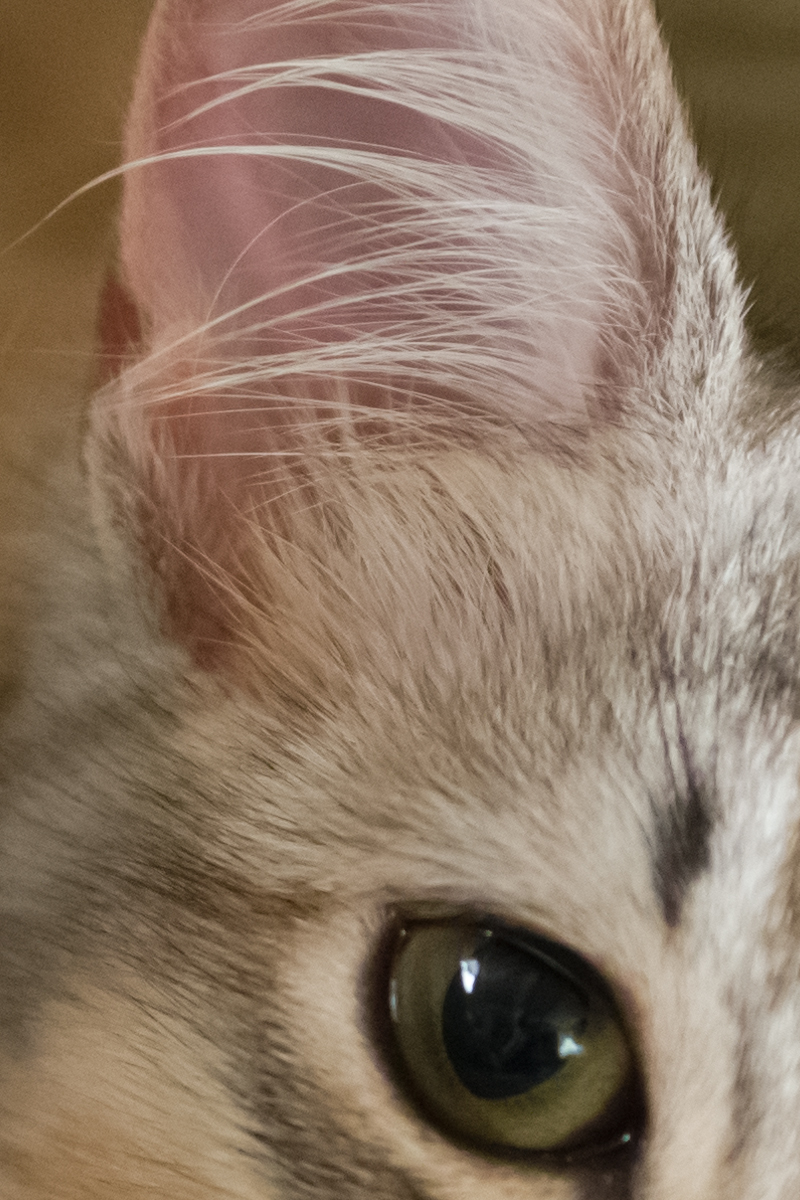
    And, for those who don’t think f/4 is wide enough and desperately want 55mm f/1.8 or f/0.95 lenses, this is at 55mm f/2.8 and of course when the iris of the eye is sharp the fur around it is not and Willow’s nose is blurred. Once again, despite correction for tungsten light at the extreme limit of Adobe Camera Raw, and using ISO 3200, it’s pretty amazing what the A7RII can do seen at 100% (below).

    3200-iso-f2p8-55mm-100pc

    But this super-shallow depth of field is what happens at 42 megapixels. Depth of field used to be worked out based on a 10 x 8″ print held in your hand, not a 6 x 4ft image viewed through the ‘window’ of a screen. Of course for social media you do indeed need very wide apertures because when your pictures are mostly viewed on smartphones, it’s like looking at a contact print from a Vest Pocket Kodak…

    To support Photoclubalpha, subscribe to f2 Cameracraft (it’s probably the only photo mag edited by two long-standing Sony system users, myself and Gary Friedman).

    – David Kilpatrick

    You can find deals for the Sony SAL 28-75mm f/2.8 SAM A-mount lens at B&H Photographic, Wex Photographic for the UK, or Amazon Sony SAL2875 Alpha 28-75mm F2.8 Standard Zoom Lens

  • Sony A7R II review by David Kilpatrick

    Sony’s A7R II has a unique position in the mirrorless ILC world, creating the largest image files at over 42 megapixels from an in-body five axis stabilised sensor with exceptional performance given by backside illuminated CMOS.

    My reviews in print of the Sony A7R II have now appeared, in the British Journal of Photography, f2 Cameracraft and Master Photography magazines. All three make slightly different points, and reflect growing experience of the camera which I bought from WEX as one of the first despatched on July 28th. The UK best body-only price then fell from their £2,695 to just over £2,000 from one main Sony dealer (at an event promotion) in under three months.

    Despite finding bargain deals or importing directly, since the introduction of the A99 only three years ago I have lost about £3,500 keeping up with Sony full frame camera bodies. I’ve also spent around £2,000 buying other Sony models like the NEX-6, RX100, RX100 MkIII, RX10, and A6000 to cover the shortcomings of every different full frame model – and £2,000 or more updating my lenses.

    So why invest in the A7R II when experience tells me the Sony system loses value faster than any other, yet so often falls short of performing as required?

    One body for all lenses

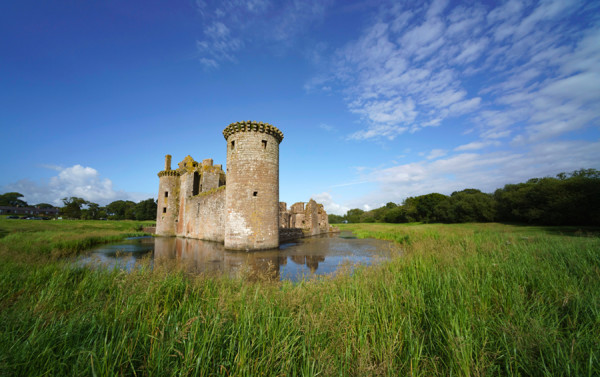
    The A7R II almost matches medium format digital, and gives great results with rangefinder (Leica) fit wide-angles. It has enabled me to add a 12mm f/5.6 Voigtländer Ultra Wide-Heliar to my kit for sharp, tint and vignette free 120° architectural and creative work. I write about lenses, and with current and future adaptors, this body lets me focus and make test shots with all lenses from Canon, Nikon, Pentax, Leica and many others. Click the Heliar image below for a link to a full size (slightly cropped and straightened from 42 megapixels) file. It’s actually shot at f/11 though the pBase data says f/5.6, that how the camera’s Lens Correction app works.

    Caerlaverock Castle

    There’s no lens made which disagrees with the 42 megapixel sensor as far as I can tell. My kit includes the 12mm mentioned above, the 16-35mm f/4 Carl Zeiss OSS, the 24-240mm f/3.5-6.3 Sony OSS, the 28mm f/2 Sony OSS FE (look out for individual reviews shortly); a 40mm Canon f/2.8 STM pancake, a 24mm Samyang tilt-shift, 85mm Sony SAM f/2.8, Sigma 70-300mm OS and a whole bunch of interesting older stuff used on adaptors.

    With the Lens Correction App configured for SS with each manual lens, the very high resolution of the A7R II sensor allows a stable view for precision magnified focus well beyond the ability of any AF method or reliance on focus peaking alone. Doing this at working aperture ensures no focus shift on stop down. The results show me quickly which lenses are excellent performers without needing an optical bench or test charts (give me a single LED light and a darkened room, and I can find out what I need to know about any lens very quickly).

    driedflowers-A7RII-web

    Most Sony and Sony Carl Zeiss zooms do yield good sharp images on 42 megapixels but it’s easy to exceed their best by fitting something like my 1970-ish SMC Takumar 50mm macro (used for the shot above), or even my Russian 50mm f/2 tilt-adapted Zenitar. I found the 28-70mm f/3.5-5.6 OSS which was fine on A7 II inadequate for critical quality on the A7R II and after tests concluded the 24-240mm was the best option to replace it. To learn why FE/E mount zooms and OSS lenses are never likely to blow away fixed focal length unstabilised types like the Zeiss Loxia or adapted classic RF and SLR optics, wait for my 24-240mm review.

    Having said size matters, I downsize many of my final images to as small as 9 megapixels. I don’t need 42 megapixels (7952 x 5304) for every image and for some it’s ridiculous. I’m still selling thousands of stock images* taken with DSLRs from six megapixels up. So for general ‘field’ use, most lenses are more than OK, as I can reduce the file size right down 3600 x 2400 pixels when noise needs cutting, depth of field is a problem, or general sharpness is poor.

    One sensor for all image shapes and sizes

    With the A7R II, unlike the A7R, all the APS-C E-mount lenses work properly (they never have their OSS forcibly disabled). The auto cropped image is 5168 x 3448, 17.8 megapixels, and that’s a perfectly useful size for all personal and most professional work. The 0.78X EVF is, of course, completely filled to exactly the same visual quality as when a full frame lens is used – the user experience with an APS-C lens is identical to that with full frame.

    As with downsizing or lens based cropping, I can crop full frame captures right down to less than a quarter of the A7R II image and have a file acceptable to Alamy for stock library use, or to a client directly for almost any reasonable editorial use. That same crop can go full page in a wedding album, or make a fine A3/16×12 print. It’s like using 120 rollfilm again, you can find pictures within pictures.

    lemurs-fullframe

    A 240mm shot clearly not close enough…

    lemurs-240mmf9-iso400-crop

    This is a 3600 x 2400 crop. That is, an image large enough for full page publication or a 12 x 18″ photo/inkjet print (click to view full size)

    With many lenses which don’t cover full frame, a 24 x 24mm crop is perfect. The Sigma prime lens ART trio (19mm, 30mm and 60mm f/2.8 AF without stabilisation) all do well on this basis. I had a 16 megapixel square format digital back on Hasselblad V and the square format is a favourite. Unlike Olympus, who offer a 1:1 ratio capture, Sony only includes 3:2 (35mm shape) and 16:9 (HD widescreen) – I’d love them to add a proper 1:1 square image seen in the EVF and on screen, a perfect 28 megapixel crop.

    The high resolution FF image also means there’s less need to stitch panoramas or use shift lenses. Canon’s 17mm f/4 TS-E tilt shift lens was introduced in 2009 when their full frame 12 megapixel 5D has just been upgraded to the 21 megapixel 5D MkII. On the A7R II, using its maximum 12mm shift reveals serious loss of outer field sharpness even at apertures like f/10, f/11 and f/13 which are optimum on other ways. It’s not a sensor cover glass problem as the Canon 5DS R revealed exactly the same weakness. Downsize the image to 12 megapixels, which the lens was probably first designed for, at everything looks sharp. But here’s where 42 megapixels can pay off – I just need to use a 12mm Voigtlander or a Sigma 12-24mm, crop a 14 x 21mm area from any part of the 24 x 36mm frame, and I have a 14 megapixel image allowing even more effective ‘shift’ than the Canon. And I can, of course, use the Canon via an adaptor if needed.

    The same kind of strong cropping works for telephoto wildlife shots (300mm lens, better than 500mm on 14 megapixels) and for macro work (1:1 on full frame, 2.2:1 at 14 megapixels). You need to remember all the time that traditional depth of field calculations just don’t work well with sensors of 36 megapixels and over. When you view a full size A7R II image at 100% on a non-Retina iMac or HP 27″ monitor, you are looking at part of a six foot wide ‘print’. Depth of field tables, still used today, were based on viewing a 10 x 8″ print from a similar distance! This problem is reduced by higher resolution screens but sometimes, you simply need a smaller image size.

    Canon 5DS/R (in proportion with earlier models) have useful M-RAW and S-RAW formats, allowing the cameras to become full frame 28 or 12 megapixels with a single menu change. This function is missing from Sony raw files and would be a great firmware enhancement, if it was possible. Edit: with the Sony A7RV and its even larger 61 megapixel sensor, Sony addressed this with M and S raw files of 26MP and 15MP, which are downsampled from a full capture so do not offer faster continuous (etc) but do bring noise control and sharpness benefits.

    Reasons to buy the A7R II

    SONY DSC

    Having used two other A7 series bodies, and started the transition to the FE lens series with some mix of adapted glass on the way, why didn’t I stick with the far more realistic and practical A7 II, or the A7R which was paid for and at 36 megapixels just as useful a large file size?

    • Internally or externally recorded 4K video though not a commercial offering from my side might well be a request from a future client. I don’t make videos though many years ago I did made 16mm films and many 35mm slide based dual and multi projector AV programs. However, I know many still photographers who have found sufficiently high-end clients for video to invest the time. I wouldn’t touch any video production, even a brief 20-second ad clip, for under four figures. It’s fun to experiment with until any serious use emerges. Also, excellent Super-35 crop format video.jamesgem-1371-web
    • Completely silent operation when needed – though not compatible with any kind of flash, the fully electronic shutter is an option for wedding ceremonies and I’ve used that function already. It is also useful for shooting stills when someone is making a video, or during quiet concerts, in meetings, or when you simply don’t want the sound of a shutter to be heard. When silent is not needed, electronic first curtain (not provided on the A7R) improves shutter lag time and cuts vibration
      .SONY DSC
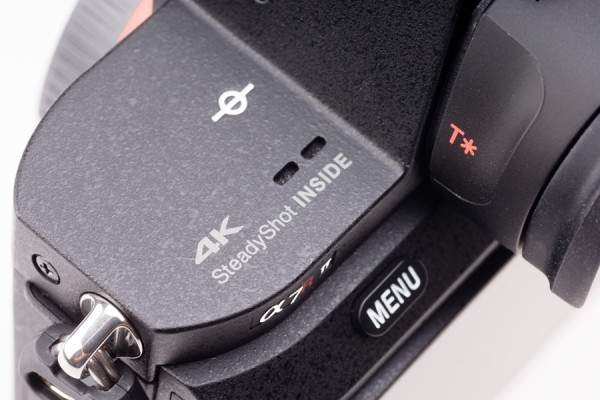
    • It’s also got a 500,000 actuation life shutter built to more than pro specification and a superior 0.78X electronic viewfinder, a slightly improved body flange for the lens mount (now common to all the II models, tighter and more precise than the original machining), no light leaks. And the mode dial is improved with a locking button, the Multi Function Accessory shoe is further improved in contact reliability, the ocular is T* coated and gives better eye relief.SONY DSC
    • It will perform well with all kinds of lenses and the 399-point wide area phase detection AF array built in to the sensor functions partly, or completely, with more native Sony and converted Canon lenses than ever before. It betters the A7R and A7 II in this respect, though I sold the Canon 85mm f/1.8 USM above as it didn’t work with the II having worked well on the A7R. Metabones have now fixed this, but my adaptor is a cheaper non-programmable type… you get what you pay for!
      Canon5DS-6400-web
      This is what you get from the Canon 5DS at ISO 6400, default, for shadow detail and noise (click to enlarge a 100% view of this section from a much larger file)

      Compare the separation of the black ribbon, and the shadow detail in general, from a similar shot ISO 6400 A7R II file, using the same lens and settings (click to view enlarged).

    • The back-illuminated CMOS sensor has a dynamic range – and a contrast curve or gamma function through controlled A to D conversion – which provides an ideal raw file for subsequent adjustment at lower ISO settings. Here, the difference seen above between the Canon 51MP sensor and the Sony 42MP is striking. The Sony images may often look softer and lack punch, but they reveal two stops more detail in the tones close to deep shadow. It’s probably been designed this way to allow s-Log gamma settings for professional video, producing flat neutral results ideal for grading to match from take to take. This happens to be very flattering to skin tones and it’s no surprise the A7R II is rivalling Fuji’s X-Trans sensor amongst fans of the flesh.jamesgem-1685-web
    • The same sensor has awesome practical performance in low light without sacrificing resolution, and noise levels which allow surprisingly high ISO settings for critical subjects like wildlife where fur and feather textures are easily damaged by noise (or noise reduction). Properly processed from raw, or shot as JPEG in camera, ISO 800 can be used as an everyday setting and 1600 will not even harm landscape detail. Up to 6400 an effectively noise-free full size image can be extracted, and at 12,800 to 25,600 some downscaling is all that’s needed to clean up. Admittedly, it’s never going to match the 12 megapixel A7S or A7S II at 51,200 and has a limit at 102,400 rather than marching on to an insane 409,600 EI as that body does.SONY DSC
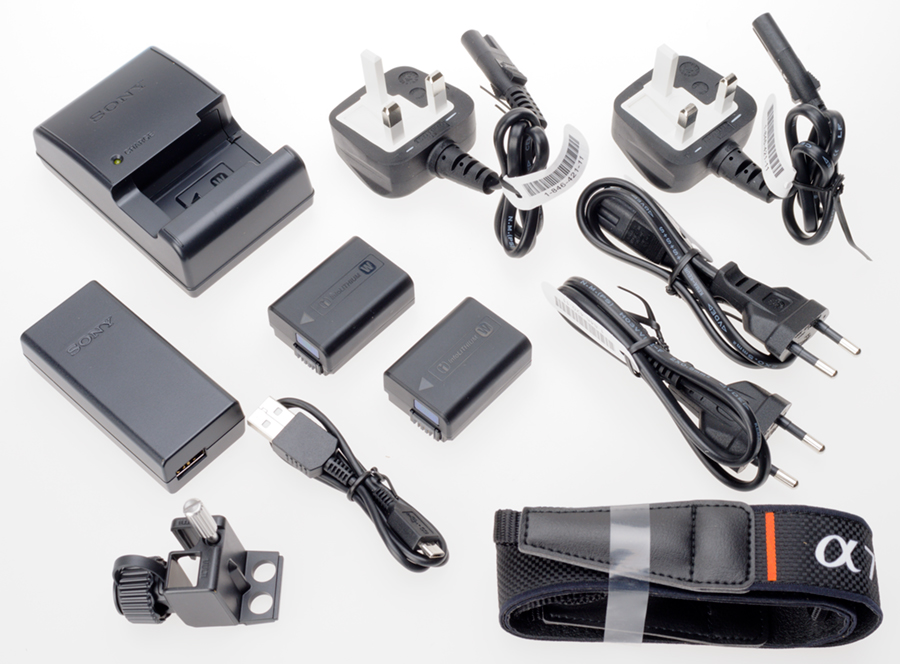
    • Compared to buying an A7 II, remember that with the A7R II you get two Sony batteries and an external charger (about £150 in official value) as well as the ability to operate the camera from any 5v 1.5A USB source (not just to charge the battery internally, but to shoot using USB power)
      .SONY DSC

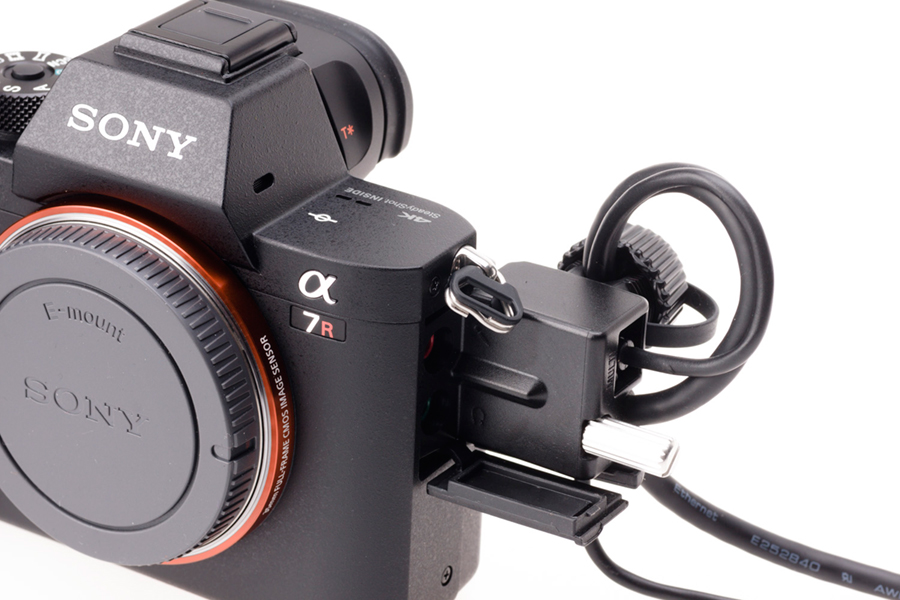
      You also get a neat tether-trap locking cage which screws into the camera side and can secure your USB and HDMI cables against accidental disconnection or strain on the connectors.
    • Final reason – going beyond the A7R II specification does not seem to offer further compelling advantages. It doesn’t have any major flaws or shortcomings except perhaps the single card slot and some doubts about the durability of the body, weatherproofing, and the quality of the lens mount (see below). I’m not in need of more than 5fps and 22 continuous raws before slowing down, and if I am the smaller Sony models like the A6000 and my RX10 do some pretty neat extra high speed sequences. So, for the first time since the sale of my A900 to get the A99, I feel I have a long-term camera no matter what Sony does in six months to make it hopelessly out of date.

    What’s could be wrong?

    First up, the poorly specified and designed lens mount and low precision body/lens relationship. Where Minolta A, Fuji X, Pentax, Leica and nearly all good makes secure the body and lens bayonet mounts using six screws, the E-mount uses only four even for the top end bodies which may have to support lenses approaching 1 kilo in weight. The four-screw fitting creates two axes of potential tilt restrained only by diametrically opposed screws, six-screw design is better but actually a five screw design beats both as you can’t draw a diameter across any two screws and create a tilt axis. Edit: after publication of this post and my articles in print in the British Journal, Cameracraft and f2 Freelance Photographer, Sony changed the design and A7/9/1 series bodies from the A7IIIR onwards have a six screw mount with screw positions reducing symmetry and the potential to rock.

    sonyjune1526

    The E/FE lens-body system is built round a concept of achieving final accuracy in alignment and focus without needing precision in every component. The nominal 18mm mount to sensor register doesn’t have to be perfect (and seems to vary by at least ±0.1mm). All Sony E and FE mount lenses compensate for variations and use free-floating magnetic focus often combined with floating OSS – they don’t have fixed infinity stops. Just as the bodies don’t have to be all that precise, the lenses themselves don’t need to be. As long as both work with the sensor to AF perfectly, the overall system is self-correcting.

    You soon find out the limits of E-mount precision when buying adaptors for older manual lenses or modern Canon EF lenses. I’m sure Zeiss makes due allowance in the design of manual focus Loxia lenses, and Voigtlander has specifically allowed the new E-mount range planned for 2016 (10mm, 12mm and 15mm) to focus past infinity because they are aware of the variable register of the system. I have measured many adaptors and the only safe decision for the engineer is to fall short of the target register. Some very expensive adaptors turn out to be 0.3mm thicker than others for the same mount (I’ve found this in Leica M, Canon FD and Canon EF adaptors). The lenses being adapted often have a fixed infinity stop and are designed to hit this precisely. Combine a 0.1mm ‘plus thickness’ Sony body with a 0.2mm plus adaptor, and your manual wide angle lens won’t focus on infinity.

    So, one overall issue is that despite the high cost, the Sony FE/A7 series range of bodies and lenses lacks the precision engineering of past systems and it’s designed that way. When you find one side of your pictures always seems soft with wide-angle, wide zoom or very fast lenses you have encountered the limitations of Sony precision and quality control. Edit: see new body mount comment above, Sony greatly improved the precision and accuracy of the entire body/lens system from 2016 onwards.

    Secondly, the A7R II has such large files and a slow overworked processor relative to those files and the massive task of running a high resolution, high frequency EVF and many clever software functions. Any kind of systematic ‘chimping’ to check each shot after taking may leave you frustrated. Depending on your choice of card and some unknown spin of the CPU’s internal dice, you will sometimes encounter long file writing times and a brief lockout from playback.

    Install the 14-bit (in 16-bit container) raw uncompressed format introduced in October 2015 through a firmware update, and the situation may improve. With Firmware V2.0 I’ve seen typical write to card times halved but identical shots could take varying times and the worst case remains close to 10 seconds for the light to go off on a single shot. Most of time it’s clearing about 1 second after 2 second auto review, and disabling auto review has no apparent effect on this, or the time the camera takes to respond to a fresh shutter actuation.

    Secret solutions

    Since you’ve been patient, and listened to why the A7 system in general has a few failings, here’s how to get the best optical performance and general response from it.

    SEL70200G_A-1200

    First of all, for the best optical performance use lenses where OSS can be disabled but in-body SS allowed to operate. The internal 5-axis sensor based stabilisation of the A7II/RII/SII is awesome. In-lens OSS is impressive but by its design will always lose you some resolution, often more towards one side or corner of the image than centrally. Amended paragraph, see comments: To see how good your stabilised lens really is, turn off stabilisation and shoot something using flash or at a high shutter speed.

    But… if you turn off Steady Shot or OSS on the A7R II, you disable it in the body and the lens. You can not turn it off for the lens, but keep it working in the body. The 90mm f/2.8 Sony G OSS Macro, the 70-200mm f/4 Sony G OSS (above) and the 28-135mm f/4 Sony G PZ OSS and several newer OSS higher end (G and GM) offer the on-lens switch. But if you want stabilisation, you can’t choose to have it provided by the body with these lenses. You can do so with Canon, Sigma and Tamron lenses used on a Canon EF adaptor – their IS, OS or VC will operate normally when the SS in the body is disabled. In fact you must never use these lenses with both methods turned on together, or the result will be unsharp. This is a problem we first noticed with the Olympus system, where their lens and body stabilisation do not communicate and it’s possible to us none, just body, just lens or ruin shots by turning on both together. The Sony body used with third party lenses does allow this; used with Sony lenses, it prevents it.

    The A7R II will switch between internal SS, lens OSS and a combination depending on settings. But it won’t tell you what it is doing, which makes this intelligent function something of a handicap. As a rule, if you can lock the camera down (tripod) or use a very fast exposure (studio flash, shutter speed 4X the focal length of the lens) shooting with no stabilisation at all will offer the best results.

    sonyjune1527

    Secondly, don’t use ‘AF With Shutter’ all the time. It’s convenient sometimes, but every time you take first pressure on the shutter, your E-mount AF lens will initialise a short routine involving focus position recalibration followed by AF. It costs you a variable extra lag before the shutter fires, maybe 1/15th to as long as 1/4 second. Instead, turn this off and AF will default to the centre button of the rear controller (you can change this assignment). You then use this to AF for each change of subject, composition or distance but if nothing’s changed you do not touch it and you do not re-AF. You save battery life, and you eliminate the whole shutter-button-AF delay cycle. You can now capture pictures, using electronic first curtain shutter or silent mode, within 1/20s of pressing the shutter.

    Thirdly, for action shots prefer stops close to full aperture on E-mount lenses for the same reason – the aperture closing action involves a delay you can clearly identify and it’s longer with apertures like f/16. But for maximum reaction speed, use a purely manual lens. The camera knows there’s no aperture to be closed so it misses out that stage. It knows there’s no AF. You can get down to a mere 1/50s shutter lag, faster than most photographers can think. If you are used to older DSLRs which typically fire the shutter between 1/15s and 1/8s after you have pressed the button, you’ll anticipate and fire too early for action shots. Beware the LA-EA adaptors for A-mount lenses as you can’t turn off the aperture lever actuation. These adaptors will always add a delay even if you fit a manual lens.

    I’m not going to delve into how you use focus peaking, magnification, setting the slowest shutter speed to be used by the Auto ISO function and so on. You can find out about this from countless videos and blogs, not all of which feature grandmothers, sucking and eggs. Nor will I recommend JPEG noise reduction and image settings in camera, since I don’t use JPEGs. Remember that your picture style and adjustments, like extra sharpening or contrast, will be reflected in the view you see through the EVF and on-screen. They will affect focus peaking, the histogram and what the image looks like when you use magnified manual focus, too. My tip is ‘stay neutral’ for the best EVF experience and ability to judge and control your results, especially if shooting raw. Camera Standard – boring but it won’t fool you into making adjustments which are not needed.

    smailhomsony16-16-p-h-srgb-web

    A 16mm landscape with careful focus checking, and only just enough depth of field even at f/16 if the end result is going to be a 1m wide print

    Read the manual, think about all the functions of the camera, assign your custom buttons, set your parameters. My set-up includes (routinely) Auto ISO 200-1600 because within that range the A7R II files have low noise and good textural sharpness and there’s no great benefit in dropping to 100; AWB; 1/250th slowest shutter speed because the world moves and I’m very happy with 1/250th at ISO 800 rather than 1/125 at ISO 400 for nearly all my walkabout shots; AdobeRGB because I need that but actually sRGB is better matched to the EVF and rear screen, and will give you a more accurate histogram; no JPEGs because I don’t need them; Airplane Mode on; compressed raw unless there’s a really good reason; AF-S and Centre point focus; no face recognition, no smile shutter, no tracking, nothing clever with AF; single shot; generally Aperture Priority but sometimes P, M or very rarely S; Date Format file folders; SS on; electronic first curtain; setting effect on; finder and screen at default brightness and colour; grid lines 3 x 3; focus peaking low, yellow; lens correction enabled; 2 secs review, or none.

    – David Kilpatrick, all images except front and rear views of A7R II body and 70-200mm lens are ©David Kilpatrick/Icon Publications Ltd; please do not link directly to images or copy

    * You need thousands on offer to sell dozens…

  • Sony A7R II, RX10 II, RX100 IV – making everything else obsolete

    (Updated June 15th after press conference)

    sonyjune1528

    The new Sony A7R II is the camera I’ve been waiting for, which everyone has predicted, and which seems to tick every box without having a huge price label on its own. I find the $3,200 (UK coinfirmed £2,600) matches its stated specifications well. Others may disagree, but they’re probably influenced by the price collapse of the original A7R, now occasionally found for under £1k.

    sonyjune1526

    Even so, at $3,200 the A7R II commands a $1,500 premium over the A7 II and much of that must be what you pay the new sensor – which does not seem to be licensed or sold to any other brand. Not even to Nikon, yet. The A7S remains the most expensive model despite the minimal 12 megapixel capture and lack of in-body stabilisation (SS in Sony terms, or IBIS generically).

    On Monday June 15th I flew to London to have a look at the A7R II and the new RX10 II (£1,200) and RX100 IV (£850). This was a bit like a motoring journalist going to a car launch and being told, you can sit in the seat, waggle the gearstick but don’t start the engine as no photography was allowed with any of the demonstraton cameras. I was surprised to find it was a European conference, as this normally means journalists from across the Channel have a facility trip to be present, and that seems very extravagant just to look at cameras which can not be tried out. I wish I lived in France not Scotland – it might not have cost me almost £300 to be there, eight miles from Heathrow (but an eight miles which might as well be a fifty Scots miles!).

    Don’t expect to get one on June 17th, as B&H’s information and too many bloggers have repeated. We are told by B&H it won’t arrive until August even though pre-orders open on June 17th in the USA. It may be later arriving in some regions. Demand is going to be so high that if you want one, you’ll need to crash into that queue…

    But you can snag a Canon EOS 5DS – 50 megapixels – for only $3,699 right now

    A7R II – or A7 II R?

    In brief, the A7R II consists of an A7 II body with a new 42.4 megapixel backside-illuminated CMOS sensor, same Bionz X processor allowing 5fps at full resolution, new 399-point Phase Detection AF on the sensor covering most of the field (up from 117 points), a similar EVF with improved eyepiece giving a genuinely impressive 0.78X instead of 0.71X virtual magnification, the same rearRGBW bright LCD, plus silent shutter and HD 4K movie functions improving on the offering of the A7S. The new shutter mechanism is claimed to have a 500,000 actuation life expectancy which puts it ahead of almost every pro DSLR yet made. The back of the camera body is magnesium, where it’s solid composite plastic in the A7II. And it has, unlike the A7R, five-axis sensor stabilisation which talks to Sony OSS lenses for the best blend of anti-shake methods ever devised.

    kelsokelpiesgirl12mm-evf78

    The new EVF size, to the eye – compared with the old (A7II, A7R, A7) 0.71X view below (A7R, Sigma 12-24mm at 12mm, Canon EF fit, on Commlite EF-FE adaptor).

    kelsokelpiesgirl12mm-evf71

    You will read in the specifications and promo blurb that it has a new LCD double the brightness, new tough body and strengthened mount, new shutter release and controls but all these ‘improvements’ are listed by Sony over the A7R and already existed in the A7 II. Instead of making comparisons with the A7 II – which this is really a development from – Sony has listed many advances made relative to the A7R. It is not an A7R II. It’s really an A7 II R.

    sonyjune1527

    The eyepiece surround is much improved, wider and softer still than the A7II which in turn is softer on specs then the earlier models. Eyepoint and position flexibility both improve and there are no unsharp zones at all even if you shift your eye around.

    It’s important to understand that many of the improvements already exist in the A7 II partly as a result of criticisms of the original A7R made by objective reviewers, not Sony artisans or staff or sponsored bloggers. You don’t owe this camera to the success of its predecessors or the daily Facebook sermons of awestruck evangelists – you owe its features to corrections made to the shortcomings of the models so far. And to those who have had no vested interest (other than ownership) persuading them to weaken critical appraisal. The further improvements in the A7R II are either extremely technical – serious core improvements in the sensor and focusing – or minor refinements and carries-over from the A7II.

    42.4 versus 36 point anything

    If you really think 42.4 megapixels is going to take you to realms far beyond your 36 megapixel sensor, think again. It is the same step up as from 18 megapixels to 21 megapixels, a move Canon made without absolutely transforming the images created, or about the same as from 10mp to 12mp. There’s one big difference – it does not make the jump to any larger common print or repro size. Remember going from 6 to 8? That was from sub-full-page to a decent full page resolution, for US or A-size documents at a touch under 300dpi. 24 megapixels took us to a really sharp A2, 36 megapixels takes us to a acceptable A1, and all that 42 does is to make a slightly better A1 but not 300dpi.

    icelight-cherries-36mpsize

    icelight-cherries-42mpsize

    Above you can see the actual, real size difference (in proportion) between a 36 megapixel shot and a 42 megapixel shot. If you click on the bigger version, it will take you to my pBase page with a full A7R II sized version of this A7R shot. Zeiss? No – a 45 year old Asahi Pentax Super-Multi-Coated Macro Takumar 50mm f/4, used at f/11, and a 30 second exposure at ISO 50 lit using the ICE Light 2 moved round the subject in horseshoe shaped path for 15 seconds, laid flat, and then moved under the perspex for the remaining 15.

    In practical terms, it’s 7980 x 5320 pixels (or very close – Sony has been extremely coy about releasing full specifications, even at the conference I could not find this out) versus 7360 x 4912 for the A7R. In perspective, make a big print from the A7R and it’s 24.5 inches long at optimum resolution; use the A7R II and you get one inch extra each end on the long side, 2/3rds of a inch extra top and bottom. The A7R makes a 16.3 x 24.5 inch print to perfection; the A7R II makes a 17.7 x 26.6 inch print.

    Anything smaller than A4 printed, it’s got no great advantage over the 12 megapixel A7S – but you are getting close to enabling a 2X crop (one quarter of the frame) to look as good as the A7S full frame. Sony showed A3 prints. They could, honestly, all have been shot on the Sony A100 from 2006 and no-one would have been any the wiser. One enlarged section was the only real test of the camera. I’m sure the model’s dermatologist loves it.

    a7RII-prints

    Where it does count most is when using crop frame mode. In APS-C crop mode, the A7R II file is large enough for a 300dpi double page fine art magazine spread, just under 18 megapixels. I’d say that where 42.4mp is not a critical size, 18mp actually is. You can get away with 16, and for Nikon, Panasonic, and Olympus this had been an important baseline. Cropped frame FF from Sony now rises above that baseline instead of sitting just below it.

    portlandgardens-showerroom1-11mm

    What I’d like to see would be 1:1, 4:3, 5:4 ratios implemented with the EVF and LCD screens cropped to match – and ideally the raw files reduced in size the same way. A square 1:1 would be 28 megapixels and that crop allows so many APS-C lenses (like the Zeiss Touit 12mm) to be used without vignetting or limits of coverage distortion issues. The example above is from the A7R and it’s a square crop 24 x 24mm from a frame taken with the 10-18mm f/4 Sony OSS, at 11mm; the lens would have allowed a 4:5 crop equally well.

    Important edit: just read another ‘Sony artisan’ blog post asking the (redundant) question as to whether Sony lenses will be up to this new resolution. Anyone who owns an A6000, NEX-7, or A77 is already shooting at well above this resolution (full frame will need to match the Canon 5DS 50 megapixels to beat them). The resolution of the A7R II is slightly lower than that of the base level entry A3000. Don’t panic. Plenty of old legacy lenses will match it well, let alone any new Sony FE and A-mount designs.

    I checked out the 20mm f/2.8 SEL lens with the new version 2 wide and fisheye black converters on full frame at the Sony event. Really, this lens comes so close to doing a good full frame and the converters even leave much of the area intact for a much bigger crop than APS-C.

    20mm-on-FF  20mm-wide-FF  20mm-fisheye-FF

    And that’s all without removing rear baffles or doctoring the built-in lens hoods of the converters!

    Detailed points

    When we get a chance to use the camera, the following points will be of interest:

    Has the mount been upgraded again? It still has only four attachment screws, compared to Fujfilm X system’s six screws (and the A-mount uses six too). My two camera bodies and two changes of mount on the A7R, to Tough E mount and then 2nd generation Tough E mount, all produce unpredictable degrees of slop, smoothness or jam-on tightness from various adaptors showing that no matter what, tolerances are broad. Comment: can’t tell from changing lenses at the event, it feels much the same as the A7 II.

    Has the Memory position, 1 and 2 on the mode dial, been improved to remember MORE of the important settings – notable, Setting Effect ON and OFF, for saving a studio flash preset mode with the EVF/LCD setting effect disabled? Answer: No.

    Is the hot shoe part of the Multi Function Accessory Shoe hampered by paint, or tolerances in fit, or does it readily accept all standard ISO hot shoe simple flash devices and triggers? Looks clear.

    Canon 85mm f/1.8 USM on Focus EF-FE adaptor (also works perfectly with Commlite) on A7R. The 40mm f/2.8, and Sigma 12-24mm in EF mount work well on my A7R with these two sub-Metabones price adaptors. At the press event we found the 85mm just didn’t focus at all with any adaptor on any of the pre-production A7R II bodies, but the 40mm was fine.

    Will the promised ability to use PD-on-sensor AF with Canon and other lenses rely on Metabones as the only adaptor, or is it generic? The microlenses on a backside illuminated sensor have a large effective aperture than traditional design, and this means the PD-lenses (a special variant of the microlenses used on sensel pairs) will be similarly improved. This may make some difference, but it’s actually the focus motor control via lens to body data communication which will enable fast and sure operation with Sony SSM on LA-EA3, Canon USM on EF-adaptor, and so on. Remember, this does not make screw drive or SAM, or micromotor Canon AF pre-USM lenses, function any better. It will only apply to ultrasonic, piezo, linear motor and similar finely controllable AF mechanisms with close to zero play and accurate (8 contacts, not 5) distance and ‘state’ reporting. Note, too, that Sony’s revised lenses (SSM II) are not just optical and weatherproofing reworks – the new SSM is designed to work with contrast detection, as found on the A7R, much better.

    Comment: we found that the Canon 85mm f/1.8 USMdidn’t work on any adaptor on the A7R II, while the 40mm f/2.8 activated the PDAF points and focused very rapidly, and a 24mm f/2.8 USMf/2.8 focused fast – and that various different demo A7R II bodies responded differently and one malfunctioned a lot of the time even with Metabones. Sony said this was known and the final retail stock should at least work OK with Metabones IV and probable firmware updates, but other cheaper adaptors will not be tested.

    The new camera’s mode dial has a central lock button, and a slightly lighter click action without risk of being turned by mistake. We’d had liked to have seen a lock on the +/- EV compensation dial too, but this just has slightly strengthened clicks.

    Wish list

    The same small battery has been used yet again despite the II body design having what looks like enough room for a full sized Alpha battery (see below – carefully positioned batteries with A7 II body). Let’s hope for upgraded batteries from Sony.

    Please, Sony, you provided a GPS pinout in the new shoe – you have never rolled out a GPS module or firmware. It’s three years now and no news. Hell, I nearly bought a brand new boxed A99 at Dixons Heathrow Terminal 2 shop for £1075 inc VAT maanger’s special, I miss GPS so much!

    Please let the Lens Data entered into the menu for SS of manual lenses, without data communication, be embedded into EXIF so if I enter 50mm, my files say so. And ideally, please make it possible to enter the focused distance (this would improve stabilisation) and the aperture in use (just to complete the EXIF data).

    Sony pointed out that the latest version of the lens correction App will record the focal length and aperture as you enter them, in EXIF. It has its own SS on/off setting and automatically recognises whatever focal length you have entered. You can name and recall each different lens, and if for example you normally use your 24mm f/3.5 Samyang shift lens at f/16 for architecture, you can enter f/16 as the lens’s aperture and that will be corrected embedded in your EXIF. But to get this you must run the app, not just shoot with a manually set focal length for SS.

    Please change the Memory 1 and 2 registers to save and recall ALL the camera settings and not just those in the first bank of the menu system (but see the vital point above about Setting Effect On/Off). Until I test the camera, no more to say – but Sony does not usually keep quiet about changes, and has not mentioned this aspect.

    The existing rear screen – the II design, left, improves on the original A7R but this is still a basic, amateur level screen to be working with and a fully articulated design would be better.

    Though you’ve missed the boat with this camera, the crudely hinged and angled rear screen needs to be replaced with a fully articulated screen that can be reversed to the camera for protection and to prevent distracting light when working in the dark.

    Out of the loop

    I’ve been out of reviewing new Sony gear for some time, as it has not proved possible to get hold of it early enough or for long enough to give any meaningful assessment which Joe Photographer anywhere in the world couldn’t appear to do themselves. For six or seven years I have bought and sold new Alpha gear to fill the gaps between the occasional availability of review kit, but recently that has become so expensive it exceeds any margins available from the three magazines I publish, or any fees I can obtain from other media. Like politicians, people who write about gear either need an independent mind or independent means – without one of these, you’re always in someone’s corporate pocket or feeding from crumbs under the main table.

    The result, as we see all the time, is that many early users or reviewers of Sony kit are no longer all that independent and much of the first wave of information now comes through the channel of ‘artisans’ (as it does with ‘ambassadors’ for all makes). And we see plenty of others who are clearly of independent means, whose main purpose in life is to be the first to post pictures taken with new item X regardless of the cost.

    So maybe I don’t need to push to get hold of an A7R II for the too-short two week period of any review loan, after a six month wait while other consumer-orientated magazines and blogs take priority – or indeed rush to buy one.

    But… like the RX10 which I use all the time… like the A6000 kit which is co affordable and compact it’s essential… like the RX100 MkIII which goes where even the RX10 is not welcome… like my A7 II with stabilisation which has transformed a box of assorted lenses into a solid outfit… this one’s possibly something to buy because I actually need it and will use it.

    I may not even cosy anything as it will make both the A7R and A7II redundant, because it does both jobs and also covers the A7S I did manage to borrow but never bought. And it does more.

    So, thinking whether or not to bother with this upgrade is a bit irrelevant. Even if it was still ‘just’ 36mp the other improvements would mean it still replaced the need for a handful of A7 models, all in one.

    sonyjune1534

    Small miracles

    My one doubt is that the A7R II may be beaten in practical terms by the RX10 II. Please note that so many incorrect snippets of info have gone around about the ‘stacked’ sensor design, I thought it referred to RGB stacking. It does not, the sensor is a conventional Bayer pattern, and what is stacked is the electronic substructure. This does not affect the top side of the sensor and the performance in image quality should be similar to the existing models. What it does is greatly speed data transfer and enables over 1000 (lower resolution) frames per second to be clocked through from photon received to movie frame recorded.

    The RX10 and 100 new versions offer ridiculous levels of high speed slow motion capture, clean 4K video and other technical benefits which come with a very small chance of dust on sensor, unlike the A7R II which is almost guaranteed to be a dust devil. Why do I say that? Because a backside illuminated sensor renders dust on its cover glass even more sharply than a conventional one! We know the RX models are not dustproof and if you are unlucky enough to get a spot on the sensor it’s a service visit to get it removed, but in my experience with five or them so far I have never had a single dust spot.

    sonyjune1531

    So what? Just retouch? Not when making movies! Admittedly most movie makers will open up the lenses to max or only a stop down on these 1″ sensor cameras, and would open up lenses just the same on the A7R II and never see dust even if it was there. But what about the time you want that ‘American take’ – f/22 at 20mm? Traditionally they were taken in dusty settings for the spaghetti westerns!

    All I can say is that the RX10 has come very close indeed to removing the need for any other camera and it’s been a pleasure to work with the raw files. The RX10 MkII might be so much better that I forget about DSLRs or mirrorless systems and just get on with capturing great images. Or then again…

    – David Kilpatrick

  • Pentax Q up to battle it out with NEX and Ricoh

    Although it’s not Alpha, this product announcement – embargoed until 5am UK time, 23rd June, though no doubt by adhering to the embargo we will be a day later than hundreds of websites breaking it – speaks volumes for the impact of Sony’s Alpha system, its interformat lens compatibility, and the future of non-SLR systems.

    Kenko, a Hoya group company like Pentax, showed a C-mount digital camera body in February, as a prototype planned for release this summer. Nothing more has been heard of this project. It looked rather like the Pentax in a way.

    But Pentax Q is not a NEX competitor as it uses a tiny lens mount and a tiny sensor. It’s more like today’s equivalent of the Pentax 110 SLR system. Only Ricoh currently uses such small sensors in a nominally ‘interchangeable lens’ (not really) camera format. And our own testing of the Fujifilm F550 EXR, with a similar back-illuminated CMOS sensor, indicated that the gap between such microformats and the APS-C subformat is massive.

    Just as your first dust spot will be… the anti-dust system is going to have to be 100% efficient, as a single dust bunny landing on a 1/2.3″ sensor will be disaster.

    The lens throat is approximately 38mm diameter, very slightly smaller than Leica screw. The back focus is around 9mm, or half the thickness of the NEX body from sensor surface to flange. This will present the anti-shake, anti-dust vibration mounted sensor (on a magnetic carriage) in a fairly exposed ‘well’. The high speed limitation of 1/2,000th is unexpected, but the camera does not use a focal plane or electronic gating; instead it uses leaf-shutter lenses, which due to the small aperture size, can achieve this fast speed. But they can still only manage 1/250th flash sync, when it would be expected that a leaf shutter on this scale could achieve 1/1,000th.

    Here is the Pentax Q system, due to go on sale in the Autumn (press release with comments).

  • Sony NEX Launch 2010 – full transcription

    .
    The European press launch
    David Kilpatrick recorded the proceedings at Le Meridien Lav Hotel, Split, Croatia on March 11th 2010 using a Zoom H2 portable digital recorder. Shirley Kilpatrick transcribed the audio, with subsequent editing to translate verbal output to read well as text. This is a multi-page document please use the PAGE navigation at the foot of each page to continue reading. It is a very long document.
    Nick Sharples, director of corporate communications for Sony, Europe, welcomed the press to Split in Croatia, and thanked everyone for getting up before breakfast – especially those from Portugal who arrived at midnight (volcanic ash delayed their flights). The launch was synchronised round the world, hence the 8.00am timing for the European meeting.Yoshiyuki Mogami (Vice President of Digital Imaging, Europe) was introduced to explain a little bit more about the business strategy for Digital Imaging in Europe. Yoshiyuki thanked everyone for coming over to Split; the team from Munich had arrived by driving ten hours.Sony started Alpha business in 2006, he said, introducing the Alpha 100 in Morocco. The Alpha 700 was launched in Italy in 2007, the Alpha 900 flagship model was introduced in Scotland in 2008. “We have carried out surveys asking people in Europe which brands they would think of when buying a digital camera; the figure has risen from 50%, to close to 70%. Now we are enjoying a 15% market share in Europe. This figure is OK, but Sony now really has to go to our next step.“But looking at the DSLR as an industry it’s not like two years ago or three years ago. DSLRs were pretty much a booming industry, and that’s why everybody came into his segment. These days the growth of this segment has very much flattened, and of course you could say this is due to economic slow down or recession, but we suspect that the traditional DSLR has a limit in mass appeal to consumers.“So that’s why Sony can try to break this type of barrier. We put together all kinds of voices and views on this technology to see what we can do – we think we have heard the customers’ voice, and really put it into this project.”Mogami-san introduced Toru Katsumoto, senior general manager of Alpha:“Today I would like to officially announce our new ultracompact interchangeable lens camera we have already shown at PMA in February and in Japan. In the current market the boundaries between the three categories – DSLR, compact still camera and camcorder – are already starting to merge.

    “In the area when DSLR and Digital Still Compact merge, we see great possibilities. Let me introduce to you NEX-5 (he holds up the camera, in front of large projected images of the cameras). This beautifully crafted body is designed to bring out the presence of the lens. The body is so slim and compact but without sacrificing any size or balance. The grip on this camera ensures a firm and comfortable hold despite such a slim and compact body. The rigidity and texture of magnesium alloy gives a high grade appearance and solid feel to the camera.
    “NEX-3 is designed for a more casual approach, and can be very attractive especially for those who have yet to explore the world of the DSLR. The slim design comes in three different colour variations, with a unique texture on the grip. It simply feels great in one’s hand in addition to being a stylish camera.
    “The key concept of NEX-5 and NEX-3 is to combine the best of both worlds – the image quality and power of expression of the DSLR, with the portability and ultra-compact design of a digital compact camera. We strongly believe that NEX-5 and NEX-3 are cameras that are capable of satisfying customers’ needs from both DSC and DSLR segments. Namely, compact digital still camera users who are motivated to step up from DSC, and DSLR users who are demanding a more compact camera without compromising DSLR power.
    “Professional quality in your pocket is the buzzword for this camera. There are six elements:

    • DSLR quality in still and moving images
    • Compact and stylish
    • Power of expression derived from interchangeable lenses
    • Making creative work easier
    • Beautiful high definition movies easily filmed
    • High speed continuous shooting, 7fps

    “The APS-C sensor successfully packs DSLR quality in a small body (he removes the lens and shows the sensor). The new sensor is significantly larger than the FourThirds sensor, resulting in a higher pixel count and superior picture quality.
    “Our designers have done a great job; the philosophy is a minimalist design. The lens itself is small, but the body size is so small that the lens looks dominant overall. With the pancake lens, it comes close to the size of a point and shoot camera. It is the world’s smallest, and is lighter than either of the rival brands (Olympus and Panasonic profiles shown on screen but not named).
    “The depth of the flange back on the camera is 18mm, the world’s thinnest. This is why we can make it so slim. There are three new lenses. Also conventional Alpha A-mount lenses, currently in customers’ hands, can be used via our mount adaptor.”
    Katsumoto-san described the user interface with its virtual scroll wheel, adjusting depth of field; and the sweep panorama including the 3D function. “During the sweep motion, the camera generates two pictures, one for the right eye and the other for the left. You do not need two lenses for 3D.”
    He said that Handycam experience had been used to set up high definition recording. Toru emphasised the value of Alpha NEX division working together with other Sony technologists.
    “NEX-5 and NEX-3 are only the first two products to be offered by Sony in this emerging area. We believe that products based on the combination of a large imaging sensor and interchangeable lenses are not limited to NEX-5 and NEX-3; today, let me take the opportunity to reveal our second proposal to you briefly. As I am speaking now, a dedicated group of engineers is in the process of developing a new camcorder with the interchangeable lens system (he shows a mockup image).
    “This camcorder will come with an EXMOR HD APS-C sensor for DSLR quality video in AVCHD form. Like the NEX-5 and NEX-3, with an adaptor, this new camcorder is also compatible with current Alpha lenses allowing videographers to access a wide range of high performance lenses to be used to express one’s creativity like never before.
    “Needless to say, its body design is specially optimised for video shooting. Details of this product will be communicated soon, I’d say around the Autumn area, so please stay tuned. The combination of a large image sensor and interchangeable lenses can create whole new dimensions and expression and possibilities.
    “To express our strength in such products, we would like to introduce the phrase “Beyond Our Eyes” which contains the following meanings – bringing new experiences, and style of unforeseen dimensions, that evoke deep emotions, and creating a visual world beyond how our eyes can see in both still photography and video.”
    After this, the conference was officially over, and journalists were asked to re-convene for region specific in depth meetings. The meeting for the UK and Scandinavia was headed by Paul Genge of Sony UK. 

    The UK in-depth introduction to NEX

    Rachel Banin, head of the Alpha product division for Sony UK, introduced the hands-on press conference for UK and Scandinavian journalists:
    This product is a new and exciting surprise for Sony, and we’re really excited about bringing it to market, and we’ve got really big plans for it – and high expectations for it also.
    Here is a UK-specific slide, highlighting what we expect the market potential to be for this kind of category – compact interchangeable lens cameras. We think that market is going to be about 100,000 units in FY 2010 (April 2010 to March 2011) and we’re very encouraged by the positive actual sales results that we’ve now seen come through for FY 09.
    Certainly looking at the kind of coverage which the GFK data indicator gives, that 30,000 units (2009) might even be on the kind of pessimistic side. We’ve seen some good developments so far and we’re expecting a lot, lot more in 2010 and the key reasons for that, I think, are obviously new brands coming into the marketplace, including Sony
    Sony is starting to be able to address a market which is not just DSLR consumer. That’s very important because we don’t believe this market is going to 100% cannibalise the DSLR business. We think it’s incremental and by appealing to people who are used to using a digital still camera – and who are perhaps ready to take an upgrade to a camera that offers them a higher performance, better flexibility and better creativity – we can generate this kind of business potential.
    So communicating with consumers has been a very, very important part of the product development process for NEX in particular. We’ve really involved them right from day one in terms of testing out concepts with them, testing out some prototypes and then, finally, testing them with an almost complete product and I have to say the response has been very, very positive from the groups that we tested.
    They were tested also with similar products available from the market place at the moment including some micro DSLR products, for which there were certain limitations identified – be that physical limitations, or limitations in the performance of the camera itself. The response that we got to NEX was what we were really hoping to achieve – that it was something new and unique, that it was a completely different camera category in itself and revolutionary in that sense, and easy to use and allows the consumer to take that step further and get the extra special results that they can’t get from a digital still camera.
    So that’s really it as an introduction to the product. I’m going to hand over to Paul now. He’s going to talk in a lot more detail about the NEX products.
    Paul Genge, technical sales manager for Sony Alpha division UK:
    You remember last night’s dinner when I asked you which was the camera you would like to own, given to you, any choice, you could have whatever you like. I was fairly confident that by the end of the day most of you would switch your allegiance to wanting at least one of these. I think as soon as you get a hands on opportunity with these, from the moment you pick it up and realise what a quality proposition it really is, it’s really a nice camera to use, shoot and own. So you’ll get your opportunity a bit later. Right, let’s get cracking.
    Sony is very much a technical innovation company. We operate in numerous electronic areas and every business that we operate in has radically changed over the last ten years or less really. I mean, it wasn’t so long ago when I was a little kid with the Argos catalogue writing down what I wanted on my Christmas list – a Sony tape Walkman. Today, nobody wants a Walkman, it’s all iPods, it’s mobile phones and the way you get your music and they way you handle your music is entirely different to what it was like ten years ago.
    I used to sell these – a 35mm compact camera, eight or nine years ago was a big thing that cost £300. Today for £300 you can have a glossy slimline, feature-rich, high quality, digital compact camera. Digital photography has changed not only the form factor but also the way the customer experiences photography.
    Anyone still got a big-box CRT TV at home?
    Today televisions are slimline, they hold to the wall, and in the future is 3D and internet download services direct to your television. You can also plug many devices into them and use your television for other purposes than just watching television. Today we record to hard disc drives and we watch high definition movies on Blu-Ray. It wasn’t so long ago that we all had our individual cassettes and woe betide you if you recorded your football over the top of Mum’s Coronation Street!
    Today those arguments don’t exist. Every market has changed radically, everything has been improved, everything has been made faster, everything is delivering a better consumer experience. Or is it?
    Because on the left-hand side there(he shows a slide with two cameras, the smaller on the left) you’ve got a Minolta Dynax camera and on the right you’ve got an Alpha 550. Have we really changed SLR photography? I don’t think so because really the functionality, operational experience and form factor is nearly identical.
    Yes, we’ve taken out the film gubbins and we’ve put in the digital and we’ve added a tilting screen because it’s digital with Live View but, actually, is it any more appealing a product proposition as it was ten years ago? Not relevant, it’s still seen as a specialist product, it’s still seen as something you’ve got to learn and experience and “get into” photography. So really we haven’t actually delivered a new consumer propositional experience in the same way as all those other devices have done – until now.


    NEX design philosophy
    The NEX system has been designed from a fresh start. A clean sheet of paper approach. We knew what we wanted to achieve and we knew the boundaries in which, the confines in which, we had to operate to deliver the product. But we actually wanted to radically change the way that you used the camera, and then alter its appeal to the consumer, and we think that we’ve done that in a totally different way to all of these other mirrorless styled cameras.
    It’s a totally different user experience and the user we’re targeting is in this(upgrading consumer digicam owner) category because the SLR camera market is dominated by heritage brands. There’s the Canons, the Nikons, there’s ourselves on the back of the Minolta legacy, there’s Pentax and there’s the likes of Olympus.
    Our Cybershot and all DSCs (digital still camera – industry term for consumer digitals) are in a range where you’ve got a plethora of products. You can buy anything from any brand, some you’ve heard of, many you haven’t and the majority of them take a reasonably good picture from a certain price point upwards. It’s actually getting more and more difficult to separate the brands themselves. They all have this feature or that, they all have a smart shutter, they all have this many megapixels, they’re all this small and they all have that much zoom.
    So where is the defining factors? Is there actually anything different between any of them? Yes we’ve got features like sweep panorama at Sony, but it’s one feature in a cluster of lots of things on the ticket at retailers. How does the customer separate one from another? So the market’s a wash.
    Do you buy a digital compact camera to replace your previous digital compact camera? You’ve probably had about four or five of them by now in the lifespan of digital camera development. Or are you ready for the next step? Do you actually want the best picture quality and some creative input in the way that you take your pictures? But actually you’re a little bit worried, you’re a little bit put off by what an SLR is and what it perhaps stands for. For most people an SLR is too big, too expensive and too difficult to understand and we do research on this. We’ve understood what the consumers’ voice is because we’ve listened to it since 2006 when we entered this market four years ago.
    The cameras I’m about to show you and talk you through are thirteenth and fourteenth Alpha introductions since 2006. In four years we’ve launched twelve cameras, and this is the thirteenth and fourteenth. For the first time we are bridging the gap between digital compact cameras and what is truly digital SLR, and we believe globally that there is up to 10 million potential customers in this market, and our solution for their demands we’re calling NEX.
    Our engineering department, our technicians and our designers wanted to deliver a product that was more closely suited to a digital compact camera than naturally a digital SLR. However, we wanted to deliver the quality and experience in photography that you take of a digital SLR but we didn’t want to go down the road of covering it with a plethora of buttons and external controls that make it appear complicated from day one.
    That’s the sort of thing; it’s in there, it’s up to you to unlock it and use it to its full potential, so the day you pick this camera up for the first time you use it it can be as simple as your digital compact camera, because that’s our primary market – digital compact camera upgraders.
    So here is the next focus, this is where we want to develop from. The largest potential for us is in the digital compact camera upgrader market, and at the same time we wanted to keep one foot in the sort of legacy part of digital SLR market because there is another customer, a niche market perhaps, but somebody like myself and the majority of you who are SLR enthusiasts. We know how to use an SLR – but actually at the same time you find an SLR itself to be big, heavy and cumbersome and not the sort of thing you would take with you all the time. Maybe NEX can provide that solution as well.
    With a T on the end, this is your NEXt camera. Your next progression from a digital compact camera. It’s going to deliver you the quality and photographs that you’ve always wanted and it does movies too. So, shoot now, create well. Professional quality in your pocket. Take it everywhere. Take the best pictures and those pictures will make you go “wow” when you download them and show them to your friends and your family.
    It is about giving DSLR quality and experience and control without the complication to a digital compact camera user, both stills and video. It’s got to be “cool”, it’s a Sony product after all so it’s got to look great – and it has interchangeable lenses, creativity, HD video and high-speed continuous shooting.


    The products
    Right, let’s get into the nitty gritty detail of it all. There’s two cameras, the NEX-5 and NEX-3. NEX-3 is actually a derivative of the NEX-5, they are very similar cameras. They are like siblings if you like of each other, very similar specs. Essentially NEX-5 is for the experienced user and comes in black and silver;  and for the absolute beginner NEX-3 comes in silver, red and black … and you can see the colour variations across the table there.
    When our engineers set out with that fresh sheet of paper they lay down various boundaries that they wanted to keep within, targets that they wanted to meet in the end fulfilment of this product. Number one, it had to have a DSLR sensor. We are not the world’s largest semiconductor manufacturer, but we are not about to try and reinvent the wheel yet again, try and re-educate the monkey that everything they’ve seen before wasn’t good enough and actually this is better again.
    No, we already produce fantastic DSLR sensors, we’ve been equipping our cameras since 2006 with them so why change that? APS-C is there and it’s understood in retail – and predominantly the consumer understands it as well in the DSLR category. So there is one boundary, now that is a defining point because you’ve got to squeeze that into a very small camera and that’s not easily achieved.
    It had to be the size of a compact camera, so when it’s fitted with its pancake lens it had to be as small and pocketable as possible. The lenses obviously need to be interchangeable, that gives the flexibility and control of shooting when you’re out in the field, and to have some inter-compatibility with our existing products in our Alpha line-up.
    So those were the four defining factors and I think they’ve achieved a fantastic job. They’ve done what they set out to do.
    I want to draw your attention to a couple of key points. Three sensor sizes are shown in this slide; digital compact camera on average these days has a 1 over 2.4 size sensor. You’ve got four-thirds or micro four-thirds in the already mirrorless category, and then there’s what we’ve got in our DSLR cameras, the APS-C size sensor.
    The difference between these sensor sizes makes a massive difference in the way the images actually result and the future prospect of development beyond what you see today. In a year’s time we could be talking about different cameras and there’s more potential in an APS-C size sensor, we believe, to continue to develop technologies.
    We offer twice the sensitivity, or one-stop greater sensitivity, over our competitors in the micro four-thirds category. At the moment their sensitivity maxes out at 64 hundred, ours, in this camera, goes up to 12 eight hundred. Now, nobody shoots black cats down coal mines very often so it’s not actually that this is the important value. What is important is what it does lower down the scale. An extended latitude range and noise reduction system (means) we actually achieve less noise at the lower ISOs than our competitors.
    There is less depth of field generated with a larger sensor. That beautiful defocused effect is something that separates a DSC from a DSLR. You can’t get that effect (with a smaller sensor). You’ve simply got very little control over getting that effect with a modern day digital compact camera and even with the other mirrorless cameras, the effect is there but not as great as it is with the APS-C.


    Sensor performance
    Let’s talk about noise. So we go from 200 to 12,800 ISO and we’ve got an EXMOR APS-HD CMOS Sensor – we’ve actually put in the HD abbreviation to give the presence of video – and the BIONZ processor. There is less noise at 200 than our competitors have at 100 and the trend continues all the way up the ISO scale. So we really are delivering the best image quality without the customer even realising potentially. Leave it on auto ISO and the camera’s going to select for itself the ISO, and it actually means that you can take pictures in circumstances that otherwise you would probably have thought not possible. With higher ISOs you can shoot without flash. In a romantic sort of restaurant situation which a compact camera would automatically chuck the flash into and change completely the ambience of the picture, you wouldn’t get the feel of the situation you were in. So this is the best image quality in any conditions.
    Let’s talk about video. Comparison here with a camcorder. The camcorder has a 1 over 2.88 sensor and is even smaller than a digital compact camera and records high definition movies now, granted the pixel count on a camcorder is not as high as on a digital compact camera, but there is still a massive difference in the potential of things like background defocus and resolution. It’s down to the sensor size and the of the lens.
    OK well, that’s the techie stuff about the sensor and why we’ve chosen to adopt an APS–C size. Now let’s talk a little bit about the design of the cameras and their actual appeal. It’s a complete break from what you would consider normally to be an SLR style. They’re very slim, they’re very well made, the fit and finish of them is fantastic, but there isn’t a plethora of buttons. We’ve kept them clean and free so at the point of retail where the customer first handles this camera they will see that actually it’s very easy for them. There isn’t actually a load of buttons that they’re frightened of.
    Differences between 3 and 5, and DSLRs
    The NEX 5 is a very stylish design available in the black and silver finish. The NEX-3 is available in the three colours and has a more compact camera-styled look to it. It’s subtle but it’s there. We’ve managed to package all of this into a really small compact. Weight, you take the body, you add the battery, you add the pancake lens and we are significantly lighter than the competition. If you switch the pancake lens for the standard zoom, an 18-55, we’re actually no longer the lightest but the reason is that some of our competitors have really reduced the weight and the material construction of their lenses to make the overall combination as light as possible. Their lenses don’t actually have a great feel of quality about them, whereas ours is a nice combination between the body and lens. Put the flash in as well and we’re about in the midst, we’re certainly the lightest with the pancake, but we’re in the midst when it comes to the standard zoom.
    Compare that to a digital SLR and there’s a massive difference – 887 grams for the Alpha 550, which is its natural comparable model in our line-up if you like, and the NEX is only 503 grams. That’s some 44% difference in overall weight. A lot of difference if you’ve got to carry that think with you all day, every way you go and you’ve probably got kids with you as well and you’ve got all their paraphernalia and stuff that they need and you’re carrying this alongside and it all adds up. So it’s a much more enjoyable experience to carry this around with you wherever you go.
    As design goes they actually have a family look to them, Notice there’s no cinnabar. The orange colour has been chosen to remain the preserve of the true Alpha DSLR category and the colour complement for NEX-5 and 3 is silver, white and black, so the Alpha logo is in silver on this camera.
    NEX 5 is a magnesium alloy construction, so the body panels are magnesium alloy. NEX-3 is a polycarbonate plastic body, so it has that feel of a compact camera. Lenses are the same for both so whichever camera you end up buying the lenses are exactly the same. They’re actually finished in a brushed aluminium and the way they fit to the body, the tightness of the mount, the way they zoom, they’re really high quality. Real pleasurable experience, summed here as a high grade design that emanates a sense of oneness. It does feel part and parcel of the camera.


    E-mount to A-mount adaptor
    We’ve already got a line-up of over thirty lenses in Alpha, the A-mount, and we have an adaptor which will fit between the two. If you do wish toy use one of these Alpha lenses on the face of the NEX camera you can do, you just need this lens adaptor to make that possible. Here’s a good example, the new or recently introduced DT 30mm 2.8 macro. We are not launching the NEX camera with a bespoke E-mount macro lens, but if you want to do macro photography you can go about it this way. Just a couple of things to point out here, E-mount is all electronic coupling. There is no mechanical aperture as there is with Apha, so it is probably closer to the EOS system. There is no mechanical coupling at all so we have to transfer what is an electronic signal in the front of this camera to a mechanical closure within the lens, the aperture, and this does that. It provides that interface.
    However – and our technicians have been battling with this night and day – they are unable to offer reassured autofocus with Alpha lenses so that feature is disabled. You will only be able to use manual focus with any Alpha lens with an adaptor on NEX.
    There is also a tripod attachment which fits to the underside and comes with the mount adaptor to spread the load because the weight of some of our Alpha lenses is very high; they were designed for a different system originally, and the weight is all of the way forwards. Rather than place the tripod mount on the camera and take the load from there, instead we’ve placed it on the mount adaptor. OK, so there is some incompatibility and some compatibility in the way that you use Alpha lenses on NEX cameras. But it does mean that the potential is there for people who are already in the Alpha system, who have invested in some good quality lenses and want to get the maximisation of that with a smaller more portable system.
    E-mount lenses
    Right, E-mount lenses: our launch lenses are 16mm ƒ2.8; 18-55mm ƒ3.5-5.6; 18-200mm ƒ3.5-6.3. The subtle differences between these, all three have circular apertures so you do get that beautiful defocus effect without the shape of the aperture forming in the highlights in the background. These are the first Alpha cameras to not have in-body stabilisation. To go with the miniaturisation as much as possible, it wasn’t possible to incorporate the sensor shift technology that our Alpha cameras are known for, instead we’re opting for the optical in-lens stabilisation which we’ve used for the Cybershot and for Handicam for many, many years. It’s great that we’ve got both technologies within the Sony family because we can now adapt the right technology for the purpose and what delivers the best consumer experience.
    So, bearing in mind we are primarily trying to attract DSC users to this category, optical stabilisation is something they have probably already experienced in their use of the Cybershot cameras. There is also is slight difference between the performance of optical steady shot in the 18-55 and in the 18-200. The 18-200 is equipped with active mode. Now if you’re familiar with our handicam line-up of products, the active technology is there for when recording video. It’s also in our Cybershot HX5 because that’s equipped with AVCHD video. Active mode provides up to 10 times more stable a viewing on video recording. It can actually move the optics better, and in a greater range, to combat camera shake. That will be in the 18-200.
    We’re particularly proud of the fact that we’ve brought down the distance between the mount and the sensor to 18mm. It’s 44 and half mm in our traditional DSLR styled product and simply by taking out the mirror box and the mirror and everything and bringing that back we’ve made the camera ever so thin. That has also obviously meant that the focusing of lenses has changed and that’s where the issue exists with the mount adaptor trying to provide assured focusing.
    Actually if you look at the diameter of the mount they’re not that different. There’s only about 4mm in it, so for such a small camera, the large part of the front of it is the open aperture, the mount where you attach your lens. It’s dominated by this great big ring. That’s just how small it is. So when you come to think, this is like the Tardis. This side of the camera is hollow. This side of the camera is the battery, where’s all the rest of it? Where’s all the electronics? It’s a marvel.


    The user interface
    We have completely changed the way that you operate the camera. As we said right at the beginning people think digital cameras are too complicated and too confusing. They can handle a digital compact, they have every confidence in that, so what we have tried to do in the NEX is try to deliver a compact style experience, bringing the functionality and control of a digital SLR. So the back of the camera is very clean.
    You have two soft keys, top and the bottom, which control various functions that appear on the screen here depending on the mode setting. You have a control wheel which has a North, South, East and West input and rotation so you interact all the camera between these three button controls and the control wheel. It’s actually quite a speedy process, the software guys have learned from compact cameras, mobile phones, and incorporated it in the NEX.
    The screens are are very colourful, animated interactive screens. You can have a black background, you can have white, you can have blue. We have an electronic dial which responds just like a normal wheel would do by rotating the control. This I think is absolutely fantastic.
    Every camera comes with an instruction manual. What’s the first thing that the customer does, particularly if they are a male? “Don’t need that.” Straight in the bin! Straight in the recycling box! What we’ve done is build in a photographic guide better than the instruction book. The instruction book just tells you “this is the feature and this is what it does”. It doesn’t tell you how to use it. It doesn’t tell you when to use it. So we’ve got eighty screens of English with full photographic explanation of settings, controls, lighting, composition, how to take a better picture built into the camera and you can read that like a book.
    In the menu there is an option to go straight into the screen and scroll through all eighty pages and learn photography but actually, when you’re out shooting with the camera, dependent on the settings at the time, only the relevant pages of the shooting tips are shown to you. So you can read it as a reference book when you first get the camera, think you understand it, you’re out in the field taking pictures and you think “I read something about how I could do x, y, z and I can’t remember it now”.
    Shooting Tips is a soft key at the bottom of the screen, so you press it and all the relevant information is there for you to digest and get a better picture. It teaches you photography. So you’ve got that built in – Shooting Tips.
    We’ve also got a Help Guide. Now this was introduced with the Alpha 230s and 380s. The Help Guide as you’re scrolling through the various setting is actually telling you what those settings are for. The Help Guide can be turned off, so once you’re familiar with your settings than you don’t need those to get in the way and slow down the operation of the camera you can turn that particular feature off – but Shooting Tips is always there.
    Intelligent Auto (iAuto)
    We have introduced Intelligent Auto to Alpha for the first time. This has been in Cybershot, so anybody coming up from a digital compact will be familiar with this. It’s also in our Handycam products as well. It has scene recognition, automatically recognising that it’s a landscape, or a portrait or whatever it might be and setting the appropriate settings. This is just fantastic. The first time you buy a digital SLR and you are met with ƒ-numbers, pphhf, you don’t understand it and… “oh it’s the aperture”… then you get into a full conversation… oh, that controls depth of field.
    Depth of field? What’s that mean? Agricultural term? It’s too complicated. There’s too many phrases used, there’s too many acronyms and numbers and mathematics and… ppphhhh oh no! It doesn’t excite me, sorry, I just want to take nice pictures.
    Okay, let’s change this completely. Let’s completely change the way that you work the aperture. You’re in Intelligent Auto or any one of the scene modes, you’d like to control what we know as the depth of field. Easy, ‘background defocus’ – you press the centre of the control ring and the background defocus screen appears just as you see here, and there’s a scale on the right hand side, going from crisp at the top to defocus at the bottom.
    As you rotate the wheel, this dot moves between the two, so you’ve got it there with a crisp background. You might like it with a defocused background. You see the result before you shoot because the camera is closing down the aperture live. It’s doing it for you. It’s showing you a live preview of what your end result will be and it’s using gain-up on the sensor to keep the exposure consistent, so it’s not like depth-of–field preview on a digital SLR which doesn’t give a very good consumer experience. That shuts the aperture down, makes everything go dark and you can’t see what’s in focus or not. It can be impossible to use in some dimmer lighting conditions. You have to have a fantastically bright view finder and lovely lighting conditions to be able to get the benefit. Here, somebody who doesn’t understand apertures, doesn’t understand depth-of-field, gets the result they’ve seen in magazines but without complication. Very easy. A totally different way of interacting with what is a photographic control.
    If you look in scene selections, you’ve got landscape, macro, night portrait, night view, portrait, sports action and sunset. All built into the camera and all selected by the user and usable further with background defocus mode adjusted. For those that are conversant with their photography and want the interaction control, you have got the usual Alpha display of shutter speed and aperture combination.
    When you play back the images, if you wish, you have the full display of histograms and EXIF data shown. So it is as “complicated” if you like, as a DSLR candid so somebody coming down from that niche market has the things that they look for but at the same time we’ve tried to accommodate as possible the user of a digital compact camera with their expectations, their knowledge without making it overly complicated from day one.


    Sweep Panorama
    So we’ve covered quality. We’ve covered compactness and style and now we’ve covered functionality – they way you interact with the camera and make the settings. Now I’m going to tell you about what makes this camera different to everybody else’s in which features that you’ve got  like sweep panorama. Sweep panorama has been with us in Cybershot for some time now. We introduced it in the HX1.
    It’s a case of being able easily to take panoramic pictures. In the past it’s been a case of get a tripod, get a cable release, line up the camera, swing it round… then you’ve got to combine it in software, three days later you might have a picture. Doesn’t make for an easy life. Sweep panorama is now in Alpha for the first time. You’ve got two settings, wide and standard. In wide, you shoot 226° on the horizontal, in standard 149°. In wide that is 12,416 pixels wide.
    Vertical? You can also use sweep panorama this way. You can shoot 106° in standard or 151° in extra wide with a maximum resolution on the vertical of 5536 pixels. Sweep panorama in Alpha is different to sweep panorama in Cybershot. NEX actually takes photographs. When you are doing a sweep panorama, it is assembling a series of exposures. When the shutter actually fires for each one. With Cybershot, it records video and buffers film frames out of to assemble the sweep panorama. The resolution is a lot lower.
    This is where you see the difference. This is SLR quality with DSC functionality. (Paul showed panoramic prints from pictures by Duncan McEwan, taken in Germany on a trip – he said that Sony would be offering a print service, but many high street outlets now offered panorama printing as well).
    Vertical panorama – sweeping down from the sky, the camera shows its dynamic range, blending the exposures as the light changes. Standard pan 15 megapixels, extra wide 23 megapixels(Paul showed the end results of NEX versus Cybershot HX-5 panoramas) –10 million more pixels in the Alpha NEX panorama.
    This is the first camera in the market to be able to record 3D with panorama. They way that it does it is to take two pictures, one as if mimicking the left eye, one as if mimicking the right eyes, so you’ve got the separation. As you are sweeping across, it’s recording two sections on each exposure. The playback of those images on the Bravia TV with the glasses is fantastic, experiencing the depth of the final result. What it actually saves is a movie file. You do need to have either the camera to play back the image, or a PlayStation 3. There will be a firmware upgrade for both the camera and PlayStation 3 (scheduled for July, hopefully mid rather than late). This technology is not actually ready yet, so we will not be launching these cameras with this feature enabled. 3D will be on the box, but it’s something which comes later.
    You will need a Bravia 3D TV.
    Multi shot modes
    Building on existing technology, in Alpha 500 and 550 we launched Auto HDR. High Dynamic Range is about expanding the latitude in the final photograph by using two different exposures. It takes the underexposed picture and produces the highlight areas from that, and takes the overexposed picture and uses the more shadowy areas from it, to merge to one finally saved result.
    In NEX, it now takes takes three pictures – under, average and over exposed – merged into one final result. The improvement is in the mid-tones, because it has actually captured them in the average exposure. It actually saves you two pictures; it saves the auto HDR, and the average exposure. Even if your HDR does not work, you still have a normally exposed picture.
    You also have manual over-ride, so you’ve got HDR Manual and can go up to 6EV difference, a massive difference (Paul shows examples).
    Anti Motion Blur is built into Cybershot. It takes six photographs, and it uses the best bits of all of them. Camera shake is random, so is noise; it detects the noise, and extracts it, so it only uses the best bits of the exposure and the sharpest bits of the exposure, merges them all into one and you end up with one final, great, saved result.
    (Paul did not cover the similar Night Scene multishot mode, which takes six images and improves noise and detail).
    Seven frames per continuous shooting puts the NEX on par with a DSLR in speed priority mode. When you have a subject entering a zone where you have pre-focused, you are guaranteed the capture the best moment. If you need it with AF and AE update between shots, it is reduced to 2.3 frames per second. Speed priority is for fixed conditions, where the subject is passing into the zone of focus.


    Autofocus
    Autofocus performance is one of the challenging areas for this category – to try to offer DSLR performance on cameras actually not equipped with a mirror, and not equipped with Phase Detection autofocus. This is the benchmark, the traditional DSLR with 20-plus years’ worth of autofocus since Minolta pioneered it in 1985. Now we are moving into video-based contrast detect autofocus. We would refer to the digital SLR as still the best camera to use for sports photography – anything that’s high speed, requiring fast-updating autofocus, the DSLR is going to do the better job.
    For everyday snaps and in most user conditions, NEX is going to do perfectly well. We actually believe that we have the best on-sensor autofocus technology possible. And that is a first for Alpha, because none of our Alpha cameras to date have offered on-sensor, live view, autofocus. We’ve got 25 zones spread all the way across the image area; you can select those with flex spot, you’ve got centre focus as well, and wide area multi-zone. You select as a user which is most sensible for the subject conditions.
    That’s more sensor positions than Panasonic, significantly more than Olympus, and we believe our speed is as fast as Panasonic who seem to be about the best so far. We are seeing a consistently of about 0.3 seconds focusing on any focal length, with all of our lenses, which is a bit quicker than even Panasonic on telephoto.
    You also have got Direct Manual Focus. This was introduced by Minolta in their legacy SLR system. Direct Manual Focus means that when the camera autofocuses, if it is not right, you just turn the end of the lens and manually focus. It automatically goes into manual focus control and automatically enlarges the image for you on live view. Manual focus assist pops up at 6X enlargement, if you want 12X enlargement you press the softkey at the bottom, you jump to 12X. This is another first.
    Additional features
    We put Smile Shutter into the camera; it is also in Alpha, but I don’t think that much used. It’s a great way of taking pictures of happy families without using the self timer (the camera also has Face Detection – Ed.).
    The screen is an absolute joy to use. We introduced TruBlack technology in our photo frames and some of our camcorders. TruBlack is a gapless or bonded screen assembly which cuts down on internal reflections. You get the maximum resolution out of the 920,000 dots on the 3 inch screen. It is 55% brighter than the Alpha 550 screen. And the screen tilts. You can lift it up 80°, you can drop it down 45°, so you really can shoot above your head or below your waist, and get some creative angles. For the price point that is unique in the micro category.
    It is able to take SD and MemoryStick, with automatic recognition of which you are using. We are now doing Sony branded SD cards.
    Dust? Well, dust is a big problem, and something to worry about in a camera without a mirror and with an exposed sensor when you change the lens. So we have built in our anti dust system, vibrating the sensor on shutdown, it tries to dislodge the dust particles. But you are going to need to be somewhat more careful and considerate because of the exposed sensor.
    Flash – it is an accessory, it is attached when you need it. It comes free in the box. The noise is so low you can take pictures in darker conditions without flash, that’s why we did not incorporate it, we went for the smallest possible accessory flash which can still provide great quality results. It draws the power from the camera’s battery, you simply elevate it to turn it on.


    Video
    The camera is equipped with AVCHD, a first for Alpha. We have deliberately held off launching digital SLRs with video until we knew we could get in right. We are providing film-quality, AVCHD 1080 on the NEX-5. For NEX-3, subtle difference, it records 720p at MPEG4 compression.(A short video clip with music was shown). You press the movie button on the back of the camera to start and stop your movie recordings.
    That brings Alpha now into the line-up with Handycam and Cybershot, equipped with AVCHD – full factor AVCHD, if you like, not the ‘lite’ version that we co-developed with Panasonic and they introduced in their models. Which means the compression isn’t as hard on the video, the audio channels and clearer, the picture has less artefacts to it. AVCHD requires a huge processing capacity. We wanted to get it right for the DSLR sensor. Quality, and usage really. It now means the whole family records to the same format, and we will continue to push forward on this with further product introductions in the future, so stay tuned on this. Video is now as important as taking stills.
    For the consumer, they can go out of the house with one device. And they can record fantastic quality stills, and video when they want, where they want. They can take a still picture, but sometimes it’s moving pictures with audio that actually add an extra dimension and more enjoyment.
    If you want even better audio quality, there is an accessory microphone that goes in to the Active Shoe on the top of the camera so that you can record – with the flick of a switch – either 90° coverage or 120° coverage. That is again powered from the main camera battery.
    Playback is via HDMI to your Bravia TV. That brings Alpha into the family network of High Definition. You can record your movies to Blu-Ray for posterity, up to 50 gigabytes of data.
    That’s really all the technical stuff. I’m now going to take you through how we are going to be packaging these products and sending them out to market, the kit formations, and the various accessories we have to complement these cameras.
    Marketing matters
    NEX-5, NEX-3 – we have spoken about the colour differences. The ‘Go Out With Me’ package is a 16mm lens f/2.8 pancake in the box with body, so it’s a one box, fixed lens combination. However, when the camera is fitted with a fixed lens, the menu system activates a digital zoom and it only works when it’s with the pancake 16mm. 10X digital, precision zoom enables you still to have some zoom just like a compact camera user would.
    The ‘Snap Package’ is the standard 18-55mm lens in combination with either body. ‘Go Out With Me and Snap’ is a twin-lens kit, with the 16mm and the 18-55mm. The ‘Sports Travel’ package is only available with the NEX-5 camera, and is the 18-200mm lens in the box with the body.
    Optical Steady Shots – the benefits are that it’s designed to match the performance of the lens, and the combination used, subject matter and suchlike, you do have a live stabilised view on the LCD, and it means the body is as small as possible. Obviously the disadvantage is that we need to stabilise each lens. We have to design the lenses with built-in stabilisation. But it really means that for those Alpha users that want to use their existing lenses with the lens mount adaptor, obviously there isn’t any form of stabilisation.
    We think the twin lens kit is going to be the most popular combination. We are working on various cases, there is a luxury strap, a soft carry case, and a wrapping cloth. I really like these wrapping cloths! The Optical Viewfinder goes on top of the camera, and is matched to the 16mm pancake. The mount adaptor is manual focus only.
    Lens adaption was popular with digital cameras before the lenses got so versatile, and it certainly is very popular still with Handycams. But it’s never been done in this configuration before with an interchangeable lens camera. So, two converters – a wide and a fisheye. The wide is 0.75X magnification, and the fisheye is 0.62X. It bayonets directly on to the front of the pancake. The most expensive part of buying the lens is the autofocus system, the aperture control and what have you. That makes the fisheye lens in the Alpha lineup (the 16mm f/2.8 full frame Minolta design now made by Sony – Ed.) £600, more than most people could justify when stepping up from a compact camera. But they like the creativity, the effect of a fisheye picture.
    So let’s make it easier and cheaper for them – this adaptor, the fisheye lens, just bayonets on to the front of the 16mm lens. Brilliant! Likewise, the ultra-wide converter too.
    Body accessories – spare battery, we are going to do a mains adaptor for it too. Obviously memory cards. We are going to do a screen protector, polycarbonate clip-on. And this is a great combination kit – the wrapping cloth, the luxury strap, spare battery and a lens-cap holder all in one box, great value for money.


    Question and Answer time
    The press was invited to ask questions. The first of these was – what are the prices!
    A: Retailers are free to set their own pricing, and we have actually done something in the UK for the first time. We have actually sent all the dealers information on the NEX system before the embargo. So it’s gone live now. You can go and check on internet and see the prices now.
    NEX-5 equipped with an 18-55mm lens will be something between £550 and £600. NEX-3 with the same lens will be about £100 less, something between £450 and £500. The 16mm lens on its own will be around about £200-220; the 18-200mm lens on its own will be something in the region of £550-600. The viewfinder, about £130; the microphone, about £90-100; the Alpha lens adaptor, about £150; the wide lens converter about £100 and the fisheye converter about £20 more; the Accessory kit that I said was good value about £80, and it is good value because the battery on its own is about £65.
    We are anticipating about a month from now for shipping, early to mid June. The only kit which will be slightly behind will be the NEX-5 with 18-200mm, which will be a little bit later, about a month after that we will also be announcing the 3D firmware upgrade. All of the accessories will be available from day 1. In the UK, you will see those cameras hit the stores first in the photo independents, and that includes Jessops. We will be doing various launch activities around the UK with the retailers, a party atmosphere.
    Q: is focus confirmation offered with Alpha lenses on the adaptor?
    A: No. Since we reduced the flange back between the rear element and the sensor, we are experiencing some difficulties with the focus confirmation, which is why we have not made in autofocus. Autofocus varies massively according to the lens we are using, and therefore the autofocus indicator is not good enough to rely on.
    Q: Is there any way that this adaptor can power the OS or VC available in Tamron or Sigma lenses?
    A: No.
    Q: Is it an SSM type motor or an SAM type motor?
    A: It’s SSM. It is silent for both zoom and focusing and you should not hear any audible mechanics working on movie recordings. The microphones are positioned on the top of the camera body and they are separated by about a centimetre, it varies on the two bodies. Movie recording is not impeded by noises coming from the body.
    Q: Is the aperture actuated by a linear motor or another mechanism?
    A: Pass!
    Q: Is there a 3.5mm jack socket for other mics?
    A: No, it has to be the Sony mic.(In a later written reply to Photoclubalpha, Paul Genge stated that if Sony felt there was a viable market demand for a jack input adaptor which could be profitable, they would make it, but they were not here to serve niche markets).
    Q: About the mechanical shutter, is there a silent mode of any kind?
    A: No.
    Paul confirmed electronic pass-through of A-mount to the E-mount, everything about the lens data is transmitted. It knows EXIF data, where to position the aperture. For launch on these cameras AF is disabled.
    Q: Are there any plans for an electronic viewfinder?
    A: We have requested it, certainly most countries have requested it. It is something we would like to see. There is a multi-connector accessory shoe in the top of the camera that can do all sorts of wonderful things. Whether an electronic viewfinder is one of these, we don’t know. We certainly have seen nothing in development. We have seen it in other people’s products and we would like it too.
    Q: Are we likely to see video recording in a DSLR?
    A: Yes you are. When we announced NEX at PMA we also showed the next generations of Alpha. Video is in the next generation of products which we have already shown as prototypes.
    Q: Are there any more lenses planned for the system?
    A: The three-lens line up at the moment is a little bit restricting, and there’s potential for many more. Consumer feedback will determine it; ‘what they would like as lenses, we really want to hear’.
    Q: What are you calling this type of camera?
    A: Compact Interchangeable Lens Camera (later on, a questionnaire was handed to delegates to find the most popular term – in fact ‘Compact System Camera’ was the preferred choice).
    Q: Will the 3D panorama play back on other makes of TV?
    A: 3D playback – we guarantee the performance on Bravia, it should work on Samsung and some other 3D televisions, but we can not guarantee it.

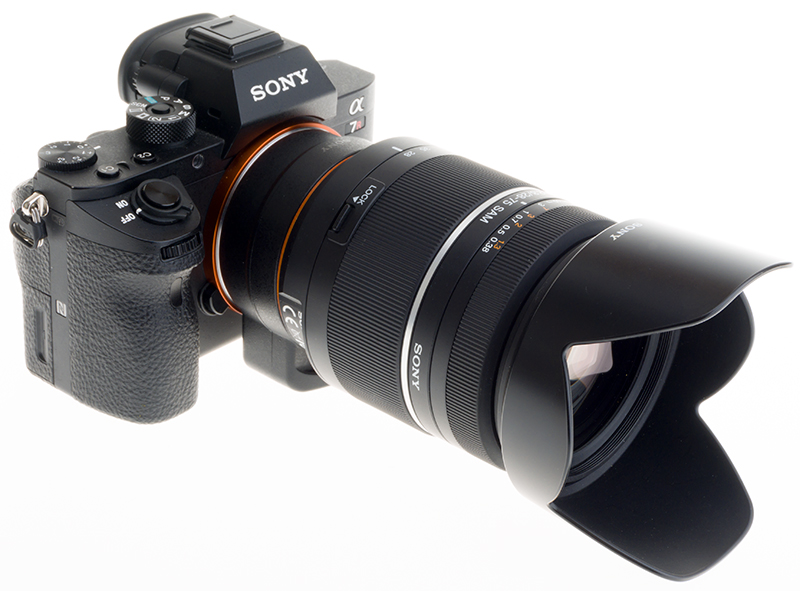
  • What's NEX? – full first-look review

    Although you will never achieve the kind of results seen with your Sony NEX-3, the technologies used in these cameras do filter down and more compact versions may be seen in the future in your Sony Mobile Phone, enabling you to take great images on the move. Continue reading to find out more about the camera system and its capabilities.

    THE SONY NEX-3 & NEX-5 cameras are ultra-slim interchangeable lens models, referred to as ‘ultracompact’ or ‘compact system camera’ models by Sony. The lens flange to film distance is only 18mm, compared to 44.5mm for the Alpha system and very similar figures for all popular SLR brands.

    The Leica M and screw mounts, with under 1mm difference between them, are 10mm greater than this at around 28mm. Screw mount Leica lenses can be adapted to M even though there is only 1mm difference. With 10mm difference, almost any lens ever made for any camera – even the Robot system, original Contax, maybe even the Pentax 110 SLR – can probably be adapted to fit the E-mount. In fact it will accept 16mm and 35mm (half-frame) ciné, C-mount CCTV lenses, and subminiature camera lenses.

    You name it, the NEX will be able to do it. Telescopes, microscopes, endoscopes, whatever. And Alpha lenses, and MD lenses. There is even enough ROOM with over 25mm the spare to fit a true retrofocus format reduction converter – that is, a 0.66X optical unit which condenses the image from a full frame lens to fit the APS-C sensor. It is already done in the video and ciné world, and these converters have a wonderful bonus. Your 24-70mm f/2.8 SSM lens becomes, with a 0.66X reducing converter behind it, a 16-46mm f/2. That’s right – the same way a teleconverter loses you a stop or two, a format reduction converter gains you a stop.

    The same converters also increase resolution, much as teleconverters reduce it. Zeiss can achieve 400 line pairs per millimetre from high grade 35mm format movie lenses when rear-converted to reduce on to 16mm or video.
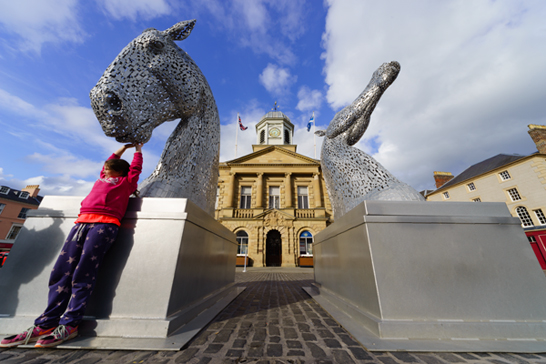
    Will Sony ever make such a converter? Do they even know that Zeiss have designs, and make exactly this type of converter for Arriflex and other systems via Angenieux? Do they realise that rear fitting format-reduction converters can also perform an AF function, allowing a manual focus lens from Nikon, Canon, Contax, Minolta or whoever to be mounted on a converter which has an ultrasonic AF mechanism of its own?

    Imagine that – your 50mm f/1.2 Rokkor becomes an autofocus 33mm f/1.0 on the NEX. This is not blue sky thinking, it’s an optical practicality not a mere possibility. However, you don’t want to know the price of Zeiss converters, and for a system like NEX a universal converter might never be possible; it might have to be matched to the prime lens.

    The NEX mount is almost as wide in the throat as an SLR mount; for some obscure reason, Sony chose to measure the outer diameter of the flange, which is not what matters, and came up with 62.6mm for the Alpha and 58.9mm for the NEX. Inner diameter of the bayonet, the bit which counts, was not stated. But it’s a wide throat and can cope with a huge potential range of adapted lenses.

    Less of this ramble, and on to the plain vanilla – the camera.

    Inside the camera there is a 14.2 megapixel CMOS sensor, capable of HD video and of course the vital live view and contrast-detection focusing on which the entire camera is based. This is fed to a 3 inch, 920,000 pixel TruBlack articulated rear screen and the user must compose, control and review everything on this screen. There are few buttons, no dials except a single control wheel, and everything is converted to a virtual control or a menu choice using a Sony-Ericsson developed graphical user interface.

    The NEX5 camera, by some way the preferable model of the two, has a magnesium alloy body which matches the machined and brushed aluminium barrels of the lenses. It comes complete with a tiny camera-powered flashgun, screwed into an accessory slot on the camera top which has more contacts than a mere flash should need. Three, at least, must be for the stereo microphone audio interface which also draws Electret Condensor Microphone phantom power from the body’s battery.

    At the end of less than 24 hours with the camera, I cleaned the white table on the hotel balcony and took a few pictures which will show you the camera in detail.

    Here, you can see the 18-55mm f/3.5-5.6 OSS (stabilised) kit lens to the left; the camera body is fitted with the (raised) flash and the 16mm f/2.8 E-mount non stabilised wide angle pancake lens. In front is a 49mm fit lens cap (for either), InfoLithium battery good for around 350 shots, a 4GB MemoryStick Pro Duo MkII, and the lens hood for the 18-55mm.

    The NEX baseplate view reveals the steel tripod bush set into the mag alloy casing, the lens release in a slightly unfamiliar position, the size of the grip and the location of the new Sony factory making this system – in Thailand. It was rumoured that these lenses would be branded as Zeiss. Having used these two, I can’t say they would ever have deserved that. Both are very sharp centrally but pretty soft at the edges unless well stopped down, and both have fairly strong CA. The central sharpness is excellent, about as good as you could expect, perhaps aided by the Contrast Detect focusing which is entirely free of back or front focus.

    Here’s the body, which is 24.2mm thick at its thinnest point, with the lens removed – the sensor is exposed. But that’s how it normally is, whether switched on or off. Turning the camera off does not closed the focal plane shutter (30s to 1/4000th, X at 1/160th, vertical travel). Dust removal is not going to be all that easy with the sensor cover glass sitting so well shielded and recessed behind the shutter gate. When a lens is fitted, the sun can come in and focus itself on the sensor. What issues will that cause for anyone careless enough to leave a NEX with a 16mm f/2.8 lens on its back, with no lenscap, in tropical mid-day sun? As people sometimes do, dining or drinking outdoors?

    The lens will afford some protection when fitted. The well-machined metal mount should not admit dust too easily. There are ten contacts on the E-mount lenses (note the legend ‘E-mount’ etched on the flange). They transfer EXIF information about the lens, power for the ultrasonic focusing motor which is a silent ring type, power for the aperture adjustment via a stepper motor, and command and feedback signals to make these adjustments. Enough of the protocol is shared for the E to A mount adaptor LA-EA1 to have been designed to operate SSM and SAM Alpha lenses.

    At the launch conference, Sony admitted their engineers had failed to get reliable focusing, so AF was disabled in firmware. They hoped that a firmware update would restore the planned AF functionality with in-lens motor Alpha glass.

    The ability to change aperture during video shooting is only offered with E-mount lenses, and is disabled when A-mount lenses are fitted via the adaptor. Sony does not make it clear whether different apertures can still be preset, before filming.

    This is one of the lenses which might have proved interesting on the NEX – the Sony SAM 30mm f/2.8 1:1 Macro. You can see the difference in scale and engineering approach. Note the AF/MF switch on the SAM lens – it’s the only way to over-ride AF on the Alpha bodies. The E-mount lenses are far superior, they have full time manual focus over-ride which is ultra smooth, just turn the focus ring at any time to shift away from the autofocused point. When you do this, the rear screen instantly and automatically switches to an enlarged view to aid manual fine focusing.

    Here’s a close-up of the 16mm lens iris. Whatever shape of aperture is claimed, there are only seven blades (probably to keep the action very light) and that minimum f/22 does not look especially circular to me – much like any other lens with a very small iris diaphragm. The blades are oddly asymmetrical too.

    Here you have the 18-55mm naked on the body. It’s a really good cosmetic match but you can see how large even this lens is compared to the camera. The 18-200mm f/3.5-6.3 which was not ready to be tried out is even larger. Note the position of the strap lug(s). They are placed down the body and angled so that when neckdangled or shoulderslung, the camera tends to hang with the lens aiming down and the screen facing up. This saves a lot of screen scuffing, gives quick access to the info there presented, and keeps the bigger lenses neatly placed.

    Be warned, though, that you can’t expect to grab a shot from hanging position. If the camera is turned off, it takes a short delay to fire up and for the screen to brighten as the gain is adjusted (always from dark). If the camera is sleeping, first touch on the shutter button does the same, with the screen ready for use in a second or so. Then a firmer pressure acquires focus and re-adjusts the screen exposure; AF officially takes 0.3s, but I found you could easily have 2-3 seconds from the moment of raising the camera to being able to fire the shutter in confidence. I actually think my old Konica Minolta Dimage A2 is faster. I missed several candids and moving subjects when testing the NEX5.

    This is just a shot with the petal lens hood fitted. You may notice that the 16mm lens, supplied without a hood, does have a bayonet as well as a 49mm filter thread. This is to enable two afocal front lens convertors to be fitted – the VCL-ECU1 is a 0.75X rectilinear converter, turning the 16mm into a 12mm ultrawide, while the VCL-ECF1 is a 0.62X fisheye converter creating a 10mm full frame curved view fisheye. Given that the 16mm is expected to be only around £200 (or much less in effect when bought with a body), and these converters are £100 and £120 respectively, a system will be no great weight on the pocket.
    There is also an optical finder for the 16mm, which occupies the flash/mic shoe, and will cost £130. Eh?

    Like the flash, shown above, it will use the 12-pin gold plated connector and thumbscrew to attach. But it’s not an electronic finder. No-one would answer whether this contact array will support an EVF attachment.

    This is how you secure the flash, which stows by folding down flat. Raising it, as in this shot, turns it on.

    This runs off the battery, which lives next to the dual-purpose card slot. Previous models have had twin slots. The NEX range uses a dual MSPro/SD slot which auto senses the type of card being used. An AC mains adaptor is available which uses a dummy battery and a cable emerging through a hinged portal in the battery door (above).

    The rear screen is articulated very much like the Alpha 550, and does not turn to face forwards, or orient itself in any way to suit vertical compositions. It is very much geared to the landscape format trend created by video shooting, HD, mobile phones and so on. Though the camera has auto orientation sensing for photos, the display does not change like an Alpha and it’s not really designed well for vertical shots.

    The downfacing position is pretty odd. It does not fold out in the usual way. I was able to shoot well enough holding the camera overhead. The screen articulation is, like the 550, a very rugged metal mechanism. It does not feel as vulnerable as many other (more versatile) swivel and tilt rear screens.

    The GUI is exactly what GUI means – very much a graphical, not textual, user interface. The six main menu icons resemble mobile phone menus. You get to them by rotating the scroll wheel and pushing its centre button. Shortcuts are marked at the compass points of the wheel for outer rim press-clicks taking you to different options or changing the display mode. The LCD has a glass cover but Sony still offers both hard and adhesive protectors. I took photographs using the ‘Sunny’ brightness setting, not Auto. ‘Sunny’ really boosts the backlight well beyond the auto brightness maximum.

    The Brightness/Color Menu includes the options for DRO+ and for HDR shooting. HDR is now three frame bracketing, with manual control up to 6EV span (plus/minus 3). The NEX has a very powerful new BIONZ processor and crunches 3 raw files into an HDR JPEG instantly – while also saving, at the same time, the middle bracketed exposure from your rapidfire 7fps burst as a standard choice. So you get two frames from your triple shutterburst, one normal, one HDR. There are also six-shot Night Scene and Anti Motion Blur modes, which synthesise a final low noise or minimum blur JPEG in-camera; I failed to test these, as the presentations made no real mention of them.

    Here you can see the second shutter release, marked MOVIE. Press this and there is no waiting – filming starts immediately, so you either need to be in Continuous AF mode, or have pre-focused using the main shutter release. A second press ends the take. Unlike almost every other HD Video 1080p capable model yet made, the NEX5 will shoot continuously without clip length limits, up to around 29 minutes (filesize limit).

    Select Shoot Mode, and an image of a virtual mode dial appears concentric with the control wheel. It turns in perfect sync with the wheel. So, without having a physical dial, Sony has given you one. Text information appears as you perform changes. Some more annoying repetitive cyber-advice can be turned off; other ‘tips’ are not optional. They follow you round for life.

    The camera includes many functions aimed at happy young exuberant target-market users. I don’t think it is complete, as the Smile Detection menu has not made adequate allowance for Goths, neo-punks, or grumpy old folk with permanently inverted scowls. A future version for the legacy Alpha-owner generation should include ‘Not Frowning’ as a smile mode!

    The Display mode change options include a semi-graphical exposure scale exactly along the lines of current Alpha models.

    Alternatively, you can opt for a different set of info more aimed at the advanced user. I found that no matter what display mode I used, the screen became so cluttered I sometimes could not see parts of the subject I was keen to check for alignment, cut off or inclusion in the shot.

    This – a very simple display indeed – was what I found most acceptable. It is interesting to note that with the exposure metered live from the CMOS, there was much less need for the plus-minus over-ride function using NEX. I was shooting raw, but even the JPEGs obtained alongside the raw files were pretty much perfectly exposed every time. For difficult subjects the JPEG-only shooter can use a three-shot HDR in-camera process, and this worked very well.

    I have a gallery of 48 full size in-camera JPEGs taken during the photo shoot opportunity organised for the press, which involved two hours in sealed dirty-window ferry and bus plus half an hour wasted on a wine tasting (?!) session, for the sake of maybe an hour of pictures. They would have been better just bussing us into Split old city and telling us to meet later. Escorting a gaggle of journos round Hvar town was singularly unproductive!

    http://www.pbase.com/davidkilpatrick/nex5_samples

    48 full size in-camera JPEGs with peculiarly deficient EXIF data. Where it says 16mm, the 16mm was used. Everything else is on the 18-55mm. The NEX5 body was used.

    The NEX system and the initial 3 and 5 model cameras needs much more writing about it, with many new functions and features. This has just been a small guided tour of the camera for you to see it in detail. We will be posting further reports as time permits, rush-blogging not being something I intend to do when there is so much detailed information to be digested. My quick reports from Croatia and during transit back home have already appeared on the BJP website:

    http://www.bjp-online.com/public/showPage.html?page=874544

    http://www.bjp-online.com/public/showPage.html?page=874550

    You can see a short 720p HD movie (rescaled from the original 1080i for YouTube, edited using iMovie 09 on Mac) here:

    http://www.youtube.com/watch?v=lSl3jN2sk7Q

  • Alpha's Silver Jubilee


    The Alpha System celebrates its Silver Jubilee or 25th Anniversary this month.
    We have a full length revision of the article which appears in the latest Photoworld now online as a page here.
    Read our 25th birthday review of the Alpha system’s history now!

  • Ricoh seal the future of interchangeable lenses

    Tokyo, Japan, November 10, 2009—Ricoh Co., Ltd. (president and CEO: Shiro Kondo) today announced the development and release of the GXR interchangeable unit camera system featuring the world’s smallest and lightest* digital camera with the ability to change lenses.

    NS1_front-web

    The new GXR is an interchangeable unit camera system in which lenses are changed by using a slide-in mount system to attach camera units to the body. The lens, image sensor, and image processing engine are integrated into the camera units so the body itself does not contain an image sensor.

    NL2_left_close-web

    With world-leading small size and low weight* enabling easy carrying, the GXR interchangeable unit camera system features a highly rigid magnesium alloy body and multiple camera units that can be changed to best fit the scene to be photographed. You can enjoy easy lens changes as well as amazing image quality and shooting flexibility. Concealing infinite possibilities in its small body, the GXR is a revolutionary camera system that pioneers a new realm of photography.

    Distinctive characteristics:
    1.    Lens, image sensor, and image processing engine comprise an integrated unit which can be changed to match the scene being photographed.
    2.    World’s smallest and lightest* digital camera with interchangeable lenses
    3.    System potential expanded through use of interchangeable units

    Comment from David Kilpatrick:

    Though the Ricoh system as revealed through this press release appears to show only a GR-size body with a zoom lens module suitable for a 2/3rds or slightly smaller imaging sensor, Ricoh has said that sensors right up to the size of APS-C will be built in to further lens modules. The ultra-wide angle version would have an APS-C sensor making similar to the Sigma DP-1. For similar reasons, high ISO and fast lens may be combined with a different size of sensor.

    This is not the first time a digital camera has been designed with lens-sensor modules that could be changed. The Minolta Dimage EX 1500 accepted either a standard zoom module, or a wide-angle module. These included viewfinders (missing from the Ricoh concept, which relies entirely on the rear screen or electronic viewfinders) and had the unique ability to be removed from the camera on a 1.5m long Cable EX. This allowed users to position the wide-angle module inside scale models, doll’s houses and similar subjects to obtain realistic human-scale perspectives. It was only a 1.5 megapixel camera, and Minolta abandoned the concept before they had a chance to develop it further, whatever dPreview said ten years ago:

    http://www.dpreview.com/reviews/minolta1500/

    The technology behind the Ricoh is not all that different from the way consumer digital cameras are constructed anyway. Lenses are already sold sealed to CCD/CMOS sensors, as a single unit. That is how the OEM sources of the lens-sensor modules market them. At photokina, you can see (every two years) a new crop of such modules with both the technical resolution specs of the optical unit and the megapixel count of the sensor, identifiable to this non-Chinese/Japanese reader in the middle of a description which is usually inb Chinese. In 2006, I tracked such a module from its maker to the first camera I could find which used it – a compact branded as Vivitar. The customisation consisted of building any body the maker chose to design, and putting a ring on the lens front labelling it is a high resolution Vivitar lens; actually, it was just a generic lens-sensor assembly from China.

    Ricoh has also pioneered unusual digital designs in the past, including rotatable or detachable lens modules and one of the first viewfinder-less designs, where the viewing screen was intended to be used at waist-level rather than today’s habit of waving the camera in front of your face.

    This differs from anything previously done in the power of the CPU unit in each lens, and control module with screen display and card interface in the host body. It should allow any reasonable pixel count and sensor size to be built in to future optical modules. If the accessories do eventually include dedicated APS-C lens-sensor sealed modules, ‘dust on sensor’ will be one clear benefit (or the lack of it will). A supertelephoto module is also planned which will use a sensor smaller than APS-C.

  • New skins versus old wine – A350 or A380?

    As the generation of Alpha 200, 300 and 350 reaches early retirement age it may be the time to grab bargains. The new Alpha 230, 330 and 380 have plenty of bonus points to win over new users despite the critical lack of video capture. But the older generation has some very tangible benefits.
    The most obvious changes in the ‘Plus-30’ range are the use of a new smaller battery (NP-F50AM) shared with Cyber Shot consumer models, a dual MS ProHG Duo and SD card interface, substantial reduction in weight and size, improved rear LCD screen with auto brightness adjustment (only on the A330 and A380), and a radical overhaul of the graphical user interface to include sample picture tips (pioneered by Nikon).
    (more…)