Tag: sensor

  • Sony A7RII versus Nikon D850 – noise

    There’s a lot of noise about the Nikon D850 right now but few direct comparisons. One problem I have with some early reports is that new D850 owners are most likely to be existing D810 or perhaps D750 or D5 owners. Any comparisons are therefore being made with earlier Nikon sensors.

    Recently a Nikon ambassador whom I respect greatly placed some .NEF raw files into a Dropbox for fellow professionals to examine. Since this article effectively criticises Nikon, I will not reproduce anything recognisable. I naturally grabbed the files and processed them with my usual care in Adobe Camera Raw. This includes making adjustments to the Sharpness and Noise Reduction settings depending on the ISO used. My standard with Sony, Nikon and most other files is to reduce the radius for sharpening to the minimum (0.5) leaving the basic settings of 25 for sharpness and 25 for detail untouched, with no masking. I also don’t touch the Colour Noise controls at all, and usually only adjust the first Luminance control leaving Luminance Contrast and Luminance Detail at default. This first Luminance control tends to set to zero for ISO 100 (or the minimum for a given camera), 10 to 15 around 400 to 800, 25 at 1000 to 2000, 30 to 35 at 2500 to 4000, 50 at 6400 and never above this level.

    In practice these settings make raw files from the Sony A7RII (and presumably A99II, which I do not own) fully useful to ISO 3200 regardless of conditions and intent. Blue skies do not have grain, shadows are smooth and clean, detail is fine, skin tones are not marred by noise. ISO 6400 is slightly grainy but only to the degree we used to expect from ISO 800 in cameras of the first CMOS period (2007-2008, the A700 and A900).

    So, given the glowing reports on the new Nikon sensor, I was expecting to see something at least matching the A7RII. There’s not a huge difference between 45 megapixels (Nikon) and the earlier 42 megapixel Sony BSI CMOS. I have already seen that the Canon 51 megapixel sensor in the 5DS/R offers no benefit at all, just a steep fall-off in shadow detail and loss of dynamic range combined with more noise.

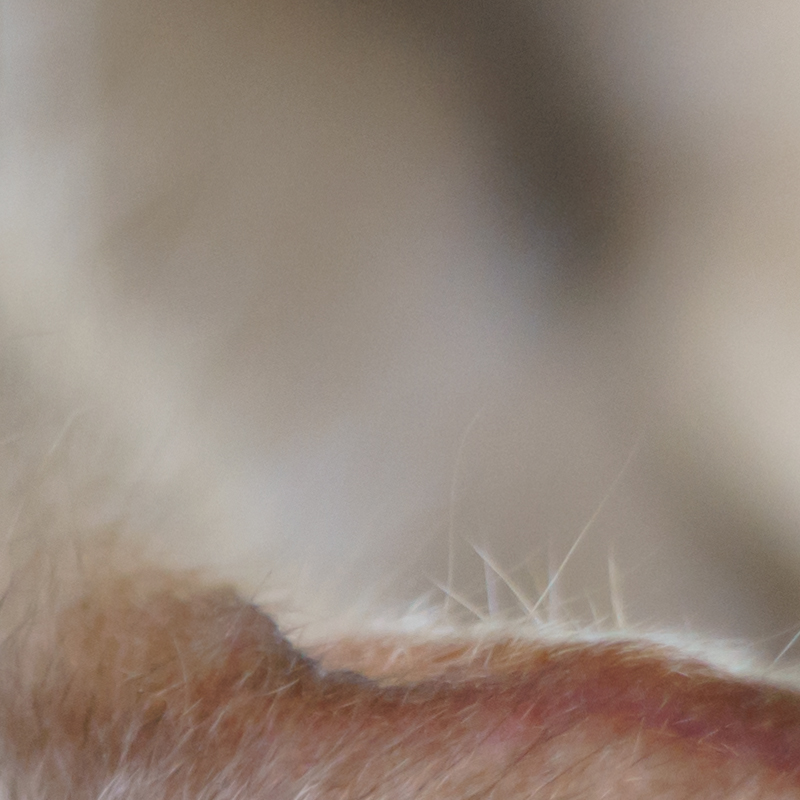
    Here, then, is a 100% section from a raw .NEF at ISO 1000 on the D850, with the Adobe Camera Raw settings I would expect to turn in a clean result. It has been saved at JPEG 12 but WordPress’s image engine causes some quality loss:

    The NR was set as described above, to Luminance 25.

    Then I looked back through my files to locate some ISO 1000 raws from the A7RII and try to find something with broadly comparable tone (surprisingly difficult!). Here is the result, with exactly the same process and settings:

    You will note that the grainy noise is much finer. Both are taken from regions away from the image centre where the camera’s firmware will be adding some gain to combat sensor-created vignetting. On-axis areas are slightly less noisy in both cameras. This may also depend on the lens. You probably think this looks noisy for the A7RII, and this light colour and exposure level does indeed tend to increase noise.

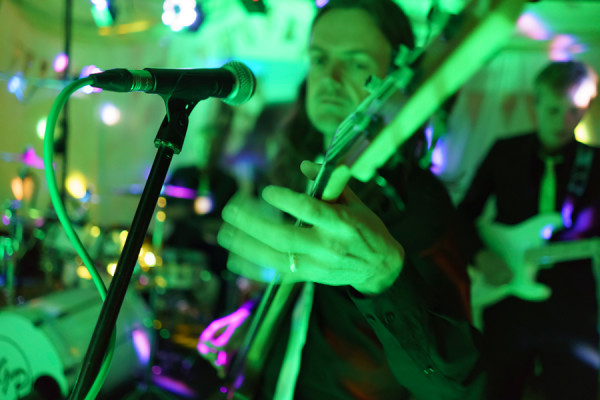
    Here is another A7RII ISO 1000 clip in better light, brighter subject matter, closer to the frame centre – this is more typical of the noise level you should see (or not see) in Sony 42 megapixel images:

    I’ver chosen blurred neutral areas beyond the point of critical focus because these emphasise noise. If the same settings are used with sharply focused detail, with strong colours or contrast and textures, you simply won’t see noise at all at ISO 1000 and NR 25.

    I will also say that while the Nikon community seemed impressed by the sharpness of sample images, I was not. I have to reconsider my critical opinions of Sony’s lenses. I have been judging zooms against Carl Zeiss and Voigtländer primes, and used to seeing a level of detail in images at 100% which I guess regular DSLR users simply don’t expect. Part of this is down to the quality of the A7RII sensor, part down to the lenses, and a whole lot is down to the zero-error focusing of the mirrorless system. I am part of another community, where most photographers use Canon or Nikon and prefer to have fast zooms and primes (the usual 16-35mm f/2.8 or 14-24mm f/2.8, 24-70mm f/2.8, 70-200mm f/2.8, 35mm f/1.4, 50mm f/1.4 and 85mm f/1.4 kit). In this group, many are having their cameras and lenses custom matched and reporting improvements in sharpness which transform their autofocus work.

    Those who use Sony, Fujifilm, Olympus or Panasonic mirrorless systems don’t tend to make any comment as they have been getting critically sharp focus ever since they made the switch from DSLRs.

    Conclusion? My A7RII is now two years old. It’s a 2015 model which is certainly not surpassed by 2017 rivals at least in the ‘core competence’ of its sensor. Other Sony models may offer different levels of special features, like the blistering shooting speed and focus tracking of the A9, but the A7RII continues to do its job as a great all-rounder and this quick comparison shows why.

    – David KIlpatrick

    To support Photoclubalpha, buy through our Affiliate links… or subscribe to David’s premium-quality photographic bi-monthly Cameracraft which includes regular Sony-related editorial, with system expert Gary Friedman as Associate Editor – see www.iconpublications.com

  • Sony A7R II review by David Kilpatrick

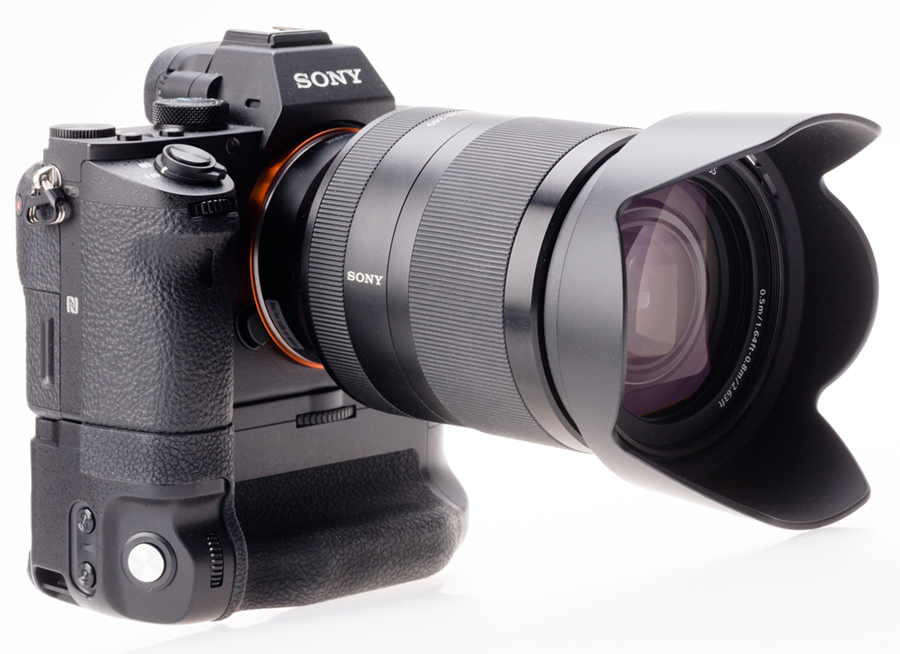
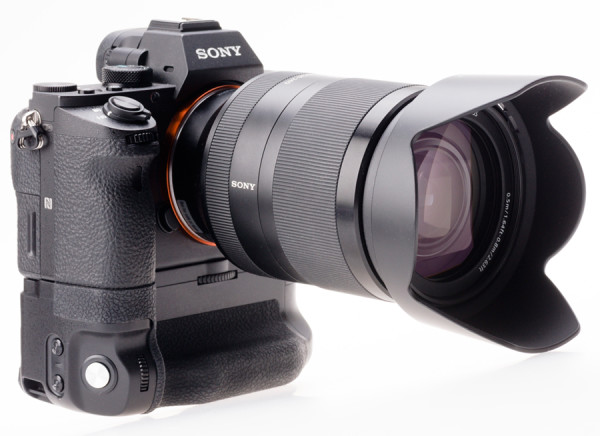
    Sony’s A7R II has a unique position in the mirrorless ILC world, creating the largest image files at over 42 megapixels from an in-body five axis stabilised sensor with exceptional performance given by backside illuminated CMOS.

    My reviews in print of the Sony A7R II have now appeared, in the British Journal of Photography, f2 Cameracraft and Master Photography magazines. All three make slightly different points, and reflect growing experience of the camera which I bought from WEX as one of the first despatched on July 28th. The UK best body-only price then fell from their £2,695 to just over £2,000 from one main Sony dealer (at an event promotion) in under three months.

    Despite finding bargain deals or importing directly, since the introduction of the A99 only three years ago I have lost about £3,500 keeping up with Sony full frame camera bodies. I’ve also spent around £2,000 buying other Sony models like the NEX-6, RX100, RX100 MkIII, RX10, and A6000 to cover the shortcomings of every different full frame model – and £2,000 or more updating my lenses.

    So why invest in the A7R II when experience tells me the Sony system loses value faster than any other, yet so often falls short of performing as required?

    One body for all lenses

    The A7R II almost matches medium format digital, and gives great results with rangefinder (Leica) fit wide-angles. It has enabled me to add a 12mm f/5.6 Voigtländer Ultra Wide-Heliar to my kit for sharp, tint and vignette free 120° architectural and creative work. I write about lenses, and with current and future adaptors, this body lets me focus and make test shots with all lenses from Canon, Nikon, Pentax, Leica and many others. Click the Heliar image below for a link to a full size (slightly cropped and straightened from 42 megapixels) file. It’s actually shot at f/11 though the pBase data says f/5.6, that how the camera’s Lens Correction app works.
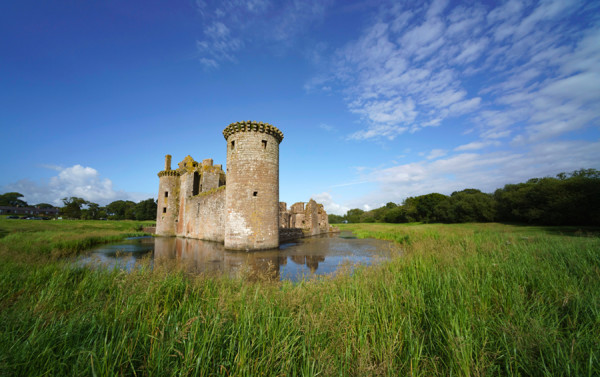
    Caerlaverock Castle

    There’s no lens made which disagrees with the 42 megapixel sensor as far as I can tell. My kit includes the 12mm mentioned above, the 16-35mm f/4 Carl Zeiss OSS, the 24-240mm f/3.5-6.3 Sony OSS, the 28mm f/2 Sony OSS FE (look out for individual reviews shortly); a 40mm Canon f/2.8 STM pancake, a 24mm Samyang tilt-shift, 85mm Sony SAM f/2.8, Sigma 70-300mm OS and a whole bunch of interesting older stuff used on adaptors.

    With the Lens Correction App configured for SS with each manual lens, the very high resolution of the A7R II sensor allows a stable view for precision magnified focus well beyond the ability of any AF method or reliance on focus peaking alone. Doing this at working aperture ensures no focus shift on stop down. The results show me quickly which lenses are excellent performers without needing an optical bench or test charts (give me a single LED light and a darkened room, and I can find out what I need to know about any lens very quickly).

    driedflowers-A7RII-web

    Most Sony and Sony Carl Zeiss zooms do yield good sharp images on 42 megapixels but it’s easy to exceed their best by fitting something like my 1970-ish SMC Takumar 50mm macro (used for the shot above), or even my Russian 50mm f/2 tilt-adapted Zenitar. I found the 28-70mm f/3.5-5.6 OSS which was fine on A7 II inadequate for critical quality on the A7R II and after tests concluded the 24-240mm was the best option to replace it. To learn why FE/E mount zooms and OSS lenses are never likely to blow away fixed focal length unstabilised types like the Zeiss Loxia or adapted classic RF and SLR optics, wait for my 24-240mm review.

    Having said size matters, I downsize many of my final images to as small as 9 megapixels. I don’t need 42 megapixels (7952 x 5304) for every image and for some it’s ridiculous. I’m still selling thousands of stock images* taken with DSLRs from six megapixels up. So for general ‘field’ use, most lenses are more than OK, as I can reduce the file size right down 3600 x 2400 pixels when noise needs cutting, depth of field is a problem, or general sharpness is poor.

    One sensor for all image shapes and sizes

    With the A7R II, unlike the A7R, all the APS-C E-mount lenses work properly (they never have their OSS forcibly disabled). The auto cropped image is 5168 x 3448, 17.8 megapixels, and that’s a perfectly useful size for all personal and most professional work. The 0.78X EVF is, of course, completely filled to exactly the same visual quality as when a full frame lens is used – the user experience with an APS-C lens is identical to that with full frame.

    As with downsizing or lens based cropping, I can crop full frame captures right down to less than a quarter of the A7R II image and have a file acceptable to Alamy for stock library use, or to a client directly for almost any reasonable editorial use. That same crop can go full page in a wedding album, or make a fine A3/16×12 print. It’s like using 120 rollfilm again, you can find pictures within pictures.

    lemurs-fullframe

    A 240mm shot clearly not close enough…

    lemurs-240mmf9-iso400-crop

    This is a 3600 x 2400 crop. That is, an image large enough for full page publication or a 12 x 18″ photo/inkjet print (click to view full size)

    With many lenses which don’t cover full frame, a 24 x 24mm crop is perfect. The Sigma prime lens ART trio (19mm, 30mm and 60mm f/2.8 AF without stabilisation) all do well on this basis. I had a 16 megapixel square format digital back on Hasselblad V and the square format is a favourite. Unlike Olympus, who offer a 1:1 ratio capture, Sony only includes 3:2 (35mm shape) and 16:9 (HD widescreen) – I’d love them to add a proper 1:1 square image seen in the EVF and on screen, a perfect 28 megapixel crop.

    The high resolution FF image also means there’s less need to stitch panoramas or use shift lenses. Canon’s 17mm f/4 TS-E tilt shift lens was introduced in 2009 when their full frame 12 megapixel 5D has just been upgraded to the 21 megapixel 5D MkII. On the A7R II, using its maximum 12mm shift reveals serious loss of outer field sharpness even at apertures like f/10, f/11 and f/13 which are optimum on other ways. It’s not a sensor cover glass problem as the Canon 5DS R revealed exactly the same weakness. Downsize the image to 12 megapixels, which the lens was probably first designed for, at everything looks sharp. But here’s where 42 megapixels can pay off – I just need to use a 12mm Voigtlander or a Sigma 12-24mm, crop a 14 x 21mm area from any part of the 24 x 36mm frame, and I have a 14 megapixel image allowing even more effective ‘shift’ than the Canon. And I can, of course, use the Canon via an adaptor if needed.

    The same kind of strong cropping works for telephoto wildlife shots (300mm lens, better than 500mm on 14 megapixels) and for macro work (1:1 on full frame, 2.2:1 at 14 megapixels). You need to remember all the time that traditional depth of field calculations just don’t work well with sensors of 36 megapixels and over. When you view a full size A7R II image at 100% on a non-Retina iMac or HP 27″ monitor, you are looking at part of a six foot wide ‘print’. Depth of field tables, still used today, were based on viewing a 10 x 8″ print from a similar distance! This problem is reduced by higher resolution screens but sometimes, you simply need a smaller image size.

    Canon 5DS/R (in proportion with earlier models) have useful M-RAW and S-RAW formats, allowing the cameras to become full frame 28 or 12 megapixels with a single menu change. This function is missing from Sony raw files and would be a great firmware enhancement, if it was possible. Edit: with the Sony A7RV and its even larger 61 megapixel sensor, Sony addressed this with M and S raw files of 26MP and 15MP, which are downsampled from a full capture so do not offer faster continuous (etc) but do bring noise control and sharpness benefits.

    Reasons to buy the A7R II
    SONY DSC

    Having used two other A7 series bodies, and started the transition to the FE lens series with some mix of adapted glass on the way, why didn’t I stick with the far more realistic and practical A7 II, or the A7R which was paid for and at 36 megapixels just as useful a large file size?

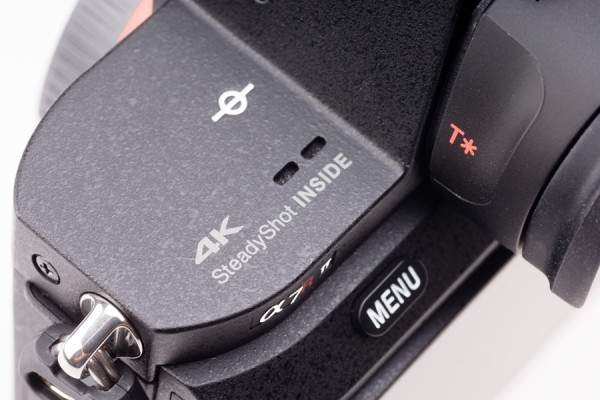
    • Internally or externally recorded 4K video though not a commercial offering from my side might well be a request from a future client. I don’t make videos though many years ago I did made 16mm films and many 35mm slide based dual and multi projector AV programs. However, I know many still photographers who have found sufficiently high-end clients for video to invest the time. I wouldn’t touch any video production, even a brief 20-second ad clip, for under four figures. It’s fun to experiment with until any serious use emerges. Also, excellent Super-35 crop format video.jamesgem-1371-web
    • Completely silent operation when needed – though not compatible with any kind of flash, the fully electronic shutter is an option for wedding ceremonies and I’ve used that function already. It is also useful for shooting stills when someone is making a video, or during quiet concerts, in meetings, or when you simply don’t want the sound of a shutter to be heard. When silent is not needed, electronic first curtain (not provided on the A7R) improves shutter lag time and cuts vibration
      .SONY DSC
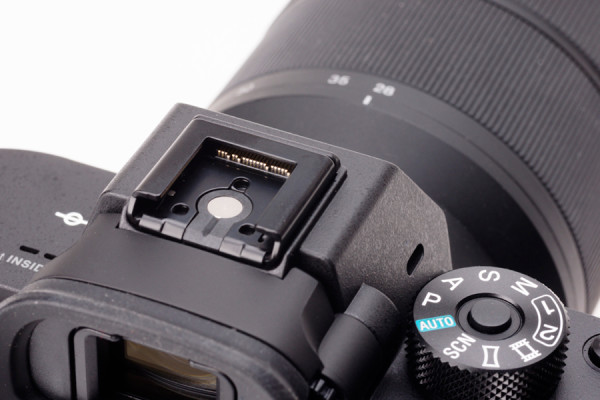
    • It’s also got a 500,000 actuation life shutter built to more than pro specification and a superior 0.78X electronic viewfinder, a slightly improved body flange for the lens mount (now common to all the II models, tighter and more precise than the original machining), no light leaks. And the mode dial is improved with a locking button, the Multi Function Accessory shoe is further improved in contact reliability, the ocular is T* coated and gives better eye relief.SONY DSC
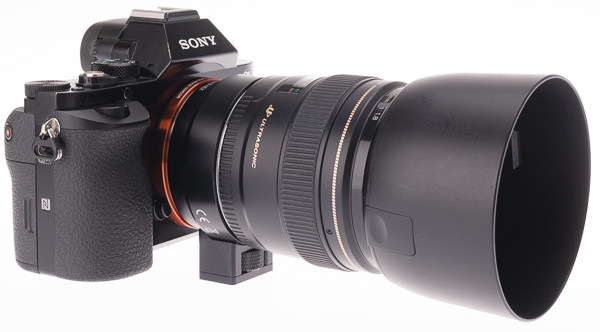
    • It will perform well with all kinds of lenses and the 399-point wide area phase detection AF array built in to the sensor functions partly, or completely, with more native Sony and converted Canon lenses than ever before. It betters the A7R and A7 II in this respect, though I sold the Canon 85mm f/1.8 USM above as it didn’t work with the II having worked well on the A7R. Metabones have now fixed this, but my adaptor is a cheaper non-programmable type… you get what you pay for!

      Canon5DS-6400-web
      This is what you get from the Canon 5DS at ISO 6400, default, for shadow detail and noise (click to enlarge a 100% view of this section from a much larger file)

      Compare the separation of the black ribbon, and the shadow detail in general, from a similar shot ISO 6400 A7R II file, using the same lens and settings (click to view enlarged).

    • The back-illuminated CMOS sensor has a dynamic range – and a contrast curve or gamma function through controlled A to D conversion – which provides an ideal raw file for subsequent adjustment at lower ISO settings. Here, the difference seen above between the Canon 51MP sensor and the Sony 42MP is striking. The Sony images may often look softer and lack punch, but they reveal two stops more detail in the tones close to deep shadow. It’s probably been designed this way to allow s-Log gamma settings for professional video, producing flat neutral results ideal for grading to match from take to take. This happens to be very flattering to skin tones and it’s no surprise the A7R II is rivalling Fuji’s X-Trans sensor amongst fans of the flesh.jamesgem-1685-web
    • The same sensor has awesome practical performance in low light without sacrificing resolution, and noise levels which allow surprisingly high ISO settings for critical subjects like wildlife where fur and feather textures are easily damaged by noise (or noise reduction). Properly processed from raw, or shot as JPEG in camera, ISO 800 can be used as an everyday setting and 1600 will not even harm landscape detail. Up to 6400 an effectively noise-free full size image can be extracted, and at 12,800 to 25,600 some downscaling is all that’s needed to clean up. Admittedly, it’s never going to match the 12 megapixel A7S or A7S II at 51,200 and has a limit at 102,400 rather than marching on to an insane 409,600 EI as that body does.SONY DSC
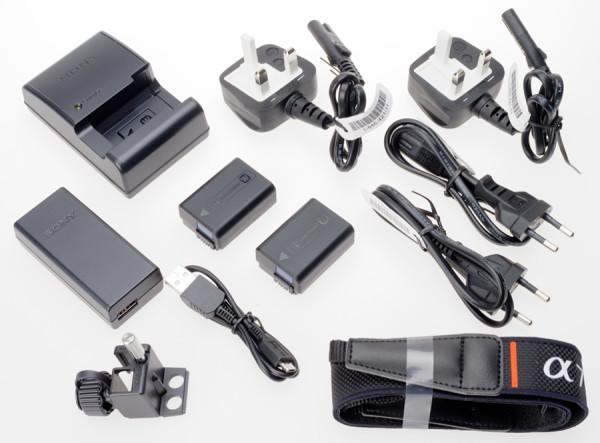
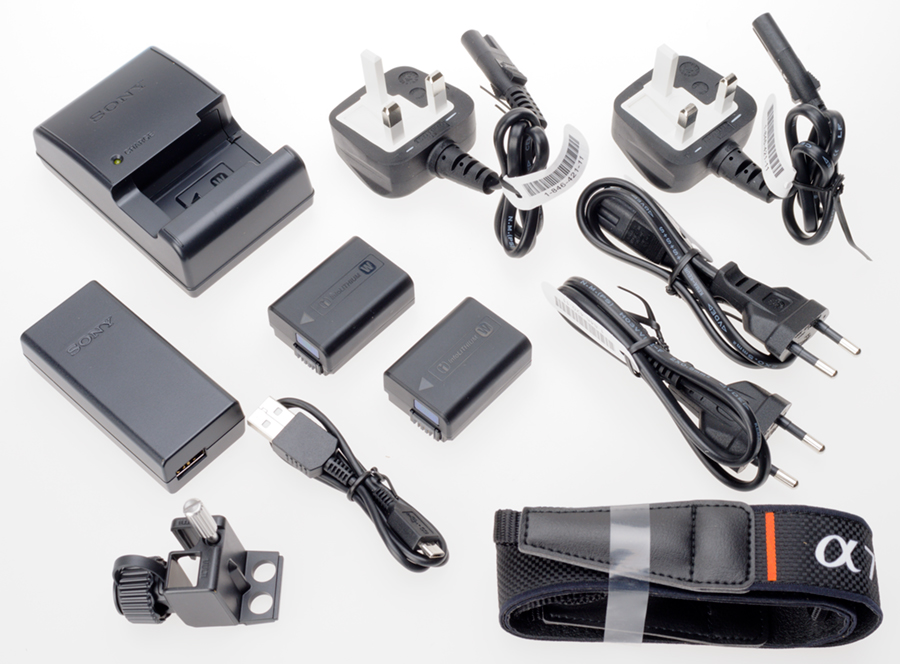
    • Compared to buying an A7 II, remember that with the A7R II you get two Sony batteries and an external charger (about £150 in official value) as well as the ability to operate the camera from any 5v 1.5A USB source (not just to charge the battery internally, but to shoot using USB power)
      .SONY DSC
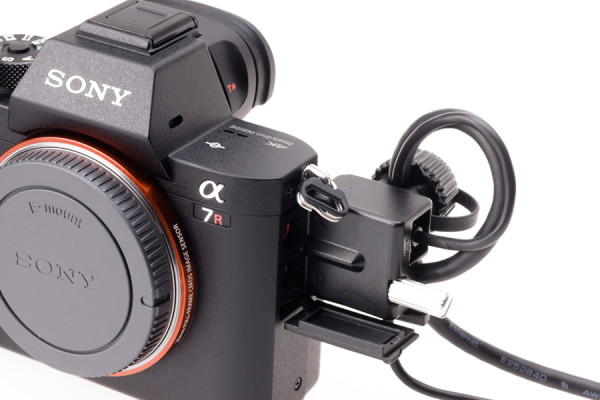
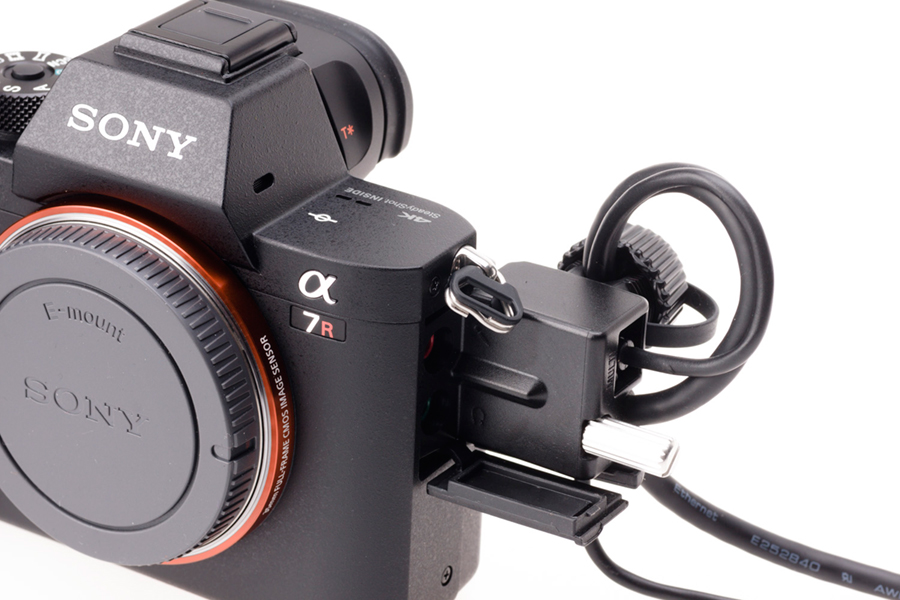
      You also get a neat tether-trap locking cage which screws into the camera side and can secure your USB and HDMI cables against accidental disconnection or strain on the connectors.
    • Final reason – going beyond the A7R II specification does not seem to offer further compelling advantages. It doesn’t have any major flaws or shortcomings except perhaps the single card slot and some doubts about the durability of the body, weatherproofing, and the quality of the lens mount (see below). I’m not in need of more than 5fps and 22 continuous raws before slowing down, and if I am the smaller Sony models like the A6000 and my RX10 do some pretty neat extra high speed sequences. So, for the first time since the sale of my A900 to get the A99, I feel I have a long-term camera no matter what Sony does in six months to make it hopelessly out of date.

    What’s could be wrong?

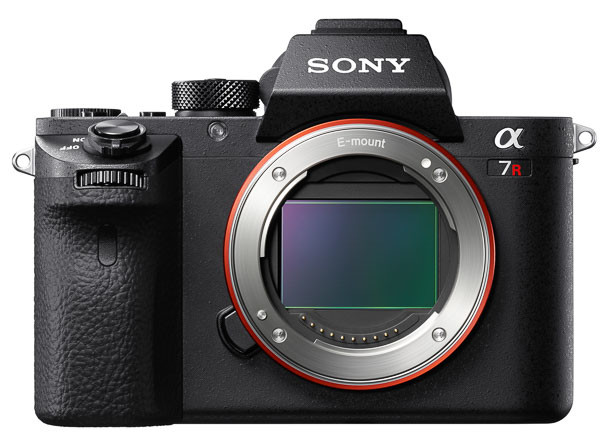
    First up, the poorly specified and designed lens mount and low precision body/lens relationship. Where Minolta A, Fuji X, Pentax, Leica and nearly all good makes secure the body and lens bayonet mounts using six screws, the E-mount uses only four even for the top end bodies which may have to support lenses approaching 1 kilo in weight. The four-screw fitting creates two axes of potential tilt restrained only by diametrically opposed screws, six-screw design is better but actually a five screw design beats both as you can’t draw a diameter across any two screws and create a tilt axis. Edit: after publication of this post and my articles in print in the British Journal, Cameracraft and f2 Freelance Photographer, Sony changed the design and A7/9/1 series bodies from the A7IIIR onwards have a six screw mount with screw positions reducing symmetry and the potential to rock.
    sonyjune1526

    The E/FE lens-body system is built round a concept of achieving final accuracy in alignment and focus without needing precision in every component. The nominal 18mm mount to sensor register doesn’t have to be perfect (and seems to vary by at least ±0.1mm). All Sony E and FE mount lenses compensate for variations and use free-floating magnetic focus often combined with floating OSS – they don’t have fixed infinity stops. Just as the bodies don’t have to be all that precise, the lenses themselves don’t need to be. As long as both work with the sensor to AF perfectly, the overall system is self-correcting.

    You soon find out the limits of E-mount precision when buying adaptors for older manual lenses or modern Canon EF lenses. I’m sure Zeiss makes due allowance in the design of manual focus Loxia lenses, and Voigtlander has specifically allowed the new E-mount range planned for 2016 (10mm, 12mm and 15mm) to focus past infinity because they are aware of the variable register of the system. I have measured many adaptors and the only safe decision for the engineer is to fall short of the target register. Some very expensive adaptors turn out to be 0.3mm thicker than others for the same mount (I’ve found this in Leica M, Canon FD and Canon EF adaptors). The lenses being adapted often have a fixed infinity stop and are designed to hit this precisely. Combine a 0.1mm ‘plus thickness’ Sony body with a 0.2mm plus adaptor, and your manual wide angle lens won’t focus on infinity.

    So, one overall issue is that despite the high cost, the Sony FE/A7 series range of bodies and lenses lacks the precision engineering of past systems and it’s designed that way. When you find one side of your pictures always seems soft with wide-angle, wide zoom or very fast lenses you have encountered the limitations of Sony precision and quality control. Edit: see new body mount comment above, Sony greatly improved the precision and accuracy of the entire body/lens system from 2016 onwards.

    Secondly, the A7R II has such large files and a slow overworked processor relative to those files and the massive task of running a high resolution, high frequency EVF and many clever software functions. Any kind of systematic ‘chimping’ to check each shot after taking may leave you frustrated. Depending on your choice of card and some unknown spin of the CPU’s internal dice, you will sometimes encounter long file writing times and a brief lockout from playback.

    Install the 14-bit (in 16-bit container) raw uncompressed format introduced in October 2015 through a firmware update, and the situation may improve. With Firmware V2.0 I’ve seen typical write to card times halved but identical shots could take varying times and the worst case remains close to 10 seconds for the light to go off on a single shot. Most of time it’s clearing about 1 second after 2 second auto review, and disabling auto review has no apparent effect on this, or the time the camera takes to respond to a fresh shutter actuation.

    Secret solutions

    Since you’ve been patient, and listened to why the A7 system in general has a few failings, here’s how to get the best optical performance and general response from it.

    SEL70200G_A-1200

    First of all, for the best optical performance use lenses where OSS can be disabled but in-body SS allowed to operate. The internal 5-axis sensor based stabilisation of the A7II/RII/SII is awesome. In-lens OSS is impressive but by its design will always lose you some resolution, often more towards one side or corner of the image than centrally. Amended paragraph, see comments: To see how good your stabilised lens really is, turn off stabilisation and shoot something using flash or at a high shutter speed.

    But… if you turn off Steady Shot or OSS on the A7R II, you disable it in the body and the lens. You can not turn it off for the lens, but keep it working in the body. The 90mm f/2.8 Sony G OSS Macro, the 70-200mm f/4 Sony G OSS (above) and the 28-135mm f/4 Sony G PZ OSS and several newer OSS higher end (G and GM) offer the on-lens switch. But if you want stabilisation, you can’t choose to have it provided by the body with these lenses. You can do so with Canon, Sigma and Tamron lenses used on a Canon EF adaptor – their IS, OS or VC will operate normally when the SS in the body is disabled. In fact you must never use these lenses with both methods turned on together, or the result will be unsharp. This is a problem we first noticed with the Olympus system, where their lens and body stabilisation do not communicate and it’s possible to us none, just body, just lens or ruin shots by turning on both together. The Sony body used with third party lenses does allow this; used with Sony lenses, it prevents it.

    The A7R II will switch between internal SS, lens OSS and a combination depending on settings. But it won’t tell you what it is doing, which makes this intelligent function something of a handicap. As a rule, if you can lock the camera down (tripod) or use a very fast exposure (studio flash, shutter speed 4X the focal length of the lens) shooting with no stabilisation at all will offer the best results.
    sonyjune1527

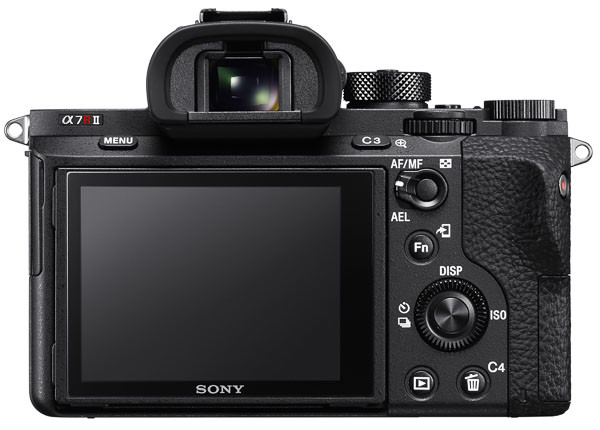
    Secondly, don’t use ‘AF With Shutter’ all the time. It’s convenient sometimes, but every time you take first pressure on the shutter, your E-mount AF lens will initialise a short routine involving focus position recalibration followed by AF. It costs you a variable extra lag before the shutter fires, maybe 1/15th to as long as 1/4 second. Instead, turn this off and AF will default to the centre button of the rear controller (you can change this assignment). You then use this to AF for each change of subject, composition or distance but if nothing’s changed you do not touch it and you do not re-AF. You save battery life, and you eliminate the whole shutter-button-AF delay cycle. You can now capture pictures, using electronic first curtain shutter or silent mode, within 1/20s of pressing the shutter.

    Thirdly, for action shots prefer stops close to full aperture on E-mount lenses for the same reason – the aperture closing action involves a delay you can clearly identify and it’s longer with apertures like f/16. But for maximum reaction speed, use a purely manual lens. The camera knows there’s no aperture to be closed so it misses out that stage. It knows there’s no AF. You can get down to a mere 1/50s shutter lag, faster than most photographers can think. If you are used to older DSLRs which typically fire the shutter between 1/15s and 1/8s after you have pressed the button, you’ll anticipate and fire too early for action shots. Beware the LA-EA adaptors for A-mount lenses as you can’t turn off the aperture lever actuation. These adaptors will always add a delay even if you fit a manual lens.

    I’m not going to delve into how you use focus peaking, magnification, setting the slowest shutter speed to be used by the Auto ISO function and so on. You can find out about this from countless videos and blogs, not all of which feature grandmothers, sucking and eggs. Nor will I recommend JPEG noise reduction and image settings in camera, since I don’t use JPEGs. Remember that your picture style and adjustments, like extra sharpening or contrast, will be reflected in the view you see through the EVF and on-screen. They will affect focus peaking, the histogram and what the image looks like when you use magnified manual focus, too. My tip is ‘stay neutral’ for the best EVF experience and ability to judge and control your results, especially if shooting raw. Camera Standard – boring but it won’t fool you into making adjustments which are not needed.
    smailhomsony16-16-p-h-srgb-web

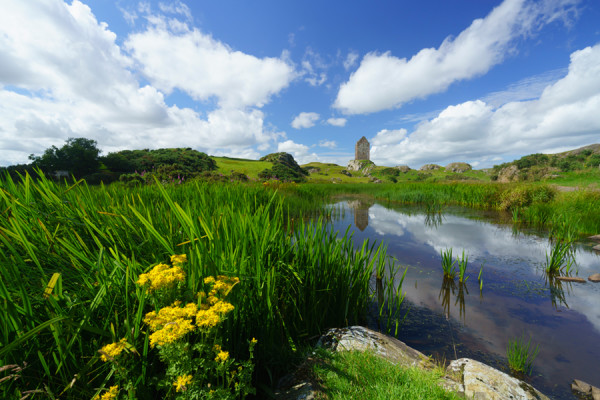
    A 16mm landscape with careful focus checking, and only just enough depth of field even at f/16 if the end result is going to be a 1m wide print

    Read the manual, think about all the functions of the camera, assign your custom buttons, set your parameters. My set-up includes (routinely) Auto ISO 200-1600 because within that range the A7R II files have low noise and good textural sharpness and there’s no great benefit in dropping to 100; AWB; 1/250th slowest shutter speed because the world moves and I’m very happy with 1/250th at ISO 800 rather than 1/125 at ISO 400 for nearly all my walkabout shots; AdobeRGB because I need that but actually sRGB is better matched to the EVF and rear screen, and will give you a more accurate histogram; no JPEGs because I don’t need them; Airplane Mode on; compressed raw unless there’s a really good reason; AF-S and Centre point focus; no face recognition, no smile shutter, no tracking, nothing clever with AF; single shot; generally Aperture Priority but sometimes P, M or very rarely S; Date Format file folders; SS on; electronic first curtain; setting effect on; finder and screen at default brightness and colour; grid lines 3 x 3; focus peaking low, yellow; lens correction enabled; 2 secs review, or none.

    – David Kilpatrick, all images except front and rear views of A7R II body and 70-200mm lens are ©David Kilpatrick/Icon Publications Ltd; please do not link directly to images or copy

    * You need thousands on offer to sell dozens…

  • Canon’s 250 megapixel sensor – the reality

    canonbigsensor Canonbigsensorcamera

    Here’s this morning’s news:

    United Kingdom, Republic of Ireland, 7 September 2015 – Canon Europe, a leader in imaging solutions, today announces that its parent company, Canon Inc., is developing an APS-H-size (approx. 29.2 x 20.2 mm) CMOS sensor incorporating approximately 250 million pixels (19,580 x 12,600 pixels), the world’s highest number of pixels for a CMOS sensor smaller than the size of a 35 mm full-frame sensor.

    When installed in a camera, the newly developed sensor was able to capture images enabling the distinguishing of lettering on the side of an airplane flying at a distance of approximately 18 km from the shooting location

    Well, this is great for the Guinness Book of Records, but you need to put it in context. Sony’s little HX60 – like many other 1/2.3 inch sensor compacts offering 20 megapixel resolution – records 705,000 pixels per square millimetre, 840 pixels per linear millimetre. And where Canon shows a 35mm f/1.4 lens on their prototype camera, the wee Sony goes to 129mm…

    The new Canon sensor records about 450,000 pixels per square millimetre, or 670 pixels per linear millimetre. It’s actually just a little bit higher in resolution than the Sony one-inch sensor used in the Cyber-Shot DSC RX10 and RX100 series (414,000 pixels per square millimetre).

    sonyHX60

    In theory, given the same lens and the ability to aim the camera, a pocket Sony Cyber-shot with backside illuminated CMOS 20.2 megapixel 1/2.3″ sensor can distinguish the lettering on that airplane (or if you’re in Britain, aircraft or aeroplane…) from 22.5 kilometres – and if the Sony G zoom on that HX60 is sharp enough, make that 82km. Unless of course Canon was actually testing with a 600mm f/4 attached. Saying what focal length of lens is used gets rather important when chucking around statistic-examples like this.

    It is very easy to use facts and figures without reference or benchmarks for comparison.

    This is no reason to rain on Canon’s parade, as the video achievement is a major one. Here’s the rest of their tech info, and the important bit is in the last paragraph – Big Brother is droning you… and across that city square, he’ll be able to recognise your eyes and put a bullet in your head with surgical precision.

    With CMOS sensors, increases in pixel counts result in increased signal volume, which can cause such problems as signal delays and slight discrepancies in timing. The new Canon-developed CMOS sensor, however, despite its exceptionally high pixel count, achieves an ultra-high signal readout speed of 1.25 billion pixels per second, made possible through such advancements as circuit miniaturisation and enhanced signal-processing technology. Accordingly, the sensor enables the capture of ultra-high-pixel-count video at a speed of five frames per second. Additionally, despite the exceptionally high pixel count, Canon applied its sensor technologies cultivated over many years to realise an architecture adapted for miniaturised pixels that delivers high-sensitivity, low-noise imaging performance.

    Video footage captured by the camera outfitted with the approximately 250-megapixel CMOS sensor achieved a level of resolution that was approximately 125 times that of Full HD (1,920 x 1,080 pixels) video and approximately 30 times that of 4K (3,840 x 2,160 pixels) video. The exceptionally high definition made possible by the sensor lets users crop and magnify video images without sacrificing image resolution and clarity.

    Canon is considering the application of this technology in specialised surveillance and crime prevention tools, ultra-high-resolution measuring instruments and other industrial equipment, and the field of visual expression.

    Actually, I see a better use. With the camera set up to cover an entire playing field, licenced from Sony the latest ‘Ball-AF’ ball recognition technology will keep focus on the ball and Minolta’s auto zoom framing patent will compose the crop. TV crews will no longer be needed and Rupert Murdoch will be able to install a full system in every stadium!

    – David Kilpatrick

  • Colour and power benefits of Sony 20 megapixel sensor

    A58_wSAL1855-2_TMT_01-1200

    Sony has now released full details of the Alpha 58. Although I don’t think the camera is a game-changer or a vital upgrade for owners of Alpha 55 and 57 (the 55 will leave me only when it expires, with its useful GPS, 6fps/10fps and fully articulated reversible rear screen) there are hidden bonuses for anyone investing in the 58.

    Firstly, the new OLED finder – probably a step better visually – is a league better in power consumption. The penalty for using the EVF instead of the rear LCD on the Alpha 77 and is siblings has been a sharp reduction in the battery stamina for shots, 470 versus 530 official figures for the 77 as an example. The new finder on the 58 gives a reduction for 700 to 690 – not just an overall improvement, but a minimal difference you can ignore. The smaller, non-reversile tilting rear 2.7″ LCD screen may also be less power-hungry than 3″ types.

    Secondly, the camera supports an extended TriLuminos colour gamut. The colour gamut of existing Sony DSLRs and SLTs (and NEX) equipped with HDMI output does not need to exceed AdobeRGB (52.1% of the recognised visual gamut for a ‘Standard Observer’, CIE 1931 vintage). That’s because regular HDTV throws away a stack of this colour, showing only 35.9% of the gamut. That’s why it looks so colourful and bright. The less gamut you show, the brighter and more saturated colours look, for the capabilities of any given display. That may sound the reverse of what you would believe to be the case, until you apply a bit of thought to it.

    CIExy1931_Rec_2020_and_Rec_709

    TriLuminos gamut is the larger triangle, regular HDTV is the smaller (similar to sRGB) while AdobeRGB falls between the two. One colour space you can use when processing raw files – ProPhotoRGB – is so large is exceeds part of the CIE 1931 colour space.

    The TriLuminos gamut is massive. Unlike HDTV, it’s bigger than AdobeRGB and much bigger than regular sRGB (what most computer screens can show). It is 75.8% of the CIE 1931 colour space. That, by the way, is simply a standard based on what a bunch of test subjects could perceive back in 1931 and it’s been criticised for failing to include a wide enough range of genetic backgrounds and learned visual abilities. We all see colour differently (men notably with far less accuracy and discrimination than women, young better than old). If you’re a teenage girl you’ll love the TriLuminos displays. If you’re an old bloke you may not notice…

    Sony claims that the A58 can output colours to the TriLuminos TV sets which show “a dramatically expanded palette of vivid, ultra-realistic colours when videos and still images (are played back)”. In theory since AdobeRGB (offered by all Sony models to date) would already show an expanded palette, this might not mean any big change in the sensor. But TriLuminos uses a colour space which requires 12-bit depth and it can’t be used effectively unless the sensor itself is going beyond the range of AdobeRGB. You can’t get out what you do not put in. Then again, if you’re using a normal printer or computer, you can’t get it out anyway. The camera captures colours you can’t see on its own rear screen, in its viewfinder, on your computer screen or in a print.

    We can therefore deduce that the Bayer filter colours on the new 20 megapixel sensor may be changed, along with the BIONZ processing and the JPEG colour management and compression (after all, the JPEGs will still be 8-bit and going beyond AdobeRGB risks significant banding in smooth graded colours such as skyn blues). Sony say this is the first ever A-mount camera to offer this colour ability. Will DxO Mark have to change their colour measurements to cope with it?

    It is possible the sensor has no colour gamut benefits and that all Sony is doing is expanding AdobeRGB (or the native gamut, which is close enough to AdobeRGB) to fill the wider space of the TriLuminos TV screens, making certain colours appear dramatic in the process, but not realistic. Obviously what we should all hope for is that this improvement starts with the sensor itself.

    Since the NEX-3n (possibly not the camera rumoured by Nippon Camera as NEX-F3R) also offers TriLuminos extended gamut but has a regular 16 megapixel sensor, I’m going to have to wait to see what the real colour science experts at DxO, and our various friends in Russia with special knowledge of this field, find. We do have a resident colour scientist but sadly none of the gear needed to analyse this properly.

    Whatever the case, we appear to be getting a camera whose new 20 megapixel sensor will have significantly better power consumption which almost certainly also means lower heat generation, in turn meaning lower noise and longer ‘safe’ durations for video. Sony is gearing up for the next phase of HDTV – 4K – and the UHDTV beyond this going to 8K. They will eventually need to produce 39 megapixel sensors for uninterpolated 8K, and this will be the target for both APS-C/Super35 and full-frame between now and 2015 when the industry expects to see the first 8K UHDTV retail sales (those in the UK, don’t hold your breath, we’re likely only to get 4K and may not see that become the standard until 2020).

    Nikon has stolen an interesting march by enabling a 1.3X, 15 megapixel crop for 7fps shooting in the new 24 megapixel D7100 – a very useful size almost equal to a 2X crop from full frame. Sony has an unspecified ‘tele-zoom’ feature in the A58 to achieve 8fps. But no-one has so far been able to reveal what the tele-zoom crop is; Sony’s ‘technical specifications’ so far released for the A58 are minimal.

    If the same 24.1 megapixel, AA-filter-less sensor is used in an A78 (as some rumour sites think likely) then perhaps sub-frame readout aka tele-zoom will be implemented on that too.

    The A58 has a new 18-55mm SAM lens with improved build quality and a redesign to the rear element configuration. Sony says this is to avoid ghosting. We’d be surprised if it was not also to change the exit pupil geometry slightly, in order to work better with current and future phase-detection on sensor models.

    – DK


  • The truth about 24 megapixels

    There is a rumour, which the ides of August may stab in the back or elevate to divine truth, that the coming Alpha 77 will have 24 megapixels.

    Because of this rumour, there is a lot of very negative discussion going round to the effect that 24MP on APS-C is far too much and the results will be poor (etc).

    Well, they may be, if you think Canon’s results are poor – you can judge that for yourself, try a Canon. But they do not have 24MP sensors!

    They also do not have APS-C sensors, in the same way that Sony does. They have smaller APS-C sensors with lots of pixels cut off all round the edges. Sony has chunky big APS-C sensors with acres of extra pixels to spare. This is a slight exaggeration of the situation, but hey, I may as well join in the mood of unrestrained opinion!

    Facts: Canon’s 18-megapixel sensor makes images 3456 x 5184 pixels in size (give or take a few, depending on your raw processor). Fact: their smaller 1.6X factor sensor measures 22.3 x 14.9mm. Fact: Canon states it is approximately a 19 megapixel sensor with 18 megapixel final output.

    Facts: Sony’s 16.2 megapixel sensor measures 23.5 x 15.6mm and into this packs 3264 x 4912 pixels (active area).

    If you made a current Canon pixel-pitch sensor the same 1.5X size as a Sony sensor, it would be around 19.7 megapixels active from a 21 megapixel total. If you put Canon pixels on an existing Sony 1.5X sensor, you would be up to 3618 x 5463 pixels and 24 megapixels needs to be 4000 x 6000.

    Clearly it’s not the quantum leap some people think, just a quantum leapfrog over Canon’s back with the benefit of the larger sensor. And it’s worth considering that APS-C covers sensor sizes up to a true 24 x 16mm, for Super-35 video use, and that such sensors have already been made. A few wide-angle lenses and zooms might be a bit tight on the image circle, but that half millimetre one way, 0.4mm the other way, adds up to a surprising number of pixels, enough to take the 19.7 megapixels up to 20.7 megapixels without changing from Canon’s current pixel pitch.

    So don’t panic. The chances are that 24 megapixels on proper, big Sony APS-C will perform very well. If you’ve got the glass and the technique to make it…

    – David Kilpatrick


  • Ricoh seal the future of interchangeable lenses

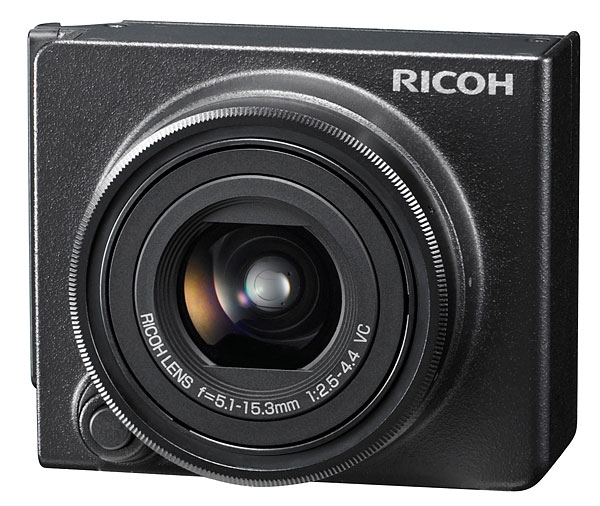
    Tokyo, Japan, November 10, 2009—Ricoh Co., Ltd. (president and CEO: Shiro Kondo) today announced the development and release of the GXR interchangeable unit camera system featuring the world’s smallest and lightest* digital camera with the ability to change lenses.

    NS1_front-web

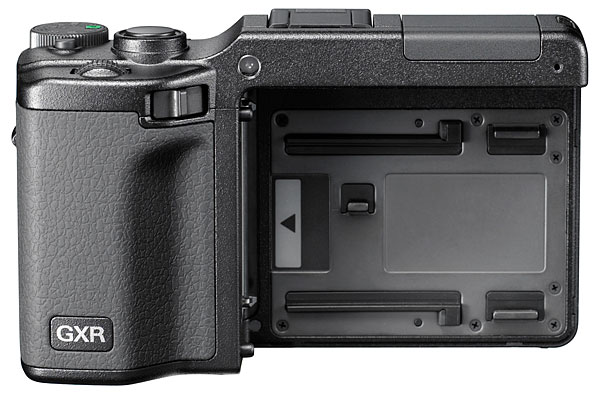
    The new GXR is an interchangeable unit camera system in which lenses are changed by using a slide-in mount system to attach camera units to the body. The lens, image sensor, and image processing engine are integrated into the camera units so the body itself does not contain an image sensor.

    NL2_left_close-web

    With world-leading small size and low weight* enabling easy carrying, the GXR interchangeable unit camera system features a highly rigid magnesium alloy body and multiple camera units that can be changed to best fit the scene to be photographed. You can enjoy easy lens changes as well as amazing image quality and shooting flexibility. Concealing infinite possibilities in its small body, the GXR is a revolutionary camera system that pioneers a new realm of photography.

    Distinctive characteristics:
    1.    Lens, image sensor, and image processing engine comprise an integrated unit which can be changed to match the scene being photographed.
    2.    World’s smallest and lightest* digital camera with interchangeable lenses
    3.    System potential expanded through use of interchangeable units

    Comment from David Kilpatrick:

    Though the Ricoh system as revealed through this press release appears to show only a GR-size body with a zoom lens module suitable for a 2/3rds or slightly smaller imaging sensor, Ricoh has said that sensors right up to the size of APS-C will be built in to further lens modules. The ultra-wide angle version would have an APS-C sensor making similar to the Sigma DP-1. For similar reasons, high ISO and fast lens may be combined with a different size of sensor.

    This is not the first time a digital camera has been designed with lens-sensor modules that could be changed. The Minolta Dimage EX 1500 accepted either a standard zoom module, or a wide-angle module. These included viewfinders (missing from the Ricoh concept, which relies entirely on the rear screen or electronic viewfinders) and had the unique ability to be removed from the camera on a 1.5m long Cable EX. This allowed users to position the wide-angle module inside scale models, doll’s houses and similar subjects to obtain realistic human-scale perspectives. It was only a 1.5 megapixel camera, and Minolta abandoned the concept before they had a chance to develop it further, whatever dPreview said ten years ago:

    http://www.dpreview.com/reviews/minolta1500/

    The technology behind the Ricoh is not all that different from the way consumer digital cameras are constructed anyway. Lenses are already sold sealed to CCD/CMOS sensors, as a single unit. That is how the OEM sources of the lens-sensor modules market them. At photokina, you can see (every two years) a new crop of such modules with both the technical resolution specs of the optical unit and the megapixel count of the sensor, identifiable to this non-Chinese/Japanese reader in the middle of a description which is usually inb Chinese. In 2006, I tracked such a module from its maker to the first camera I could find which used it – a compact branded as Vivitar. The customisation consisted of building any body the maker chose to design, and putting a ring on the lens front labelling it is a high resolution Vivitar lens; actually, it was just a generic lens-sensor assembly from China.

    Ricoh has also pioneered unusual digital designs in the past, including rotatable or detachable lens modules and one of the first viewfinder-less designs, where the viewing screen was intended to be used at waist-level rather than today’s habit of waving the camera in front of your face.

    This differs from anything previously done in the power of the CPU unit in each lens, and control module with screen display and card interface in the host body. It should allow any reasonable pixel count and sensor size to be built in to future optical modules. If the accessories do eventually include dedicated APS-C lens-sensor sealed modules, ‘dust on sensor’ will be one clear benefit (or the lack of it will). A supertelephoto module is also planned which will use a sensor smaller than APS-C.

  • Stunned by the beautiful game

    Peter Crouch cuts a striking figure on the football pitch at the best of times and when recently asked to train the UK Sony ‘Twilight Football’ team ahead of their big game on the 22nd September, the outcome was some simply stunning imagery. (Editor’s note – continue reading to see the ‘stunning imagery’… but have somewhere handy to put the hair you tear out)
    (more…)

  • Sigma’s DP2 – Camera less obscure

    sigmadp2_page_02_image_0001

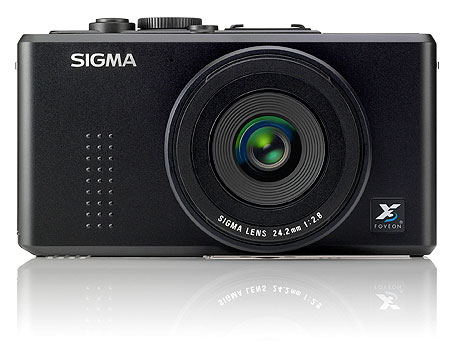
    Sigma’s DP1 was launched in 2007 (with production models available in 2008) to great critical acclaim. occupying a unique spot in the marketplace by combining an APS-C format sensor with a compact “point and shoot” style body. There were a few controversial design choices, and the user and reviewer feedback varied greatly with the time and effort people were prepared to put in learning about the camera, yet the verdicts on the optical performance were united – the DP1 was astounding. Now the DP2 has arrived, with production-quality units available from UK retailers.
    (more…)

  • Sony CMOS sensor background revealed

    There is a white paper by Sony Semiconductor on the imaging processing which I think is in the HX1, http://www.sony.net/Products/SC-HP/cx_news/vol55/pdf/featuring55.pdf. I assume it is the IMX-032 CMOS sensor (http://www.sony.net/Products/SC-HP/cx_news/vol55/np_imx032cqr.html) mated to a CXD4109AGG image processing chip. There seem to be some interesting techniques employed, multi-plane synthesis to combine several frames for low light and HDR capture.
    With the IMX-032, it is interesting to note that the on-board programmable gain amplifier has a gain value of up to 18dB or a factor of 8, so if base ISO is 80, then maximum “analogue” ISO is 640. If we compare the IMX-032 versus Sony’s first column ADC CMOS chip (IMX-017), the IMX-32 has an 11.8% better photo-electron efficiency per unit area (2300e per 1.75 micron square pixel compared to 4500e per 2.5 micron square pixel). Might be a sign that Sony is improving the process and design used to make their CMOS chips.
    The backside illuminated chip is called the IMX-061, http://www.chipworks.com/uploadedFiles/Aliased_Pages/CMOS_ImageSensors_Spotlight/Chipworks%20-%20Sony%20IMX061%20EXR-0902-813.pdf
    6MP and 1.75 micron pixels in ClearVID (45 degree) layout with a 1:6:1 RGB Bayer filter array, sacrificing colour resolution for spatial resolution.
    The Nikon D90 chip is called the IMX-038 (not the IMX-021 as for the A700), so this suggests it has significant revisions compared to the IMX-021 (possibly linked to LiveView and HD Video?).
    – Dr Daniel K. L. Oi

  • Sekonic's camera calibration

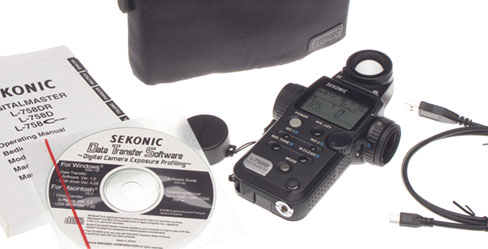
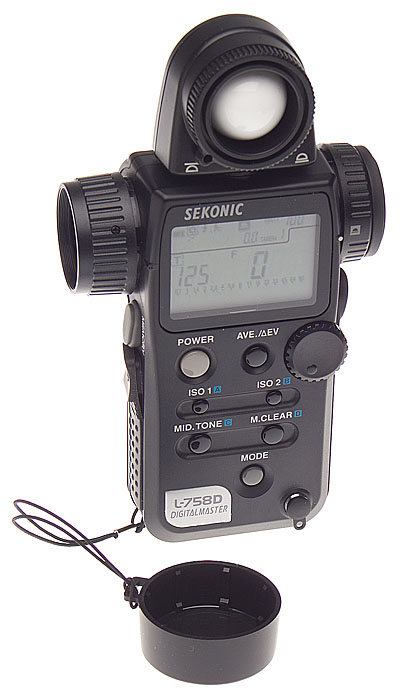
    The Sekonic Digitalmaster L-758D meter offers the solution to variable ISO/EI ratings, and apparent sensitivity and contrast curves variations found in DSLRs. With a USB interface to link it up to a PC/Mac calibration program, the L-758D can remember three different cameras, two types of lighting (ambient or flash) and two measuring methods (incident or reflected) plus a range of ISO values for each of the cameras. There are twelve basic ‘profiles’ that can be stored, and within each profile a range from ISO 3 to ISO 8000.

    The three cameras can include settings on a single camera such as Landscape+sRGB+High Contrast, or Portrait+AdobeRGB+Low Saturation+Low Contrast. More likely, they will be three different generations or even different makes of digital SLR, as many studios keep their last models when buying new ones. They can equally well be films used in a particular film camera, though you need a scanner or a densitometer for calibrating film.

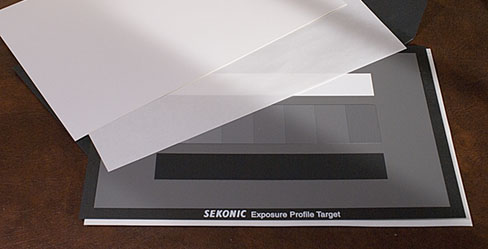
    You might think a meter costing over £300 and coming with a USB cable and a program to do the calibration would include the necessary calibration target. But it’s incapable of actually doing the calibration until you spend another £99.99 on a special A4 grey scale card. Since this report was written, a new more accurate target card has been introduced.

    My sample test target arrived packed in a carton large enough to contain a camera. It is quite fragile, and obviously hand-made using special papers and perhaps a type of inkjet printing for the black patches. You could not just shove this in a camera bag and use it as a grey card. It should be kept in its envelope and stored away from light, like an archival print.

    Sekonic Digitalmaster L-758D basic functions

    The Sekonic appeared to agree with power adjustments made to my Elinchrom flash units, which claim a 1/10th of a stop accuracy.

    I found it to agree with my Minolta Flashmeter IV (which can be user calibrated with a small potentiometer in the back, but only for overall sensitivity). The L-758D should never need to go back to base as a default calibration can be programmed in to it, and this can cope with non-linear responses.

    The L-758D will measure flash versus ambient, compare light source contrasts, or compare incident and digital much like any other modern digital meter. You can take up to nine spot or local measurements, pressing the M memory button after each one, then pressing the Average button for a calculated average exposure. Contrast (they recommend you turn each light off and only measure one at a time) is shown in EV values.

    The reflected light metering via a semi-spot type viewfinder replaces any other type of reflected reading. Unlike the Gossen Spotmaster F you don’t get information shown in the finder, you just use the sighting to make the reading and must then examine the Sekonic’s LCD.

    I found the L-758D to be large, complex and to have too many simultaneous potential functions and too much going on the LCD display with too-small graphics and symbols. It is no doubt versatile but I would be happy with one of the simpler models in the range for the routine metering I need to do.

    Sekonic Digitalmaster L-758D calibration

    If you shoot raw and habitually use a program like Adobe Camera Raw with auto adjustments set you can not use the meter calibration function. It only works if a fixed conversion is used for all files, or you shoot in-camera JPEGs and do not change the contrast or colour space and scene type settings.

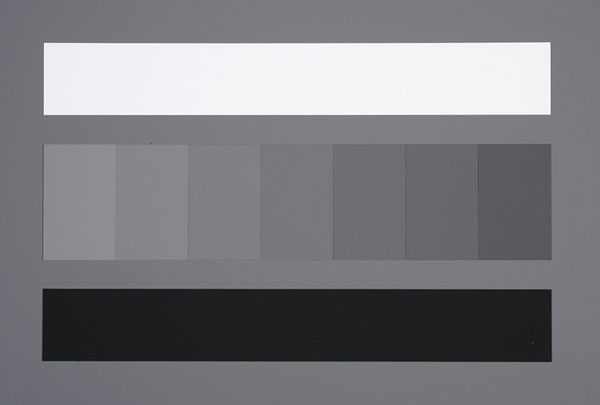
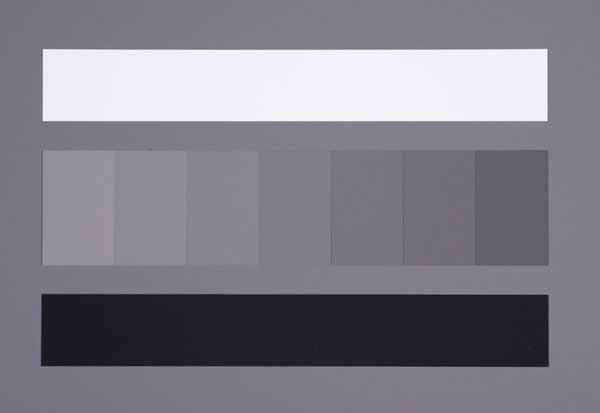
    The plain 18% grey back of the test card is ideal for white balancing and spot metering. The front side has an 18% grey field plus a central array of seven grey patches in 1/6th stop increments, plus and minus 0.5EV either side of 18% grey. Above this is a white strip 2.33 EV brighter than 18%, and below it a black strip 2.33EV darker.

    Sekonic Digitalmaster test file from the Konica Minolta Dynax 5D

    While Sekonic issue LAB values and densities for their £99.99 card (it goes from 3.6% to 90.7% reflectance, densities 0.04 to 1.44 LogD), they disclaim accuracy and say ‘not guaranteed as the performance of exposure profile target’.

    Test file from the Sony Alpha 100 under identical lighting and lens conditions

    In the CD-only user instructions you learn that you can equally well use a Kodak Greyscale and enter the data manually. The software, however, operates only with the Sekonic target for automatic entry. Even this is mainly manual; you must use Photoshop to read off the RGB values from each patch. It will not read a JPEG in the way that camera ICC profiling software reads a target image.

    Light and lens problems

    The recommendation is 45° copy lighting, but the total range of exposures needed to calibrate one DSLR fully is too great for most flash systems at such close range. You need to give plus three to minus three stops either side of a metered exposure, at each ISO speed you want to measure. You should also compare incident and reflected readings, and make tests using both flash and ambient light.

    Even at ISO 400 my Elinchrom 300S heads, turned down to 1/16th power, need a neutral density filter fitting to make a complete set of exposures with ISO 400 and a lens which stops down to ƒ32, when placed five feet either side of the target.

    The biggest speed deviations with DSLRs occur at even higher ISOs. Doing a full calibration is going to be difficult – I did not attempt it because I’m not keeping the meter, and it would have occupied a full half-day or maybe most of a day. But I would have needed some special type of light source to calibrate ISO 1600 or 3200.

    It was useful to find out that two of our DSLRs used with twin wireless flash heads and auto exposure agreed with the Sekonic to within 1/10th of a stop, and one gave 1/3rd of a stop overexposure.

    For quick operation, without a camera calibration for dynamic range and clipping point data, you don’t need the ±3 stops business. You don’t really need the Sekonic card, a good 18% grey card will do fine. Take a shot at each ISO setting, as measured by the Sekonic meter, using a medium lens aperture (least likely to have errors) and medium flashpower if possible (ditto). Open the JPEG in Photoshop, check the Green channel RGB levels in ‘Info’ and this should be within the range 116 to 120 (118 is the target figure). The 1/6th stop steps either side of G=118 are roughly in intervals of 8 on the lighter side and 7 on the darker side but cameras do not have linear response, and Sekonic only work within +/-2 units of the 256 value G scale.

    Once you have completed all your entries, the meter is connected to the computer by its supplied USB cable, and the program recognises its presence. You can then upload the new calibration to the meter. Each calibration is recalled using a memory menu on the L-758D, and you must of course remember which storage register applies to which camera.

    If you think any of this is slightly complicated, don’t buy the Sekonic L-758D for its programmable camera customisation. Buy it for its excellent performance as a multifunction flash/ambient meter with wireless Pocket Wizard compatible triggering upgrade option, and all the features you’ll find in the best meters of the last decade rolled into one.

    The Sekonic L-758D meter is imported to UK by JP Distribution, and has a retail price (without the calibration target or the Pocket Wizard adaptor) of £398.99 including VAT.

    – David Kilpatrick FBIPP Hon FMPA