Tag: low light

  • A7RII shoots in Iceland’s glacier caves

    Sony camera sensor technology enables a closer look at some of Mother Nature’s rarest sights that could not previously have been photographed in this way

     Story: Sony Corporation UK PR release with high resolution images and full metadata – click to view. All images are copyright and may not be copied or reproduced.

    Wednesday 25th November 2015, Vatnajökull national park, Iceland: Photographer Mikael Buck with assistance from renowned local Icelandic guide Einar Runar Sigurdsson, explored the frozen world of Vatnajökull glacier in Iceland using Sony’s world first back-illuminated full-frame sensor – which features in the ?7R II camera. His images were taken without use of a tripod or any image stitching techniques in photoshop. This was made possible through Sony’s new sensor technology, allowing incredibly detailed low-light hand held photography. Previously images this detailed would have required carrying bulky equipment to the caves, some of which can require hiking and climbing over a glacier for up to two hours to to access. This picture: Inside the 'ABC cave' - which stands for Amazing Blue Cave. Guide Einar Runar Sigurdsson is seen taking a photo at the entrance to the cave PR Handout - editorial usage only. Photographer's details not to be removed from metadata or byline. For further information please contact Rochelle Collison at Hope & Glory PR on 020 7014 5306 or rochelle.collison@hopeandglorypr.com Copyright: © Mikael Buck / Sony 07828 201 042 / mikaelbuck@gmail.com
    Inside the ‘ABC cave’ – which stands for Amazing Blue Cave. Guide Einar Runar Sigurdsson is seen taking a photo at the entrance to the cave. Copyright: © Mikael Buck / Sony

    The enigmatic beauty of the caves of Vatnajokull, one of the largest glaciers in Europe, is revealed in all its frozen, icy splendour through astoundingly sharp and detailed photography.

    The sensor sits at the heart of every camera and defines its capability to capture the amount of light and detail that goes into photographs. Advancements in Sony’s sensor technology are enabling photographers to take pin-sharp photographs in the most challenging low light conditions with the latest cameras from Sony, which formerly would not have been possible.
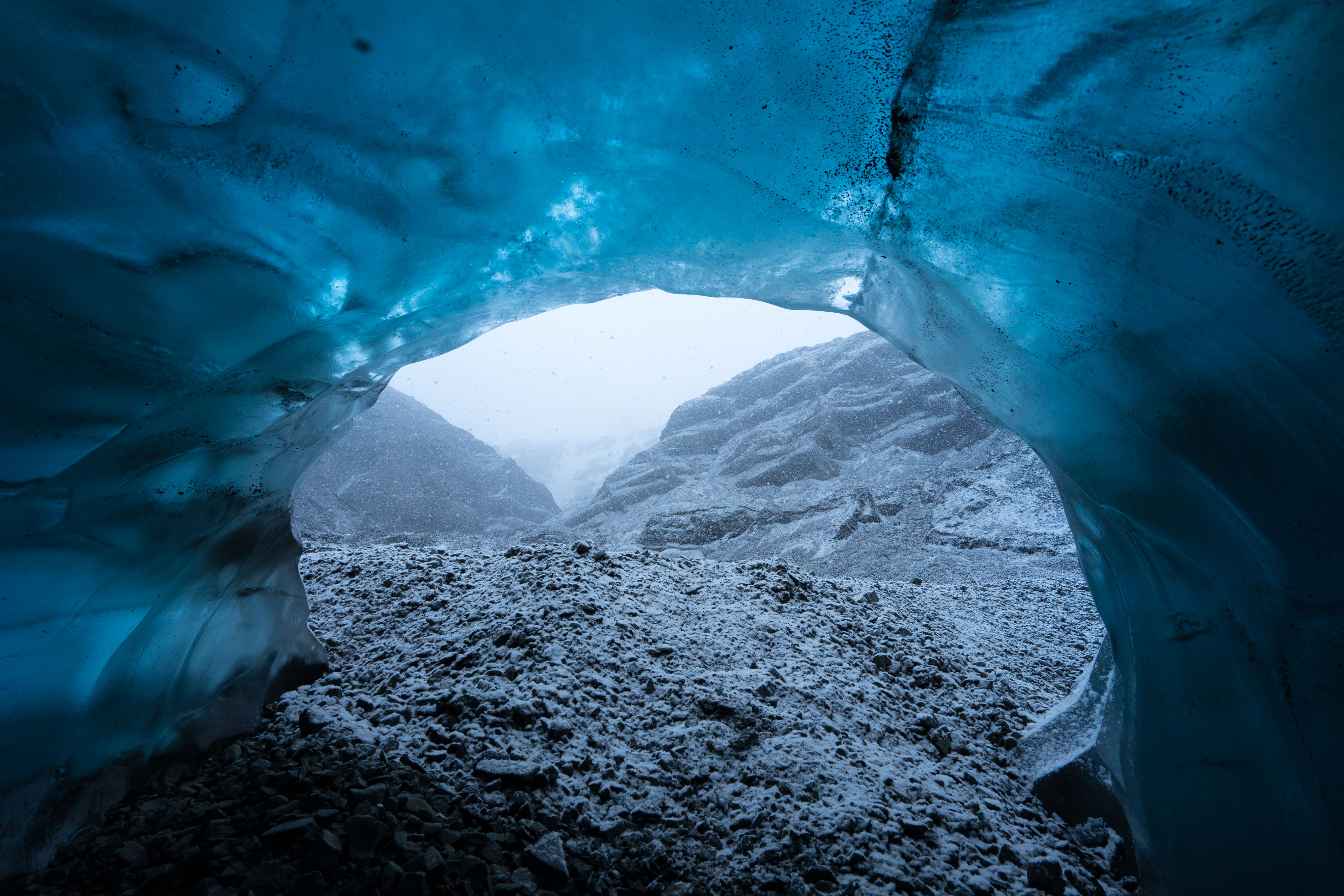
    Wednesday 25th November 2015, Vatnajökull national park, Iceland: Photographer Mikael Buck with assistance from renowned local Icelandic guide Einar Runar Sigurdsson, explored the frozen world of Vatnajökull glacier in Iceland using Sony’s world first back-illuminated full-frame sensor – which features in the ?7R II camera. His images were taken without use of a tripod or any image stitching techniques in photoshop. This was made possible through Sony’s new sensor technology, allowing incredibly detailed low-light hand held photography. Previously images this detailed would have required carrying bulky equipment to the caves, some of which can require hiking and climbing over a glacier for up to two hours to to access. This picture: Inside the 'ABC cave' - which stands for Amazing Blue Cave. This view shows a snow storm outside the entrance to the cave. PR Handout - editorial usage only. Photographer's details not to be removed from metadata or byline. For further information please contact Rochelle Collison at Hope & Glory PR on 020 7014 5306 or rochelle.collison@hopeandglorypr.com Copyright: © Mikael Buck / Sony 07828 201 042 / mikaelbuck@gmail.com
    A snow storm outside the entrance to the cave. Copyright: © Mikael Buck / Sony

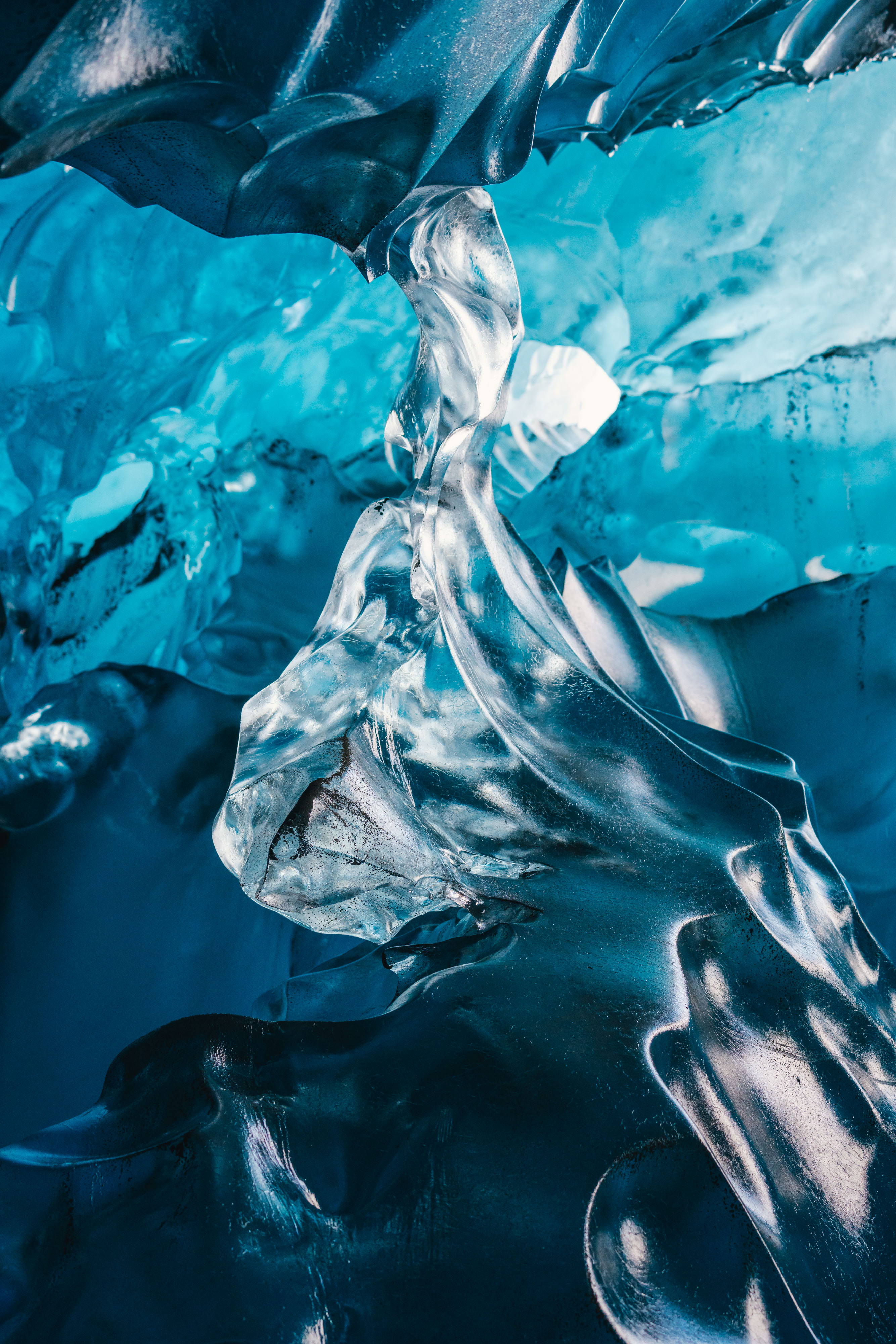
    Stunning photo series heroes Iceland’s otherworldly ice caverns, with the cave’s bright blue and bubble-like walls resembling an almost underwater scene. Images also capture flowing waterfalls, and crystal clear crevasses and icy tunnels within the frosty fortress.

    Wednesday 25th November 2015, Vatnajökull national park, Iceland: Photographer Mikael Buck with assistance from renowned local Icelandic guide Einar Runar Sigurdsson, explored the frozen world of Vatnajökull glacier in Iceland using Sony’s world first back-illuminated full-frame sensor – which features in the ?7R II camera. His images were taken without use of a tripod or any image stitching techniques in photoshop. This was made possible through Sony’s new sensor technology, allowing incredibly detailed low-light hand held photography. Previously images this detailed would have required carrying bulky equipment to the caves, some of which can require hiking and climbing over a glacier for up to two hours to to access. This picture: Looking up from inside the 'ABC cave' - which stands for Amazing Blue Cave. Guide Einar Runar Sigurdsson can be seen ice climbing on the glacier outside. PR Handout - editorial usage only. Photographer's details not to be removed from metadata or byline. For further information please contact Rochelle Collison at Hope & Glory PR on 020 7014 5306 or rochelle.collison@hopeandglorypr.com Copyright: © Mikael Buck / Sony 07828 201 042 / mikaelbuck@gmail.com
    Looking up from inside the ‘ABC cave’. Guide Einar Runar Sigurdsson can be seen ice climbing on the glacier outside. Copyright: © Mikael Buck / Sony

    This incredible photo series displays the immense intricacies of never-before-seen ice caverns in Vatnajokull, Iceland – only made possible through Sony’s new sensor technology, allowing incredibly detailed low-light photography.

    Wednesday 25th November 2015, Vatnajökull national park, Iceland: Photographer Mikael Buck with assistance from renowned local Icelandic guide Einar Runar Sigurdsson, explored the frozen world of Vatnajökull glacier in Iceland using Sony’s world first back-illuminated full-frame sensor – which features in the ?7R II camera. His images were taken without use of a tripod or any image stitching techniques in photoshop. This was made possible through Sony’s new sensor technology, allowing incredibly detailed low-light hand held photography. Previously images this detailed would have required carrying bulky equipment to the caves, some of which can require hiking and climbing over a glacier for up to two hours to to access. This picture: Inside the 'ABC cave' - which stands for Amazing Blue Cave. PR Handout - editorial usage only. Photographer's details not to be removed from metadata or byline. For further information please contact Rochelle Collison at Hope & Glory PR on 020 7014 5306 or rochelle.collison@hopeandglorypr.com Copyright: © Mikael Buck / Sony 07828 201 042 / mikaelbuck@gmail.com
    Inside the ‘ABC cave’. Copyright: © Mikael Buck / Sony

    Each year, the Vatnajokull glacier shifts and changes, revealing complex cave systems that are there for only a matter of weeks before metamorphosing again.

    Wednesday 25th November 2015, Vatnajökull national park, Iceland: Photographer Mikael Buck with assistance from renowned local Icelandic guide Einar Runar Sigurdsson, explored the frozen world of Vatnajökull glacier in Iceland using Sony’s world first back-illuminated full-frame sensor – which features in the ?7R II camera. His images were taken without use of a tripod or any image stitching techniques in photoshop. This was made possible through Sony’s new sensor technology, allowing incredibly detailed low-light hand held photography. Previously images this detailed would have required carrying bulky equipment to the caves, some of which can require hiking and climbing over a glacier for up to two hours to to access. This picture: Inside the 'ABC cave' - which stands for Amazing Blue Cave PR Handout - editorial usage only. Photographer's details not to be removed from metadata or byline. For further information please contact Rochelle Collison at Hope & Glory PR on 020 7014 5306 or rochelle.collison@hopeandglorypr.com Copyright: © Mikael Buck / Sony 07828 201 042 / mikaelbuck@gmail.com
    Inside the ‘ABC cave’. Copyright: © Mikael Buck / Sony

    Photographer Mikael Buck and renowned local guides Einar Runar Sigurdsson and Helen Maria explored the frozen world using Sony’s latest digital cameras including the α7R II featuring the world first back-illuminated full-frame sensor which brings together ultra-high resolution and ultra-high sensitivity, the  RX10 II and RX100 IV which feature the world’s first 1.0 type stacked Exmor RS CMOS sensor that truly shine in low-light and high contrast conditions. The images were taken without the use of any external sources – just the natural light that filters through the ice caves.
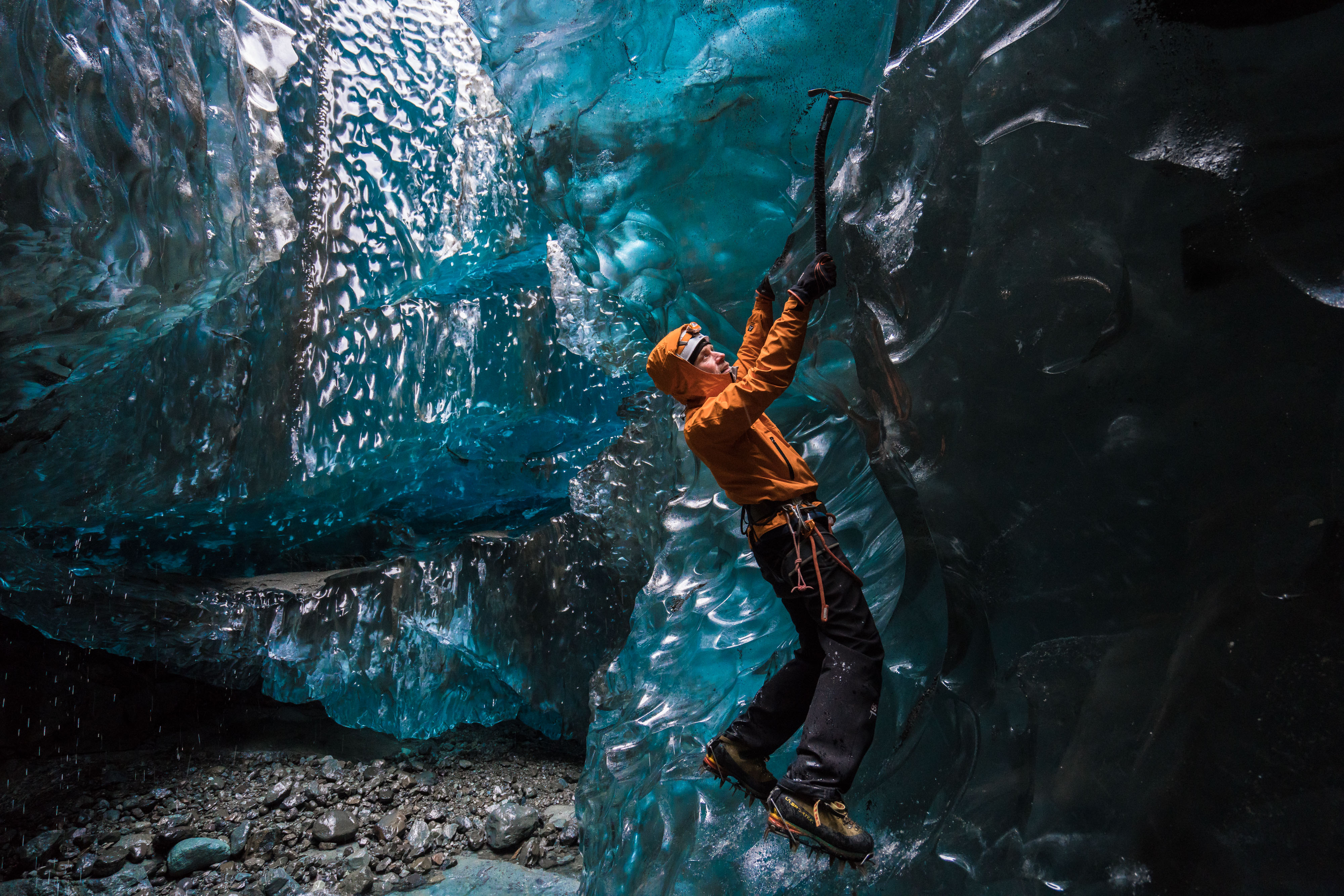
    Wednesday 25th November 2015, Vatnajökull national park, Iceland: Photographer Mikael Buck with assistance from renowned local Icelandic guide Einar Runar Sigurdsson, explored the frozen world of Vatnajökull glacier in Iceland using Sony’s world first back-illuminated full-frame sensor – which features in the ?7R II camera. His images were taken without use of a tripod or any image stitching techniques in photoshop. This was made possible through Sony’s new sensor technology, allowing incredibly detailed low-light hand held photography. Previously images this detailed would have required carrying bulky equipment to the caves, some of which can require hiking and climbing over a glacier for up to two hours to to access. This picture: Guide Einar Runar Sigurdsson is seen ice climbing inside the 'Waterfall Cave' PR Handout - editorial usage only. Photographer's details not to be removed from metadata or byline. For further information please contact Rochelle Collison at Hope & Glory PR on 020 7014 5306 or rochelle.collison@hopeandglorypr.com Copyright: © Mikael Buck / Sony 07828 201 042 / mikaelbuck@gmail.com
    Guide Einar Runar Sigurdsson is seen ice climbing inside the ‘Waterfall Cave’. Copyright: © Mikael Buck / Sony

    Within the photo series, barren caves have been brought to life, making visible the intricate curves of the natural sculptures, the delicate structure of its icicles, and the smooth and the marble-like texture of the cavern walls, which are formed through constant movement. Images capture the misty waterways that flow within the frosty fortress, as well as the ice-cold waterfalls that cascade down and transform the cavern’s bright blue walls. Buck has also captured images of a skilled local climber ascending the icy walls to showcase the scale of the majestic blue cave.

    Wednesday 25th November 2015, Vatnajökull national park, Iceland: Photographer Mikael Buck with assistance from renowned local Icelandic guide Einar Runar Sigurdsson, explored the frozen world of Vatnajökull glacier in Iceland using Sony’s world first back-illuminated full-frame sensor – which features in the ?7R II camera. His images were taken without use of a tripod or any image stitching techniques in photoshop. This was made possible through Sony’s new sensor technology, allowing incredibly detailed low-light hand held photography. Previously images this detailed would have required carrying bulky equipment to the caves, some of which can require hiking and climbing over a glacier for up to two hours to to access. This picture: Guide Einar Runar Sigurdsson is seen ice climbing inside the 'Waterfall Cave' PR Handout - editorial usage only. Photographer's details not to be removed from metadata or byline. For further information please contact Rochelle Collison at Hope & Glory PR on 020 7014 5306 or rochelle.collison@hopeandglorypr.com Copyright: © Mikael Buck / Sony 07828 201 042 / mikaelbuck@gmail.com
    Sigurdsson ice climbing inside the ‘Waterfall Cave’. Copyright: © Mikael Buck / Sony

    Helen Maria of Local Guide – Iceland’s oldest mountain guiding company – comments: “I have been exploring these ice caves for years with Local Guide. Being here in them is a truly wonderful opportunity. Knowing you’re experiencing such a fleeting phenomenon makes it even more special – the opportunity to help capture this nature in all its intricate glory and now in more detail than ever thanks to Sony’s sensor technology is a truly magical experience. This series of photographs has done it justice like never before, and I hope many more people will be spurred on to visit as a result.”

    Wednesday 25th November 2015, Vatnajökull national park, Iceland: Photographer Mikael Buck with assistance from renowned local Icelandic guide Einar Runar Sigurdsson, explored the frozen world of Vatnajökull glacier in Iceland using Sony’s world first back-illuminated full-frame sensor – which features in the ?7R II camera. His images were taken without use of a tripod or any image stitching techniques in photoshop. This was made possible through Sony’s new sensor technology, allowing incredibly detailed low-light hand held photography. Previously images this detailed would have required carrying bulky equipment to the caves, some of which can require hiking and climbing over a glacier for up to two hours to to access. This picture: Guide Helen Maria is pictured inside the waterfall cave PR Handout - editorial usage only. Photographer's details not to be removed from metadata or byline. For further information please contact Rochelle Collison at Hope & Glory PR on 020 7014 5306 or rochelle.collison@hopeandglorypr.com Copyright: © Mikael Buck / Sony 07828 201 042 / mikaelbuck@gmail.com
    Guide Helen Maria is pictured inside the waterfall cave. Copyright: © Mikael Buck / Sony

    Yann Salmon Legagneur, Head of Product Marketing, Digital Imaging for Sony Europe, commented, “These images wouldn’t have been possible a few years ago without having to take bulky kit, lighting and other accessories to the glacier – all of which would have weighed down a photographer. The sensors inside Sony’s α7 and RX cameras ensure that all a photographer needs is a small form factor camera and with its low light photography capabilities and they can then capture incredible images like these.”

    Wednesday 25th November 2015, Vatnajökull national park, Iceland: Photographer Mikael Buck with assistance from renowned local Icelandic guide Einar Runar Sigurdsson, explored the frozen world of Vatnajökull glacier in Iceland using Sony’s world first back-illuminated full-frame sensor – which features in the ?7R II camera. His images were taken without use of a tripod or any image stitching techniques in photoshop. This was made possible through Sony’s new sensor technology, allowing incredibly detailed low-light hand held photography. Previously images this detailed would have required carrying bulky equipment to the caves, some of which can require hiking and climbing over a glacier for up to two hours to to access. This picture: Inside the 'ABC cave' - which stands for Amazing Blue Cave. Guide Einar Runar Sigurdsson is seen taking a photo at the entrance to the cave PR Handout - editorial usage only. Photographer's details not to be removed from metadata or byline. For further information please contact Rochelle Collison at Hope & Glory PR on 020 7014 5306 or rochelle.collison@hopeandglorypr.com Copyright: © Mikael Buck / Sony 07828 201 042 / mikaelbuck@gmail.com
    Sigurdsson is seen taking a photo at the entrance to the ABC cave. Copyright: © Mikael Buck / Sony

    As the global number one in Sensor technology and production with approximately 50% global market share, Sony is proud to continue to push through the perceived boundaries of sensor development and thanks to advancements in this field, images like this are now possible. Sensors are such a vital part of camera performance and being able to release two new advanced sensors this year is enabling Sony to continue its growth in the digital imaging industry.

    Wednesday 25th November 2015, Vatnajökull national park, Iceland: Photographer Mikael Buck with assistance from renowned local Icelandic guide Einar Runar Sigurdsson, explored the frozen world of Vatnajökull glacier in Iceland using Sony’s world first back-illuminated full-frame sensor – which features in the ?7R II camera. His images were taken without use of a tripod or any image stitching techniques in photoshop. This was made possible through Sony’s new sensor technology, allowing incredibly detailed low-light hand held photography. Previously images this detailed would have required carrying bulky equipment to the caves, some of which can require hiking and climbing over a glacier for up to two hours to to access. This picture: The view on top of the Vatnajökull glacier whilst hiking to access the caves PR Handout - editorial usage only. Photographer's details not to be removed from metadata or byline. For further information please contact Rochelle Collison at Hope & Glory PR on 020 7014 5306 or rochelle.collison@hopeandglorypr.com Copyright: © Mikael Buck / Sony 07828 201 042 / mikaelbuck@gmail.com
    The view on top of the Vatnajökull glacier whilst hiking to access the caves. Copyright: © Mikael Buck / Sony

    In addition to being able to capture incredibly detailed low-light photography, sensor technology featured in the RX10 II and RX100 IV cameras also allows photographers, hobbyist and professionals alike, to capture moments not always visible to the human eye, with 40X super slow motion video capture at up to 1000fps.

    Wednesday 25th November 2015, Vatnajökull national park, Iceland: Photographer Mikael Buck with assistance from renowned local Icelandic guide Einar Runar Sigurdsson, explored the frozen world of Vatnajökull glacier in Iceland using Sony’s world first back-illuminated full-frame sensor – which features in the ?7R II camera. His images were taken without use of a tripod or any image stitching techniques in photoshop. This was made possible through Sony’s new sensor technology, allowing incredibly detailed low-light hand held photography. Previously images this detailed would have required carrying bulky equipment to the caves, some of which can require hiking and climbing over a glacier for up to two hours to to access. This picture: On top of the Vatnajökull glacier PR Handout - editorial usage only. Photographer's details not to be removed from metadata or byline. For further information please contact Rochelle Collison at Hope & Glory PR on 020 7014 5306 or rochelle.collison@hopeandglorypr.com Copyright: © Mikael Buck / Sony 07828 201 042 / mikaelbuck@gmail.com
    On top of the Vatnajökull glacier. Copyright: © Mikael Buck / Sony
    Wednesday 25th November 2015, Vatnajökull national park, Iceland: Photographer Mikael Buck with assistance from renowned local Icelandic guide Einar Runar Sigurdsson, explored the frozen world of Vatnajökull glacier in Iceland using Sony’s world first back-illuminated full-frame sensor – which features in the ?7R II camera. His images were taken without use of a tripod or any image stitching techniques in photoshop. This was made possible through Sony’s new sensor technology, allowing incredibly detailed low-light hand held photography. Previously images this detailed would have required carrying bulky equipment to the caves, some of which can require hiking and climbing over a glacier for up to two hours to to access. This picture: Inside the 'ABC cave' - which stands for Amazing Blue Cave. For further information please contact Rochelle Collison at Hope & Glory PR on 020 7014 5306 or rochelle.collison@hopeandglorypr.com Copyright: © Mikael Buck / Sony 07828 201 042 / mikaelbuck@gmail.com
    Amazing Blue Cave. Copyright: © Mikael Buck / Sony
    To enquire about other uses, reproduction rights or prints email [email protected]
  • Stunned by the beautiful game

    Peter Crouch cuts a striking figure on the football pitch at the best of times and when recently asked to train the UK Sony ‘Twilight Football’ team ahead of their big game on the 22nd September, the outcome was some simply stunning imagery. (Editor’s note – continue reading to see the ‘stunning imagery’… but have somewhere handy to put the hair you tear out)
    (more…)

  • Shaken… and slightly stirred

    I CARRY a camera everywhere, because you never know when a good photograph is round the corner. I also just grab the camera from my office, and rarely think to check the settings. Today, I managed to shoot everything with Super Steady Shot (Anti-Shake) carefully switched off on my Alpha 100.

    In the studio, or when making tests, I may switch SSS off. It’s not needed or desirable with tripod shots, or flash. In fact it can spoil tripod shots by reacting incorrectly to reflected vibrations. Now I have been reminded that I should switch it back on the moment the tripod or flash shoot is finished. That’s what I mean by slightly stirred. Memory stirred. Or intentions. Whether I will remember and intend is another matter.

    I only photographed three situations when spending a couple of hours in Edinburgh. I parked near the mosque, which happens to be surrounded by good cafés and close to a music shop I wanted to visit. Ten minutes waiting for good sun on the mosque itself failed me, but in walking on my route I passed a university building with carefully preserved old signs:

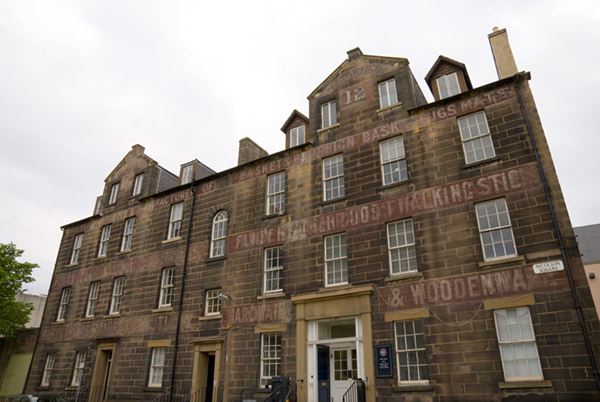
    Signs of the past

    This is not a ‘good’ photograph but like many I take, it may have a value to someone writing about architecture, history, or conservation. I’ll revisit it on a better day. It was taken at 16mm on the CZ 16-80mm, carefully focusing at 35mm before zooming back to 16mm, as the lens never focuses accurately at the extreme wide end on the A100. The exposure was a very safe 1/100th at f/10. Even so, the image is not as sharp as I have come to expect from routine hand-held shooting with SSS enabled.

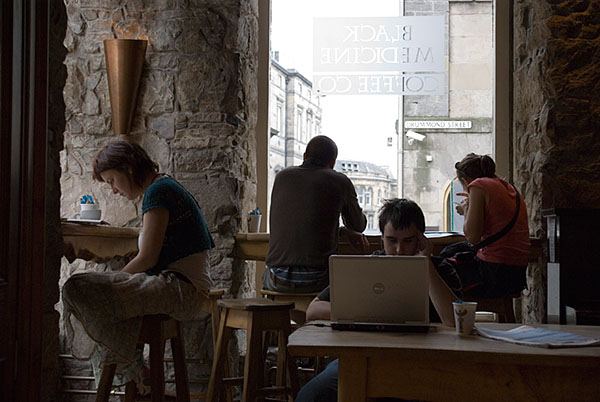
    In a café for a quick lunch, the scene in front of me struck me as pretty good with one internet wifi connection user concentrating on his laptop. A longish first exposure reminded me to switch to ISO 400, but I didn’t check the SSS switch. Nor did I manage to focus any of four different shots as intended. The AF despite being set for centre focus tended to hit the background scene. The CZ, despite being the best lens around optically, is not making friends with me right now.

    Laptop cafe group

    While the lighting is natural, it’s not what I needed for an internet café scene which might find a use in my markets – serious newspapers, magazines, and books or websites wanting natural-looking real life shots. The Black Medicine Coffee Co offers entirely free wifi, and I guess a return visit from time to time might produce a better image. I am happy with the compositional flow, the relative positions of the heads (the elements to which the eye is drawn) but it’s not the best shot, just the best focus.

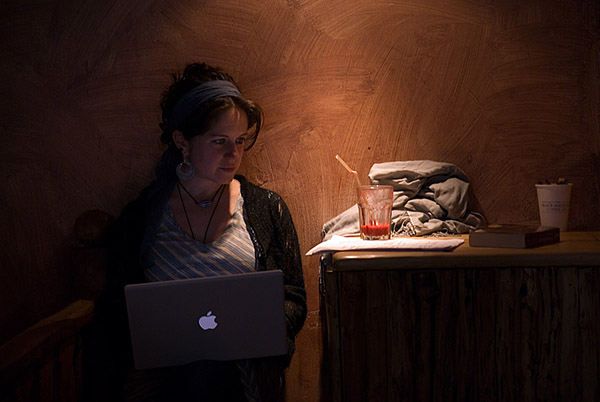
    However, on departing I visited the subterranean loo (Edinburgh basements generally provide loo space) and passed a truly classic composition, partly created by the café’s own decor and lighting, and partly by a perfectly poised Mac Powerbook user with a glowing Apple symbol and a scatter of still-life elements in best Dutch school arrangement!

    Laptop cafe lady

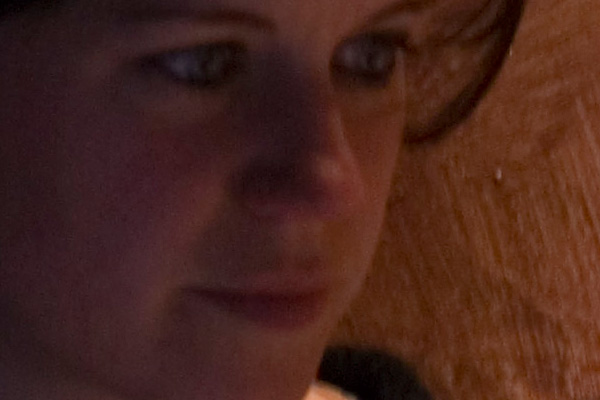
    While I will shoot a group of people without asking, I won’t aim my lens at a single individual without the courtesy of asking permission. There was no problem apart from folk milling about between my lens and my sitter, who was asked just to keep working and not worry about the camera. But, aware that I should work quickly and not take endless pix, I once again failed to spot the SSS was turned off. The exposure was running at around 1/25th wide open, at the long end of the lens. In Leica or Minolta CLE days I would not have thought twice, I could hand-hold this, but I would have taken great care. Breathe in, calm the body’s natural sway, squeeze the shutter smoothly. SSS has made me careless. Also, the small viewfinder of modern DSLRs has made me less aware of focus. For reasons everyone will know, the central focus locked on to the wall, not my subject. I thought I had locked and recomposed, but perhaps the lens made a final tweak and revised my setting. At f/4.5, this was enough to take the edge off the shot. Like it or not, there was shake. All three frames I shot showed shake, one so badly it was not usable. The chosen shot here was on the verge of being unusable when enlarged to A3+ picture library dimensions:

    Section of laptop cafe

    This gives a very unfair view of the shot, since it is enlarged to 17.5 megapixels, and when output to a size suitable for a 6 x 4 inch print it’s as sharp as you could want. We used to try to judge images from 6 x 4 prints. Now, we really can see that bit of directional shake and that focus error. Even so, with the softness and slight ISO 400 noise, it has a painterly look and will go in the library.

    But can anything better be done?

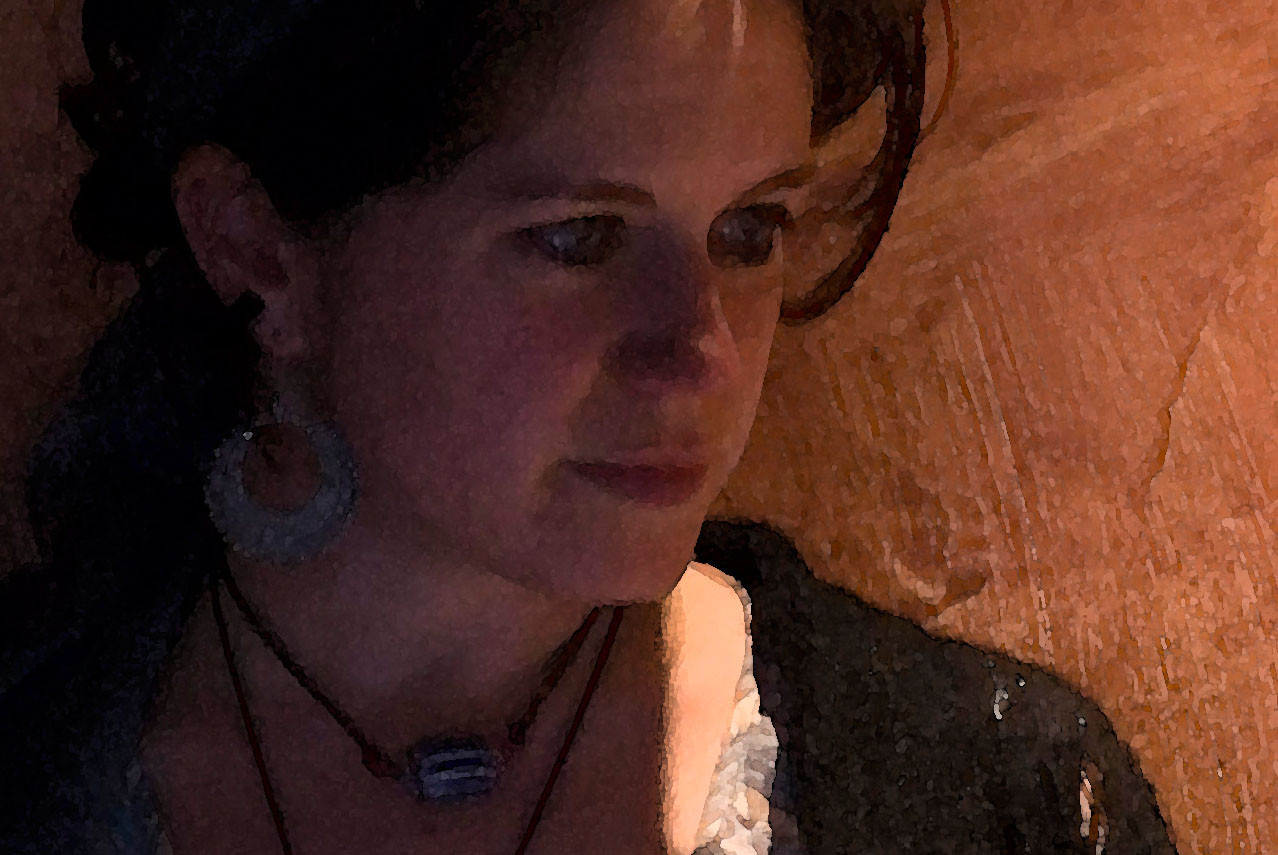
    Photoshop provides an answer. One of the very oldest Artistic Effect filters, Watercolour Paint, is a favourite of mine for prints on watercolour type paper from images which are small, or have focus errors, or noise. It quantises the image into blobby posterized zones with ragged bleed edges and a random overlap. Applied to a shot like this, it also creates perfectly sharp edges to the face and hair, while brightening the eye-whites and the Apple logo. The overall image processed through the Watercolour Paint filter (settings 9, 1, 0) loses any of the distracting imbalance between the sharper painted wall and the portrait element. It also looks uncannily like many of the real art prints on show just over the road from the café! Slightly Vettriano in feel, with solid blacks and simple outlines. Here is a section, after watercolour processing:

    Watercolour at 600

    If you click the photo, you will open a full sized clip (at the size suitable for A3 to A2 printing on watercolour paper). The artificial edges created by the watercolour filter are most effective, and it handles the colour in skin tones well despite producing a dense black for the hair and charcoal shades for the shoulder wrap.

    Obviously there are very few images where this is appropriate treatment, and it is an off-the shelf filter, which makes it not really your own creative work. There are some other options – programs like Painter, and sets of special effect filters – but the same can be said of these as well. In the end, if the process applied to an image makes it serve its purpose better or enhances it visually, reasonable productivity dictates that it’s OK to use ready made shortcuts.

    And one shortcut I must remember not to take is to grab the camera without checking every single setting – including the SSS switch. It is just too easy to shoot all day with it off. In my experience SSS will sharpen up many shots at normal shutter speeds, let alone those at hard to handhold settings. I didn’t lose my shot, but it could have been better.

    As a footnote, in sending my subject a copy of her portrait, I realised we had spoken before (Edinburgh is a very small place) – at a Friends of the Earth Scotland booth during one of the many green festivals or events which happen in the city.

    – David