Category: Cameras (Digital)

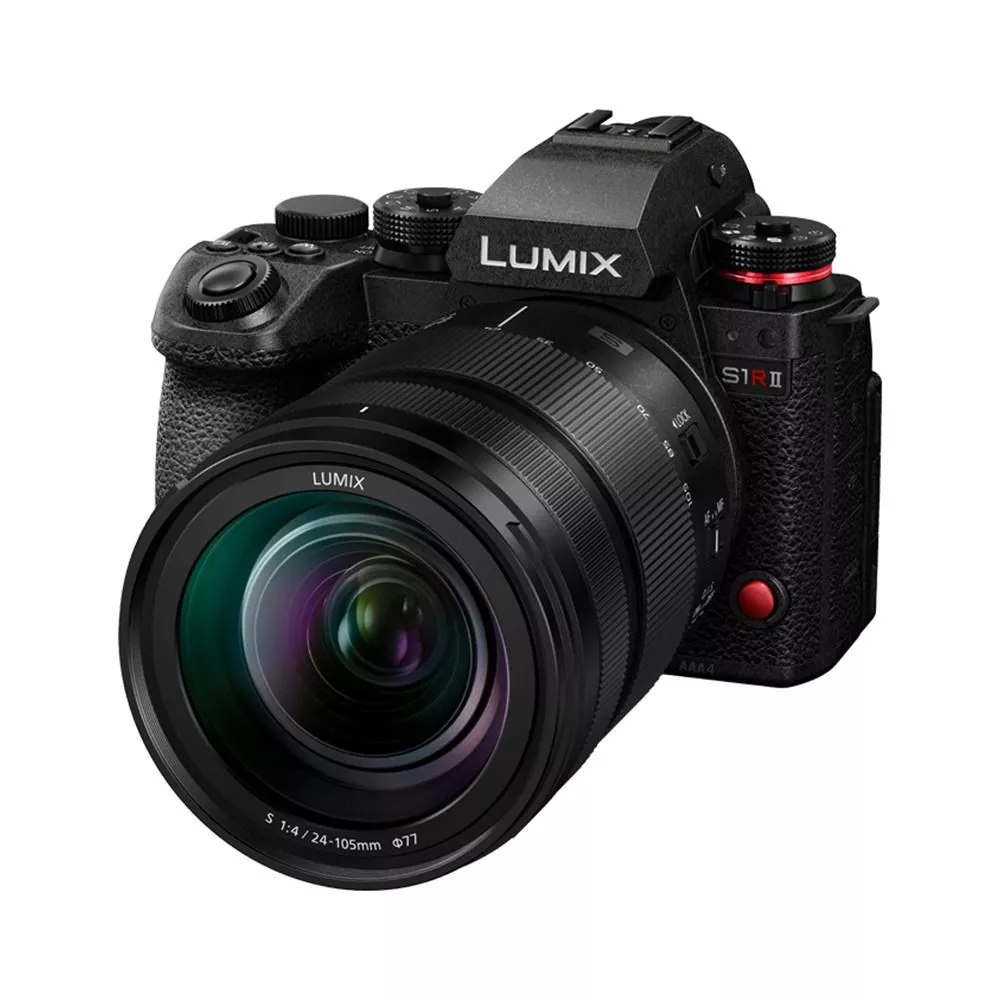
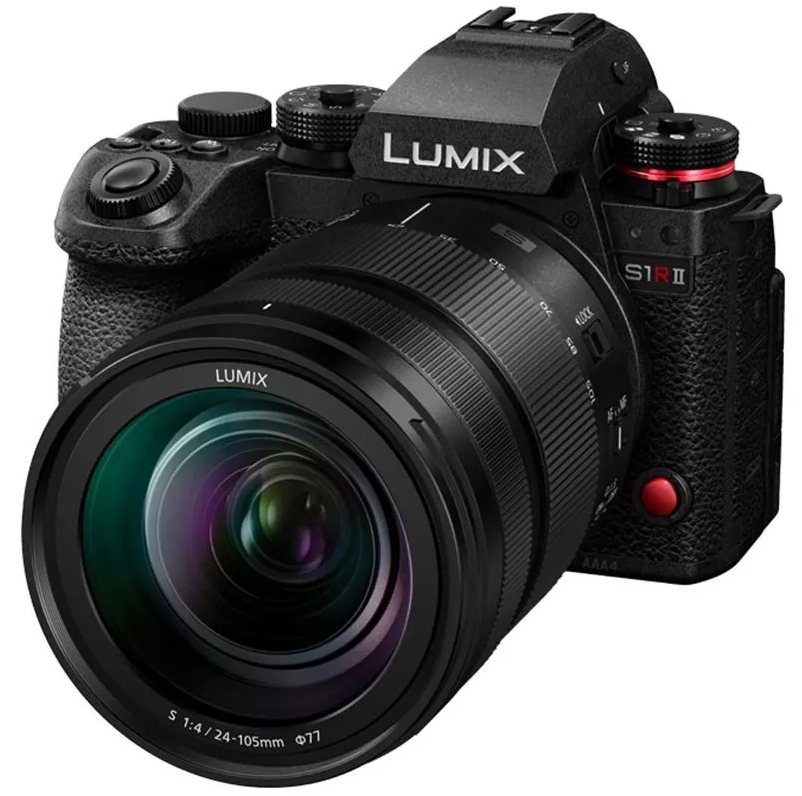
  • Panasonic Lumix S1R II – 44MP full frame

    Panasonic Lumix S1R II – 44MP full frame

    • Successor to the original Panasonic full-frame flagship body
    • New 44.3MP sensor for high dynamic range and 8K video
    • Promises impressive low-light ability plus 177MP multishot capture

    The Panasonic Lumix S1R II, announced Feb 25 2025, features a new 44.3MP sensor offering high-resolution imaging with a wide dynamic range (14-stop V-Log/V-Gamut) and impressive low-light performance.

    Powered by the latest L2 engine, it balances high resolution with low noise, offering a flexible ISO range of 80-51,200 (expandable to 40-102,400). It’s equipped with advanced 779-point phase-detection AF and AI-driven subject recognition.

    The Panasonic S1R II also offers a 177MP high-resolution mode and supports 8K video recording, as well as 6.4K 30p 10-bit Open Gate, making it a powerful tool for both photographers and filmmakers.

    Panasonic S1R II: price and spec

    • New 44.3MP full-frame sensor
    • 14-stop dynamic range
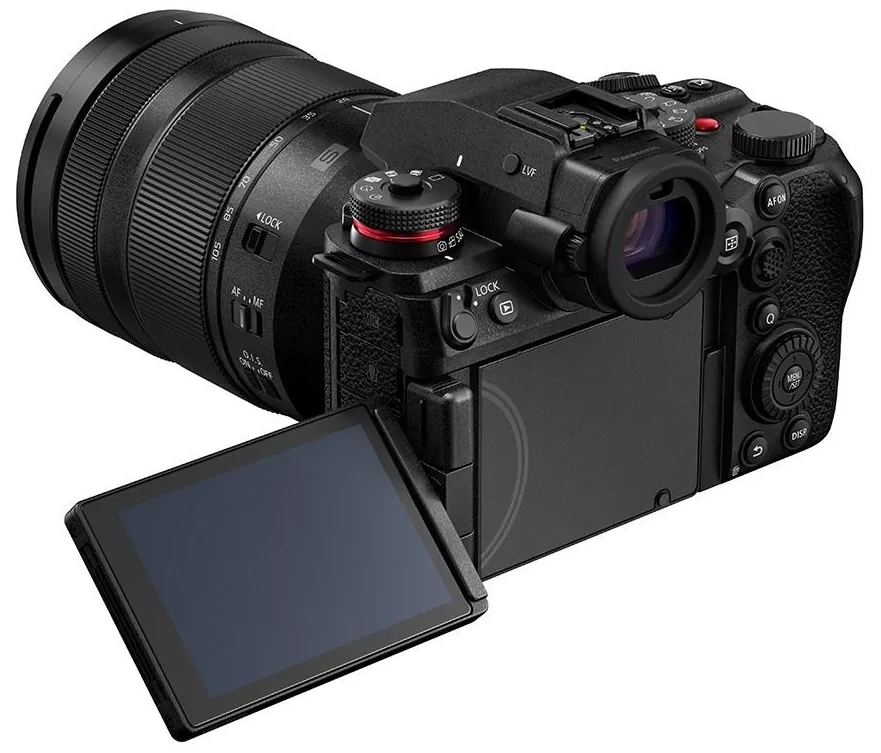
    • Fully articulated rear screen
    • Latest processor with L2 technology
    • ISO 80-51200 (expandable to 40-102400)
    • AFC/AFS at 40fps, blackout-free
    • 8.1K (17:9) / 8K (16:9) 30p 10-bit with V-Log/V-Gamut
    • 779-point phase-hybrid AF with advanced AI Tech
    • AI subject recognition for People. animals, cars, planes and more
    • 8.0-stop 5-axis sensor-based stabilisation
    • Sensor shift 177MP high resolution capture
    • Weather-sealed pro body in magnesium alloy

    It is priced at £2,999 body only, £3,799 with 24-105mm f/4 Macro OIS lens.

    Home » News » Cameras (Digital)

  • Sony release A7C upgrades to II and R versions, new 16-35mm GM

    Sony release A7C upgrades to II and R versions, new 16-35mm GM

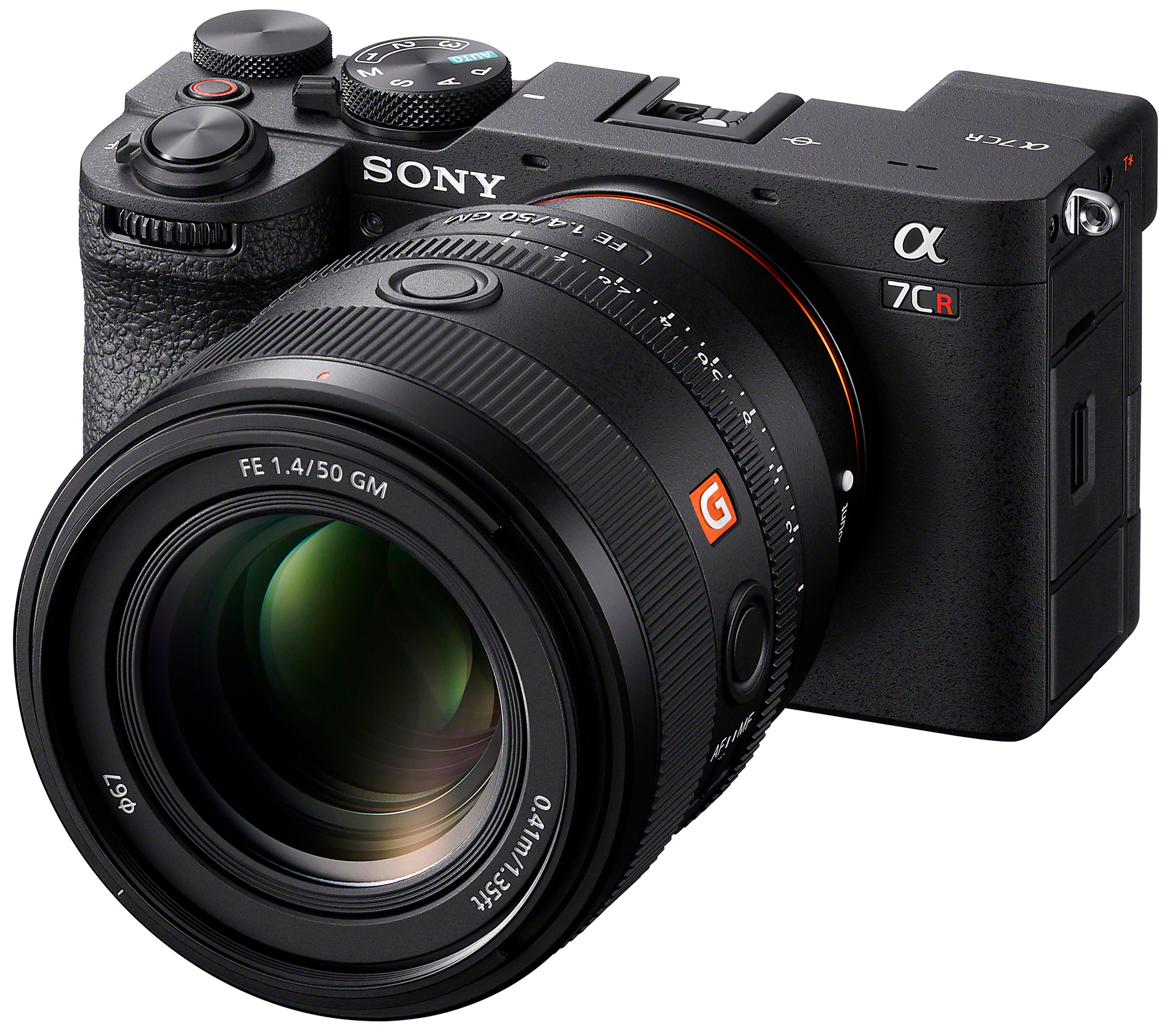
    Sony has announced the launch of its two new Alpha 7C compact full frame cameras, and version II of the ƒ2.8 wide-angle G-master 16-35mm zoom. But the cameras do look good with the 50mm f/1.2 G Master – a bit of a classic photojournalist’s combo.

    Alpha 7C II key features: 

    • Full-frame back-illuminated Exmor R® CMOS sensor similar to A7IV, with approximately 33.0 effective megapixels
    • ISO sensitivity from 100 to 51200 for both still images and movies (expanded ISO 50 to 204800 for still images)
    • Same AI-processing unit as the A7R V

    Alpha 7C R key features

    • Full frame image sensor with approximately 61.0 effective megapixels similar to A7RIV, IVa and V
    • Same AI-processing unit as the A7R V

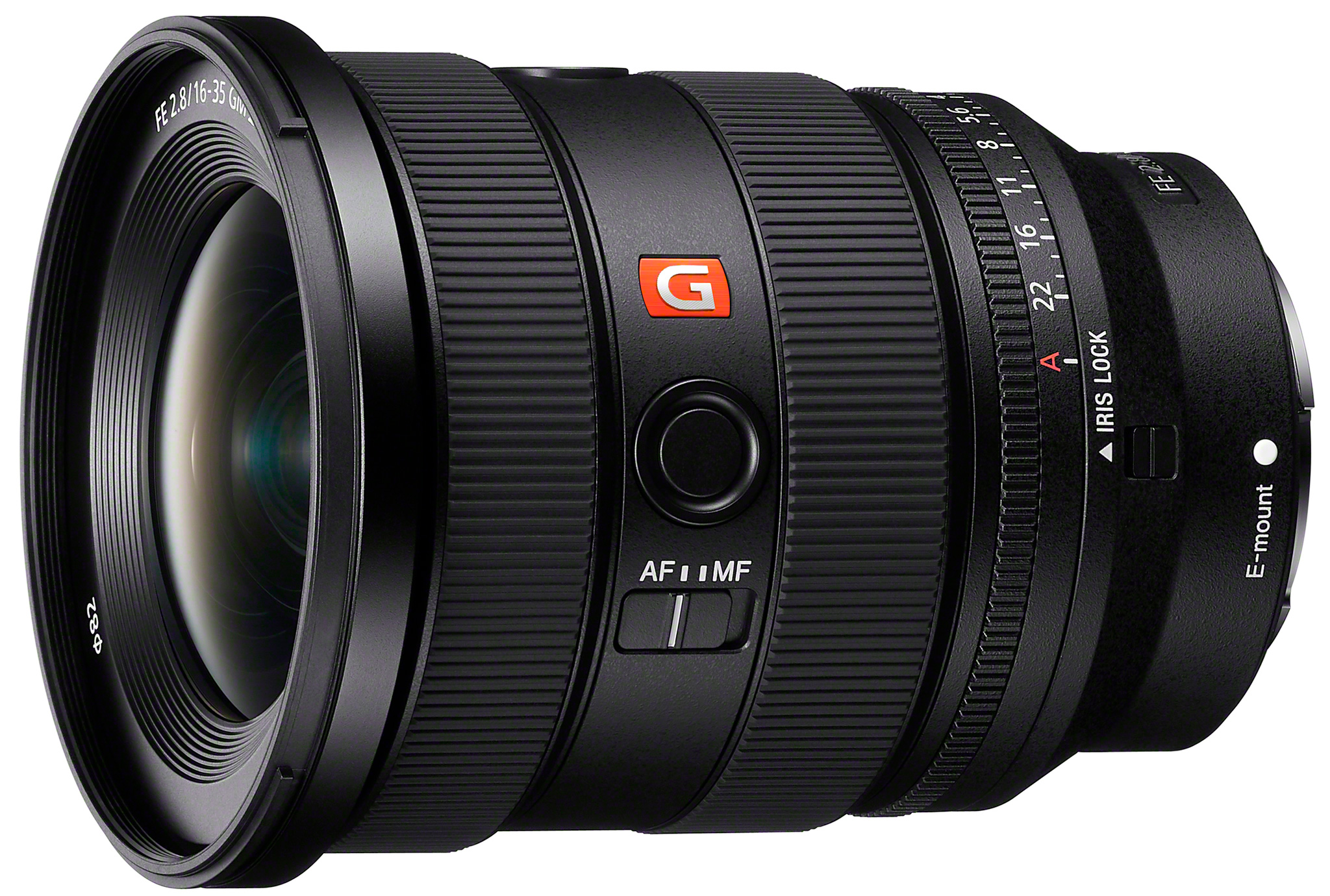
    Sony FE 16-35mm F2.8 GM II key features: 

    • World’s smallest and lightest high-resolution f2.8 wide-angle zoom lens 
    • Fast and precise AF that brings out the best in advanced bodies 

    The new products will be available to purchase from September 2023 at a variety of Sony’ authorised dealers throughout Europe, for an estimated retail price of: 

    • Alpha 7C R: £3,200 / €3,732
    • Alpha 7C II: £2,100 / €2,449
    • FE 16-35mm F2.8 GM II: £2,400/ €2,799

    Our comments before handling and using these: first of all, they are welcome and affordable specifications though the full A7 body is better ergonomically and in controls. The A7CR has seven-stop Steady Shot Inside as does the II, but also Pixel Shift Multi Shooting, something unexpected in the smaller body. Having said this, these bodies have only a single SDXC UHS-II card slot and both feature the same small (0.70X with 50mm) 2.35 million pixel OLED EVFs – far lower resolution, less tolerant eyepoint and apparently smaller size compared to the mainstream A7IV/RIV+ models. If the eyepiece (ocular) glass design is similar to the A7C, it’s also likely to be zonally unsharp and demand very accurate centering of the eye.

    Sony’s current emphasis on video and vlogging, fortunately not emphasised in the press info which major instead on the travel friendly aspect of these bodies for still shooting, does mean they have microphone and headphone jack sockets as well as the audio functions found in the Multi Interface shoe.

    As for the 16-35mm GM II, it may be the claimed smallest and lightest but taking 82mm filters makes it about as kit-friendly as any larger lens if you use a filter system, and even screw-in filters like a convenient polariser end up taking loads of space in typical 82mm size packaging or keepers. Perhaps a 16-35mm f/4 G or even GM series II might be on the way. Maybe the qualification of the claim with the words ‘high resolution’ is s clue – there may be smaller and lighter competitors which Sony believes they can prove to be lower in resolution, and they must have tested every single one of them to make this claim! The A7C II body is offered as a kit with the 28-60mm collapsible lens, slow but useful for travel – the A7CR does not come as a kit, perhaps an indicator of Sony’s own view about using this budget lens on 61 megapixels.

  • Sony A6500 – IBIS, touch screen, 200k shutter, €1700 body

    Sony’s official press release – we’re working here on magazines with deadlines tonight so this is unedited hot news. Enjoy!

    a6500_fe2470gm_right_image-large

    Sony today introduced its new flagship APS-C sensor camera, the α6500 (model ILCE-6500). As the latest addition to Sony’s line-up of award winning mirrorless cameras, the new α6500 shares the same unrivaled 4D FOCUS™ system as the α6300 camera, which can lock focus on a subject in as little as 0.05 seconds, the world’s fastesti AF acquisition time. Also shared with the α6300, the new α6500features 425 phase detection AF points that are densely positioned over nearly the entire image area – the world’s highestii number of AF points on any interchangeable lens camera. The new model can shoot images at up to 11 frames per second with continuous autofocus and exposure tracking and up to 8 frames per second in a live-view shooting mode that makes it easy to track fast moving subjects, as it combines all of the benefits of an electronic viewfinder with the immediacy of an optical viewfinder.

    The camera can shoot at these high speeds for up to 307 frames[iii] thanks to its expanded buffer, which, along with the fast response speeds described above, are all achieved with the support of a new front-end LSI chip that has been added to the camera. This new front-end LSI also serves to enhance both still and video image quality.

    Additionally, the new α6500 features Sony’s acclaimed in-camera 5-axis optical image stabilisation, making it the first Sony APS-C sensor camera to offer all of the benefits of advanced in-body stabilisation, which include a shutter speed advantage of approximately 5 steps[iv]. It also offers touchscreen AF capabilities for focus point selection and adjustment.

    Unmatched AF Capability

    Sony’s new α6500 camera utilises the same 4D FOCUS system as the α6300 – a Fast Hybrid AF system that combines high-speed phase detection AF with extremely accurate contrast AF and allows it to capture and lock on to moving subjects in as little as 0.05 secondsi. It also features 425 phase detection AF points and High-density Tracking AF Technology, which significantly improves subject detection and tracking performance.

    New for the α6500, thanks to faster internal processing capabilities enabled by the front-end LSI, the maximum buffer for high-speed continuous shooting is an impressive 307 framesiii, greatly increasing the chances to catch that decisive moment.

    The camera’s 425 phase detection AF points, focusing tracking and accuracy are also available when using non-native A-mount lenses[v] with Sony’s LA-EA3 mount adaptor. Additionally, it includes silent shooting, Eye AF in AF-C mode, AF in focus magnifier modes, Expand Flexible Spot AF and more.

    5-axis Image Stabilisation Provides 5 Steps Shutter Speed Advantage

    One of the most exciting developments in the new α6500 is the implementation of 5-axis image stabilisation for the first time in a Sony APS-C sensor camera. Additionally, through a total revision of the internal design of the camera, this newly developed stabilisation system fits entirely within a body that is nearly the same size as the α6300 model.[vi] This innovative 5- axis system provides a shutter speed advantage of 5 steps,iv ensuring the full resolving power of the sensor can be realised, even in challenging lighting.

    The shake compensation provided by the system works with a variety of lenses, including E-mount lenses without OSS (Optical SteadyShot) stabilisation and A-mount lenses[vii] when used with a compatible mount adapter. When an E-mount lens with OSS is mounted, pitch and yaw are compensated in the lens and horizontal, vertical and roll axes are compensated in the camera body, resulting in optimal 5-axis stabilisation.vii

    Also, with a simple half press of the shutter button, the effect of the image stabilisation can be monitored in the viewfinder or on the LCD screen, allowing framing and focus to be accurately checked and continually monitored. This is available even when a lens is attached that does not have built-in shake compensation.

    New Touch Screen Focusing

    The new α6500 comes equipped with touch screen functionality, allowing users to lock focus on a subject simply by touching it on the screen. This is a powerful compliment to its advanced AF system and video shooting capabilities.

    Additionally, in a first for Sony cameras, the α6500 features touchpad functionality. When utilising the viewfinder for framing and shooting, the LCD screen can be used as a touch pad. Simply drag a finger across the screen to shift the focus point from one area to another.

    Powerful 24.2 MPviii Exmor CMOS Sensor, BIONZ X® Processor and New Front-End LSI

    The new α6500 features an APS-C sized 24.2 MP[viii] Exmor CMOS sensor that works together with a BIONZ X image processor and the newly developed front-end LSI to maximise processing power and achieve an impressive sensitivity range of ISO 100-51200.[ix]

    The image sensor employs a thin wiring layer and large photodiode substrate that maximises light collection efficiency, plus copper wiring in its structure for outstanding read-out speed. The BIONZ X image processor and newly developed front-end LSI ensure superior image and video quality with low noise even when using higher ISO settings, in particular those at high sensitivity values where other cameras typically struggle. The LSI is also responsible for the expanded buffer depth for continuous shooting.

    Professional Video Capabilities

    The new α6500 becomes the latest Sony interchangeable lens camera to offer internal 4K movie recording, as it can shoot 4K (3840x2160p) video in the popular Super 35mm format on the full width of the image sensor. When shooting in this format, the camera uses full pixel readout without pixel binning to collect 6K of information – approximately 2.4x[x] (20 MP equivalent) as many pixels as 4K UHD and then oversamples the information to produce high quality 4K footage with exceptional detail and depth.

    Additionally, the α6500 will focus exceptionally fast during movie shooting thanks to its Fast Hybrid AF system, offers touch focusing for professionally smooth focus shifts, whilst also offering adjustable AF transition speed and AF tracking sensitivity. The camera supports the XAVC S codec[xi] during video shooting, which records at a high bit rate of up to 100 Mbps during 4K recording and 50 Mbps during Full HD shooting, ensuring maximum detail and clarity in both video formats.

    Other professional calibre video features include the ability to record Full HD at 100fps at up to 100 Mbps, which allows footage to be reviewed and eventually edited into 4x slow motion video files in Full HD (25p) resolution with AF tracking.

    New on the α6500 is the incorporation of a ‘Slow and Quick’ (S&Q) mode that supports both slow motion and quick motion. In this mode, frame rates from 1 fps to 100fps can be selected in 8 steps for up to 50x quick motion and 4x slow motion recording[xii]. Footage shot in this mode can be previewed after shooting without the need for PC-based post processing.

    The camera also offers S-Log gamma recording[xiii] for wide dynamic range shooting – approximately 14-stop latitude in S-Log3 gamma setting – and supports S-Gamut for a wider colour space. Both options allow for greater creativity for processing video post-production.

    Shooters also now have the ability to select, extract and save still images from movie footage directly on the camera. Approximately 8 MP images and 2 MP images can be pulled from 4K modes and Full HD modes, respectively.

    Enhanced Operability and Reliability 

    The new α6500 has a refined design, maintaining the mobility of the α6000 series while adapting much of the usability of Sony’s acclaimed α7 II series. The new model features the same high contrast, high-resolution 2.4 million dot XGA OLED Tru-Finder as the α6300 that offers exceptional corner-to-corner visibility.

    New hardware features on the α6500 include a magnesium alloy body and a high-durability shutter with a tested life span of approximately 200,000 release cycles.[xiv] It also has several design features that are borrowed from the α7 II series of full-frame cameras, which include a robust lens mount, a recessed grip to improve handling, a larger release button and ten total custom buttons including ‘C1’, ‘C2’ and ‘C3’. It also has an improved operation feel for its mode and control dials and rear face buttons, as well as a softer eyepiece cup for more comfortable usage.

    On the software front, there is a new overall user interface, which allows for a much smoother process for searching and adjusting menu settings, as well two new metering modes – Highlight, where exposure metering is focused on the brightest area of the frame, and Entire Screen Avg, which maintains an average metering for the entire image.

    The camera is Wi-Fi®, QR and NFC compatible and fully compatible with Sony’s PlayMemories Mobile™ applications[xv] available for Android™ and iOS platforms, as well as Sony’s growing range of PlayMemories Camera Apps™. The α6500 also offers location data acquisition via a Bluetooth[xvi]connection to a compatible mobile device and an updated menu structure to deliver a smoother navigational experience.

    Pricing and Availability

    The new Sony α6500 interchangeable lens camera will be available in Europe in December priced at approximately €1,700 body only or €2,800 with SEL1670Z lens. Full product details can be seen here. The current α6000 will also see a new colour introduction in Europe in December with the model also available in Graphite Grey.

    The new content will also be posted directly at the global Sony Photo Gallery and the Sony Camera Channel on YouTube.

    [i]Among interchangeable-lens digital cameras equipped with an APS-C image sensor as of October 2016, based on Sony research, measured using CIPA-compliant guidelines, and internal measurement method with an E PZ 16-50mm F3.5-5.6 OSS lens mounted, Pre-AF off and viewfinder in use.

    [ii]Among digital cameras as of October 2016, based on Sony research.

    [iii]With “Hi” continuous shooting mode and “Fine” image quality.

    [iv]Based on CIPA standard. Pitch/yaw shake only. With Sonnar T* FE 55mm F1.8 ZA lens mounted. Long exposure NR off.

    [v]A-mount lenses with SSM or SAM only. Users can choose phase-detection AF or contrast-detection AF in AF System menu. “Phase-detection AF” is not available during movie shooting. AF-C in AF System menu is available only with “Contrast-detection AF” selected, but no motion tracking is performed during continuous shooting (Hi+, Hi, Mid).

    [vi]Excluding grip, frontal-view size and main body thickness are the same as for the α6300

    [vii]All 5-axis stabilisation is performed in-camera when SEL90M28G is mounted

    [viii]Approximate effective MP

    [ix]Standard ISO range: 100-25600 for stills and movies. Expandable up to ISO 51200 for stills only.

    [x]In 25p recording.

    [xi]SDHC/SDXC memory card of Class 10 or higher is required for movie recording in XAVC S format. UHS-I (U3) SDHC/SDXC card is required for 100Mbps recording.

    [xii]Sound cannot be recorded. SDHC/SDXC memory card of Class 10 or higher is required.

    [xiii]S-Log2 and S-Log3 are premised on processing pictures

    [xiv]With the electronic front curtain shutter, under internal test conditions of Sony.

    [xv]Use the latest version of PlayMemories Mobile

    [xvi]Can be connected via Bluetooth with smartphones featuring (as of the date of release):

    • -Android (Android 5.0 or later, Bluetooth 4.0 or later)
    • – iPhone/iPad(iPhone 4S or later/iPad 3rd generation or later)
     
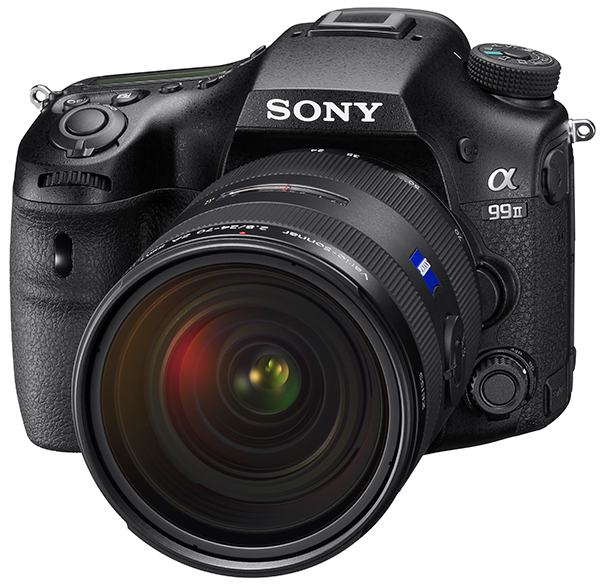
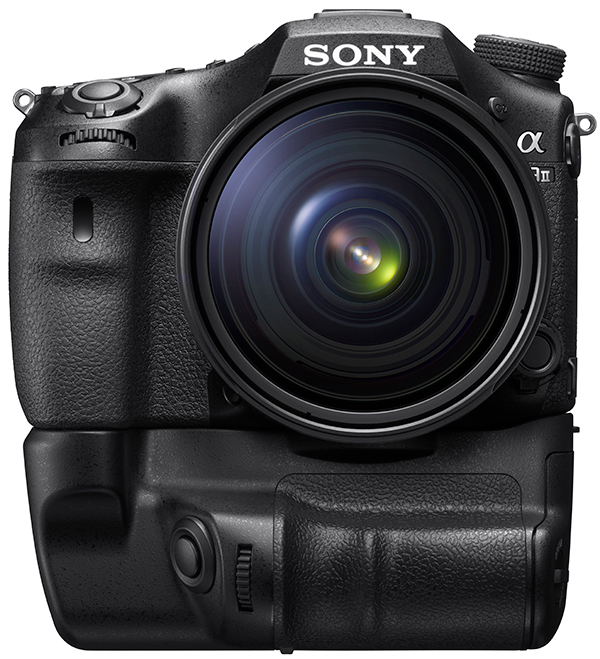
  • Sony launches A99II at photokina

    a99-ii_wsal2470z2_right-web

    Sony has today released the details of the updated A99II, using a 42MP sensor and 5-axis stabilisation to match the A7RII. It does not appear to have retained GPS and the paragraph highlighted in red later on indicates a weasel-worded possible get out for this – it may not embed GPS in the image files, but instead store a mobile phone location data track on the camera’s memory card. We may guess that this choice could be partly down to cutting out fees payable to incorporate a GPS module. Not the same, guys, not the same:

    From Sony’s site, the ambiguous word is highlighted here:

    Use Location Information Link to make the most of your camera anywhere you go together. After the camera has been paired to the PlayMemories Mobile app installed on a compatible mobile phone or tablet device, it can acquire location data from the mobile device and record that data with still images. The acquired location data can also be used to correct the camera’s date/time and location settings. The PlayMemories Home application can then be utilised on a personal computer to organise still images imported into the computer on a map.

    Edit: note that Sony’s later announcement for A6500 uses specific wording which says that its GPS Blueooth app embeds location data in the images as they are shot. This wording has not been used for A99II. We have not, though the A9II has now been released and bought by some users, been able to confirm how it works yet.

    In the Sony release (used almost complete, slightly edited, to form this post) they appear to imply that dual SD card slots are new, which of course they are not, the original A99 has this already. No UHS-II, no USB 3 Not only that, the dual slots are apparently exactly the same spec as the original unless someone at Sony Towers has forgotten to edit their website:

    Memory Stick PRO Duo, Memory Stick PRO-HG Duo, Memory Stick Micro (M2), SD memory card, SDHC memory card (UHS-I compliant), SDXC memory card (UHS-I compliant), Micro SD memory card, Micro SDHC memory card, Micro SDXC memory card

    Some of the hidden, clever features of the A99 remain like the buttons which are coded to touch with concave or convex tops or a small raised dot, making it easy once you have learned their feel to find them by fingertip. In fact the entire interface remains constant (in the way that Canon did throughout the EOS 1D series) meaning you can pick this up and shoot immediately, coming fom the A99. Only the Silent Controller is significantly improved, and the badly placed Movie button remains exactly where it was.

    • Full-frame 4D Focus: Innovative Hybrid Phase Detection AF system with accurate 79 hybrid cross AF points[i] enabled by 79-point dedicated and 399-point focal-plane AF sensors and continuous shooting at up to 12fps[ii]
      There is no AF Illuminator, but please note that -4 EV is quoted with an f/2.8 lens at ISO 100. In the past, AF low limits were always quoted with an f/1.4 lens (although the sensor only works at f/2.8). This is very good.
    • 42.4 effective MP 35mm Full-frame Exmor R™ CMOS sensor so it’s essentially an A7RII
    • Newly developed optical 5-axis in-body image stabilisation system
    • Outstanding operability and reliability in newly designed downsized body
    • Internal 4K movie recording in XAVC-S format[iii] with host of pro-orientated movie features
      IMPORTANT: this appears to be a Super-35 4K mode if you want no pixel binning and the highest overall quality but near-full-frame is offered with the usual partial readout.We would add a few extras – this camera has the much-needed (almost essential) Copyright Info function, minimum shutter speed when using Auto ISO, 10/5/2 sec self-timer, Hi+ in addition to Hi, Med and Lo motordrive shooting (not just shifting three settings over a faster range but giving 12, 8, 6 or 4 fps); built-in WiFi wireless including WiFi remote control and NFC (but not, apparently, apps); there are new Highlight and Average metering modes, and for each metering mode, you can calibrate the standard exposure if you prefer your shots slightly lighter or darker than the camera’s default.The A99II can capture 54 uncompressed RAW+JPEG images at 12fps (Hi+) before the buffer is full. There’s no great advantage in capturing RAW only, or JPEG only, and even with Fine JPEG at Hi speed (8fps) the limit is still 71, not ‘until card full’.

      Omissions include no Multi Shot Noise reduction, no GPS, and the external DC power supply is no longer via a dedicated socket, instead it uses the dummy battery approach. The camera is still not officially recommended for use in temperatures below freezing or over 40°C/104°F, both of which can easily be achieved in Scotland in a single sunny winter day (even without the benefit of your car parcel shelf oven).

    a99-ii_rear-web

    The upgraded autofocus

    The newly developed Phase Detection AF System is capable of ‘full-time AF’ and is the first implementation of 4D FOCUS in the full-frame ɑ series, bringing a supreme new level of AF performance to ɑ99 II users. The Hybrid Phase Detection AF System is enabled by combining a precision 79-point[iv] dedicated phase detection AF sensor with 399 focal plane phase detection AF points to produce a 79 hybrid cross AF point[v] array. These cross points deliver incredibly precise autofocus performance and advanced subject tracking of any moving objects right across the image, at high speed. In addition, as there is no moving mirror, TMT enables continuous AF operation and the finder image remains unaffected during any type of shooting, including live view and movie recording.

    Low light conditions present no problem to the ɑ99 II. The precision AF system will function properly down to EV-4[vi] brightness levels where most other cameras struggle. Editor’s note: the A99 is poor in this respect and often can’t focus modest aperture lenses at all in low light.

    Data flow through the ɑ99 II has been redesigned to allow for high resolution and continuous shooting at high frame rates. A new front-end LSI works with the image sensor and BIONZ X image processing engine, as well as a newly designed shutter unit, to enable continuous shooting at up to 12fps with AF/AE tracking[vii], all whilst harnessing the sensor’s 42.4MP capabilities. The result is an ultra-fast camera that will deliver incredibly detailed shots, even with fast moving objects in challenging light conditions. Thanks to a large buffer and sophisticated data processing, these shots can be viewed immediately after shooting even when in high speed continuous shooting mode and if shots are being taken indoors under artificial lighting, flicker is automatically detected and the shutter is timed to minimise its effect on the end image[viii].

    Improvements to the EVF display algorithm now deliver continuous live-view shooting at up to 8 fps[ix] with AF/AE tracking with minimal display lag so that the viewing experience is essentially no different from that of an optical viewfinder. Exposure, white balance and other camera settings are displayed in real time in the viewfinder and continuous live view shooting can be set in 3 stages to match a variety of subjects: 8 fps, 6 fps and 4 fps.

    Pixel Power

    The back-illuminated full-frame 42.4MP[x] Exmor R CMOS sensor benefits from a gapless-on-chip design and allows for fast readout of large volumes of data as well as being extremely efficient in its light gathering ability. The net result is very high sensitivity with low noise, wide dynamic range and 42.4MP resolution across an ISO range of 100-25600, expandable to ISO 50 – 102,400[xi]. The ɑ99 II has been designed without an optical low-pass filter to allow the finest natural details and textures to be captured with unprecedented depth and realism and the photographer can select compressed or uncompressed RAW files, as required.

    5-axis SteadyShot™ INSIDE Image Stabilisation

    Having proved to be incredibly popular in the ɑ7 II series of cameras, Sony has designed a new in-body 5 axis image stabilisation system for A-mount cameras which debuts for the first time in the ɑ99 II. In addition to movement in the pitch and yaw axes that tend to occur at longer focal lengths, this system effectively detects and compensates for shift blur that can occur on the X and Y axes when shooting close-up, and roll blur that is often apparent in still images and movies that are shot at night. Newly implemented precision gyro sensors are capable of precisely detecting even tiny camera movements that can cause blurring, providing a 4.5 step[xii] shutter speed advantage that can help realise the full potential of the 42.4MP sensor, in both stills and movies. The effect of image stabilisation can be monitored in the viewfinder or on the LCD screen during live view when the shutter button is half pressed or the Focus Magnifier functions are used. This allows framing and focus to be accurately checked via live view when shooting at telephoto focal lengths or macro distances.

    Improved design and operability

    The design of the new ɑ99 II has noticeably evolved compared to its predecessor, based upon feedback from professional users. The new model is 8% smaller than the original ɑ99 and has a newly designed grip, magnesium alloy body, dual SD[xiii] card slot and other upgrades that improve both hold and operation. All major buttons and dials are provided with seals and the media jack cover and enclosure edges feature tongue and groove – the result is a body that is both dust and moisture resistant[xiv] and can be used in the toughest and most challenging shooting conditions.

    In addition to being designed for faster response, the new shutter unit is also more durable and has passed endurance tests in excess of 300,000 shutter operations[xv].

    a99-ii_top-web

    The XGA OLED Tru-finder has a ZEISS® T* Coating and has a 4 element lens group that includes a double sided aspherical element whilst offering a powerful 0.78x magnification, delivering outstanding clarity from corner to corner. It also has a fluorine coating on the outer lens to prevent fingerprints, dust, water, oil and dirt from sticking, thus ensuring a clear view. Editor’s note: the ocular of the original A99 is a weak point, and in the A7RII Sony finally produced a really good non-squiffy eyepiece optical train which shows a clear view with some leeway to move your eye. So this is a major upgrade as much of the experience of using the SLT models comes down to finder quality.

    The silent Multi Controller introduced in the original ɑ99 has been improved so that in addition to allowing control of aperture, shutter speed, ISO, exposure compensation, AF area, AF mode and other settings, it now features a click-stop ON/OFF switch. When ON, the preferred setting for still image shooting, the control clicks, providing a tactile indication of the length of rotation. When OFF, the control turns smoothly and quietly, ideal for movie shooting. Location data acquisition has also been made possible via Bluetooth[xvi] connection to a compatible mobile device and it is now possible to select whether the storage location should just be on a tethered computer or also on camera for easy review without leaving the shooting position. Based upon feedback from a number of ɑ users, the menu structure of the ɑ99 II has also been updated to deliver a smoother navigational experience.

    Internal 4K movie at 100 Mpbs

    The ɑ99 II enables internal 4K movie recording[xvii] featuring full pixel readout, without pixel binning[xviii], for ultimate high resolution video in the pro friendly XAVC S format. It is capable of recording high quality footage at 100Mbps for 4K recording. A new ‘Slow and Quick’ mode[xix] (S&Q) supports both slow motion and quick motion. Frame rates from 1 fps to 120 fps (100 fps) can be selected in 8 steps for up to 60x (50x) quick motion and 5x (4x) slow motion recording.[xx] A number of features designed for a professional movie production workflow are included such as picture profiles, time code and HDMI clear output and the new ɑ99 II now also offers gamma assist for real time S-Log monitoring and a zebra mode for easier exposure adjustment. S-Log3 and S-Log2 gamma are now included, making wide dynamic range shooting possible with(out) – our edit, the press release says with! blown highlights or blocked shadows making the ɑ99 II easily integratable into a fully professional movie production workflow.

    Editor’s note: there’s a problem with the A99II for movies, which also applies to the LA-EA4 and SSM/SAM or other A-mount lenses on the E-mount bodies – the lenses really don’t work well at all. Sony had pictures of this camera with the 24mm f/2 SSM, still a current lens. I sold mine because it could not handle the same AF and exposure control functions as the 25mm f/2 Batis or the 28mm f/2 Sony (which I use) during video shooting. The A-mount was never built for movies, the E-mount has been from the start. However, both are fine using purely manual focus, manual aperture ciné lenses which many professionals prefer.

    a99-ii_sal2470z2_wvg-c77am_front-web

    The new ɑ99 II will start shipping in November, priced at approximately €3600 and full technical details can be seen here.

    Editing: David Kilpatrick

    Further information can be found on the Sony Camera Channel: www.youtube.com/c/ImagingbySony/ and the

    Sony Photo Gallery: www.sony.net/Product/di_photo_gallery/

    Our Affiliate links, supporting photoclubalpha:

    Check Amazon.co.uk for availability and price

    Check B&H stock (pre-order live)

    Check WEX (UK)

    [i]The number of usable AF points may depend on the lens and shooting mode. Up to 323 focus points are selectable. Not available for movie recording

    [ii]Continuous shooting mode set to ‘Hi+’

    [iii] Class 10 or higher SDHC/SDXC memory card required for XAVC S format movie recording. UHS-I (U3) SDHC/SDXC card required for 100Mbps recording

    [iv]The number of usable AF points may depend on the lens and shooting mode

    [v]Hybrid Phase Detection AF active. The dedicated phase detection AF sensor or focal-plane phase detection AF sensor may be used independently in certain photographic situations.

    [vi]Central focus point

    [vii]The supported focus area will depend on the shooting mode and lens used. Furthermore, when“Continuous Shooting: Hi+” is selected, focus will be fixed at the first frame shot when Hybrid Phase Detection AF is active at aperture settings of F9 or higher, or when Hybrid Phase Detection AF is not active at aperture settings of F4 or higher

    [viii]When Anti-flicker Shoot. is ON. Flicker detection at 100 Hz or 120 Hz only. Continuous shooting speed may decrease. Does not function during bulb exposure or movie recording

    [ix]Continuous shooting mode set to ‘Hi’

    [x] Approximate effective megapixels

    [xi]Still images only

    [xii]CIPA standards. Pitch/yaw shake only. SAL135F18Z lens. Long exposure NR off.

    [xiii]One slot can hold an SD card or a Memory Stick.

    [xiv]Not guaranteed to be 100% dust and moisture proof

    [xv]Electronic front curtain shutter activated

    [xvi]Requires pairing with compatible mobile devices running the PlayMemories Mobile app. Supported devices are Android smartphones running Android 5.0 or later and compatible with Bluetooth 4.0 or later. iPhone/iPad: iPhone 4S or later/iPad 3rd generation or later

    [xvii]SDHC/SDXC memory card of Class 10 or higher is required for movie recording in XAVC S format. UHS-I (U3) SDHC/SDXC card is required for 100Mbps recording

    [xviii] In Super 35mm recording mode

    [xix]Sound cannot be recorded. SDHC/SDXC memory card of Class 10 or higher is required

    [xx]In NTSC (PAL) system

  • New firmware for A7RII, A7SII

    Sony has released new firmware 3.20 for the A7RII and 2.10 for A7SII to enable XAVCS video recording on SDHC (rather than the larger XC) cards. The European updater is, as usual, not on line when the US/Americas Sony site has got it all ready to go. They are the same software so it’s safe to use either.

    Though nothing else is mentioned as improved, we note that lens compatibility is an active link in the list of inherited changes.

    The link for A7RII is: https://esupport.sony.com/US/p/model-home.pl?mdl=ILCE7RM2&template_id=1&region_id=1&tab=download#/downloadTab

    and for A7SII:

    https://esupport.sony.com/US/p/model-home.pl?mdl=ILCE7SM2&template_id=1&region_id=1&tab=download#/downloadTab

    European support for A7RII is here: http://www.sony.co.uk/support/en/product/ILCE-7RM2

    and for the A7SII: http://www.sony.co.uk/support/en/product/ILCE-7SM2

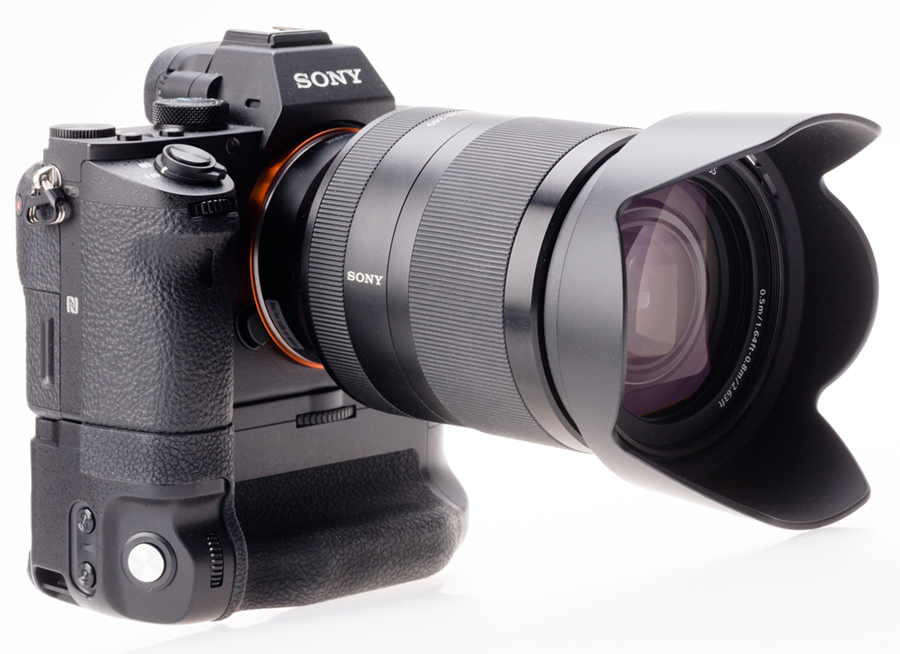
  • Sony A7R II review by David Kilpatrick

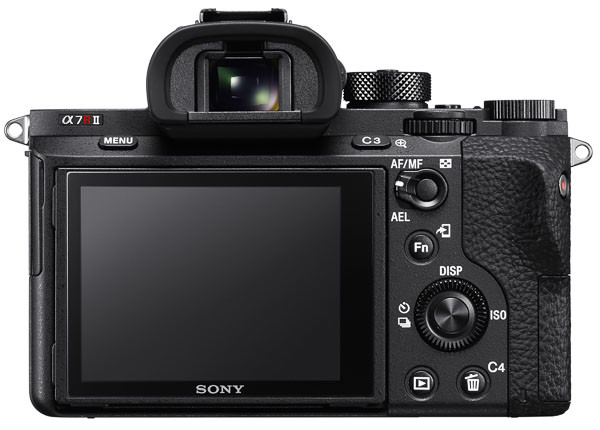
    Sony’s A7R II has a unique position in the mirrorless ILC world, creating the largest image files at over 42 megapixels from an in-body five axis stabilised sensor with exceptional performance given by backside illuminated CMOS.

    My reviews in print of the Sony A7R II have now appeared, in the British Journal of Photography, f2 Cameracraft and Master Photography magazines. All three make slightly different points, and reflect growing experience of the camera which I bought from WEX as one of the first despatched on July 28th. The UK best body-only price then fell from their £2,695 to just over £2,000 from one main Sony dealer (at an event promotion) in under three months.

    Despite finding bargain deals or importing directly, since the introduction of the A99 only three years ago I have lost about £3,500 keeping up with Sony full frame camera bodies. I’ve also spent around £2,000 buying other Sony models like the NEX-6, RX100, RX100 MkIII, RX10, and A6000 to cover the shortcomings of every different full frame model – and £2,000 or more updating my lenses.

    So why invest in the A7R II when experience tells me the Sony system loses value faster than any other, yet so often falls short of performing as required?

    One body for all lenses

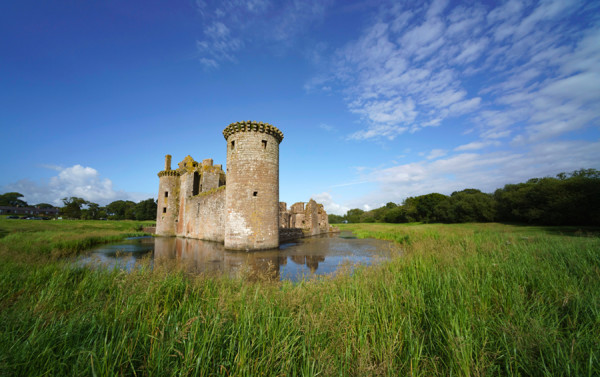
    The A7R II almost matches medium format digital, and gives great results with rangefinder (Leica) fit wide-angles. It has enabled me to add a 12mm f/5.6 Voigtländer Ultra Wide-Heliar to my kit for sharp, tint and vignette free 120° architectural and creative work. I write about lenses, and with current and future adaptors, this body lets me focus and make test shots with all lenses from Canon, Nikon, Pentax, Leica and many others. Click the Heliar image below for a link to a full size (slightly cropped and straightened from 42 megapixels) file. It’s actually shot at f/11 though the pBase data says f/5.6, that how the camera’s Lens Correction app works.

    Caerlaverock Castle

    There’s no lens made which disagrees with the 42 megapixel sensor as far as I can tell. My kit includes the 12mm mentioned above, the 16-35mm f/4 Carl Zeiss OSS, the 24-240mm f/3.5-6.3 Sony OSS, the 28mm f/2 Sony OSS FE (look out for individual reviews shortly); a 40mm Canon f/2.8 STM pancake, a 24mm Samyang tilt-shift, 85mm Sony SAM f/2.8, Sigma 70-300mm OS and a whole bunch of interesting older stuff used on adaptors.

    With the Lens Correction App configured for SS with each manual lens, the very high resolution of the A7R II sensor allows a stable view for precision magnified focus well beyond the ability of any AF method or reliance on focus peaking alone. Doing this at working aperture ensures no focus shift on stop down. The results show me quickly which lenses are excellent performers without needing an optical bench or test charts (give me a single LED light and a darkened room, and I can find out what I need to know about any lens very quickly).

    driedflowers-A7RII-web

    Most Sony and Sony Carl Zeiss zooms do yield good sharp images on 42 megapixels but it’s easy to exceed their best by fitting something like my 1970-ish SMC Takumar 50mm macro (used for the shot above), or even my Russian 50mm f/2 tilt-adapted Zenitar. I found the 28-70mm f/3.5-5.6 OSS which was fine on A7 II inadequate for critical quality on the A7R II and after tests concluded the 24-240mm was the best option to replace it. To learn why FE/E mount zooms and OSS lenses are never likely to blow away fixed focal length unstabilised types like the Zeiss Loxia or adapted classic RF and SLR optics, wait for my 24-240mm review.

    Having said size matters, I downsize many of my final images to as small as 9 megapixels. I don’t need 42 megapixels (7952 x 5304) for every image and for some it’s ridiculous. I’m still selling thousands of stock images* taken with DSLRs from six megapixels up. So for general ‘field’ use, most lenses are more than OK, as I can reduce the file size right down 3600 x 2400 pixels when noise needs cutting, depth of field is a problem, or general sharpness is poor.

    One sensor for all image shapes and sizes

    With the A7R II, unlike the A7R, all the APS-C E-mount lenses work properly (they never have their OSS forcibly disabled). The auto cropped image is 5168 x 3448, 17.8 megapixels, and that’s a perfectly useful size for all personal and most professional work. The 0.78X EVF is, of course, completely filled to exactly the same visual quality as when a full frame lens is used – the user experience with an APS-C lens is identical to that with full frame.

    As with downsizing or lens based cropping, I can crop full frame captures right down to less than a quarter of the A7R II image and have a file acceptable to Alamy for stock library use, or to a client directly for almost any reasonable editorial use. That same crop can go full page in a wedding album, or make a fine A3/16×12 print. It’s like using 120 rollfilm again, you can find pictures within pictures.

    lemurs-fullframe

    A 240mm shot clearly not close enough…

    lemurs-240mmf9-iso400-crop

    This is a 3600 x 2400 crop. That is, an image large enough for full page publication or a 12 x 18″ photo/inkjet print (click to view full size)

    With many lenses which don’t cover full frame, a 24 x 24mm crop is perfect. The Sigma prime lens ART trio (19mm, 30mm and 60mm f/2.8 AF without stabilisation) all do well on this basis. I had a 16 megapixel square format digital back on Hasselblad V and the square format is a favourite. Unlike Olympus, who offer a 1:1 ratio capture, Sony only includes 3:2 (35mm shape) and 16:9 (HD widescreen) – I’d love them to add a proper 1:1 square image seen in the EVF and on screen, a perfect 28 megapixel crop.

    The high resolution FF image also means there’s less need to stitch panoramas or use shift lenses. Canon’s 17mm f/4 TS-E tilt shift lens was introduced in 2009 when their full frame 12 megapixel 5D has just been upgraded to the 21 megapixel 5D MkII. On the A7R II, using its maximum 12mm shift reveals serious loss of outer field sharpness even at apertures like f/10, f/11 and f/13 which are optimum on other ways. It’s not a sensor cover glass problem as the Canon 5DS R revealed exactly the same weakness. Downsize the image to 12 megapixels, which the lens was probably first designed for, at everything looks sharp. But here’s where 42 megapixels can pay off – I just need to use a 12mm Voigtlander or a Sigma 12-24mm, crop a 14 x 21mm area from any part of the 24 x 36mm frame, and I have a 14 megapixel image allowing even more effective ‘shift’ than the Canon. And I can, of course, use the Canon via an adaptor if needed.

    The same kind of strong cropping works for telephoto wildlife shots (300mm lens, better than 500mm on 14 megapixels) and for macro work (1:1 on full frame, 2.2:1 at 14 megapixels). You need to remember all the time that traditional depth of field calculations just don’t work well with sensors of 36 megapixels and over. When you view a full size A7R II image at 100% on a non-Retina iMac or HP 27″ monitor, you are looking at part of a six foot wide ‘print’. Depth of field tables, still used today, were based on viewing a 10 x 8″ print from a similar distance! This problem is reduced by higher resolution screens but sometimes, you simply need a smaller image size.

    Canon 5DS/R (in proportion with earlier models) have useful M-RAW and S-RAW formats, allowing the cameras to become full frame 28 or 12 megapixels with a single menu change. This function is missing from Sony raw files and would be a great firmware enhancement, if it was possible. Edit: with the Sony A7RV and its even larger 61 megapixel sensor, Sony addressed this with M and S raw files of 26MP and 15MP, which are downsampled from a full capture so do not offer faster continuous (etc) but do bring noise control and sharpness benefits.

    Reasons to buy the A7R II

    SONY DSC

    Having used two other A7 series bodies, and started the transition to the FE lens series with some mix of adapted glass on the way, why didn’t I stick with the far more realistic and practical A7 II, or the A7R which was paid for and at 36 megapixels just as useful a large file size?

    • Internally or externally recorded 4K video though not a commercial offering from my side might well be a request from a future client. I don’t make videos though many years ago I did made 16mm films and many 35mm slide based dual and multi projector AV programs. However, I know many still photographers who have found sufficiently high-end clients for video to invest the time. I wouldn’t touch any video production, even a brief 20-second ad clip, for under four figures. It’s fun to experiment with until any serious use emerges. Also, excellent Super-35 crop format video.jamesgem-1371-web
    • Completely silent operation when needed – though not compatible with any kind of flash, the fully electronic shutter is an option for wedding ceremonies and I’ve used that function already. It is also useful for shooting stills when someone is making a video, or during quiet concerts, in meetings, or when you simply don’t want the sound of a shutter to be heard. When silent is not needed, electronic first curtain (not provided on the A7R) improves shutter lag time and cuts vibration
      .SONY DSC
    • It’s also got a 500,000 actuation life shutter built to more than pro specification and a superior 0.78X electronic viewfinder, a slightly improved body flange for the lens mount (now common to all the II models, tighter and more precise than the original machining), no light leaks. And the mode dial is improved with a locking button, the Multi Function Accessory shoe is further improved in contact reliability, the ocular is T* coated and gives better eye relief.SONY DSC
    • It will perform well with all kinds of lenses and the 399-point wide area phase detection AF array built in to the sensor functions partly, or completely, with more native Sony and converted Canon lenses than ever before. It betters the A7R and A7 II in this respect, though I sold the Canon 85mm f/1.8 USM above as it didn’t work with the II having worked well on the A7R. Metabones have now fixed this, but my adaptor is a cheaper non-programmable type… you get what you pay for!
      Canon5DS-6400-web
      This is what you get from the Canon 5DS at ISO 6400, default, for shadow detail and noise (click to enlarge a 100% view of this section from a much larger file)

      Compare the separation of the black ribbon, and the shadow detail in general, from a similar shot ISO 6400 A7R II file, using the same lens and settings (click to view enlarged).

    • The back-illuminated CMOS sensor has a dynamic range – and a contrast curve or gamma function through controlled A to D conversion – which provides an ideal raw file for subsequent adjustment at lower ISO settings. Here, the difference seen above between the Canon 51MP sensor and the Sony 42MP is striking. The Sony images may often look softer and lack punch, but they reveal two stops more detail in the tones close to deep shadow. It’s probably been designed this way to allow s-Log gamma settings for professional video, producing flat neutral results ideal for grading to match from take to take. This happens to be very flattering to skin tones and it’s no surprise the A7R II is rivalling Fuji’s X-Trans sensor amongst fans of the flesh.jamesgem-1685-web
    • The same sensor has awesome practical performance in low light without sacrificing resolution, and noise levels which allow surprisingly high ISO settings for critical subjects like wildlife where fur and feather textures are easily damaged by noise (or noise reduction). Properly processed from raw, or shot as JPEG in camera, ISO 800 can be used as an everyday setting and 1600 will not even harm landscape detail. Up to 6400 an effectively noise-free full size image can be extracted, and at 12,800 to 25,600 some downscaling is all that’s needed to clean up. Admittedly, it’s never going to match the 12 megapixel A7S or A7S II at 51,200 and has a limit at 102,400 rather than marching on to an insane 409,600 EI as that body does.SONY DSC
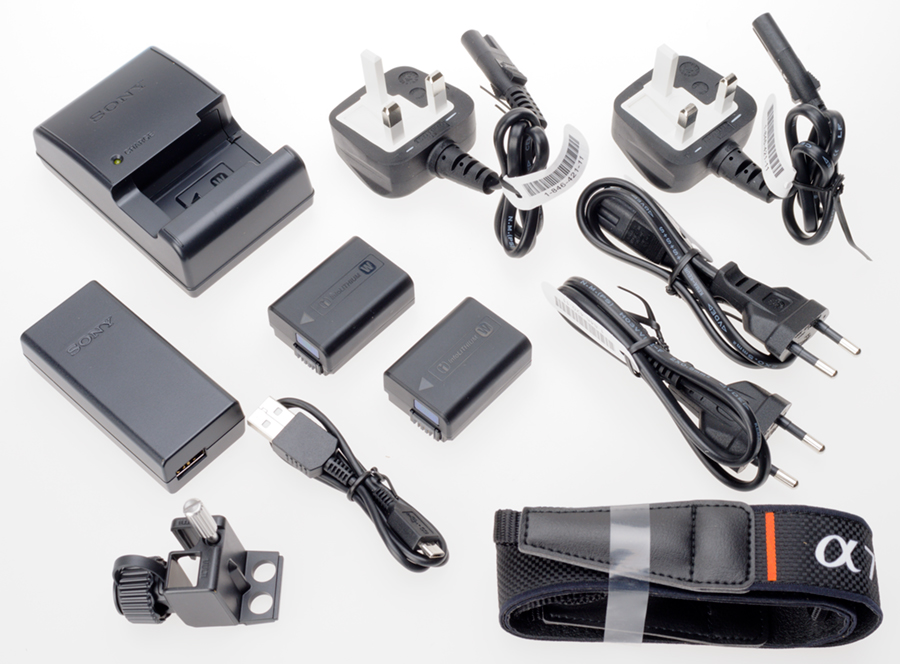
    • Compared to buying an A7 II, remember that with the A7R II you get two Sony batteries and an external charger (about £150 in official value) as well as the ability to operate the camera from any 5v 1.5A USB source (not just to charge the battery internally, but to shoot using USB power)
      .SONY DSC

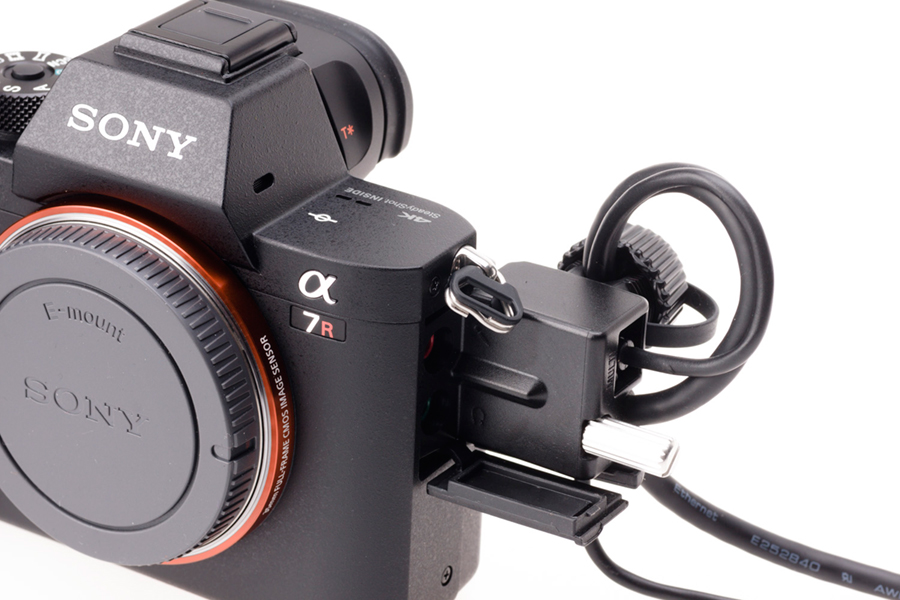
      You also get a neat tether-trap locking cage which screws into the camera side and can secure your USB and HDMI cables against accidental disconnection or strain on the connectors.
    • Final reason – going beyond the A7R II specification does not seem to offer further compelling advantages. It doesn’t have any major flaws or shortcomings except perhaps the single card slot and some doubts about the durability of the body, weatherproofing, and the quality of the lens mount (see below). I’m not in need of more than 5fps and 22 continuous raws before slowing down, and if I am the smaller Sony models like the A6000 and my RX10 do some pretty neat extra high speed sequences. So, for the first time since the sale of my A900 to get the A99, I feel I have a long-term camera no matter what Sony does in six months to make it hopelessly out of date.

    What’s could be wrong?

    First up, the poorly specified and designed lens mount and low precision body/lens relationship. Where Minolta A, Fuji X, Pentax, Leica and nearly all good makes secure the body and lens bayonet mounts using six screws, the E-mount uses only four even for the top end bodies which may have to support lenses approaching 1 kilo in weight. The four-screw fitting creates two axes of potential tilt restrained only by diametrically opposed screws, six-screw design is better but actually a five screw design beats both as you can’t draw a diameter across any two screws and create a tilt axis. Edit: after publication of this post and my articles in print in the British Journal, Cameracraft and f2 Freelance Photographer, Sony changed the design and A7/9/1 series bodies from the A7IIIR onwards have a six screw mount with screw positions reducing symmetry and the potential to rock.

    sonyjune1526

    The E/FE lens-body system is built round a concept of achieving final accuracy in alignment and focus without needing precision in every component. The nominal 18mm mount to sensor register doesn’t have to be perfect (and seems to vary by at least ±0.1mm). All Sony E and FE mount lenses compensate for variations and use free-floating magnetic focus often combined with floating OSS – they don’t have fixed infinity stops. Just as the bodies don’t have to be all that precise, the lenses themselves don’t need to be. As long as both work with the sensor to AF perfectly, the overall system is self-correcting.

    You soon find out the limits of E-mount precision when buying adaptors for older manual lenses or modern Canon EF lenses. I’m sure Zeiss makes due allowance in the design of manual focus Loxia lenses, and Voigtlander has specifically allowed the new E-mount range planned for 2016 (10mm, 12mm and 15mm) to focus past infinity because they are aware of the variable register of the system. I have measured many adaptors and the only safe decision for the engineer is to fall short of the target register. Some very expensive adaptors turn out to be 0.3mm thicker than others for the same mount (I’ve found this in Leica M, Canon FD and Canon EF adaptors). The lenses being adapted often have a fixed infinity stop and are designed to hit this precisely. Combine a 0.1mm ‘plus thickness’ Sony body with a 0.2mm plus adaptor, and your manual wide angle lens won’t focus on infinity.

    So, one overall issue is that despite the high cost, the Sony FE/A7 series range of bodies and lenses lacks the precision engineering of past systems and it’s designed that way. When you find one side of your pictures always seems soft with wide-angle, wide zoom or very fast lenses you have encountered the limitations of Sony precision and quality control. Edit: see new body mount comment above, Sony greatly improved the precision and accuracy of the entire body/lens system from 2016 onwards.

    Secondly, the A7R II has such large files and a slow overworked processor relative to those files and the massive task of running a high resolution, high frequency EVF and many clever software functions. Any kind of systematic ‘chimping’ to check each shot after taking may leave you frustrated. Depending on your choice of card and some unknown spin of the CPU’s internal dice, you will sometimes encounter long file writing times and a brief lockout from playback.

    Install the 14-bit (in 16-bit container) raw uncompressed format introduced in October 2015 through a firmware update, and the situation may improve. With Firmware V2.0 I’ve seen typical write to card times halved but identical shots could take varying times and the worst case remains close to 10 seconds for the light to go off on a single shot. Most of time it’s clearing about 1 second after 2 second auto review, and disabling auto review has no apparent effect on this, or the time the camera takes to respond to a fresh shutter actuation.

    Secret solutions

    Since you’ve been patient, and listened to why the A7 system in general has a few failings, here’s how to get the best optical performance and general response from it.

    SEL70200G_A-1200

    First of all, for the best optical performance use lenses where OSS can be disabled but in-body SS allowed to operate. The internal 5-axis sensor based stabilisation of the A7II/RII/SII is awesome. In-lens OSS is impressive but by its design will always lose you some resolution, often more towards one side or corner of the image than centrally. Amended paragraph, see comments: To see how good your stabilised lens really is, turn off stabilisation and shoot something using flash or at a high shutter speed.

    But… if you turn off Steady Shot or OSS on the A7R II, you disable it in the body and the lens. You can not turn it off for the lens, but keep it working in the body. The 90mm f/2.8 Sony G OSS Macro, the 70-200mm f/4 Sony G OSS (above) and the 28-135mm f/4 Sony G PZ OSS and several newer OSS higher end (G and GM) offer the on-lens switch. But if you want stabilisation, you can’t choose to have it provided by the body with these lenses. You can do so with Canon, Sigma and Tamron lenses used on a Canon EF adaptor – their IS, OS or VC will operate normally when the SS in the body is disabled. In fact you must never use these lenses with both methods turned on together, or the result will be unsharp. This is a problem we first noticed with the Olympus system, where their lens and body stabilisation do not communicate and it’s possible to us none, just body, just lens or ruin shots by turning on both together. The Sony body used with third party lenses does allow this; used with Sony lenses, it prevents it.

    The A7R II will switch between internal SS, lens OSS and a combination depending on settings. But it won’t tell you what it is doing, which makes this intelligent function something of a handicap. As a rule, if you can lock the camera down (tripod) or use a very fast exposure (studio flash, shutter speed 4X the focal length of the lens) shooting with no stabilisation at all will offer the best results.

    sonyjune1527

    Secondly, don’t use ‘AF With Shutter’ all the time. It’s convenient sometimes, but every time you take first pressure on the shutter, your E-mount AF lens will initialise a short routine involving focus position recalibration followed by AF. It costs you a variable extra lag before the shutter fires, maybe 1/15th to as long as 1/4 second. Instead, turn this off and AF will default to the centre button of the rear controller (you can change this assignment). You then use this to AF for each change of subject, composition or distance but if nothing’s changed you do not touch it and you do not re-AF. You save battery life, and you eliminate the whole shutter-button-AF delay cycle. You can now capture pictures, using electronic first curtain shutter or silent mode, within 1/20s of pressing the shutter.

    Thirdly, for action shots prefer stops close to full aperture on E-mount lenses for the same reason – the aperture closing action involves a delay you can clearly identify and it’s longer with apertures like f/16. But for maximum reaction speed, use a purely manual lens. The camera knows there’s no aperture to be closed so it misses out that stage. It knows there’s no AF. You can get down to a mere 1/50s shutter lag, faster than most photographers can think. If you are used to older DSLRs which typically fire the shutter between 1/15s and 1/8s after you have pressed the button, you’ll anticipate and fire too early for action shots. Beware the LA-EA adaptors for A-mount lenses as you can’t turn off the aperture lever actuation. These adaptors will always add a delay even if you fit a manual lens.

    I’m not going to delve into how you use focus peaking, magnification, setting the slowest shutter speed to be used by the Auto ISO function and so on. You can find out about this from countless videos and blogs, not all of which feature grandmothers, sucking and eggs. Nor will I recommend JPEG noise reduction and image settings in camera, since I don’t use JPEGs. Remember that your picture style and adjustments, like extra sharpening or contrast, will be reflected in the view you see through the EVF and on-screen. They will affect focus peaking, the histogram and what the image looks like when you use magnified manual focus, too. My tip is ‘stay neutral’ for the best EVF experience and ability to judge and control your results, especially if shooting raw. Camera Standard – boring but it won’t fool you into making adjustments which are not needed.

    smailhomsony16-16-p-h-srgb-web

    A 16mm landscape with careful focus checking, and only just enough depth of field even at f/16 if the end result is going to be a 1m wide print

    Read the manual, think about all the functions of the camera, assign your custom buttons, set your parameters. My set-up includes (routinely) Auto ISO 200-1600 because within that range the A7R II files have low noise and good textural sharpness and there’s no great benefit in dropping to 100; AWB; 1/250th slowest shutter speed because the world moves and I’m very happy with 1/250th at ISO 800 rather than 1/125 at ISO 400 for nearly all my walkabout shots; AdobeRGB because I need that but actually sRGB is better matched to the EVF and rear screen, and will give you a more accurate histogram; no JPEGs because I don’t need them; Airplane Mode on; compressed raw unless there’s a really good reason; AF-S and Centre point focus; no face recognition, no smile shutter, no tracking, nothing clever with AF; single shot; generally Aperture Priority but sometimes P, M or very rarely S; Date Format file folders; SS on; electronic first curtain; setting effect on; finder and screen at default brightness and colour; grid lines 3 x 3; focus peaking low, yellow; lens correction enabled; 2 secs review, or none.

    – David Kilpatrick, all images except front and rear views of A7R II body and 70-200mm lens are ©David Kilpatrick/Icon Publications Ltd; please do not link directly to images or copy

    * You need thousands on offer to sell dozens…

  • Alpha 77 II announced

    Sony’s successor to the Alpha 77 improves all-round performance in line with the enhanced 24 megapixel sensor also found in the new A6000 E-mount camera. Key points are that the AF array now covers most of the image area (this is a mixed blessing as Canon 7D owners quickly found out, having active AF points near the image edge can produce some very unwanted results unless detailed control is offered of the AF behaviour – we shall find out when we test the camera); that the high ISO performance is 20% better, meaning the new A77 II should be as good as the original NEX-7 in this respect; and the entire rig is much faster though we would guess it also demands very fast SD or MSProDuo cards.

    We are currently in touch with Sony to determine whether GPS has been omitted from this body, as the launch specification makes no mention of it, and if so, whether Sony is anywhere nearer releasing the separate GPS module originally planned for the Multi-Function Accessory Shoe (another key upgrade present in the revised camera). Update: there is no GPS in the camera and Sony doesn’t seem to know what we are talking about.

    Full audio level control, something we have pressed for as a firmware upgrade for the original A77, is now provided. It’s also got the fashionable but almost useless WiFi/NFC functions (almost useless in a camera which can shoot 60 continuous JPEGs at 12 fps or produce 24 megapixel raw files). If you really want to upload your latest selfie, shoot the damn thing on your smartphone, says the man whose A7R is kept in Airplane Mode because that way you at least get a decent battery life… Sony only has this one photo in the Europe media library right now (but if you click it you get the full sized file).

    Slightly tongue in cheek, as WiFi can indeed be enormously useful for remote viewing and control – but that all depends on how the connectivity works and will remain to be seen. It’s a bit heavy for a drone copter but great for a 20 metre sky pole if it’s got the right functions.

    What follows is the Sony press release and specification table.

    You can pre-order for only $1,198 (body) from B+H and we reckon this is a very fair price for the spec.

    A77 II__front

    • New A-mount camera with world’s highest phase-detection AF point count – 79 points with 15 cross points
    • Translucent Mirror Technology delivers ultra-fast, intelligent AF tracking and up to 12 fps burst of up to 60 full-resolution frames
    • 24.3 megapixel Exmor™ CMOS image sensor delivers wide ISO 100-25600 sensitivity range
    • XGA OLED Tru-Finder and 3-way tiltable LCD
    • Tough magnesium body with dust- and moisture-resistant seals
    • BIONZ X processor for pro-quality images and Full HD 50p video
    • NFC/Wi-Fi for One-touch sharing and remote control by mobile

    From dynamic sports to the sudden flutter of a startled bird: the new α77 II stays locked right on target, frame after crisply-focused frame.

    Building on the heritage of Sony’s much-loved original α77 and α700, the α77 II gives advanced amateurs a string of exciting enhancements in a tough, weather-resistant body that’s up to any challenge.

    Image quality is boosted while sensitivity is increased by approximately 20% compared to the α77 for flawless, exquisitely-detailed stills and Full HD video, even in low light. Non-stop continuous burst shooting stamina is enhanced and there is a clutch of pro-friendly new video functions for movie makers.

    Best of all, the α77 II rips up the rule book with an advanced phase detection autofocus system. With approximately 2x wider coverage area than the previous α77 model, it outpaces the AF capabilities of many professional cameras.

    New-generation 79 point phase detection AF system

    For the first time ever, the α77 II features no less than 79 autofocus detection points, including 15 cross points within most frequently-used central area of the sensor. This aids super-accurate focusing, even with horizontally-striped subjects that confuse many other cameras.

    There’s also a dedicated F2.8 AF point placed horizontally in the centre of the sensor. This centrally-mounted sensor supports apertures up to F2.8, ensuring maximum AF precision when using large-aperture lenses. The AF system also performs well in low light, accurately locking onto subjects in scenes with illumination levels as low as EV-2 (ISO100), where even the human eye can struggle to discern fine detail.

    Vast amounts of metering data from all 79 focus points are processed by a brand new AF algorithm that’s been fine-tuned in extensive field tests. This predicts the subject’s next movement, combining AF metering data together with data on the subject’s position. AF precision is further improved when Lock-on AF is used, recognising the subject from its colour as well as its position in the frame.

    Whether you’re framing through the viewfinder or on screen in Live View mode, Sony’s unique Translucent Mirror Technology maintains razor-sharp tracking focus on your subject, whether you’re capturing stills or Full HD movies. This powerful new system is less likely to be distracted by other objects – like a rogue balloon moving across your shot at a football match. It performs brilliantly in low-light conditions, capturing crisply-focused images of moving subjects on moonlit nights.

    There’s a suite of sophisticated new AF functions that make the most of the new 79-point system. Expanded Flexible Spot mode maintains focus even if the selected AF point loses track of the subject, activating eight surrounding AF points that recognize the subject. In combination with AF-C AF mode, this dramatically increases performance with moving subject.

    Lock-on AF mode lets users select one of four AF area modes (Wide, Zone, Flexible Spot or Expanded Flexible Spot). Once its target is acquired, the camera keeps tracking as long as the shutter button remains half-pressed. As the subject moves or framing changes, the camera automatically selects the most appropriate AF point from the 79 available. When subject movement is too fast for the new Expanded Flexible Spot mode alone, it’s combined with Lock-on AF for class-leading tracking performance.

    For even greater control, the degree of subject-tracking duration can be fine-tuned in five steps (when shooting still images in AF-C mode). With subjects whose movement is predictable, a low setting reduces the risk of the camera focusing on another object suddenly entering the area around the subject. High settings deliver more responsive focusing – ideal when you’re rapidly shooting different subjects at different distances, such as wildlife. AF Tracking Duration can also be selected between High, Medium and Low during Full HD movie shooting.

    Other new features include an Eye AF function that precisely detects and focuses on the subject’s eyes when photographing people. AF Range Control allows AF to be limited to a specified range, with five AF Tracking Duration settings to optimally match the subject’s motion. There’s a Balanced Emphasis mode that complements the release and focus priority modes by providing the ideal balance between focus and release timing. Users can manually select the most appropriate mode to shoot the situation and their precise creative objectives.

    Shoot a continuous burst of 60 full-resolution frames at up to 12 fps

    Continuous shooting stamina outpaces many professional cameras, too. The α77 II can capture a non-stop burst of up to 60 full-resolution JPEG images at a maximum continuous shooting speed of approximately 12 frames per second (in Continuous Advance Priority AE mode).

    24.3 megapixel Exmor™ CMOS image sensor with improved sensitivity

    A showcase for Sony’s world-leading expertise in imaging sensing technology, the 24.3 megapixel Exmor™ CMOS image sensor features the same gapless on-chip lens structure as used in the acclaimed α7R and α6000. Thanks to an array of latest-generation imaging innovations, it now offers 20% greater sensitivity than its predecessor that offers the same pixel count. Together with flawless image detail, low-noise performance is assured across a wide sensitivity range of ISO 100 to 25600.

    The high-resolution sensor is partnered by the same evolved BIONZ X image processor featured in the α7 and α7R. Around three times faster than Sony’s previous BIONZ engine and optimised for the α77 II, it employs detail reproduction, diffraction-reducing and area-specific noise reduction technologies that contribute to amazing image definition, rich colours and textures with stills and Full HD video.

    See things your way with OLED Tru-Finder and 3-way tilting LCD

    Framing and focusing is a pleasure through the clear, bright XGA OLED Tru-Finder™ with 236,000 dot resolution. With three times higher[i] contrast and resolving power, it faithfully displays exactly what’s in the final image, letting you accurately judge the effects of adjusting focus, exposure and other settings before firing the shutter. A wide viewing angle and high eye-point are complemented by a newly-expanded choice of brightness settings, plus colour temperature adjustment for even more comfortable, accurate composition.

    As featured on the full-frame α99, the α77 II also features a detail-packed 3.0-type (7.5 cm) Xtra Fine LCD that moves three ways for near-limitless creative flexibility. Easily shoot from high or low angles, in portrait or landscape orientation, handheld or with a tripod. WhiteMagic technology significantly improves screen visibility, even outdoors in direct sunshine.

    You’re always in control with expanded custom functions

    Evolved from the original α77, separate control dials in front of the grip and behind it allow intuitive, fumble-free adjustment of camera settings without taking your eye away from the viewfinder. Lavish customisation options now allow a total of 51 functions to be assigned to 11 buttons.

    Up to three frequently used groups of shooting mode and other settings can be stored in memory and recalled easily via the mode dial. In addition, an exposure mode dial lock function has been inherited from the a99 to prevent accidental mode changes.

    Tough enough for serious enthusiasts

    The tough, light magnesium body of the α77 II is engineered to withstand the demands of serious enthusiasts in search of that perfect shot. Positive, comfortable handling is enhanced by the large, contoured grip. Dust- and moisture-resistant seals around main buttons and controls are complemented by double-layered protection around all openings including media slot and terminals. In addition, the camera’s durable shutter unit is rated for 150,000 activations.

    Pro-style movie shooting with continuous AF

    The a77 II can record Full HD 60p and 24p movies using the AVCHD 2.0 format. As with still shooting, Translucent Mirror Technology enables full-time phase-detection AF, ensuring accurate focus tracking with fast-moving subjects while you’re capturing video.

    A number of advanced features appeal directly to serious moviemakers, including three-level AF tracking sensitivity adjustment, a pro-style Zebra function and audio level metering. There’s also the addition of a clean HDMI output that allows viewing on an external monitor and recording without compression to an external storage device.

    One-touch wireless connection and smartphone remote control

    On-board Wi-Fi allows one-touch connection for easy shot sharing with your Xperia™, NFC-compatible Android smartphones, tablets and VAIO. A single touch also activates Smart Remote Control, linking the camera to your mobile phone enabling you to fire the shutter from a distance.

    Lenses and accessories

    Covering focal lengths from wide angle to telephoto, a family of 32 A-mount lenses offers an extensive choice of creative tools for visual expression.

    The line-up includes glassware to fulfil just about every artistic need, from high-performance G Lens™ and ZEISS® models that deliver world-class quality to the unique Sony STF (Smooth Trans Focus) lens that produces extraordinarily smooth background bokeh. Premium G Lens models feature precision aspherical lenses, ED (Extra-low Dispersion) glass, an advanced Nano AR Coating and other advanced Sony optical technologies that contribute to high resolution while also enabling beautiful bokeh effects.

    ZEISS® lenses are jointly developed by Sony and ZEISS, a name that is well known to discerning photographers worldwide, making full use innovative and ground-breaking optical technologies. Superb contrast and high resolution that extend right to the edge of the frame are highly famous hallmarks of the ZEISS brand.

    The optional VG-C77AM grip enhances camera operability by offering remarkable holding and operational ease during vertical shooting.

    α Library app

    Sony has also today released a new “α Library” application for tablets which includes two types of content. “α Lens catalog” showcases the entire line up of α lenses and provides key information and specifications about which lenses are best suited to different types of photography. The bi-annual “α Magazine” showcases the boundless fun of photography. The new α Library is available for download on Google Play and the iOS App Store from today.

    The α77 II A-mount interchangeable lens digital camera from Sony is available to pre-order now from www.sony.co.uk. It’s on general sale in Europe from Summer 2014.


    α77 II technical specifications

    Key Features ILCA-77 II
    Type Interchangeable lens digital camera with built-in flash
    Lens Compatibility Sony A-mount lenses, operation with Minolta/Konica Minolta lenses confirmed
    Image Sensor Type APS-C type (23.5 x 15.6mm), “Exmor” CMOS sensor with primary colour filters offering approx. 24.3 effective megapixels
    No. of pixels (effective)

    Approx. 24.3 megapixels

    Processor BIONZ X™ image processor
    Image Quality Modes RAW / RAW & JPEG / JPEG Extra fine / JPEG Fine / JPEG Standard
    Focus system

    Type

    TTL Phase-detection AF

    Focus point

    79 points (15 points cross type) with centre F2.8 sensor

    Sensitivity range

    EV -2 to 18 (at ISO100 equivalent)

    Focus area

    Wide/Zone/Center/Flexible Spot/Expanded Flexible Spot/Lock-On AF(Wide/Zone/Center/Flexible Spot/Expanded Flexible Spot)

    AF mode

    Single-shot AF (AF-S), Continuous AF (AF-C), Automatic AF (AF-A), Direct Manual Focus selectable

    Drive Speed (approx., max.) Continuous Advance Priority AE: Maximum 12 frames per second

    Continuous shooting Hi: Maximum 8 frames per second

    Continuous shooting Lo: Maximum 3 frames per second

    No. of frame recordable* (approx.) [Continuous Advance Priority AE mode] Extra fine: 53 images/Fine: 60 images/Standard: 64 images/RAW & JPEG: 25 images/RAW: 26 images
    [Continuous shooting] Extra fine: 56 images/Fine: 75 images/Standard: 93
    images/RAW & JPEG: 26 images/RAW: 28 images
    ISO Sensitivity Range Still Image: ISO100 – 25600 (1/3 EV step), (ISO numbers up from ISO50 can be set as expanded ISO range.)AUTO: ISO 100-25600, selectable lower limit and upper limitMovie: ISO100 – 12800 equivalent (1/3 EV step)AUTO ISO 100-12800 equivalent, selectable lower limit and upper limit
    HD movie record Recording format: AVCHD 2.0 / MP4Video compression: AVCHD:MPEG-4 AVC/H.264MP4:MPEG-4 AVC/H.264
    Electronic Viewfinder XGA OLED, 1.3 cm (0.5 type) electronic viewfinder (2,359,296 dots effective resolution), with 100% frame coverage, five display modes and grid line display modes.
    LCD Monitor 7.5 cm (3.0-type) wide type TFT with WhiteMagic technology. Tilt angle: 150 degrees upward and 180 degrees downward. Rotation angle: 180 degrees clockwise and 90 degrees counter-clockwise.
    Anti-dust System Charge protection coating on image sensor and image sensor shift mechanism
    Exposure Modes AUTO (Intelligent Auto/Superior Auto) / Scene Selection / Sweep Panorama / Continuous Advance Priority AE / Movie (P/A/S/M) / Programmed AE / Aperture priority / Shutter-speed priority / Manual / Memory recall (MR1/2/3)
    Exposure Metering System 1200-zone evaluative metering
    Shutter Speed Still images: 1/8000 to 30 sec/Bulb;Movies: 1/8000 to 1/4 (1/3 step), up to 1/60 in AUTO mode (up to 1/30 in Auto slow shutter mode)
    Exposure Bracketing Bracket: Cont./Bracket: Single, With 1/3EV, 1/2EV, 2/3EV, 1.0EV, 2.0EV, 3.0EV increments, 3 /5frames
    Media Memory Stick PRO Duo / Memory Stick PRO-HG Duo / Memory Stick XC-HG Duo / SD memory card / SDHC memory card (UHS-I compliant) / SDXC memory card (UHS-I compliant)
    Dimensions (WxHxD) Approx. 142.6 mm × 104.2 mm × 80.9 mm
    Weight Approx. 647g (body only)Approx. 726g (with battery and Memory Stick PRO Duo)


  • Nikon’s DF finally recaptures the spirit of Dynax 7D

    Sony said, as they took over the Konica Minolta camera division in 2006, that the day of mechanical controls and switches was gone. Economies of production and efficiencies of design meant that from now on, cameras would be controlled by buttons and menus. Anyone who remembers the original Alphas, the 7000 and 5000 from the mid-1980s, will also remember that this is not an original idea.

    Minolta started to return to mechanical dials and visible controls after ten years of experiment with buttons, programs, and automatic functions. The Dynax (Alpha, or Maxxum) 800si and above all the 600si Classic restored traditional camera controls. The acclaimed 9 and 7 models followed, featuring physical switch or dial controls for exposure compensation (separate ambient and flash) and drive modes along with a shutter-dial style mode setting including the vital 1, 2 and 3. The triple custom memory setting enabling users to switch instantly between (say) outdoor action, studio flash and tungsten theatre lighting has survived as a Minolta gene all the way to the latest Sony generation.

    Now Nikon has arrived with the DF, a very much standard autofocus DSLR using the D4’s 16 megapixel full frame sensor and a D610-derived AF and shutter specification, in a moderately compact retro-styled body with about the same number of mechanically switched visible controls as the Dynax 7D. It’s over ten years since the 2002 design of that camera (which finally appeared in 2004 after a change of imager from a planned Foveon sensor to the 6 megapixel Bayer Sony, rumoured to be a decision helped by Sony’s pressure on Konica Minolta as their main supplier for compact digital sensors).

    nikdf-slant Dynax-7D-slant

    Top, you see the Nikon DF in the black finish which very few sites are choosing to highlight – the silver and black looks SO much more retro – with 18-35mm Nikkor lens, 2013; below it, you see the Konica Minolta Dynax 7D with Konica Minolta (aka Tamron) 17-35mm. Note the strap lugs; KM moved one forward for better balance, but carefully kept the right-hand strap behind the shutter finger. Nikon has rather peculiarly chosen to place this strap lug forward as well, putting the strap physically between the index finger and the rest of the fingers.

    The Nikon is hiding a flip-out aperture coupling pin to allow the use of original Nikon F (Photomic metering) or Nikkormat generation F-mount lenses, which have an external non-self-indexing meter coupler on their aperture control. Minolta’s full aperture metering used a self-indexing coupler which, unlike Nikon, did not required a back and forth rotation of the ring to tell the camera the relationship between the full aperture and any stopped down setting. In the 1960s, Minolta’s method enabled the fastest lens changes and also enabled ‘blind’ changing as there was no need to look down at the lens or engage a pin when doing so.

    Nikon kept faith with their old mount when they introduced their AF system, despite the deep body register and narrow throat creating many problems with lens design. Minolta designed a brand new wider throat. At the time it made sense. Who then was to know that precisely the same constraints on lens design imposed by the narrow Nikon mount and deep mount to film register would make Nikon lenses much better, 20 years later, in the age of digital sensors with their need for telecentric designs and small rear exit pupils?

    You’ll see that the old KM has a switched White Balance at the right hand end, more or less where Nikon has put a small PASM selector dial on the DF. Imagine it – a switch to get AWB, your most recent Preset, a Custom reading or to set in Kelvins. Where the D7D has a PASM plus 123 custom memory selector (locking) and hiding below it a mechanical switch for self-timer and sequence drive modes (3fps from the 6.1 megapixel sensor), Nikon has a very granular T (for time) to 1/4,000th shutter speed dial cramming those intervals in.

    nikdf-top

    The actual shutter inside the camera despite being full-frame in the Nikon is really much the same as that of the D7D, a 30 second to 1/4,000th unit with X at 1/200th. And below the Nikon’s dial at the front (the KM has it at the back) is the drive mode selector, which does include the Mirror Up position that the D7D was lacking. There’s a mini LCD display on top to allow the use of the 1/3rd step control-wheel set shutter speeds, and to display the aperture on G type lenses which don’t have a physical setting and must be set from the body.

    On the left end of the Nikon there’s a two-tier wedding cake for ±3EV 1/3rd stop exposure compensation, and below this an ISO control from L1 (50) to H4 (51,200).

    d7dback

    I don’t seem to have a picture of the D7D left hand dial from above, but it offered something unusual – turn the dials a full 180° and the 1/3rd step EV compensation adjustments were exchanged for 1/2 step adjustments. The D7D also had a stack of controls on the back, like the lockable AF point selector control round the four-way selector, an ISO button (bearing in mind this camera was derived from the Dynax/Alpha 7, which used DX coding to read filmspeeds and an LCD menu entry to adjust them), Memory Set and other stuff which now seems rather clever and useful. The AS anti-shake physical switch, last seen on the Alpha 900, is one which would be welcomed back again. And of course this camera had AS. It was the first, and everyone apart from Nikon and Canon has followed the lead.

    nikdf-back

    Where the back of the D7D was criticised for being a bit complex for the everyday user, the Nikon DF in all fairness bears a remarkable similarity right down to five left hand buttons and the metering selector switch, AE and AF buttons. The DF has more stuff on the front, including a control wheel which looks a bit like the battery cover off an early Mamiya SLR and two buttons down to the right of the lens escutcheon which vaguely resemble an ancient two-pin flash connector. Since there can be no actual need for the bulges they are placed on, this is probably deliberate. Same goes for the mechanical cable release screw thread in the shutter button, fun feature, but actually electrical releases can have many more functions and don’t transmit hand movement the same way. The DF has a pretty skinny right hand grip but exceptional battery life at up to 1500 exposures, where the D7D has a lovely big grip partly to accommodate a similar size of battery which rarely managed 400.

    KM’s pioneering DSLR weighs almost 200g more than the Nikon, though both are made from magnesium alloy, despite the smaller format. That’s perhaps because the prism in the Minolta design was not downsized and the actual eyepiece magnification of the 95% view was 0.9X, where the Nikon dealing with a full frame is reduced to 0.7X (and still, of course, looks larger – 0.7X versus 0.9X 0.66X 0.95X, or a cumulative 0.56X scale).

    As for size and fit, the Nikon is said be based on an F2, or maybe they meant an FM2 – but it’s not in any way, the prism can look vaguely FM2-like in the chrome version with leather panels, but the body is a completely different shape some 15mm shorter than an F2 but much fatter and taller. It’s a dumpy sort of chunk, is also shorter fatter and higher than the D7D despite having no built-in flash. D7D = 150mm x 106mm x 65mm (specifications misprinted as 77.5mm in many reviews, no idea why); Nikon DF = 144mm x 110mm x 67mm.

    Now there’s one other way in which Nikon has copied the KM D7D – the DF has no video! It does have live view, and that means you can overcome the shortcomings of the D600-like 39 point AF module (limited to the DX crop area and in my experience with very small AF point areas making it ‘twitchy’). Live view has magnification and focus peaking.

    The new Nikon shoots 16 megapixels not 6 – that’s what a decade of progress has done – and it shoots 5.5fps not an actual 2.8fps like the ‘3fps’ D7D managed. But it’s got just a fixed rear screen, 3.2 inches verses 2.5 (the D7D was ahead of the field in 2004). The Nikon also shoots superb ISO 6400, equal to the old sensor’s 1600 at a pixel level before you consider the benefits of the larger file as well.

    And the pricing is borrowed from KM 2004 too – the D7D came in as a $1599 body only which made it a premium product against competition like the Canon EOS 300D, the Nikon DF arrives at $2749 body only and it’s a comparable level considering the full format, technology and cost changes, and a near ten year interval.

    We’re sure the Nikon will be a success and this article is not trying to knock the concept or the execution. It’s just here to point out that a decade earlier, Minolta had designed and Konica Minolta eventually produced a DSLR with a general philosophy of physical, external, mechanical-feeling controls. As the pictures show, the Nikon DF could almost be a tribute to that design rather than something based on historic Nikon film bodies – which it quite simply isn’t!

    – David Kilpatrick

  • Sony A7 merges NEX and RX lines, RX10 revives classics

    Although some of my information back in September was off-mark (writes David Kilpatrick), the post which I put up here was definitely right about the new A7 or rumoured ‘full frame NEX’ being based on the RX body design. I gather it was not the Alpha division, or the NEX division, which handed the prototype cameras to photojournalists from Magnum and Panos agencies. It was either Sony management at an even higher level, or the Cyber-shot division. The photographers involved had previously been using the RX1. They were given the pre-production A7 as a development of the RX1. It may even have been produced because Sony got the feedback that an RX with interchangeable lenses would be great.

    Richard Kilpatrick attended the London launch event on Wednesday 16th October and has a small gallery of JPEG shots taken with prototype or pre-production bodies and lenses:

    http://www.pbase.com/davidkilpatrick/sony_a7_a7r_samples_by_richard_kilpatrick

    Richard also relays these comments (now finalised and properly written, evening of a busy day):

    Both cameras are deceptive; you simply don’t expect this image quality out of something that light. It’s not like carrying a Leica, where you’re wielding something that might double as a weapon – the magnesium body and full-frame sensor feel solid yet after carrying my regular full-frame SLR, it’s a genuine shock.

    The Zeiss lens on the Alpha 7R I used, the 55mm F1.8, looks to be exceptional. When first looking over the JPEGs, I went straight to the corners – the clarity, the even illumination, just instantly impressive. The kit lens I didn’t spend as much time with, and I tried it on the 24Mp Alpha 7 mostly investigating the AF, but I would be opting for primes anyway on this body. I’m curious to see how it handles Leica M-targeted lenses – there will undoubtedly be a 15mm or similar, but one of my favourite inexpensive lenses on the M9 was the Voigtländer Super Heliar II, which showed dramatic falloff and magenta tinges in one corner on that full-frame CCD. It was possible to correct, it seems Sony’s work on short registration full frame may be extremely successful, or their lenses are very well matched. Either way, it works.

    I’m not very familiar with Sony’s user interface, and I found some controls slightly unintuitive – on this pre-production model, I couldn’t change the ISO whilst the file was being written. That’s the sort of thing which if I’ve left it set to Auto, or simply hadn’t been paying attention between uses, I might want to do – noticing an incorrect exposure and wanting to rapidly correct my error and reshoot.

    Other areas of the UI impressed. The animations for aperture and so forth as you adjust the wheels are quick, clear and unobtrusive, whilst still providing the feedback that would allow less experienced users to see which direction they’re heading and what options are available.

    The main screen is very nice. Sharp, and I’m a big fan of articulated screens that allow the use of a camera in a “waist level finder” format. Felt solid, robust enough to cope with professional abuse.

    Card door and battery compartment aren’t combined, which is a bonus on a compact body. It also has a well sculpted grip. Perhaps it’s unfair to make direct comparisons, but let’s say I prefer this sort of body design to the flatter, more ‘retro’ inspired mirrorless options on the market.

    Can not mention this enough, it’s tiny. It’s properly tiny. Not tiny like “well, it’s as big as a classic SLR from X manufacturer, but it’s packing a tiny sensor in there” – it’s “35mm film era compact body” tiny. With a proper, serious sensor in it, the design compromises to achieve a digital, high-tech UI in a small form factor feel like a much better trade than if you’re working with small controls and sacrificing sensor area.

    Port covers are hard plastic, hinged, a bit annoying (rubber ones will at least bend if you catch them by accident). Again, lack of familiarity with Sony catches me out here, as the accessories I’d often expect to hook into the ports use the hotshoe accessory port. An adaptor for the earlier hotshoe is available and about £25 apparently, I was more concerned that I wouldn’t be able to use a regular wireless trigger and thus finding a conventional – albeit very sophisticated – hotshoe was reassuring. I wonder how many regular professionals share that perception – that there will be a non-standard interface on the Sony body.

    Shutter sound is very solid, mechanical. A really nice sound. There is not a fully electronic shutter mode available, so no silent shooting, but it’s discrete enough.

    Ergonomics are really good. The wheels are logical, I found my way around it very quickly on the whole, though without the experience David has of Sony’s software I didn’t know where to find specific features right away. It was logical enough for the main features, such as setting file size and type. There’s an optional battery grip, though it’s really not vital for changing orientation – the camera is so light, one handed shooting and quick rotation is easy.

    I am not a fan of EVFs, though I’m happy to work with them if that’s what I’ve got, an optical viewfinder will always be my preferred route. That said, the EVF really did impress. It’s very sharp, has an impressive refresh rate and of course, somewhere there’s a lot of data being shifted to generate that 2.4Mp image. Cannot deny the technical accomplishment! The overlaid virtual horizon was useful and unobtrusive, though I wasn’t clear on what focus point I was using due to my lack of familiarity with the interface.

    Sensor exposed when lens detached. This is common on mirrorless bodies, but I’d really like the option for the shutter to close when detaching a lens. Pros do not treat their kit the way an enthusiast or amateur will cherish the substantial investment – the job, be it on sandy beaches, muddy fields or pouring with rain at a wedding, must take priority and the cameras and lenses get subjected to abuse.

    I want one, in an abstract way. it’s really very nice. To expand on that – I’ve a feeling when I see what the finished firmware and raw files offer, and have had more experience with the Zeiss lenses in particular, the shift to an EVF is a change I’d willingly accept for the size and quality advantages, but it’s also just a lovely bit of design. Really appealing.

    Sony want to move to pro market. Sony have pretty much always had good glass and bodies, but this offers something really unique that should appeal to many professionals – not least because of that 36Mp sensor.

    NEX brand is no more. All models will be united under the Alpha brand, with A, E and FE mounts (Alpha, E and Fullframe E)      – Richard Kilpatrick
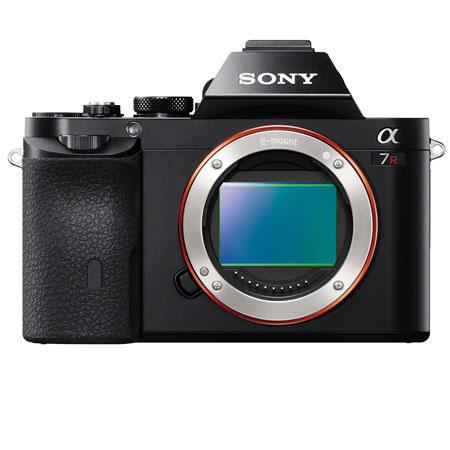
    Sony-A7R1

    That it should use the NEX E-mount (already used for full frame on the VG-900) was never in any real doubt, though other prototypes may have existed using a different approach. Today, worldwide, the A7 (24 megapixels full frame with Phase Detect focusing pixels on the sensor) and the A7r (36 megapixels without PDAF, but with AA filter) were officially announced.

    a7r-35mm

    Compare the body here with the RX1 below – and make a special point of looking at the film plane index mark on the left-hand top plate end. You’ll see that the sensor is positioned much further forward in the A7 body, as the FE mount has the same 18mm register as the original E-mount (including the RX-style decorative orange lens throat bezel) and the RX body is thicker than a NEX even before this is added. This enables a flush-mounted double hinged rear LCD screen, but it’s not a fully articulated or reversible screen, which is a pity.

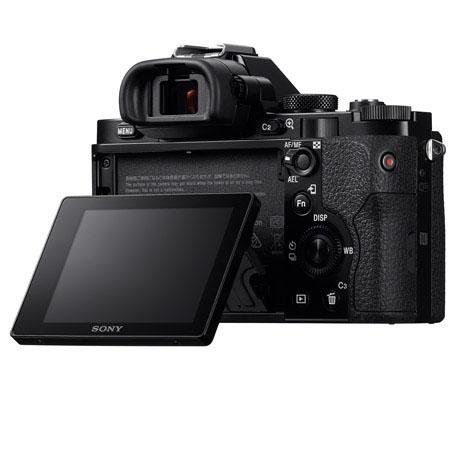
    rx1electronicfinder


    Sony-A7-2

    You will also see that the entire body has been extended in length, despite the RX being full frame.

    This is necessary to accommodate the mechanical drive for the focal plane shutter, which sits more or less between the lens and chunky right hand grip (the RX has no FP shutter as it uses an interlens design). All other principal aspects of the A7 stem from the RX design but the construction is not the same, with multiple magnesium body components sealed together and a different set of interface covers.

    The cameras include WiFi and NFC (NearField) communication to enable cable free transfer of images. It does not have built-in GPS but a GPS module is expected for the Multi Function Accessory shoe. The cameras have 2.3K dot 0.71X 0.5 inch OLED EVFs, essentially the same as the A99 with a similar generous eyepiece size and auto switching.

    There also appears to be some extra depth to the body. You could dream that the extra body depth, length and height conceal the required mechanism for in-body stabilisation… but it’s just what is needed for the focal plane shutter.

    a7-rx1

    We had hoped that the 35mm f/2 lens would be replicated, but this was not to be despite some information that the 35mm being used on prototypes was ‘the same’ as the RX1. Instead, there’s a 35mm f/2.8 Zeiss. I will admit to being underwhelmed by that, as it puts the A7/A7r into a category which almost every camera ever made matches (very few cameras can’t achieve a 60° view angle at f/2.8 – it’s what the cheapest compact 35mms used to start with). It is not stabilised.

    One zoom lens also announced – a lower cost stabilised(?) Sony G 28-70mm f/3.5-5.6 – also fails to set the heart racing (or the hands racing for the wallet) when you consider its modest aperture and fairly substantial size. Unlike the 35mm, it has a rear ring which is marked for aperture adjustment like the RX1 (silent or clicked at choice). The FE mount, while compatible with existing E-mount lenses and accessories and has the same ten-pin contact array, may have additional protocols to handle the on-lens aperture setting.

    The 28-70mm zoom is not a true parfocal, it’s similar to lenses such as Canon’s 18-135mm sold with their EOS 70D which almost negates the value of on-sensor PDAF by having massive focus shift when zoomed.

    If you want contrast detect focus to work, you need parfocal zooms. You need to keep the subject as close to being sharply focus when you zoom as you possibly can. This zoom does not have a constant aperture though setting it to f/5.6 or smaller may have that effect, and it has a large varifocal range (closest focus at 28mm is 0.30m, at 70mm, it’s 0.45m).
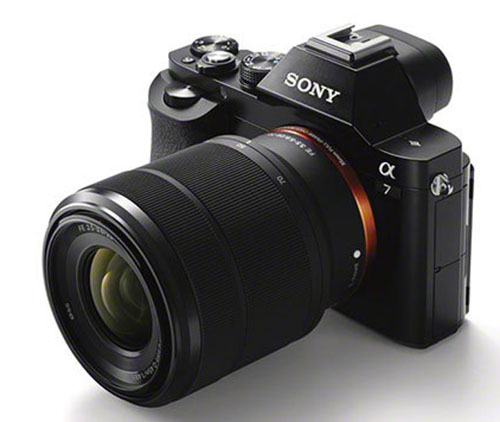
    a7-2870

    Looking at this, I feel that the 24-105mm Sony f/3.5-4.5 D I’m using on my A99 has real appeal.

    a7-2470

    This shot shows a Carl Zeiss 24-70mm f/4 OSS lens, not a kit lens, but an option at a high price. This is a more realistic range. My guess is that this lens will not only be a constant aperture (regardless of setting) but also parfocal so zooming during video will not force a refocusing process.

    The A7 models have audio manual level control during video and a conventional 3.5mm jack for mic input, clean HDMI output for professional external recorders, and for stills only (not video which remains 1080 50/60 or 25/24p – there is no 30p option) the camera will play back at 4K resolution for the new Triluminos gamut Sony 4K televisions.

    The final lens of those released with the camera is a 55mm f/1.8 – again, a slightly odd choice for an expensive standard angle lens of reasonable speed without being special. Bear in mind all these lenses are weathersealed and built for professional use, with the kind of smooth focusing and aperture control required for video as well as stills. A 70-200mm f/4 is also released, putting a total of five lenses in the showcase for launch despite the absence of a true super-wide.

    A brand new LA-EA4 Alpha mount lens adaptor provides phase detection AF via an SLT mirror, and has sufficient clearance internally to prevent image cut off (the LA-EA2 casts a shadow on the sensor as it has a smaller throat). A new 70-200mm SSM G II A-mount lens has been launched today as well as is picked out by Sony as compatible with this adaptor.

    For most potential buyers, the preview of many other lens adaptors – for Leica and for Canon, as examples – will not just be an added attraction, it will be a essential function. It would be interesting if the FE-mount allows adaptors with their own aperture ring controlling lenes such as Nikon G, and reporting EXIF correctly to the A7’s CPU. That kind of detail we’ll have to wait to learn about; most early reviewers will have other concerns. Adaptors are vital because this camera is launched in sharp contrast to the original NEX-5 and 3 models, with at the best a semi-wide prime lens and a basic wide angle on its zoom.

    The NEX system set off with a 24mm lens equivalent, an 84° angle of view considered to be the most desirable all-purpose wide angle, in the box. The NEX SEL 16mm f/2.8 may have had its critics and its QC problems, but it’s become a much-loved lens and got hundreds of thousands of NEX owners off to a great start needing no other wide angle lens. It also had the 12mm wide and 10.5mm fisheye adaptor options at modest cost, meaning that those who wanted true wide views had no reservations buying into the system.

    The A7/r is in sharp contrast to this, without no prime in the launch range shorter than 35mm. Professionals would definitely want to have a fast 24mm (and a faster 35mm!) and a geometrically good 20 or 21mm. The Leica 21mm Super Angulon was almost the standard lens for photojournalists from as long ago as 50 years, reaching a peak of popularity in the 1970s, still considered vital when you’re in a tight situation with crowds. The A7 is an incomplete professional tool until it has a moderate sized, f/3.5 or f/2.8 20-21mm. Vignetting is acceptable as long it’s not accompanied by a colour shift. Vignetting actually helps with the look of the images!

    The AA filter

    The A7r with its D800 level resolution (but a sensor not related to the D800) has the AA filter removed, as in the RX1r. I have tested the RX1r against the RX1 for the British Journal of Photography and I’ll write here about the whole issue of AA filters and moiré only after the BJP has published my report. I will say that the moiré is not a minor issue, the RX1 standard version is already capable of throwing up moiré as it has a very weak AA filter, and the RX1r is bitingly sharp.

    So why does Sony do this? It’s hostile to video though the scaling down from the 6000 pixel sensor to a 1920 pixel HD frame is accompanied by moiré removal. The answer lies in conventional contrast detection autofocus. AA filters reduce fine detail contrast and tend to smooth the luminance peaks and troughs used by contrast detect focusing to decide when the image is most sharp. Removing the AA filter has a small but significant effect on the speed and accuracy of contrast detection focusing, along with an improvement in many irregular textures like distant woodlands, lawn grass and human skin. So if you incorporate image processing able to remove some of the resulting moiré, it makes sense. This is the route being taken by most other makers now to get the best possible live view auto follow-focusing.

    The A7r sensor has a sensitivity of 100-25,600 expandable to 50, and to 51,200 with multi-frame noise reduction.

    The battery

    The RX1, like the RX100, charges via micro USB and uses a very small battery., NP-BX1. This is fine for running a camera without a focal plane shutter, though pushing it for capacity when running the larger RX1 with EVF (you need spares). The A7 models have a large finger grip partly to accommodate a more substantial battery. The tiny NP-BX1 is really a consumer compact camera cell. The NP-FW50 used by the A7 models is the same cell used by NEX and Alpha 55 (etc).

    A battery grip VG-C1EM accepts two of these cells for extended shooting. Charging remains in-camera despite the battery size, as with the Alpha 3000, the first camera to charge this battery type via USB. However, there is an external battery charger available.

    Availability

    Sony state ‘mid November’ for worldwide shop stocking. B&H already has offers in place:Sony A7 digital camera body only $1,698
    Sony A7r body only $2,298
    Sony A7 with 28-70mm $1,998
    Cyber-shot RX10 see below $1,298
    CZ 24-70mm f/4 OSS $1,198
    Sony FE 35mm f/2.8 ZA $798
    Sony FE 55mm f/1.8 ZA $998
    Sony 70-200mm f/2.8 G SSM II $2,998
    Sony LA-EA4 SLT Alpha mount adaptor $348
    Battery Grip $298
    Charger $48
    Off-camera flash shoe (also for all other cameras with Multi Function Shoe) $198

    The RX10

    Sony-RX10

    As this image, released in the early hours of the morning, shows it’s a bridge camera with an 8.8-73.3mm f/2.8 lens which is equal to 24-200mm on a 1″ sensor (2.7X factor, 2:3 format shape). This is the spiritual heir to two cameras – the Konica Minolta A200 and the Sony Cyber-shot DSC-R1 – rolled into one. The A2/A200 was described as having a 28-200mm lens, but because it had a 4:3 format shape, the lens was actually equal to a 24mm if you wanted an 8 x 6″ print shape (the 28mm equivalent assumed you cropped the frame down to 2:3… not many people know that…). And that camera had a 7.2-56mm lens, which tells you that the 2/3 inch sensor is for some reason more like a 3/4 inch sensor relative to the 1″ standard.

    The RX10 has a mechanical zoom just like the earlier Minolta/KM and Sony models. As long as the lens lives up to expectations, it’s going to be a great general purpose camera, with its 1/3rd click stopped aperture ring round the lens and its Alpha style mechanical AF mode switch. Why would you really want anything more than this for 90% of your out-and-about photography? It has Nearfield (NFC) connectivity but does not have WiFi, or GPS built-in. It does have the Multi Function Accessory shoe which can add many accessory functions in future.

    One surprise is that this camera has a mini XLR balanced powered adaptor kit for microphones – this is the small XLR you may have seen on wireless mic sets, locking and more secure than the minijack which is built-in for regular use. This also has audio level metering and manual gain control (thus beating the Alpha 77, which remains hampered by forced auto gain for audio).

    Local noise reduction

    All the new Sony models have improved sensors and processors. The A7r has the microlenses moulded directly to the sensor, rather than added in an overlay layer as it normal, and they are gapless. The RX10 has a back-illuminated sensor. All have ‘local noise reduction’ which sets alarm bells ringing. If it’s a function that only affects JPEGs, all very well; if we have adaptive local NR affecting raw files, it will only be acceptable if it can be turned off (at least, to some users).

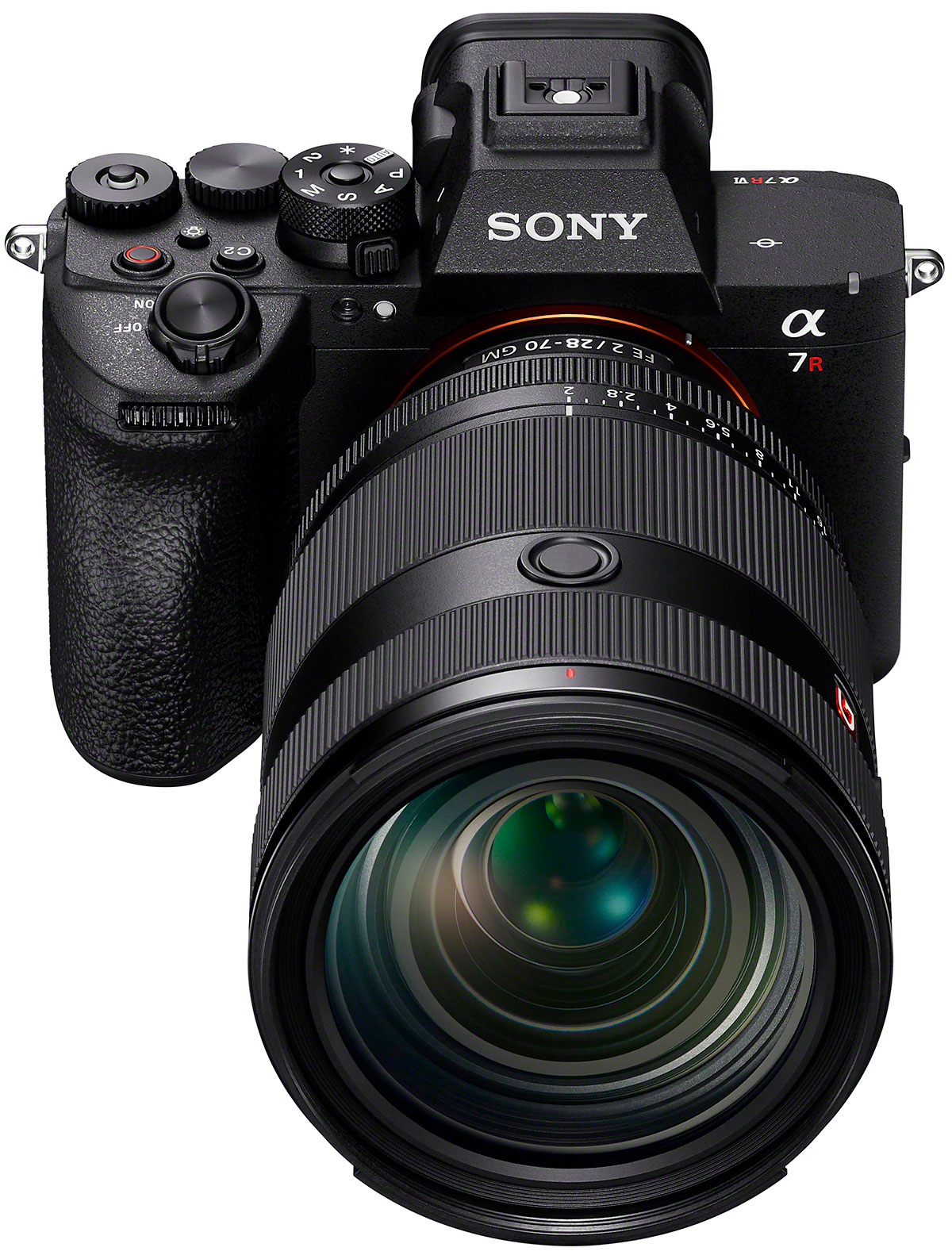
  • Alpha 3000 has NEX mount, 20 megapixel, APS-C

    The long-rumoured Alpha 3000 was announced earlier in August but placed under a n embargo until August 27th. At the same time, the Press was given an insight into new smartphone related products (also widely rumoured) but again, not allowed to print anything officially.

    (via Sonyalpharumours.com)
    (via Sonyalpharumors.com)

    The A3000 is a DSLR-like body with an electronic 1.44MP viewfinder in a prism-style top bulge, but the body is much slimmer at the lens mount and built to the smallest Alpha form factor as the 3 series indicates (smaller than the A57). Indeed, it’s not so different from the relationship of the very first Alpha 3000 series cameras back at the end of the 1980s. The mount is a regular NEX E-mount and the camera lacks any form of Phase Detection AF, depending on Contrast Detection matched to both existing (18-55mm SEL, etc) and new E-mount lenses. The rear screen is a 230KP fixed type.

    18-105-16-70

    Along with this first Alpha E-mount body, Sony announced three new E-mount lenses – a 50mm f/1.8 E OSS (£249) in black, CZ Vario-Tessar T* SEL 16-70mm f/4 ZA OSS (£800) and a Sony SEL Power Zoom 18-105mm f/4 G OSS (£500, and also destined to be matched to the next generation of NEX camcorders, with its friendly left hand operated PZ switch and quiet, controllable action). There may also be another power zoom, probably 16-50mm f/2.8 or a similar short wide aperture range, maybe even the 10-18mm in a power zoom housing. The reason these new lenses are made with constant apertures has nothing to do with the ‘Canon f/4 L’ obsession; it’s entirely to do with video work, to enable zooming without brightness change. The power zoom function is also there for video.

    Caveat: the 18-105mm has a close focus of 45cm at 18mm, 95cm at 105mm. This indicates that the lens is not a true zoom but a varifocal. Varifocals are not of much use for zooming during a take in video, which goes against the constant aperture and power zoom features. So either the lens has an automatic compensation system which can refocus intelligently during power zoom, or a physical limiter on focus travel (unlikely – what would happen if you focused on 45cm at 18mm, then zoomed to 105mm?). The 16-70mm focuses to 35cm over its zoom range, and is actually capable of close-ups with better than double the image scale (less than a quarter of the frame enlarged) relative to the best the 18-105mm can offer, at 0.23X.

    The relatively high level specification of the 16-70mm ZA does not necessarily indicate that there is a higher level of Alpha E-mount body on the way quite yet; at 20.1 megapixels (the same size sensor as the Alpha 58, with some improvements) the performance in terms of imaging may be optimal for a while. photokina 2014 should be when any professional body appears. But this is no way professional – it’s a mere £370 kit with 18-55mm f/3.5-5.6 E OSS, ISO range 100-16000, full HD video, A58-like viewfinder and general performance. You’ll see it in the shops before the end of September.

    Sony’s agenda

    Much has been made of Sony’s relationship with Olympus and the possible inclusion of OM-style 5-axis sensor stabilisation in E-mount bodies. Though the A3000 seems to have SteadyShot Inside (not confirmed by our man at the press conference, and not one of the features shown on the swingtags of the first cameras photographed by others) Carl Zeiss, traditionally wary of stabilised lens design, would not be issuing the 16-70mm with OSS unless fixed sensors were going to around in NEX and Alpha E-mount bodies for some time.

    Whatever type of in-body stabilisation it has, the A3000 with SS looks like a good companion for existing un-stabilised lenses such as the Sigma 60mm, 30mm and 19mm f/2.8 designs or specialities like the Voigtlander Nokton 42.5mm f/0.95. However, I’m writing this prior to the big release of information this morning. Despite many statements that the camera does have IBIS, I see no rock-solid evidence that it does and I’m very aware that Sony staff if asked whether it has stabilisation could well say ‘yes’ on the basis of the OSS present in the kit 18-55mm lens. So, I treat this information with caution. It would not be the first time an expected feature has not materialised. Check the Sony site if you are reading soon after 5am GMT, I’ll amend this article later in the day.

    Update 9am: full details are now widely on the web and there is no IBIS – here’s a complete rundown and sales page from B&H in New York on all the new products, including tech specs.

    In the meantime, we know that Sony has been increasingly close to Sigma (a company which also works with Zeiss) and that some ideas may be shared between the two companies. One of the most important ideas promises to end the way your camera system choice locks you in to one company’s products. Sigma has taken the first visible step with its mount switching service. Future Sigma DSLR lenses can be returned to the workshop and their entire rear mount changed, at a cost, to another mount. So you will be able to own your 300-800mm (2014 version…) and if you switch from Canon to Nikon, the lens can switch with you. Now that many regular lenses cost £1000 or more and Sigma’s quality is so highly regarded (35mm f/1.4, MFT and E-mount lenses, DP series) it will make sense to keep the glass for longer. The new USB-interfaced lens calibration kit will also enable such lenses to be user tuned to work with their new host bodies.

    The second idea is the switch to E-mount for more products by Sony. There is already a full frame E-mount Sony, the NEX VG-900E, and it’s actually a 24 megapixel still camera shooting raw, as well as a high-end full frame camcorder. It just gets very little attention because it does not look like an SLR or a NEX. This camera has adaptors for other systems of full-frame DSLR lens, as well as a specialised full-frame version of the Alpha mount plain adaptor (LA-EA3 without APS-C internal baffles found in the LA-EA1). However, third party makers have not yet gone the distance. Prime lenses from Samyang and Carl Zeiss are the main E-mount full frame offerings, made for video.

    With the Alpha 3000 we see the introduction of an idea I sketched out for film cameras in the 1970s based on discovering the Contarex with its interchangeable 35mm backs. My concept was a camera body with a shutter unit, and a mechanical linkage for slot-in modules including a rangefinder mount, an SLR mirror-box with prism, and a pro mirror-box with interchangeable finders, plus several further front components to switch between Pentax, Minolta, Nikon, Canon and other lenses. Alpa came close to managing this with their very slim bodies and mount adaptors, plus a combination of optical direct finder and prism.

    Sony’s future, like Sigma’s, lies in crossing all boundaries. The eventual full-frame, E-mount DSLR-style camera may well have the rumoured 36-50 megapixel sensor, 4K electronic viewfinder, and five-axis sensor stabilisation. It will also have an Alpha lens adaptor and firmware lens recognition good enough to let SSM and SAM in-lens focus motor lenses function adequately with on-sensor focusing. But what it will also have, for certain, is a range of adaptors for other mounts including Canon EF and Nikon G with translated control of AF and aperture (exactly what Sigma has now built in to the front ends of its ‘switchable mount’ new lens series). These will likely be third party products, but Sony has already shown (in 2010, at photokina and other shows) that it has no difficulty welcoming makers such as Metabones and Novoflex on board as co-operative vendors.

    What’s more, in theory there will room to build a phase-detect mirror system (SLT) into some adaptors and even to add a focus drive motor. With the right chipset to translate the protocols from body to lenses, or to mechanical functions in the adaptor, almost any lens ever made for any SLR or rangefinder from the last century of miniature camera development will find a home on Alpha E-mount bodies.

    Then you will have the ‘DSLR-CSC’ hybrid to end all – the body which can be sold with a Nikon mount, or a Canon mount, or an A-mount – or use its highly optimised future full-frame E-mount optics. To some degree the NEX has already done this but the real impact of the 18mm thick body, compatible with full frame lenses, has yet to be seen.

    Caveat – if a full frame model does use sensor stabilisation, mechanical obstructions could mean that a crop factor of somewhere around 1.2X was needed. Sony already has pixel-shifting electronic stabilisation for video, not stills, and this also needs a crop factor to work. It would be easy to imagine the full-frame NEX accepting this limitation, and providing electronic stabilisation on-sensor only, removing moving parts and improving precision/calibration.

    The NEX-5T

    Sony-NEX5T-flipup

    The NEX-5T has the same forward flippable rear screen mechanism as the 5R, one of the advanced over the earlier 5 and 5N designs.

    The NEX-5T is the successor to the NEX-5R (5n, 5 etc), available as a black or white body. The 16.1 MP APS-C CMOS sensor NEX-5T will sell for around £600 and adds Near Field Connectivity technology to WiFi. Fifteen of Sony’s PlayMemories ‘apps’ are now available. Features include Hybrid AF (CD-PD on sensor), 180° tilting LCD, and maximum sensitivity of ISO 25600.

    See: www.sony.co.uk