United Kingdom / Republic of Ireland, 20 August, 2007:
Canon raises the stakes in the professional photography market with the launch of the 21 Megapixel, 5 frame per second EOS-1Ds Mark III. Delivering 14-bit depth resolution from a newly developed 35mm full frame CMOS sensor, Canon’s new flagship digital SLR produces files that convert to over 100MB uncompressed 16-bit TIFF, setting a new benchmark in image resolution and sharpness for 35mm-format digital photography.
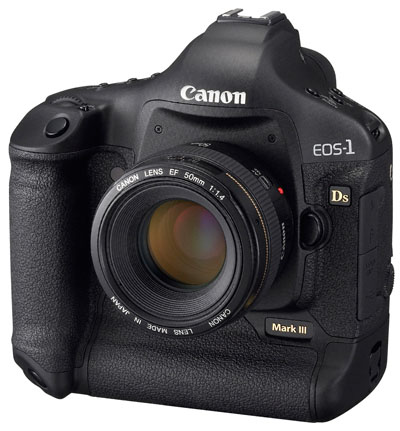
As well as producing outstanding colour rendition, Dual DIGIC III processors drive 5 fps continuous shooting for up to 56 Large JPEGs (12 RAW) – unrivalled by any other camera at this resolution. This capacity to shoot such large images uninterrupted is regarded as a big driver in switching studio photographers to the EOS platform.
The EOS-1Ds Mark III inherits the new technology platform introduced earlier this year in the EOS-1D Mark III, including 63-zone exposure metering, 19 cross-type auto focus system, a 3.0” LCD with Live View mode and EOS Integrated Cleaning System. The Highlight Tone Priority function expands dynamic range for more depth and detail in bright areas. The launch is supported with the announcement of Canon’s new ultra wide-angle lens, the EF 14mm f/2.8L II USM.
“Taking image quality and versatility to unprecedented levels, the EOS-1Ds Mark III redefines commercial photography conv entions”, said Karz Suzuki, Head of Canon Professional Services. “The camera will strengthen Canon’s popularity amongst professional studio photographers. Culminating 20 years of EOS development, the EOS-1Ds Mark III represents a definitive moment in our company’s photographic history.”
Availability and pricing
The EOS-1Ds Mark III will be available from October 2007, priced at £5999.99 / €8699.99 RRP inc VAT.
Key features
- 21 Megapixel full frame (35mm) CMOS sensor
- 5 fps continuous shooting for up to 56 frames
- Dual “DIGIC III” processors
- Highlight Tone Priority
- Auto focus system with 19 cross type sensors and 26 focus assist points
- EOS Integrated Cleaning System
- ISO 100-1600 (expandable to L:50 H:3200)
- 3.0” 230K pixel LCD with Live View mode
- Redesigned viewfinder now wider and brighter
Image quality
The EOS-1Ds Mark III produces files that exceed the standard resolution requirements of leading agencies and stock libraries. The third generation CMOS sensor incorporates a new pixel design with on-chip noise reduction circuitry to ensure high image quality all the way to ISO 1600. 14 bit A/D converters provide a total colour depth of 16,384 tones per pixel – delivering smoother gradations and more accurate colour reproduction.
The option to expand to H:3200 will be welcomed by professionals working in churches and sensitive situations where the use of flash is not permitted or desired. Where discretion is paramount, a silent drive mode delays shutter re-cocking for as long as the shutter release remains depressed.
Highlight Tone Priority mode gives wedding and landscape photographers the option to boost dynamic range for highlights when shooting above ISO 200 – reproducing more tonal detail from wedding dresses, clouds and other bright subjects.
Precision and control
The auto focus system includes 19 cross-type sensors with sensitivity up to f/2.8, spread across the AF area to better accommodate off-centre subjects. An additional 26 AF assist points help with AF tracking accuracy.
The control layout includes a dedicated AF-ON button on the back of the camera, allowing users to instantly switch auto focus on when composing. The viewfinder is now brighter with a wider angle of view, while the 63-zone metering system gives photographers a greater degree of control over exposure.
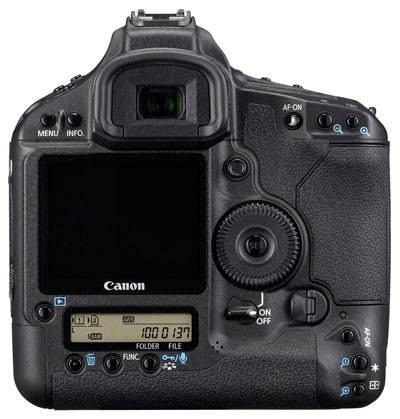
New LCD with Live View
The bright 3.0” LCD monitor provides 230K pixels resolution for precise framing and reviewing. Live View mode displays a real-time image on the LCD, including a selectable grid overlay and a live histogram that simulates image exposure. For the studio environment, remote Live View lets the photographer compose, adjust settings and capture the shot via a PC using the supplied EOS utility software.
New controls and menu
The EOS-1Ds Mark III’s menu incorporates a tab structure that eliminates scrolling for vastly improved readability and ease of use. Improving on previous models, personal settings and custom functions are consolidated into 57 custom functions grouped into four logical categories. Photographers can also now see at a glance any default setting changes. The My Menu option allows photographers to store frequently used settings on a separate menu for immediate access. Settings for recently released accessories such as the Speedlite 580EX II and the Wireless File Transmitter WFT-E2 can be controlled directly from the LCD.
Along with a new dedicated ISO button, ISO is permanently displayed on the top LCD panel.
Reliability
Shutter durability is increased by 50% to 300,000 cycles. A magnesium alloy casing with dust and moisture resistant seals protects the body. The EOS Integrated Cleaning System reduces, repels and removes dust from the sensor to significantly limit the need for manual cleaning. To avoid image loss, a warning alarm sounds if the memory card door is opened while images are still being written.
Connectivity
Interfaces include video out (for display in both NTSC and PAL formats – with the
Live View mode ideal for live display to clients during the shoot) and USB 2.0. To prevent the USB cable becoming accidentally dislodged during shooting, a special connection secures it to the camera body.
Compatibility and accessories
As well as full compatibility with all EF lenses and EX Speedlite flashes and accessories, the EOS-1Ds Mark III is supported by the recently released
Wireless File Transmitter WFT-E2. The WFT-E2 enables secure wireless uploads to FTP servers as well as remote access via HTTP and PTP protocols. The unit also connects wirelessly to external storage media and supports GPS tagging when used with a portable GPS device. For assignments where image protection and authenticity are crucial, the EOS-1Ds Mark III is compatible with the Original Data Security Kit OSK‑E3.
New lens
Today’s launch coincides with the release of the EF 14mm f/2.8L II USM: Canon’s new professional L-series ultra wide-angle lens for the photographer requiring a slightly different perspective. As with many L-series lenses and the Speedlite 580EX II, the EF 14mm f/2.8L II USM incorporates environmental sealing to match that of the EOS‑1Ds Mark III, creating a fully weatherproof camera system. Aspherical and UD lens elements produce exceptional image quality with improved corner-to-corner sharpness. The ring-type USM delivers fast, silent auto focus with full-time manual focus override. A circular aperture produces pleasing bokeh at wide apertures and Super Spectra coatings suppress ghosting and flare by suppressing internal reflections from lens element and sensor surfaces.
Software
The EOS-1Ds Mark III is packaged with a comprehensive software suite to streamline the photographer’s workflow. This includes Digital Photo Professional (DPP) RAW conversion/processing software for complete RAW image processing control. DPP also integrates with camera features such as the Dust Delete Data and Picture Style. The camera also comes with EOS Utility, ImageBrowser/Zoom Browser and Photostitch.


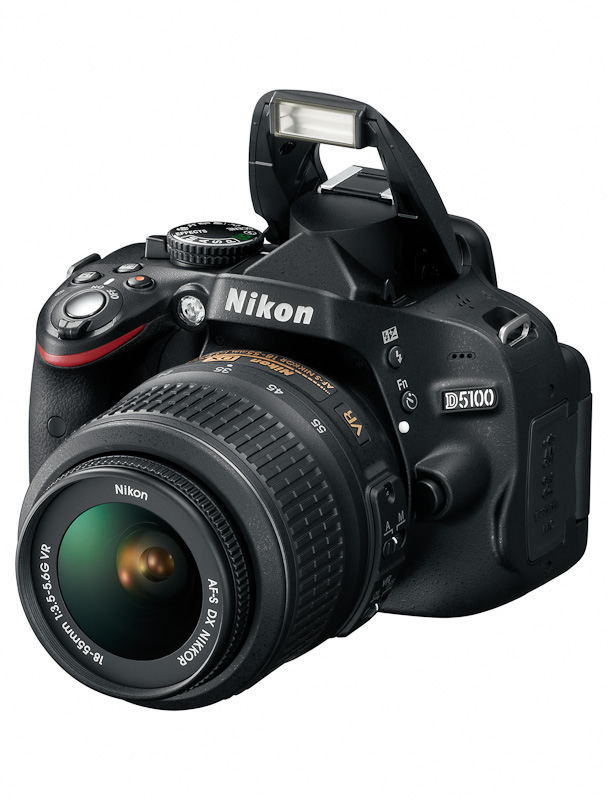
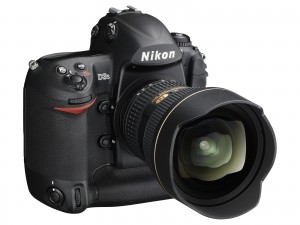 Today sees the announcement of Nikon’s most significant camera body this year so far – bringing the D3 in line with the resr of the Nikon range, and improving it with customer feedback and to continue competing in a rapidly developing sector of the market. With headline grabbing ISO performance and D-Movie, the D3s looks set to repeat the success of the original D3…