Tag: technique

  • Elinchrom ELC500 TTL studio flash

    Elinchrom ELC500 TTL studio flash

    A new generation from Swiss masters of studio flash Elinca SA brings multi-platform TTL, super-fast recycling and flash durations, brilliant LED modelling and many design innovations.

    David Kilpatrick has been trying out the twin head kit.

    The second wave of any innovation in technology is often safer to invest in than the pioneering first generation. Studio flash offering IGBT duration and power control, allowing much the same TTL and high speed functions found in camera speedlights, has been in development for over a decade but whole generations have been orphaned by advances in wireless trigger and camera firmware.

    Finally bringing this to their new mid-range ELC TTL heads – one rung below the ELC Pro and one above the BRX – Elinchrom has worked for maturity in the whole technology. So, when the ELC 125 and 500 TTL arrived they worked much like any head with the EL Skyport Pro. Days later new firmware for the triggers enabled TTL operation, across a range of camera platforms already proven with the portable ELB 500 TTL.
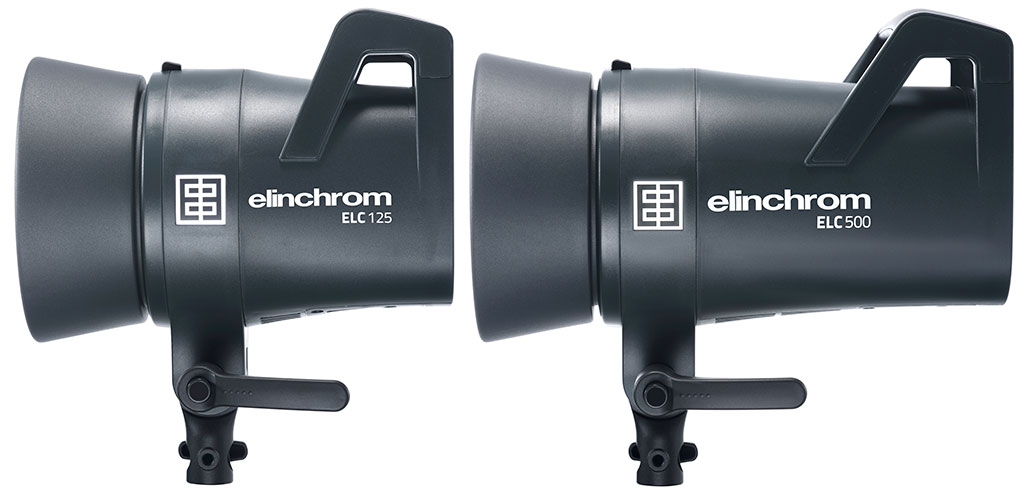
    The ELC 125 TTL is a little larger than a D-Lite. The ELC 500 TTL is substantial – as expected.
    • New dark grey design with superior handling and balance
    • Pro-sumer price but professional spec
    • True TTL exposure with all major camera systems
    • Standard or high speed flash without changing heads or tubes
    • Robust sequence shooting
    • New bright LED daylight colour modelling light
    • Unique colour-coded logo display to show groups
    • Very large LCD rear info panel easy to see at a distance
    • Skyport and Phottix, smartphone and tablet control
    • Large brolly shaft tube fits third part accessories
    • Elinchrom shot-to-shot consistency of colour and power output
    • Worldwide service, UK support from The Flash Centre
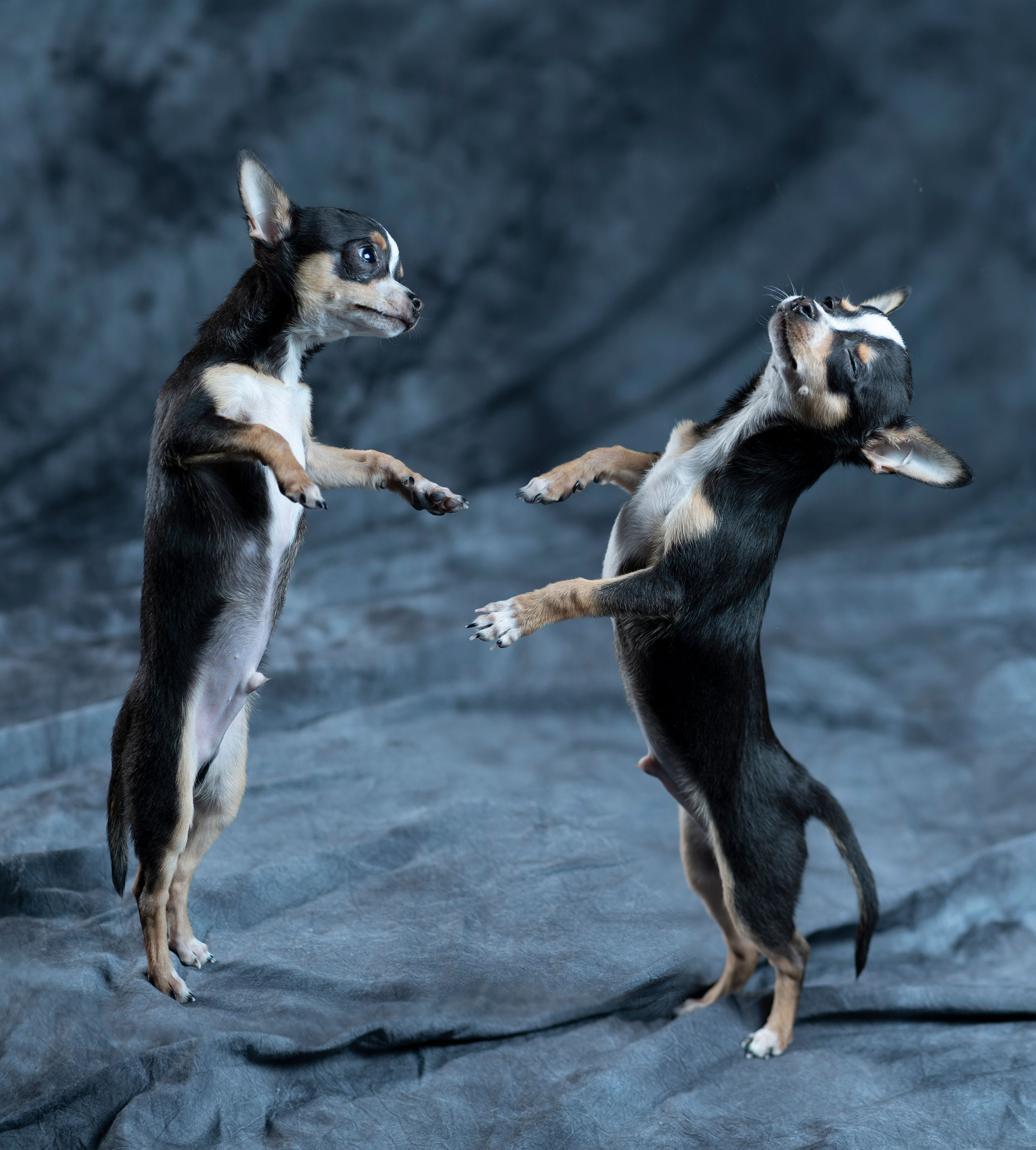
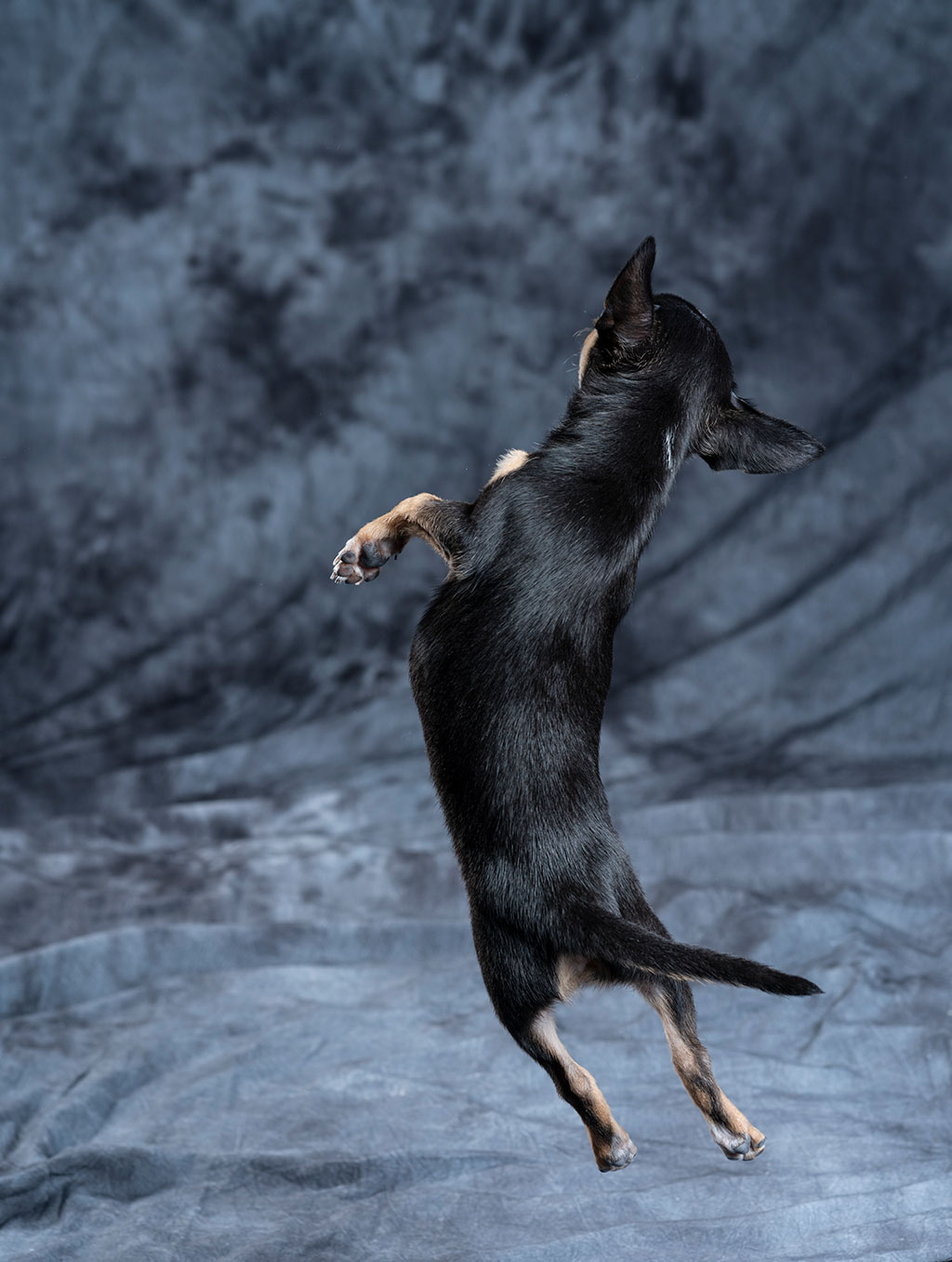
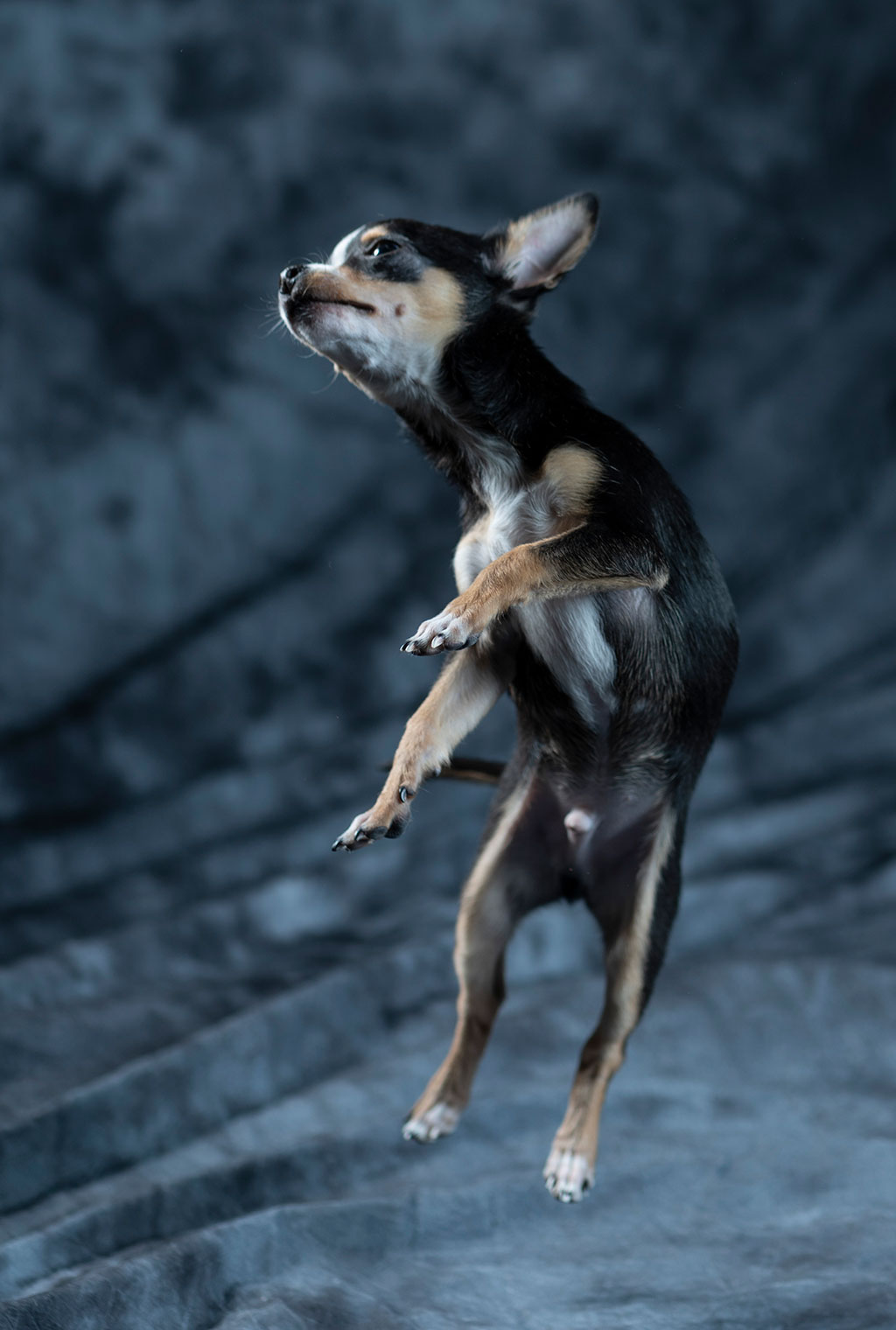
    Photoshop composite warning! Alfie dancing with himself, high speed poses with Animal Eye AF on the Sony A7RIII, 85mm ƒ1.8 lens at f/2.8, and Action duration set on the two heads. Main 90cm square softbox on ELC 500 to the right of the camera, 44cm honeycomb rigid softbox on ELC 125 to the left, skimming in from side and behind, near the edge of the background. Dog handling by Assistant Editor Diane E. Redpath; lighting, camerawork and post-production by David Kilpatrick.

    Canon, Nikon, Olympus/Panasonic, Sony, Fujifilm and Pentax have all been enabled to integrate into Elinchrom studio setups though the differences between the shoe fittings do mean you need a trigger for each different system you use. For medium format and anything else, the transmitters can be paired with a universal receiver.
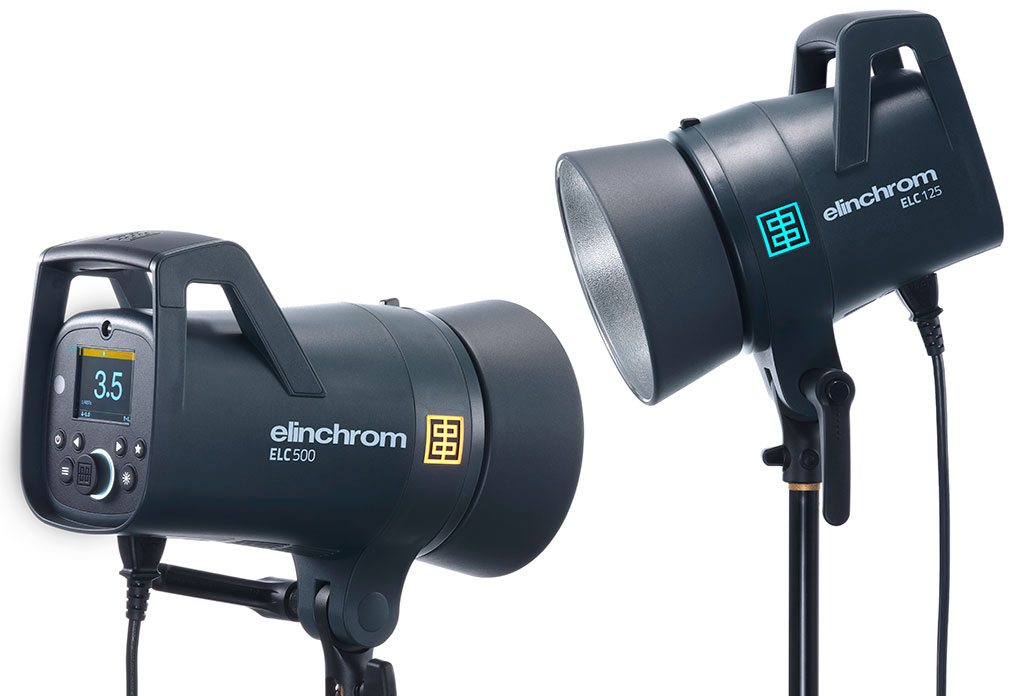
    The logo on the side changes colour to show the Group set. The stand fitting is simple and appears to be very strong. The centre of gravity and pivot point is better on the 500 when any lightshaper is fitted.

    To use functions of the transmitter such as Hi-Sync (up to 1/8000s shutter speed) specific flash heads have been needed – the ELB 400 and 1200 portables with HS heads, or the D-Lite RX4, are needed to use HS. With the new ELC TTL heads HSS rather than Hi-Sync is used with a high speed shutter setting, enabling the ELC 125 to achieve this despite having a standard maximum power flash duration of 1/625s  (t=0.1) which would be too short for Hi-Sync.
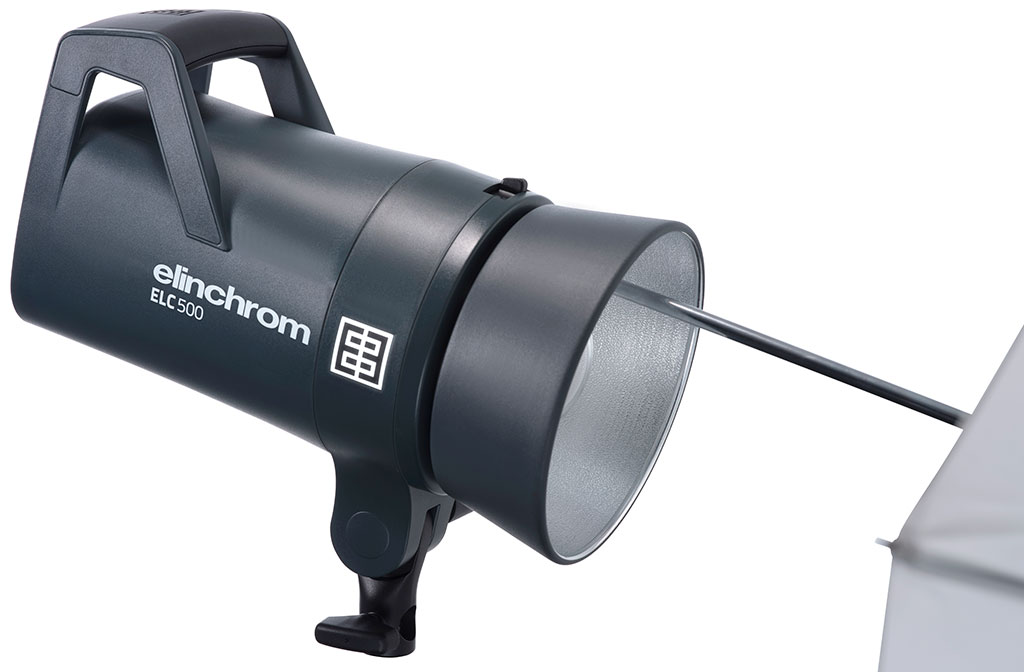
    The umbrella tube is within the reflector area, as with previous Elinchrom heads, but it’s able to fit 8mm (very common) as well as 7mm (Elinchrom native, and less easily found) shafts.

    The ELC heads can achieve either Standard or Action durations for any given power setting, toggled at the press of a button. The 125 can give 1/7750s and the 500 1/9430s at minimum power which is an identical 7 Ws in both cases. It’s a close enough match to mix the heads, you’re not going to see ghosting on super-fast subjects with the difference in durations involved. Since the LED modelling light in these heads is fully variable both manually and with a proportional link to flash power, it is possible to use the 500 within its 7 to 125 Ws range alongside a 125, and match the modelling to the flash exposure easily. There is no function similar to the D-Lite or BRX heads to apply a two-stop differential to modelling power.

    Bright daylight LED modelling
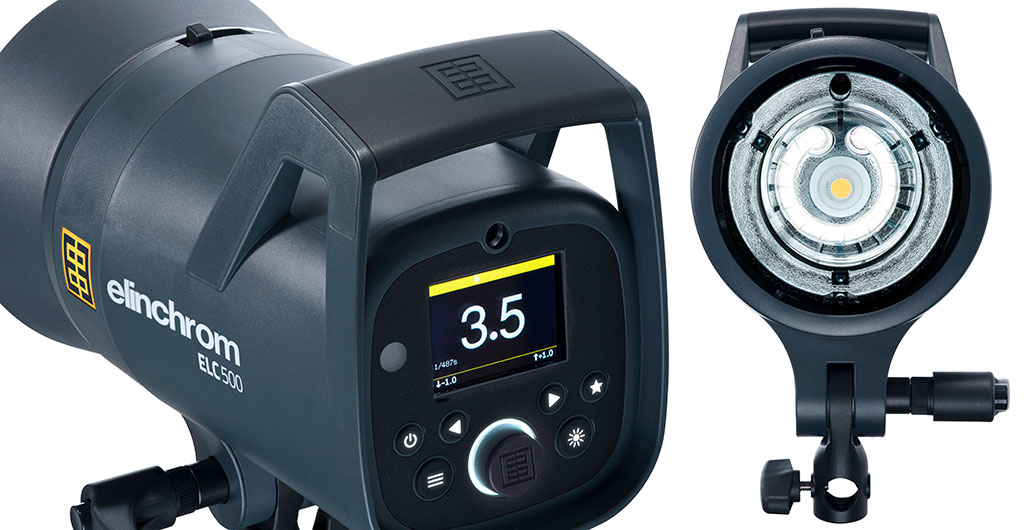
    The LED is centred on the flashtube and the rear display can show both modelling and flash power. The modelling when measured was sixteen times brighter than our iLux Summit 600E battery powered mono heads.

    To give an idea how good the new modelling LED is, it’s a very bright CRI 91 source suitable for most daylight fill-in and video though the intelligent fan cooling of the heads works against movie lighting. It is sixteen times as bright as the LED fitted to competing battery-powered Chinese heads introduced a few years ago and still unchanged in this respect. It’s a 20W LED, which would be perfectly battery-friendly for brief use but can run all day at full output in a mains-powered head. 

    The head never heats up the way tungsten modelling lamp designs always have, even those with 50W peanut bulbs. This meant my 44cm rigid small soft box, conical snoot, optical spot and reflectors fitted with front diffuser or deep honeycomb could be left with full power modelling, for hours if necessary. For many photographers, the quality and brightness and proportional control of the modelling without any heat penalty will be reason enough to choose the ELC heads.

    Songwriter Natalie Bays photographed using a 100cm deep octa softbox on ELC 500 close to the camera, with 44cm honeycomb rigid softbox on ELC 125 as a hair accent light behind to her right. The modelling is bright enough for reliable manual or auto focusing but also very comfortable for the subject.

    While the TTL function tests out well, I’m still using a flash meter partly to check the relative brightness of each head especially when one is used for a side/back positioned accent light and one for a main light, as I did with the 125 and 500. I generally add a small amount of rim lighting to avoid dark subjects blending into the typically dark background. The tenth-stop control of these heads, individually or globally from either their very well designed and illuminated rear controls or the Skyport, allows fine tuning to traditional reversal film standards though digital shooting doesn’t need that. Just get the ratio right and don’t overexpose, at low ISO settings (anything under 800 these days) the shadows and exposure can be fine tuned from raw.

    Practical photography tests with the Elinchrom ELC 125/500 TTL kit

    To test the 125/500 kit we did a shoot with Assistant Editor Diane’s chihuahua puppy Alfie who was up for an extended playtime jumping in the air after toys and running around the fabric backdrop. The modelling was set at full power to let the Sony A7RIII with 85mm f/1.8 FE lens track continuous focus at 8fps (Hi) and AF-C with Animal Eye AF enabled. Short bursts or single frames only were needed, and it was pretty amazing how precise the focus was working out at f/2.8. What may look like static poses were not!

    We did a shoot using tomatoes dropped into a long glass of water, just for fun, using the fastest duration on both heads with closer positioning and ISO 640 to allow f/5.6, with manual focus and exposure by metering and test frames. The Hi+ setting (10fps) does reduce the dynamic range to 12-bit from 14-bit, so bright water in these is burned out, but that doesn’t really matter. The Tamron 28-75mm FE zoom used at 75mm had no chromatic aberration (always a risk with bright water reflections), and later on in the portrait below showed its sharpness, aided by the total absence of any exposure duration related shake. That’s a benefit which not all studio flash brings as durations can indeed be in the 1/200-1/500s range – the ELC 500 runs at 1/250s in standard mode at full power (t=0.1). 

    Water splash at faster than 1/7000s flash duration on both heads, shot using the Tamron 28-75mm f/2.8 FE at f/5.6, manually focused, ISO 400. From 10fps Hi+ sequence shots with nearly symmetrical flash to rear and sides. Below, variations on the theme – the bottom right hand shot is a composite of two frames, made possible by working on a tripod. Set-up design and tomato dropping by Assistant Editor Diane E. Redpath, lighting and camerawork by David Kilpatrick.

    The longest sequence bursts were only two seconds at 10fps, and the ELCs had no problem keeping up and never lost a frame. Recycling with both 125 and 500 set to 7 Ws is just 0.06s working from 230V mains, so capable of better than 16fps. I didn’t try running the camera at full speed until it or the flash hit a barrier – trying not to use my 500,000 shot shutter life all in one day!

    Start where you left off – a memory for the settings in use

    One great benefit of the heads is the ‘mains always on’ function with a standby red glow on the rear power switch. The settings last used are remembered, as with most Elinchrom units even when switched off and on again at the mains – common practice with boom or track mounted heads positioned out of reach. The ELC ProHD models turn off completely if you do this and need to be switched on at the head (a service modification can change this). With ELC TTL heads, just switch off and on again at the plug and the heads come alive.

    Ergonomically, the new heads are much improved. The bayonet lock is similar to the D-Lite latch but made stronger, and easier to use than a rotating rim. The tilting stand mount is very robust, the reflector centred umbrella shaft is increased to 8mm from 7mm and there’s no external one in the mount. The big grab handle on the top is needed as the barrel of the body is large to hold otherwise. The new standard reflector and other accessories are finished in very dark grey, a switch from the traditional light colour of Elinchrom. Some third party EL bayonet accessories didn’t fit the heads, as the body is tailored exactly to the profile of the genuine products. The new protective cap is compact, reducing overall storage size, but won’t fit heads with conventional modelling bulbs.
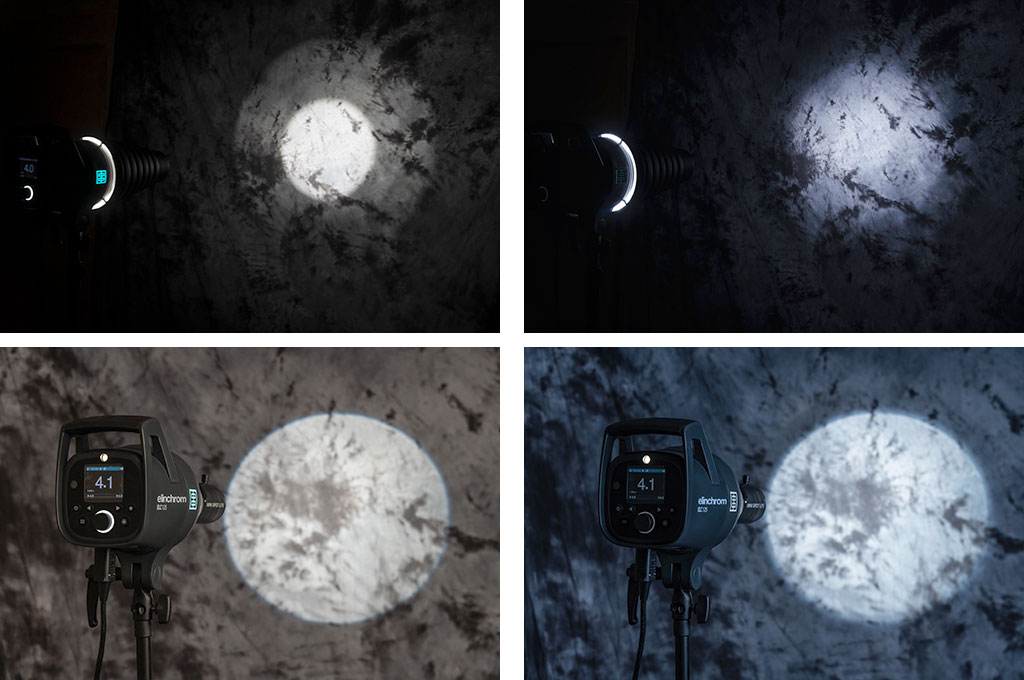
    The LED modelling light in the ELC heads outputs 3000 lumens from a small circular source located dead centre of the ring-shaped flash tube. With the Conical Snoot, top, there’s a significant difference between visual modelling (top left) and flash exposure (top right). This also applies to some reflectors and also honeycomb grids, but not to softboxes with fabric panels, or umbrellas. Lower pair, the preview using the Elinchrom Mini Spot optical spot – which does not overheat with the LED – closely matches the final flash result.

    The flashtube is covered by a ventilated pyrex dome. There may be a frosted one available in future to iron out any discrepancy in the modelling light and flash illumination, as previews and as shot. I found the LED gave odd effects with just a few light shapers, notably the conical snoot. Surprisingly, the optical mini spot was very faithful between modelling and flash effect – and naturally any reflected or soft sources worked just as normal. All small modelling sources produce different effects, and Elinchrom’s original Super Leuci large bulbs preview flash tube light better.

    Benefits of cool running modelling with video-friendly brightness

    With the new LED modelling there will be no bulbs to replace, so that’s a cost of ownership reduced. The flash tube and dome are user replaceable, the modelling LED is a service replacement. Does an LED have a longer life than a flash tube? From experience of LEDs so far, I’d suggest not. Time will tell. We have seen great advances in LEDs over the last few years. Elinchrom must be convinced that the unit they have chosen is a mature design and will have a long production life. It is, after all, the first time they have put LED modelling into an AC mains head and they have waited to be able to get this right.

    As for video, each head still has an intelligently controlled cooling fan – even the 125. So they have limited use with sound recording. With any flash able to fire at a 16fps burst rate cooling is needed. For events, school portraiture, fashion or sports action shoots at typical power settings around 30 Ws per head the rate of firing may be slower but photographers don’t want thermal cut-out half way through a day of hundreds or thousands of shots. This is the big difference between the existing D-Lites, BRX, and ELC ProHD models – recommended duty cycle. At entry level you can shoot sessions with hundreds of shots, at the top level with thousands. The new ELC TTL heads have a medium-duty rating similar to BRX.

    The standard duration mode, toggled to Action by pressing a button on the back panel marked with a star, offers 5600K colour temperature with a ±150K stability on the 125 head and ±200 on the 500. The LED is 5700K. Unlike flash heads with bright tungsten modelling, you won’t get a warmed-up result by using strong modelling and low flash power with a shutter speed like 1/30s or 1/60s. Photographers today often forget that some of the classic fashion, beauty, figure and portrait work of the 1960s to 90s was taken using studio flash with 650W halogen modelling turned down to minimum flash power to enable wider apertures, on medium format cameras like Pentax 67 or Hasselblad 2000F which synced at speeds like this. With leaf shutters capable of X-sync at 1/500s, speeds like 1/60s were used to allow the modelling to add warmth and enrich the colours on transparency or negative colour film. What you get from the ELC TTL heads and any mix of LED and flash, even with dragged shutter effects to combine movement flow with frozen detail, is a constant daylight colour temperature. The 3000 lumens output is enough to shoot at f/1.4 or f/2 hand-held for subjects like newborns, using no flash.
    Our verdict on the ELC TTL system

    In the ELC TTL heads, Elinchrom has combined most of the key features of mains studio flash with the functions of the ELB 500 TTL portable kit. The ELC ProHD models remain best for very heavy duty work, high power to 1000 Ws, and advanced programmable functions. For most users a set of ELC TTL heads will be all the studio flash needed for many years to come. The ELC 125, not much bigger than a D-Lite One, is ideal for social studios shooting portraits, groups, babies and small products.

    The reliability of the brand, its 30-year history of British-Swiss synergy, and the solid service provided by The Flash Centre in the UK outweigh the cost advantages of buying one of the lesser competitors in the new field of TTL studio flash – makes which might be considered equal cost more. If your existing light shapers and accessories are EL fit, the decision is easy. If you’re moving from the Bowens S reflector fit adaptors are easy to find.

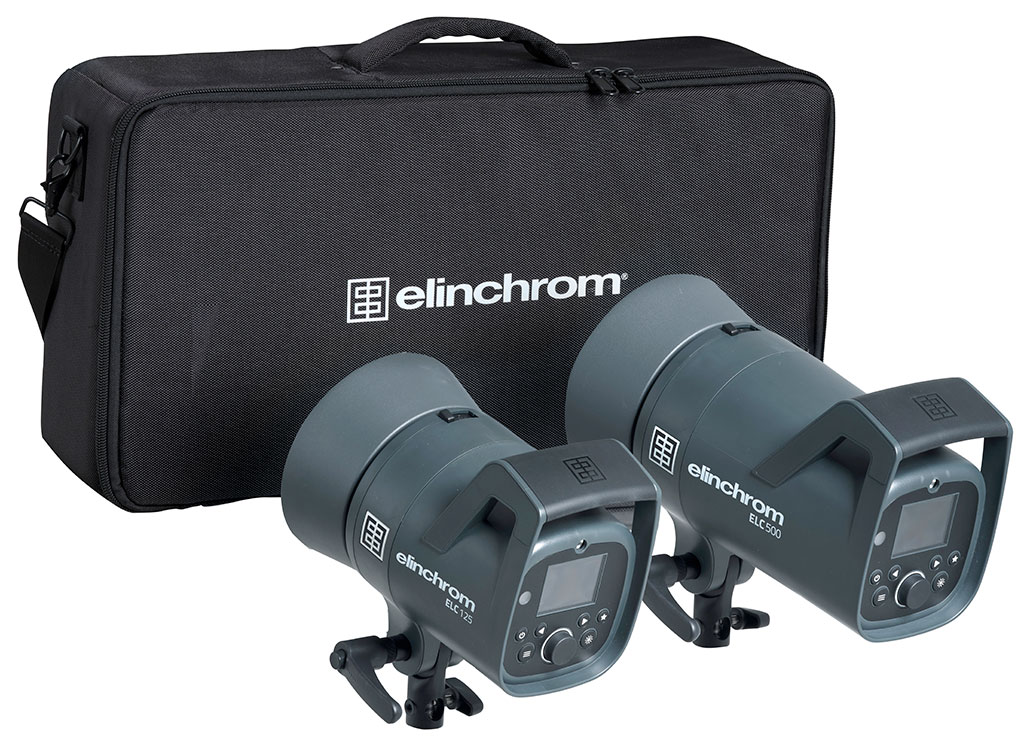
    The ELC TTL heads are sold individually and also as kits – 125/125, 125/500 and 500/500. Prices start at under £500 for the single 125 to around £1,200 for two 500s in a well-designed bag, all heads coming with the new 16cm reflector and all warranted for three years.

    See: www.theflashcentre.comWhen enquiring please mention Cameracraft’s review! Affiliate links below help run this site if you choose to buy from them.

  • Frank’s a definite Alpha Male

    We shall be sending Frank Doorhof one of our original and rare Alpha Male T-shirts, in black, though I’m not sure we have anything quite large enough to fit him – which goes for his personality too. He’s a great workshop presenter, overcoming technical problems by just cracking on with whatever will work best. At Edinburgh for The Flash Centre’s full day fashion seminar with Frank on May 24th, the last thing I expected was to be using the same camera as Frank. All workshop leaders use Canon, right?

    Frank now uses Sony Alpha 99, and he had a lot to say about it. Since we already know the benefits of the Alpha system and the current Sony full frame 24MP sensor with its extreme 14-bit dynamic range, most of what he said was not new, but it’s rare to hear a course leader extol the virtues of a system which not one of his delegates (apart from me) was using. He did rather talk down the value of CZ lenses (while using a 24-70mm CZ) and praised the quality of his vintage Minolta 85mm f/1.4 and 35-200mm xi, but I can’t argue with that as I’ve made similar decisions. Indeed, the 35-200mm owes much of its reputation to results we published seven years ago. I was beating him at his own game by using my SAM 28-75mm f/2.8 – cheaper by half than the CZ 24-70mm, and extremely sharp.

    doorhof-church

    We had a rare sunny clear day in a run of mixed weather, though it was cold and windy on the roof terrace of the Glasshouse Hotel in central Edinburgh. The location provided strong backgrounds and details. Simon Burfoot and Chris Whittle from The Flash Centre brought along the Ranger (battery location) and Ranger Quadra (lightweight version) flash systems with Elinchrom Skyport wireless triggers. Of course, in the past if you turned up to a workshop with an Alpha body, you were unable to use the wireless flash connection unless you also remembered to bring a standard hotshoe adaptor. With the A99 (and NEX-6, RX1 and future models) the new Alpha multi function accessory shoe works directly with triggers.

    Frank put everything into using just one light source, and used no reflectors, aiming instead for dramatic lighting by underexposing the main scene but lifting his model subject Nadine by local flash. This was achieved with the 44cm rigid square softbox, newly re-introduced to the Elinchrom system (I have used the original grey one for over 20 years – you only need to buy these expensive accessories once in a lifetime). Fitted with a honeycomb but no diffusing scrim, the single lighting head with this light shaper put a tightly controlled pool of light on to his subject. Though it’s easy to use digital SLRs as a pre-test light metering and flash balancing method, Frank works with a Sekonic flash and ambient light meter able to take incident, reflected and partial spot readings. It is very similar to the discontinued classic Minolta Flashmeter IV/V, with the same 1/10th stop accuracy and display of contrast and memorised values. If I was doing this type of work, I would use my Flashmeter IV, but I would also use its calibration function to match it to specific ISO settings on the A99.

    doorhof-setup2

    Frank’s wife Annewiek used multiple video cameras to film the workshop, as Frank provides his on-line tutorial material through Scott Kelby’s training site. Here you can see one set-up as he explains how he’s seeing the location, addressing the used of the glass window wall, avoiding unwanted reflections, placing Nadine in the shade then adding the flash to match an underexposed daylight scene. To achieve the required settings, he used ISO 100 at apertures around f/16 to f/22, with a 1/160th shutter speed, and mechanical first curtain shutter. I also followed these settings, which are not kind to sensor dust spots. Anyone using a Nikon D600 would have been in serious trouble! Even my ‘clean’ A99 which never needs any spot removal at my regular optimum working apertures between f/8 and f/13 showed a few visible spots at f/18. I would have used ISO 50, which I consider to be an advantage of the A99, and trusted shutter speeds to 1/250th with this camera for flash sync. But Frank was dealing with photographers some of whom had cameras incapable of shooting at less than ISO 200 or synchronising with studio flash at 1/250th without a slight second curtain crop to the frame. It would not have been fair to demonstrate using the advantages of the Alpha 99…

    I did have in my bag, and normally carry, a 4X ND filter. With the Alpha 99, fitting an ND filter has absolutely zero effect on the viewfinder brightness, or the quality of view in sunlight. After all, sunshine with a 4X ND is just like a cloudy day in brightness, and you have no problems on a cloudy day. You can work with an ND just as ‘transparently’ as you can use an UV filter. An alternative would have been to use a polarising filter, which can also enhance the dramatic ‘dark sky – bright subject’ mix. However, Frank wisely kept clear of this. Polarisers have some pretty horrible effects on fabrics, skin and hair. Use them on portrait or fashion shots only with great care. Digital sensors are usually able to do deep blue skies without help.

    doorhof-elinchrom44-web

    Here’s the Elinchrom Ranger head as used. Frank asked delegates to restrict themselves to three shots per situation, a request generally ignored. I took some before the flash had recycled, to show the effect of the scene without flash, and with flash.

    doorhof-set2-shot-web

    This was my ‘take’ on this setup and it’s probably different from most as I used a 12-24mm Sigma HSM lens at 12mm. Now Frank did not explain to the photographers how he was using his electronic viewfinder, and I didn’t ask, but I’m sure he had it set to over-ride manual setting gain, as he was shooting on manual (M) with a degree of underexposure that would have made the finder extremely dark. I didn’t change my setting and though for all the other situations I was able to compose well enough, for this set-up my EVF showed nothing but solid black where the model was. As a result, I did not see what an ungainly shape was made by the extreme angle of the 12mm lens for a couple of poses.

    alpha99-noview

    The left hand side is very much how my finder looked. I don’t like this result, but I could not tell until after it was taken. Nadine was changing poses rapidly. This is one case where the optical viewfinder of my Alpha 900 would have been a better choice.

    If you have a Sony/Minolta wireless flash set-up, you can overcome this whole problem. Your remote flash would perhaps need a softbox, or more realistically a small umbrella to match Frank’s localised soft flash and also receive the control signal from the on-camera flash. You would simply set the remote flash to Manual power not TTL, set the A99 (or other EVF DSLR) to Aperture Priority (A), set f/20, and rely on the flash’s auto communication with the camera body to set 1/160th flash sync and ignore the ambient light. You can also do the same with a slave cell triggered by a small camera top unit converted to invisible IR using a gel filter or old transparency unexposed film-end. You can not do this with the sync cable (PC socket) or flash triggers, as these connections do not tell the camera there is a charged flash fitted, and set the shutter speed.

    Elinchrom! We need, for Sony and other EVF or LCD screen-only cameras, a flash trigger designed to provide a signal to the pin which the camera’s own flash system uses to auto-set flash sync speed when using Aperture priority. When this is live, the viewfinder brightness is set to auto gain regardless of the exposure mode (PASM) used.

    For his first set-up, Frank was actually shooting full lengths from a distance with Nadine making a small element in a large view. I liked the structure she was posing under, and prefer in general to get pictures which are not a copy of the course leader’s work. Although this was also slightly underexposed for the background, I had no problem with the EVF when the subject was in a normally lit area.

    doorhof-set1-shot-web

    You may say, the subject was in sunlight anyway, so why use flash? The dual lighting gives a filmic look, like a movie set lit in Californian sunshine (and Scotland’s legendary blue skies complete the illusion). This essentially sidelight from the sun, with a frontal fill you can see most clearly on the fingers of the left hand glove.

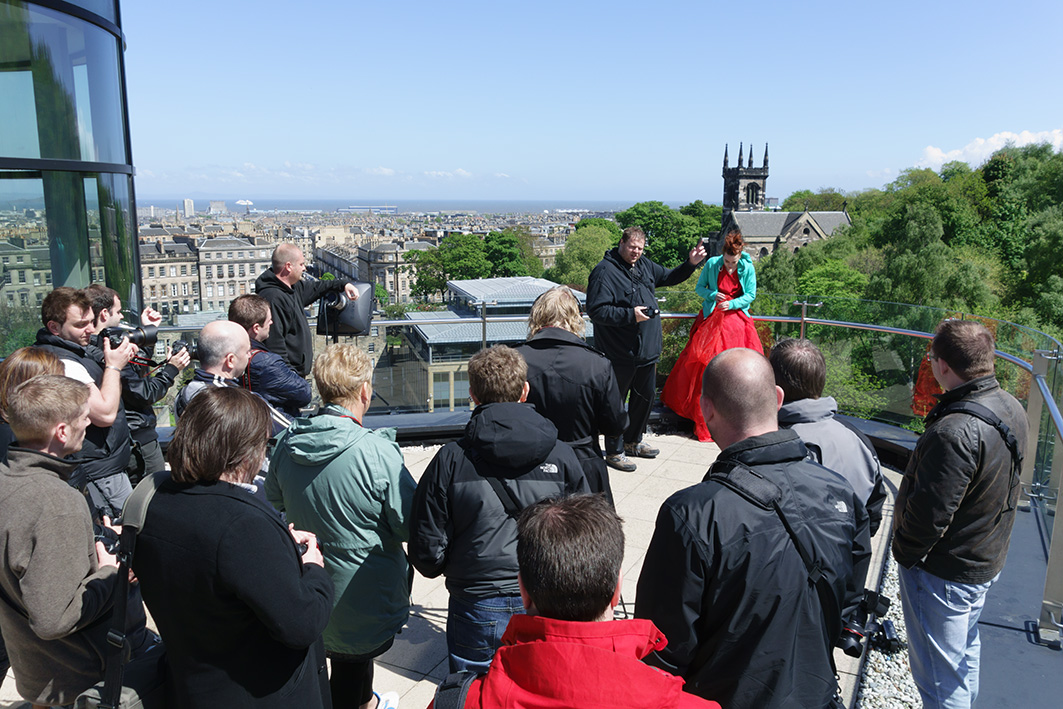
    For a further set-up, Frank moved to the roof terrace view over the north of Edinburgh towards Leith and the Forth (first image on this page). He had demonstrated sets suitable for normal to wide angle lenses, using the 24-70mm, and switched to the 70-200mm f/2.8 Sony SSM G for a different relationship between the model and the background.

    doorhof-churchview-noflash-web

    This was the view without flash – not a bad set-up as it stands. When processing my images, I found that the in-camera standard JPEGs of the A99 handled the red of the dress better than almost any setting or camera profile using Adobe Camera Raw. Colours like this are a good case for trying alternative raw converters, such as DxO Optics Pro or Capture One Pro. Their camera profiles are generally closer to the in-camera conversions than Adobe’s. Frank demonstrated how to use the MacBeth ColorChecker Passport colour patch target and its camera profiling software to create an on-the-spot profile for better ACR/LR conversions.

    doorhof-churchview-flash-web

    This is the shot with flash, again, in-camera JPEG sRGB. AdobeRGB would retain more potential detail in the red, raw conversion to 16-bit using ProPhotoRGB the maximum. But for that you also need something like a Eizo 10-bit monitor with a matching video driver, and no Apple Mac made comes with that. Build yourself a tower system and it’s just about possible to get 10-bit colour… but not using Mac OSX! My monitor is a regular old 27 inch iMac and if it’s 8-bit it’s having a good day. The colour looks lovely, but accurate it certainly is not. I don’t mind as 99% of all the screens any of my images will ever be seen on are no better, and the printed page is far inferior. Putting the above pictures into print would almost guarantee the differences you see here are lost.

    smallscreeneducation

    Because the Glasshouse’s rooftop function suite has a white translucent fabric roof, the overhead projector could not be used. So, Frank sat down with his laptop and the photographers. Later on in the day, the group moved to an inside room, and he demonstrated a series of processing steps in Lightroom with special attention to the use of plugins producing Clarity, pseudo-HDR and ‘image look’ and to fashion and beauty retouching.

    To read more about Frank’s work, visit his own website www.frankdoorhof.com or follow him via Kelby Training. He regularly does workshop tours. I’ll be reporting on some of his views and hints for professional photographers, specifically, in the June 2013 edition of Master Photography magazine (you can subscribe here for this 10X a year magazine which we also produce).

    For more information on the Elinchrom flash system, Skyport wireless triggering and battery powered Ranger/Ranger Quadra location flash, see The Flash Centre website.

    – David Kilpatrick