Tag: light

  • Bluebells, bokeh and OM-1 macro

    Bluebells, bokeh and OM-1 macro

    • Classic 2012-on OM-system M4:3 60mm F2.8 Macro on OM-1, £449 street price
    • Less than 200g, 8cm 1:1 reproduction (from lens front)
    • Make the most of the micro four-thirds system’s size advantage

    Can a smaller sensor deliver the artistic and creative potential for narrow depth of field and use of bokeh? Absolutely. The Olympus family of mirrorless cameras has evolved into the OM system – we look at the 2012 60mm f/2.8 M.Zuiko Macro for creative close-up photography and explore the opportunities made available by cutting the size of your system.
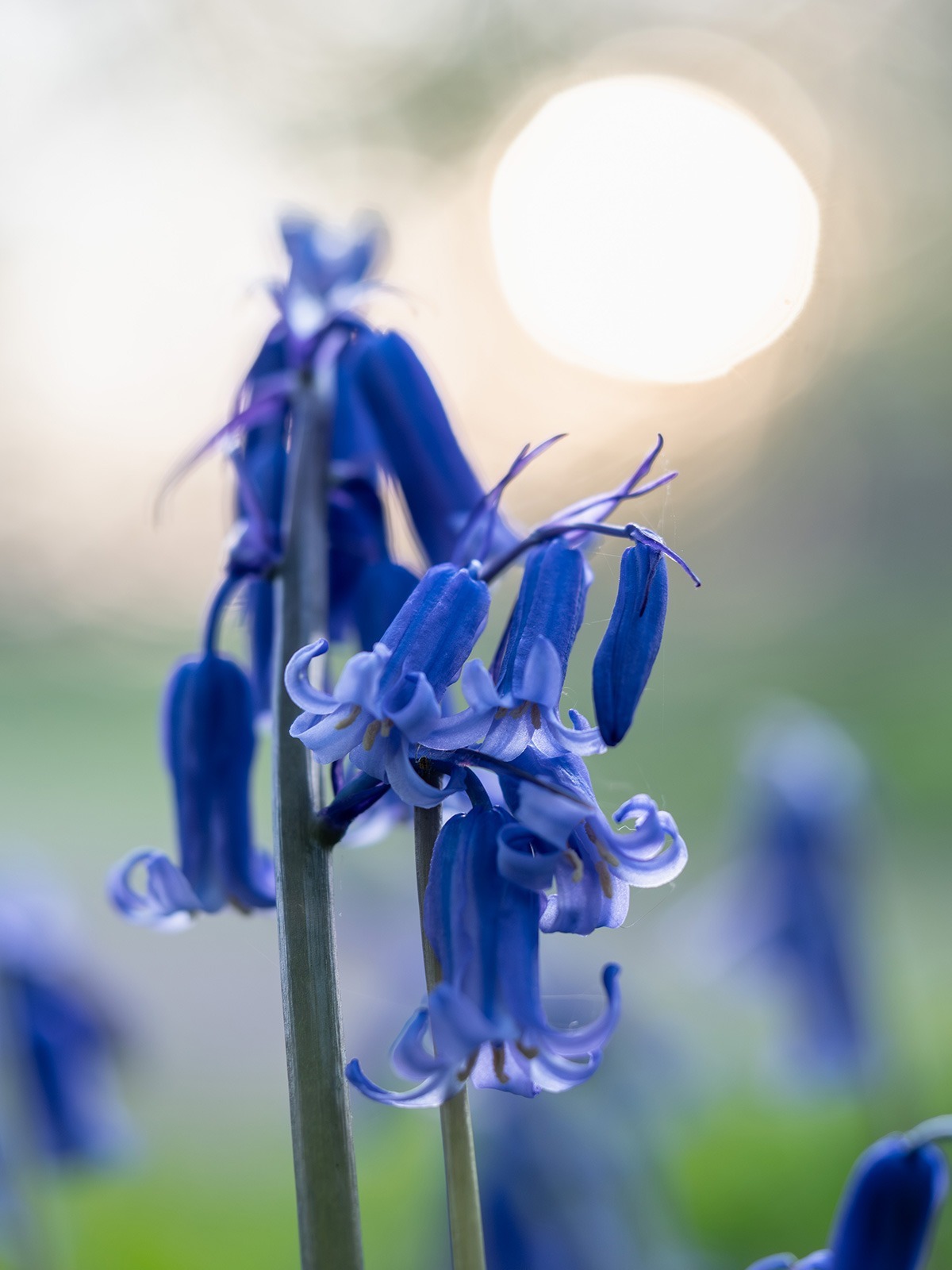
    What is the 60mm f/2.8 M.Zuiko Macro lens?

    The OM-Systems 60mm f/2.8 M.Zuiko Macro is one the best lenses for close-up nature photography. Introduced in 2012, after 14 years it’s still an essential in any Olympus OM kit. True 1:1 focus at 8cm from the lens front is thanks to an internal focus system with no change in the barrel length. It weighs just 186g, takes 46mm filters and is only 82mm long. This makes it ideal as a field companion.

    Although it was introduced 14 years ago at the time of writing, it has remained part of the OM-System lineup and is available new for £449 from Clifton Cameras (this link supports Cameracraft), from Amazon UK, or used from around £250 from reputable secondhand dealers such as London Camera Exchange or CeX.

    Here’s a shot of with it next to the full frame Sigma 105mm f/2.8 macro – the 60mm is equivalent to a 120mm – which says it all.
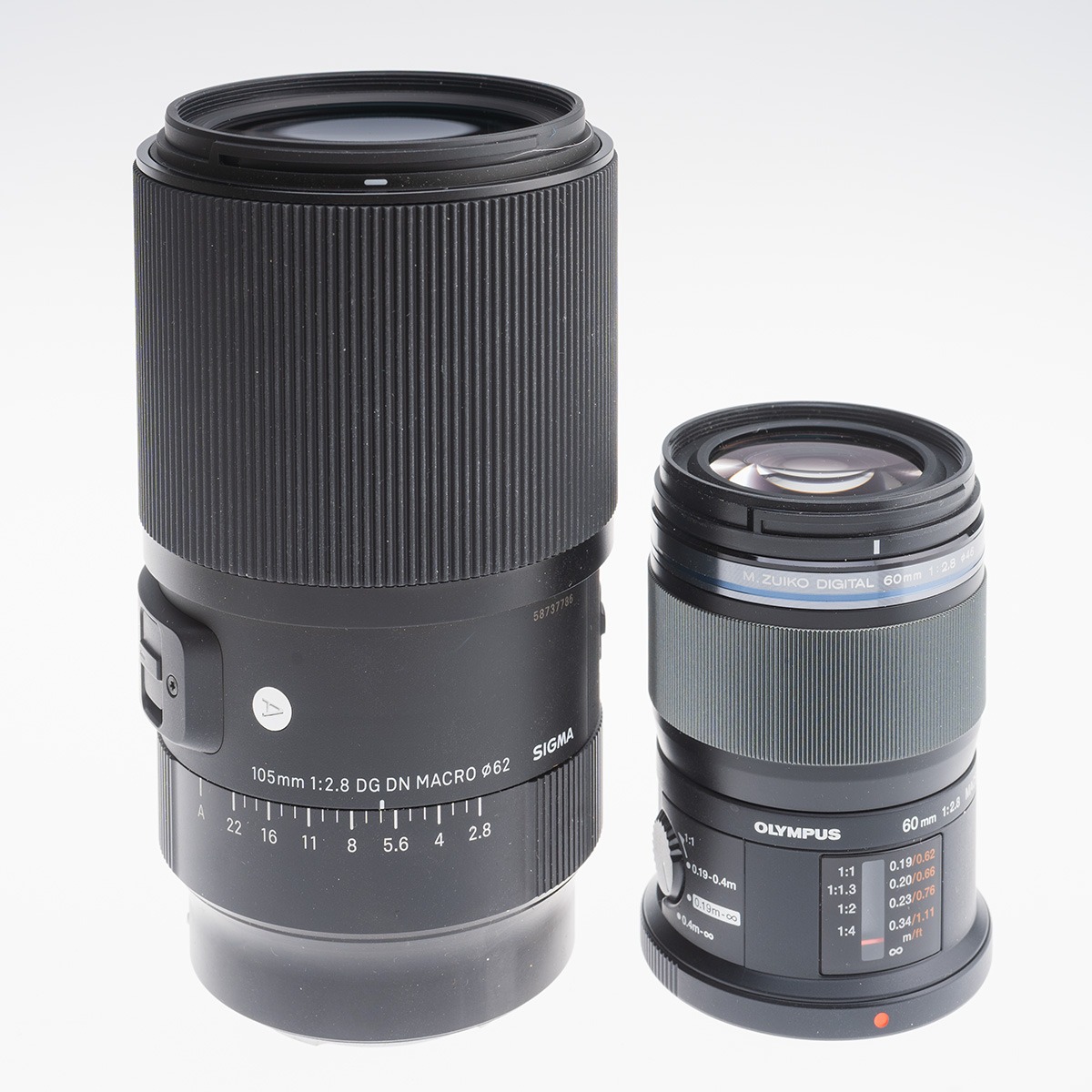
    The OM-Systems 60mm f/2.8 M.Zuiko Macro, right, next to the Sigma 105mm F2.8 macro.for full frame. The Olympus is equivalent to a 120mm F2.8 in full-frame terms, but is significantly smaller and lighter.

    The size avoids touching or disturbing foliage. It’s also easy to hold a camera like the OM-1, currently the largest and heaviest OM-Systems body, one-handed. It’s easy to get low viewpoints using the tilt and twist rear screen when you can not put an eye to the viewfinder.
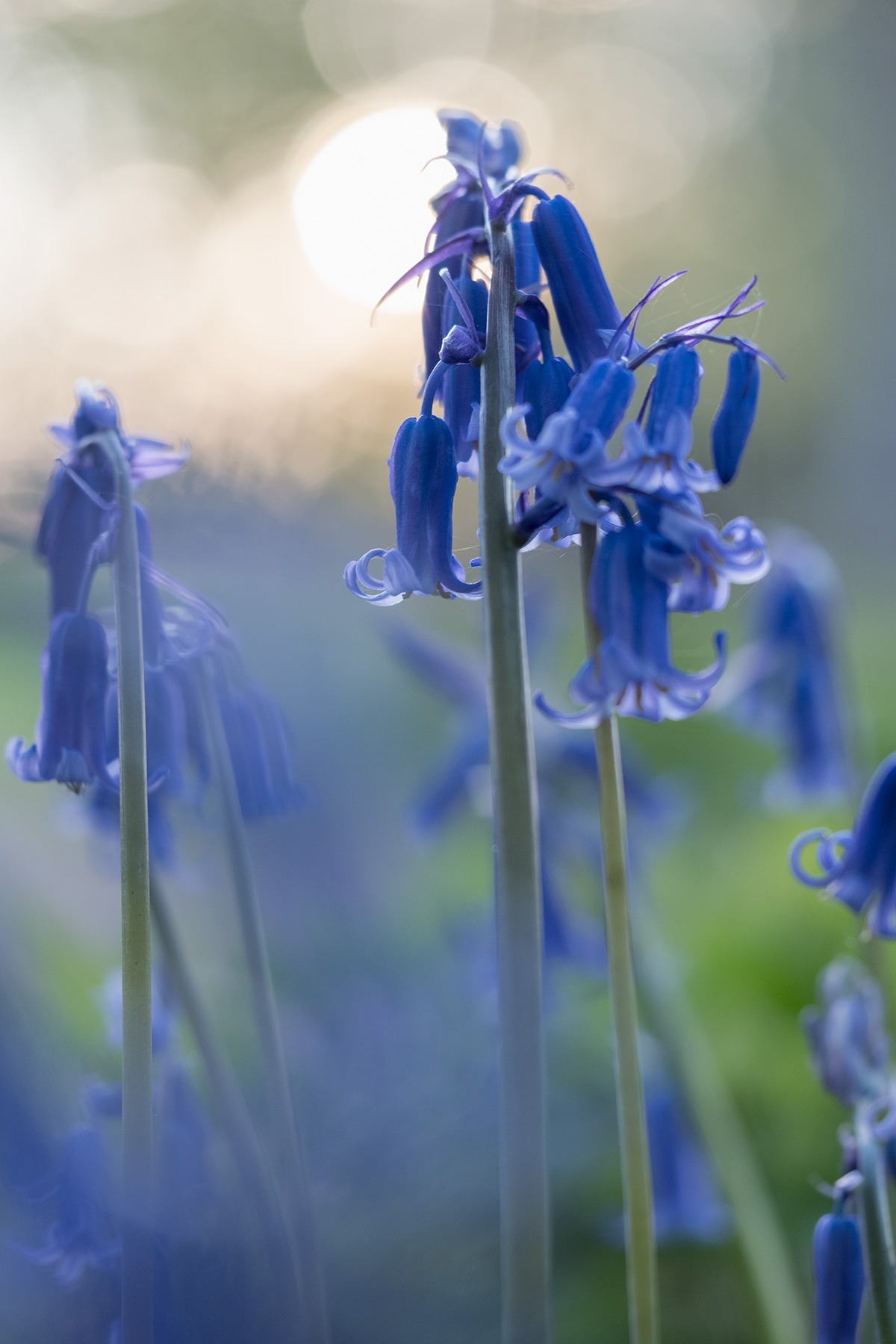
    A picture of bluebells, where the foreground, burred subject imparts an impressionistic glow.

    The f/2.8 aperture means if you do put anything very close to the front element it can dissolve into a blur. Here a bluebell adds an impressionistic glow. Depth of field is tiny wide open. The seven-blade aperture is still present at f/2.8 so the low sun coming through trees creates slightly less than perfect highlight circles. It’s still a lovely effect.

    Shot against the light, the colour of bluebells is realistic. Most digital (and film) shots record too much reflected far red from these flowers making them slightly less pure blue, as the shot below taken at the same time with the light coming from the left hand side. Aperture for this was f/5 to balance keeping most of the main head sharp but still with distinction from the background.

    These are true Scottish bluebells! They are not the Spanish-British hybrids and are a protected species, growing here in woodlands dating from the early 18th century (the big house and estate disappeared long ago). I was very careful not to tread on any. My garden has the invaders, and that’s also what most ‘wild’ ones are. They look very different. See – https://www.wildlifetrusts.org/wildlife/how-identify/spanish-or-native-bluebell
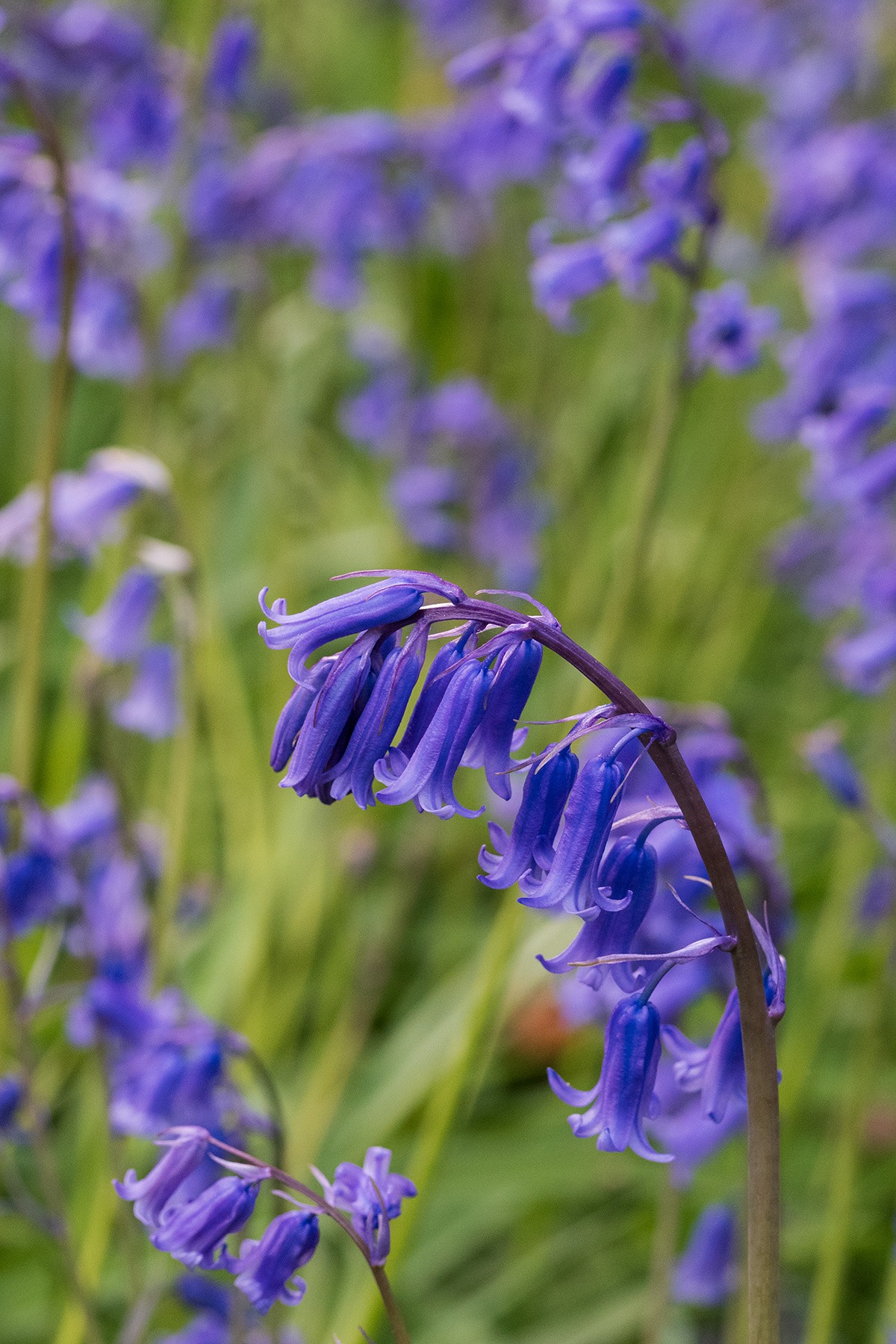
    A crisp frame-filling bluebell shows strong differentiation in plane of focus in the foreground as well as the background, even at f/10.

    I set out with just this lens on the OM-1 walking to a spot where I had seen a large patch of bluebells on the edge of the wood open to the direction of sun, setting behind distant trees. As a subject, bluebells are best shot on a longer lens, which this 120mm-equivalent is. The narrow angle of view compresses them to fill the frame. At f/10, there’s still a distinct plane of focus with softer detail in front and beyond. This lens stops down all the way to f/22 in third-stop steps but using a smaller aperture like f/16 would have lost sharpness slightly where focused – the lens performs best from f/4 to f/5.6 – and even this was at ISO 5000 to keep 1/125s shutter speed. The OM-1 sensor-based stabilisation would allowed 1/30s or even 1/15th without camera shake affecting things, but flowers don’t keep still. At macro distances the vibration from a gentle breeze can blur them.
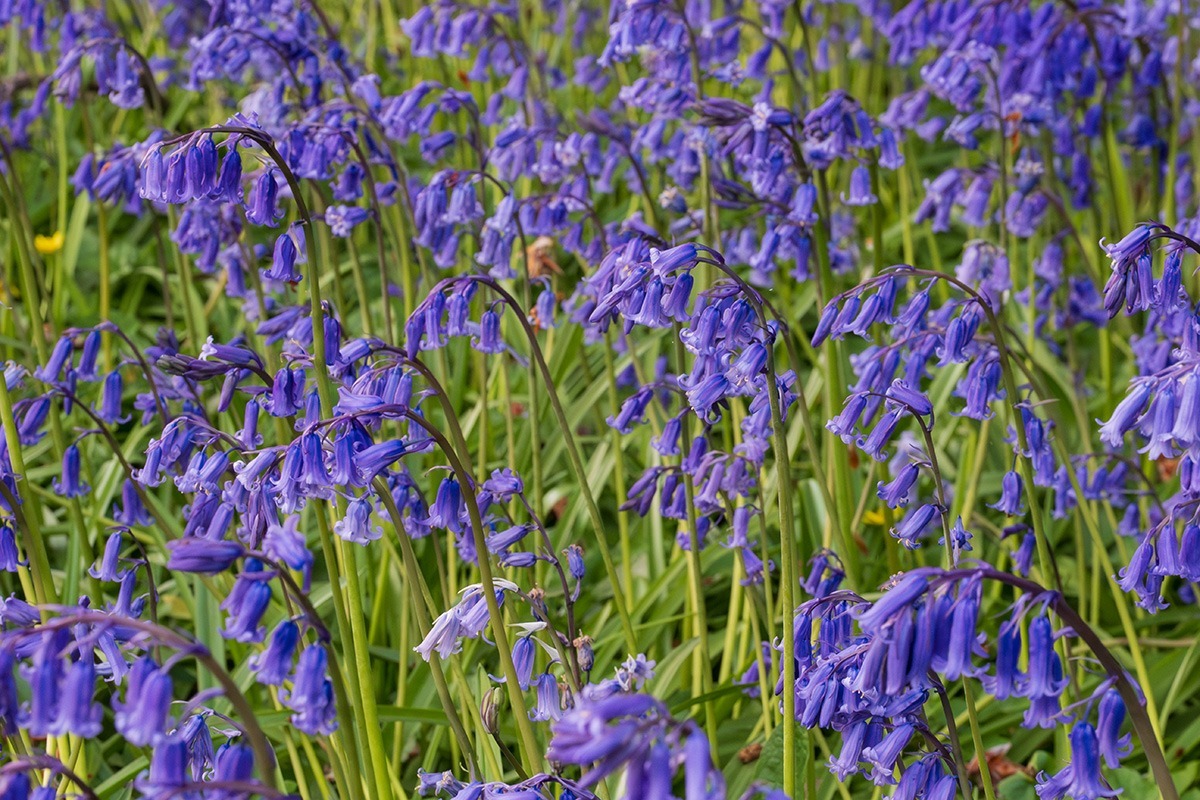
    I also knew where the low sun would be coming from, and it was the backlit effect I was looking for. The side/front lit angle may also have influenced auto white balance, and when this colour is viewed in a mostly green setting, the blue can seem to have more magenta.
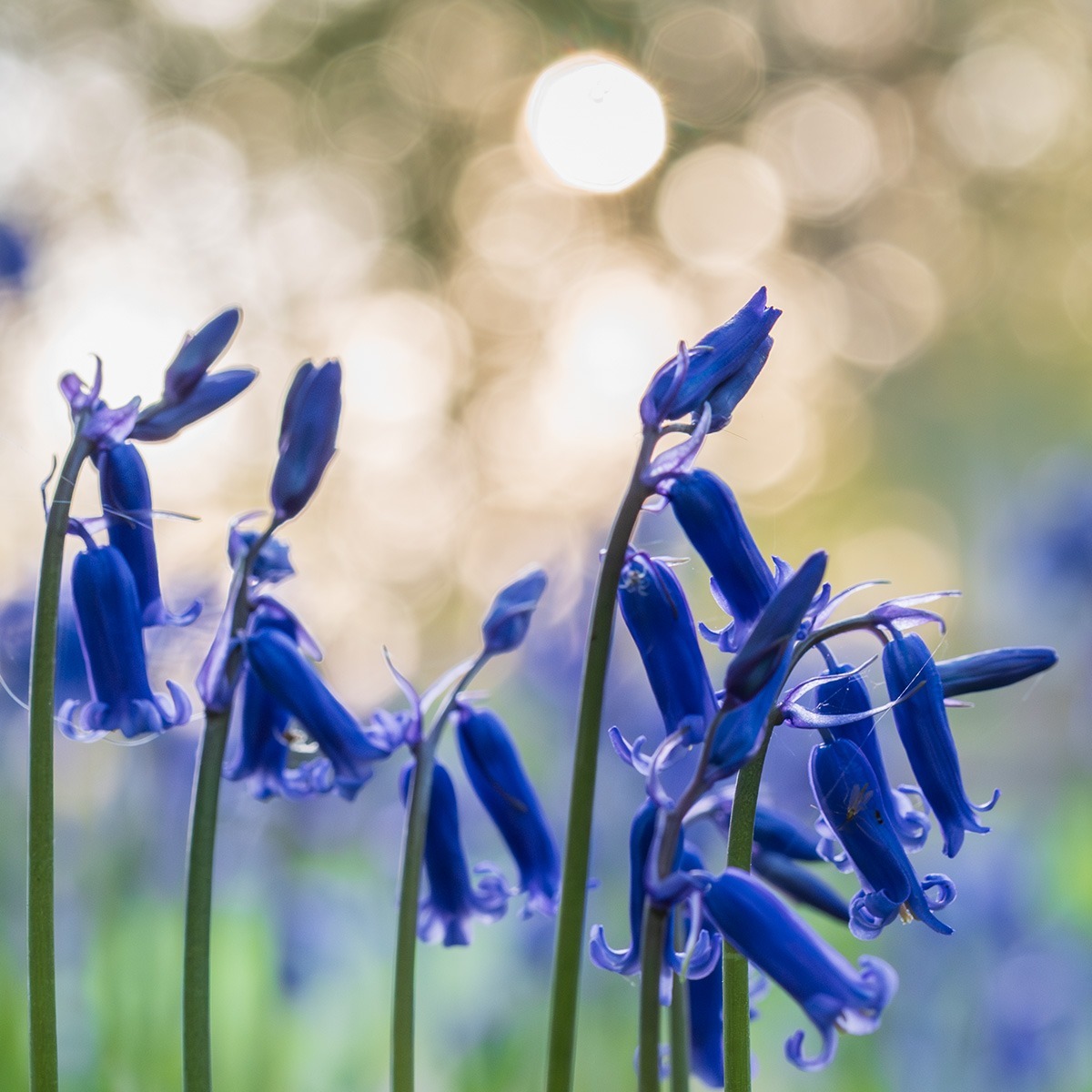
    The multiple overlapping bokeh discs are caused by the distant trees. Here they are made smaller and more distinct by stopping down to f/5.6. Again, this blue is more realistic and very true to nature.
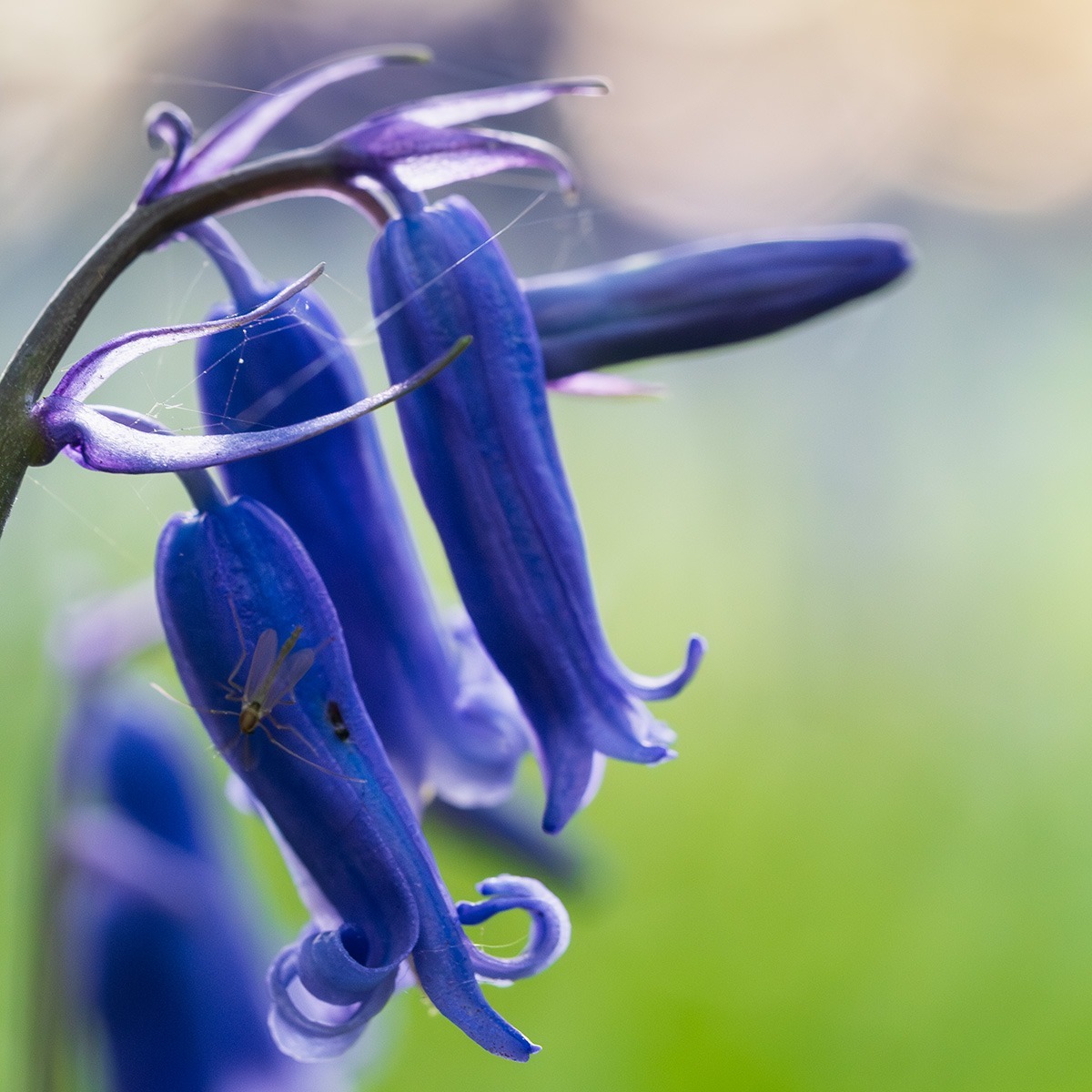
    The 60mm macro enabled very close studies and even at f/2.8. You can see the fly and strands of spider web are well resolved, but the contrast of the fly and flower is low in this lighting.
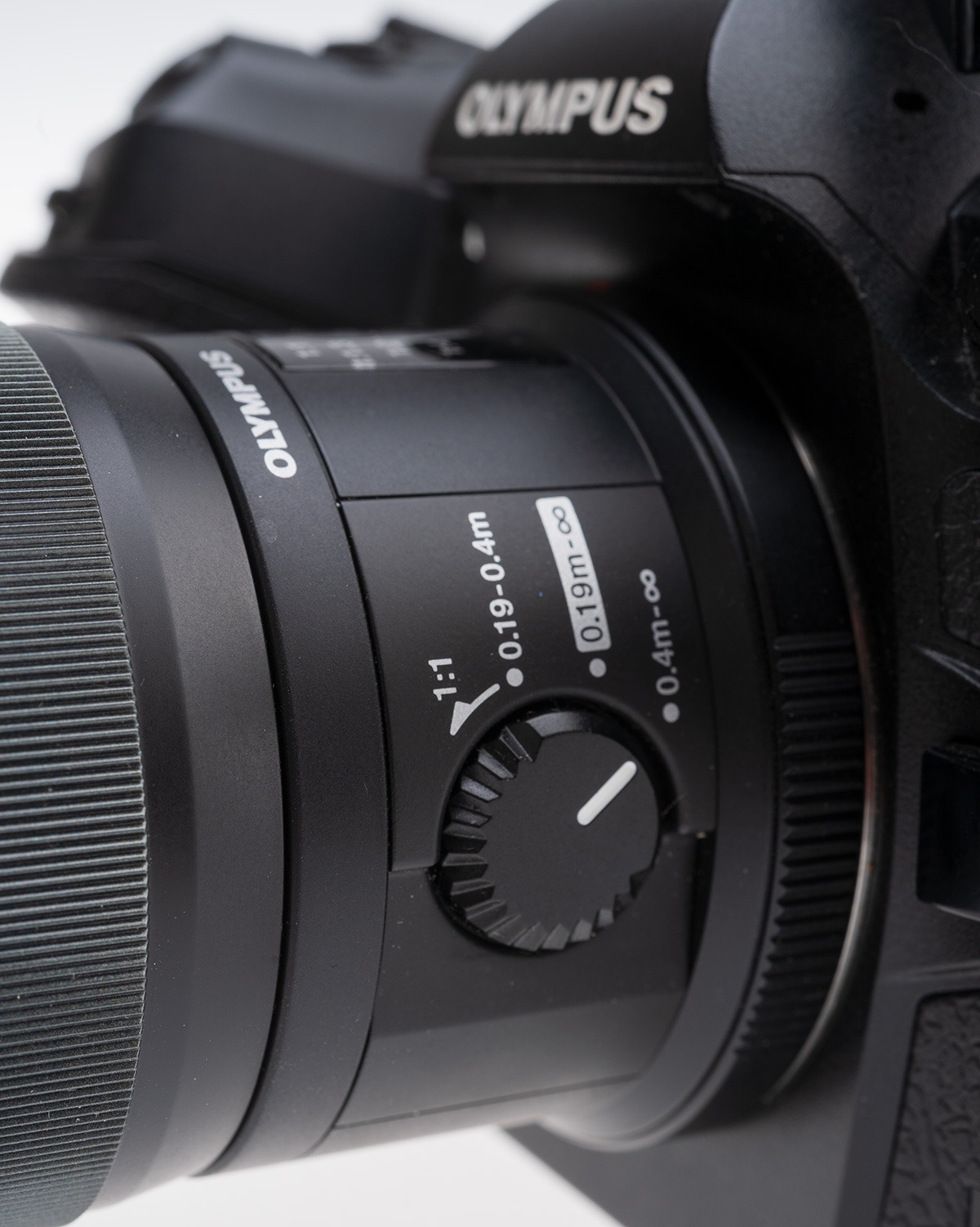
    The focus range limiter switch on the left of the 60mm f/2.8 M.Zuiko Macro lens, showing settings for 0.4-infinity, 0.19-infinity, and 0.19-0.4m and fixed 1:1 magnification (move subject or camera, not focus).

    For more distant shots, the focus range limiter on the lens was set to 40cm to infinity. It focuses very fast and silently but if allowed to range all the way from 1:1 focus may be missed. I had it set to the 19 to 40cm range when two roe deer does walked past just three or four metres away and that was a lost shot!
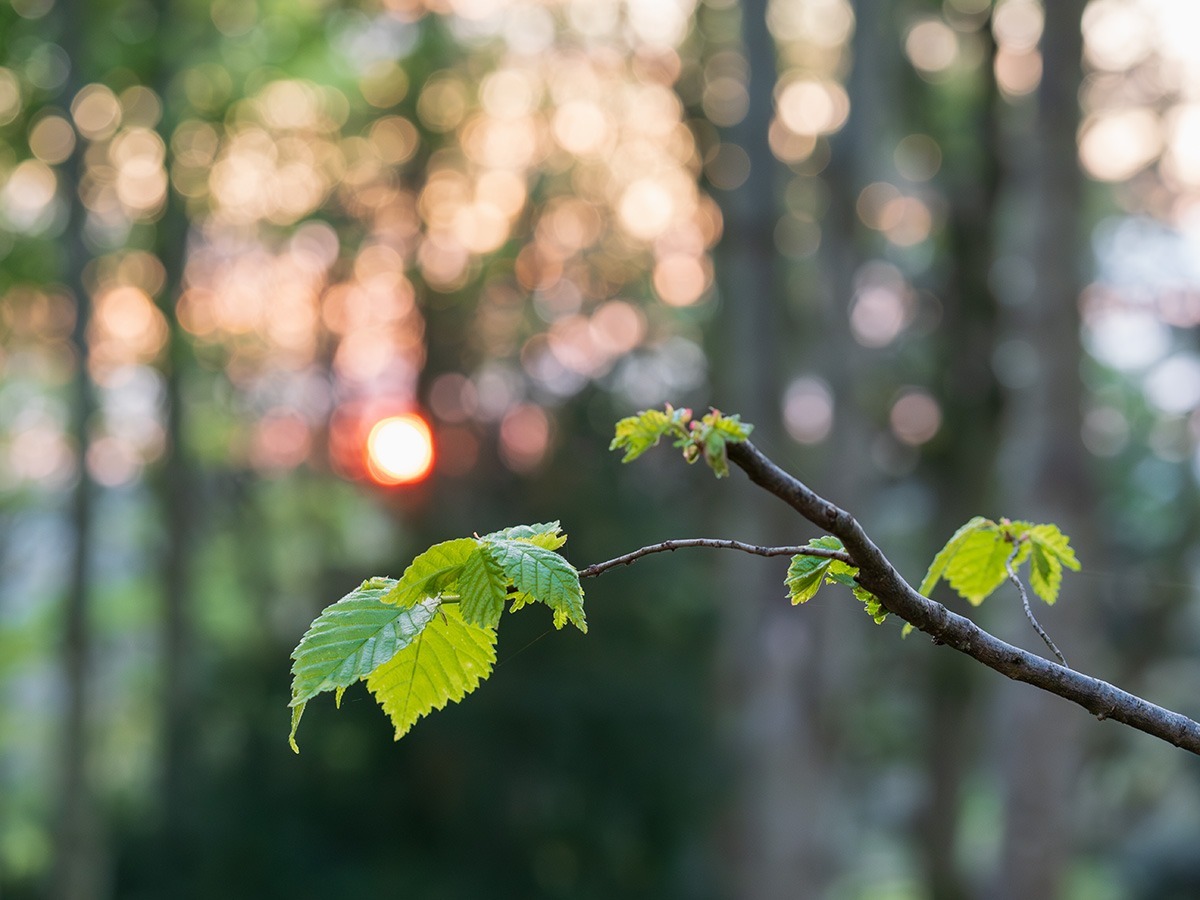
    With this lens, the woodland at sunset continued to provide many opportunities. Young birch leaves here were taken at f/4, and in the rapidly falling light this needed ISO 2500. The small MicroFourThirds sensor – one quarter of the size of a full frame, half the size of APS-C – has reasonable noise levels but without shooting raw as I did for all these, and using Adobe’s Reduce Noise AI-powered conversion, the results would not be as smooth.
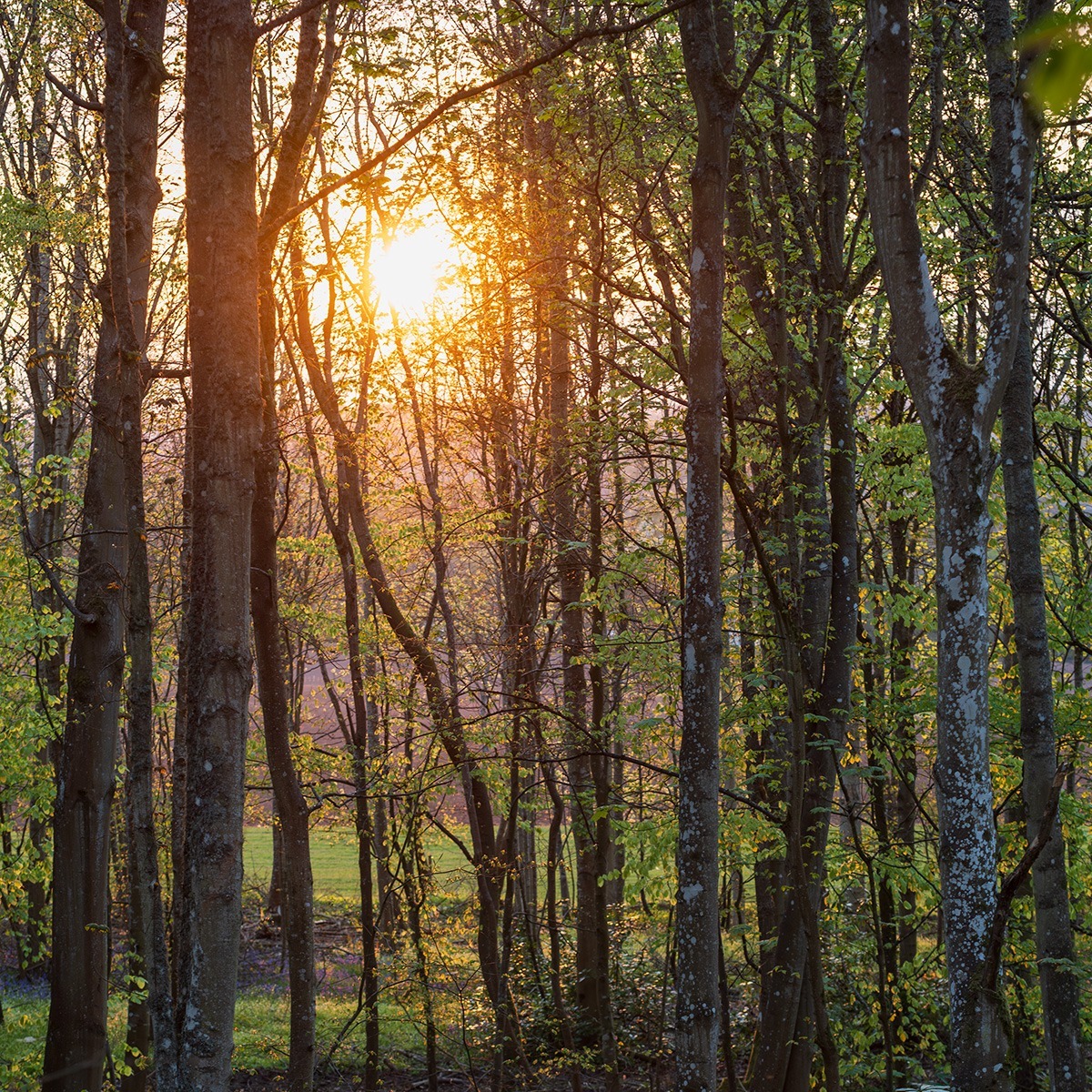
    The 60mm focal length is also great for general landscape views. This is taken 12 minutes earlier and only needed ISO 320 at f/4. That only 1/3rd of a stop faster than the OM-1 base ISO of 200.

    Where and when to find bluebells in the UK?

    In many parts of the UK bluebells are still in bloom and there’s still time to get out into woodlands while the leaf cover on trees is not too far grown to let the light in. In southern Scotland they have just come into their best state and woodlands remain open to light, but that will not last long. Further north it’s a week or so later. May is a good month to catch the new bright green and light environment in woods. By June, most trees are in such full leaf that only a fraction of the light reaches the forest floor and in July the green of leaves begins to darken.

    Get out now, even without a macro lens. Do not just look for subjects. Look for interesting light, which can mean staying out until sunset. Photography is all about light, the subject or scene is not enough on its own!
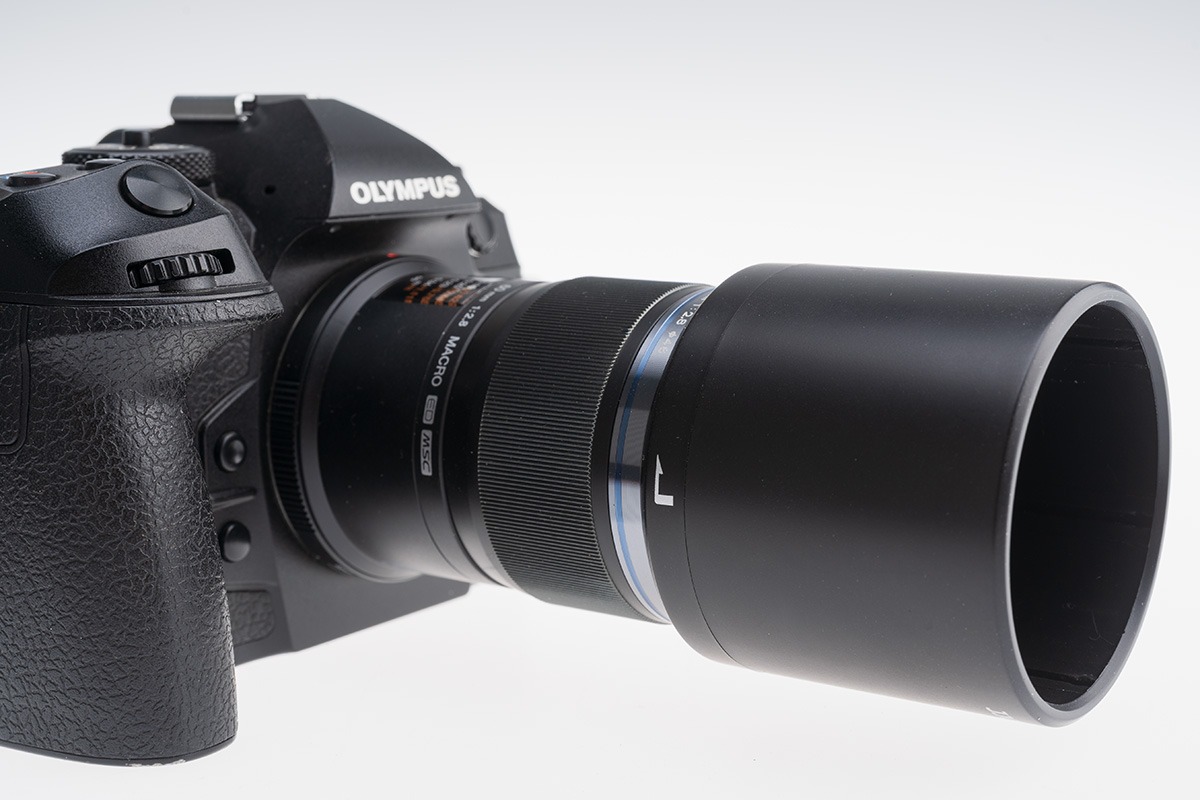
    This lens hood, which retracts with a gentle push to sit back over the lens, is a low cost JJC from Amazon which I rate better than the OM-Systems original. It was used for all the pictures as the working distance of this lens does allow enough space.

    None of the close shots are anywhere near the lens’s 1:1 which is the same framing as a 2:1, twice life size, view on a full frame camera.

    – David Kilpatrick
  • Sekonic's camera calibration

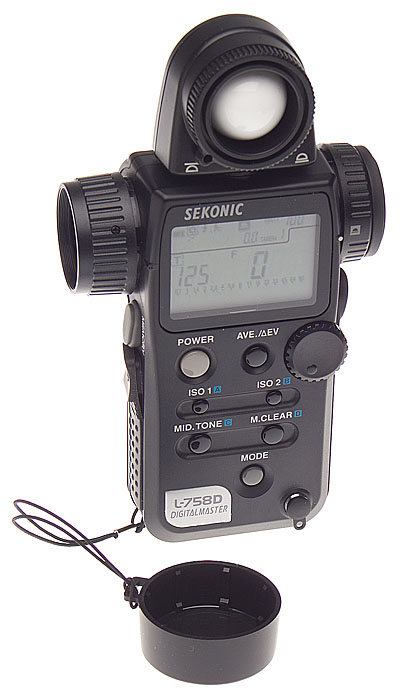
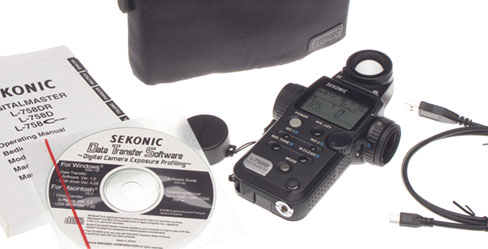
    The Sekonic Digitalmaster L-758D meter offers the solution to variable ISO/EI ratings, and apparent sensitivity and contrast curves variations found in DSLRs. With a USB interface to link it up to a PC/Mac calibration program, the L-758D can remember three different cameras, two types of lighting (ambient or flash) and two measuring methods (incident or reflected) plus a range of ISO values for each of the cameras. There are twelve basic ‘profiles’ that can be stored, and within each profile a range from ISO 3 to ISO 8000.

    The three cameras can include settings on a single camera such as Landscape+sRGB+High Contrast, or Portrait+AdobeRGB+Low Saturation+Low Contrast. More likely, they will be three different generations or even different makes of digital SLR, as many studios keep their last models when buying new ones. They can equally well be films used in a particular film camera, though you need a scanner or a densitometer for calibrating film.

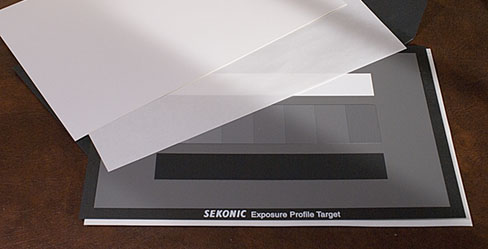
    You might think a meter costing over £300 and coming with a USB cable and a program to do the calibration would include the necessary calibration target. But it’s incapable of actually doing the calibration until you spend another £99.99 on a special A4 grey scale card. Since this report was written, a new more accurate target card has been introduced.

    My sample test target arrived packed in a carton large enough to contain a camera. It is quite fragile, and obviously hand-made using special papers and perhaps a type of inkjet printing for the black patches. You could not just shove this in a camera bag and use it as a grey card. It should be kept in its envelope and stored away from light, like an archival print.

    Sekonic Digitalmaster L-758D basic functions

    The Sekonic appeared to agree with power adjustments made to my Elinchrom flash units, which claim a 1/10th of a stop accuracy.

    I found it to agree with my Minolta Flashmeter IV (which can be user calibrated with a small potentiometer in the back, but only for overall sensitivity). The L-758D should never need to go back to base as a default calibration can be programmed in to it, and this can cope with non-linear responses.

    The L-758D will measure flash versus ambient, compare light source contrasts, or compare incident and digital much like any other modern digital meter. You can take up to nine spot or local measurements, pressing the M memory button after each one, then pressing the Average button for a calculated average exposure. Contrast (they recommend you turn each light off and only measure one at a time) is shown in EV values.

    The reflected light metering via a semi-spot type viewfinder replaces any other type of reflected reading. Unlike the Gossen Spotmaster F you don’t get information shown in the finder, you just use the sighting to make the reading and must then examine the Sekonic’s LCD.

    I found the L-758D to be large, complex and to have too many simultaneous potential functions and too much going on the LCD display with too-small graphics and symbols. It is no doubt versatile but I would be happy with one of the simpler models in the range for the routine metering I need to do.

    Sekonic Digitalmaster L-758D calibration

    If you shoot raw and habitually use a program like Adobe Camera Raw with auto adjustments set you can not use the meter calibration function. It only works if a fixed conversion is used for all files, or you shoot in-camera JPEGs and do not change the contrast or colour space and scene type settings.

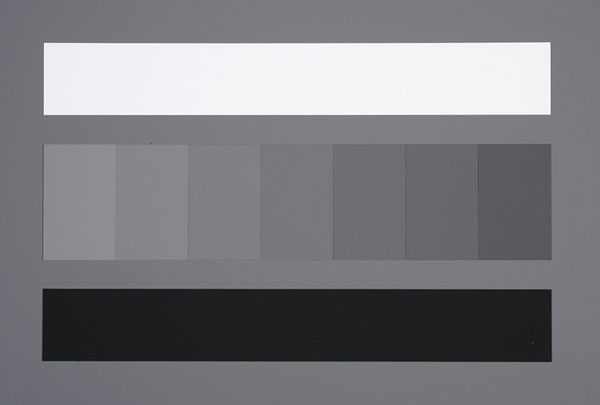
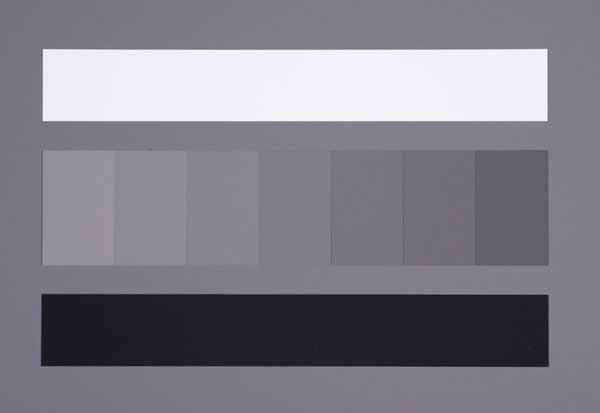
    The plain 18% grey back of the test card is ideal for white balancing and spot metering. The front side has an 18% grey field plus a central array of seven grey patches in 1/6th stop increments, plus and minus 0.5EV either side of 18% grey. Above this is a white strip 2.33 EV brighter than 18%, and below it a black strip 2.33EV darker.

    Sekonic Digitalmaster test file from the Konica Minolta Dynax 5D

    While Sekonic issue LAB values and densities for their £99.99 card (it goes from 3.6% to 90.7% reflectance, densities 0.04 to 1.44 LogD), they disclaim accuracy and say ‘not guaranteed as the performance of exposure profile target’.

    Test file from the Sony Alpha 100 under identical lighting and lens conditions

    In the CD-only user instructions you learn that you can equally well use a Kodak Greyscale and enter the data manually. The software, however, operates only with the Sekonic target for automatic entry. Even this is mainly manual; you must use Photoshop to read off the RGB values from each patch. It will not read a JPEG in the way that camera ICC profiling software reads a target image.

    Light and lens problems

    The recommendation is 45° copy lighting, but the total range of exposures needed to calibrate one DSLR fully is too great for most flash systems at such close range. You need to give plus three to minus three stops either side of a metered exposure, at each ISO speed you want to measure. You should also compare incident and reflected readings, and make tests using both flash and ambient light.

    Even at ISO 400 my Elinchrom 300S heads, turned down to 1/16th power, need a neutral density filter fitting to make a complete set of exposures with ISO 400 and a lens which stops down to ƒ32, when placed five feet either side of the target.

    The biggest speed deviations with DSLRs occur at even higher ISOs. Doing a full calibration is going to be difficult – I did not attempt it because I’m not keeping the meter, and it would have occupied a full half-day or maybe most of a day. But I would have needed some special type of light source to calibrate ISO 1600 or 3200.

    It was useful to find out that two of our DSLRs used with twin wireless flash heads and auto exposure agreed with the Sekonic to within 1/10th of a stop, and one gave 1/3rd of a stop overexposure.

    For quick operation, without a camera calibration for dynamic range and clipping point data, you don’t need the ±3 stops business. You don’t really need the Sekonic card, a good 18% grey card will do fine. Take a shot at each ISO setting, as measured by the Sekonic meter, using a medium lens aperture (least likely to have errors) and medium flashpower if possible (ditto). Open the JPEG in Photoshop, check the Green channel RGB levels in ‘Info’ and this should be within the range 116 to 120 (118 is the target figure). The 1/6th stop steps either side of G=118 are roughly in intervals of 8 on the lighter side and 7 on the darker side but cameras do not have linear response, and Sekonic only work within +/-2 units of the 256 value G scale.

    Once you have completed all your entries, the meter is connected to the computer by its supplied USB cable, and the program recognises its presence. You can then upload the new calibration to the meter. Each calibration is recalled using a memory menu on the L-758D, and you must of course remember which storage register applies to which camera.

    If you think any of this is slightly complicated, don’t buy the Sekonic L-758D for its programmable camera customisation. Buy it for its excellent performance as a multifunction flash/ambient meter with wireless Pocket Wizard compatible triggering upgrade option, and all the features you’ll find in the best meters of the last decade rolled into one.

    The Sekonic L-758D meter is imported to UK by JP Distribution, and has a retail price (without the calibration target or the Pocket Wizard adaptor) of £398.99 including VAT.

    – David Kilpatrick FBIPP Hon FMPA