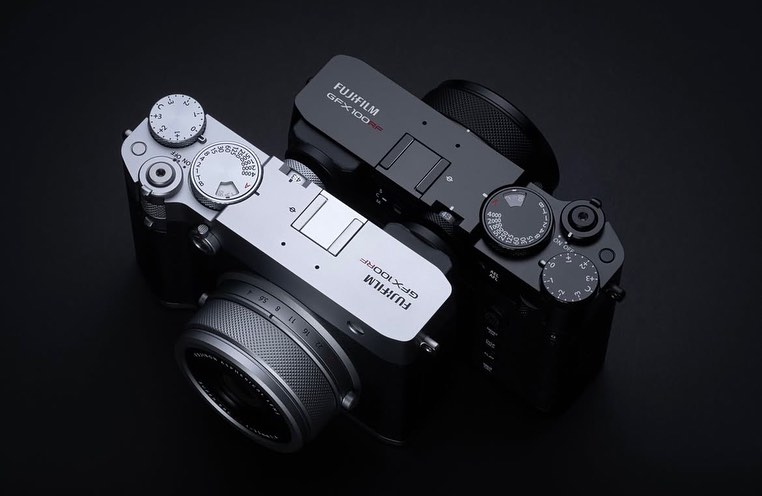
- Flagship medium-format digital rangefinder-style design revives classic Fujica handling
- 100MP 44x33mm sensor and fixed 35mm f/4 lens
- 4K movie capability, and less than £4,700
Anyone remember the Fujfilm GS645W, that robust go-anywhere 120 rollfilm leaf shutter viewfinder (focus by estimation) model with a 45mm f/5.6 wide-angle lens, or its electronic GA645W with faster AF f/4? Well, in a slightly different body form the medium format digital GFX series is revisiting this amazingly popular minority choice for landscape, travel and everyday use. This is the GFX100RF.
The GFX100RF is essentially unique on the market, but you may consider a Hasselblad X2D II 100C for the minimalist body, paired with either the 28mm or 45mm f/4 lightweight lenses. It will cost twice as much – albeit, with the benefit of in-body stabilisation and interchangeable lenses. That logic would also put Fuji’s own medium-format mirrorless system camera in the running – the GFX100S II with 35-70mm kit lens is around £600 more than the 100RF, but is a more conventional DSLR-style design and much larger, even with a compact prime.
Fujifilm GFX100RF specifications
- 102 megapixel 44 x 33mm CMOS sensor
- Fixed 35mm f/4 Fujinon Super EBC Aspherical lens
- Angle of view similar to 28mm on 35mm full frame
- Mechanical leaf shutter 1 second to 1/4000s with physical top dial setting
- Apertures down to f/22 set by physical aperture ring on lens with A setting for aperture priority auto
- EV over-ride for auto metering or manual setting from +3 to -3 stops
- Selectable format ratios 4:3, 2:3, 1:1, 16:9, 5:4, 7:6, 17:6 and 24:65
- Digital converter by embedding metadata crop in raw file, cropping in-camera JPEG
- Full range of Fujifilm film simulation looks and BW with filters
- 4K movie, Bluetooth GPS location data and Fujifilm X app compatible
- Weight 735g, size 133 x 90mm
GFX100RF: handling and controls
If you like physical controls and the feel of fine engineering, you’ll fall in love with the fixed lens medium format Fujifilm GFX100RF. It looks, handles and performs unlike any other and my brief acquaintance with it only scratches the surface. That may not be the right term, as this camera has a ‘machined from solid’ aluminium housing with a surface treatment which should look as good in a decade as it does now.
It’s a pity our sample was missing its flash shoe cover as that completes the design. Every dial, wheel and roller is finely knurled. Below the shutter release is a roller you can turn, a cylindrical pillar with the on/off switch above and a left-right toggle below it. You can customise functions, but out of the box the roller scrolls through nine image ratios and the bottom toggle further changes the crop with four lens simulations.
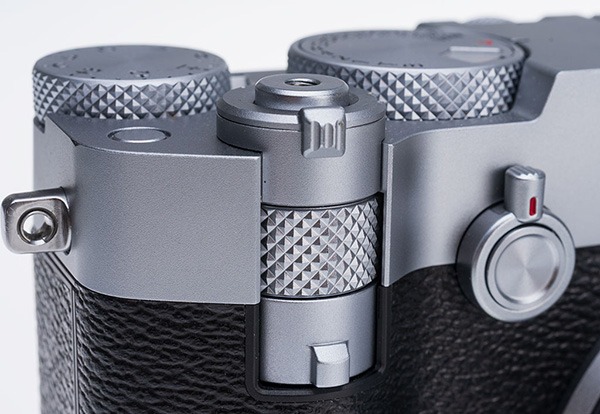
There’s another toggle lever (with a red mark) to move between EVF and rear screen viewing. A smaller roller with pushbutton function falling under your thumb positions the AF area, a rear top plate mounted dial gives an alternative way to set the default format ratio on power up, and on the top in the usual position is a shutter speed dial with lift and drop ISO setting collar (80-8,000, expandable to 40-102,400).
Most of this could be accomplished using the screen or EVF and menu settings. Instead this camera reasserts Fujifilm’s affinity for real controls as found in other GFX, the X100 and X-Pro ranges.
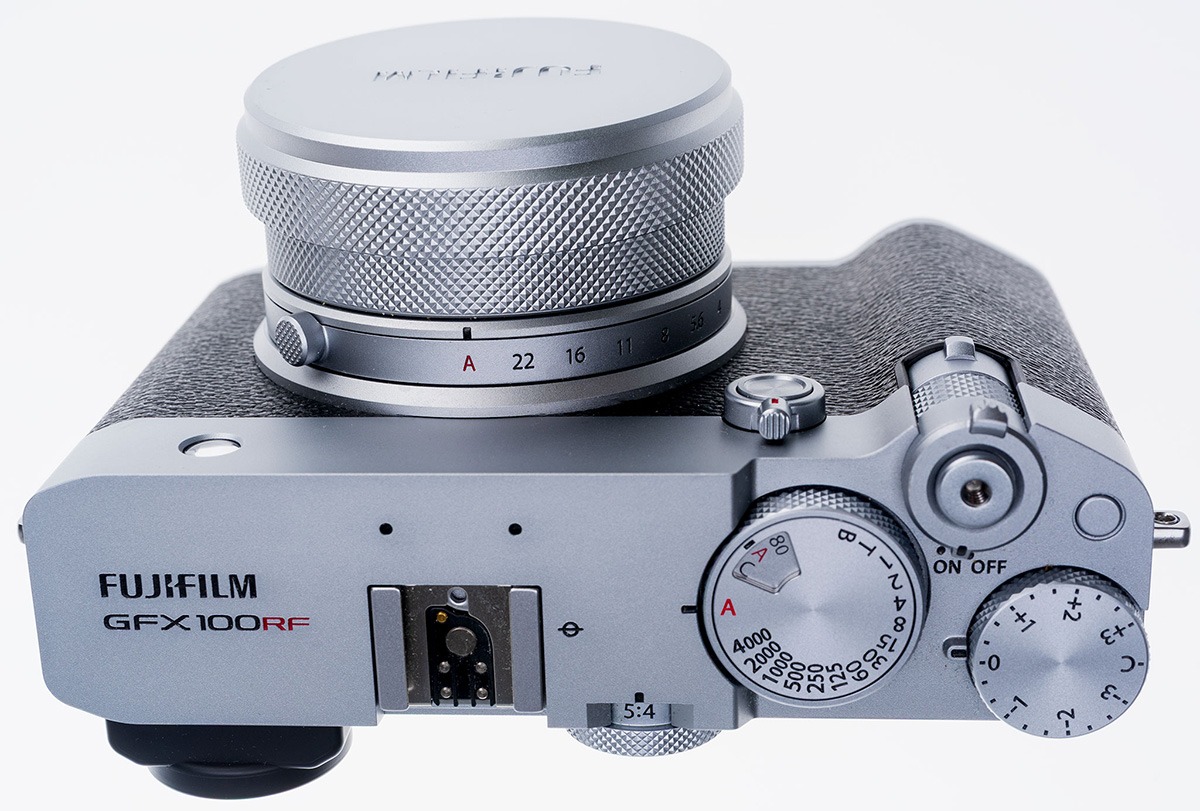
It is most akin to the X100 models, including a choice of silver or black finish. It’s also not much bigger despite the 33 x 44mm sensor. The X100VI is larger than its APS-C sensor predecessors because of the sensor stabilisation, and the GFX100S II is fairly large for the same reason. IBIS adds about 1cm all round to a sensor assembly.
The GFX100RF has no form of stabilisation, optical or sensor based, except a digital type dependent on a crop which can be activated for shooting the 4K and lesser movie formats. I did not test movie shooting, and also didn’t experiment with the interesting multi-exposure function.
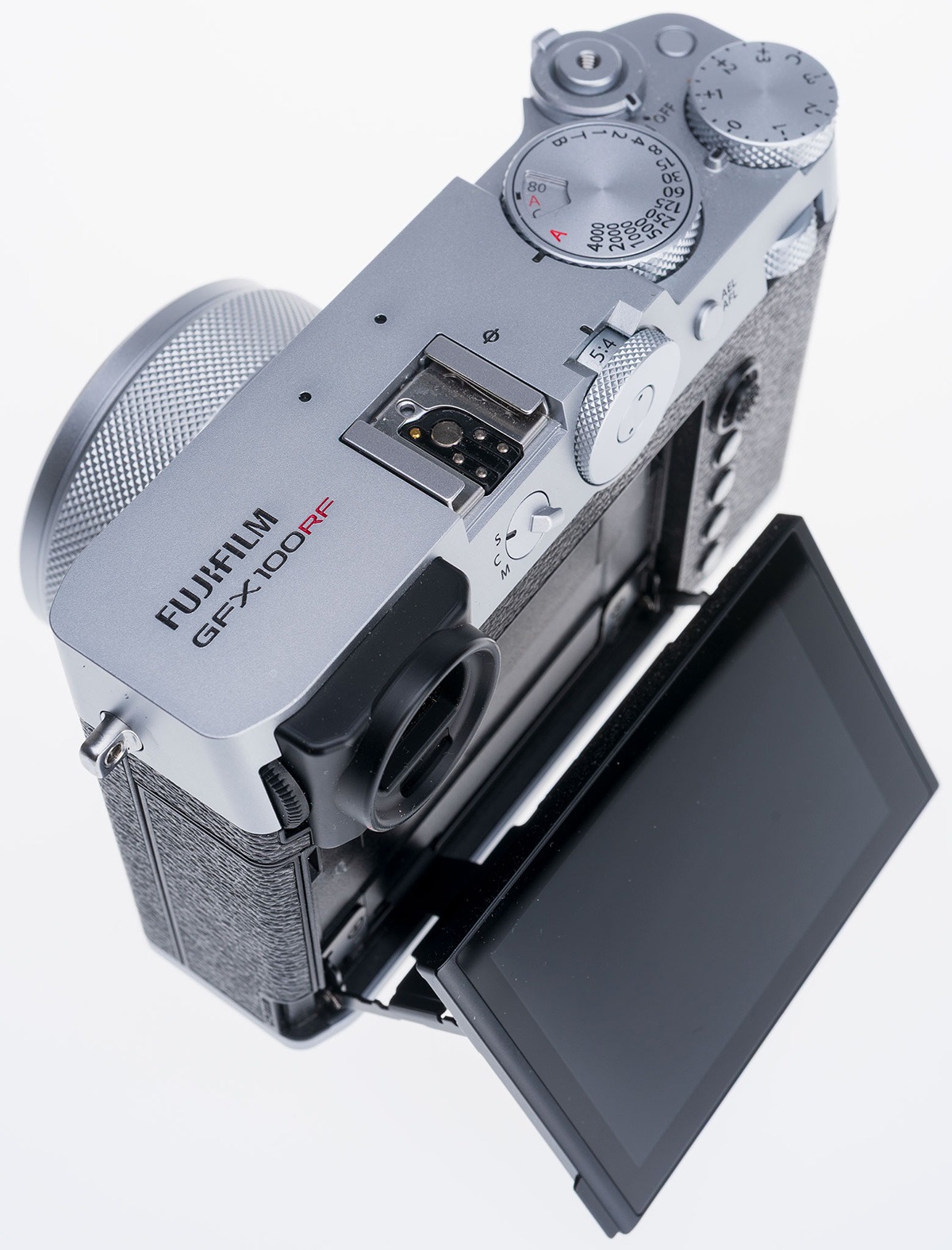
For me, this camera came as more of a digital reprise of the classic Fuji GA645 rollfilm autofocus camera. It also manages to cover the role played by the G690 and G670 ‘giant Leica’ models, and the G617 panoramic 120 rollfilm camera which shot a 55 x 165mm format using a 105mm lens.
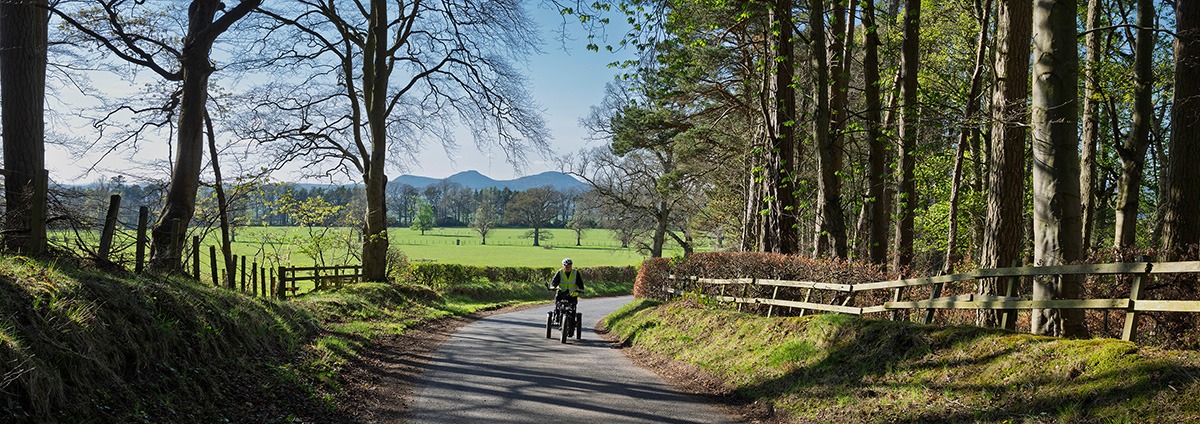
Switch the GFX100RF to its 17:6 ratio, and the 35mm f/4 Fujinon Super EBC lens gives exactly the same panoramic view. The JPEGs produced are cropped, and the raw .RAF files get an embedded sidecar file which makes Lightroom, Bridge, Camera Raw and other software preview and open them using the crop seen in the viewfinder.
You can cancel this and access the entire 4:3 ratio image instead of the 17:6 – or the 65:24 (XPan), 16:9, 3:2, 5:4, 7:6 and 1:1 options as well as a vertical ‘half frame’ 3:4 ideal for portraits without holding the camera vertically. It’s still more than half the 102MP sensor! Eildon Hills and EV tricyclist in April.
With movie/audio functions similar to the X100VI, dual SD UHS-II card slots, CPU and screen/EVF similar to the GFX100S II I’ll refer readers back to reviews of these for other evaluation.
Part of the appeal of the GFX100RF is that it’s very familiar in detail and functions for any dedicated Fujifilm shooter. It offers all the same film simulations such as the ACROS+R red filtered BW, Velvia and Astia all of which I used at different times during this trial. However, to get the degree of control I wanted from each frame without diving into the detailed adjustments possible on the camera, I found Adobe’s Camera Matching ACROS+R combined with Strong curve and brightness increase more like the kind of print I’d aim for.

The Lindisfarne boat hut and chunky rope was taken at f/11 and there is enough depth of field for an A2 print with only the distant buildings slightly soft.
Fuji GFX100RF: the 35mm F4 lens
What’s very different is the 35mm f/4 fixed lens. It is not really comparable to the fixed 23mm f/2 of the X100 series, though some will claim f/2 on APS-C ‘equals’ f/4 on 33 x 44mm MF. That only holds true for depth of field, and then only for an identical pixel count determining the print or monitoring viewing conditions.
This lens is similar to a 26 to 28mm in field of view depending on whether you use the full 4:3 sensor ratio or crop to 3:2 35mm shape, where the X100 series lens is like a 35mm semi-wide on 35mm.
It’s a surprisingly simple 10-element 8-group inverted retrofocus with just two aspherical elements. In a similar fashion to lenses which pioneered this design in 1990s luxury compacts and later digital reprises, it uses a large element close to the sensor. It’s more or less a giant Ricoh GR despite Fujifilm pedigree. For calendar picture-postcard views the angle is perfect.
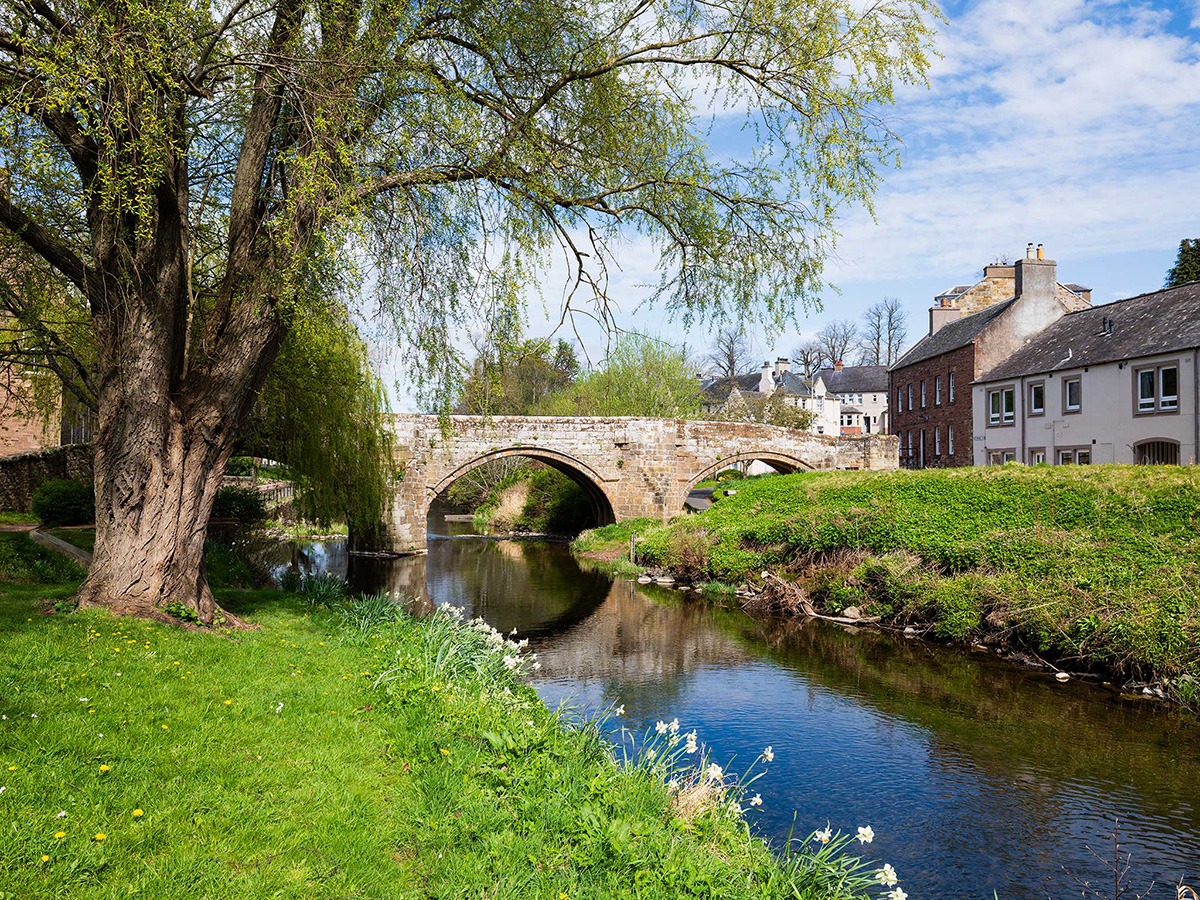
Jed Water running through Jedburgh.
Despite the EBC coating, which I first encountered creating unrivalled flare-freedom in a 1975 55mm f/2.2 EBC Fujinon which used only five elements, the internal leaf shutter and iris combine with the lens design and probably also the sensor to produce some distinct flare patterns when shooting with a light source in the frame. These become dramatic from f/11 to f/22, resembling a diffraction grating or special effect rainbow star filter as below taken at f/22.
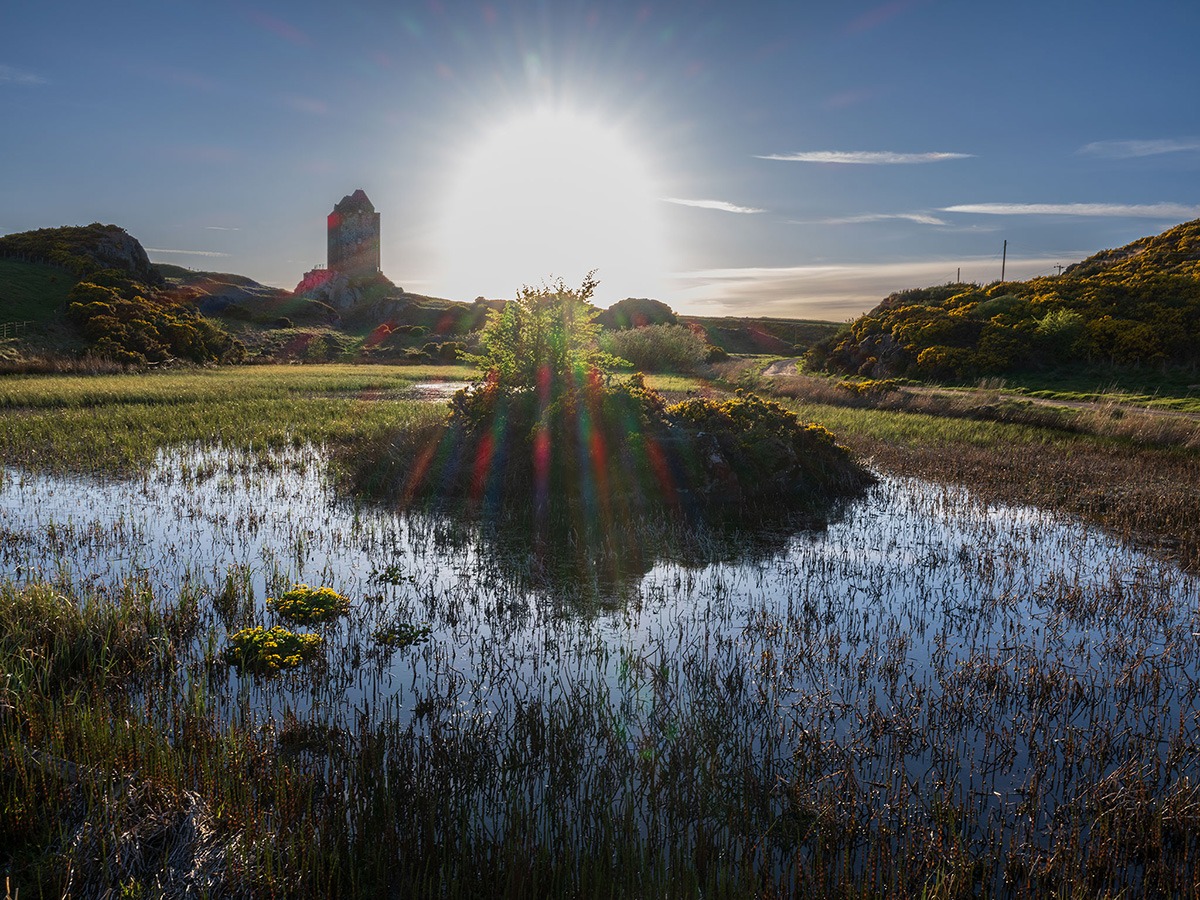
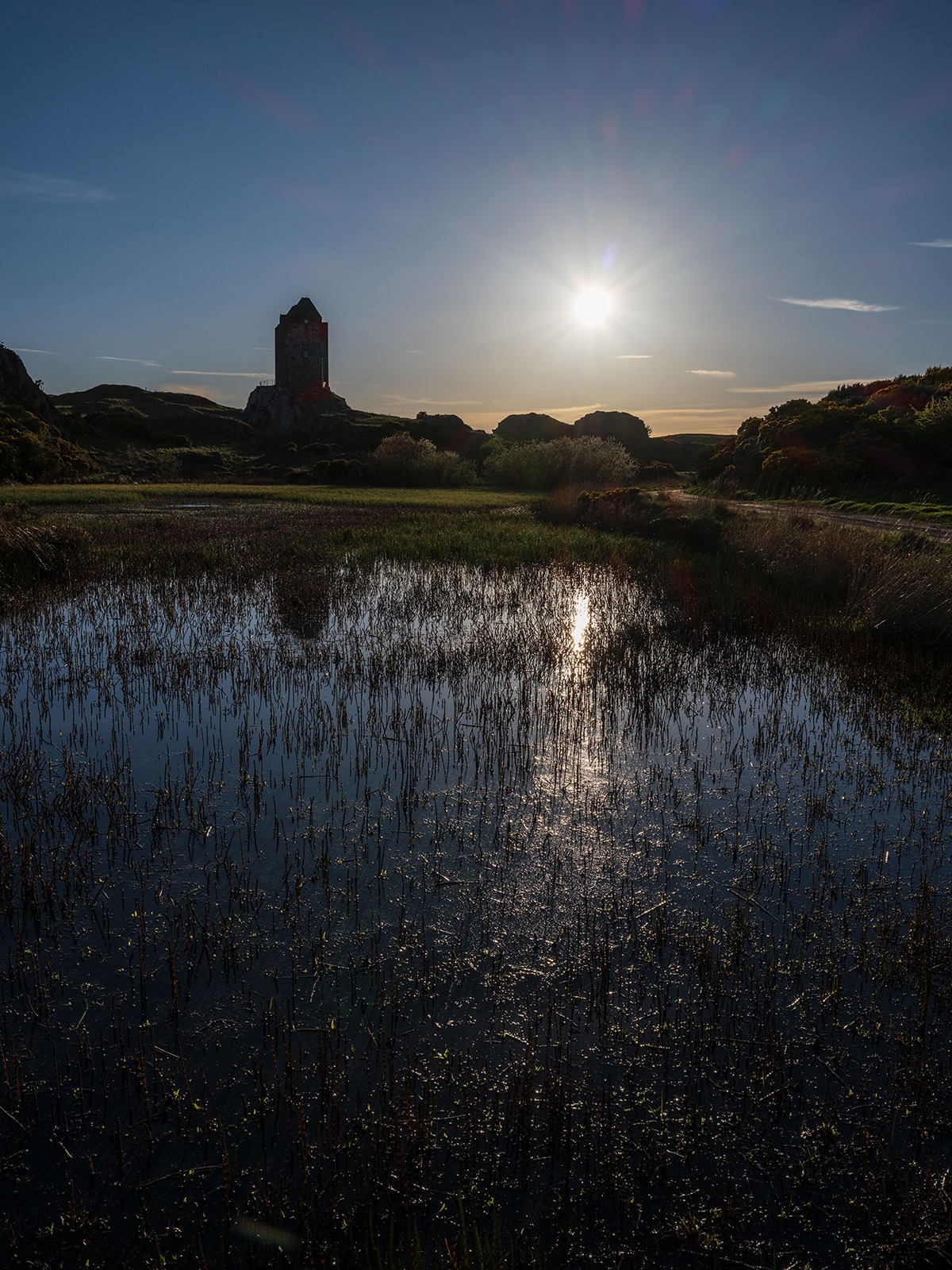
Fortunately the lens performance at f/4 is impeccable and using wider apertures can kill this flare, with the benefit of a 4X ND filter option inside the lens and the 1/4,000s fast leaf shutter speed or the electronic extreme of 1/16,000s. Flash sync works up to 1/2,000s or 1/4,000s depending on aperture.There’s no PC sync terminal, the flash shoe is your only connection. But flare is not inevitable, the shot below is at f/14.
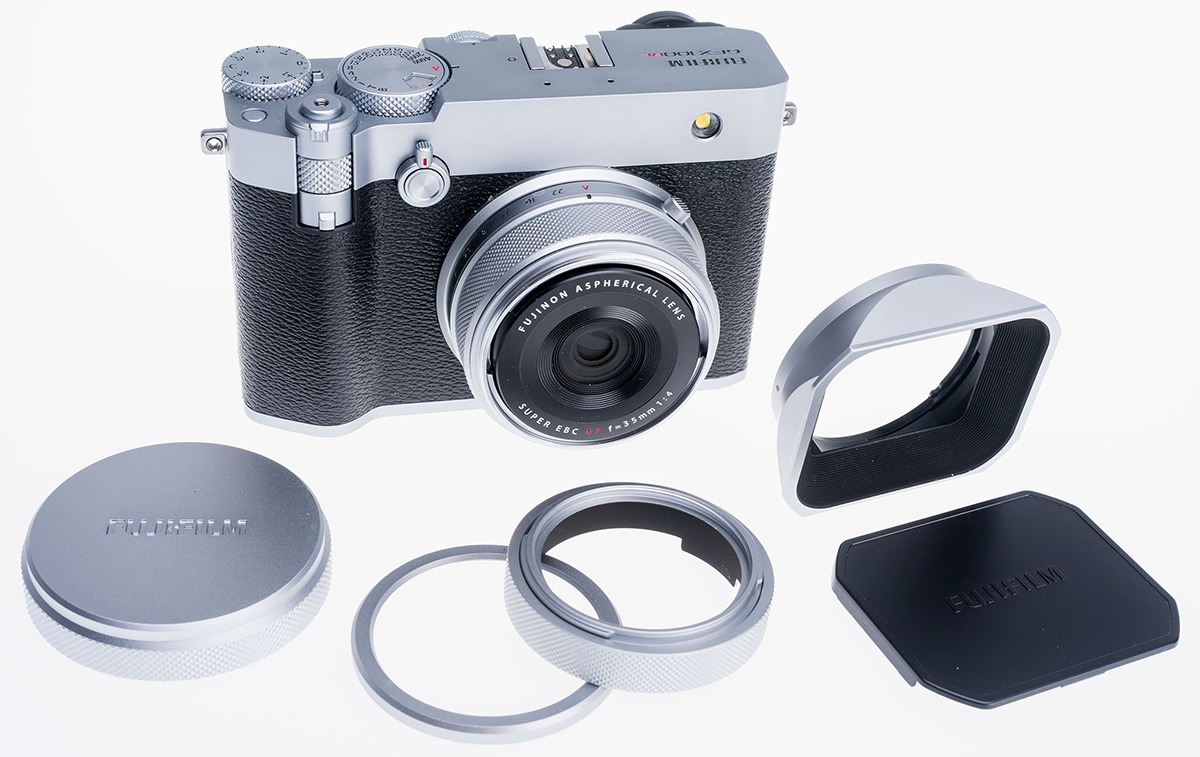
Putting all this together with finely engineered focus and aperture rings (to 20cm, and third stop soft detents) we get a masterpiece of compact lens design on this larger format. Unscrew a front trim, fit the supplied 49mm filter on the bayonet lens hood adaptor and the camera becomes weather-sealed. Add the machined rectangular lens hood with its deep matt black inner and aluminium outer skins, and a supplied slide-on front cap completes the rig. The slide-on design could very easily be used to make a dedicated filter holder for grads or effects (hint to Fujifilm).
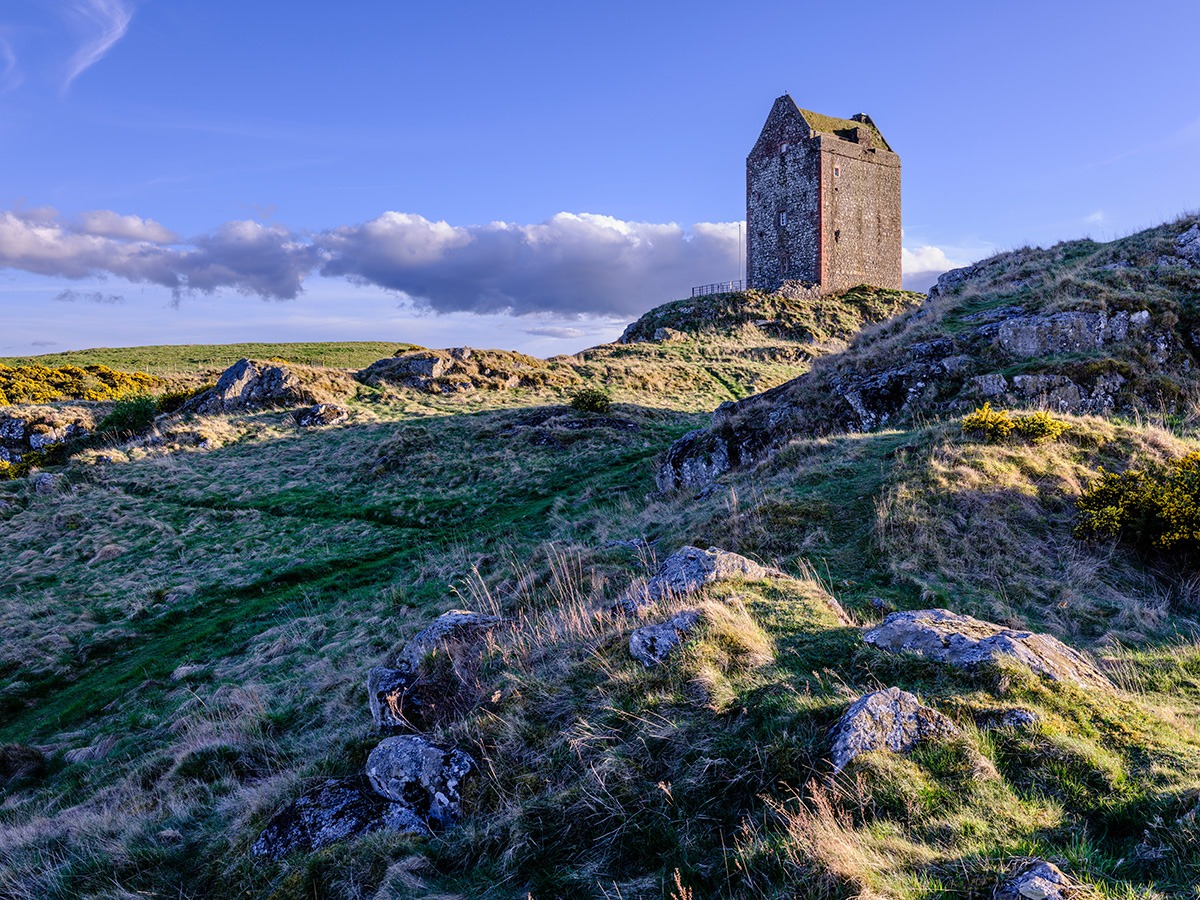
It’s difficult to fault the lens when you see in-camera JPEGs. The Super Fine option is so good, and the exposure so accurate, you might never need to shoot raw. At ISO 200, the deepest shadow detail on a JPEG can be pulled up with extreme levels adjustment in Photoshop and show no excessive noise or tone breaks. An underexposed JPEG from this sensor is almost as good as .RAF for post-processing.
It’s just as well that using the two cards to record the raw and JPEG gives you the best backup, film simulations (with EVF/screen preview) and cropped results. You can set the digital zoom to 35mm, 45mm, 50mm or 80mm in addition to those format ratios. If raw is recorded, in-camera processing allows application of all these settings later on. Sit down with the camera and a coffee, use the 5.7 million pixel EVF to view the results, and save a new JPEG.
Cropping, whether in-camera or later, provides great scope despite the fixed wide-angle lens. The 45mm digital onverter setting crops to exactly 35mm full frame bar the 4:3 ratio, and at 62MP closely matches the Sony A7RV with a 35mm lens. The 63mm crop gives a 50mm view with 31MP file and the 80mm a 20MP file with 63mm view. For best quality, an A4 print needs a 10MP+ image. One ninth of the full GFX picture is good enough for this, an effective 3X ‘converter’ giving a 105mm view though you must do this in post, there’s no camera setting.
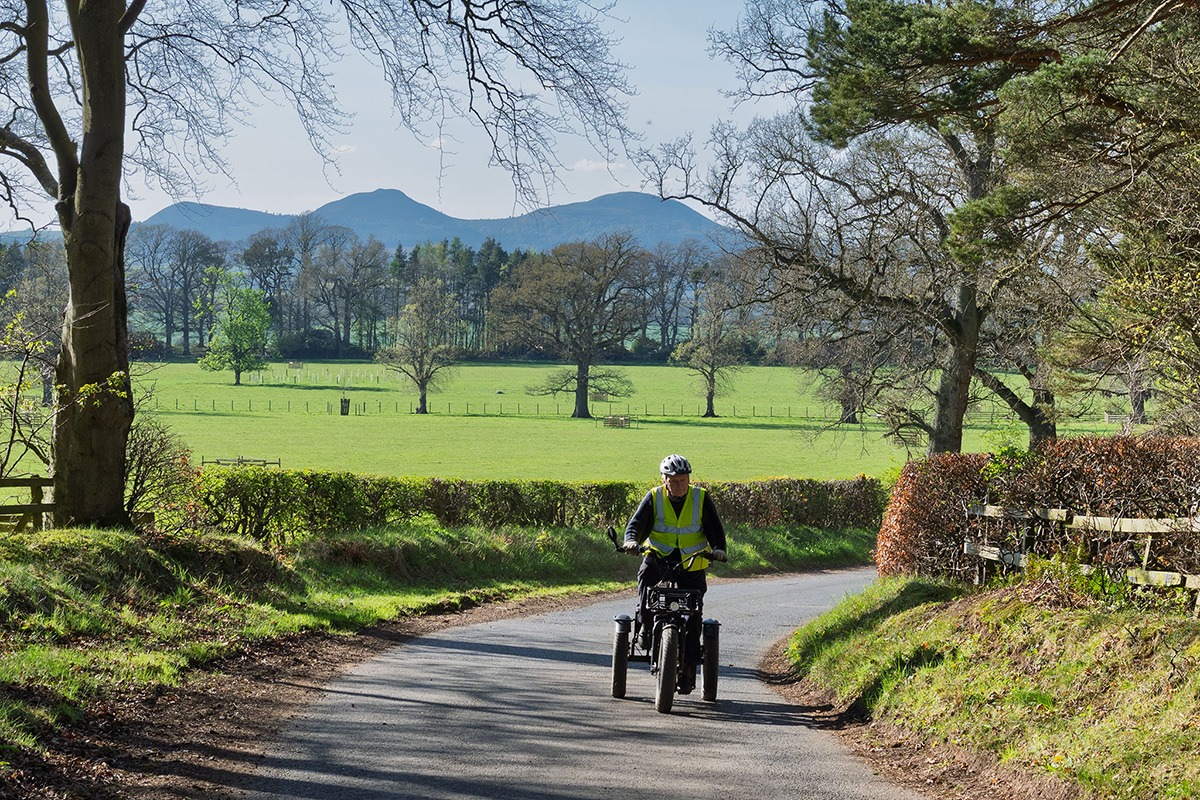
When using the digital converter, the entire EVF or screen is filled by the cropped image. This leads on to the issue of ergonomics and those wonderfully engineered controls.
Check your change
After a few sorties out with the GFX I noticed that the digital converter and the format ratio had a tendency to be wrongly set. The greyed out non-image areas of the finder view meant accidental nudging of the ratio was not a huge problem, but changing the crop and the angle of view was.
When picking up the camera whether turning it on or just lifting it to the eye from neck-strap hanging, I was all too often touching the front roller and the digital converter (crop) toggle switch because both fall naturally under the right hand fingers. It’s an issue a long-term owner would learn to live with, avoided by turning the camera on only after lifting it to the eye, or by customising functions.
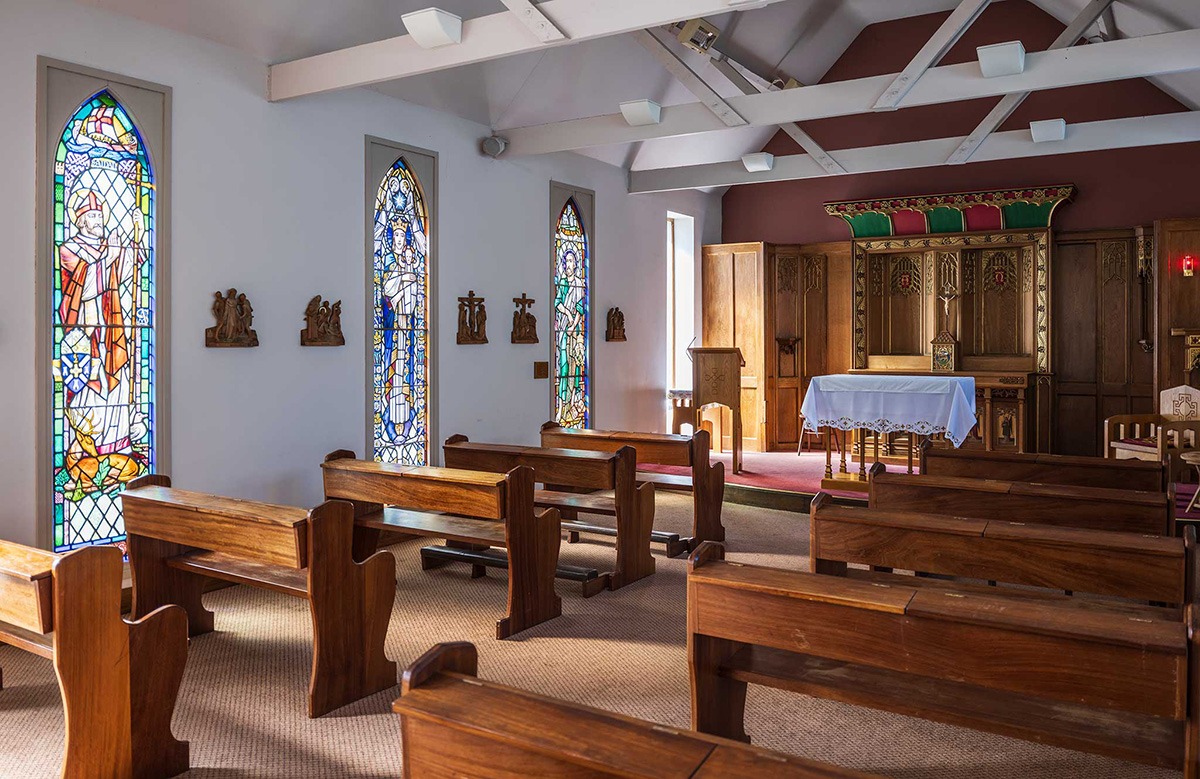
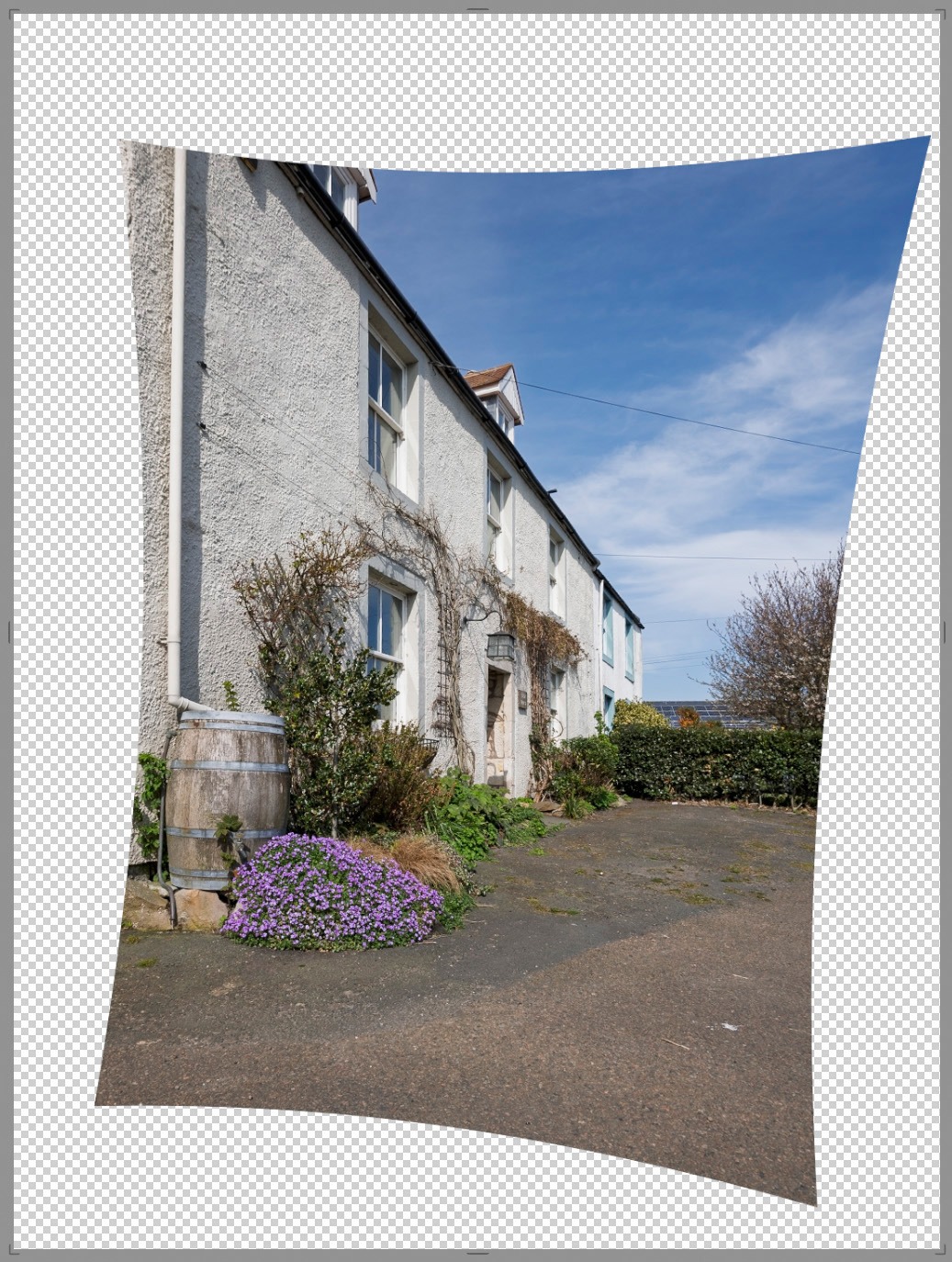
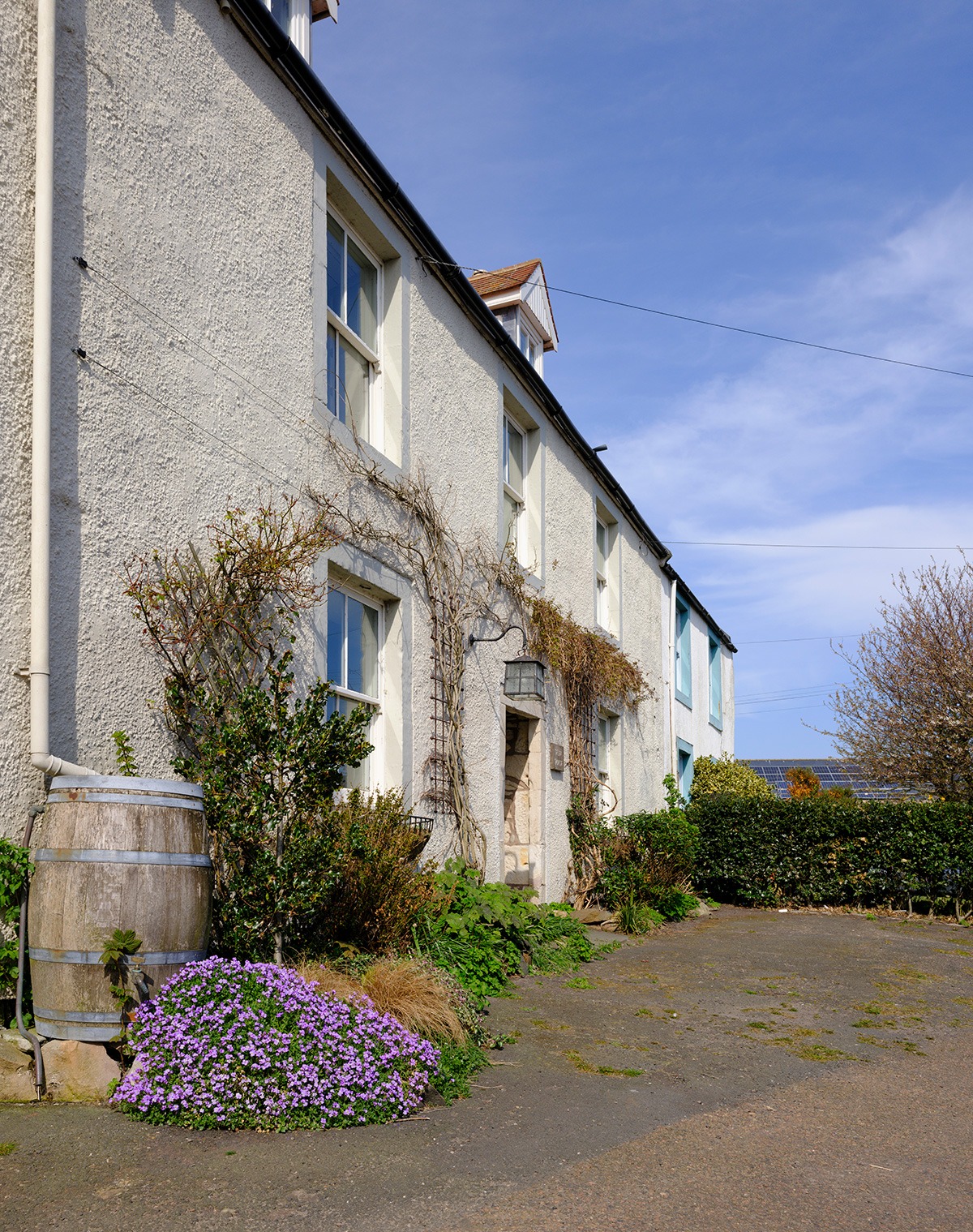
The most common thing was to think – “that’s not a 28mm view!” after moving to the intended shooting position. Church on Lindisfarne, above, is the full 28mm angle with a slight crop to a 35mm shape. The camera was often set by accident to a 35mm view, the first change when moving the toggle switch. Sometimes I failed to realise and took a perfectly good 62MP or 31MP shot, and in a few cases like the house shown in the example dealing with lens distortion and profile I intended a 35mm view (no drainpipe) but used the full 28mm angle when processing from raw. Nothing was ever lost, except perhaps some resolution in a JPEG which I probably did not need.
GFX100RF: power and storage management
Since startup is not instant, you may leave the camera switched on – but this doesn’t make a huge difference. To wake it up, first pressure on the shutter button is needed, the wake-up time is no faster than switching on from cold. It’s also very easy to take an accidental frame – I got more than a few.
I often found that picking the camera up by its right hand end in my right hand turned it on anyway as that switch also tends to get caught.
There is another point Fujifilm could address – the question of M and S size true raw files. Sony offers this with 26 and 15MP alternatives to 60MP. I don’t often use these, because tests have shown little or no benefit when it might be expected at high ISO settings. Sony raw files are big enough at around 80Mb. However with the 102MP GFX, raw files are over 200Mb and even the Super Fine JPEGs come in around 60Mb, with cropped ratio or digital converter use greatly reducing this, while always leaving raws full size.
If you shoot raw, Bridge/LR will mark frames cropped and/or digitally converted with a symbol identical to the one seen after processing. Only after previewing can you revert to see the whole raw frame and re-crop.
Shake down
The shutter has so little vibration that shots taken at speeds like 1/60s were critically sharp every time (bar subject movement) and those in the 1/8s-1/30s almost always as good. For me the watershed seemed to be anything longer than 1/8s. But ISO 8000 as used below to ensure a shutter speed of 1/50s does not mean high noise, and full aperture doesn’t mean loss of sharpness.
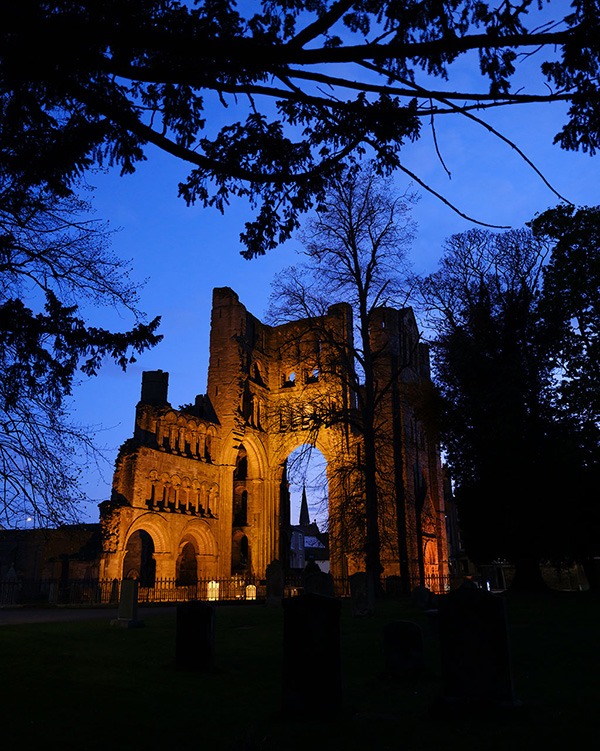
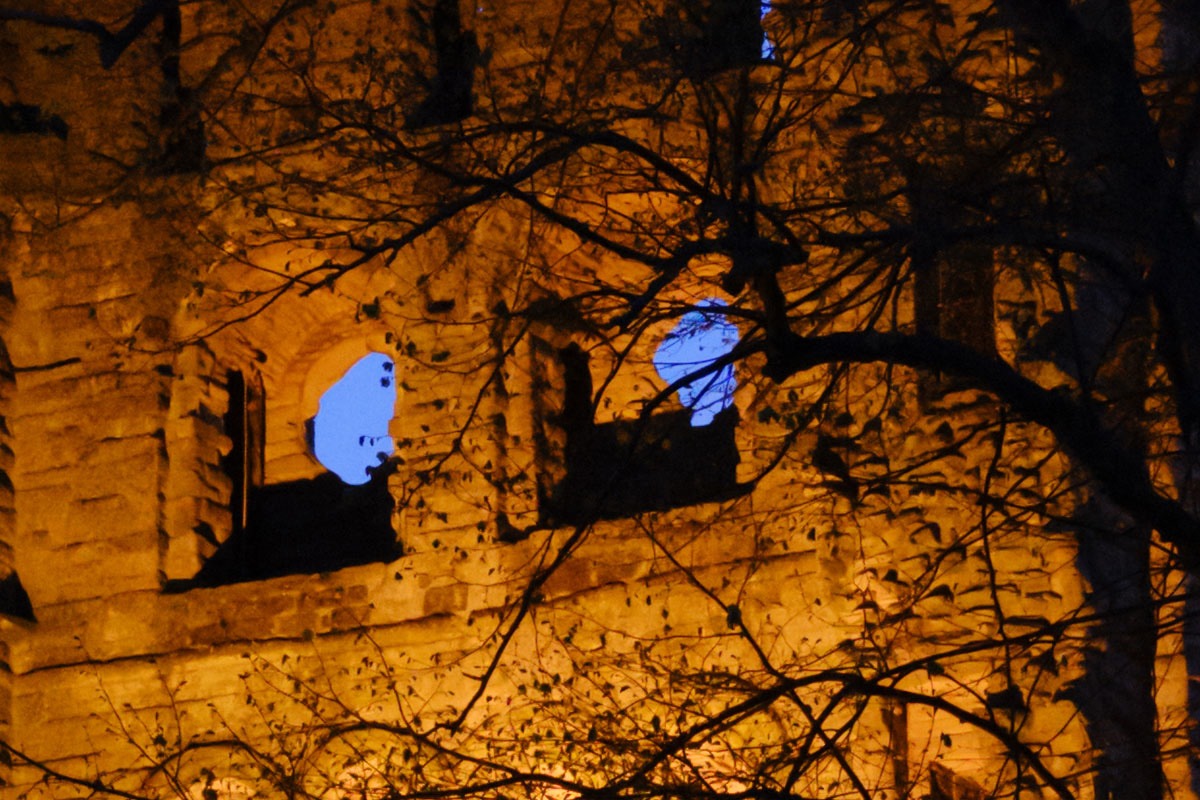
It’s a camera for extremes, with f/22 plus 4XND entering f/64 territory. The sensor doesn’t suffer badly from diffraction loss as it has no AA filter. It can shoot at 6fps (3fps only on electronic shutter) for a burst of nearly 300 JPEGs.
As for the battery life, it’s good that it is over 800 raw captures, twice as many as most full frame high res competitors. I charged in camera as no charger was provided, and never needed to change the battery mid-day. I used the latest Lexar Armor SDXC UHS-II card in slot 1, and a provided standard Lexar in slot 2. Reviewing, deleting, formatting and in-camera operations were fast, as was transferring small JPEGs to my iPhone. Using a new Fujifilm App, geolocation was recorded from the phone reliably with the camera connection renewed.
Although it has been called a ‘compact’ and tipped for street shooting, it’s more of a travel and landscape choice. The level of detail revealed when you zoom in on a 100% view will have you magically erasing gum off paving, crisp bags from hedgerows and bad pointing on brickwork. Sure, it would not distract even on a 20 x 16″ print but this sensor is good for prints 40 x 30″ viewed with a magnifying glass.
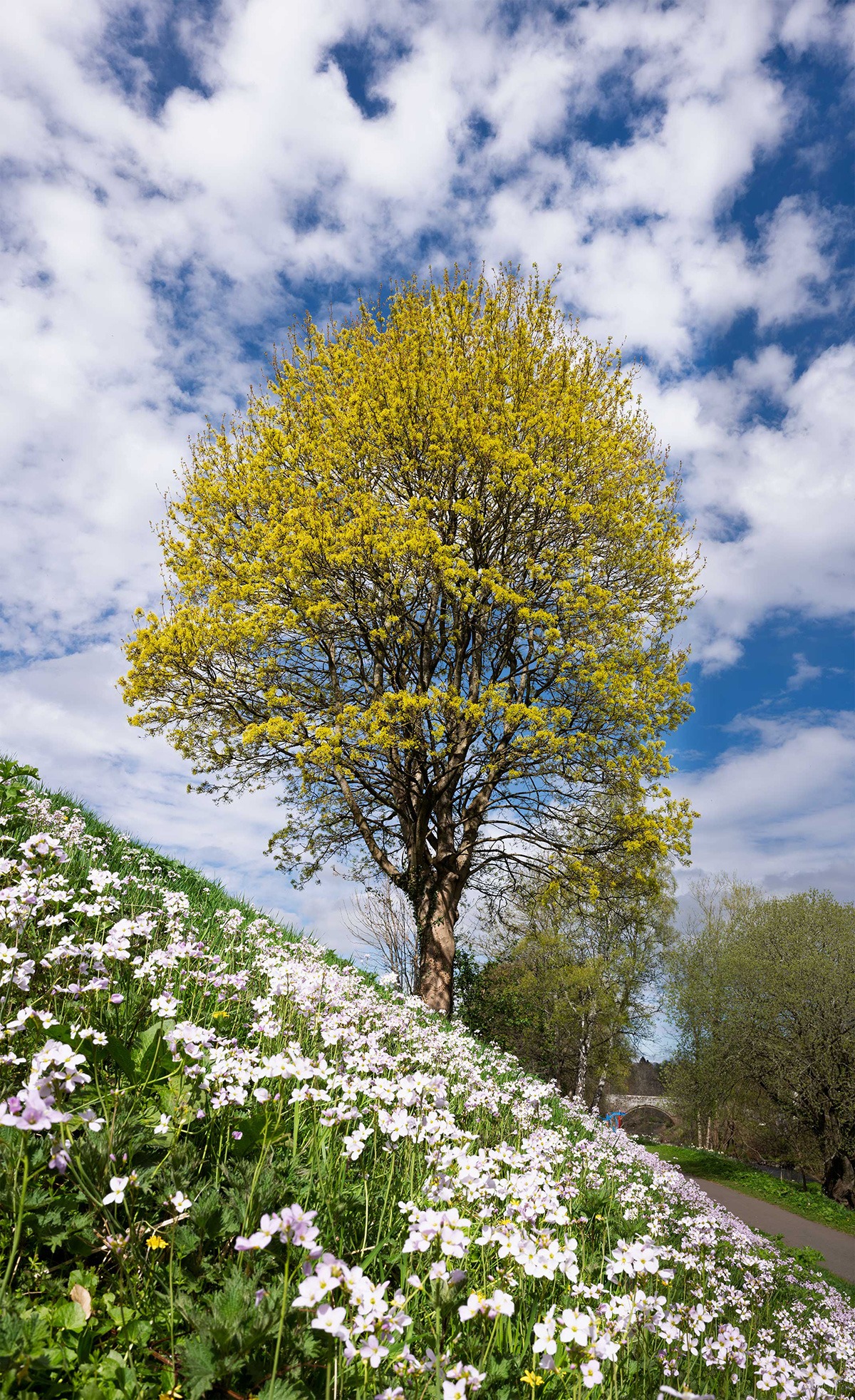
If 100 megapixels on a 4:3 ratio format isn’t enough, it’s such a quick and easy camera to used and focus that two handheld shots in rapid succession, one at ISO 160 and the other at ISO 200 by accident, focused on the distant tree and the foreground flowers were easily merged into a slimmer format composite of aorund 140 megapixels! Regular multishot pans do require a good processor and free memory/disc space for Photoshop to handle them automatically. This was a manual composite, no automation involved.
The £4,700 SRP seems high but it’s the lowest cost way to get that 100 million 16-bit pixel look.
You can find the GFX100RF at Clifton Cameras with a 5-year extended warranty.