Tag: firmware

  • New firmware for A7RII, A7SII

    Sony has released new firmware 3.20 for the A7RII and 2.10 for A7SII to enable XAVCS video recording on SDHC (rather than the larger XC) cards. The European updater is, as usual, not on line when the US/Americas Sony site has got it all ready to go. They are the same software so it’s safe to use either.

    Though nothing else is mentioned as improved, we note that lens compatibility is an active link in the list of inherited changes.

    The link for A7RII is: https://esupport.sony.com/US/p/model-home.pl?mdl=ILCE7RM2&template_id=1&region_id=1&tab=download#/downloadTab

    and for A7SII:

    https://esupport.sony.com/US/p/model-home.pl?mdl=ILCE7SM2&template_id=1&region_id=1&tab=download#/downloadTab

    European support for A7RII is here: http://www.sony.co.uk/support/en/product/ILCE-7RM2

    and for the A7SII: http://www.sony.co.uk/support/en/product/ILCE-7SM2

  • Sigma’s system revolution

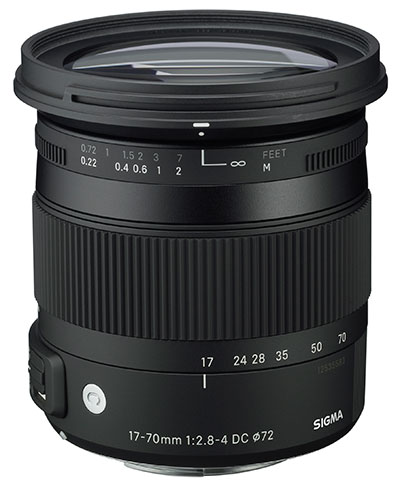
    Sigma Imaging, already one of our favourite lens makers, has announced upgrades and new functions for their entire system which will transform the way it works with all the major camera systems.

    The new DC 17-70mm f/2.8-4 – DC (APS-C format) lenses have never been given the EX designation, even when they clearly matched the EX specifications. Now the EX name and its exterior finish are both going, replaced by one standard for all formats, and one finish.

    The entire Sigma range is being restyled, with a new finish, and the old distinctions between EX DG and other lens ‘grades’ are disappearing. “All our lenses have become what we once called EX”, said Graham Armitage of Sigma UK, at photokina. “The demands made by digital systems with higher resolutions mean we have to produce perfect lenses for all the formats from MicroFourThirds to APS-C and full frame.

    “Our greatest breakthrough is in MTF testing. We have designed new MTF equipment, which will be used on the production of new lenses from now on. The MTF testing system we use for development is too slow to be used in production, and we have had our own Bayer sensor based system for this purpose. But it was not proving high enough resolution for new camera sensors like the D800.

    “Now we have built our own MTF testing system, based on the 46 megapixel Foveon Merrill sensor used in the latest cameras. This allows a much better MTF tests. It will be used to test the sharpness of every new lens that Sigma manufacturers.”

    We asked Graham if this would only apply to expensive professional teles, zooms and specialist lenses. “No, it will apply to all lens types”, he said. “We have been able to use the data from the Foveon sensor based tests to improve the performance of all our lenses.” Because the sensor is true RGB not Bayer much better information about chromatic aberration has been gathered and Sigma is feeding this back into the design and manufacture process.

    The new lenses have a robust feel, with machined metal barrel and mount components (a current trend for many lens makers) and a slightly soft-looking matt or silk finish. All Sigma lenses are assembled by hand, in Japan, using traditional construction methods.

    But the most exceptional advance has been made inside the new lenses – sadly, it can’t be retro fitted to older ones.

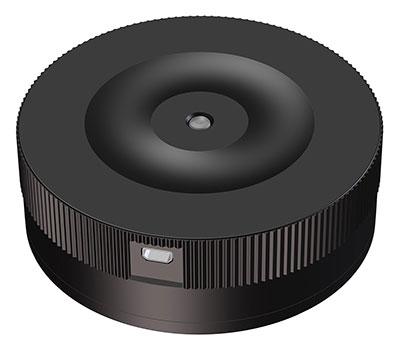
    The USB ‘dock in a cap’ has an LED activity indicator and we handled the real thing. This photo looks a bit over-retouched.

    All new Sigma lenses will be compatible with a USB-connected dock allowing firmware updates to be made by the user. Sigma has honoured its relationship with users for decades by upgrading the chips inside lenses free of charge whenever the protocols used by camera makers created an incompatibility. Now they have developed a way in which users can do this themselves without the lens having to be returned or ‘operated on’ in a workshop.

    “The USB dock will cost about the same as a filter”, Graham told us. I suggested this could mean £50. He indicated I was on the high side. This dock device, which resembles a thick rear lens cap, might be £30 or so.

    “It does more than just upgrade the chip”, he continued. “With a PC program, you will be able to change the focusing speed of the lens. All AF systems are a compromise, a balance between speed and accuracy. You will be able to set the lens to suit your working style, increasing the focus speed if you shoot action or improving accuracy if you take subjects like landscapes and portraits.

    “All DSLRs have problems with front and back focus. Some cameras offer AF calibration, but not all allow you to have different corrections for each focal length of the zoom lens and for different focusing distances. Using our program, you will be able to calibrate new Sigma lenses for the full range of settings so you don’t get front or back focus at any distance or focal length.

    “Not only that, with new telephoto and macro lenses you will also be able to change the distance ranges used by focus limiter switches.”

    The new-style 120-300mm f/2.8 – one of the first lenses compatible with the USB programming system, allowing perfect tuning of front and back focus corrections across the zoom and focus distance range.

    This function sounds familiar, indeed it’s almost what the new Sony Alpha 99 offers with a restricted range of Sony lenses – on-camera setting of focus range limits. The difference with the Sigma option is that future lenses with a range setting switch can each have their individual far, middle and near limits set and there will be no need to go into camera menus to change the setting when shooting.

    Along with Sigma’s recently introduction of nano-type hard coatings which resist water and dirt, their improvements in environmental and dust sealing of lenses, we look forward to testing Sigma products in future and finding them close to the blueprint for the optical design. These innovations draw a line between existing generations of Sigma lenses and the future, as they can’t be fitted to older models. They also take Sigma yet one more step ahead of the camera makers’ own aspirations.

    Sigma has always shown the industry what can be done in terms of advanced optical design – often unmatched for many years, with such specifications as the 8-16mm and 12-24mm zooms, the 300mm-800mm and many others remaining unchallenged even by Nikon and Canon. Now they have set out to show what can be done by harnessing a simple standard interface and allowing communication to the lens IC through the contact-pin array.

    Finally, Graham showed us the new 35mm f/1.4. “Nikon has done really well with their 35mm f/1.4”, he said. “We thought we would try to beat them with this one. We are hoping it turns out to be the best 35m f/1.4 on the market”. The new MTF testing may yet be proved! I mentioned that Samyang had also done pretty well with a 35mm f/1.4. To that there was no comment…

    And then there’s the obligatory picture from any trade show – the man who can’t resist trying to find out what the butler saw, courtesy of the Sigmonster!

    – David Kilpatrick

    This post has been edited with Sigma’s help on October 3rd. The original reference to Zeiss MTF equipment was incorrect; this is used in design and prototype development, and will continue to be used. Sigma’s own production-line testing system is what’s been updated with new high speed Foveon-based MTF bench.

  • Canon transforms 7D – why can’t Sony do the same?

    Version 2 firmware for the Canon EOS 7D released today so much transforms and upgrades that camera that it makes the lack a replacement – at least until after photokina – no concern for owners. Indeed, owners will be thanking Canon for giving them what amounts to a new camera free of charge.

    Whether or not Canon’s approach to firmware coding is very different, and gives them much better access to tapping new functions, we do not know. But this is not some small tweak. It adds the one vital thing which could make the Alpha 77, 65, 55 (etc) and NEX-7 attractive to video makes – manual control of audio/mic input gain.

    That single improvement answers many Canon owners’ demands, as lesser models within the Canon range, introduced after the 7D, have had a full two-channel level adjustment display.

    The upgrade goes further and adds in-camera RAW editing, which surely must have required a processor capable of this from the start, and JPEG resizing plus image rating (these two functions when combined allow preparation and selection of images for transmission to client, newsdesk or printer hosts).

    Here is the full info:

    Canon today announces that the EOS 7D firmware v2 is now available, adding a range of new benefits and functionality for enthusiasts looking to explore the creative boundaries of their photography. Following direct user feedback from photographers around the world, the new firmware further extends to the camera’s advanced image quality, high speed shooting and creative functionality.

    Firmware v2 now offers greater control of image settings and functionality, including a higher maximum RAW burst rate, now up to 25 RAW files or 130 JPEGs. Giving photographers greater control over images directly after capture, a new range of in-camera editing functions includes processing of RAW files, as well as the ability to easily adjust white balance, sharpness and Picture Style.  Enhanced control over Auto ISO levels during both still and movie shooting now allows users to limit ISO speeds to within the native ISO 400-6,400 range, perfect for manipulating exposure in different situations.

    During movie shooting, amateur videographers will also benefit from new manual control of audio levels, with the ability to choose from 64 different sound levels. New compatibility with Canon’s high-performance GPS unit, the GP-E2, enables photographers to track the locations of their images using longitude, latitude and altitude geo-tagging.

    Firmware v2 is available to download now from: http://software.canon-europe.com/

    Canon EOS 7D firmware v2 – new features:

    ·         Improved maximum burst for RAW images (up to 25)

    ·         In-camera RAW image editing

    ·         In-camera Image Rating

    ·         In-camera JPEG resizing

    ·         Maximum Auto ISO setting (ISO 400-6400)

    ·         Manual audio level adjustment in movie recording

    ·         GPS compatibility

    ·         File name customisation

    ·         Time zone settings

    ·         Faster scrolling of magnified images

    ·         Quick control screen during playback

    (end of Canon copy)

    Now Sony – can you step up to the mark, show that you have spent just a few dollars of the money acquired from the sale of Alpha and NEX system on human resources aka software and firmware programmers, and reward the loyalty of your owners with an audio fix on all camera, max/min auto ISO where missing, in-camera RAW processing…

  • Wait for the NEX SLT, folks…

    That is, the next slot in Sony’s programme of new product releases. Almost exactly five years after the Alpha 100 was launched to the world (also a Wednesday in the second week of June, back in 2006) Sony selected an auspicious date to announce the NEX-C3 and the Alpha A35. But these cameras, rather like the Alpha 100 in its day, are not what we are waiting for.

    So – what’s new? 16.2 megapixels, 5.5fps native size, 7fps using a 1.4X crop (about 8 megapixels), no articulated rear screen, some candy functions in the menus for technophobes, and that accessible D-Range button can be made into a rapid custom control.

    Everyone has suggested that a NEX-7 will be what they want. I rather think they will be get a NEX-C5, applying the same transforms to the 5 as the C3 (Compact 3) applies to the 3. That means it will have proper HD video, which the C3 lacks being restricted to MPEG4 HD720. Already, the rustle in the undergrowth is that the diminutive C3 misses the mark for this one single reason only. Sure, a 16.2 megapixel sensor (supposedly a new version, not just borrowed from the A55/580) is a welcome upgrade but NEX is a multipurpose system, and HD720 is back in 2006 not in 2011.

    Nice mic slots, nice big CZ 16-80mm shown on the adaptor – but this, dear Sony, misses the point. We actually want the CZ 16-80mm to be updated to an SSM design so that it will focus on the NEX, and be better on the Alpha bodies, and so that its slightly manky mechanical design can be turned into something so smooth existing 16-80mm owners queue up to buy the replacement.

    Good points – the shift in position of the stereo microphones to the front of the camera, the change to using a separate cover for the memory card instead of having to open the battery compartment. There’s a claim that along with a 20% better battery life, greater heat efficiency means the new cameras won’t cut out before 29 minutes is up when filming HD, even if you use SSS on the A35. Of course the NEX has no SSS but still managed to overheat, at least in the NEX-5, unless you were savvy enough to shift the rear screen away from contact with the camera back – in which case it generally keeps filming OK.

    The operating times, startup, focusing speed are all reported to be much improved – by a factor of two or better. Only the image review time is worse due to the larger file size. Sony’s information makes it clear that very strong noise reduction is applied and this may affect raw files as well as JPEGs.

    The new 30mm f/3.5 Macro SEL is theoretically interesting, but not so much for me personally as we have already got the 30mm f/2.8 SAM and the NEX adaptor. Eventually, you come to terms with the simple fact that a 2.5cm working distance for 1:1 shots prevents you shooting half the 1:1 shots which present themselves. You disturb the butterfly, hit bits of the plant, or cast the lens’s own shadow across the picture.

    The firmware update (see end of story) to provide a ‘focus confirm’ overlay for manual focusing is actually of far more interest to the macro photographer – along with almost any other specification of macro lens except 30mm f/3.5. These lenses are fun, I love the SAM 30mm, but it’s not the answer.

    The new HVL-F20S flashgun (based on the HVL-F20AM only in the design of its rotating reflector/diffuser) has changed a load since it was previewed with a mockup based on the Alpha model. Sony has decided to power it from the NEX battery, much as Minolta did with flashguns like the 316i in the early 1990s. That’s almost certainly because the NEX Smart Connector is simply not capable of holding the gun with a couple of AA cells in it, the weight would be too much.

    In an ideal world, this new flashgun would do for the NEX system what its orginator does for the Alpha 900 and 850 – act as a remote wireless flash commander. But it does not, leaving NEX outside the main Alpha system still. If you want remote flash (or even just a more powerful flash mounted on a bracket beside your camera) the Nissin Di 866 MkII remains your best bet, programmable to fire correctly in synch with the NEX and to use its own auto-exposure cell for metering.

    Alpha 35 – one step forward, two steps back

    The Alpha 35 is similarly not earth-shattering news, especially if you own an Alpha 55 with GPS function and rather better overall performance in all respects except (perhaps) ultimate high ISO. The firmware updates for both NEX and SLT models, to be available from June 20th, add most of the benefits of the new models along with some of the child-friendly hipsta stuff. Again, wait until the next round. A higher end SLT camera is firmly promised, it’s been prototyped and mocked up and preproduced and somewhere as I write someone is actually using it.

    Losing the articulated rear LCD (see above), not even replacing it with a tilting one, is a big sacrifice. The 7fps 1.4X digital tele conversion mode – with continuous AF tracking – is interesting and reminiscent of the sensor crop mode of Nikon’s first CMOS, the D2X, which was itself developed from a Sony sensor (the Cybershot DSC R-1). It shows that there are genetic traits in the Sony line that won’t be forgotten.

    But is there really much point to this camera? Not much. Unlike the NEX-C3 which sees a significant body size reduction and style change, the A35 contrives to be a poor relation of either the A33 or the A55 because it lacks that excellent, reversible, twist and swivel rear screen.

    Photoclubalpha has been a photographer’s thing not just a camera owner’s thing – a small difference, these days, but important. For photographers any reason to prefer the new models to what you’ve got may depend on small hidden differences which come to light as people use them. Certainly the provision of functions with changed names because no-one can be expected to understand what an aperture is, what a shutter speed is (and so on) is no reason to want the new models. Probably the reverse!

    Video enthusiasts may like to note that the firmware update for the A55/33 allows all the overlaid text to be removed from the live view, which can be output from the HDMI port to surprisingly high quality. Recording devices to accept HDMI signals like this are just starting to appear at affordable prices. There’s some potential to experiment with the image provided for LV (Focus Check Live View more so than Quick AF LV) once fed into other systems free from overlays.

    Version 04 firmware update for NEX-5, NEX-3
    Available from June 20th, a firmware upgrade for existing NEX-5 and NEX-3 cameras adds the new ‘Picture Effect’ function as introduced on the new NEX‑C3. It also adds a Peaking function to assist with more precise manual focusing. Available free to registered users, latest Version 04 firmware update for NEX-5/NEX-3 can be downloaded from:
    NEX-3
    Windows:
    http://support.sonyeurope.com/dime/downloads/downloads.aspx?f=FW_NEX3_V04_WIN&site=odw_en_GB
    MAC OS:
    http://support.sonyeurope.com/dime/downloads/downloads.aspx?f=FW_NEX3_V04_MAC&site=odw_en_GB
    NEX-5
    Windows:
    http://support.sonyeurope.com/dime/downloads/downloads.aspx?f=FW_NEX5_V04_WIN&site=odw_en_GB
    MAC OS:
    http://support.sonyeurope.com/dime/downloads/downloads.aspx?f=FW_NEX5_V04_MAC&site=odw_en_GB

    Editor’s note June 9th: please note that these URLs will not work – they are incorrectly transcribed by Sony. The URLs should be similar to those for the A33, A55 with a hyphen between sony-europe. Unfortunately, Sony has issued press releases and web pages with the incorrect URLs. We have changed the link so that it will work when the time comes.

    Version 2.00 firmware update for α33, α55
    Available from June 20th, a firmware upgrade for existing α33 and α55 cameras by Sony adds several creative and operational enhancements. Support for the ‘Picture Effect’ function featured on the new α35 is now offered. High-Speed Synch is supported during wireless operation with a compatible external flash (only α55). Ergonomics are further improved with revised menus and a new mode that lets users switch off shooting parameters overlaid on screen for clear, uncluttered composition. The camera’s Digital Level Gauge can also be displayed when shooting via the optional CLM-V55 external LCD monitor. Frequently used features can now be custom-assigned to the D-RANGE button for rapid, menu-free access.

    Available free to registered users, from the 20th of June the latest GB English Version 2.00 firmware update for α33 and α55 can be downloaded from:
    A33
    Windows:
    http://support.sony-europe.com/dime/downloads/downloads.aspx?f=FW_A33_V2_WIN&site=odw_en_GB
    MAC OS:
    http://support.sony-europe.com/dime/downloads/downloads.aspx?f=FW_A33_V2_MAC&site=odw_en_GB
    A55
    Windows:
    http://support.sony-europe.com/dime/downloads/downloads.aspx?f=FW_A55_V2_WIN&site=odw_en_GB
    MAC OS:
    http://support.sony-europe.com/dime/downloads/downloads.aspx?f=FW_A55_V2_MAC&site=odw_en_GB

  • Alpha 700 Firmware v4 + IDC update official

    SONY has, one week after the leak of a final version of Firmare v4 for the Alpha 700, placed authorised download links on their support websites along with an updated Image Data Suite 3 which can handle Alpha 900 raw files. Quick download links are given here with key features.

    (more…)