
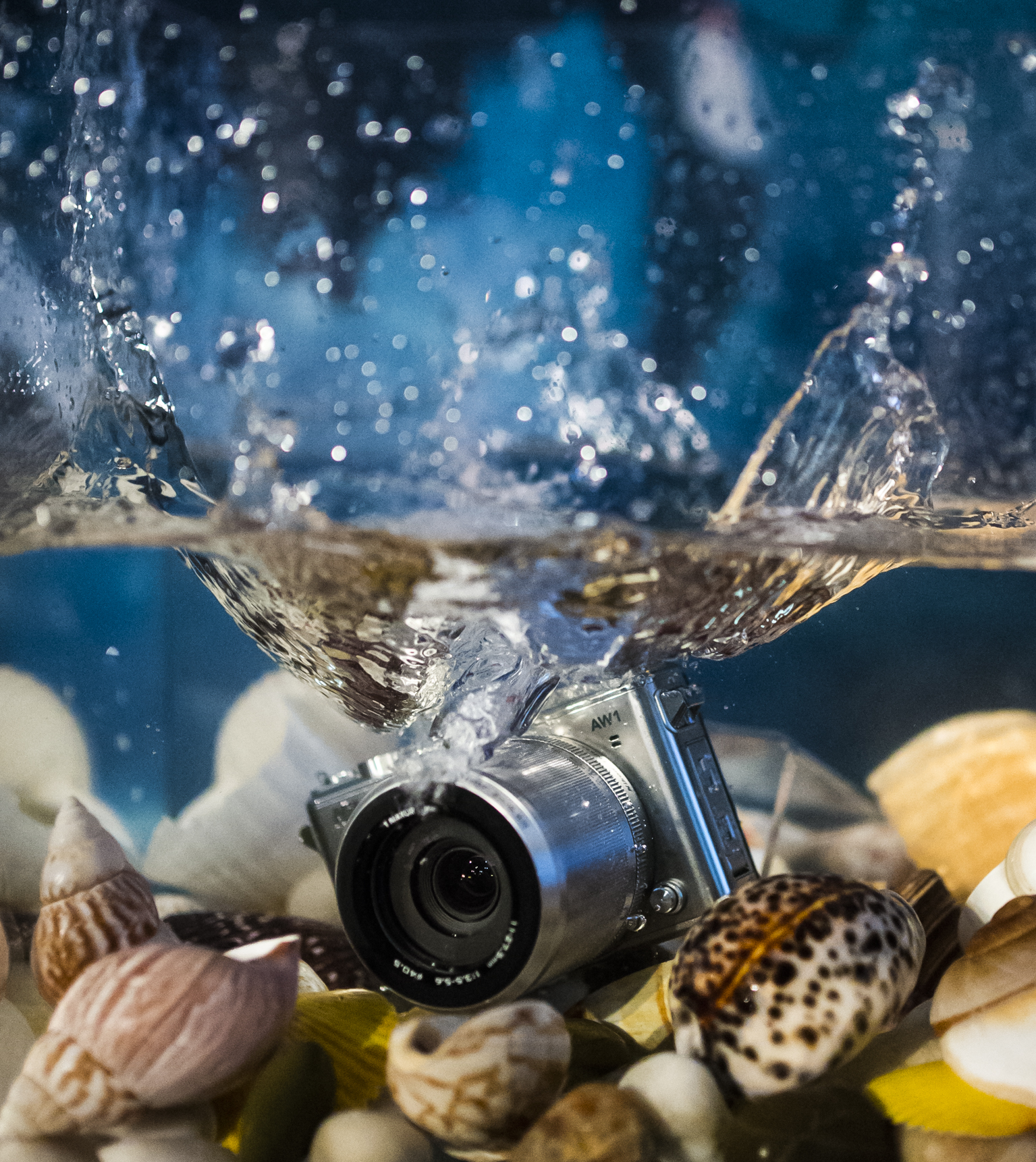
How many outlets will use that original headline, I wonder, and what inspiration leads to it…

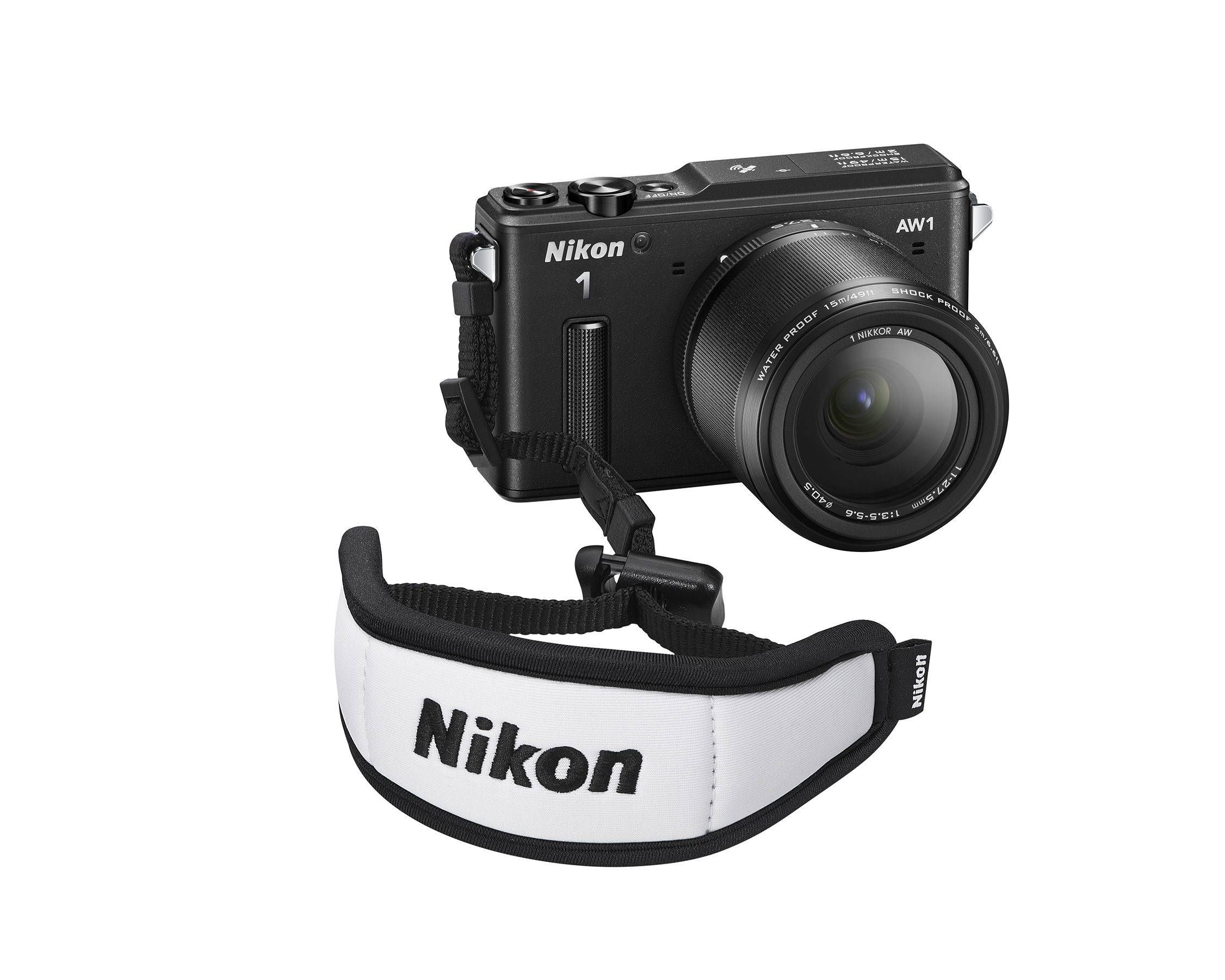
Today, Nikon released the world’s first interchangeable lens digital camera – if you ignore the military version of the Nikonos RS underwater SLR produced with Kodak. Unlike that specialised system, the AW1 is intended for the consumer and is extremely affordable. Available in black, white or silver metal finish for £749 with standard 11mm-27.5mm F3.5-5.6 Zoom lens (equivalent, in 35mm terms, to 30mm to 74mm) which is rated for 15m submersion, or £949 with the 10mm F2.8 and the zoom, with the 10mm supporting 20m submersion.
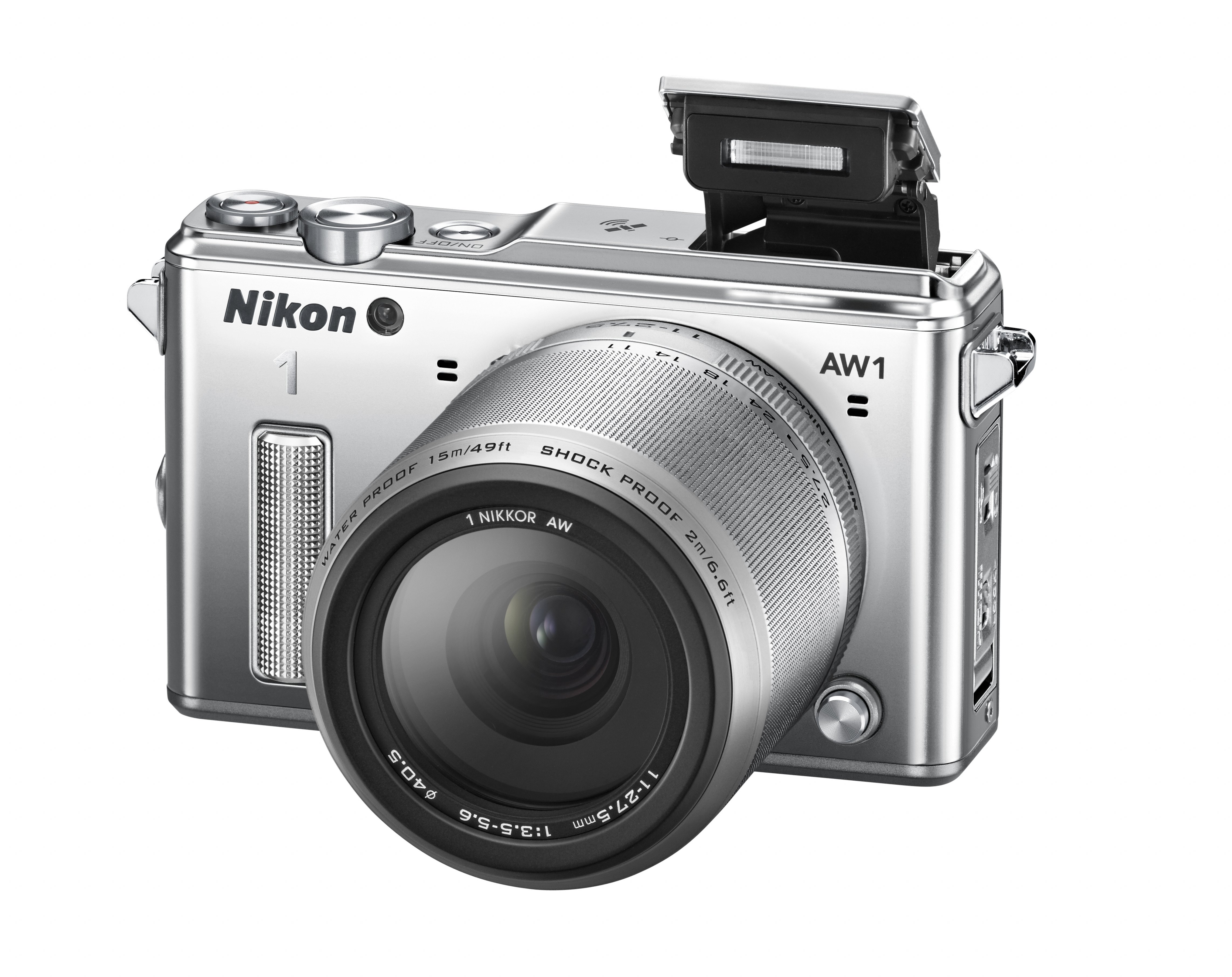
Part of NIkon’s 1-series, the AW1 sports the hybrid AF 14Mp sensor, high-speed shooting (now 15fps with continuous AF) and good high ISO abilities that defined the CX-mount family from the start, with some enhancements inherited from newer models and ideal for underwater use. First, though, let’s look at the mount that makes the AW1 so unique.
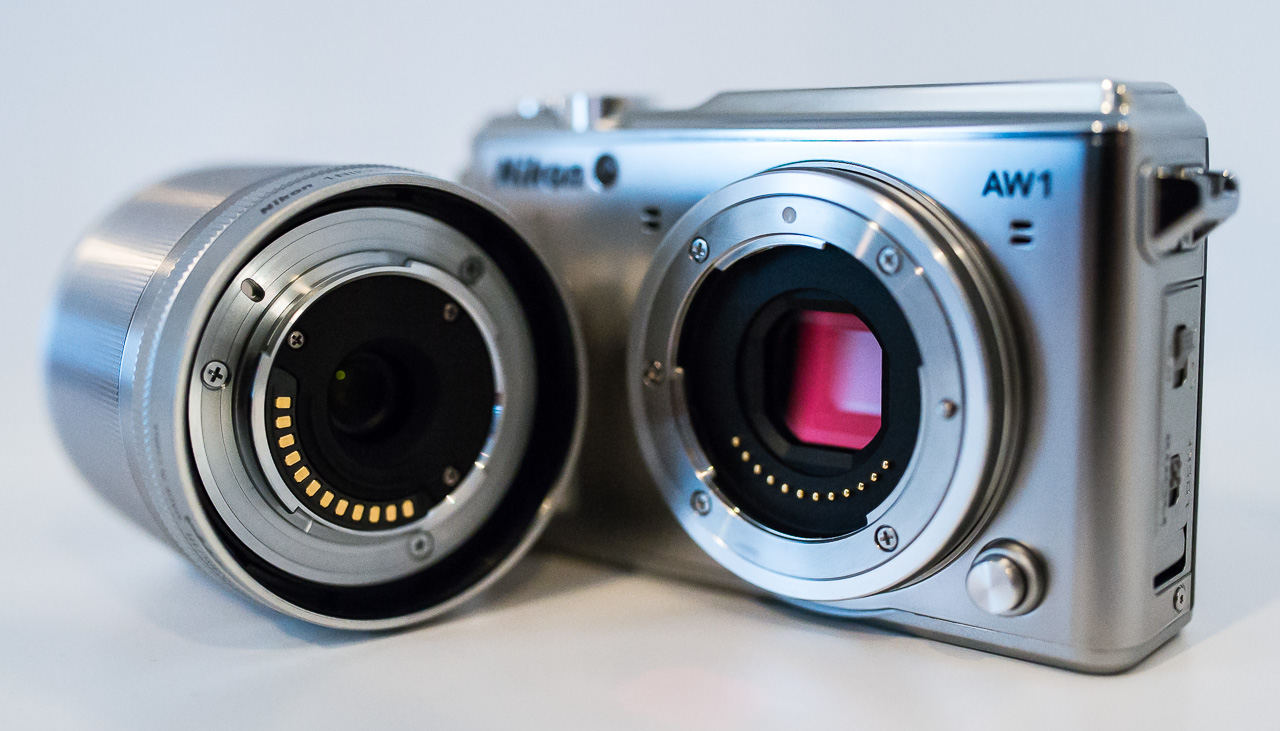
It’s very similar, in concept, to the Nikonos RS mount, but reversed. Even the familiar grease to maintain the seals is included. Naturally, changing the lenses underwater is not possible, as the sensor and electronics are exposed – and any foreign body such as hair or sand will stand a chance of compromising that seal, so Nikon is placing a great deal of trust in their consumers’ ability to understand and maintain the camera properly.
As a member of the CX/1 family, the AW1’s physical lens mount and registration is unchanged, but the body includes a greater protrusion for the flange with a rubber gasket. On the new underwater lenses, the mount is recessed, with the extension of the barrel including a silicone liner. Mounting the underwater lenses is satisfyingly difficult, making it clear that this is sealing to back up the claims of 15m submersion.
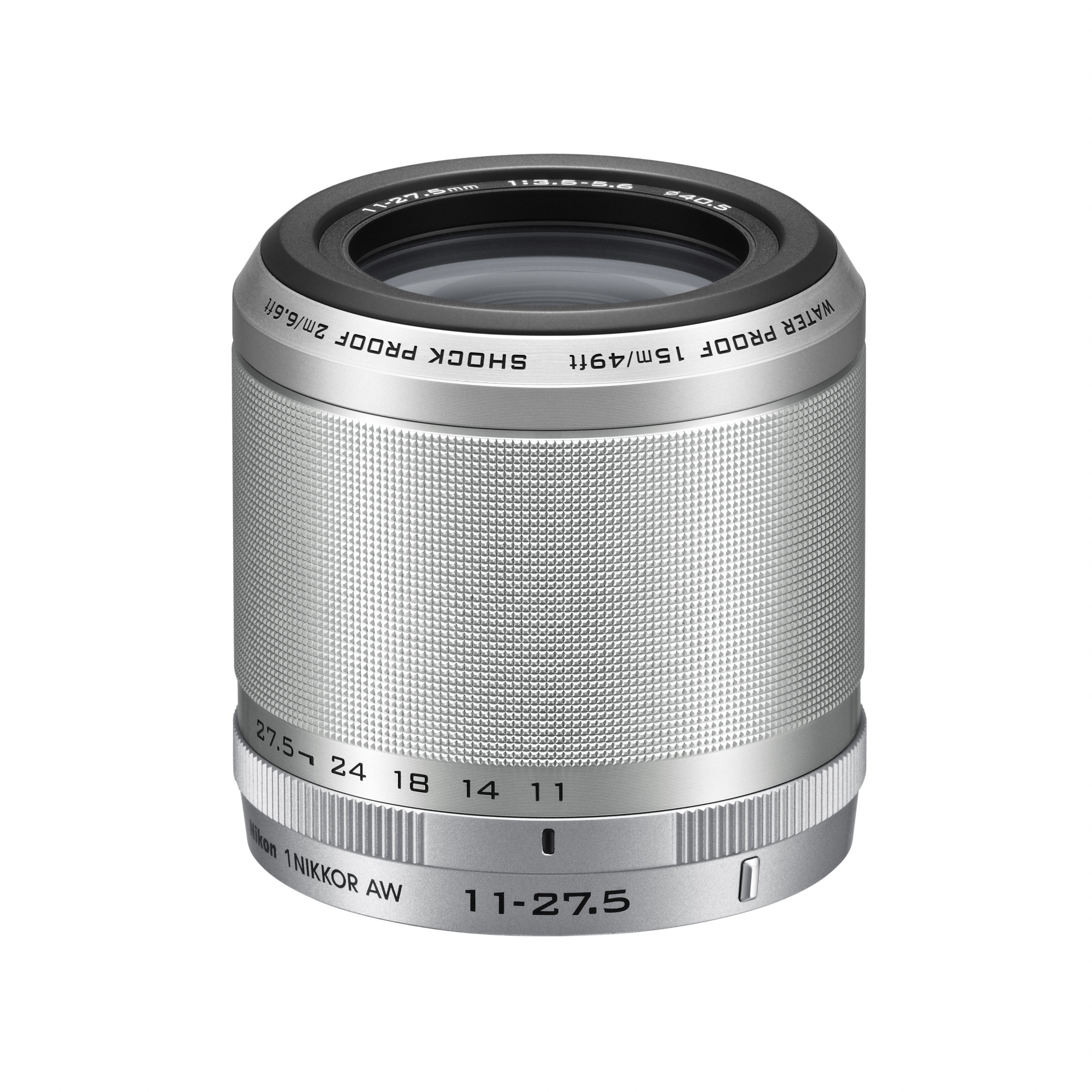
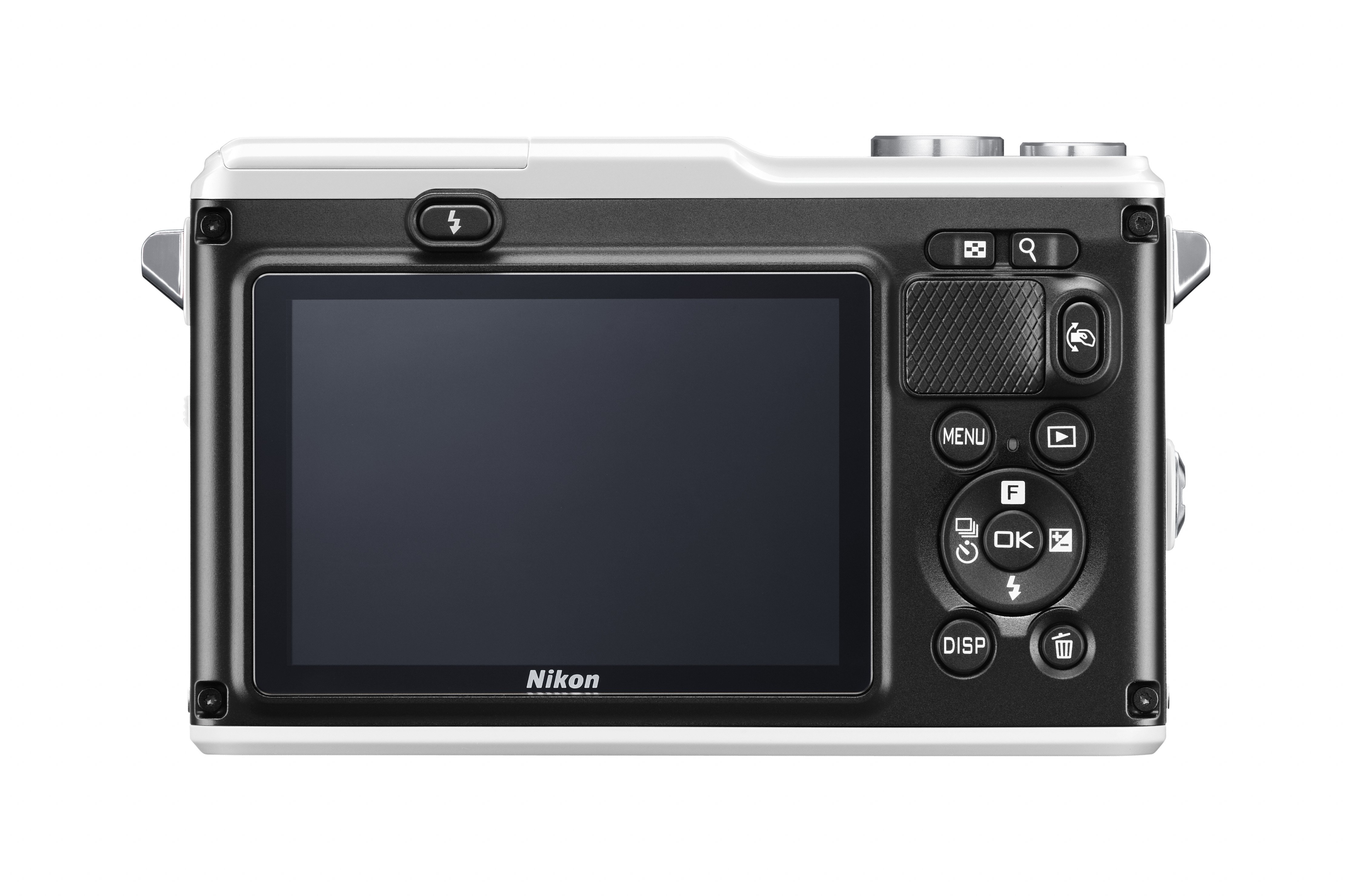
Aiding the underwater experience, the 11mm-27.5mm zoom has a grippy metal zoom collar for most of the barrel, and the AW1 uses an innovative ‘press and tilt’ mode selection – simply hold the mode button, and a virtual pendulum hangs on the LCD to indicate the mode. Tilt the camera body clockwise or vice-versa and it indicates one of the automatic modes for video, creative shooting etc. and selects it without any need for additional buttons or hands. This also eradicates the issue with the early Nikon 1, where the mode wheel could be knocked into a new shooting mode when extracting it from a bag or pocket.
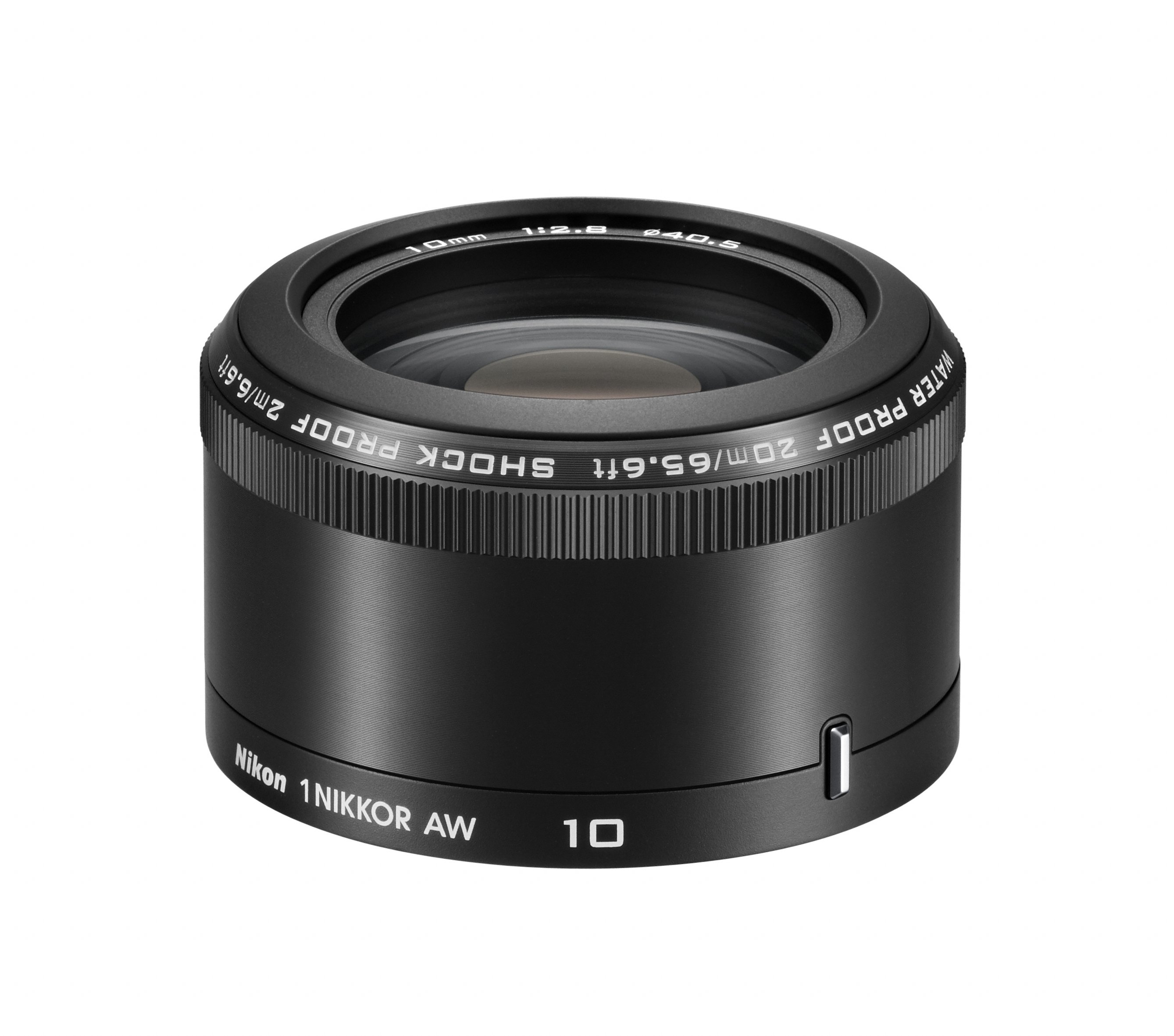
An underwater 10mm prime lens has also been introduced, which can be submerged to 20m.
The AW1 does not make existing CX mount lenses suitable for use underwater, and the underwater lenses will not mount on existing CX bodies such as the V2. Yet the flexibility of the system does allow F-mount lenses via the adaptor, so opting for the AW1 really gives very little away in overall ability.
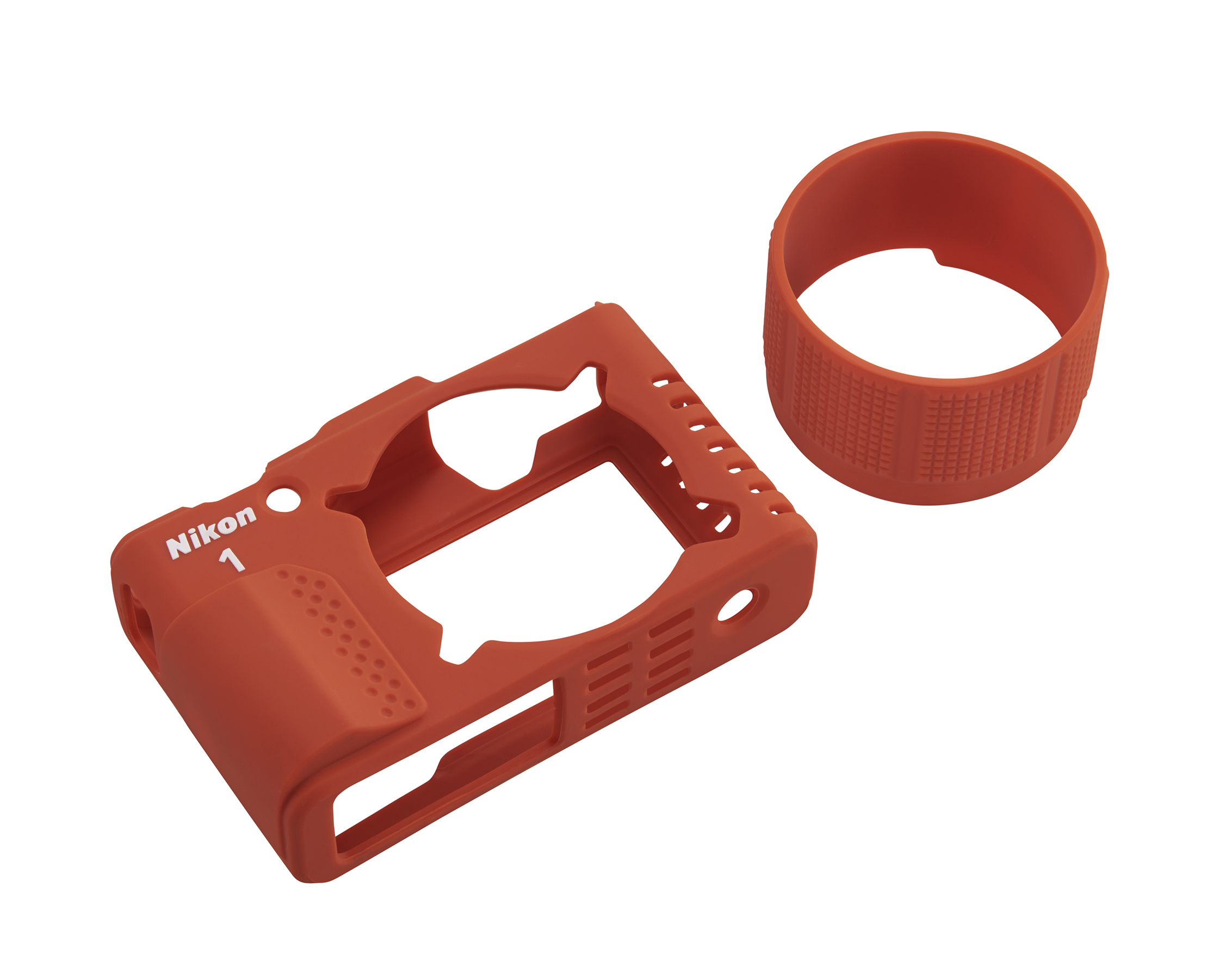
Other technical improvements include GPS/GLONASS support with compass, depth and altitude meters, shockproof from 2m capability, and an underwater Speedlight (the SB-N10) will also be introduced, though the camera’s own pop up flash can be used underwater. Several accessories have been announced, including the obligatory bright rubber housing which includes a grippy collar for the lens.
We had the opportunity to try a pre-production sample for water, drop resistance and handling, though not photography for publication as the firmware is yet to be finalised, with the camera release date set for 10th October. The silver metal body was particularly attractive, and it seems that at this point, this is where the Nikon 1 system and the CX mount come into their own – offering something truly unique, with a form factor and range of abilities that suits the intended user perfectly.
– Richard Kilpatrick
AW1 Specifications:
|
Type
|
Digital camera with support for interchangeable lenses
|
|---|---|
|
Lens mount
|
Nikon waterproof 1 mount
|
|
Effective angle of view
|
Approx. 2.7x lens focal length (35mm format equivalent)
|
|
Effective pixels
|
|
|
Effective pixels
|
14.2 million
|
|
Image sensor
|
|
|
Image sensor
|
13.2 mm x 8.8 mm CMOS sensor (Nikon CX format)
|
|
Storage
|
|
|
Image size (pixels)
|
Still images (auto, best moment capture, and all creative modes other than Easy panorama; aspect ratio 3:2)
Still images
Still images
Still images
Still images
Still images
Still images
|
|
File format
|
|
|
Picture Control system
|
Standard, Neutral, Vivid, Monochrome, Portrait, Landscape; selected Picture Control can be modified; storage for custom Picture Controls
|
|
Media
|
SD (Secure Digital), SDHC, and SDXC memory cards
|
|
File system
|
DCF (Design Rule for Camera File System) 2.0, DPOF (Digital Print Order Format), Exif (Exchangeable Image File Format for Digital Still Cameras) 2.3, PictBridge
|
|
Shooting modes
|
|
|
Shooting modes
|
auto; creative, with a choice of the following options: P, S, A, M, underwater, night landscape, night portrait, backlighting, easy panorama, soft, miniature effect, and selective color; best moment capture (slow view and Smart Photo Selector), advanced movie (HD-P, S, A, M only-and slow motion), Motion Snapshot
|
|
Shutter
|
|
|
Type
|
Electronic shutter
|
|
Speed
|
1/16,000-30 s in steps of 1/3 EV; BulbNote: Bulb ends automatically after approximately 2 minutes
|
|
Flash sync speed
|
Synchronizes with shutter at X=1/60 s or slower
|
|
Release
|
|
|
Modes
|
|
|
Frame advance rate
|
Approx. 5, 15, 30, or 60 fps
|
|
Self-timer
|
2 s, 5 s, 10 s
|
|
Exposure
|
|
|
Metering
|
TTL metering using image sensor
|
|
Metering method
|
|
|
Mode
|
|
|
Exposure compensation
|
-3-+3 EV in increments of 1/3 EV
|
|
Exposure lock
|
Luminosity locked at metered value when shutter-release button is pressed halfway
|
|
ISO sensitivity
(Recommended Exposure Index) |
ISO 160-6400 in steps of 1 EV; auto ISO sensitivity control (ISO 160-6400, 160-3200, 160-800) available (user controlled when P, S, A, M, or underwater is selected in creative mode)
|
|
Active D-Lighting
|
On, off
|
|
Focus
|
|
|
Autofocus
|
Hybrid autofocus (phase-detection/contrast-detect AF); AF-assist illuminator
|
|
Lens servo
|
|
|
AF-area mode
|
Single-point, single-point (center), auto-area, subject tracking
|
|
Focus area
|
|
|
Focus lock
|
Focus can be locked by pressing shutter-release button halfway (single AF)
|
|
Face priority
|
On, off
|
|
Flash
|
|
|
Built-in flash
|
Manual pop-up
|
|
Guide Number (GN)
|
Approx. 5/16 (m/ft, ISO 100, 20 °C / 68 °F; at ISO 160, Guide Number is approx. 6.3/20.7)
|
|
Control
|
i-TTL flash control using image sensor
|
|
Mode
|
Fill flash, red-eye reduction, fill flash + slow sync, red-eye reduction + slow sync, rear curtain + slow sync, rear-curtain sync, off
|
|
Flash compensation
|
-3-+1 EV in increments of 1/3 EV
|
|
Flash-ready indicator
|
Lights when built-in flash unit is fully charged
|
|
White balance
|
Auto, underwater, incandescent, fluorescent, direct sunlight, flash, cloudy, shade, preset manual, all except preset manual with fine tuning
|
|
Movie
|
|
|
Metering
|
TTL metering using image sensor
|
|
Metering method
|
|
|
Frame size (pixels)/
recording rate |
HD movies (aspect ratio 16:9)
Slow-motion movies (aspect ratio 8:3)
Motion Snapshot (aspect ratio 16:9)
|
|
File format
|
MOV
|
|
Video compression
|
H.264 / MPEG-4 Advanced Video Coding
|
|
Audio recording format
|
AAC
|
|
Audio recording device
|
Built-in stereo microphone; sensitivity adjustable
|
|
Monitor
|
|
|
Monitor
|
7.5 cm (3-in.), approx. 921k-dot, TFT LCD with brightness adjustment
|
|
Playback
|
Full-frame and thumbnail (4, 9, or 72 images or calendar) playback with playback zoom, movie and panorama playback, slide show, histogram display, auto image rotation, and rating option
|
|
Interface
|
|
|
USB
|
Hi-Speed USB
|
|
HDMI output
|
Type C mini-pin HDMI connector
|
|
Electronic compass/location data/altimeter/depth gauge
|
|
|
Electronic compass
|
16 headings (with 3-axis accelerometer attitude correction and automatic offset adjustment)
|
|
Location data
|
|
|
Altimeter
|
Operating range approximately -500-+4500 m (-1640-+14,760 ft)
|
|
Depth gauge
|
Operating range approximately 0-20 m (0-65.6 ft)
|
|
Supported languages
|
Arabic, Bengali, Bulgarian, Chinese (Simplified and Traditional), Czech, Danish, Dutch, English, Finnish, French, German, Greek, Hindi, Hungarian, Indonesian, Italian, Japanese, Korean, Marathi, Norwegian, Persian, Polish, Portuguese (European and Brazilian), Romanian, Russian, Serbian, Spanish, Swedish, Tamil, Telugu, Thai, Turkish, Ukrainian, Vietnamese
|
|
Power source
|
|
|
Battery
|
One rechargeable Li-ion EN-EL20 battery
|
|
AC adapter
|
EH-5b AC adapter; requires EP-5C power connector (available separately)
|
|
Tripod socket
|
1/4-in. (ISO 1222)
|
|
Dimensions/Weight
|
|
|
Dimensions (W x H x D)
|
Approx. 113.3 x 71.5 x 37.5 mm (4.5 x 2.9 x 1.5 in.), excluding projections
|
|
Weight
|
Approx. 356 g (12.6 oz) with battery and memory card but without body cap or O-ring protector; approx. 313 g (11.1 oz), camera body only
|
|
Operating environment
|
|
|
Temperature
|
-10 °C -+40 °C (+14 °F-104 °F) on land, 0 °C- +40 °C (+32 °F-104 °F) in water
|
|
Humidity
|
85% or less (no condensation)
|
|
Shockproof, waterproof, and dustproof performance
|
|
|
Shockproof performance 1, 2
|
Has passed in-house tests 3 to MIL-STD-810F Method 516.5: Shock standard
|
|
Waterproof performance 2
|
In-house tests have demonstrated JIS/IEC Class 8 (IPX8) waterproof performance; can be used at depths of up to 15 m (49 ft) for up to 60 minutes
|
|
Operating depth 2
|
Maximum 15 m (49 ft)
|
|
Dustproof performance 2
|
In-house tests have demonstrated JIS/IEC Class 6 (IP6X) dustproof performance
|
- * Sensor output is about 60 fps.
- Does not apply when built-in flash is raised.
- With special-purpose waterproof lens attached.
- Using a test method derived from MIL-STD-810F Method 516.5: Shock, the product is dropped from a height of 200 cm (6.6 ft) onto a plywood surface 5 cm (2 in.) thick. Exterior deformation and surface damage are not tested. These in-house tests do not constitute blanket guarantees of invulnerability to damage or destruction.
- Unless otherwise stated, all figures are for a camera with a fully-charged battery operating at the temperature specified by the Camera and Imaging Products Association (CIPA): 23 ±3 °C (73.4 ±5.4 °F).
- Nikon reserves the right to change the specifications of the hardware and software described in this manual at any time and without prior notice. Nikon will not be held liable for damages that may result from any mistakes that this page may contain.