Category: Lighting

  • Elinchrom ELC500 TTL studio flash

    Elinchrom ELC500 TTL studio flash

    A new generation from Swiss masters of studio flash Elinca SA brings multi-platform TTL, super-fast recycling and flash durations, brilliant LED modelling and many design innovations.

    David Kilpatrick has been trying out the twin head kit.

    The second wave of any innovation in technology is often safer to invest in than the pioneering first generation. Studio flash offering IGBT duration and power control, allowing much the same TTL and high speed functions found in camera speedlights, has been in development for over a decade but whole generations have been orphaned by advances in wireless trigger and camera firmware.

    Finally bringing this to their new mid-range ELC TTL heads – one rung below the ELC Pro and one above the BRX – Elinchrom has worked for maturity in the whole technology. So, when the ELC 125 and 500 TTL arrived they worked much like any head with the EL Skyport Pro. Days later new firmware for the triggers enabled TTL operation, across a range of camera platforms already proven with the portable ELB 500 TTL.
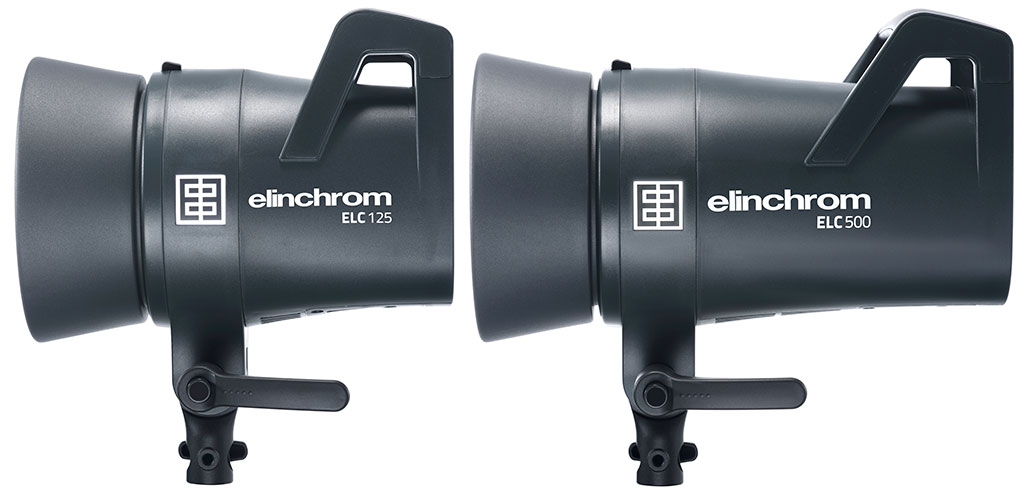
    The ELC 125 TTL is a little larger than a D-Lite. The ELC 500 TTL is substantial – as expected.
    • New dark grey design with superior handling and balance
    • Pro-sumer price but professional spec
    • True TTL exposure with all major camera systems
    • Standard or high speed flash without changing heads or tubes
    • Robust sequence shooting
    • New bright LED daylight colour modelling light
    • Unique colour-coded logo display to show groups
    • Very large LCD rear info panel easy to see at a distance
    • Skyport and Phottix, smartphone and tablet control
    • Large brolly shaft tube fits third part accessories
    • Elinchrom shot-to-shot consistency of colour and power output
    • Worldwide service, UK support from The Flash Centre
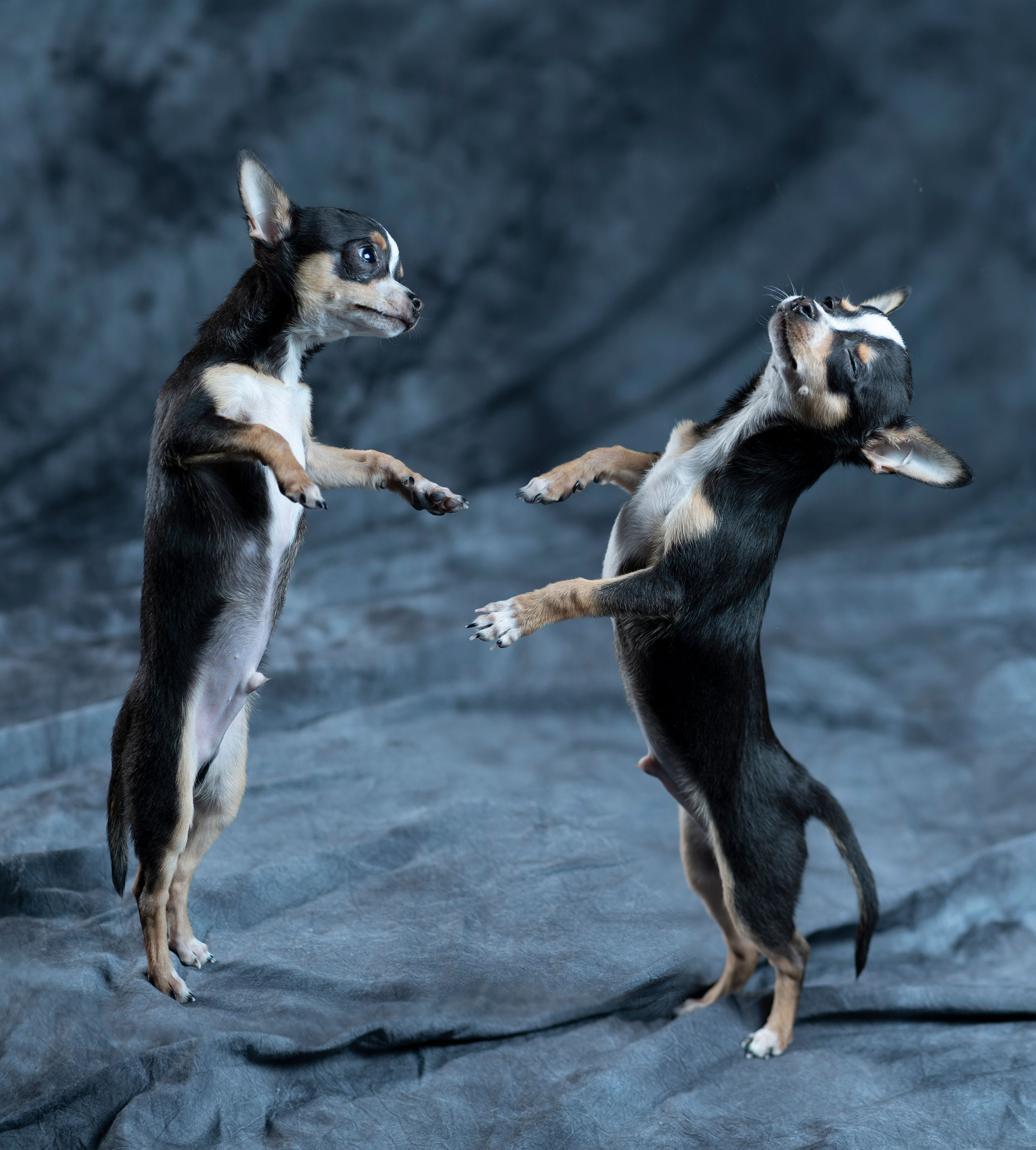
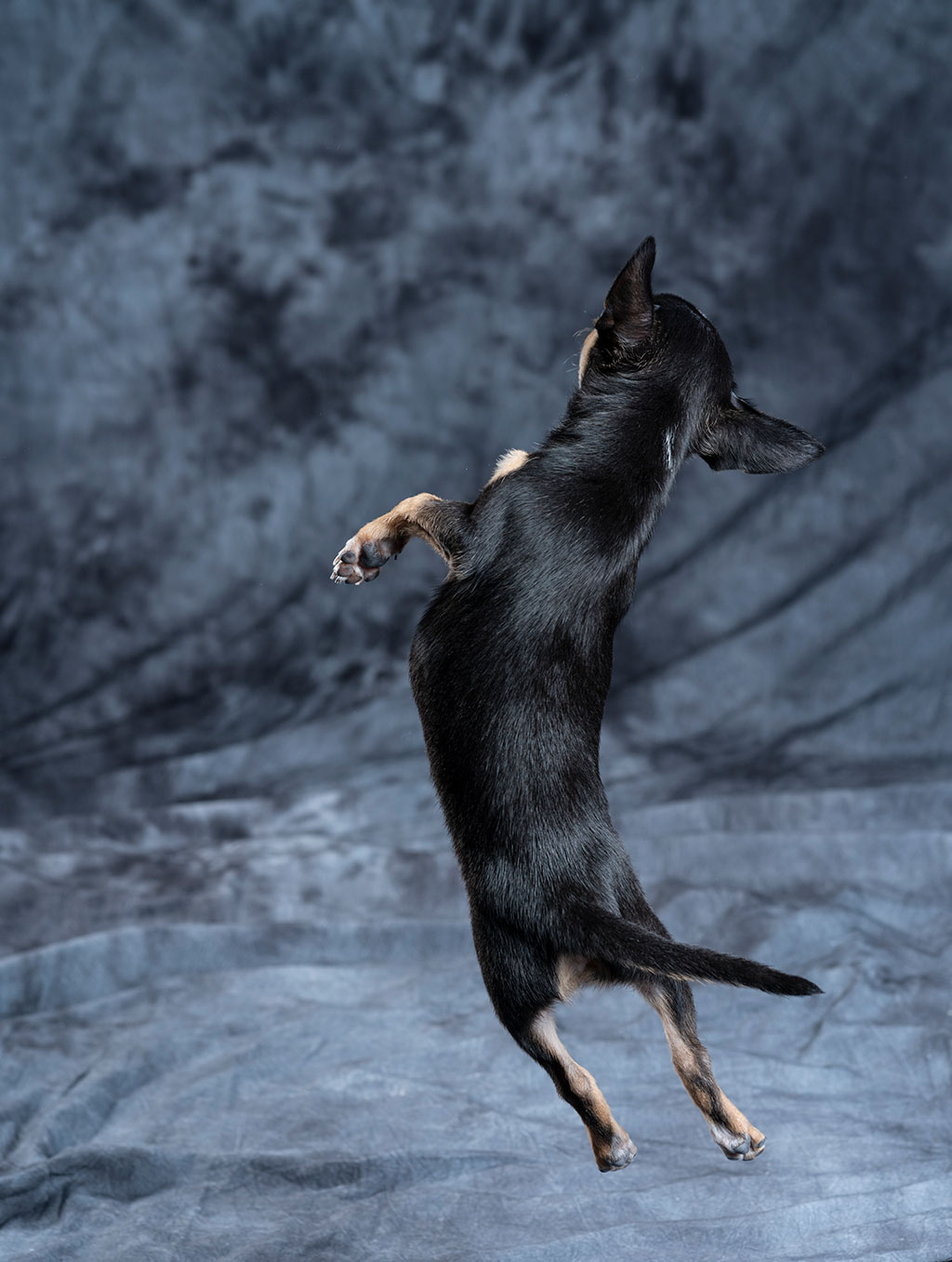
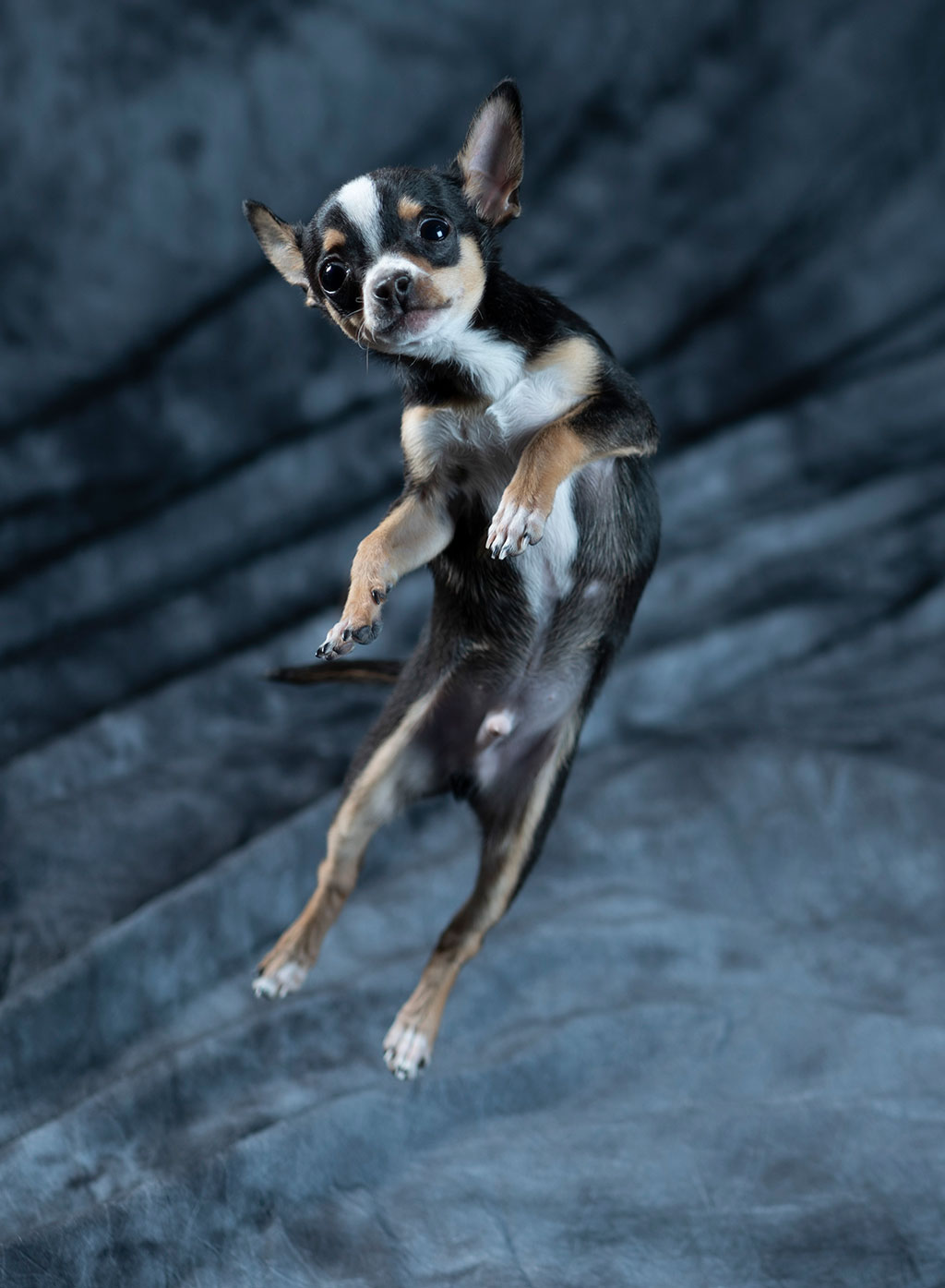
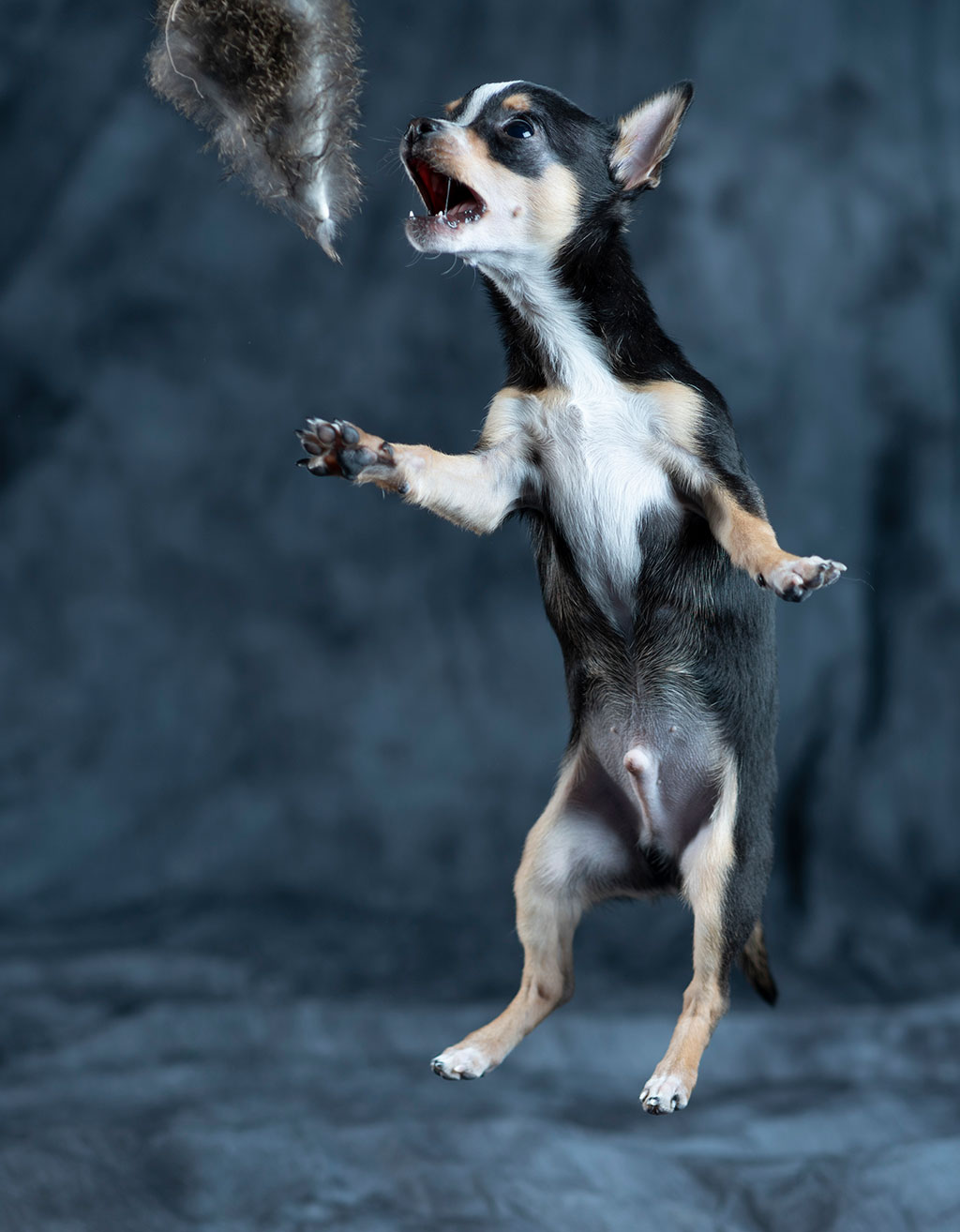
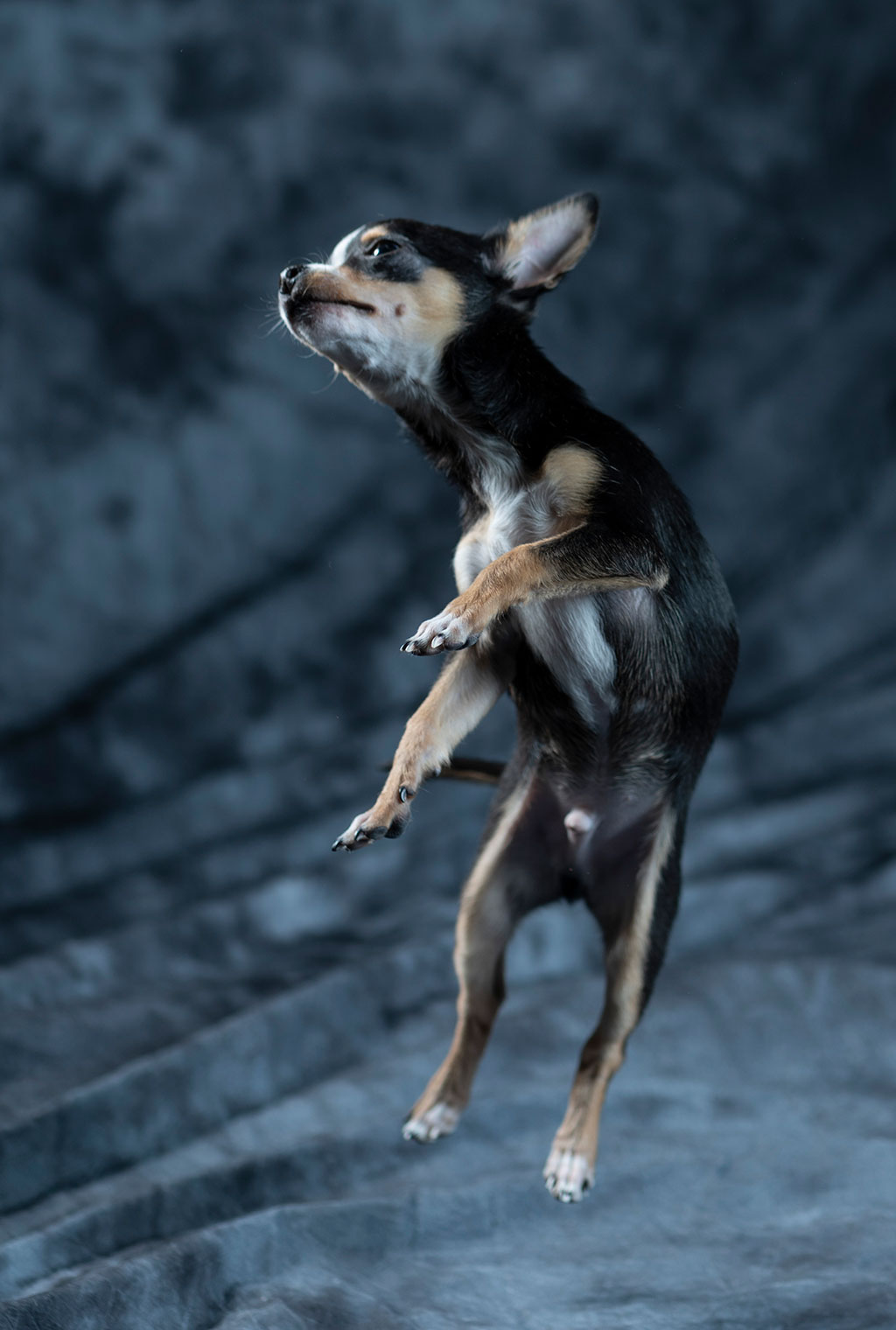
    Photoshop composite warning! Alfie dancing with himself, high speed poses with Animal Eye AF on the Sony A7RIII, 85mm ƒ1.8 lens at f/2.8, and Action duration set on the two heads. Main 90cm square softbox on ELC 500 to the right of the camera, 44cm honeycomb rigid softbox on ELC 125 to the left, skimming in from side and behind, near the edge of the background. Dog handling by Assistant Editor Diane E. Redpath; lighting, camerawork and post-production by David Kilpatrick.

    Canon, Nikon, Olympus/Panasonic, Sony, Fujifilm and Pentax have all been enabled to integrate into Elinchrom studio setups though the differences between the shoe fittings do mean you need a trigger for each different system you use. For medium format and anything else, the transmitters can be paired with a universal receiver.
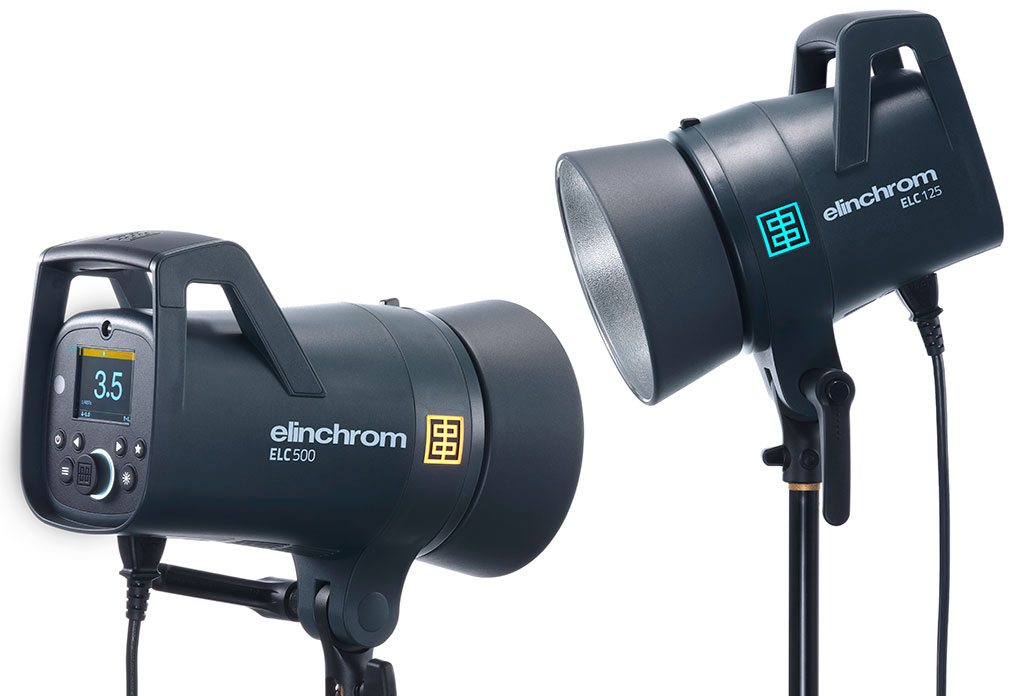
    The logo on the side changes colour to show the Group set. The stand fitting is simple and appears to be very strong. The centre of gravity and pivot point is better on the 500 when any lightshaper is fitted.

    To use functions of the transmitter such as Hi-Sync (up to 1/8000s shutter speed) specific flash heads have been needed – the ELB 400 and 1200 portables with HS heads, or the D-Lite RX4, are needed to use HS. With the new ELC TTL heads HSS rather than Hi-Sync is used with a high speed shutter setting, enabling the ELC 125 to achieve this despite having a standard maximum power flash duration of 1/625s  (t=0.1) which would be too short for Hi-Sync.
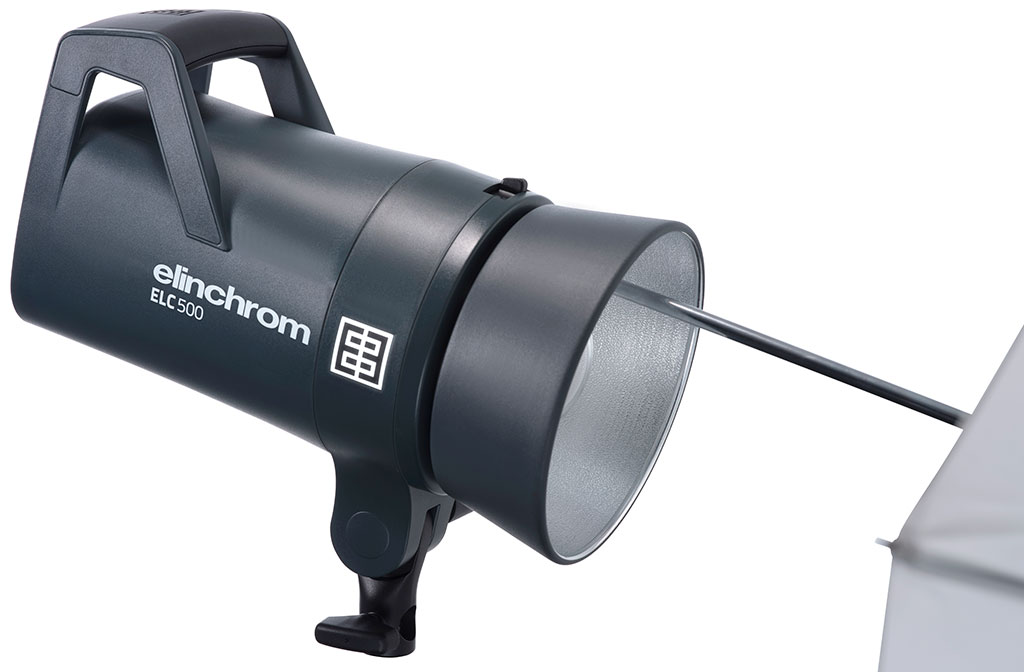
    The umbrella tube is within the reflector area, as with previous Elinchrom heads, but it’s able to fit 8mm (very common) as well as 7mm (Elinchrom native, and less easily found) shafts.

    The ELC heads can achieve either Standard or Action durations for any given power setting, toggled at the press of a button. The 125 can give 1/7750s and the 500 1/9430s at minimum power which is an identical 7 Ws in both cases. It’s a close enough match to mix the heads, you’re not going to see ghosting on super-fast subjects with the difference in durations involved. Since the LED modelling light in these heads is fully variable both manually and with a proportional link to flash power, it is possible to use the 500 within its 7 to 125 Ws range alongside a 125, and match the modelling to the flash exposure easily. There is no function similar to the D-Lite or BRX heads to apply a two-stop differential to modelling power.

    Bright daylight LED modelling
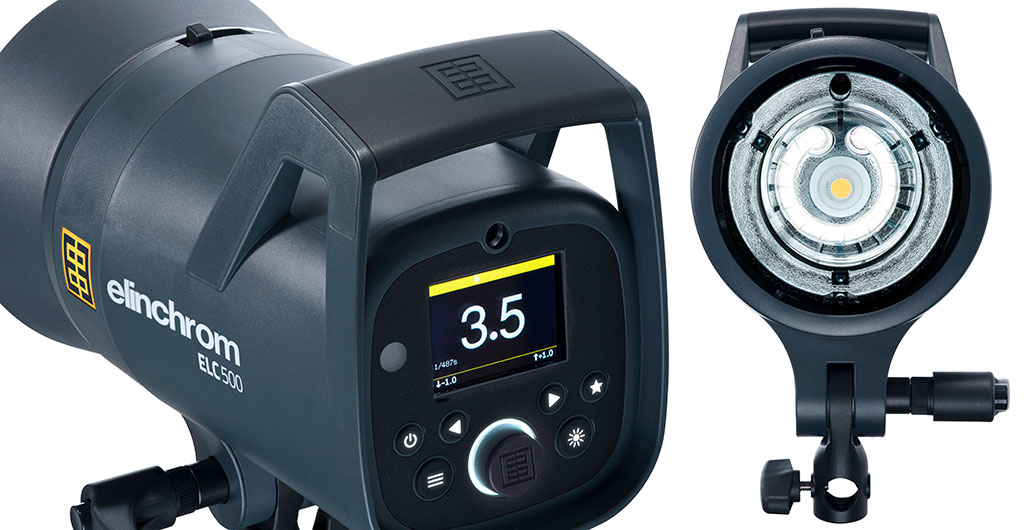
    The LED is centred on the flashtube and the rear display can show both modelling and flash power. The modelling when measured was sixteen times brighter than our iLux Summit 600E battery powered mono heads.

    To give an idea how good the new modelling LED is, it’s a very bright CRI 91 source suitable for most daylight fill-in and video though the intelligent fan cooling of the heads works against movie lighting. It is sixteen times as bright as the LED fitted to competing battery-powered Chinese heads introduced a few years ago and still unchanged in this respect. It’s a 20W LED, which would be perfectly battery-friendly for brief use but can run all day at full output in a mains-powered head. 

    The head never heats up the way tungsten modelling lamp designs always have, even those with 50W peanut bulbs. This meant my 44cm rigid small soft box, conical snoot, optical spot and reflectors fitted with front diffuser or deep honeycomb could be left with full power modelling, for hours if necessary. For many photographers, the quality and brightness and proportional control of the modelling without any heat penalty will be reason enough to choose the ELC heads.

    Songwriter Natalie Bays photographed using a 100cm deep octa softbox on ELC 500 close to the camera, with 44cm honeycomb rigid softbox on ELC 125 as a hair accent light behind to her right. The modelling is bright enough for reliable manual or auto focusing but also very comfortable for the subject.

    While the TTL function tests out well, I’m still using a flash meter partly to check the relative brightness of each head especially when one is used for a side/back positioned accent light and one for a main light, as I did with the 125 and 500. I generally add a small amount of rim lighting to avoid dark subjects blending into the typically dark background. The tenth-stop control of these heads, individually or globally from either their very well designed and illuminated rear controls or the Skyport, allows fine tuning to traditional reversal film standards though digital shooting doesn’t need that. Just get the ratio right and don’t overexpose, at low ISO settings (anything under 800 these days) the shadows and exposure can be fine tuned from raw.

    Practical photography tests with the Elinchrom ELC 125/500 TTL kit
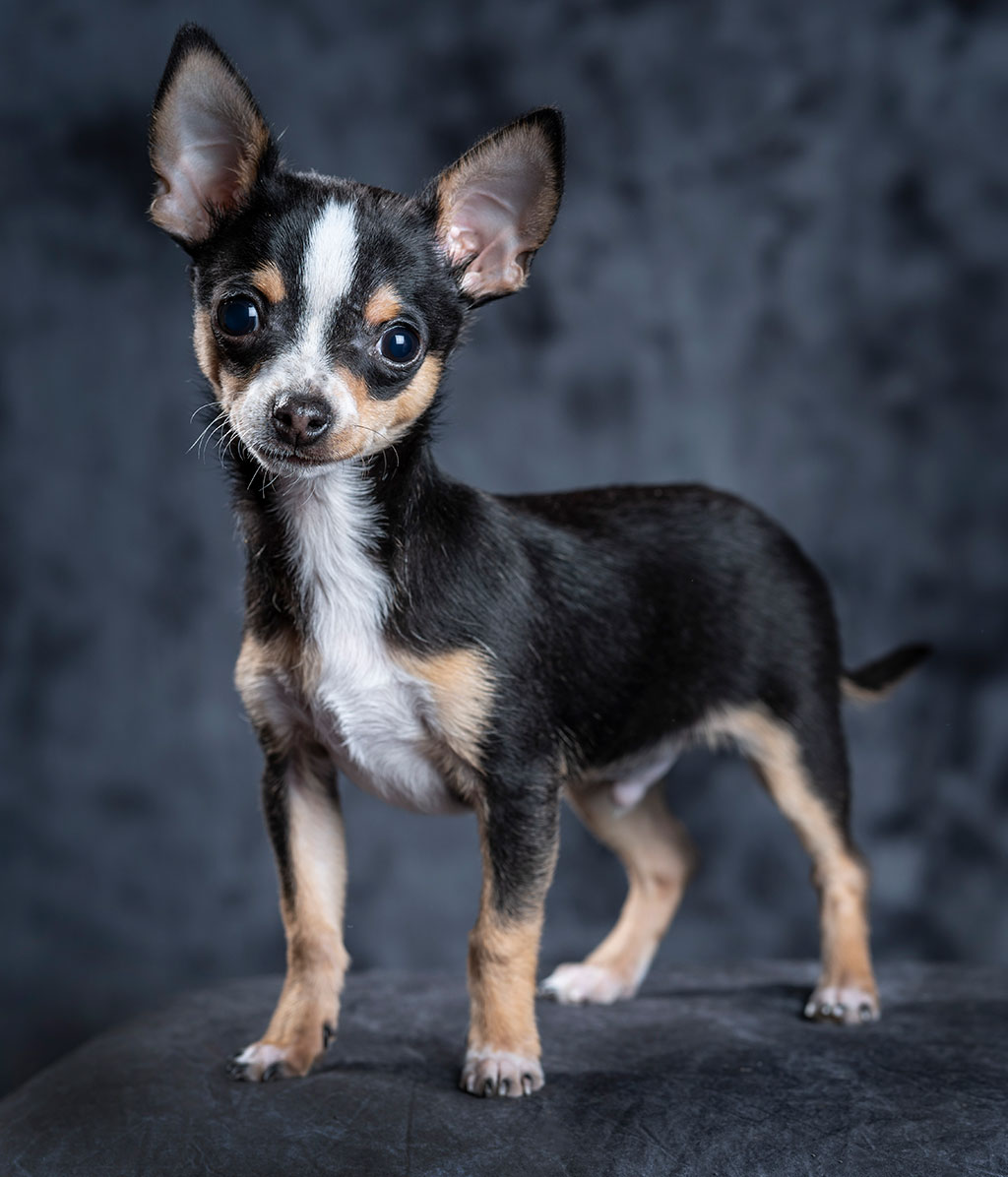
    To test the 125/500 kit we did a shoot with Assistant Editor Diane’s chihuahua puppy Alfie who was up for an extended playtime jumping in the air after toys and running around the fabric backdrop. The modelling was set at full power to let the Sony A7RIII with 85mm f/1.8 FE lens track continuous focus at 8fps (Hi) and AF-C with Animal Eye AF enabled. Short bursts or single frames only were needed, and it was pretty amazing how precise the focus was working out at f/2.8. What may look like static poses were not!
    We did a shoot using tomatoes dropped into a long glass of water, just for fun, using the fastest duration on both heads with closer positioning and ISO 640 to allow f/5.6, with manual focus and exposure by metering and test frames. The Hi+ setting (10fps) does reduce the dynamic range to 12-bit from 14-bit, so bright water in these is burned out, but that doesn’t really matter. The Tamron 28-75mm FE zoom used at 75mm had no chromatic aberration (always a risk with bright water reflections), and later on in the portrait below showed its sharpness, aided by the total absence of any exposure duration related shake. That’s a benefit which not all studio flash brings as durations can indeed be in the 1/200-1/500s range – the ELC 500 runs at 1/250s in standard mode at full power (t=0.1). 

    Water splash at faster than 1/7000s flash duration on both heads, shot using the Tamron 28-75mm f/2.8 FE at f/5.6, manually focused, ISO 400. From 10fps Hi+ sequence shots with nearly symmetrical flash to rear and sides. Below, variations on the theme – the bottom right hand shot is a composite of two frames, made possible by working on a tripod. Set-up design and tomato dropping by Assistant Editor Diane E. Redpath, lighting and camerawork by David Kilpatrick.

    The longest sequence bursts were only two seconds at 10fps, and the ELCs had no problem keeping up and never lost a frame. Recycling with both 125 and 500 set to 7 Ws is just 0.06s working from 230V mains, so capable of better than 16fps. I didn’t try running the camera at full speed until it or the flash hit a barrier – trying not to use my 500,000 shot shutter life all in one day!

    Start where you left off – a memory for the settings in use

    One great benefit of the heads is the ‘mains always on’ function with a standby red glow on the rear power switch. The settings last used are remembered, as with most Elinchrom units even when switched off and on again at the mains – common practice with boom or track mounted heads positioned out of reach. The ELC ProHD models turn off completely if you do this and need to be switched on at the head (a service modification can change this). With ELC TTL heads, just switch off and on again at the plug and the heads come alive.

    Ergonomically, the new heads are much improved. The bayonet lock is similar to the D-Lite latch but made stronger, and easier to use than a rotating rim. The tilting stand mount is very robust, the reflector centred umbrella shaft is increased to 8mm from 7mm and there’s no external one in the mount. The big grab handle on the top is needed as the barrel of the body is large to hold otherwise. The new standard reflector and other accessories are finished in very dark grey, a switch from the traditional light colour of Elinchrom. Some third party EL bayonet accessories didn’t fit the heads, as the body is tailored exactly to the profile of the genuine products. The new protective cap is compact, reducing overall storage size, but won’t fit heads with conventional modelling bulbs.
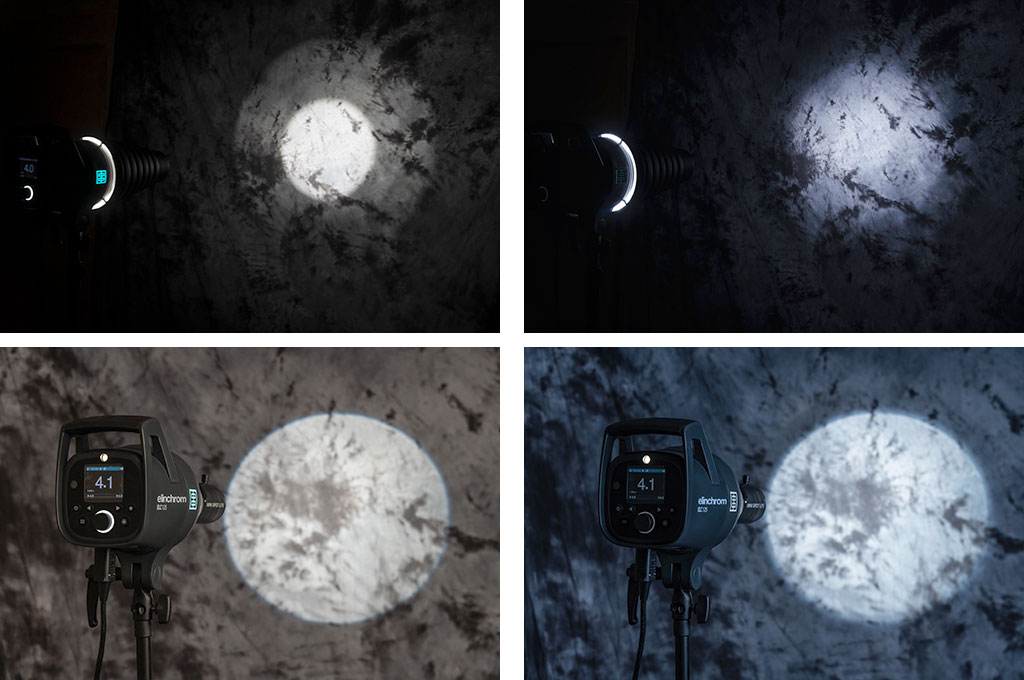
    The LED modelling light in the ELC heads outputs 3000 lumens from a small circular source located dead centre of the ring-shaped flash tube. With the Conical Snoot, top, there’s a significant difference between visual modelling (top left) and flash exposure (top right). This also applies to some reflectors and also honeycomb grids, but not to softboxes with fabric panels, or umbrellas. Lower pair, the preview using the Elinchrom Mini Spot optical spot – which does not overheat with the LED – closely matches the final flash result.

    The flashtube is covered by a ventilated pyrex dome. There may be a frosted one available in future to iron out any discrepancy in the modelling light and flash illumination, as previews and as shot. I found the LED gave odd effects with just a few light shapers, notably the conical snoot. Surprisingly, the optical mini spot was very faithful between modelling and flash effect – and naturally any reflected or soft sources worked just as normal. All small modelling sources produce different effects, and Elinchrom’s original Super Leuci large bulbs preview flash tube light better.

    Benefits of cool running modelling with video-friendly brightness

    With the new LED modelling there will be no bulbs to replace, so that’s a cost of ownership reduced. The flash tube and dome are user replaceable, the modelling LED is a service replacement. Does an LED have a longer life than a flash tube? From experience of LEDs so far, I’d suggest not. Time will tell. We have seen great advances in LEDs over the last few years. Elinchrom must be convinced that the unit they have chosen is a mature design and will have a long production life. It is, after all, the first time they have put LED modelling into an AC mains head and they have waited to be able to get this right.

    As for video, each head still has an intelligently controlled cooling fan – even the 125. So they have limited use with sound recording. With any flash able to fire at a 16fps burst rate cooling is needed. For events, school portraiture, fashion or sports action shoots at typical power settings around 30 Ws per head the rate of firing may be slower but photographers don’t want thermal cut-out half way through a day of hundreds or thousands of shots. This is the big difference between the existing D-Lites, BRX, and ELC ProHD models – recommended duty cycle. At entry level you can shoot sessions with hundreds of shots, at the top level with thousands. The new ELC TTL heads have a medium-duty rating similar to BRX.

    The standard duration mode, toggled to Action by pressing a button on the back panel marked with a star, offers 5600K colour temperature with a ±150K stability on the 125 head and ±200 on the 500. The LED is 5700K. Unlike flash heads with bright tungsten modelling, you won’t get a warmed-up result by using strong modelling and low flash power with a shutter speed like 1/30s or 1/60s. Photographers today often forget that some of the classic fashion, beauty, figure and portrait work of the 1960s to 90s was taken using studio flash with 650W halogen modelling turned down to minimum flash power to enable wider apertures, on medium format cameras like Pentax 67 or Hasselblad 2000F which synced at speeds like this. With leaf shutters capable of X-sync at 1/500s, speeds like 1/60s were used to allow the modelling to add warmth and enrich the colours on transparency or negative colour film. What you get from the ELC TTL heads and any mix of LED and flash, even with dragged shutter effects to combine movement flow with frozen detail, is a constant daylight colour temperature. The 3000 lumens output is enough to shoot at f/1.4 or f/2 hand-held for subjects like newborns, using no flash.
    Our verdict on the ELC TTL system

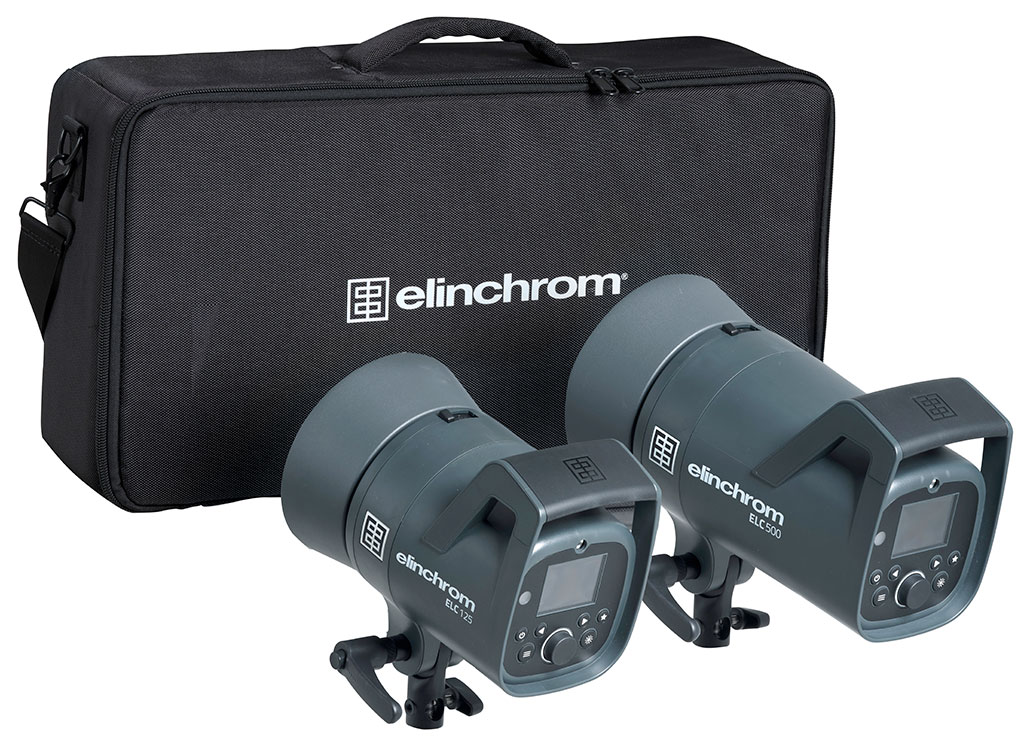
    In the ELC TTL heads, Elinchrom has combined most of the key features of mains studio flash with the functions of the ELB 500 TTL portable kit. The ELC ProHD models remain best for very heavy duty work, high power to 1000 Ws, and advanced programmable functions. For most users a set of ELC TTL heads will be all the studio flash needed for many years to come. The ELC 125, not much bigger than a D-Lite One, is ideal for social studios shooting portraits, groups, babies and small products.

    The reliability of the brand, its 30-year history of British-Swiss synergy, and the solid service provided by The Flash Centre in the UK outweigh the cost advantages of buying one of the lesser competitors in the new field of TTL studio flash – makes which might be considered equal cost more. If your existing light shapers and accessories are EL fit, the decision is easy. If you’re moving from the Bowens S reflector fit adaptors are easy to find.

    The ELC TTL heads are sold individually and also as kits – 125/125, 125/500 and 500/500. Prices start at under £500 for the single 125 to around £1,200 for two 500s in a well-designed bag, all heads coming with the new 16cm reflector and all warranted for three years.

    See: www.theflashcentre.comWhen enquiring please mention Cameracraft’s review! Affiliate links below help run this site if you choose to buy from them.

  • Sekonic's camera calibration

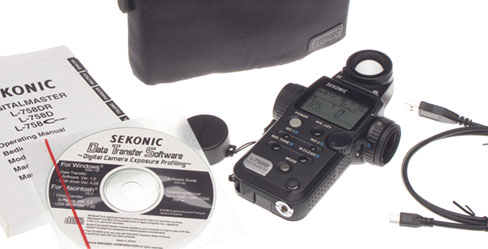
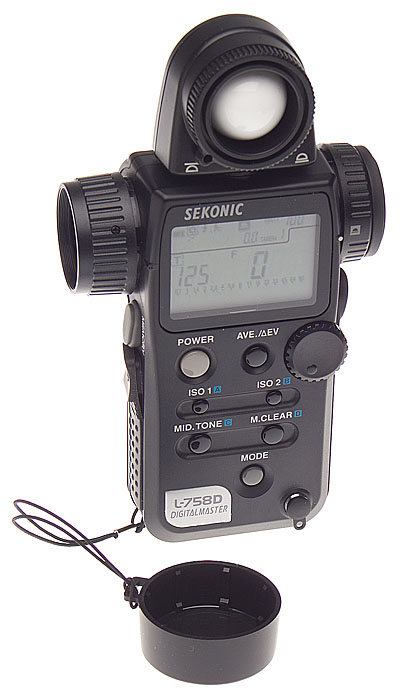
    The Sekonic Digitalmaster L-758D meter offers the solution to variable ISO/EI ratings, and apparent sensitivity and contrast curves variations found in DSLRs. With a USB interface to link it up to a PC/Mac calibration program, the L-758D can remember three different cameras, two types of lighting (ambient or flash) and two measuring methods (incident or reflected) plus a range of ISO values for each of the cameras. There are twelve basic ‘profiles’ that can be stored, and within each profile a range from ISO 3 to ISO 8000.

    The three cameras can include settings on a single camera such as Landscape+sRGB+High Contrast, or Portrait+AdobeRGB+Low Saturation+Low Contrast. More likely, they will be three different generations or even different makes of digital SLR, as many studios keep their last models when buying new ones. They can equally well be films used in a particular film camera, though you need a scanner or a densitometer for calibrating film.

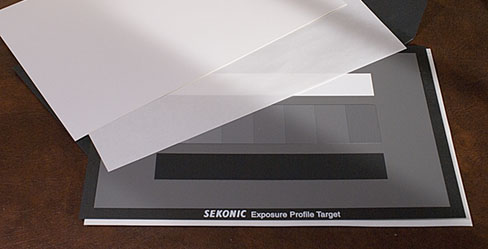
    You might think a meter costing over £300 and coming with a USB cable and a program to do the calibration would include the necessary calibration target. But it’s incapable of actually doing the calibration until you spend another £99.99 on a special A4 grey scale card. Since this report was written, a new more accurate target card has been introduced.

    My sample test target arrived packed in a carton large enough to contain a camera. It is quite fragile, and obviously hand-made using special papers and perhaps a type of inkjet printing for the black patches. You could not just shove this in a camera bag and use it as a grey card. It should be kept in its envelope and stored away from light, like an archival print.

    Sekonic Digitalmaster L-758D basic functions

    The Sekonic appeared to agree with power adjustments made to my Elinchrom flash units, which claim a 1/10th of a stop accuracy.

    I found it to agree with my Minolta Flashmeter IV (which can be user calibrated with a small potentiometer in the back, but only for overall sensitivity). The L-758D should never need to go back to base as a default calibration can be programmed in to it, and this can cope with non-linear responses.

    The L-758D will measure flash versus ambient, compare light source contrasts, or compare incident and digital much like any other modern digital meter. You can take up to nine spot or local measurements, pressing the M memory button after each one, then pressing the Average button for a calculated average exposure. Contrast (they recommend you turn each light off and only measure one at a time) is shown in EV values.

    The reflected light metering via a semi-spot type viewfinder replaces any other type of reflected reading. Unlike the Gossen Spotmaster F you don’t get information shown in the finder, you just use the sighting to make the reading and must then examine the Sekonic’s LCD.

    I found the L-758D to be large, complex and to have too many simultaneous potential functions and too much going on the LCD display with too-small graphics and symbols. It is no doubt versatile but I would be happy with one of the simpler models in the range for the routine metering I need to do.

    Sekonic Digitalmaster L-758D calibration

    If you shoot raw and habitually use a program like Adobe Camera Raw with auto adjustments set you can not use the meter calibration function. It only works if a fixed conversion is used for all files, or you shoot in-camera JPEGs and do not change the contrast or colour space and scene type settings.

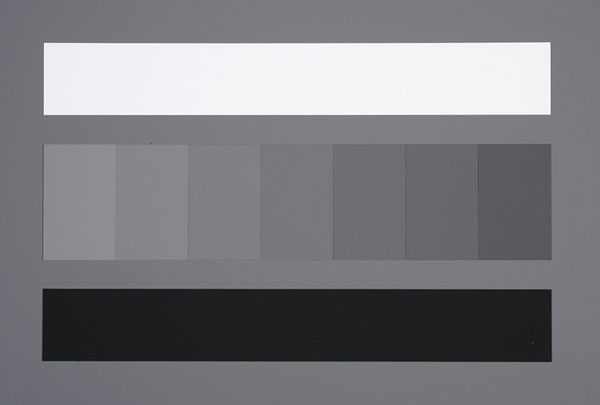
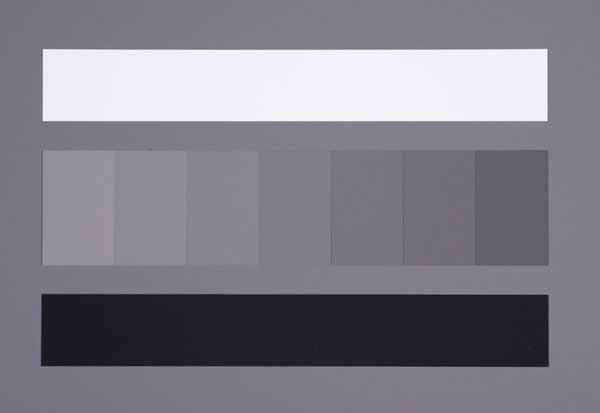
    The plain 18% grey back of the test card is ideal for white balancing and spot metering. The front side has an 18% grey field plus a central array of seven grey patches in 1/6th stop increments, plus and minus 0.5EV either side of 18% grey. Above this is a white strip 2.33 EV brighter than 18%, and below it a black strip 2.33EV darker.

    Sekonic Digitalmaster test file from the Konica Minolta Dynax 5D

    While Sekonic issue LAB values and densities for their £99.99 card (it goes from 3.6% to 90.7% reflectance, densities 0.04 to 1.44 LogD), they disclaim accuracy and say ‘not guaranteed as the performance of exposure profile target’.

    Test file from the Sony Alpha 100 under identical lighting and lens conditions

    In the CD-only user instructions you learn that you can equally well use a Kodak Greyscale and enter the data manually. The software, however, operates only with the Sekonic target for automatic entry. Even this is mainly manual; you must use Photoshop to read off the RGB values from each patch. It will not read a JPEG in the way that camera ICC profiling software reads a target image.

    Light and lens problems

    The recommendation is 45° copy lighting, but the total range of exposures needed to calibrate one DSLR fully is too great for most flash systems at such close range. You need to give plus three to minus three stops either side of a metered exposure, at each ISO speed you want to measure. You should also compare incident and reflected readings, and make tests using both flash and ambient light.

    Even at ISO 400 my Elinchrom 300S heads, turned down to 1/16th power, need a neutral density filter fitting to make a complete set of exposures with ISO 400 and a lens which stops down to ƒ32, when placed five feet either side of the target.

    The biggest speed deviations with DSLRs occur at even higher ISOs. Doing a full calibration is going to be difficult – I did not attempt it because I’m not keeping the meter, and it would have occupied a full half-day or maybe most of a day. But I would have needed some special type of light source to calibrate ISO 1600 or 3200.

    It was useful to find out that two of our DSLRs used with twin wireless flash heads and auto exposure agreed with the Sekonic to within 1/10th of a stop, and one gave 1/3rd of a stop overexposure.

    For quick operation, without a camera calibration for dynamic range and clipping point data, you don’t need the ±3 stops business. You don’t really need the Sekonic card, a good 18% grey card will do fine. Take a shot at each ISO setting, as measured by the Sekonic meter, using a medium lens aperture (least likely to have errors) and medium flashpower if possible (ditto). Open the JPEG in Photoshop, check the Green channel RGB levels in ‘Info’ and this should be within the range 116 to 120 (118 is the target figure). The 1/6th stop steps either side of G=118 are roughly in intervals of 8 on the lighter side and 7 on the darker side but cameras do not have linear response, and Sekonic only work within +/-2 units of the 256 value G scale.

    Once you have completed all your entries, the meter is connected to the computer by its supplied USB cable, and the program recognises its presence. You can then upload the new calibration to the meter. Each calibration is recalled using a memory menu on the L-758D, and you must of course remember which storage register applies to which camera.

    If you think any of this is slightly complicated, don’t buy the Sekonic L-758D for its programmable camera customisation. Buy it for its excellent performance as a multifunction flash/ambient meter with wireless Pocket Wizard compatible triggering upgrade option, and all the features you’ll find in the best meters of the last decade rolled into one.

    The Sekonic L-758D meter is imported to UK by JP Distribution, and has a retail price (without the calibration target or the Pocket Wizard adaptor) of £398.99 including VAT.

    – David Kilpatrick FBIPP Hon FMPA

  • Using a low-cost IKEA spotlight for studio effect

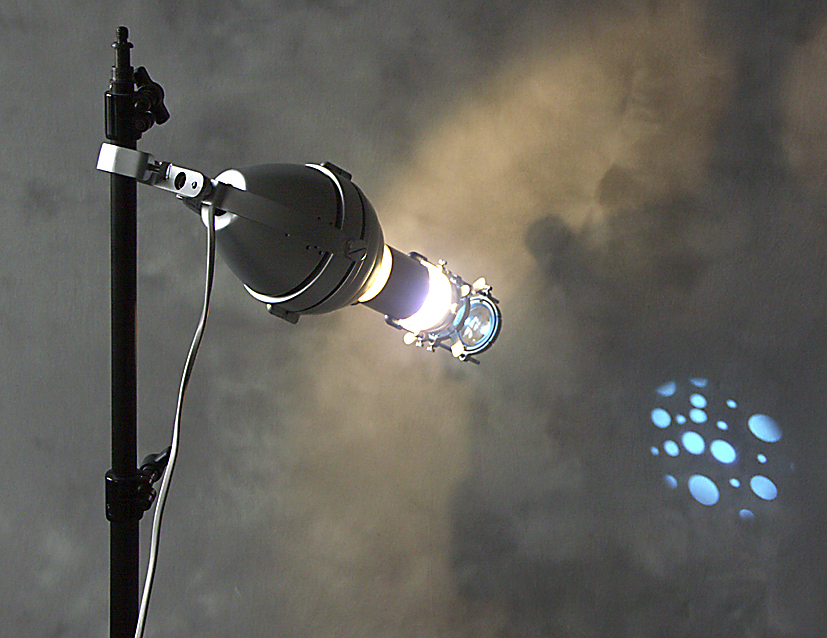
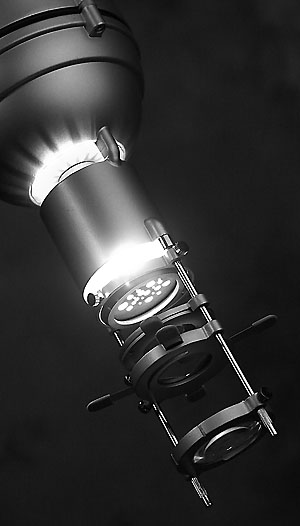
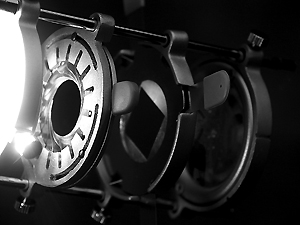
    IKEA has a very low cost optical focusing theatre-style spotlight which can be used, or adapted, for studio work. It comes complete with an adjustable iris diaphragm unit, a four-blade square aperture adjustable unit, a gobo/filter holder, a set of stainless steel cut gobos and a set of coloured glass filters. The focusing lens is not sealed against light leaks but open to allow heat to dissipate, however if this unit was adapted to hold a flash light source in place of its halogen bulb, you could also make a tube to seal off the light leaks from the optical assembly.

    IKEA spotlight

    This spotlight was featured in f2 magazine, December 2004. Here’s what I wrote:I can put up with being lynched by the Flash Centre and Studio Workshop for printing this article, because the items you see on this page are low in power and only suitable for small product digital photography.Visiting IKEA for office sundries I found a spotlight called ISBRYTARE on sale for £29.95 (now 45 Euros in Europe apparently 2008). The box indicated a full set of accessories. As you can see, this light is just a housing which contains a transformer for the usual 12V 50W halogen, and it’s not light sealed or especially well cooled. But it has twin rails, which accept a focusing lens, a square aperture variable shutter mask, an iris diaphragm, a filter holder and a gobo holder. It comes with several pattern gobos, and six circular glass primary colour dichroic filters.

    Focus rails


    Since you would pay more for the filters alone, it’s great value, but it is also correctly designed. The lens focus allows a sharp or soft circle to be projected, or the gobo patterns. You can change the order of the accessories. And it has a 4 metre mains cable with the switch near the plug, not the light.

    Iris

    Round spot

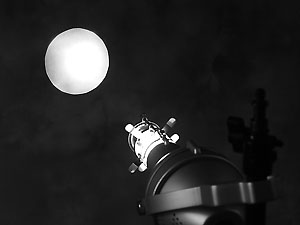
    It actually projects anything from a tiny circle for macro work to a big spotlight thrown over 20 feet or more – still pin sharp.

    Salt pot

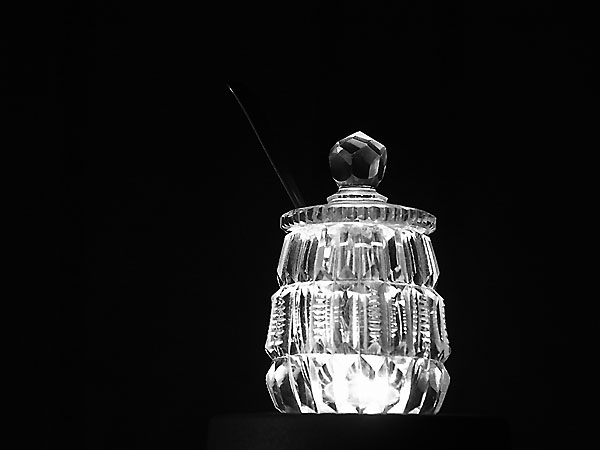
    The crystal salt pot is sitting on a £4.95 IKEA paperweight illuminating plinth called KUBBO. The fitted, high quality transformer plug looks worth more than that before you start. Again, illumination is low, to prevent overheating, but enough for a hand-held pic at 100 ISO for my quick example.With auto white balance and easy image reviewing, digital cameras are ideal for experimenting with such affordable mini studio lighting. All my shots here were taken within a few minutes using a Konica Minolta Dimage A2 and its anti-shake function, but exposures were all faster than 1/20th.The KUBBY light is very warm in colour temperature and would not be suitable for use with daylight film. The spotlight is normal tungsten halogen balance, and with its colour filters, would normally be used for effect anyway.

    Replacement lamps are very low in price, overall quality is reasonable, and the ISBRYTARE is a versatile addition to any small studio. You read it here first!

    – David Kilpatrick