Category: HD Video

  • Sony launches new range Alpha, NEX

    All the predicted new models from Sony were unveiled today – the Alpha 77, Alpha 65, NEX-7, NEX-5n and NEX-VG20.

    Full details are up on Sony’s websites. The A77/65 cameras will be on sale from October 2011 onwards. View Sony press information online.

    Those who grab the cameras will find the virtual 1.09X 100% field of view given by the OLED finders looks to be visually 10% bigger than the largest APS-C viewfinders made, an experience close to using a full frame DSLR with an optical prism (1.09X at 23mm eyepoint).

    The Alpha 77 is launched with the new 16-50mm f/2.8 SSM (not SAM as rumoured!) lens, and the Alpha 65 shares the same new 2.3 megapixel OLED viewfinder technology. The burst speed of the 77 is revealed to be 12 frames per second (predictions have ranged from 10 to 15) with the A65 achieving 10. The new 19-point, 11-cross point AF module is fitted to the A77 only, the A65 has a simpler 15-point, 3-cross module.

    Both have the 24.3 megapixel CMOS sensor also found in the new NEX-7 model, but only the A77 allows ISO 50 capture (all allow 16,000). The A77 has a fully articulated 3-way swivelling rear screen and the A65 a simpler 2-directional hinge. HD video is upgraded to full 50/60 frames 1080 progressive (no longer 25/30p or 1080i) with full manual control.

    The A77 has a semipro spec 1/8,000th shutter speeded to 1/250th for X sync, and rated for 150,000 cycles (tests will probably showe it uses a hybrid electronic/mechanical timing method to reduce shutter wear, but you’ll have to look elsewhere to confirm that, as we are not at the launch event). It has the expected GPS onboard.

    The A65 is regular plastic-skin construction (see strap lugs, above) but the A77 is moisture/dust sealed and so, according to the information, are ther 16-50mm and the new HVL-F43AM flash and VG-C77AM vertical grip. The 77 uses full size NP-FM500H batteries.

    Paul Genge, Technical Field Sales Manager for Sony UK, will be online for a one-hour live video Q&A session on the company’s Facebook page from 7.30pm GMT – visit www.facebook.com/SonyUK to partticipate.

    Key points: auto ISO remains 100-1600 not expanded in range on the A65, but can be user set for 100-12,800 on the A77, which also has separately set 50 and 16,000 options plus a multishot 25,600 (the A65 also has this high speed mode). The A77 offers JPEG Extra Fine, the A65 does not.

    The viewfinder magnification (eyepiece/screen combination) is not stated but is superior to the A55 with a half-inch OLED.

    On the A77 only, exposure bracketing has been expanded to 3 frames at 2EV and 3EV intervals, in addition to 3 or 5 frames at 1/3, 1/2, or 2/3 EV; the A65 offers only 1/3 or 2/3 for 3 frames. Peculiarly, neither offers 1 EV bracketing.

    The A77 or A65 normal motordrive with full AF/AE is 8fps (slow speed 3fps), the higher speeds are obtained with Continuous Advance Priority (fixed settings during burst). Both can achieve 13 raws, 17 fine JPEGs before slowing.

    It doesn’t look as if either accepts the HVL-F58AM as a wireless controller, but both have built-in wireless. The rumour of CF card compatibility in the A77 was false, the cameras have dual MemoryStick PRO Duo/SD drives.

    The NEX-7

    The professional NEX has the 24.3 megapixel sensor, ultra-fast response with startup and focus time improvements, the same OLED viewfinder as the A77/65 built in to the body, the same full HD 1080/50/25p movie (Europe, 60/30 US) and the same sensitivity range as the A77. Manual refocusing is possible during video, 10fps bursts can be shot, and a leather case turns the camera into a Leica-like for eye level use.

    The NEX-7 has the slower 1/4,000th with 1/160th sync shutter found in the A65 so it’s not all professionally-biased. And it’s got a small buffer, allowing a mere 6 raw frames or 4 raw+JPEG in a burst, 10 JPEGs at Fine res (no Extra Fine option is offered).

    All the pre-existing bells and whistles remain included, such as Sweep Pan, 3D Pan, etc.

    Please note: the OLED viewfinder on all these cameras is a power hog. With the NEX, for example, the rated battery life is 350 images using the finder, 430 images using the rear screen. The bigger battery of the A77 can still only power 470 shots (because of GPS?) where the A65 manages a respectable 510. Switching to the rear screen for composition increases these figures to 530 and 560.

    There is NO new updated standard lens for the NEX and the existing 18-55mm will fight it out with the increased 24 megapixels!

    No GPS. No info on potential GPS attachment.

    View press info online.

    The NEX-5n

    The 16.1 megapixel sensor, also found in the new video VG20 model, gets into the updated NEX-5 which has the same improvements in response time and focusing as the 7 (claimed doubling of readout speed from the CD-AF system).

    Its USP appears to be the ability to simulate a preview of adjustments on the screen and adjust them using touch control. It has 10fps burst.

    There is a new EVF attachment. View press release online.

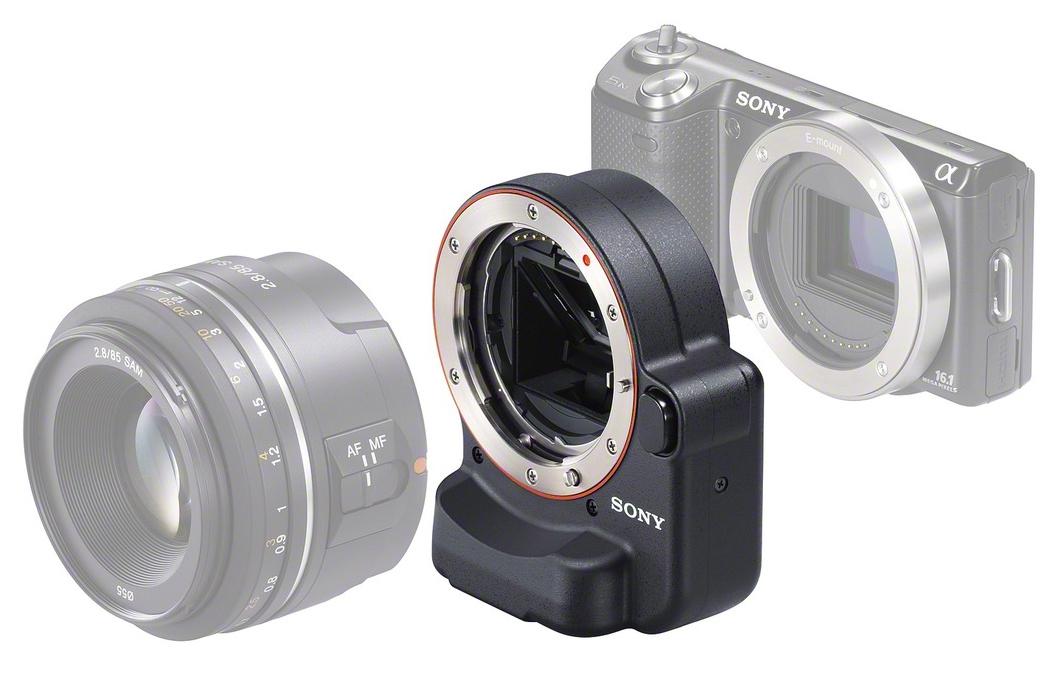
    A new battery powered LE-EA2 adaptor which allows autofocus with ALL Alpha lenses including Minolta body-drive types back to 1985 is also to be available, above. It includes a downward-facing SLT pellicle mirror (don’t know why they did not use this design in regular cameras) and a Phase Detect AF module so the NEX can behave exactly like an Alpha 55. Note the screw drive focus coupling.

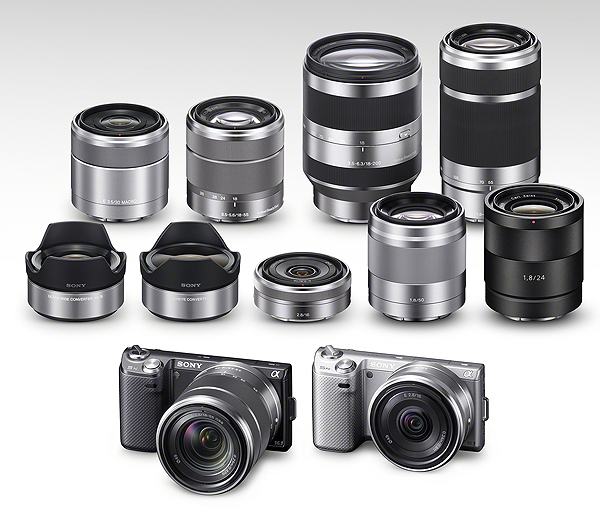
    Looks like a decent lens-line-up, but me, I prefer more pancakes for my breakfast, not just a stack on one…

    Along with the two new NEX models, the Carl Zeiss Sonnar T* E 24mm f/1.8, the Sony E 50mm f/1.8 OSS and the telephoto zoom E 55-210mm f/4.5-6.3 OSS are to be launched. Availability of the new NEX gear should be quick – from September for the 5n, November for the 7.

    The NEX-VG20

    Aye well, it’s 16 megapixel video formfactor model as per VG10. See the info online. It claims the best ever video from such a camera – but they say the same about the ‘still’ models and they are probably right.

    Sorry about a few of Sony’s uncropped image files with loads of white round them, they always do this and we will crop them later. But I’m due 100 miles away for a major Associateship and Fellowship annual judging to see some good photography and I have already made myself late with this! The article will be revised tonight. – David


  • Sony DEV-5 and DEV-3 digital HD filming binoculars

    An invitation to a Sony event on August 15th seemed perfectly timed for the announcement of the Alpha 77 and 65, NEX-7 and NEX-5n. In fact, those cameras were launched in Greece on August 24th – and Photoclubalpha, as a very minor player in this business, was not on the guest list. Nor could we have attended if invited as the diary was already full that week (four days of the Master Photography Awards judging and their Fellowship and Associate annual admissions to be covered).

    Wild geese – red-breasted geese, Branta ruficollis, fleeing the camera (©Shirley Kilpatrick, A580, Sigma 18-250mm OS)

    However, when the invitation to an event at the London Wetland Centre was issued, with strict limits on the numbers able to register and some air of importance, we decided to do the 700 mile round trip, stay a couple of days for some stock photo shooting, and hope for the best. My mistake, one of our photo mag friends said he didn’t attend because he was tipped off it was not really for photo mags. Even so, most of those present seemed to be photo press not wildlife press…

    The Wetland Centre, while a fairly poor location for photography due to the extreme distance the hides are from the wildlife, would have been a good place to launch an Alpha 77 and Alpha 65 (both equipped with improved GPS) and teamed up with the long-awaited 500mm f/4.5 Sony Apo G SSM.

    Sadly, it all turned out to be a wild goose chase for Photclubalpha. The object being launched was the new Sony invention of 3D digital binoculars, the DEV-3 and DEV-5 models aimed at high end binocular users wanting to spend their £1300-£2000 on something novel. While impressive enough if you want an electronic viewfinder version of binoculars, they are almost useless to photographers as the still capture resolution is a mere 7.1 megapixels from a small EXMOR-R back illuminated sensor. JPEG only, no raw, no control of still capture settings beyond very basic adjustments.

    Digital scoping

    Sony took their lead on development, it seems, from digiscoping. Their research showed that serious bird watchers have been fixing compact digital cameras (and occasional DSLRs) to the end of high power spotting scopes to secure unfeasibly long focal length equivalents and capture acceptable frame-fillers of bird life from the distances bird life prefers to remain.

    Their research also showed that bird watchers will spend £2000 without hesitation on a high end pair of binoculars.
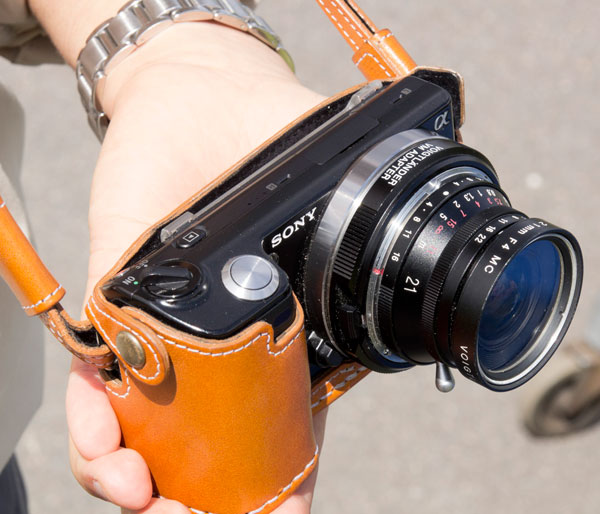
    Now I’m going to stick my neck out and suggest that much of the appeal of digiscoping is exactly the same as the appeal of adaptors and alien lenses used on the NEX. One of Sony’s own Japanese executives at the event was wearing a NEX-5 with a Voigtländer adaptor and a 21mm f/4 Voigtländer lens in Leica M mount.

    Digiscopers like their rigs of camera and scope because part of the challenge is to create a perfect digiscoping set up and discover the best cameras, scopes, eyepieces and adaptors for the job. Creating the equipment is part of the hobby. Also, the scope continues to have a purpose of its own as an optical device. It does not matter that the combo weighs 4.5kg and needs a tripod (even that is part of the Meccano-Lego factor, building your personal solution).
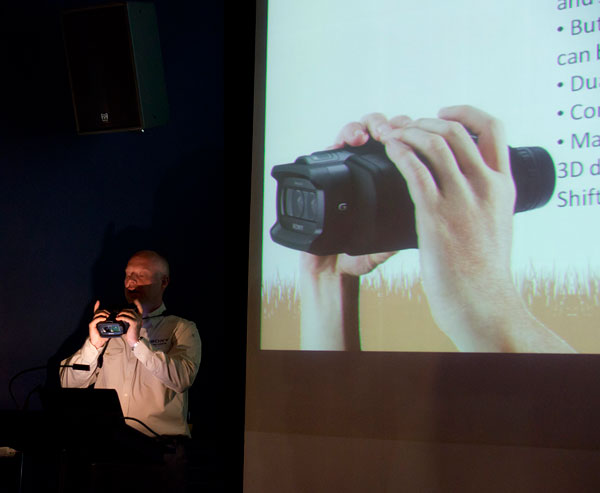
    Paul Genge of Sony explained how much lighter the system will be than digiscoping – but omitted the fun of making your own digiscoping rig, which is half the point of it

    The Sony Electronic HD video capable binoculars do one thing well, and only one thing. They capture HD1080p video at 50fps (60fps in the USA) with the option to use both sensors for 3D video, which is interlaced instead. With lens-based stabilisation counteracting complex rotational movements which may affect each of the two lenses reciprocally, they are a technical masterpiece.

    Unfortunately, they don’t have the new high resolution EVF of the Alpha 77/65/NEX-7, but use one closer to the Alpha 55 in detail. Actually, they use two, fed by separate sensors, as a true binocular system with the eyepieces adjustable for interpupillary distance and dioptre settings. They can simulate using electronic screens a binocular view, with a 16:9 or 4:3 format (the sensor is actually 4:3 ratio, and cropped for HD).
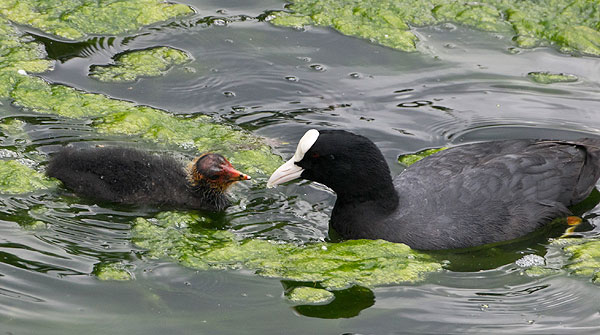
    This was not at the Wetland Centre (mother coot feeding chick) but at Kew Gardens, which actually put photographers much closer to wildlife more accustomed to humans at close quarters (©Shirley Kilpatrick, A580, Sigma 18-250mm)

    But in my pocket was a Minox 6x16X monocular, and in Shirley’s bag a similar Minox 8x16X – lovely little Zeiss-optic metal devices intended for concerts and travel. So I was able to compare the view through the 10X DEV-3 with a simple, monocular, low-cost Minox optical image. There is simply no way ever that any serious nature-watcher would wish to observe the world through the electronic version. It is a world without the individual colours within the feathers of a bird; indeed, it doesn’t even have the individual feathers. Compared to looking through the electronic finder, the optical view was breathtaking in crystal clarity and brightness with exquisite detail enabling the identification and study of subjects.

    Real birders use 20×30, 20×50, even up to 30X (Olympus zoom binoculars, for example). Some may choose stabilised binoculars, offered by Canon in specifications including an 18 x 50 with all-weather body. The stabilised view of the DEV-3 and DEV-5 is still a good feature and goes some way to make up for the lack of true image detail.

    The zoom of these devices is not the same as the limited range of binocular zooming – and the same goes for focusing. They can focus down to 80cm and retain 3D video, due to the close spacing of the objective lenses; in 2D, macro shots close to the lens are possible, and indoors you can even shoot normal people and group shots though there’s no flash of course. In this sense the Sony invention goes beyond being a binocular, just as much as it falls short of being a true one.

    If this looks familiar, the embedded front bit is basically a Sony Handycam TD10E lens and sensor assembly

    That’s because all the DEV-3 and DEV-5 actually consist of is the front part of the Sony Handycam TD10E with some optical and design modifications, and a stereo viewing system bolted on the back. This £1300 camcorder offers a 17X zoom range but it’s hard to express that in the same terms as binocular magnification. Its recording is technically identical, the same bitrate and quality of 1080p or 3D 1080i, and its stills are the same 7.1 megapixel maximum. This was admitted by Paul Genge, Sony’s technical sales executive, when showing us the DEV-5.

    Most oddly for the target markets of birding, wildlife, safaris, peeping toms, police, military, racegoers and suchlike the DEV models are not ruggedized or water and dust proof. They do accept an external microphone but it’s most unlikely any camera-mounted mic, even a special shotgun unidirectional type, will satisfy wildlife film makers.
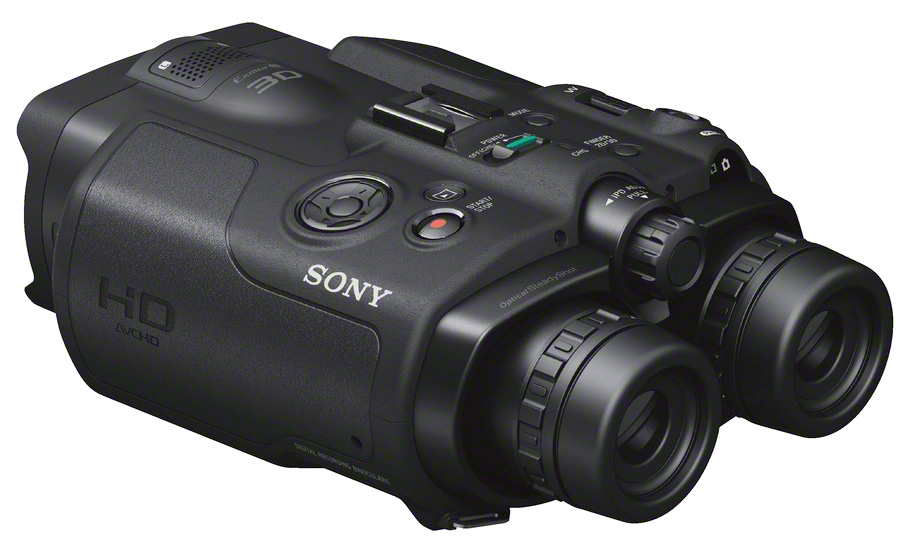
    Of course, the DEV-5 does include GPS and will record the location of filming but there’s no built-in magnetic compass so it does not tell the full story. The DEV-3, with its lower maximum zoom power, omits the GPS and that is reflected in the price (update – we are told by Paul that the interest shown since the launch is almost entirely in the higher end model with GPS – it provides valuable evidence to bird-spotters, and evidence appears to be what they value most).

    Despite the two lenses, the DEV models do not capture 3D stills – only 3D video. Binocular experts will point out that the closely spaced objectives reduce the 3D impression given by long-range binos which have a wider front lens separation. This is vital for close focusing. You either must have adjustable front lens spacing for close-ups (difficult to achieve) or a very limited true stereoscopic effect.

    No test

    We were not allowed to take any footage with the DEV-5 or DEV-3 though Paul showed some tests of his own, taken during a week trying out the new product all round Britain (between visits to key dealers such as Park Cameras, who are selling them at the Bird Fair which opened on August 19th at Rutland Water, with a free extra chunky high power battery thrown in).

    Report from this event, added September 8th – Paul Genge says it was a great success, with over one thousand visitors to the Sony stand trying the DEV models. Many of these visitors had tried digiscoping but had consistently poor results despite much investment in bits and pieces to get it working, and saw the DEV concept as a simple, elegant, nearly perfect solution to their problems.
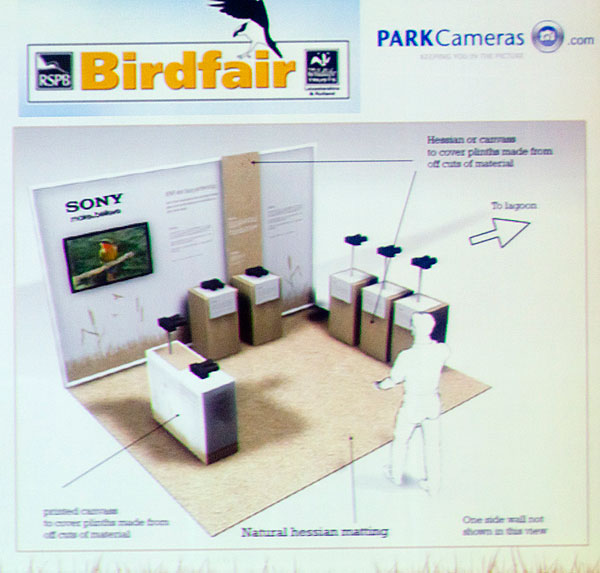
    Birdfair at Rutland Water on August 19th – the blueprint above turned into a real Sony DEV-3/5 booth. Park Cameras offered special deals as the first main distributor and took several orders, all for the DEV-5 model, on the day.

    The results looked very impressive as HD movies.

    However, there are a few functions which the DEV models could have included had they been designed from the ground up and not based on an existing camcorder. One is pre-shot capture, where the buffer is constantly recording a rolling second or two of video, to be included with the take when you press the button to film. This avoids missing the critical first part of movement of the subject which triggers your own reactions.

    The second is slow-motion capture at reduced resolution; 50/60p is already capable of half-speed playback and the shutter speed control use in the DEV models favours better motion freezing than some camcorders which aim for purely cinematic shutter speeds (1/30-1/50th and so on). Had controls been added to force fast shutter speed capture that is very useful for analysing wildlife film frame by frame, or extracting a valuable still image. Had 720p at 100/120 frames per second been enabled, that enables quarter-speed playback of action.
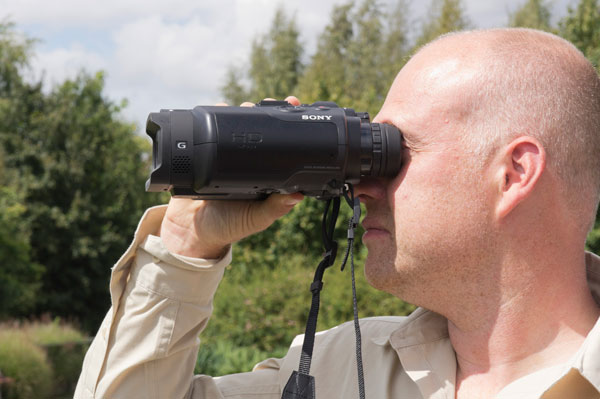
    Single-handed operation by Paul Genge – but he’s had a week of weight training before the event! They are actually pretty light, just rather large.

    Finally, make no mistake these babies are big. They are not overly heavy, as they are mainly empty plastic shaped to look like a military device. But they are not especially travel friendly, or all that easy to pop under your jacket in a cloudburst.

    The ultimate use

    Shirley’s verdict was – these are just made for festivals and stadium gigs! The one use not mentioned in Sony’s presentation, and a very popular use for binoculars and camcorders alike, is to see stage performances better and record music. Those little Minox monoculars we carry everywhere with us now were bought some years ago, en-route to an R.E.M concert. And sure enough, from our vantage point in Stirling Castle, they were a good investment.

    Now if the tiny Minox monocular happened to include a 1080p HD movie recorder – which it very easily could in terms of size, think of mobile phones, Sony Bloggie and the like – it would be an even better concert companion.

    The Sony DEV digital binoculars might get in past some security staff but we reckon they will soon be recognised and banned from events.

    Nothing new

    The first time we discovered binoculars combined with a camera, we actually got to be the first UK journalists to write them up. This was the Nicnon binocular camera, in its final version around 1975 (it had existed in a cruder design from the late 1960s) – it worked fairly well, but didn’t give any more real magnification than a regular 35mm camera with a 165mm lens and had a useless fastest shutter speed of 1/250th, only barely short enough to avoid camera shake in every shot and never able to stop action.

    Later on we tried the Tasco 110 binocular camera but the results were almost useless. Today, of course, we have pocket digicams with zoom lenses going to an equivalent of over 500mm and a resolution which matches 35mm not 110. These can even challenge the concept of the DEV-3 and DEV-5, though I doubt that anything made comes close to the HD video quality. In the end, something is new about the DEV-3 and DEV-5, and that is the HD video in a binocular form.

    We can only wish Sony the best of luck with this product. Any serious wildlife watcher or bird spotter will need their regular optical binoculars and their regular tele-equipped DSLR in addition to the DEV-3 or DEV-5. Regardless of six hour battery life and other commendable features, they simply do not and can not replace the other key equipment used in the field, with the exception of digiscope rigs or tele-capable camcorders.

    They will sell to wealthy gadget enthusiasts and garden birdwatchers with poor eyesight and big flat screen teles. Over 50s, get in an orderly queue now…

    For us, our four-day venture to the former wastelands of Barnes was a wild goose chase (we did see a few). Life was enlivened by road closures due to Olympic ‘test run’ cyclists. This product is not really of any interest to our dedicated photographer readership, for £2000 an Alpha 65 and 70-400mm SSM G would be a better investment for everything except the 3D video. And the market murmur is that 3D has failed, yet again. It’s simply not selling.

    Get the full PRESS RELEASE here.

    – David & Shirley Kilpatrick

     

  • Pentax Q's up mirrorless system…

    With their 645D offering a revolutionary balance of cost, features and usability for the medium format world, and the K-5 16Mp DSLR offering a flexible blend of enthusiast and professional features, Pentax is already blurring the distinctions between the genres traditional camera manufacturers exploit. The new Q system announced today further moves the boundaries, by offering that rare package of a compact sensor with interchangeable lenses. The new Q mount is served by a range of five lenses at launch, and this initial camera sports a 1/2.33″ Backlit CMOS sensor delivering 12.4Mp resolution and specced for a maximum ISO 6400. At 200g it’s undoubtedly a light body, yet that small sensor could well be offputting in a camera that’s likely to exceed a £500 list price.

    (more…)

  • Wait for the NEX SLT, folks…

    That is, the next slot in Sony’s programme of new product releases. Almost exactly five years after the Alpha 100 was launched to the world (also a Wednesday in the second week of June, back in 2006) Sony selected an auspicious date to announce the NEX-C3 and the Alpha A35. But these cameras, rather like the Alpha 100 in its day, are not what we are waiting for.

    So – what’s new? 16.2 megapixels, 5.5fps native size, 7fps using a 1.4X crop (about 8 megapixels), no articulated rear screen, some candy functions in the menus for technophobes, and that accessible D-Range button can be made into a rapid custom control.

    Everyone has suggested that a NEX-7 will be what they want. I rather think they will be get a NEX-C5, applying the same transforms to the 5 as the C3 (Compact 3) applies to the 3. That means it will have proper HD video, which the C3 lacks being restricted to MPEG4 HD720. Already, the rustle in the undergrowth is that the diminutive C3 misses the mark for this one single reason only. Sure, a 16.2 megapixel sensor (supposedly a new version, not just borrowed from the A55/580) is a welcome upgrade but NEX is a multipurpose system, and HD720 is back in 2006 not in 2011.

    Nice mic slots, nice big CZ 16-80mm shown on the adaptor – but this, dear Sony, misses the point. We actually want the CZ 16-80mm to be updated to an SSM design so that it will focus on the NEX, and be better on the Alpha bodies, and so that its slightly manky mechanical design can be turned into something so smooth existing 16-80mm owners queue up to buy the replacement.

    Good points – the shift in position of the stereo microphones to the front of the camera, the change to using a separate cover for the memory card instead of having to open the battery compartment. There’s a claim that along with a 20% better battery life, greater heat efficiency means the new cameras won’t cut out before 29 minutes is up when filming HD, even if you use SSS on the A35. Of course the NEX has no SSS but still managed to overheat, at least in the NEX-5, unless you were savvy enough to shift the rear screen away from contact with the camera back – in which case it generally keeps filming OK.

    The operating times, startup, focusing speed are all reported to be much improved – by a factor of two or better. Only the image review time is worse due to the larger file size. Sony’s information makes it clear that very strong noise reduction is applied and this may affect raw files as well as JPEGs.

    The new 30mm f/3.5 Macro SEL is theoretically interesting, but not so much for me personally as we have already got the 30mm f/2.8 SAM and the NEX adaptor. Eventually, you come to terms with the simple fact that a 2.5cm working distance for 1:1 shots prevents you shooting half the 1:1 shots which present themselves. You disturb the butterfly, hit bits of the plant, or cast the lens’s own shadow across the picture.

    The firmware update (see end of story) to provide a ‘focus confirm’ overlay for manual focusing is actually of far more interest to the macro photographer – along with almost any other specification of macro lens except 30mm f/3.5. These lenses are fun, I love the SAM 30mm, but it’s not the answer.

    The new HVL-F20S flashgun (based on the HVL-F20AM only in the design of its rotating reflector/diffuser) has changed a load since it was previewed with a mockup based on the Alpha model. Sony has decided to power it from the NEX battery, much as Minolta did with flashguns like the 316i in the early 1990s. That’s almost certainly because the NEX Smart Connector is simply not capable of holding the gun with a couple of AA cells in it, the weight would be too much.

    In an ideal world, this new flashgun would do for the NEX system what its orginator does for the Alpha 900 and 850 – act as a remote wireless flash commander. But it does not, leaving NEX outside the main Alpha system still. If you want remote flash (or even just a more powerful flash mounted on a bracket beside your camera) the Nissin Di 866 MkII remains your best bet, programmable to fire correctly in synch with the NEX and to use its own auto-exposure cell for metering.

    Alpha 35 – one step forward, two steps back

    The Alpha 35 is similarly not earth-shattering news, especially if you own an Alpha 55 with GPS function and rather better overall performance in all respects except (perhaps) ultimate high ISO. The firmware updates for both NEX and SLT models, to be available from June 20th, add most of the benefits of the new models along with some of the child-friendly hipsta stuff. Again, wait until the next round. A higher end SLT camera is firmly promised, it’s been prototyped and mocked up and preproduced and somewhere as I write someone is actually using it.

    Losing the articulated rear LCD (see above), not even replacing it with a tilting one, is a big sacrifice. The 7fps 1.4X digital tele conversion mode – with continuous AF tracking – is interesting and reminiscent of the sensor crop mode of Nikon’s first CMOS, the D2X, which was itself developed from a Sony sensor (the Cybershot DSC R-1). It shows that there are genetic traits in the Sony line that won’t be forgotten.

    But is there really much point to this camera? Not much. Unlike the NEX-C3 which sees a significant body size reduction and style change, the A35 contrives to be a poor relation of either the A33 or the A55 because it lacks that excellent, reversible, twist and swivel rear screen.

    Photoclubalpha has been a photographer’s thing not just a camera owner’s thing – a small difference, these days, but important. For photographers any reason to prefer the new models to what you’ve got may depend on small hidden differences which come to light as people use them. Certainly the provision of functions with changed names because no-one can be expected to understand what an aperture is, what a shutter speed is (and so on) is no reason to want the new models. Probably the reverse!

    Video enthusiasts may like to note that the firmware update for the A55/33 allows all the overlaid text to be removed from the live view, which can be output from the HDMI port to surprisingly high quality. Recording devices to accept HDMI signals like this are just starting to appear at affordable prices. There’s some potential to experiment with the image provided for LV (Focus Check Live View more so than Quick AF LV) once fed into other systems free from overlays.

    Version 04 firmware update for NEX-5, NEX-3
    Available from June 20th, a firmware upgrade for existing NEX-5 and NEX-3 cameras adds the new ‘Picture Effect’ function as introduced on the new NEX‑C3. It also adds a Peaking function to assist with more precise manual focusing. Available free to registered users, latest Version 04 firmware update for NEX-5/NEX-3 can be downloaded from:
    NEX-3
    Windows:
    http://support.sonyeurope.com/dime/downloads/downloads.aspx?f=FW_NEX3_V04_WIN&site=odw_en_GB
    MAC OS:
    http://support.sonyeurope.com/dime/downloads/downloads.aspx?f=FW_NEX3_V04_MAC&site=odw_en_GB
    NEX-5
    Windows:
    http://support.sonyeurope.com/dime/downloads/downloads.aspx?f=FW_NEX5_V04_WIN&site=odw_en_GB
    MAC OS:
    http://support.sonyeurope.com/dime/downloads/downloads.aspx?f=FW_NEX5_V04_MAC&site=odw_en_GB

    Editor’s note June 9th: please note that these URLs will not work – they are incorrectly transcribed by Sony. The URLs should be similar to those for the A33, A55 with a hyphen between sony-europe. Unfortunately, Sony has issued press releases and web pages with the incorrect URLs. We have changed the link so that it will work when the time comes.

    Version 2.00 firmware update for α33, α55
    Available from June 20th, a firmware upgrade for existing α33 and α55 cameras by Sony adds several creative and operational enhancements. Support for the ‘Picture Effect’ function featured on the new α35 is now offered. High-Speed Synch is supported during wireless operation with a compatible external flash (only α55). Ergonomics are further improved with revised menus and a new mode that lets users switch off shooting parameters overlaid on screen for clear, uncluttered composition. The camera’s Digital Level Gauge can also be displayed when shooting via the optional CLM-V55 external LCD monitor. Frequently used features can now be custom-assigned to the D-RANGE button for rapid, menu-free access.

    Available free to registered users, from the 20th of June the latest GB English Version 2.00 firmware update for α33 and α55 can be downloaded from:
    A33
    Windows:
    http://support.sony-europe.com/dime/downloads/downloads.aspx?f=FW_A33_V2_WIN&site=odw_en_GB
    MAC OS:
    http://support.sony-europe.com/dime/downloads/downloads.aspx?f=FW_A33_V2_MAC&site=odw_en_GB
    A55
    Windows:
    http://support.sony-europe.com/dime/downloads/downloads.aspx?f=FW_A55_V2_WIN&site=odw_en_GB
    MAC OS:
    http://support.sony-europe.com/dime/downloads/downloads.aspx?f=FW_A55_V2_MAC&site=odw_en_GB

  • NEX shoots the ‘Flight of the Angel’ – HD1080 YouTube

    The shape of the NEX-5 and the availability of 180° (fisheye) and 99° (ultrawide) converters for the 16mm pancake lens persuaded us that with a suitable harness or secure housing, we would get permission to make a unique high definition film on the famous Volo dell’Angelo, one of the most dramatic zipwire experiences in Europe.


    (more…)

  • Fuji use Backlit CMOS in raw G12-beater

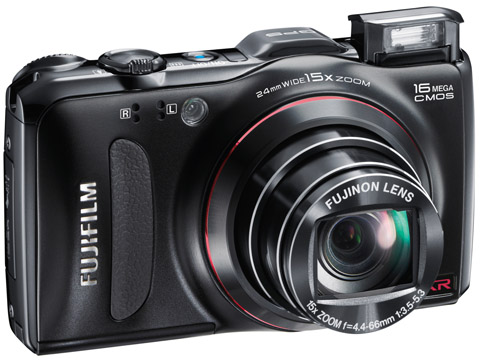
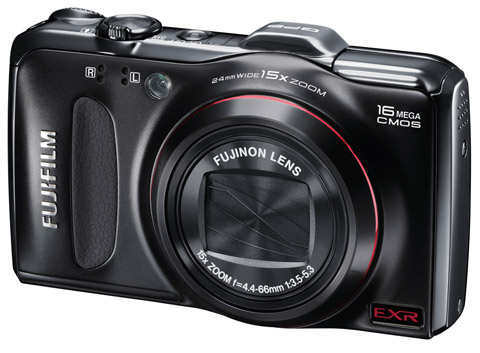
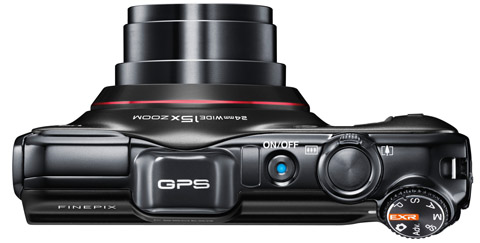
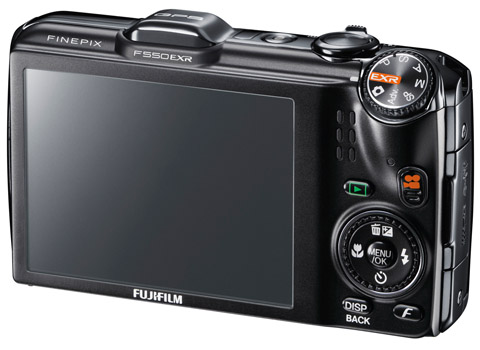
    The FujiFilm FinePix F550 EXR is the first serious competitor to the Canon G-series for professional backup shooting and travel, with 16 megapixels of back-illuminated (Sony but Fujifilm diagonally aligned matrix?) CMOS and raw shooting along with a massive zoom range, stabilisation, high ISO sensitivity, full HD at 30fps in a user-friendly .MOV format, GPS data recording, and various multishot modes including HDR. It’s also very favourably priced.

    The FinePix F550 is available today from leading photographic retailers nationwide, with a list price of £329. Note to readers: our links to B&H lead to far more detailed specifications and feature lists than Fuji’s own press info.

    New Backside Illuminated CMOS
    Thanks to the hybrid sensor, the FinePix F550 EXR delivers fast, high-quality results in a wide range of lighting conditions. The EXR processing engine uses a combination of a bespoke 16-megapixel Back Side Illuminated CMOS sensor (BSI-CMOS) and Fujifilm’s new triple-core EXR processor, to deliver superior results, particularly in low light conditions – plus high-speed shooting facilities and Full HD movie capture. The sensitivity range is from 100-3200 EI, and the filesize options include 4:3, 3:2 and 16:9 aspect ratios in three pixel densities.

    Users can still select from three different EXR shooting modes, or can allow the FinePix F550 EXR to choose the best option by selecting Auto EXR (it’s an orange setting not green on that dial, too).

    • EXR High Resolution mode utilises the full 16-megapixel resolution of the sensor for high quality results that can be printed out at A3-size, and without the need for any re-sizing by software.
    • EXR Dynamic Range mode employs dual capture-technology to provide a dynamic range of up to 1600% – almost a full stop wider than any other camera. Two images are captured at different exposures and are then merged to produce superb results on high-contrast scenes.
    • EXR Signal to Noise mode utilises Pixel Fusion, pairing pixels to increase sensitivity. Coupled with the BSI sensor technology, this mode delivers superb images in low lighting conditions.

    RAW image capture
    With the ability to shoot in RAW or JPEG format (or both simultaneously), the F550 EXR has appeal for stock photography, wedding candids and professional backup generally. It remains to be seen whether Alamy puts it on the approved or rejected list – bear in mind the Canon S90 type models are blacklisted when nearly identical G-series models are accepted. Both shoot raw and have similar sensors. Will the Fuji lens be up to the mark?

    GPS embedding
    Regardless of where you are in the world, the FinePix F550 EXR will recognise your location and display it either as longitude and latitude co-ordinates or by place name – thanks to the camera’s embedded list of locations. A tag is placed on the image which can then be easily searched for, allowing shots of a specific location or point of interest to be found quickly and by name.

    Additional functionality is also provided by the Photo Navigation mode, allowing users to find their way back to where a particular photo was taken. The FinePix F550 EXR can store location data every 10 minutes* and, once the images are downloaded to a PC, a map of the route along with the pictures taken along the way can be created using Google Maps.
    * Anytime On or Only Power On must be selected for data to be logged.

    Keep up with the action
    At the full 16-megapixel resolution, the FinePix F550 EXR is capable of delivering up to 8 frames per second for up to 8 frames – and without compromising picture quality (note: some websites state 3 frames and 3 fps). Select the Best Frame Capture mode and the FinePix F550 EXR automatically starts recording images the moment the shutter release is half-pressed and focus locked. Once the picture has been taken, the F550 EXR records the seven frames before or after the shutter was fully released to allow the choice of at least one shot that’s (hopefully, as in our experience both rarely coincide) pin sharp and perfectly framed.

    Huge zoom range, tiny camera
    Despite having a body that measures only 22.9mm deep, the f/3.5-5.3 zoom lens range extends from a wide-angle setting of 24mm through to 360mm (35mm equivalents) giving users a huge range of shooting options. Image quality and sharpness is also assured thanks to the combination of a high quality Fujinon lens and the new triple core EXR processing engine that automatically reduces colour fringing and boosts corner resolution for uniform image sharpness.

    Triple Stabilisation tactics
    Using longer focal lengths can cause camera shake, but the FinePix F550 EXR has its bases covered on three fronts. First, the sensor moves to counter any hand movements. Second, sensitivity is boosted using Pixel Fusion to allow faster shutter speeds, and third, users can select Advanced Anti-blur when in EXR Auto mode giving a sequence of four images which are then combined to provide one, shake-free result.

    Full HD video
    The FinePix F550 EXR records videos in Full HD (1080p) at 30 frames per second, with stereo sound, and outputs the files in H.264 (MOV) format. Fuji’s EXR Signal to Noise mode is now also available when shooting Full HD videos, using Pixel Fusion Movie technology to fuse pixels together for extra sensitivity, and therefore much crisper low-light videos with lower levels of noise.

    The F550 EXR also offers a class-leading selection of high-speed video capture options including a class-leading 320 frames per second capture at 320 x 100 pixels.

    Fujifilm also offers a second model, the F500 EXR with a similar specification – excluding the GPS and RAW capture capabilities – and in the same super slim design but in a range of five stylish colours.

    The Fujifilm FinePix F550 is available now for £329 in black.
    The Fujifilm FinePix F500 is available now in a choice of five colours for £279.

    Fujifilm FinePix F550 EXR key features:
    •        All-new 16 megapixel EXR CMOS sensor
    •        15x optical zoom covering 24-360mm (35mm equivalent)
    •        3.0 inch rear LCD with 460,000 pixel and new Rich User Interface using Vector fonts and graphics
    •        GPS functionality
    •        RAW shooting
    •        Advanced Anti-blur technologies
    •        1600% wide dynamic range
    •        Full resolution high speed shooting at 8fps
    •        Full HD movie capture (H.264 MOV file format)
    •        Advanced 27 scene mode EXR Auto
    •        Film simulation modes
    •        360° Motion Panorama mode
    •        Photobook Assist function

  • Supermoon on A55

    One-minute sequence of the Moon and clouds at its closest point and largest size, shot using the A55 with 500mm Minolta AF reflex lens and 2X Teleplus converter.

  • Sony 5″ video monitor for DSLRs

    For some time, I have been using a 7″ Lilliput external monitor for my Alpha and other HDMI output cameras. This is fairly bulky, with its external battery pack, and is mounted on a flash bracket holding it to the side of the camera. The main use of the monitor is for interview-style filming with it facing the subject (self filming) but it also has uses making location shooting simpler. Such monitors are usually mounted within video rigs, off camera, often at waist or chest level even when the camera is held above and forward of them.

    The cost of the Lilliput is around £150-£200 depending on supplier and battery/mains power choices. Similar monitors from Marshall and other makers typically cost two to three times this, because they are sold for the photo market – the Lilliput is sold to the in-car entertainment sector, and therefore is not marked up by 300% to allow for the deep pockets of camera owners relative to car owners.

    Sony’s new 5″ monitor is much lighter, and comes with mounts for hot shoe and Alpha shoe, and a neat lightweight HDMI-miniHDMI cable (oddly enough, that’s about the hardest thing to find – a short, skinny cable). It costs $395, but for that you do get a folding hood which is neat. They have many photos of it and not one shows it facing forwards, but the use is mentioned in the publicity.

    It does not draw power from the HDMI, but requires either a mains adaptor or a battery pack, which is not shown in any of the photos. Sony have done the same as LED-video-light makers – provided a bay for fitting the regular Alpha camera battery as a power source. The press release implies that the battery pack is a separate item (‘optional’) instead of making the point that you use any large Alpha battery (including old ones left over from the A100). I find it very convenient that my video light accepts the same batteries as my camera system, and not very convenient to have a bulky rechargeable pack for my 7″ monitor. (NB: all that white space is part of Sony’s image we have linked to – nothing like wasting a bit of bandwidth by not cropping pix, is there?).

    Here’s the press release:

    —————————————————-

    A new clip-on LCD monitor from Sony gives DSLR camera owners a bigger, better view of their footage while shooting HD video.

    The CLM-V55 is a portable video monitor featuring a high-resolution WVGA (800 x 480) (5”) LCD panel. Attaching easily to most Interchangeable Lens Digital cameras and compatible HD camcorders via the supplied adaptor, it displays video footage during shooting/playback with excellent clarity and a wide viewing angle.

    The clip-on screen tilts and swivels to any angle for comfortable framing in any position – even self-shooting when you’re in the picture.

    The CLM-V55 is loaded with pro-style features to help photo enthusiasts and videographers shoot high-quality HD video footage with their Interchangeable Lens Digital camera.

    Pixel magnification mode assists with accurate focus confirmation, giving an enlarged pixel-perfect view of a selected portion of the Full HD image. It’s complemented by a colour peaking function that highlights the edges of accurately-focused areas of the video image.

    An intuitive control wheel allows quick, positive adjustment of a wide range of monitor settings without interrupting shooting. Adjustable parameters include aspect ratio (16:9/4:3), volume, brightness, contrast, colour tone (phase), colour temp and auto dimmer. On-screen markers aid precise framing by giving precise indication of a TV’s 16:9 or 4:3 actual display area. The LCD monitor’s on-board mono speaker is complemented by a headphone jack for accurate audio monitoring during shooting.

    The CLM-V55 attaches easily to a wide range of Interchangeable Lens Digital cameras from Sony and other manufacturers that support HD video shooting. The supplied adaptor simplifies mounting on any camera or HD camcorder that features an auto-lock accessory shoe or ISO shoe. Signal connection from camera to monitor is via the supplied HDMI cable, while power can be supplied using a battery pack or AC adaptor (both optional). The CLM-V55 comes with a detachable LCD hood for more comfortable viewing when shooting outdoors in bright sunlight.

    The CLM-V55 LCD video monitor by Sony is available from March 2011.

  • Alpha 55 1080p HD video – snow in Scotland

    This video was made on December 23rd using the Alpha 55 (AVCHD recording) hand held, with SS enabled, and the Carl Zeiss 16-80mm zoom. This video has been uploaded in full 1080p HD and can be viewed at high resolution if you have a fast enough connection. The soundtrack is a classical guitar piece I wrote ten years ago, on the last day of the year 2000, when snow was falling by moonlight which I guess the music represents a bit better than mid-day.
    Some camera-mic sound has been left in place for two of the takes, and the shot of the stone wall uses active phase detection AF during video. This was not possible for most takes, as the snowflakes falling made the focus constantly change as they passed the focus zones!

    Hope you enjoy it! The camera got very wet with snow – you can see where flakes landed on the lens filter – and ended up being wiped down many times. Eventually, after going into a shop for a few minutes, everything steamed up. But it seems fine after letting it dry out and warm up. It was not very cold, around 1°C for snow to be falling like this.
    – David

  • The Alpha 580 – a three-way view

    Once I had a quarterplate hand-and-stand camera, vintage 1920s. Attached to the front standard was a small reflex viewfinder, giving a miniature composition you could use at waist or chest level. On the same standard was a folding wire frame, with a companion eye-sighting window flipping up from the side of the body. This gave a direct view from eye level. But for the most accurate framing and focusing, a groundglass screen at back could be used with the shutter open and a viewing hood folded out.

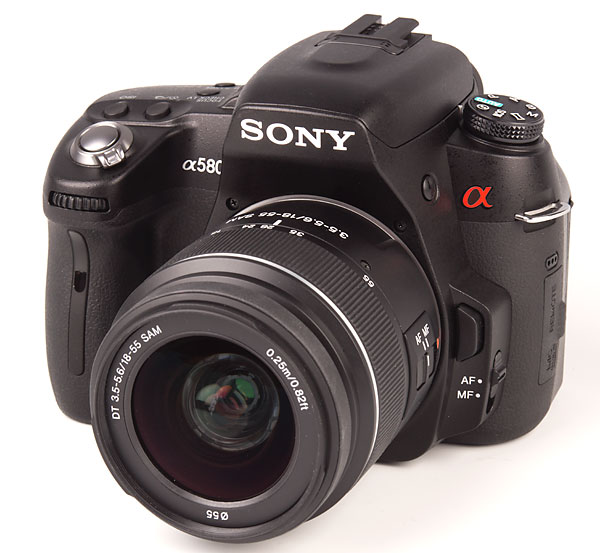
    Those three ways of viewing have never been available in a modern SLR. Until now! The Alpha 580 (for which you can also read 560 throughout this review, give or take the sensor) is the first modern SLR to offer three entirely different viewfinder systems, all with their own unique focus and exposure methods. There have been cameras made by Alpa and Praktina which had optical finders tucked in alongside their pentaprism, and Rollei invented a finder which could switch from eye-level to waist level at the flick of a lever. But the Alpha 580 offers three through-the-lens systems and it’s unlikely any DSLR will do so again.
    This is a 10-page article – please use the navigation bar at the bottom to move on to the next page, or click the ‘Continue Reading’ link to view as a single long article (this function is not very reliable though and may produce an ‘undefined’ error)

    (more…)