hireacamera.com invest in Alpha and NEX gear!

The UK’s top camera and lens hire company, hireacamera.com, has invested in a whole new stock of Sony Alpha and NEX gear right up to the 500mm G – their A77s come with 16-50mm SSMs… here, Guy Thatcher explains their enthusiasm for Sony, filmed at the PhotoVision Roadshow in Edinburgh on Tuesday March 27th.

It’s a 1080p HD video shot on the NEX-7 by David Kilpatrick with no accessories apart from the Tamron 18-200mm DiIII VC zoom, which at one point displays a preference for focusing on the better lit, more contrasty background.

Minolta 70-210mm f4 versus Canon 70-200mm f4 L IS

The Canon 5D MkIII arrived, but I will not be reporting on that here – it is with me for a British Journal review, and that will take a little time and will also be exclusive to the BJP in print and on iPad App. So no sneak preview anywhere else!

However, with the camera came a 70-200mm f4 Canon L IS lens. This month I picked up a very cheap 70-210mm f4 Minolta AF – the ‘beercan’ original from 1985 which has a broken lens hood, the wrong lens cap (why the hood got broken) and a slightly rough focusing travel that tends to get locked into a near or far range without having a limiter.

So, since the loaner 70-200mm from Canon was in an equally well-used state, and the question keeps being asked whether the old Minolta is a match for it, I thought I would A-B the two lenses with the Canon on the new 5D MkIII and the beercan on the Alpha 900.

I call this comparison ‘can o’beer versus a yard of L’ for reasons the product size comparison should make clear:

Of course a lot of this is the Canon lens hood (anyone with a flair for geometry will spot that the narrower, shorter Minolta hood is nearly as effective, just draw a diagonal from front left to rear right of the hood to see why). And the Canon has IS built in, as well as a focus range limiter. During operation the Canon was rather noisy, making a constant whispering sound from the IS even though the USM focusing was silent. The Minolta of course zips and clunks into focus, but is otherwise silent, and the A900 in-body stabilisation did not make anything like the same level of operating noise as the in-lens IS.

Although there is no doubt the Minolta lens is less sensitive to AF commands (if that’s the best way to put it) actual targeting a new focus point and locking on seems every bit as fast. It’s nowhere near as good as the Canon at continuous AF subject tracking, but the Canon was nowhere near as good as the Minolta/Alpha combo at user-targeted aim and focus operations. The Canon spent a lot of time being out of focus and then rapidly refocusing, with my moving targets (backyard hens, if you have them you’ll know what perfect focus test subjects they provide). The Minolta spent time staying focused and not responding much.

Reviewing the results, I can only say the Alpha/beercan combo had a better success rate. Nearly all the shots were critically sharp where a good few Canon shots either didn’t get enough IS to combat shake, or maybe the IS was actually taking the edge off sharpness. This applied particularly at closer distances, where the Minolta (210mm, front group focus  and 1.1m focus distance) seemed much better than the Canon (200mm, internal focus and 1.2m minimum).

For this article, I have made 2000 pixel wide reductions from my test images. These are within the 2MB limit at high quality for images within the site. Subscribers to photoclubalpha can also access hi-res full sized images (over 70MB in total, so beware) through an additional page link provided at the end of this report.

The tree and twigs test

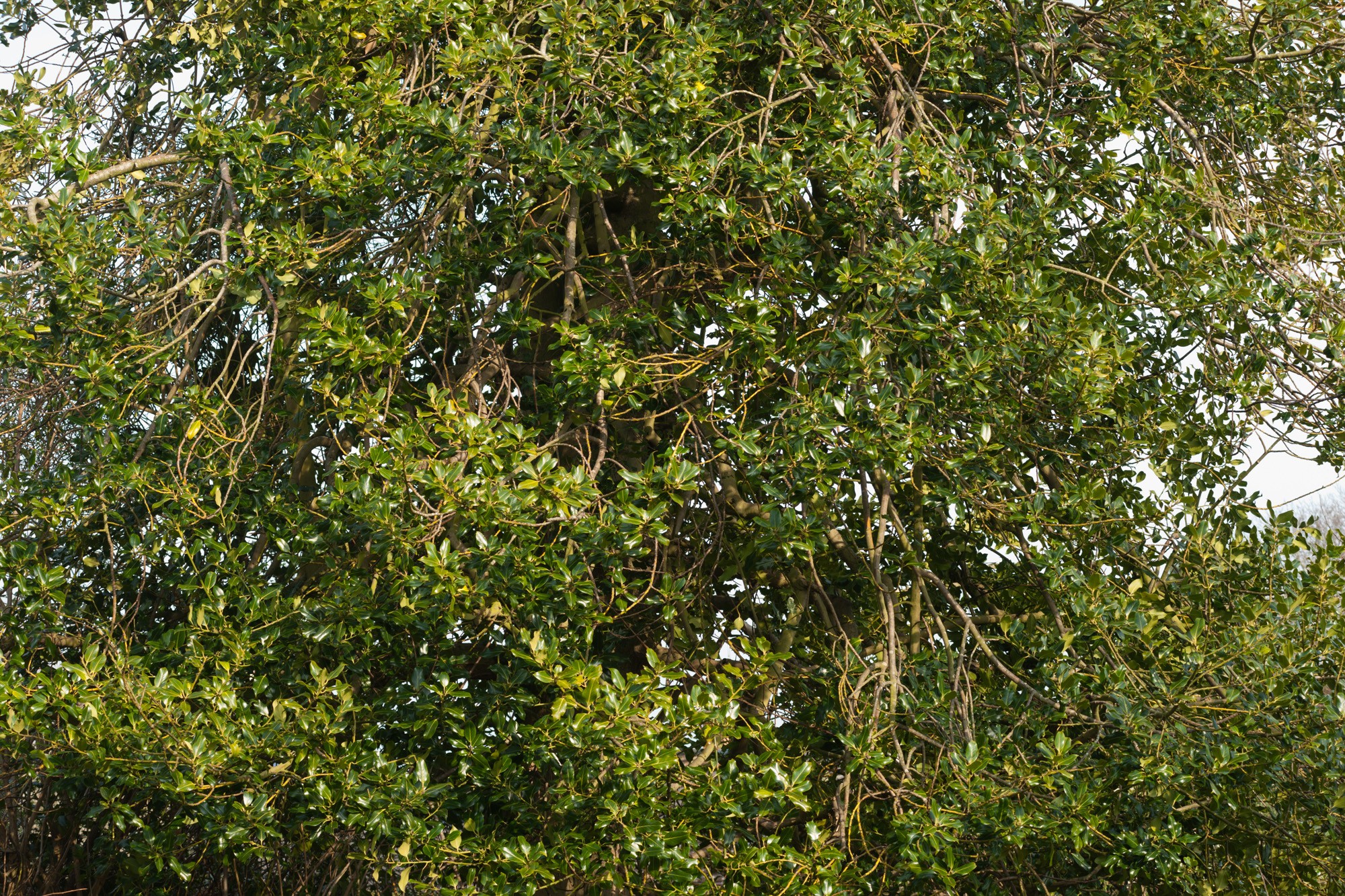
Our big old holly tree provides a suitably evil subject for any lens with chromatic fringe or purple fringe issues. I shot everything raw; no lens profiles were used, the conversion was done using Adobe Camera Raw 6.7Beta. Like Lightroom 4, this offers automatic analysis of CA even without requiring lens profiles. In fact, adjustable CA is entirely disabled – gone. I can tell you it works amazingly well. Lenses which have been very difficult to clean up are fixed. It isn’t even one-click – just set ‘Remove CA’ as a default, and that is it, for all lenses, for ever.

I used the tree for hand-held (with stabilisation) ISO 100 tests at f/4, f/5.6 and f/8.

I thought the beercan would be bad for fringes and CA. On the Alpha 900, it simply wasn’t. The full aperture image was surprisingly clean. The Canon lens on the MkIII actually showed more colour fringing. Both cleaned up in ACR 6.7b. As for sharpness, it seemed to me to be a draw. I picked a 3D target to avoid slight front of back focus differences influencing the result.

Above – Canon at 70mm and f/4 – click image to open 2000 pixel wide version

Above – Minolta at 70mm and f/4 (same applies, to all these example)
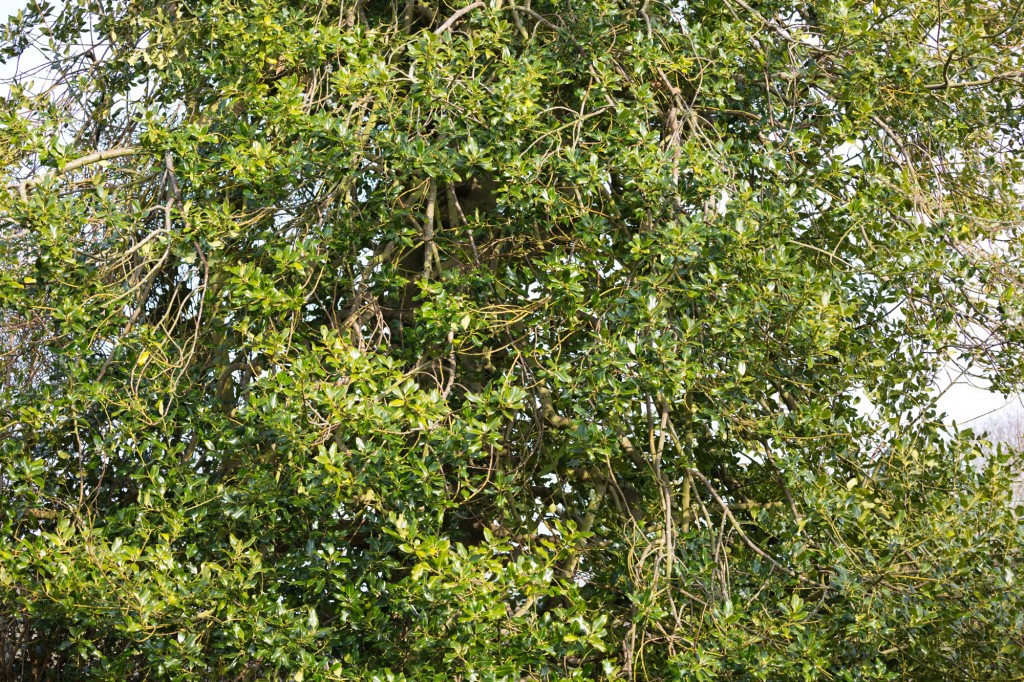
Above – Canon at f/5.6
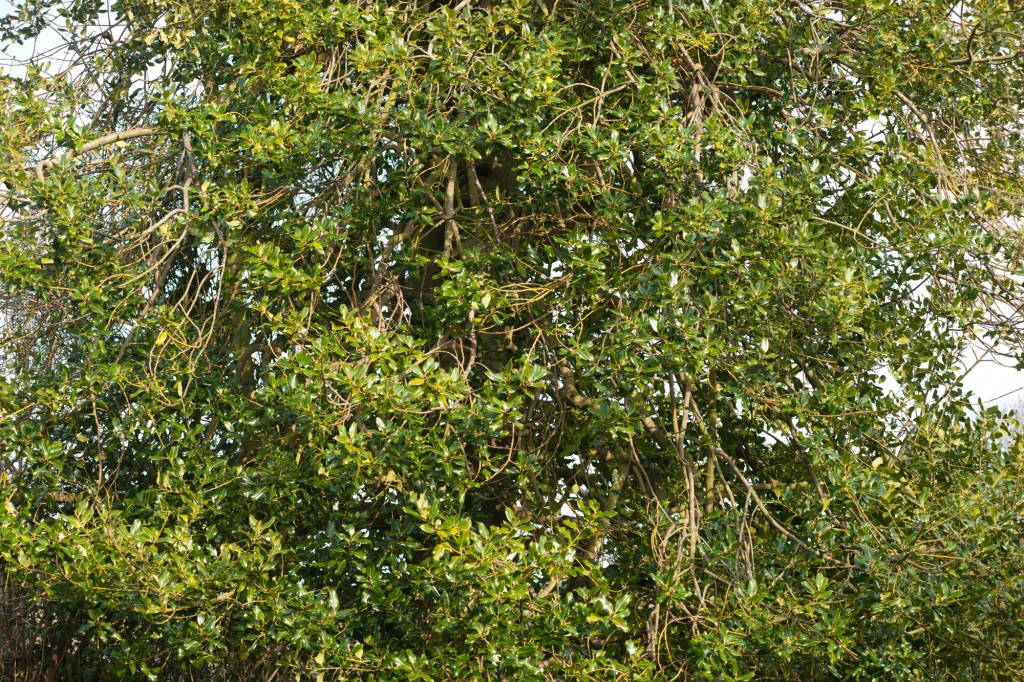
Above – Minolta at f/5.6

Above – Canon at f/8 (for the f/8 images, the ACR conversion was cut by -0.30 EV exposure, as I felt both cameras had predictably overexposed a little, but the wider apertures were left this way as it emphasises any CA – since f/8 is an optimum aperture with cameras of this resolution, I aimed for the best straight conversions)

Above – Minolta at f/8.

Long end tests, moving and static, medium to close

A range of different subjects ended up being shot on both cameras in the garden. I was, at the same time, shooting various tests on Fuji X10 and Pentax Optio WG-2. If that Pentax could shoot raw files it would be a real winner because the lens is lovely! When you start poking small cameras one or two cm away from small flowers, you realise how limiting the larger format and longer lenses can be.

But the small cameras could not catch a single decent snap of hens scratching around as I worked. They move too fast and just the focus lag along, let alone the shutter lag, stops even the best compact or pocket digitals from being useful.

Here’s a Canon shot. I took half a dozen similar shots with both cameras, slightly varying in distance and with two different hens, at f/5.6 and also some at f/8, all at maximum focal length. It would be hard to say the Canon was better as the success rate was lower. It seemed to focus faster but not as accurately, with both cameras set just to use the centre sensor (as the overall frame compositions tell you).
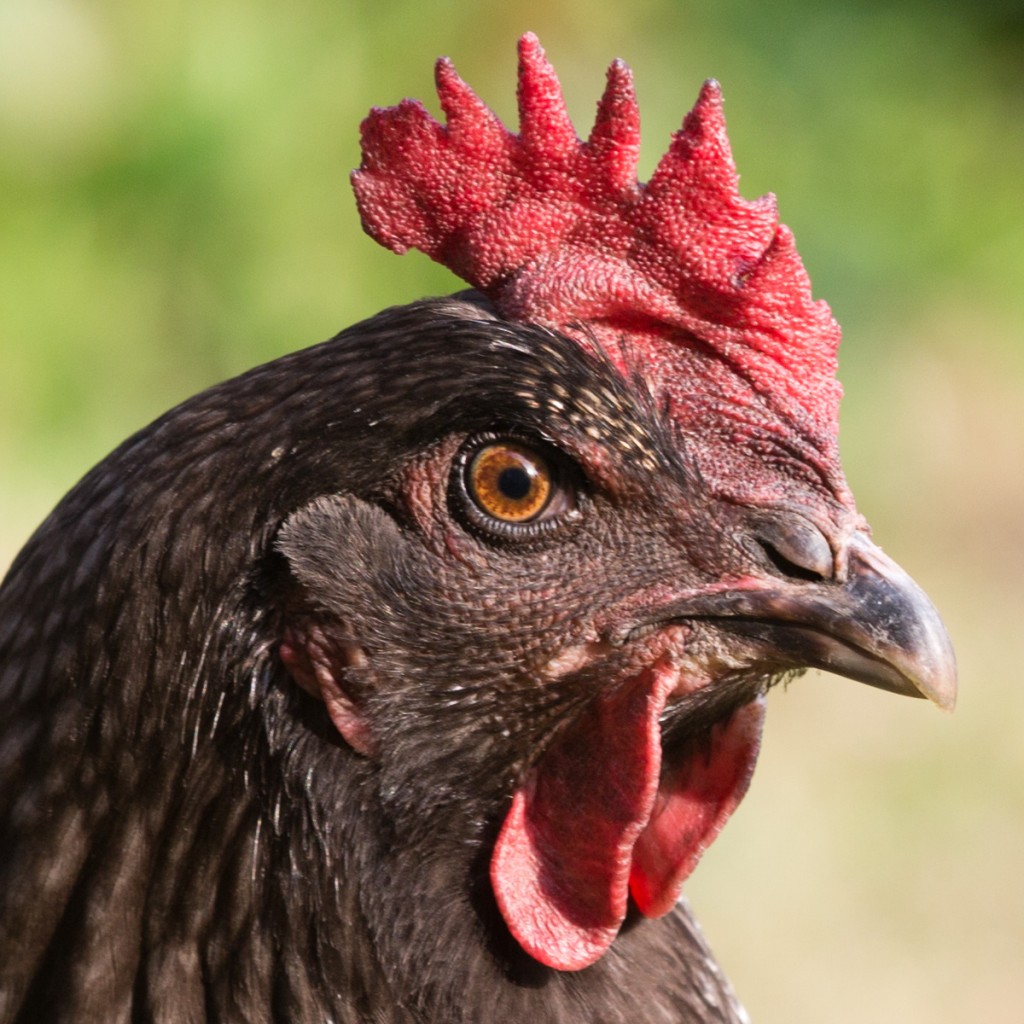
This is 50% of original pixel scale. Click the image for a 1200 pixel square, 100% clip view.
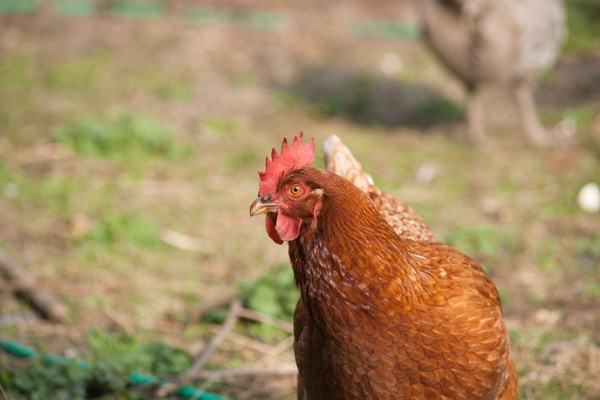
Here’s an Alpha 900 shot with the  Minolta at the same settings, ISO 320 RAW, exactly the same ACR 6.7b parameters used (25, 0.5, 25, 0 Sharpening; 20, 25, 0, 25, 50 L and C NR; strong contrast curve; black point 0; Adobe Standard colour calibration; CA Correction enabled with Defringe Highlights but no Lens Profile; both with exposure dropped by -0.3EV, no other change to defaults).

Again, if you click this 50% view you get a 1200 pixel square clip. Remember, no web or print sharpening is applied. The red hen is a little lower in contrast but so is the Minolta lens, I think, and so is the Alpha 900 default rendering – the 5D MkIII either has less dynamic range, or processes with a steeper curve to the raw. Or Adobe simply applies more contrast to the Canon raw ‘under the hood’.

These pictures are at 1/320th for the Canon, 1/200th for the Alpha – anything less than 1/200th and hens move their heads so fast you don’t stand a chance of a sharp image. Aperture priority auto.

Close-up ability

I find the small difference between 1.1m and 210mm, and 1.2m and 200mm, significant. This is a recurring theme for me. Around 1m, differences of 10 or 20cm either way in minimum focus distance are critical. They can make the difference between working at arm’s length, within reach, or out of reach. My perfect close-up situation allows me to reach a hand out and adjust a subject, so I really like lenses which focus down to 60cm or so. I also like to be able to place my lens against glass, or right up to wires, to get shots through windows and barriers. A classic example would be a small animal in a wire zoo cage. If your lens won’t focus closer than say 1.5m, often you can’t place it up to the wire and therefore you can’t get the shot and blur the wire out. But if the lens focuses down to say 0.9m you can. So for me, any gain at all in minimum focus distance is good. I’m not keen on the way Sony’s SAM versions of once-screw-drive lenses generally lose a bit of close focus range.

Here are the results of the Canon and the Minolta at their closest focus-confirmed setting. I used ISO 320, and f/11, hand-held with stabilisation.

Again, if you click this image you will get a 2000 pixels high version. The Canon colour – or maybe the Auto White Balance – is better than the Alpha shot which follows. It may be down to lens colour transmission, as the 1985 Minolta glass is yellower than the Canon. I measured the transmission using a Kenko Color Meter (the new version of the classic Minolta Colormeter IIIF). The Minolta is roughly 5Y+5G and would need a 5B+5M filter pack to match the Canon lens transmission.

Here’s the Minolta lens shot, closer because of the 1.1m focus and 210mm focal length:

Again, clicking on the image will get you to a 2000 pixel high size.

These close-ups had me really thinking. I had to go back and check the settings. I can assure you the pix really are from a distance of 10cm apart – I did not move, I just squatted back a bit with the Canon; the lenses were at 200mm and 210mm; the apertures were both f/11, both cameras were at ISO 320, both gave the same 1/160th exposure. Yet just study the bokeh (differential focus) of the Minolta images. Look at the thickness of the blurred dry plant stem crossing upper right in the background. Look at the green leaf behind the hyacinth. Study the larger version for the focus point in each case (it’s comparable). The beercan just seems so much better able to separate out the subject from the background, without losing depth of field within the flower. Yet if you look through the two lenses from the back element end, wide open, the Canon appears to have a huge aperture by comparison – a really wide exit pupil.

Does it all prove anything?

So, what do I conclude? Well, I know from many years of using the 70-210mm that it can benefit from an even deeper hood, maybe on the scale of the Canon. It’s not a contrasty lens, and it can get some serious internal reflection – big flare patches, even veiling the entire frame. And on some earlier cameras even APS-C size, my earlier examples of this lens had been prone to very strong purple fringes. But I have never had an unsharp example and some of our best, sharpest digital shots have come from the classic 70-210mm beercan.

I’ve already been finding just what a transformation Adobe’s Camera Raw 6.7 beta (release candidate) makes with its auto analysis of the image to apply CA removal. Distortion and vignetting just aren’t significant issues with tele zooms of this type, so full lens profiles are hardly needed (and they are very difficult to make, you need a working distance most studios or homes do not contain).

Using this rather beaten-up example makes me think that it would be good, again, to find a mint condition little used one. It is a lens with interesting properties; it is a true zoom, and a constant aperture, which means that if you lock the focus down and shoot video you can zoom without losing sharpness (many modern ‘zooms’ are varifocal not parfocal, and shift focus as you zoom) and without any aperture jumps (only constant aperture lenses offer you this).

Most of all, comparing this lens with the relatively expensive and much larger Canon it’s clear that the performance is either equal, or better. Take into account advances in coatings, and the effects of age on any lens, and I would have to think a new version of exactly this same Minolta lens would be stunningly sharp and ideal within the Alpha system. It would be a perfect companion for the 16-50mm, or 24-70mm, on APS-C or full frame.

Full size images for subscribers only

If you are a registered subscriber to photoclubalpha, you can go to our download page for this article, and get the full size (JPEG quality 10, sRGB) images for all the shots here except the chicken pix which are already available clipped as 100% views. It is very interesting to study the twigs at the extremes of the 70mm shots from both lenses, look at the level of colour-fringe induced tinting to out of focus details, and affirm that the legendary status of the ‘beercan’ may indeed be deserved.

And, as a final point, though I am sure the Canon will win me over in low light situations and many other ways, these tests certainly proved that the Alpha 900 has not been made obsolete by almost four years of progress.

– David Kilpatrick

 

Amazon – possible SanDisk UHS-1 card bargain

Yesterday we received two SanDisk 30MB/s 16GB SDHC cards from Amazon UK – £15.99 each, a couple of pounds more than regular Class 10 cards like the Transcends we normally use on all current Alpha and NEX models. You must have faster than 15MB/s for cameras such as the A55, A580 or NEX-5n not because of video issues, or even because you want to shoot raw bursts – you need it to be sure that shooting sweep panoramas or 3D panoramas will not a) fail b) corrupt your card and lock you out of shooting in the process.

This is what happened to us when using a SanDisk Ultra 15MB/s card which had been fine for all other work. Fortunately we had a spare card, the corrupted card was removed and its file contents recovered using SanDisk’s free program.

The SanDisk 30MB/s card labelled for ‘HD video’ is of course not limited to video and is ideal for any similar use which includes sweep pans, multishot noise reduction, HDR and 12fps bursts (etc). It is labelled slightly differently:

At £15.99 in the offer linked to here (click the image of card or this link) it’s a very good value fast reliable card from a premium maker. Admittedly, we are now seeing the Transcend brand falling to £12-13 for Class 10 which despite their info saying Class 6 or faster (etc) is the minimum you should aim for with Alpha and NEX current generation models. SEE COMMENTS – Amazon changed this offer a couple of days later to the less desirable 20MB/s but there was still a good price on 32GB 30MB/s.

We ordered two of the 16GBs and what actually arrived the next day was a pair of these:

These cards – 300X, 45MB/s, UHS-1 Class 10 – are not listed for sale under the Extreme branding but can be found as the last generation of Extreme Pro, priced at £43.50. Clearly SanDisk is repositioning the prices and labelling of the card range. So, we were apparently sent the latest version of something they’ve still got on sale for £43.50 but we paid £15.99.

March 24th update: can’t vouch for the vendor, the above were from Amazon themselves, but there’s one seller with the 45MB/s cards genuinely offered at under £20.

It gets more interesting as the real speed demon – the 95MB/s 16GB Extreme Pro which was selling for £80 or so recently – has dropped in price to be BELOW the price of the 45MB/s version which is now marked as having a ‘newer’ version. You can buy the 95MB/s card for only £38.10. We’ve ordered and received one of these, no errors or substitutions.

There is no guarantee that if you order the bargain HD Video 30MB/s card you will get the same switched product as we did with a March 18th order, delivered March 20th, UK. Even if you don’t it is a great price for a card which should guarantee the correct operation of NEX-7, Alpha 77, Alpha 65. The 95MB/s version is one of the fastest SD cards yet made, and will go beyond correct operation to ensure the fastest clearing of the camera’s buffer, fastest image playback or review, and the highest number of consecutive shots when shooting continuous sequences.

Disclaimer: Amazon prices can change on a daily basis, and Amazon USA or other regions may differ.

– DK

A57 – no GPS

A57 announced today does what was needed and updates the A55 to have a decent EVF, plus a few bells and whistles. It’s got a 77-style microphone, and also a mic input socket for external mic moved to a better position than the A55. It has full 1080/50p video capability, 12 fps burst mode (with the usual restrictions and more*), a 15-point 3-cross AF sensor like the A65.

This camera is not an A55 body revision – it uses the NP-FM500H battery, the larger size found in the earlier A5xx-series Alphas and the A77/65. This should give it far more shots (well, OK, 550) per charge than the smaller ’50’ size battery used by the NEX and A55/33/35 etc. Sony’s new accessories include an LED video light, HVL-LE1. The rear screen is similar to the 55, reversible to the body (one of the major points missing from the NEX-7, which cries out to be configurable that way but can’t be).

Exposure bracketing remains limited to the inexplicable and disappointing 1/3 or 2/3 (0.7EV) steps and just three frames, so for HDR you are obliged to work manually or use the camera’s  JPEG-only function.

*You only get 12fps in the ‘tele-zoom’ mode which is effectively a 2X crop to a mere 4 megapixel image, optimistically interpolated up by Sony in-camera to create a redundantly oversized not quite sharp enough JPEG in ‘tele-zoom’ mode. Otherwise, you get the usual and impressive 8fps regular and 10fps ‘advance priority’ modes, plus a 3fps Lo speed.

But they have dropped GPS, unless someone has managed to miss it out from the specs. Oh well. Not that interested now. Disappointing. Potentially much improved travel camera – one I would prefer to the Alpha 77 for size, weight, and sensor – turned into a family camera with some neat joke functions like automatically cropping portraits and then blowing up the cropped area to 16 megapixels. This uses face recognition, a variation of the tele-zoom kludge, and what could be a very annoying Rule of Thirds composition adjustment – at least it also saves the original file with the face/s placed where you intended. The best thing about features like these is that you can turn then off, the worst thing is that Sony probably think this is more useful than GPS.

Available end of April, and we shall be rushing out to avoid this model and wait for the next bus to arrive. Everyone has been saying – we’d love an A77 or even an A65 with the 16 megapixel sensor. Or we’d love an A55 upgraded with the better viewfinder. So what do Sony deliver? Neither…

Hopefully I should have put ‘yet?’ after that last remark.

– DK

The EVF future

At photokina 2010, Paul Genge from Sony pretty much told me that Sony’s future lay in the EVF (translucent mirror or otherwise, Electronic View Finder) models. He was not able to say anything firm. Since then, I’ve spoken to him on several occasions and he has repeated that Sony left all options open but the EVF design was likely to be the way ahead. What he has not said directly to me is that conventional SLR design – Optical View Finder – was off the roadmap.

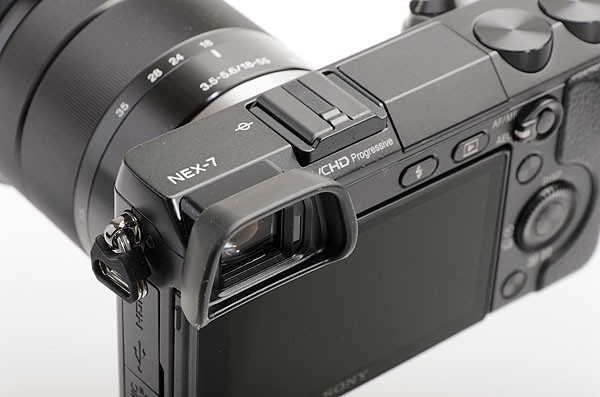
EVF does away with the need for the finder to be positioned anywhere near the optical axis. Noses can safely hit thin air not a rear screen. Unless you are left eyed. NEX-7 with ocular surround fitted.

Although Sony did not attend Focus on Imaging 2012, the UK website TechRadar secured an interview statement during Focus week, in which Paul appears to have confirmed without ambiguity that the future was EVF-only, and that the forthcoming full frame successor to the Alpha 900 would be an SLT-EVF design. At the same time, we learn that the 70-200mm SSM G and 70–400mm SSM G lens are to be revised for 2013.

We know, from several sources, that Sony is not currently making all its lenses – even the high end ones – in one facility, or in its own workshops. I believe the 70-400mm SSM G is a contracted-out design and that the 70-300mm SSM G has always been made by a third party lensmaker. This is nothing new; the Minolta 100-400mm APO was patented by Tokina and sold to Minolta as an exclusive (no-one else got the lens) and the same company made some if not all the 100-300mm APO lenses. Using different sources means that various types of coating are appearing; traditional Minolta style – the multi achromatic coating, Carl Zeiss T*, Tamron’s BBAR-derived coatings, some Sony multicoatings of unknown pedigree on Chinese SAM lenses, and a new water and oil resistant coating due to be used for the revised 70-200mm and 70-400mm.

This coating is nearly always combined with weather or splash proof design, and companies which have the ability to apply it include Hoya (Tokina, Kenko, Marumi, Pentax), Olympus, Canon, Nikon, and Sigma. Sigma is very significant as they have installed new coating lines recently and they are going through a bit of a subcontracting boom. Their facilities are all in Japan, they are on high ground and were slightly affected by the earthquake but not by the tsunami. They have a long history of building lenses and cameras for Leica, Carl Zeiss, Panasonic, Olympus, Canon/Kodak and interchangeable lenses for nearly all the major names.

If the high end tele zooms are to be revised, weatherproofing and the new coating will certainly arrive along with a synchronisation of lens appearance and finish. But I’m willing to bet something else is involved. The SSM focus system is only partially suitable for contrast-detect operation. It works, on static subjects, but unless some major advance is made in CD-AF it’s lacking the refinement and speed of the AF found in SEL (native Sony NEX) lenses. I’ve tested the 70-400mm on the LA-EA1 with NEX-7, I can work with the lens comfortably on most subjects and the camera is very good at refusing to take the shot until focus is 100% locked.

All that just to get 2X the magnification – NEX-7 with LA-EA1 and 70-400mm SSM G (an operational kit, if not fast) compared to Tamron 18-200mm NEX lens with the correct type of contrast-detection friendly focus motor and protocols.

What Sony must surely want to do is dispose of the SLT (‘translucent’) pellicle mirror and the Phase Detection AF module. It makes most sense to focus, meter, view and expose from one single sensor. In order to do so, lens focus motors need a slightly different control protocol. SSM lenses are already CD-AF compatible, as are SAM onboard focus motor lenses, but they don’t match the NEX system SEL lenses. Sigma HSM and Tamron USD Alpha mount lenses are not CD-AF compatible and do not work correctly on the LA-EA1 adaptor. Upgrading matters most with tele lenses, and they are also most likely to be used in adverse weather for wildlife, news or sports. So my guess is that the upgrade to these lenses will be comprehensive and that it will look forward to possible Sony Alpha bodies with either no SLT mirror, or a movable SLT mirror and choice between PD-AF and CD-AF.

As for the EVF itself, it’s one stage away from being better than a very good optical finder on balance of qualities. Unlike optical finders, the EVF is not susceptible to user eyesight error (incorrect dioptre correction, combined with eye focusing accommodation) and presents the user with a low resolution but otherwise very accurate view of the image focused on the sensor. It can do this at light levels where optical finders become difficult to use, while also presenting a review of the captured image if desired – ‘shot success’ confirmation.

Differences between the ‘identical’ EVF of the NEX-5n accessory finder FDA-EV1S and the NEX-7 fixed built-in version are mostly down to the difference between the 16 megapixel generation 2 sensor, and the 24 megapixel. Response speed, low light noise, quality of colour and contrast are all influenced more by the two very different sensors. User observations that one is better or worse than the other will nearly always be down to this, and variations in settings between the two cameras compared.

There are things you can do on an EVF, such as magnifying a focus point well away from the centre, which simply can’t be done at all with an optical finder and may not always be convenient to do on a rear screen. The fact that EVFs permit eye-level video shooting, and that video is now a permanent feature of the Alpha class of camera from entry to semiprofessional, makes the EVF design change more inevitable.

Paul Genge had a short exchange of information with me when I was considering selling my Alpha 900 and all my frame Alpha lenses (after starting to use the A77). He said I’d regret selling my good full frame lenses when I replaced my Alpha 900 with a full frame model I would just not believe. His message was ‘you wait – you’ll not regret it’. So, I sold my old Minolta-era full frame lenses and bought myself a brand new 28-75mm f/2.8 SAM, Sony 50mm f/1.4 (replacing Minolta vintage), a 24mm f/2 Carl Zeiss SSM, and a 70-400mm SSM G. I kept the Alpha 900  and a few lenses I like which are unique in their function, such as the Samyang 85mm f/1.4 manual, the Sigma 70mm f/2.8 Macro, the Sigma 12-24mm and an old 16mm f/2.8 full frame fisheye. Instead of getting out of full frame, I re-invested in it.

I’m expecting the Alpha 900 replacement to be either an SLT design like a scaled-up A77 with 36 megapixels, or a second generation hybrid SLT design with a mirror you can raise to use CD-AF or manual live focusing. I’m hoping that it will appear with a new 28-75mm, 24-70mm or better midrange f/2.8 with improved SSM, weatherproofing and new coatings like the 16-50mm f/2.8 DT.

– David Kilpatrick

Using Adobe Bridge/ACR for ‘film looks’ controlled by your Alpha

It’s now easy enough to find camera profiles – image looks created by independent photographers, as Adobe and Sony do not provide any – which make a big difference to raw processing using Adobe Camera Raw or Lightroom. There are also many fine adjustments you can make within these programs, able to customise the image output so that it either looks just like an in-camera JPEG of a chosen picture style, or like nothing you can produce in-camera.

Many users wonder, sometimes, why their raw pictures viewed in Adobe Bridge look different from in-camera JPEGs. Sometimes they look identical but then after working for a while and fine-tuning your preferences, you see big differences between the two if you shoot RAW+JPEG. This is in addition to differences which can happen if you set the camera to shoot in sRGB (useful for the JPEG) but your computer to save as AdobeRGB (superior in many ways for raw conversions intended to be printed).

In ACR/Bridge, you can choose as a Preference whether to build fast thumbnails or high quality, and whether to build full screen previews or accept whatever is embedded in the file. If you do not set the preference to build high quality previews and thumbs, what you see in the thumbnails is normally an embedded JPEG which is part of the raw file and an exact match to an in-camera JPEG even if you don’t save one of these. What you see in the larger preview pane will depend on your screen size, the camera, and the type of raw but for nearly all modern DSLRs on laptops the basic quality option will show the embedded JPEG and you will even be able to zoom it without interpreting the raw data.

If, on the other hand, you set your Bridge prefs to large size and high quality previews using a large screen such as an iMac 27″, and you have ACR/PS/CS5/Elements installed, Bridge will access the ACR engine behind the scenes and will render your raw files. It creates a ‘cache’ of full screen size JPEG files (which will eventually use a lot of disk space) which exactly reflect the settings for any given camera/ISO default. You have the choice, in Preferences, between having a single Default for each camera or a different Default for every single ISO increment on each camera. If you set the ISO specific Default, the conversion used to build the preview/thumb will be exactly the settings you have saved for that ISO. See below where I repeat this all again for emphasis.

The 100% and full screen fast forward keystrokes

Bridge/ACR will render the full sized 100% view of the raw using saved default settings if you used the Loupe (a small section only) or the very useful sequence of: press space bar = show the full screen preview; mouse-click with the cursor at any point on this to zoom in to 100%; scroll round using controls/mouse; magnify 200%, 400%, or 800% using scroll-wheel or Apple Magic Mouse finger-touch; return to Bridge browsing using space bar. Be warned that even with a fast machine, Bridge builds the sharpness of your enlarged view (normally 100%) in stages.

What you first see may look a bit soft, wait two seconds and it will get sharper, another two seconds and it will be transformed to pixel-perfect rendering. Never judge a Bridge/ACR 100% or loupe view the instant you access it. Bridge/ACR is clever enough for you to be able to go to the magnified view with one shot, and using your arrow keys move to exactly the same position in your other shots at the same view. You can, by this means, compare sharpness in a set of shots. Once each has rendered for that point in the shot, the cache makes sure you can go back and forth between images faster, they do not need to render again.

But it’s Bridge Camera Raw Preferences which hides the great feature I’m telling you about here – a tip which can enable to you use the lower, manual-only set ISO values of some Alpha cameras like the new 77 to ‘load’ different ‘raw’ films just by changing the ISO setting. Or indeed, other camera makes which have similar ISO control.

Different raw conversions can be made specific to exact ISO settings, so that if you select a given setting, its unique conversion will automatically be used and its effect will be shown in the preview and thumbnail created.

This would be a disaster for Auto ISO – but the Alpha 77 has six different ISO settings between 50 and 160 which are NEVER used by Auto ISO, and can safely be used for my tip here. Also, there’s really not a great deal of difference between the noise, sharpness, and dynamic range of ISO setting with this low range. They are all very good.

ISO-specific default magic

So, I have an Alpha 77 with ISO settings 50, 64, 80, 100, 125, 160 all of which are very low noise and good quality. In Bridge/ACR, I can decide that ISO 50 will be used the Vivid camera profile, strong contrast curve, a certain degree of capture sharpening, a certain black point and so on. I can adjust all this until I think that ISO 50 looks just like Velvia film. Then I save the new default.

Taking a frame set to ISO 64, I can make a default which I think looks like Kodachrome 64 perhaps using the Landscape profile. For 80, I might decide to make a fake infra-red process default with added grain, monochrome conversion and contrast effects. For ISO 100, a default which is standard and looks like a good neutral colour slide. For 125, maybe an FP4 in acutance developer printed on G4 paper mono; for 160, a Portrait profile combined with no sharpening, to imitate Vericolor Type S or Fujicolor 160N.

The examples below do not use different ISOs, I have used one raw file to show the differences, of course!

‘Standard’ – this is the colour, contrast and profile used when Adobe Standard is set as ‘Camera Raw Default’ in Bridge on the Alpha 77. This default includes WB As Shot, Exposure as shot (0), no Recovery, no Fill, Black point 5, Brightness 50, Contrast 25, Clarity/Saturation/Vibrance all at 0, Medium tone curve.

This is the same overall conversion, using a profile called ‘Neutral’ designed to be similar to the camera’s Neutral JPEG setting.

This is a profile called ‘Vivid’, again with no other adjustments.

This is an interesting custom profile called ‘Positive Film’ which clearly has some major adjustments.

This is ‘Standard’ (not the Adobe Standard) but with multiple adjustments saved in the Default – Brightness to 75, Clarity to 25, Saturation and Vibrance both to 20, Strong contrast curve. This Default is a custom one which I prefer for many shots where good saturation and midtone brightness is needed. In fact, many Alpha 77 users advise changing the ACR default Brightness from 50 to 75 permanently as the 50 figure used by Adobe appears to make the images flat and dark.

This custom high contrast ‘red filtered’ mono conversion includes strong lens vignetting added (by moving correction sliders to zero) and a greyscale rendering controlled using the Hue/Saturation/Luminance control tab for colour balance. Blue, Aqua and Purple values have been lowered and Red and Orange values raised to imitate a camera filter on panchromatic film.

If you have not found and installed any third-party profiles, you can instead make detailed adjustments including contrast and saturation for much the same effects.

I am fully aware of the ‘well I can do all this in Photoshop‘ response, the point is that all these and other far more complex processes (including any of the raw conversion Presets found in popular styling packages by Marcus Bell, onOne and others) can be effectively assigned to one chosen ISO setting in the ‘protected from Auto’ range 50-160 on the Alpha 77.

Now, when I open my folder of raw of images in Bridge set to create High Quality thumbs and large previews, they can all get exactly my customised process treatment for the thumbnails depending on the ISO I have set. One image might appear with the b/w process above and the next with colour. I will be able to preselect a different Bridge preview and a different startpoint ACR process just by selecting a different ISO on the camera. I can leave ACR’s default settings in place from 200 and up, so I will never get Auto ISO producing strange differences from one frame to the next due to Bridge/ACR presets. Yes, I did once set some different conversions for specific ISOs in the Auto range and it really messed up by image selection – I found I had increased brightness for 320 but not for 400 (etc) so my exposures seemed to go all over the place when Auto ISO chanced to pick small changes from one shot to the next.

You can apply more NR and sharpening control to ISO 200 to 12800 as needed – and again, this will automatically be applied according to the ISO, to the preview and thumb as well as the opened raw for conversion. But it won’t look odd as the exposure, colour and contrast will remain constant.

Pros and cons

If you want to revert to a standard single process for all ISO settings, you’ll lose the customisation of Bridge/ACR but you can save each setting as a Camera Raw Default process (named) and restore the settings at any time. Or, you can just reserve one careful combo for a single ISO setting such as 80 and only set this when the specific result is wanted, leaving every other setting at factory default.

It only applies to one camera body at a time, you would need to set up the same defaults for every different similar body you use – and not all Alpha bodies offer the useful 1/3rd step ISO increments and low ISO range which make the idea practical. But, this is also an advantage, because if you process files from another camera of the same exact model it will be unaffected unless you set it up. Camera Raw Defaults can be set as specific to each serial numbered body, and each different ISO, so there is never any need for someone else’s raw files to be accidentally altered by your own personal setup.

Profiles

I use a set of Alpha profiles I have assembled from as many sources as possible, but mainly from Maurizio Piraccini’s development for every KM/Sony Alpha camera:

http://www.piraccini.net/2011/02/profili-colore-sony-a900-per-adobe-lr.html

These are also linked to via a Photoclubalpha Forum thread:

http://www.photoclubalpha.com/forum/viewtopic.php?f=6&p=66090#p66090

To read a Forum thread about ‘Deep’ profiles (which is mainly about noise levels, not about the image looks themselves, but includes instructions on how to install all similar profiles) go to:

http://www.photoclubalpha.com/forum/viewtopic.php?f=32&t=5786&p=60905

These threads contain links to profiles provided or sourced by Agorabasta as a forum contributor including some for most makes.

If you have any sources for other sets of created profiles, for any Alpha models, please add a Comment at the end of this post, and provide the link (crediting the source or the author if you have that information).

You read it here first – and you’ll never forget how this can be used. Lightroom offers the same functions and preferences. Other programs may follow suit. Now you can use your manual ISO settings for raw files just the same way you can apply picture styles to in-camera JPEGs, and get the results in ACR/Lightroom – no need to be restricted to Sony Image Data Converter to read tags.

– David Kilpatrick

Sony Alpha 77 & 65 Firmware v1.04 download

The download is approximately 65MB of data in a Mac .dmg mountable disk image, or some other stuff for Windows.

The process will take about seven to ten minutes overall including downloading, opening and completing the procedure. You need a battery for the camera with at least three bars showing – preferably fully charged – and your computer to camera USB cable. The actual transfer to the camera takes about four minutes follow by 30 seconds of internal processing.

During the Mac update, you may see this window when the camera is turned off for the upload from computer to camera, and at the end of the process:

Do not worry about this – it refers only to the Mass Storage connection. Do not let this distraction interrupt your process.

SLT-A65 Firmware Upgrade v 1.04

Windows

http://www.sony-asia.com/support/download/478855

Apple Macintosh
http://www.sony-asia.com/support/download/478884

SLT-A77V Firmware Upgrade v1.04

Windows
http://www.sony-asia.com/support/download/478891

Apple Macintosh
http://www.sony-asia.com/support/download/478893

Features:
Adds auto-correction of JPEGs for two lenses:
Vario-Sonnar T * DT 16-80mm F3.5-4.5 ZA (SAL1680Z)
Sony DT 16-105mm F3.5-5.6 (SAL16105)
Improved ‘usability’ – remains to be discovered what that means
Improved image quality (presumed to be JPEG quality and noise levels)
Faster command/menu/setting response (less time lag between control wheel and updated screen info)

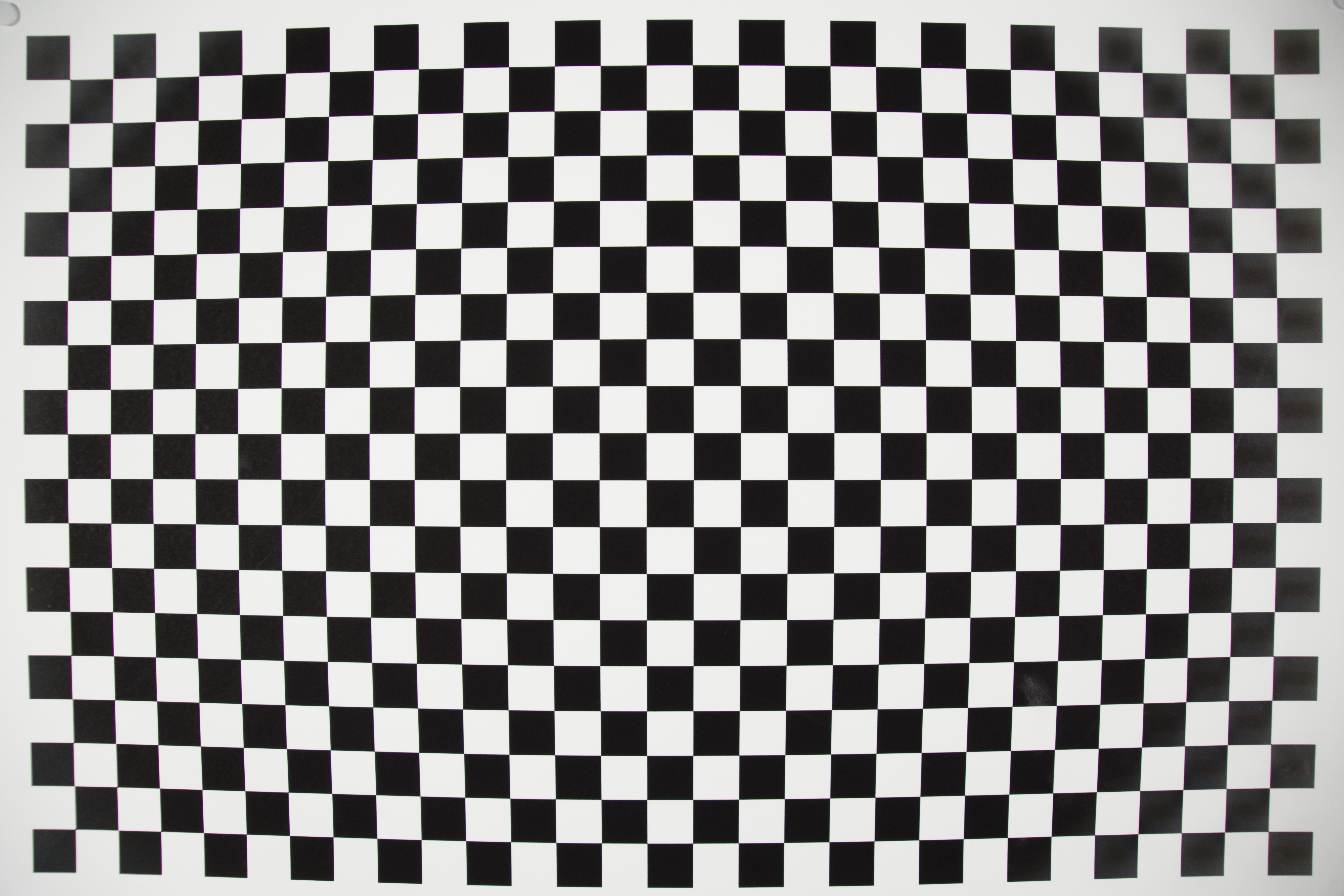
Example: correcting the 16-80mm CZ lens wide open at 16mm – focused on an A2 target, a very close distance which exaggerates the distortion level of the lens:

Above: uncorrected image

Above: in-camera correction. For full size versions which allow you to examine the CA (very prominent at f/3.5) and the degree to which it is corrected in the Fine JPEG, click the images. As you can see the image is enlarged by correction, so not quite as much coverage is achieved. But it’s less than you imagine; a fully corrected 16mm shot ends up being similar to a 16.35mm lens on the vertical and horizonal axes, or a 16.55mm lens on the diagonal. That’s still wider than a rectilinear perfect 17mm, so it’s better to use a bendy 16mm than lay out for a Zeiss MF 18mm, if you want coverage. And even Zeiss 18mms show some curvature.

We’ve tested the 16-50mm as well and BOY does that lens distort at 16mm – far worse than the CZ – which makes it clear that the in-camera lens correction goes hand in hand with this lens. To get any kind of straight line image, it’s going to be necessary to use the correction or a profile for raw conversion in a program like Adobe Camera Raw which accepts lens profiles.

The responsiveness of control wheels changing settings is greatly improved – altering +/- EV compensation for example now responds almost in real time as you shift the control. No significant improvement can be detected so far in image quality despite the claims, at least with the 100 or so test shots we’ve taken at different ISOs using a Color Checker, and other spot checks for Low/Normal/High NR. But there are so many modes on the A77 including panoramas, multishot, DRO, that the improvement may well be specific functions which Sony will explain in more detail.

Canon kyboshes the competition – full cinema system

Canon has launched, out of the blue as far as we were concerned, a complete fully featured Cinema HD production system including full-frame digital video camcorder and EF-fit lenses designed to compete head-on with the top offerings from Zeiss/Arri and Red.

The Cinema EOS system also competes with Sony right in the heart of Sony prime territory. It looks like nothing so much as an acknowledgement that Sony has attacked Canon’s primary still imaging market effectively, and Canon, instead of competing in that arena, has decided to hit their rival where it really hurts. Their announcement feels like ‘right, we’ll show them – this will be the best HD movie production system in the world’.

Porn film makers will be rubbing their hands with glee – or something, not sure if you call it glee…

At the heart of this is optical excellence. They have created a 4K (the higher resolution than 1080p HD, full large screen cinema format) lens system. Imagine these – they come in the ciné PL mount, but also in the full frame EF camera mount. You could use these on a regular Canon. And they will not have the shortcomings of lenses such as the 24-105mm f/4 L – these will be better than CZ quality if Canon is to secure a market share.

CN-E 14.5-60mm f/2.6 L S (Super-35 or APS-C is what the S stands for, like EF-S)

CN-E 30-300mm f/2.95-3.7 L S

CN-E 24mm f/1.5 L F (the F stands for Full Frame)

CN-E 50mm f/1.3 L F

CN-E 85mm f/1.3 L F

Look at those apertures – they are like Angenieux apertures! Bet you they are also true T-stop figures. Here’s their wording:

Wide-Angle and Telephoto Cinema Zoom Lenses for EF and PL Mounts
CN-E14.5–60mm T2.6 L S / CN-E14.5–60mm T2.6 L SP
CN-E30–300mm T2.95–3.7 L S / CN-E30–300mm T2.95–3.7 L SP

The four new Canon zoom cinema lenses comprise the CN-E14.5–60mm T2.6 L S (for EF mounts) and CN-E14.5–60mm T2.6 L SP (for PL mounts) wide-angle cinema zoom lenses, and the CN-E30–300mm T2.95–3.7 L S (for EF mounts) and CN-E30–300mm T2.95–3.7 L SP (for PL mounts) telephoto cinema zoom lenses. Each lens supports 4K (4096 x 2160 pixels) resolution, which delivers a pixel count four times that of Full HD (1920 x 1080 pixels), and offers compatibility with industry-standard Super 35 mm-equivalent cameras as well as APS-C cameras (Not compatible with 35mm full-frame or APS-H camera sensors).

Employing anomalous dispersion glass, effective in eliminating chromatic aberration, and large-diameter aspherical lenses, the zoom lenses achieve high-resolution imaging from the centre of the frame to the outer edges. Each lens is equipped with a newly designed 11-blade aperture diaphragm for soft, attractive blur characteristics, making them ideally suited for cinematographic applications.

The focal length range of 14.5–300 mm covered by the new zoom lenses represents the most frequently used focal lengths in theatrical motion picture production, a range that often requires a combination of three or more separate zoom lenses. Canon’s new wide-angle and telephoto cinema zoom lenses, however, offer a wider angle and powerful zooming to provide complete coverage across this range with just two lenses. The new wide-angle cinema zoom lenses will offer the industry’s widest angle of view among 35 mm digital cinema lenses with a wide-angle-end focal length of 14.5 mm (as of November 3rd 2011, according to published competitive data).

Zoom, focus and iris markings are all engraved on angled surfaces for improved readability from behind the camera. With a focus rotation angle of approximately 300 degrees and a zoom rotation angle of approximately 160 degrees, the lenses facilitate precise focusing performance while making possible smooth and subtle zoom operation.

The new top-end cinema zoom lens line-up can be used with standard manual and electronic movie industry accessories, as well as matte boxes. Featuring a unified front lens diameter and uniform gear positions, the lenses do away with the need to adjust or reposition accessory gear when switching between other lenses in the series.

Single-Focal-Length Cinema Lenses for EF Mounts
CN-E24mm T1.5 L F / CN-E50mm T1.3 L F / CN-E85mm T1.3 L F

Like their wide-angle and telephoto cinema zoom lens co-stars, Canon’s new CN-E24mm T1.5 L F, CN-E50mm T1.3 L F and CN-E85mm T1.3 L F cinema lenses deliver 4K optical performance. The three lenses, designed for use with EF mounts, are compatible with not only industry-standard Super 35 mm-equivalent cameras, but also 35 mm full-frame, APS-H and APS-C sensor sizes. The trio incorporates anomalous dispersion glass and large-diameter aspherical lenses for high resolution imaging throughout the frame, and features a newly designed 11-blade aperture diaphragm for gentle, attractive blurring.

With focus and iris markings that are easily visible from behind the camera, Canon’s three new fixed-focal-length lenses support convenient film-style operation and, offering a focus rotation angle of approximately 300 degrees, facilitate precise focusing performance.

The CN-E24mm T1.5 L F, CN-E50mm T1.3 L F and CN-E85mm T1.3 L F support standard manual and electronic industry accessories and matte boxes, and have a unified front lens diameter and uniform gear positions, eliminating the need for adjustments when switching lenses.

Costs

Is there a snag? Maybe. The cheapest of the prime lenses will be over £4000/$6,300 and the zooms will cost a cool… $47,000 each. That is not a misprint. That is not even my income. But it shows you how big the stakes are in movie making gear PROPER.

The movie camcorder

Then there’s the camera to go with them – the EOS C300/C300PL interchangeable lens digital video camcorder. It may only have an 8.29 megapixel Super-35mm CMOS sensor. It’s only 1080p but it claims to read coincident or complete RGB pixels for each pixel location, using 4:2:2 sampling, and to record at 50 Mbps (almost twice the data rate of the best DSLR video). It has twin CF card slots. It has many other features including things like metadata coding for better identification of lenses in edit work, and the capacity to be controlled remotely from an iPad or iPhone (with accessory WFT-E6B wireless transmitter).

A new DSLR

Canon is developing a new-concept EOS-series digital single-lens reflex (SLR) camera. Incorporating an enhanced version of the video-capture capability offered in the current EOS-series line-up, the new camera will be ideally suited for cinematographic and other digital high-resolution production applications. The model will be equipped with a 35 mm full-frame CMOS sensor and, enabling the recording of 4K video* (at a frame rate of 24P, with Motion-JPEG compression), will make possible the type of exceptional image quality and sublime imaging expression to be expected from the next generation of “EOS Movies.”

So why have I posted this on Photoclubalpha? Easy. I was still up and around at 1am when the news had come in by email. And it matters, because Sony will react to this. Canon has just moved in on their home territory, where they were already getting a foothold through EOS-movies and existing Canon video offerings, in a much bigger way. This could be the best thing Alpha owners could see happen because it will force Sony to update their lens range quickly and to improve the overall offering their DSLR division makes to their camcorder division (via adaptors).

– DK

Image Data Converter v4 – download now

Sony’s Image Data Converter latest version – 4.0 – will handle all Alpha raw files from A100 to A77, and all NEX raw files. It offers improvements in performance and stability, but it also eliminates the need for the Lightbox application (found in v3) as a separate item. You simply browse for a folder of images, and IDC now shows a regular thumbnail browser with image information not unlike Adobe Bridge.

Double-clicking the thumb opens the image as expected in the raw editor. This has all the features of v3 are a bit more, but at least on a latest MacBook Pro with 2GB memory it seemed to crash and quit (normally after processing the file) rather too often.

One new feature, found when you save the file and not in the main processing controls, is a crop with Inclination Control and a grid:

Testing Alpha 77 raw files on the new software, the Bayer conversion seemed to be incredibly noisy and the noise reduction left fine detail heavily smeared much the same as for in-camera JPEGs, but the colour styles, DRO settings and some other aspects read from camera EXIF data are retained. It can not be recommended as a main choice for raw conversion, and certainly not for high ISO images, but it’s available and is a fairly small application to install on laptops or less powerful machines.

Download links:

Mac OSX .dmg installer

PC/Windows .exe installer

– DK

Does Canon EOS-1D X point the way?

Rhetorical question. Actually, if you read the information carefully, it’s pretty clear that the 1D X is more or less a 1D MkIV (16 megapixels,1.3X frame factor) with the sensor area increased to full frame. The pixels are actually larger than the MkIV so for any given telephoto lens, the true resolution of a sports/news/wildlife subject will be lower.

The 1D MkIV has a 27.9mm x 18.6mm sensor capturing 4896 x 3264 pixels or 175 pixels per millimetre.The 1D X has a 24 x 36mm sensor capturing 5184 x 3456 pixels or just 144 pixels per millimetre. The photon-capturing area, all other things being equal which they probably are not, is approximately 50% greater for every 1D X sensel compared to every 1D MkIV sensel.

That, if you like, can account for half of the one-stop maximum senstivity gain in the new camera; improved microlenses and filters, manufacturing and design will account for the rest. Canon, however, claims that the new Twin Digic 5+ processors are actually responsible for the noise reduction (as well as moiré reduction in video – a related function).

This is from the press info:

“Offering performance up to three times faster than standard DIGIC 5, each processor is designed to manage huge levels of image data while simultaneously reducing image noise”.

So there is no specific claim that the CMOS itself is lower noise, mostly that the Digic 5+ dual processing does this. That is something fairly new in a world which complains about raw file noise reduction. Does it matter whether the final image quality is a result of processing, or the result of a clean readout from a good signal to noise ratio CMOS?

The claim is that the X is two stops better for noise. Having used the 1D MkIV, I can confirm that this is already pretty amazing even at ISO 25,600 and perfectly usable at 6400. If Canon’s claim is correct, the X will be as good at 25,600 and then has a usable 51,200. Beyond this, 102k and 204k EI – the highest ISO equivalent ever in a DSLR – could be usable for extreme conditions in news, military, surveillance. It’s hard to think why else you would be shooting in the dark.

The processors also allow continuous (no limit) 14-bit raw shooting using twin UDMA CF card slots, at 12fps. There’s a huge gulf between the 11 to 18 shot bursts which the Alpha 77 can handle, and never slowing down at all. By swtiching to JPEG, the capture speed can be increased to 14fps and again it never slows down.

The camera itself is very much a 1D but with improvements to the ergonomics and interface which are long overdue. Canon has stuck with a 1990s design because familiarity from generation to generation has been a key point when persuading professionals to buy the new models. Most pros don’t want to see a single button moved a single millimetre, or any change in the way the camera responds. News agencies have actually hired tech support companies to sit down with batches of new cameras and spend an hour making sure all the deeply-hidden custom settings match those on the outgoing gear.

Here’s what Canon says about the X: “The menu system also features a comprehensively redesigned user interface, incorporating Help functions to make camera operation faster, clearer and easier. Additionally, a new dedicated AF tab allows photographers to access and customise AF pre-sets for common shooting situations or subjects, allowing users to concentrate on capturing the moment without the need to constantly adjust camera settings.”

About time too! I have almost been lynched by Canon and Nikon owners alike for taking a new camera out of the box, setting it to P, and shooting everyday scenes only to find half my intended subjects out of focus. But then, I’m testing the camera, not my own ability to configure it. This has been a major problem for all advanced AF models with complex sensors (the X has a 61-point wide AF sensor with 41 cross-type, 5 double-cross and an integrated 100,000 pixel RGB metering sensor which links to AF also provides face and horizon/vertical line detection). Sony does seem to have avoided issues by keeping the A77 AF fairly simple. Anyone who has used a Canon 7D with the wrong focus behaviour set, and seen their chosen subject suddenly zap out of focus just before pressing the shutter, will know that responsiveness and auto selection of focus points can lose pictures.

So I for one am happy to see that Canon has addressed an issue often denied and brought some key AF behaviour control up front instead of buried in obscure custom settings.

Are Canon owners really gearheads? Maybe not. Canon also announced they just passed the 50 million EOS cameras mark, and the 70 million EOS lenses, the same time as the 1D X launch. That’s just 1.4 lenses for each Canon EOS body. Sigma must be doing well. But, as upgrading Alpha owners know well enough, body-only sales are very common these days. And Canon lenses just keep going the same way those old Minolta lenses do. There will be plenty of 1980s glass still in use on this 2011 camera.

Back to the rhetorical question – yes and no. Sony has never had a 1.3X sensor size, so could not do something like apparently increasing the pixel count while actually lowering the resolution (and thus the telephoto true reach). All Sony could do would be to backtrack from 24 megapixels towards 16, on either full frame or APS-C – or keep full frame at 24, and transform the performance and speed of the 9xx series.

For those who feel a bit peeved than Canon’s $7000 camera has just stolen the high-speed crown from Sony’s $1300 Alpha by offering 12fps and a boosted 14fps, just remember that with 255 pixels per millimetre the Alpha 77 captures subjects at a 77% higher magnification (100% pixel view) than the new 1D X and that means your humble A77 user with a 70-400mm SSM G is punching at the same weight as a 1D X user with a 125-700mm zoom.

And that 14fps is achieved with the mirror locked up and the focus and exposure locked on the first frame – strictly a tripod job or one for a steady hand, with no ability to see the subject once the shutter is pressed. And, even though the Canon offers sixteen times the senstivity for low light shootings, the Alpha can actually meter the light in conditions four times darker than the Canon at EV-2 rather than EV0.

These cameras are not competing, obviously, so my comments are not to be taken seriously. It’s just interesting to see how high end consumer SLT technology and specifications compare to fifth-generation heavy duty professional SLR.

– David Kilpatrick

1 2 3 4 5 6 22